Blacksburg improves its “Hill”

Photo1
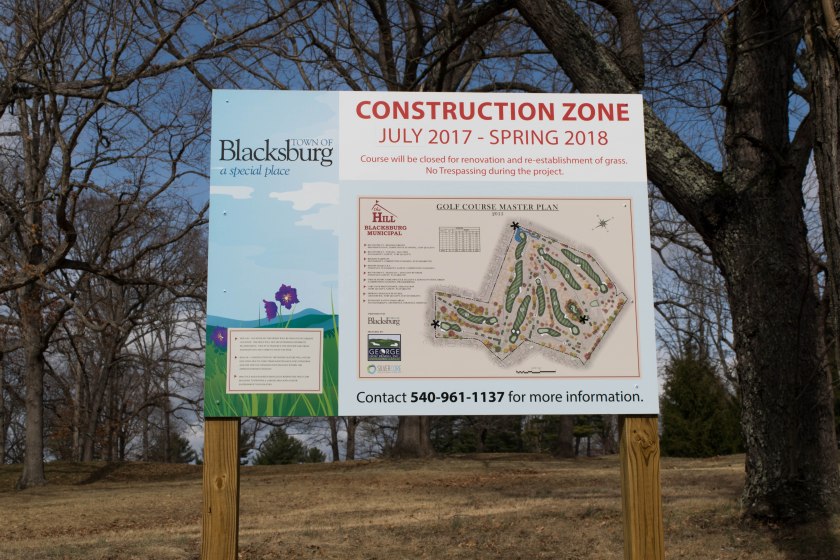
BLACKSBURG, Va., Feb. 15 – Construction to the course began as a result of requests from local residents through an online forum. Photo: Alexis Walsh

by Alexis L. Walsh—

As Spring approaches, Blacksburg Parks and Recreation continues to work towards the grand re-opening of “The Hill”, the town’s municipal golf course. Construction to the course began in August 2017 and is set to be completed within the next couple of months. What can Blacksburg residents expect?

According to Blacksburg Parks and Recreation’s website, Aspen Golf performed the construction that included the re-grassing of greens and fairways. Additionally, in order to accommodate different player levels, all the tee complexes were rebuilt to provide multiple tee decks. Bunkers on the course were also either removed, replaced or renovated.

Jeff Kleppin, The Hill Golf Shop Supervisor, stated, “The updated course should bring in more experienced golfers who might not necessarily think to use a municipal golf course as an elite course.” He added, “We are excited to welcome new and old members after the grand opening in a few short months.”

A two hole, short game practice area was constructed to provide a practice and teaching facility near the professional shop. Kleppin hopes to offer more children’s programs as a result of the new practice area. He explained that in the past children’s classes were not as prevalent due to lack of course variety; however, he hopes the new course will eliminate the prior issue.

Blacksburg Parks and Recreation aims to provide residents with a variety of amenities that encourage community relations through a healthy lifestyle. Upon completion of the course, residents will be able to purchase memberships that range from children’s passes to adult memberships.

Dean Crane, Director of Blacksburg Parks and Recreation Department, stated, “The town bought the course in 1971 and has made very little changes since.” He added, “The grand opening will show years of hard work and planning paying off. We hope our residents will appreciate the efforts we have made for them.”

Crane has been the Director of Blacksburg Parks and Recreation Department for over ten years. He explained that the new course has the potential to bring a lot of revenue into the town. He looks at the updated golf course as a major investment for Blacksburg and expressed major excitement for the future of the town.

According to Blacksburg’s Municipal Golf Course website, residents are asked to remain patient through the construction process. The website stresses the importance of the public’s ability to avoid temptations as far as walking on restricted areas and/or sledding.

The course will remain closed to pedestrian traffic in effort to protect the new grass; Residents are asked to use the adjacent walking trails. For more details regarding daily golf rates, passes, and the announcement of the re-opening, residents can visit “The Hill” facebook page.

Winter wears down national blood supply


Giving Blood
BLACKSBURG, Va., Feb. 13 – Supply and Demand: A donor gives blood at the VT Sports Club Blood Drive in response to the shortage across the nation. Photo: Kat Schneider

by Kat Schneider–

Though there is almost always a national shortage of donated blood, the winter season sees a dramatic decrease in donation levels.

“It depends on the time of year,” said Daniece Rodrigue, a Collection Specialist with the Red Cross for 12 years. “Recently, it’s been weather and flu season and holidays. People are traveling, and the need rises.”

According to the Community Blood Bank, in America and Canada, more than 4.5 million patients need blood transfusions annually. The number of donations, however, drops significantly during the cold winter season between weather cancellations and cold and flu season.

“A lot of people who are regular donators have a harder time to get out; things get canceled because there’s snow, sleet or rain,” said Jenna Sanders, a senior Human Nutrition, Food and Exercise major at Tech. Sanders, a regular donor, has previously canceled appointments to donate because of these conditions.

The American Red Cross reports that it supplies 40 percent of the blood donated in America. Of that, 80 percent is collected at mobile blood drives set up around the communities in places such as schools and places of worship. When weather causes cancellations of those mobile blood drives, the national donation supply takes a hit. Over 500 Red Cross blood drives have been canceled nationally this year alone, costing the donation service over 16,000 units of blood.

The weather is not the only factor that causes a decrease in blood donations during this time of year. Rodrigue explains that potential donors are unable to donate blood when they are sick or are taking certain over-the-counter medications following their sickness. They are also encouraged not to come in if they are feeling unwell, even if it is just a common cold.

Those considering donations during this season can check the American Red Cross website or the Virginia Blood Services website for eligibility requirements set by the FDA.

Weather and health permitting, Sanders encourages everyone in the Virginia Tech community to consider donation: “Our school’s about service, and this is a really great way to serve others and even to save a life.”


IMG_2560
Collection Specialist Daniece Rodrigue


IMG_2559
Senior Human Nutrition, Food and Exercise major Jenna Sanders


11 years later Virginia Tech, other campuses work to prevent shootings

Norris Hall

 Blacksburg, Va., Feb. 5, 2018 – Norris Hall was the location of the tragedy of April 16, 2007 took place. 30 people lost their lives in the building on that day. Today, the Virginia Tech community works with the Virginia Tech Police Department to keep the campus safe. Photo – Josh Henry


by Josh Henry —

In Blacksburg, Virginia everyone recognizes the pain and horror that so many communities have felt in recent years following shootings on college campuses. It has been almost 11 years since the tragedy of April 16, 2007, and in that time shootings have risen exponentially across the U.S. on college campuses.

From 2011 to 2016, 101 shootings on or near college campuses took place, which was a 153 percent increase from the prior 5 years, according to a study by the Citizens Crime Commission of New York City. There is no definable reason for the rise in shootings, but no matter the location the effect on the community is the same.

“It felt like there was a shadow over everything after [April 16] happened,” VT graduate Henry Chang said. “There was no way to properly recover. I just remember constantly being sad. It ended up bringing us all together, but it was all incredibly hard to handle.”

Chang, the brother of current VT student Stanley Chang, was a freshman in 2007. Before April 16 he never had a reason to worry about his own security. But afterward, that changed in a hurry.

“It was hard to feel safe going to class,” Chang said. “Of course we all had to keep our normal routine to get away from it all, but like I said there was just this shadow. We all had our guard up.”

After the April 16 tragedy, multiple security changes were made on Virginia Tech’s campus and across the U.S. in an effort to prevent more shootings in the future. According to Virginia Tech Police Chief and Director of Security Kevin Foust, Virginia Tech has doubled up on most security measures.

“We [increased] the number of officers from 24 to 50 [since 2007],” Foust said. “We’ve added more Blue Light emergency phones [both indoors and outdoors]. There are more security cameras, the LiveSafe app, and the Personal Emergency Preparedness joint presentation with [Virginia Tech’s] Office of Emergency Management.”

Changes like this became more common on campuses around the country after the tragedy at Virginia Tech. Some have even been adjustments to things that have already been around for years, like the siren on the University of Texas A&M’s campus.

Nationally, there hasn’t been one discernible solution to the issue of preventing Campus shootings in the United States. Even Foust suggests there is no “correct” way to handle everything, but overall safety starts at the community level.

“Security is a personal responsibility,” Foust said. “I cannot guarantee your safety here on this campus, as I cannot guarantee my own. What we do is educate our community as best we can so that when a crisis occurs, each person can make the best decision based upon the facts and circumstances in front of them at that time. [This] community has embraced personal responsibility and remains very vigilant.”

Campus Shootings Across the Nation Infographic
Click on the Infographic to view full image

Lawmakers work toward I-81 improvements

cover photo
BLACKSBURG, Va., Feb. 6 – The Virginia Tech community experiences heavy traffic on U.S. Route 460, especially during spring break and football season. Photo: Cody Davis

by Cody Davis–-

Seventeen Virginia state legislators requested federal assistance to improve Interstate 81 on Thursday, Jan. 25. According to Virginia Business magazine, the legislators sent a letter to U.S. Senators Tim Kaine and Mark Warner to address the “dire need of improvements to increase safety” in the Shenandoah Valley.

“The letter… asks that the congressional delegation works with President Trump to address longstanding transportation and safety needs,” Del. Christopher Head (R – 17th District) said. “In Richmond, we will continue to debate and negotiate our budget and transportation spending.”

Head and Del. Chris Hurst (D – 12th District) are two of the 17 legislators who signed the letter to Virginia’s congressional delegation.

According to WSLS.com and WDBJ7.com, Hurst held a town hall in Blacksburg on Saturday, Jan. 27 to give citizens an update from Richmond. He discussed traffic congestion, driver habits and the need to change the transportation narrative from “being solely focused on northern Virginia.”

“Transportation needs… and policy discussions shouldn’t begin and end with Interstate 66 and the Beltway,” Hurst said. “We want attention to be first placed on Interstate 81.”

In addition to the legislators’ letter to the congressional delegation, the Senate of Virginia has introduced two bills that seek to improve Interstate 81. According to Virginia’s Legislative Information System, Senate Bill No. 561 aims to impose left-lane restrictions on tractor trucks, while Senate Bill No. 971 establishes a corridor improvement plan.

As of Wednesday, Feb. 7, Senate Bill No. 561 has been continued to the 2019 session and Senate Bill No. 971 has been referred to the Senate Committee on Rules.

“Currently, we are working with different VDOT administrative districts to identify specific projects on Interstate 81,” Head said. “I’m hoping that included in those projects, are plans to widen to three lanes in certain areas of the Roanoke Valley along I-81 to relieve congestion and address safety concerns.”

Regarding plans to improve public safety on the interstate, Head and Hurst stressed the importance of research.

“I think we need to study this issue more in-depth than ever studied before,” Hurst said. “It’s great that Virginia Tech has the transportation institute, so I think we should definitely be working with them.”

Hurst is referring to the Virginia Tech Transportation Institute (VTTI), a research organization that seeks to “save lives, time and money” in transportation. VTTI is home to the I-81 Corridor Coalition, an association dedicated to improving public safety along Interstate 81.

“We see ourselves as, eventually, becoming the best resource for information on the corridor,” Andy Alden said.

Alden is the I-81 Corridor Coalition’s executive director. He gave his thoughts on how transportation in Virginia can be improved.

“We definitely need a new funding structure,” Alden said. “We need a new way to fund the improvements that are needed.”

Alden claims that VTTI does not get too involved in the “policy side of things” regarding legislation. Instead, the organization seeks to inform lawmakers with research reports.


BT’s route to the future


BUSPIC.jpg
Blacksburg, Va., Dec. 12 – Blacksburg Transit: Blacksburg Transit recently debuted new features to incoming buses. The transit system will add four news busses to their routes throughout the Blacksburg area. Photo: Humbert Zarco

by Emma Schimley, Humberto Zarco–

Blacksburg Transit will introduce four new 60-foot-long clean diesel buses next semester. They will have USB ports underneath the seats, standing poles where the so-called bendy seats are on the old so-called bendy buses and will be better for the environment. Their long-term vision, however, is much more ambitious than that.

“There’s always improvement from the previous generation,” said transit director Tom Fox. Fox has been in the transportation business for over 30 years. Fox has tried to keep his eye on the technological advancements that could be incorporated into his vision. At one point, it was USB ports. Today, it is hybrid-powered buses and self-driving technology.

With the environment and their ultimate goal in mind, Blacksburg Transit invested more than $2.8 million into nine new diesel-electric hybrid buses in 2010. In the near future, they hope to add electric buses to their fleet. Although they are expensive on the front end, Fox thinks they could be worth it in the long run.

“That’s something we’re looking seriously at,” Fox said. “As we were looking at the life cycle cost of an electric bus, we’re thinking it may actually be less than a diesel bus because you don’t pay for the fuel.”

In fact, earlier this month, some Blacksburg Transit operators and maintenance workers had the opportunity to test drive an electric bus manufactured by New Flyer, the company that manufactured the 52 buses in their fleet.   Fox believes electric buses will be a part of their fleet in the not too distant future.

“It would probably be a minimum of two years and maybe longer depending on how the funding works out,” Fox said.

With safety as the priority, he also hopes to conduct further testing on how the electric buses would handle the hills in Blacksburg, especially when buses are filled to capacity.

Fox hopes the long-term future of Blacksburg Transit will involve self-driving technology, and the future of such may very well be in the hands of Blacksburg-based Torc Robotics.

According to an August 2017 Virginia Tech press release, in late July, Torc’s Lexus RX hybrid completed an autonomous cross-country drive of over 4,300 miles from Washington to Seattle before heading back east to Richmond, Virginia. More than half of Torc’s employees are Virginia Tech alumni, and they have partnered with the university on more than $10 million worth of research and development that could lead to driverless cars hitting the consumer market in a matter of years.

Self-driving technology would greatly benefit Blacksburg Transit, which serves over 3.7 million customers each year, making it the fifth-highest ridership bus system in Virginia, according to a November 2017 New Flyer press release. Resources previously used to recruit and pay operators could be used in other areas, such as bus maintenance.

“We’re watching the progress on autonomous vehicles,” Fox said. “That’s probably not in the near future, but we’re monitoring it, and that is sure is going to be something in the future.”

NRV Mall hopes for a brighter future

nrv mall
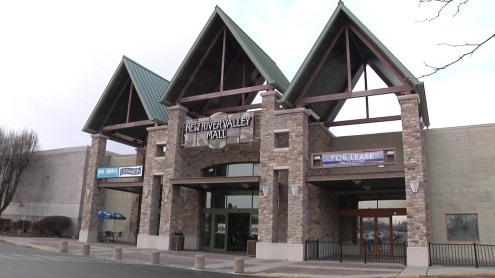
CHRISTIANSBURG, Va., Dec. 12, 2017 – NRV Mall: The New River Valley Mall, a shopping center filled with places to eat and retail stores, has been forced to close down several stores due to poor performance within the last few years. Photo: Chase Parker

by Chase Parker, Virginia Pellington, Josh Rodman–

The New River Valley Mall, located in Christiansburg, Va., has been struggling to bring in customers for years now. As a result, many of the mall’s signature stores have been forced to close up shop.

GAP, Tailgaters United, PacSun, Rue 21 and most recently JC Penny, are among the casualties of retail stores that have been forced to shut down their locations in the mall.

“JC Penny closing down was just a corporate thing,” explained Tina Corder, the Specialty Leasing Manager for the mall. “They closed several of their underperforming stores, so that was one of their choices. But it’s not really a bad thing for us. It was a store that was under-performing.”

The other stores have closed down for the same reason. For example, earlier this year Rue21 announced that they’d be closing 400 stores. Due to the New River Valley Mall’s struggles, the one located there was an easy target to shut down for the retailer.

Despite several big-name stores closing down, the mall’s management team says that it is already brainstorming ways to replace them and that there are several things currently in the works that will enhance the overall customer experience.

But for now, the slow mall traffic combined with the alarming rate of stores that have closed down has given mall management the task of finding ways to bring in more customers.

“‘Touch a Truck’ is one of our great events. We work with a lot of non-profits through the year to bring in things like that, and that’s such a great one because it’s a community event and it’s free,” Corder said. “We also have our Fall Festival in October that we work with the Christiansburg Police Department on. They’ve been doing that for 17 years now. So that’s just two of the free events that we hold to try and bring more traffic here to the mall.”

Another factor that benefits the mall is something that they have no control over the holiday season. According to Statista.com, retail sales during the holidays can account for as much as 30 percent of a retailer’s annual sales. The stores in the New River Valley mall are no exception.

“Christmas time is very important,” Corder said. “Most of the store’s sales are from the holiday season so they put a major focus on advertising for that.”

Come Dec. 26, however, Christmas time will be over and the management team’s plan to bring in more revenue to the mall will be put to the test.