Latest sleep trend: #mouthtaping

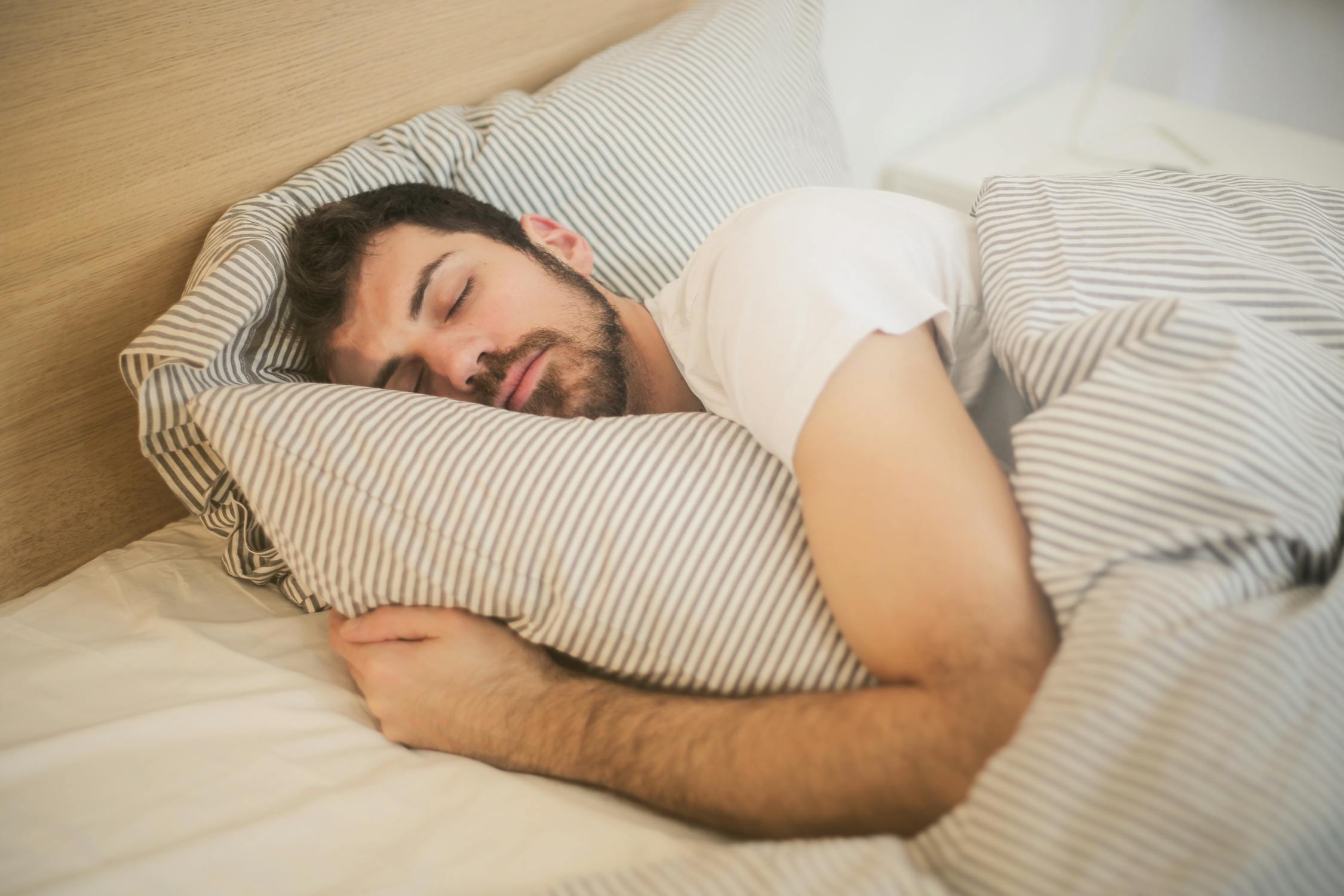
Photo: Pexels.com

by Mary Griffin-

The latest TikTok sleeping hack is designed to turn anyone into a nose breather. Known as mouth taping, Influencers and TikTok users have claimed mouth taping benefits them in ways from snoring less, reducing bad breath, and even sharpening their jawline. 

Mouth taping is just as it sounds, it is the act of taping your mouth shut, forcing you to breathe through your nose instead of your mouth when you sleep. 

One creator, @courtneysnelll, who creates wellness videos, posted a TikTok stating that “humans are the worst nose breathers in the entire animal kingdom.” As well as claims that mouth breathing causes conditions such as anxiety, depression, insomnia, sleep apnea, high blood pressure, heart failure, and dental abnormalities.

The #mouthtaping already has over 54.4 million views on TikTok as well as #mouthtapingforsleep which has over 13.6 million views.

However, despite its popularity, medical professionals suggest the research behind the benefits of mouth taping is lacking and even adds safety risks. 

According to an article by Cleveland Clinic, breathing through your nose has several health benefits including lowering blood pressure, filtering allergens, and moisturizing your throat, but sleep medicine specialist Cinthya Pena Orbea, MD, claims that most of this evidence is “anecdotal” and that there is not enough to support that mouth taping is beneficial. Rather than mouth taping, Dr. Pena Orbea states there are “alternative methods to address conditions like snoring and sleep apnea directly.”

Mouth taping, Dr.Orbea also suggests, could cause irritation and even a rash when used. Dr. Orbea suggests discussing this practice with a doctor before putting it into action. 

Kaninika Verma, MD, clinical sleep director at OSF HealthCare, discusses mouth breathing in an article published by OSF HealthCare. 

Dr. Verma agrees that people are supposed to breathe in and out using their nose, but due to safety reasons mouth taping is not the best practice or technique. According to Dr. Verma, snoring stems from a bigger issue and it is important to figure out the root of the issue rather than forcing the body to breathe through the nose. 

Verma also claims that mouth taping is a practice that no physician would recommend to a patient.

Causes of mouth breathing include; snoring, blocked nasal passages, enlarged tonsils, and being a natural mouth breather.

While mouth taping may be trendy, those with health and medical backgrounds tend to stray away from it.

Mountain Biking: A pricey past time

Blacksburg, Va., Jan 26 – Bike Hub: The Bike Hub is the central base for all bike enthusiasts at Virginia Tech. Assisting many bikers every day, Zachary Taub does maintenance on a student’s bike. Photograph: Noah Hayden

by Noah Hayden –

What started as a small club in the 1930’s, has become a worldwide phenomenon that’s grasping the nation. In 2011, nearly seven million people participated in non-paved surface bicycling. That number increased by almost two million by 2021. Mountain biking is only getting more popular and the biking market is expected to grow by at least 3.13 billion between 2023-2027.

While the sport is growing at a tremendous rate, that’s not to say it’s for everyone. The biggest initial challenge for newcomers is understanding the bike market. At a glance, there are tons of price points that would scare any consumer off.

According to long-time mountain biker, Ruben from BikingUniverse, parts for a bike can cost up to $10,000. As daunting as that may sound, there is a bright side. Most bikers are not buying parts for $10,000, especially newcomers.

“You can find hardtails for $5,000,” explained Zachary Taub, Virginia Tech Mountain Biking Club president and Bike Hub employee. “I usually tell people, look on Facebook marketplace first because you could probably find a decent entry-level hardtail for about $500 or so.”

There are other factors that go into the price of a mountain bike. Wheel size, tire material, pedals, type and range of the drivetrain, and even the material of the frame affect the price. When buying a mountain bike for around $500, the main concern revolves around the integrity and performance of the bike. More often than not, one may experience an accident due to malfunctions.

Charles Dye, a 37-year mountain biking veteran, explains that there is some correlation between price and safety. “I generally say to people, don’t spend much less than  $1,000,” said Dye. “When you get out on the trails, life is rougher, things break more, you want more features like suspension, and you really need to pony up like $1,300.”

For college students, $1,300 might just mean their entire bank account. How America Pays for College: Sallie Mae’s National Study of College Student and Parents, indicated that in 2021, the average college student in the U.S. borrowed just above $1,300 via credit card. With college students already relying on outside sources for money like their parents, how is it possible for so many to afford such an expensive hobby?

The most common way is by finding bikes or parts for little to nothing. “Get your way in [to mountain biking] however you can get in,” said Dye. “Usually that means borrowing your old uncle’s bike.” 

Others will recall long hours working part-time, or doing odd jobs around their neighborhood. Luke Dangel, cinema student at Virginia Tech, opened his own garage biking service in the summer of 2020. Despite the many exhausting challenges to get the money for a mountain bike, he says he would never take that experience back.

“It was incredibly fun and stimulating. I became super invested,” said Dangel. “It was one of the best experiences of my life.”

Blacksburg, Va., Jan 26 – Bike Racks: Despite dull weather, students still manage to bring their bikes to campus. There are many bike racks across Virginia Tech that display the vast number of bikers in the student body. Photograph: Noah Hayden

The Body Project

by Cyna Mirzai-

Blacksburg, Va., Jan. 27 – The Body Project Faculty Advisor Laurie Fritsch observes her facilitators before their monthly meeting begins. Photo credit: Cyna Mirzai

A typical college student is often balancing rigorous classes, extracurricular activities and a hectic social life. But what is also looming in the background for some, especially women, is a struggle with self-image and disordered eating. 

A study by the Washington University School of Medicine estimated that 11% to 17% of women on college campuses in the United States have eating disorders. While there is no immediate remedy for self-esteem and disordered eating issues, a program at Virginia Tech is working to transform the culture.

The Body Project is an evidence-based eating disorder prevention program that promotes positive body image to college students through workshops taught by facilitators. The program was created by a group of psychologists and, after four hours of the program, it has been shown to reduce the onset of eating disorders by 60%. The program includes two, two-hour workshops held one week apart.

A national program, The Body Project is found in universities across the country. The program’s journey at Virginia Tech, however, began in 2014. Laurie Fritsch, the faculty advisor for The Body Project, said that during this time, there was pressure for women to achieve the “thin ideal”.

“For many years, the aesthetic of the media and society, in general, was around being very skinny,” Fritsch said. “Society has had to continually change the script to reflect what the appearance ideal is at the current time. It used to be centered around a thin appearance ideal, then it shifted to a curvy appearance ideal, and now the norm is this fit and toned appearance ideal.”

According to the National Eating Disorders Association, The Body Project’s goals are to define the “appearance” ideal, examine the costs of pursuing this ideal and exploring ways to resist pressures to conform to unrealistic standards of beauty.

The same study conducted by the Washington University School of Medicine found that participation in The Body Project is also associated with short- and long-term reductions in core eating disorder factors and the prevention of future onset of eating disorders. This program has helped people think more critically about how the things they desire often do not bring that outcome of happiness they think it will, Fritsch said.

Blacksburg, Va., Jan. 27 – The Body Project facilitators meet in small groups to discuss how to teach an activity for future workshops. Photo credit: Cyna Mirzai

“We are fighting a very predominant ideal culture,” Fritsch said. “It’s always an uphill battle because it’s difficult to retrain people to think in such a different direction when they are learning about appearance ideals that have been pushed to them through the media and their childhood for ages.” 

Olivia Rummel, a student facilitator for The Body Project, believes the program is necessary for understanding what causes negative self-image and changing the discourse around body-related concerns.

“I have seen a lot of positive changes in my own life, both in my own journey with my body acceptance and in the ways that I interact with others,” Rummel said.

Any student who is struggling with self-image or disordered eating can sign up for The Body Project workshops on the Hokie Wellness website.

Potentially harmful contaminants found in local water sources

by James Tyler Ennis-

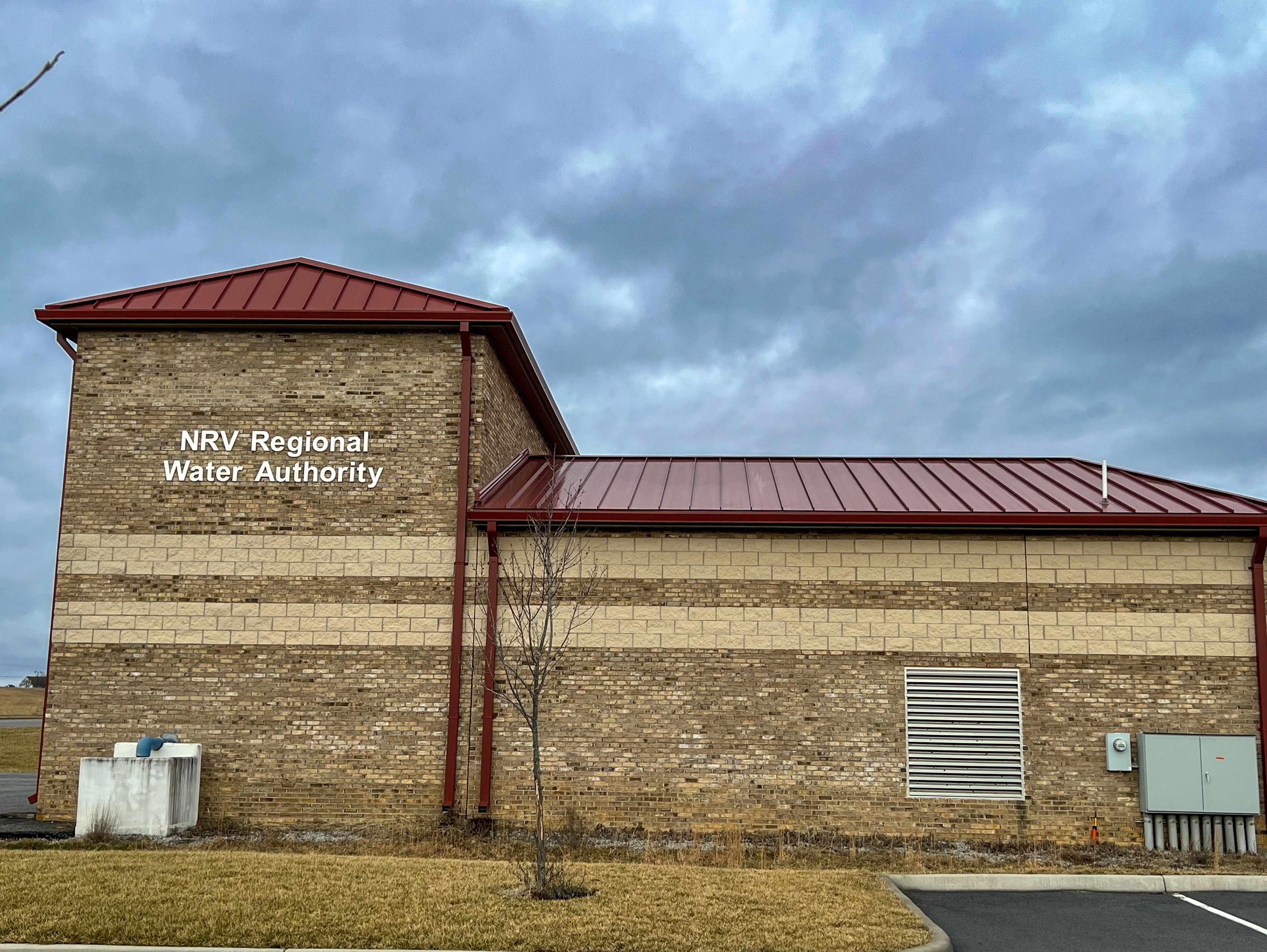
The NRV Regional Water Authority building in Christiansburg, Va., on Jan. 30, 2023. The building helps to supply clean water to the Christiansburg area. Photo Credit: James Tyler Ennis

Residents of the New River Valley need to be aware of potential unregulated contaminants in their tap water with recent reports of ‘forever chemicals’ in the nearby Roanoke River.

According to WVTF, tests from the Western Virginia Water Authority in December 2022 confirmed that potentially harmful ‘forever chemicals,’ also known as PFAS, are still present in the Roanoke River after the initial findings in August 2022. Polyfluoroalkyl substances (PFAS) are manufactured organic chemicals that have become pervasive in U.S. waterways. In fact, 83% of 114 waterways sampled by the Waterkeeper Alliance revealed at least one PFAS compound in harmful quantities.

Meagan Cox, a lifelong resident of the New River Valley, says she wants the local water authority to start testing for PFAS and other unregulated contaminants as a result of these verified findings so close to home.

“Sometimes it’s like, oddly colored, like it will not be as clear as normal. Like I normally drink tap water so I don’t really mind tap water, but just every now and then it has some odd aspects about it that makes me just not want to,” said Meagan.

Drinking high amounts of PFAS may have harmful health effects. The United States Environmental Protection Agency (EPA) reported that peer-reviewed studies link PFAS compound consumption to reproductive effects, developmental effects, increased risk of some cancers, hormone interference, increased cholesterol levels, increased risk of obesity, and risk to the immune system. Once PFAS are ingested, there are no known ways to remove them.

Virginia has not issued any regulations on PFAS in drinking water. Additionally, testing for PFAS is expensive. Without state regulation and funding, PFAS are not often tested for or removed in municipal water supplies. This may be why the NRV Regional Water Authority has yet to conduct any publicly recorded PFAS testing or removal in the New River, the primary source of the NRV’s municipal water.

“When I talk to the public about making decisions about things like lead and bacteria, I say test and then if you need to, treat. Install something to treat the water,” said Erin Ling, with the Virginia Household Water Quality Program. 

“With PFAS, if it is a concern, it is challenging to test for both in the sense that it is expensive and that you may not be able to test for all the compounds that could be there.”

For any NRV residents concerned about PFAS or other contaminants in their tap, Erin Ling says they should use EPA-approved treatments to purify their drinking water. Activated carbon, reverse osmosis, and ion exchange treatments are all effective ways to remove PFAS. Activated carbon filters can be found in most stores and are the cheapest option, while ion-exchange treatments are the most effective. 

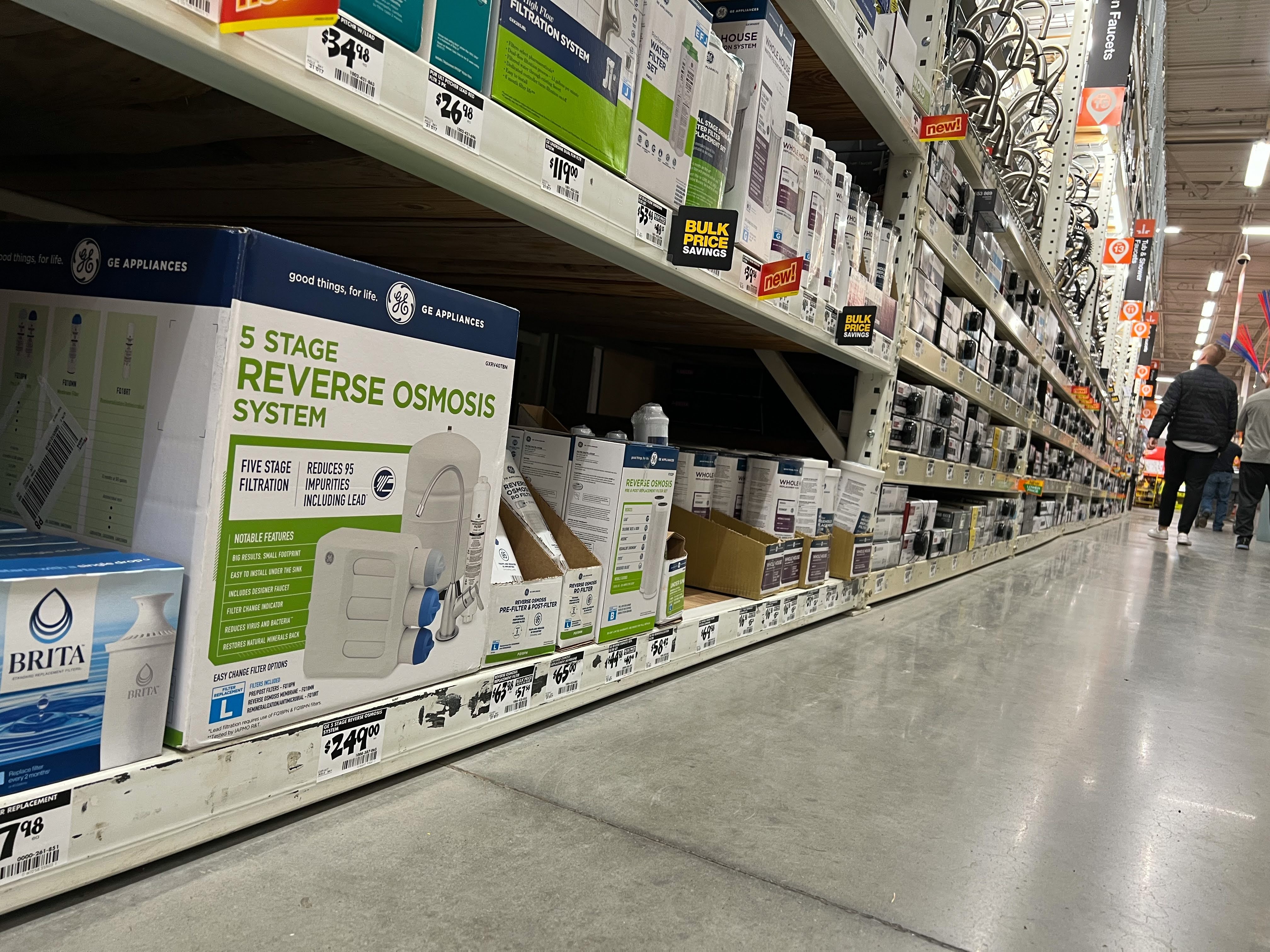
Water treatment systems for sale at Home Depot in Christiansburg, Va., on Jan. 30, 2023. Photo Credit: James Tyler Ennis

The NRV Regional Water Authority is filtering all the other dangerous contaminants, such as lead and bacteria, that are currently regulated by the EPA in Virginia. The EPA estimates that new regulations on PFAS in public water sources will be finalized by the end of 2023. 

LIFE/STYLE: How to eat like an Olympian

by Matt Scopa, Gavin Linden–

Olympic athletes train vigorously to compete in their respective sports but training is only half of what it takes to remain in peak athletic shape. To reach the height of Olympic excellence athletes must also focus on their diets.

Olympic dieting receives coverage whenever the Olympics roll around especially with competitors frequently appearing in ads for large food brands such as Subway and UberEats. This raises the question of what does an Olympic diet actually look like? What kind of foods? What kind of schedule? On this episode of the Newsfeed podcast, reporters Matt Scopa and Gavin Linden will try to shed some light on eating like an Olympian.

LIFE/STYLE: Netflix’s “Squid Games” impact

by Rory Ailor, Jonas Buckberg–

Photo by John Mark-Smith, pexels.com

Netflix released “Squid Games” and it grossed over 111 million viewers in it’s first 2 weeks. This makes the premiere the largest in Netflix’s history, and it is only growing. The show highlights many aspects of society, including the wealth gap and class system, as well as testing how far the human will go for money. The Korean-based thriller was made with many up-and-coming actors, as it was a breakthrough season for many of the main characters.

On this podcast, Rory and Jonas discuss how ‘Squid Games’ is affecting society’s way of thinking about money and greed, as there have been many people playing these games in real life for money, just without a lot of the violence being re-created. They also discuss how the show is causing concerns for many parents, as it is displayed as the show is based on children’s games, but it has a lot of violence and gore.

LIFE/STYLE: Spring is in the air, and it brought friends

Photo by Ramaz Bluashvili from Pexels

by Brandon Alimanestiano, Mason Gorelick–

Spring is finally back on the East coast and more importantly in Blacksburg, where residents are taking their lives back outside–masks on. Virginia Tech Students are taking back the Drillfield with the usual spring activities — showing up in the latest pandemic-inspired fashion trends. However, while students rejoice in the warmth, a looming annoyance is set to emerge.

On this Life/Style podcast episode, Brandon and Mason discuss some of the latest trends in mask fashion, and how creative they can become when using them as a style aid. Then, the two co-hosts take a turn and talk about the downside to the warmth: flying insects getting everywhere, and the impending doom of 17-year cicadas coming soon.

LIFE/STYLE: “Cancel Culture”

by Ian Hatcher, Meredith Topian –

Photo via pexel.com

“Cancel Culture” is a new phenomenon in which a person is effectively boycotted in response to some allegation. Since first popping up on social networking sites around 2017 the term has picked up major traction. In most instances where an individual is cancelled they are usually high profile celebrities. David Dobrik is latest in a long line to be cancelled, and the YouTube star has lost nearly all his sponsorships. Celebrities aren’t the only people who can be cancelled and there are multiple instances of normal people being cancelled for resurfacing evidence.

On this Life/Style podcast, Ian and Meredith discuss the origins of “cancel culture” and what it really entails. With this idea becoming more and more commonplace as the day passes they grapple with the implications of this phenomenon.

LIFE/STYLE: Dietary Trends

Image by Daria Shevtsova

by Kyle Graham, Juan Zapata–

A good diet can make a huge impact on somebodies life, but if not done properly, it could actually end up hurting more than it helps. There are many diets out there that if done correctly can greatly improve your health, however there are also many diets out there that make no sense but yet people still try them.

In this edition of the Newsfeed Podcast, Kyle and Juan will cover some of the popular dietary trends, how social media and celebrity influence has an impact, and lastly some of the pros and cons of dieting which includes some of the dangerous diets out there today. Most importantly, they discuss the importance of making sure that you research which diet is best for you.

LIFE/STYLE: Campus ministry life during COVID

Photo on Foter.com

by Jillian Smith, Sarah Wormald–

Virginia Tech’s campus ministries look drastically different amidst Coronavirus complications. For example, Cru, a Christian campus ministry would usually have a large group service in Squires’ Colonial Hall every Thursday night. However, under the current circumstances, Cru is continuing their large group service online, encouraging students to have safe watch parties together.

Another ministry, Baptist Collegiate Ministries (BCM) is meeting in person on Tuesday nights for a socially-distanced, reduced capacity and masked service, similar to how some other ministries and churches in the area are operating.

There are elements of uncertainty when it comes to places and groups of worship during coronavirus, and those who find community in these groups will continue to adapt.