
By Timothy Kwon, science and technology reporter
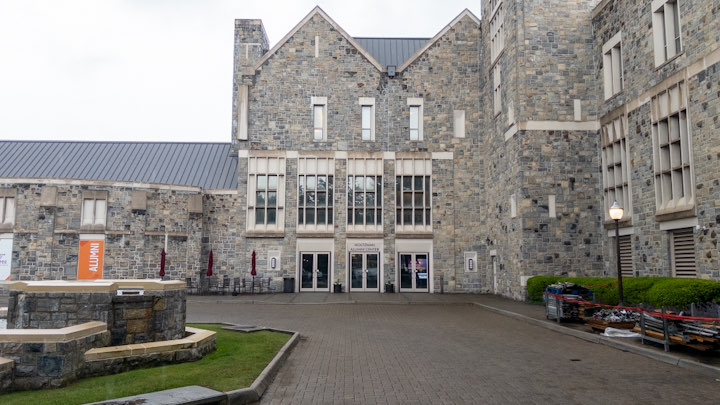
Virginia Tech’s Innovation and Partnerships team helps researchers move inventions from campus labs toward patents, licenses and startups. Photo by Timothy Kwon
On Virginia Tech’s campus, an invention can begin with a professor testing a new chemical compound, an engineering team building a prototype or a graduate student trying to solve a problem no one has answered yet.
At first, the work may look small. It may sit on a lab bench, appear in a data set or exist as a rough prototype. But if the idea has the potential to become useful beyond campus, it can begin a longer journey through invention disclosure, patent protection, licensing and sometimes even a startup company.
That journey is the focus of Virginia Tech Intellectual Properties, known as VTIP, and the university’s Innovation and Partnerships team. Their work sits between university research and the outside world, helping faculty and student researchers turn discoveries into products, services or companies that can reach people beyond Blacksburg.
Virginia Tech ranked No. 59 on the National Academy of Inventors’ 2025 Top 100 U.S. Universities list, with 36 granted U.S. utility patents, according to a March 19 Virginia Tech News article. The ranking gives a broader measure of the research and invention activity happening across campus, but the people behind the process say patents are only one step in moving university ideas toward public use.
Grant Brewer, executive director of LICENSE and president of VTIP, helps manage that transition.
“Taking research at Virginia Tech that has occurred, turning it into a patent, and then working with either a group of people who want to form a company or an existing company to turn that patent into a technology that helps society,” Brewer said.
Brewer said his office handles technology documents, patents, agreements and negotiations. In simple terms, VTIP helps give companies or startups permission to use patented Virginia Tech ideas through licensing agreements. Those agreements can bring money back to the university, inventors and departments, while also helping fund future patents.
For Brewer, a patent is not a trophy. It is a tool.

Grant Brewer. Photo courtesy of Virginia Tech
“A patent is a way to make an asset or an idea tangible and make that idea and that asset investable so that it can turn into something that can help people.” — Grant Brewer
That distinction matters because universities do not usually manufacture products themselves. A chemistry professor may discover a possible medical compound, but the university is not going to build a pharmaceutical company around it alone. An engineering team may design a battery technology, but the university is not going to mass-produce batteries.
Instead, the university often needs a company, startup or industry partner willing to invest time, money and risk into development. Patents can give those partners the protection they need to make that investment.
Brewer used the example of a possible cancer drug. A lab may develop a compound that shows promise, but turning that compound into an approved therapy can require years of research, clinical trials, manufacturing and federal approval. Without a patent, a company may have little reason to spend that money because another competitor could copy the compound after the expensive work is finished.
“We file patents because we want our research to end up impacting people in a positive way,” Brewer said.
Virginia Tech’s inventions come from many areas. Brewer said the university sees patents from engineering, chemical engineering, electrical engineering, mechanical engineering, life sciences, medical devices, drugs and drug delivery. The work can connect to major companies, startups or local products people might recognize in Blacksburg.
Some examples are highly technical. Others are easier to spot. Brewer pointed to Hokie Lager, a Virginia Tech-branded beer created through a deal involving a recipe from the food science program and a local brewery. He also mentioned battery technologies, biodegradable feminine hygiene products, cancer therapies, wheat and soybean varieties, pork industry vaccines and exoskeletons for workers who perform repetitive heavy lifting.
Those examples show the range of innovation at Virginia Tech, but Brewer said the road from research to product is rarely simple.
“The biggest challenge is the stage of development,” Brewer said. “You can have an idea and that’s great. And then you can even get some money and test your idea in a laboratory and find out that your idea works. But then there’s a long, long way from testing your idea in a laboratory and finding out that it works to having a product package label sitting on a shelf in a store.”
That gap can create tension between researchers and companies. Faculty members may spend years developing an idea, building prototypes, publishing papers and filing patents. A company may still see the same invention as early-stage and risky.
Brewer compared the work of managing university patents to watching a little league baseball game and trying to identify which player might eventually make it to the major leagues.
“They’re showing potential,” Brewer said. “There’s all the signs that they could be great. But they’re years away from making it to the big show.”
That is where LAUNCH: Center for New Ventures becomes important. While LICENSE and VTIP help with patents and licensing, LAUNCH focuses on helping university researchers understand how an invention could become a company or reach a market.
Andrea Hill, associate director of LAUNCH, said many researchers have deep technical knowledge but may not have business development experience. LAUNCH helps fill that gap through funding, training, mentorship, market research and connections to industry or federal partners.
One key resource is the proof-of-concept grant. Hill said the program supported 12 teams this year, each with innovations that had been disclosed with the hope of patent protection and future commercialization.
“The proof-of-concept grant provides $50,000 to the team to help support those entrepreneurial endeavors,” Hill said. “Because the researchers have worked on the technical side, their entire career, and their entire collegiate career as well. And so, they don’t have the business development expertise or acumen in most cases.”
The money can help researchers explore the commercial side of their work. That can include training, market research or support from experts who help them decide whether the invention is best suited for a startup, license or another path into industry.
Hill said strong technology is not enough. Researchers also need to understand whether customers want the product, whether the timing is right and whether the invention can be manufactured.

Andrea Hill. Photo courtesy of Virginia Tech
“Even though you have a great technology, it doesn’t mean that someone’s going to want to buy it.” — Andrea Hill
That is why customer discovery is a major part of the process. Through programs such as NSF I-Corps, researchers can speak with potential customers, competitors and industry contacts to better understand the market. Those conversations can reveal whether the invention solves a problem people are willing to pay to fix.
Hill said one of the biggest gaps between an invention and a product is learning what customers actually need.
“I think the biggest challenge is finding that need and understanding what the customers, what the consumers want,” Hill said.
Manufacturing can be another obstacle. A prototype that works in a lab may not be easy to produce at scale. If a company cannot make the product efficiently, the invention may struggle to survive outside the university.
“You might have the greatest invention since sliced bread, but if you can’t manufacture it easily, you can’t make money or monetize it,” Hill said.
One example Hill pointed to was Fermi Energy, a battery technology startup connected to former Virginia Tech researcher Feng Lin and one of his graduate students. Hill said Lin developed battery technologies at Virginia Tech, disclosed multiple innovations and later formed Fermi Energy after going through university commercialization support.
According to Hill, the company used several resources, including a proof-of-concept grant, support from the Virginia Innovation Partnership Corporation and the Presidential Innovation Postdoc Fellowship Program. The postdoc period became unusually short after the team received a Department of Energy Small Business Innovation Research award, allowing the postdoc to move full time into the startup.
“It was a nice success story,” Hill said. “They’re doing well. They moved the company to Boston. And they’re continually growing.”
For Hill, success is not only measured by revenue or investment. Money matters because startups need resources to survive, but she said the larger goal is to move university research into places where it can help society.
“Getting those out of the lab and into industry so that they can benefit society, in my opinion, is a success,” Hill said.
That idea connects Brewer’s work with patents to Hill’s work with startups. A patent can protect an idea, but protection alone does not create impact. A startup can bring energy and focus to a discovery, but it still needs customers, funding and a product people can use.
Together, the process shows how complicated innovation can be. It is not just a researcher having a breakthrough. It is also paperwork, legal protection, business strategy, mentorship, market testing and risk.
For students and researchers, the path can be difficult because the skills needed in the lab are not always the same skills needed in the market. A scientist may know how to develop a compound, design a battery or build a sensor, but may not know how to talk to customers, pitch investors or form a company.
That is the gap Virginia Tech’s innovation system is trying to bridge.
In the end, the work is not only about patents sitting in a database. It is about whether ideas developed at a public research university can become cancer therapies, safer food systems, cleaner batteries, better medical devices or products people encounter in daily life.
The process can take years, and many inventions will not make it to the market. But for Brewer, the possibility of impact is the reason to keep filing patents, negotiating licenses and helping researchers move forward.
For Hill, the same idea drives the startup side of the process. Success begins when research leaves the lab and finds a use beyond campus.
At Virginia Tech, innovation does not end when an experiment works. That is often where the harder story begins.
 > THE NEWS FEED <