Virginia Tech patents help researchers move discoveries beyond campus

By Timothy Kwon, science and technology reporter
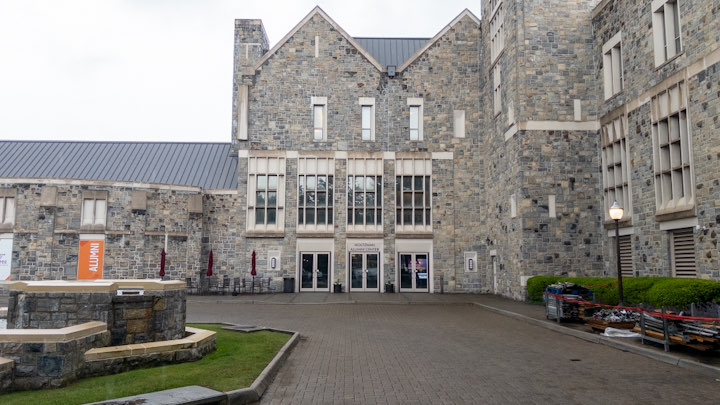
Virginia Tech’s Innovation and Partnerships team helps researchers move inventions from campus labs toward patents, licenses and startups. Photo by Timothy Kwon

On Virginia Tech’s campus, an invention can begin with a professor testing a new chemical compound, an engineering team building a prototype or a graduate student trying to solve a problem no one has answered yet.

At first, the work may look small. It may sit on a lab bench, appear in a data set or exist as a rough prototype. But if the idea has the potential to become useful beyond campus, it can begin a longer journey through invention disclosure, patent protection, licensing and sometimes even a startup company.

That journey is the focus of Virginia Tech Intellectual Properties, known as VTIP, and the university’s Innovation and Partnerships team. Their work sits between university research and the outside world, helping faculty and student researchers turn discoveries into products, services or companies that can reach people beyond Blacksburg.

Virginia Tech ranked No. 59 on the National Academy of Inventors’ 2025 Top 100 U.S. Universities list, with 36 granted U.S. utility patents, according to a March 19 Virginia Tech News article. The ranking gives a broader measure of the research and invention activity happening across campus, but the people behind the process say patents are only one step in moving university ideas toward public use.

Grant Brewer, executive director of LICENSE and president of VTIP, helps manage that transition.

“Taking research at Virginia Tech that has occurred, turning it into a patent, and then working with either a group of people who want to form a company or an existing company to turn that patent into a technology that helps society,” Brewer said.

Brewer said his office handles technology documents, patents, agreements and negotiations. In simple terms, VTIP helps give companies or startups permission to use patented Virginia Tech ideas through licensing agreements. Those agreements can bring money back to the university, inventors and departments, while also helping fund future patents.

For Brewer, a patent is not a trophy. It is a tool.
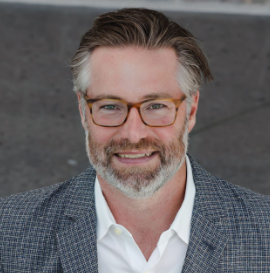
Grant Brewer. Photo courtesy of Virginia Tech

“A patent is a way to make an asset or an idea tangible and make that idea and that asset investable so that it can turn into something that can help people.” — Grant Brewer

That distinction matters because universities do not usually manufacture products themselves. A chemistry professor may discover a possible medical compound, but the university is not going to build a pharmaceutical company around it alone. An engineering team may design a battery technology, but the university is not going to mass-produce batteries.

Instead, the university often needs a company, startup or industry partner willing to invest time, money and risk into development. Patents can give those partners the protection they need to make that investment.

Brewer used the example of a possible cancer drug. A lab may develop a compound that shows promise, but turning that compound into an approved therapy can require years of research, clinical trials, manufacturing and federal approval. Without a patent, a company may have little reason to spend that money because another competitor could copy the compound after the expensive work is finished.

“We file patents because we want our research to end up impacting people in a positive way,” Brewer said.

Virginia Tech’s inventions come from many areas. Brewer said the university sees patents from engineering, chemical engineering, electrical engineering, mechanical engineering, life sciences, medical devices, drugs and drug delivery. The work can connect to major companies, startups or local products people might recognize in Blacksburg.

Some examples are highly technical. Others are easier to spot. Brewer pointed to Hokie Lager, a Virginia Tech-branded beer created through a deal involving a recipe from the food science program and a local brewery. He also mentioned battery technologies, biodegradable feminine hygiene products, cancer therapies, wheat and soybean varieties, pork industry vaccines and exoskeletons for workers who perform repetitive heavy lifting.

Those examples show the range of innovation at Virginia Tech, but Brewer said the road from research to product is rarely simple.

“The biggest challenge is the stage of development,” Brewer said. “You can have an idea and that’s great. And then you can even get some money and test your idea in a laboratory and find out that your idea works. But then there’s a long, long way from testing your idea in a laboratory and finding out that it works to having a product package label sitting on a shelf in a store.”

That gap can create tension between researchers and companies. Faculty members may spend years developing an idea, building prototypes, publishing papers and filing patents. A company may still see the same invention as early-stage and risky.

Brewer compared the work of managing university patents to watching a little league baseball game and trying to identify which player might eventually make it to the major leagues.

“They’re showing potential,” Brewer said. “There’s all the signs that they could be great. But they’re years away from making it to the big show.”

That is where LAUNCH: Center for New Ventures becomes important. While LICENSE and VTIP help with patents and licensing, LAUNCH focuses on helping university researchers understand how an invention could become a company or reach a market.

Andrea Hill, associate director of LAUNCH, said many researchers have deep technical knowledge but may not have business development experience. LAUNCH helps fill that gap through funding, training, mentorship, market research and connections to industry or federal partners.

One key resource is the proof-of-concept grant. Hill said the program supported 12 teams this year, each with innovations that had been disclosed with the hope of patent protection and future commercialization.

“The proof-of-concept grant provides $50,000 to the team to help support those entrepreneurial endeavors,” Hill said. “Because the researchers have worked on the technical side, their entire career, and their entire collegiate career as well. And so, they don’t have the business development expertise or acumen in most cases.”

The money can help researchers explore the commercial side of their work. That can include training, market research or support from experts who help them decide whether the invention is best suited for a startup, license or another path into industry.

Hill said strong technology is not enough. Researchers also need to understand whether customers want the product, whether the timing is right and whether the invention can be manufactured.
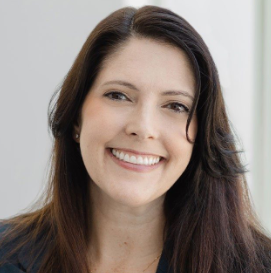
Andrea Hill. Photo courtesy of Virginia Tech

“Even though you have a great technology, it doesn’t mean that someone’s going to want to buy it.” — Andrea Hill

That is why customer discovery is a major part of the process. Through programs such as NSF I-Corps, researchers can speak with potential customers, competitors and industry contacts to better understand the market. Those conversations can reveal whether the invention solves a problem people are willing to pay to fix.

Hill said one of the biggest gaps between an invention and a product is learning what customers actually need.

“I think the biggest challenge is finding that need and understanding what the customers, what the consumers want,” Hill said.

Manufacturing can be another obstacle. A prototype that works in a lab may not be easy to produce at scale. If a company cannot make the product efficiently, the invention may struggle to survive outside the university.

“You might have the greatest invention since sliced bread, but if you can’t manufacture it easily, you can’t make money or monetize it,” Hill said.

One example Hill pointed to was Fermi Energy, a battery technology startup connected to former Virginia Tech researcher Feng Lin and one of his graduate students. Hill said Lin developed battery technologies at Virginia Tech, disclosed multiple innovations and later formed Fermi Energy after going through university commercialization support.

According to Hill, the company used several resources, including a proof-of-concept grant, support from the Virginia Innovation Partnership Corporation and the Presidential Innovation Postdoc Fellowship Program. The postdoc period became unusually short after the team received a Department of Energy Small Business Innovation Research award, allowing the postdoc to move full time into the startup.

“It was a nice success story,” Hill said. “They’re doing well. They moved the company to Boston. And they’re continually growing.”

For Hill, success is not only measured by revenue or investment. Money matters because startups need resources to survive, but she said the larger goal is to move university research into places where it can help society.

“Getting those out of the lab and into industry so that they can benefit society, in my opinion, is a success,” Hill said.

That idea connects Brewer’s work with patents to Hill’s work with startups. A patent can protect an idea, but protection alone does not create impact. A startup can bring energy and focus to a discovery, but it still needs customers, funding and a product people can use.

Together, the process shows how complicated innovation can be. It is not just a researcher having a breakthrough. It is also paperwork, legal protection, business strategy, mentorship, market testing and risk.

For students and researchers, the path can be difficult because the skills needed in the lab are not always the same skills needed in the market. A scientist may know how to develop a compound, design a battery or build a sensor, but may not know how to talk to customers, pitch investors or form a company.

That is the gap Virginia Tech’s innovation system is trying to bridge.

In the end, the work is not only about patents sitting in a database. It is about whether ideas developed at a public research university can become cancer therapies, safer food systems, cleaner batteries, better medical devices or products people encounter in daily life.

The process can take years, and many inventions will not make it to the market. But for Brewer, the possibility of impact is the reason to keep filing patents, negotiating licenses and helping researchers move forward.

For Hill, the same idea drives the startup side of the process. Success begins when research leaves the lab and finds a use beyond campus.

At Virginia Tech, innovation does not end when an experiment works. That is often where the harder story begins.
Artemis II mission update

By Hunter Grove, Jacob Jenkins and Timothy Kwon, science and technology reporters

In this episode of The News Feed NRV Podcast, Hunter Grove, Jacob Jenkins and Timothy Kwon discuss Artemis II, NASA’s first crewed mission around the Moon in more than 50 years, and why it marks a major step in the future of human space exploration. Featuring insight from Virginia Tech aerospace and ocean engineering professor Dr. Samantha Parry Kenyon, the podcast looks at the mission’s significance, its technology, and how it may shape future lunar and Mars missions.

How Virginia Tech students bring ideas to life

By Timothy Kwon, science and technology reporter

Virginia Tech’s Prototyping Studio gives students access to tools like 3D printers and fabrication equipment to turn ideas into real projects. This story looks at how the space supports creativity, experimentation, and hands-on learning across campus.

Inside Virginia Tech’s Drone Park: training drones safely on campus

By Timothy Kwon, science and technology reporter

A short video news package from Virginia Tech’s Drone Park, where students and researchers practice flying in a controlled, netted flight space. Through interviews with the Drone Park manager, a student intern, a senior emergency coordinator and a drone journalism professor, the story highlights how safety rules and training shape responsible drone use on campus.

Telehealth continues to expand access to care in the New River Valley

By Timothy Kwon, science and technology reporter

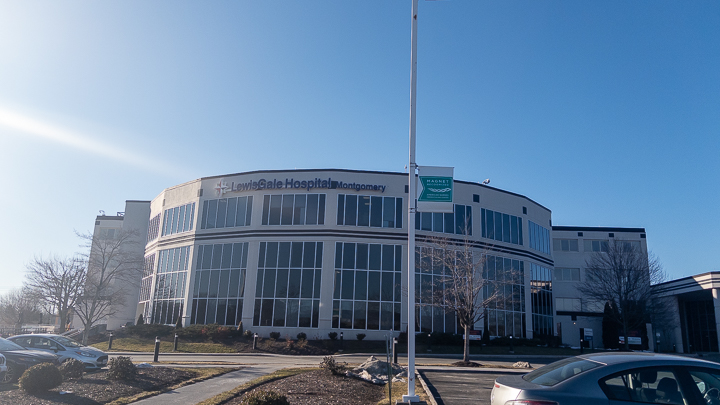
LewisGale Hospital Montgomery in Blacksburg provides in-person and telehealth services to patients across the New River Valley. Photo credited by Timothy Kwon.

For many residents of the New River Valley, a doctor’s appointment no longer requires a long drive through mountain roads or hours away from work. Telehealth has become a lasting part of rural health care, offering patients across the region more flexible access to medical and mental health services.

While telehealth use surged during the COVID-19 pandemic, local providers say it has evolved into a permanent tool for connecting rural patients with care. In communities such as Giles, Floyd and Pulaski counties, distance and transportation remain significant barriers to in-person visits.

At LewisGale Hospital Montgomery, telehealth is now integrated into outpatient workflows across the network. Rhonda Whaling, healthcare provider of LewisGale community outreach, said virtual care helps eliminate the burden of travel for many patients.

“Telehealth cuts out the long drive,” Whaling said. “For a lot of rural patients, it turns a half-day trip into a focused visit from home.”

Whaling said many telehealth appointments involve follow-ups, check-ins and specialty visits that do not require a hands-on exam. Patients still follow a structured process, checking in and joining secure video visits much like they would wait for a provider in a traditional office setting.

“The biggest benefit is simple access,” Whaling said. “It lowers the life cost of getting care..”

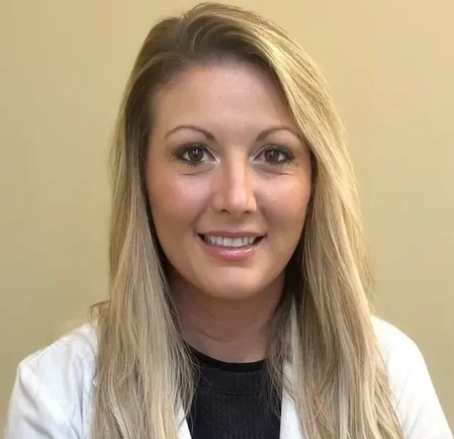
Taryn Wilson is a physician assistant who provides clinical assessments, tests, and prescriptions at Blacksburg Psychiatry. Photo courtesy of Blacksburg Psychiatry.

Mental health services have become one of the most common and effective uses of telehealth in the region. At Blacksburg Psychiatry, physician assistant Taryn Wilson said virtual visits help patients remain consistent with treatment.

“We use telehealth as a practical way to keep people connected to care,” Wilson said. “Telehealth helps us reach people who would otherwise skip care because the drive is too hard.”

Wilson said psychiatric assessments, medication management and routine follow-ups can often be handled effectively through video when clinically appropriate. That flexibility is particularly valuable in rural communities, where access challenges extend beyond provider availability.

“In the New River Valley, access isn’t just about whether a provider exists. It’s whether someone can realistically get to the appointment,” Wilson said. “It turns ‘I can’t make it’ into ‘I can show up.’”

For providers, consistency is one of the biggest advantages. When patients can attend appointments more regularly, treatment plans can be adjusted more quickly and progress can be monitored more closely.

“Better access usually means better follow-through and better outcomes,” Wilson said.

However, telehealth does not eliminate every barrier. Both providers emphasized the ongoing impact of the digital divide in rural communities. Spotty broadband access, limited data plans and lack of private space for appointments can still limit participation.

“The digital divide is real,” Whaling said. “Internet and technology are still the big challenges.”

Wilson also said that unstable internet connections can disrupt visits and that some situations require in-person care.

“Telehealth expands access, but it doesn’t erase broadband and privacy barriers,” Wilson said.

Clinically, providers stress that telehealth cannot replace all services. Physical exams, lab work and emergency care must still take place in person. In psychiatry, safety planning also requires careful attention during virtual sessions.

“We have to know where a client is located during a visit and have a plan if they’re in crisis,” Wilson said.

Telehealth policies continue to evolve at both state and federal levels. During the pandemic, reimbursement rules expanded to support virtual visits. In Virginia, Medicaid continues to update telehealth guidance, including provisions for live video and certain audio-only services in specific circumstances.

Whaling said telehealth has transitioned from an emergency solution to a long-term component of care delivery.

“Telehealth went from temporary fix to normal option,” Whaling said. “Now it’s about using it wisely.”

Looking ahead, both providers expect telehealth to remain part of a hybrid model that blends virtual and in-person services.

“I think telehealth will keep expanding, especially for specialties that are harder to access in rural areas,” Whaling said.

Wilson said the future of rural health care will likely focus on matching the format of care to the needs of the patient.

“Telehealth won’t replace clinics,” Wilson said. “But it will stay a key bridge between visits and help rural patients stay connected.”

In a region where geography has long shaped access to health care, that bridge may continue to narrow the distance between providers and the communities they serve.

How AI is changing everyday life at Virginia Tech and higher education

By Timothy Kwon, science and technology reporter

Artificial intelligence is becoming a regular part of daily life at Virginia Tech, affecting how students complete assignments, how professors teach classes and how research is conducted. From AI-powered writing tools to software that generates computer code, the technology is increasingly used across campus and is raising questions about learning, ethics and the future of higher education.

To better understand how AI is changing everyday academic life and what it means for students, Chris North, a professor of computer science at Virginia Tech, discussed how AI is already being used on campus, how it is influencing teaching and coursework and why adaptability will be important for students entering an AI-driven workforce.

This interview has been edited for length and clarity.

How do you define artificial intelligence for people who use it every day but don’t have a technical background?

Artificial intelligence is a broad term, but in general it refers to designing computer systems that behave in intelligent ways. These systems rely on large amounts of data and past experience to guide how they respond to users.

A common example is large language models like ChatGPT. These tools are trained on massive amounts of text from across the internet, which allows them to produce responses that sound realistic. They work by learning patterns from how people communicate and then using those patterns to generate new responses.

How has AI changed everyday academic life for students and faculty at Virginia Tech?

It affects different people in different ways. One example from my own experience involves mentoring graduate students who are writing and publishing research papers. Many of those students are international students, and English is not their first language.

In the past, I spent a lot of time correcting grammar and improving the readability of their drafts. That was time-consuming and not really the main focus of my job, which is to evaluate the quality of the research. Over the past few years, language models have helped take on that proofreading role. Now, when students submit drafts, the writing is usually clearer, and I can focus more on the science rather than grammar.

From the students’ perspective, AI can also help them think more critically about their writing. Some students use AI tools to summarize their work. If the summary does not match what they intended to say, it shows them that their writing needs improvement before they submit it.

How is AI changing the way professors teach and design coursework in higher education?

AI has forced professors to rethink traditional assignments. Many quizzes, homework problems and programming exercises can now be completed easily using AI tools. That raises questions about what students are actually learning if the technology can generate answers on its own.

In computer science, it is still important for students to learn the basics of programming. AI can write good code, but it can also write bad code. Students need to understand how to evaluate code, fix problems and think about issues like security.

The challenge for educators is figuring out how to teach these skills in a way that feels meaningful. Some professors are experimenting with assignments that allow students to use AI for an initial draft and then require them to critique or improve the work. The goal is to use AI as a tool while still encouraging critical thinking.

How should universities balance innovation with concerns about academic integrity, privacy and bias in AI systems?

There are still many unknowns. Higher education is very much in a trial-and-error phase when it comes to AI. Academic integrity is a major concern, especially when students can submit AI-generated work without fully understanding it.

Creating assignments that encourage thoughtful use of AI is difficult, and grading that type of work takes more time. In the past, many assignments relied on automated grading systems that simply checked whether an answer was correct. Evaluating students’ reasoning and reflection is more subjective.

Bias is another concern. AI systems may push users toward certain ways of thinking or problem-solving that are not always ideal. Universities are still figuring out how to address these issues, and it will likely take time to understand the long-term effects.

What advice would you give students who are worried that AI might replace certain jobs or career paths?

Concerns about AI are understandable, but they are not new. Similar worries existed during the rise of internet search engines like Google. At the time, people feared those tools would destroy jobs or harm society. Instead, they changed industries and created new opportunities.

AI will likely change jobs rather than eliminate them entirely. Some roles may disappear, but new ones will be created. The most important thing for students is adaptability. Education should focus on helping students learn how to adjust, be creative and use new tools as technology continues to evolve.

That is why banning AI outright in education is not helpful. Students need to learn how to use these tools responsibly so they are prepared for an AI-driven world.

Looking ahead five to 10 years, how do you expect AI to further change college campuses?

I am not very good at predicting the future, but I think mindset matters more than specific predictions. Approaching AI with fear is not productive. Instead, students and educators should view it as an opportunity to do new and innovative things.

AI will continue to develop quickly, and success will depend on how well people adapt. Universities should focus on teaching creativity, critical thinking and flexibility so students can take advantage of new technologies as they emerge.