
By Andrew Honaker, Arts, Culture and Sports reporter
The structure of college athletics is shifting rapidly, and programs like Virginia Tech are already feeling the impact.
On any given weekend in Blacksburg, the atmosphere around college sports still looks familiar. Fans pack into Lane Stadium, traditions remain intact, and the pageantry that defines college athletics continues to draw attention. But beneath that surface, the system that has long defined college sports is undergoing one of the most significant transformations in its history.
From changes in player movement to the growing influence of name, image and likeness (NIL) deals, the traditional model of college athletics has been replaced by something far less predictable. What was once a system defined by stability, continuity, and clearly defined rules has evolved into one shaped by financial competition, shifting regulations, and constant roster turnover.

(Courtesy: Triumph NIL)
Now, with federal involvement entering the conversation, the future of college athletics faces even more uncertainty.
In April 2026, President Donald Trump signed an executive order aimed at stabilizing college athletics amid growing concerns over NIL, transfers and financial imbalance. The White House described the current system as a “chaotic state of affairs,” driven by inconsistent rules and an “out-of-control financial arms race” that threatens both universities and non-revenue sports.
The order represents one of the most direct federal efforts to address the evolving structure of college athletics, a system that many believe has outgrown its traditional governance model. While college sports have historically been governed by organizations like the NCAA, a combination of legal challenges, state-level legislation and financial pressures has weakened centralized control.
Bill Roth, the longtime radio voice of Virginia Tech football and a Sports Media and Analytics professor, said the transformation of college athletics has already been dramatic, even before federal involvement became part of the conversation.
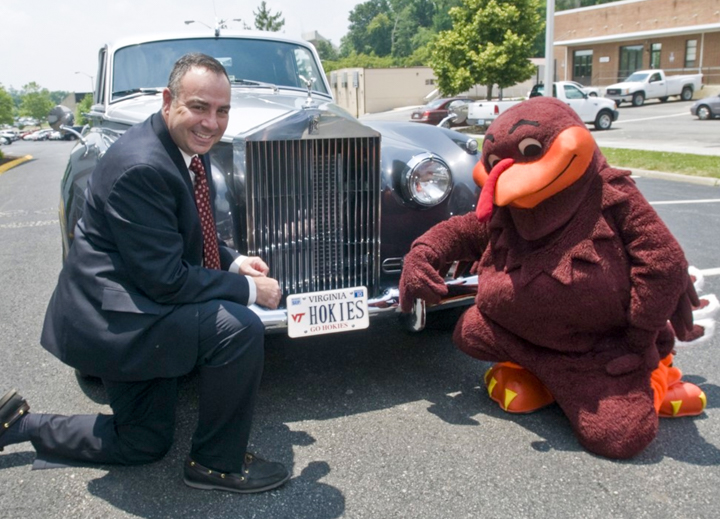
(Courtesy: Bill Roth)
“The guardrails that had been in place for years no longer exist, and the money flowing directly to athletes has increased exponentially“
Bill Roth
Over the past several years, a series of court rulings have reshaped the legal framework surrounding college athletics. Decisions at both the federal and state levels have challenged long-standing NCAA restrictions, particularly in areas related to compensation and eligibility. As a result, schools have been forced to adapt quickly to a system that is still evolving in real time.
Recent policy changes have weakened many of the traditional structures that once governed recruiting, player movement and financial distribution. Without those guardrails, schools are now operating in an environment where competitive advantage is often tied directly to financial resources.
At the same time, the lack of consistent oversight has left the system without a clear governing structure.
“The business of college athletics can’t govern itself, but the role of the federal government isn’t to fix bad business models,” Roth said.
That tension — between a system that lacks internal control and uncertainty around external regulation — is at the center of the current debate surrounding federal involvement in college athletics.
While those changes are happening at a national level, their effects are already being felt at Virginia Tech, where programs are adjusting to new realities in recruiting, roster management and financial planning.
Evan Hughes, the play-by-play broadcaster for multiple Virginia Tech sports, said two developments have driven much of that change: the transfer portal and NIL.
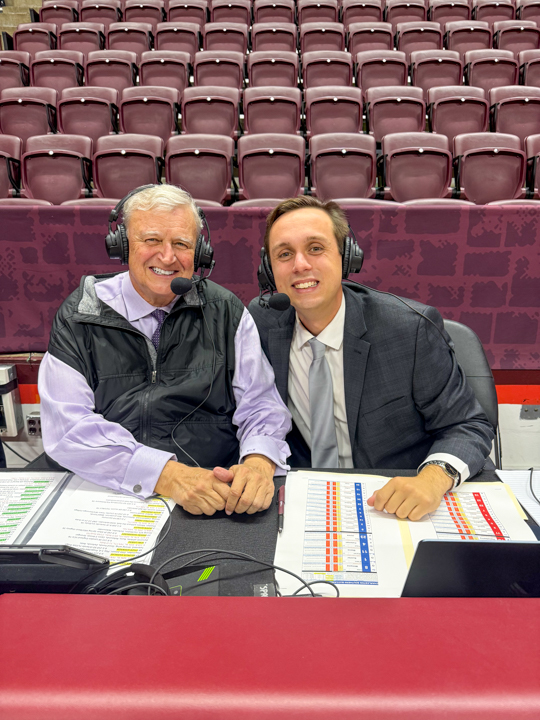
(Courtesy: Virginia Tech Athletics)
“The two biggest changes in college athletics over the last few years have been the transfer portal and NIL,” he said. “It’s been unique to see how both sometimes go together.”
In the past, roster stability was a defining characteristic of college sports. Players typically developed within a program over several years, and coaching staffs could build long-term systems around returning athletes. That model has shifted dramatically.
The transfer portal has created a system where player movement is more fluid than ever before, allowing athletes to change programs with fewer restrictions. At the same time, NIL opportunities have introduced financial considerations into those decisions, adding another layer of complexity.
Those shifts have directly influenced how teams are built and maintained from year to year, creating new challenges for programs trying to balance competitiveness with financial limitations.
“Teams only have a certain amount of money to work with NIL-wise, and that varies by sport,” he said. “That impacts how rosters are built and how teams retain players each offseason.”
As a result, roster continuity — once a cornerstone of college athletics — has become increasingly difficult to maintain. Coaching staff must now navigate not only recruiting and player development, but also retention, financial allocation and external competition for talent.
Financial differences between programs have only intensified that issue, creating a growing divide across the college sports landscape.
“The rich get richer, and smaller programs can’t always keep their best players because it’s essentially free agency every year.”
Evan Hughes
That disparity is particularly significant for programs like Virginia Tech, which must compete against schools with larger financial resources and more established NIL infrastructures. While Virginia Tech remains competitive within its conference, the broader national landscape has shifted in ways that make sustained success more difficult to maintain.
Adjustments are already underway at Virginia Tech, where leadership has begun to respond to the changing environment.
“We’ve already seen it,” Roth said. “The Board of Visitors has enacted major changes in the last few months to adjust how athletics operates at Virginia Tech.”
Those changes reflect a broader shift across college athletics, as schools attempt to adapt to a system that continues to evolve without a clear long-term framework. From restructuring budgets to exploring new revenue streams, athletic departments are being forced to think differently about how they operate.
One of the biggest questions moving forward is sustainability — a challenge that extends beyond individual programs.
“Where the revenue will come from at most schools, including Virginia Tech, is the biggest challenge,” he said.
As expenses increase and competition intensifies, many programs are relying more heavily on external revenue sources. Media rights, in particular, have become a central driver of financial growth in college athletics.
The increasing reliance on media revenue, particularly from television deals, continues to shape the direction of college sports. Expanded playoff formats, conference realignment and increased media exposure have all contributed to a system where financial success is closely tied to visibility and broadcast value.
“Media rights are paying for all of this, and the chase for additional revenue will determine the ‘haves’ and ‘have nots’ of the next generation of college athletics,” he said.
That divide — between programs with access to significant media revenue and those without — is expected to widen in the coming years, further reshaping the competitive landscape.
As financial stakes continue to rise, the potential for federal involvement adds another layer of complexity.
The executive order outlines possible changes to eligibility rules, transfer limits and NIL regulation, all aimed at creating a more standardized system across college athletics. However, questions remain about how those changes would be implemented and whether they will address the underlying issues facing the sport.
Uncertainty surrounding those changes is already influencing how programs operate.
From roster decisions to long-term planning, athletic departments are being forced to adapt in real time while navigating a system that continues to shift beneath them. Without clear, consistent guidelines, schools are left to make decisions in an environment where rules may change at any moment.
At the same time, the way college athletics is covered has also evolved.
“It’s unique now to see college sports covered like professional sports, with deals being negotiated openly and buyouts becoming part of the conversation,” Hughes said.
That shift reflects a broader transformation in how college athletics is perceived. As financial elements become more visible, the line between amateur and professional sports continues to blur, changing both how the games are played and how they are discussed.
For programs like Virginia Tech, the challenge moving forward will be navigating that new reality while maintaining competitiveness and stability in an increasingly complex system.
With federal involvement now part of the conversation, the future of college athletics remains uncertain — shaped by financial pressures, evolving policies and the ongoing search for a sustainable model.
For now, the only certainty is that the system continues to change.

