
Emma Duncan, education reporter
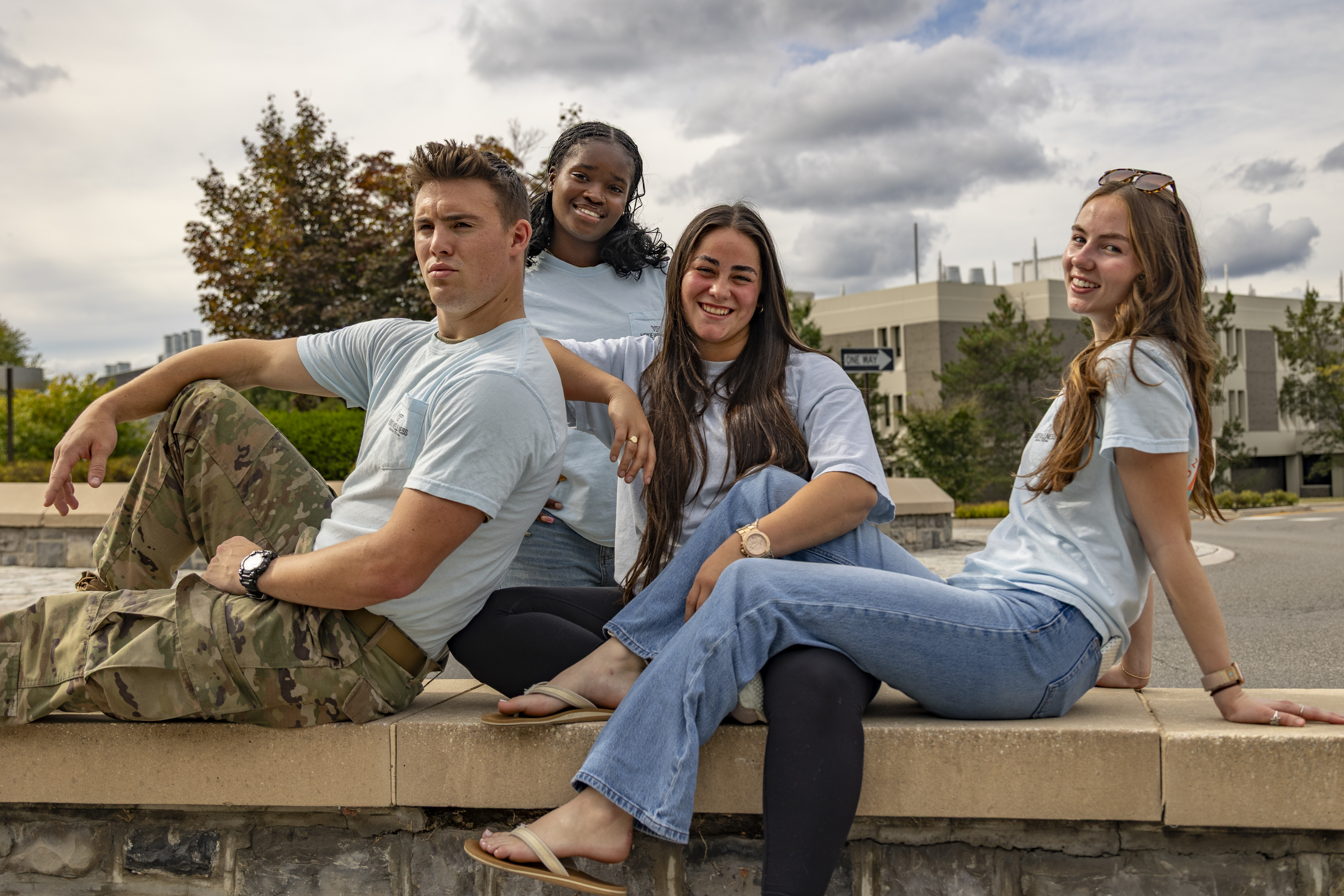
In a course built on community rather than lectures, Hokies are helping their peers navigate something many college students struggle with: loneliness. Through The Connection Project, student facilitators lead discussions on belonging and well-being in an effort to make the transition to college feel less isolating.
First created by Hoos Connected at the University of Virginia, The Connection Project responds to a mental health issue plaguing college campuses in the 21st century. According to the UVA website, “college campuses are dealing with an epidemic of loneliness and depression among their students, with overtaxed student counseling centers in need of low-intensity preventative interventions.”
Studies show that college-aged students are more likely to be vulnerable with peers before they seek mental health support from older adults. This idea was further proven by The Connection Project, as students saw a substantial increase in “sense of school membership” from pre- to post-program surveys.
As this research was published, UVA created opportunities to bring the program to other campuses. So far, The Connection Project has spread to Virginia Tech, Georgetown University, Pennsylvania State University and Arizona State University.
In Blacksburg, The Connection Project is hosted by Hokie Wellness. Previously, the department offered the FEELS Support Circle every other week. Also led by students, the meeting was less structured and allowed students to pop in and out as they pleased. As a result, the program saw a lack of engagement and student retention.
“We realized that students are trying to find belonging in these spaces we’re offering, but it’s not getting the engagement, which prevented us from solving the problem,” said Colleen Driscoll, assistant director of mental health initiatives for Hokie Wellness.
In summer 2023, the Hokie Wellness team attended a training with UVA, and The Connection Project was launched for students to enroll in spring 2024.
“I think the time worked out really well, especially since we were just a few years post-COVID, so we were seeing those spikes in loneliness, isolation and lack of belonging,” Driscoll said. “All of our programs are evidence-based, but I think the evidence behind this one shows that our students truly enjoy it and want more. What we’re doing is listening to the students and hearing, ‘We don’t feel like we belong, and you coming in and doing an hour lecture on belonging isn’t going to help us, but actually investing in this space of let’s create spaces for connection does help.’”
Students enroll in The Connection Project for a number of reasons. Most notably, first-year and some second-year students struggle to balance making friends early with sustaining those relationships long term. Others experience a fear of rejection. Some are generally nervous to introduce themselves to new people. As members of a technology-driven generation, many students (especially from 2020-2022) faced challenges socializing in person rather than online.
The Connection Project is registered as a one-credit course in two departments: Human Development and Family Science and Engineering Education. The former is open to all majors and years, while the latter is only offered for first-year engineering students. Driscoll oversees The Connection Project overall, but especially the HDFS section. Maia Greene-Havas, academic and career advisor for engineering education, oversees the engineering education section.
“Engineering is a unique college at Virginia Tech. The courses are pretty challenging and taught very differently than what students are used to coming from high school or community college,” Greene-Havas said. “I think it can be a bit daunting for first-year students because it takes time to figure out how much time they need to put toward studying. They are susceptible to higher levels of loneliness.”
While faculty and staff oversee the course, much of The Connection Project is driven by student facilitators who guide discussions and create space for vulnerable conversations. Most facilitators were participants in The Connection Project first, and because of the impact it had on their lives, they chose to become facilitators. For students who simply have a passion for creating space for their peers, they participate in The Connection Project as the first part of their training.
The second part of peer mentor training is learning what it takes to lead a group.
“We work on learning skills like radical kindness, vulnerable leadership, boundaries and emotion management,” Driscoll, who leads peer mentor training, said. “If you’re in a group and somebody says something out of pocket, how do we make sure that we’re not judging that person? We talk about how you acknowledge somebody when they’ve shared something really difficult and how you make sure they feel seen, heard and validated. We also help our facilitators understand that while they’re leading the group, they’re still a part of the group.”
Finally, students revisit the curriculum they once experienced as participants, and perfect how to present those concepts as facilitators.
Sophomore and human development major Jocelyn Hall first enrolled in The Connection Project during her freshman year after hearing it could support students interested in counseling careers. As she adjusted to college life and navigated relationship challenges, she said the course helped her feel less isolated while teaching her mindfulness.
“Since I’ve been a participant, I’ve felt more connected to my community,” Hall said. “My facilitators encouraged me to get involved and as a result, I try to do everything and anything. I got back into colorguard and joined the indoor team. The next semester, I became a Connection Project facilitator, a mental health initiatives peer educator and an orientation intern with New Student and Family Programs. I’ve felt more confident in knowing I deserve happiness as much as I want others to.”
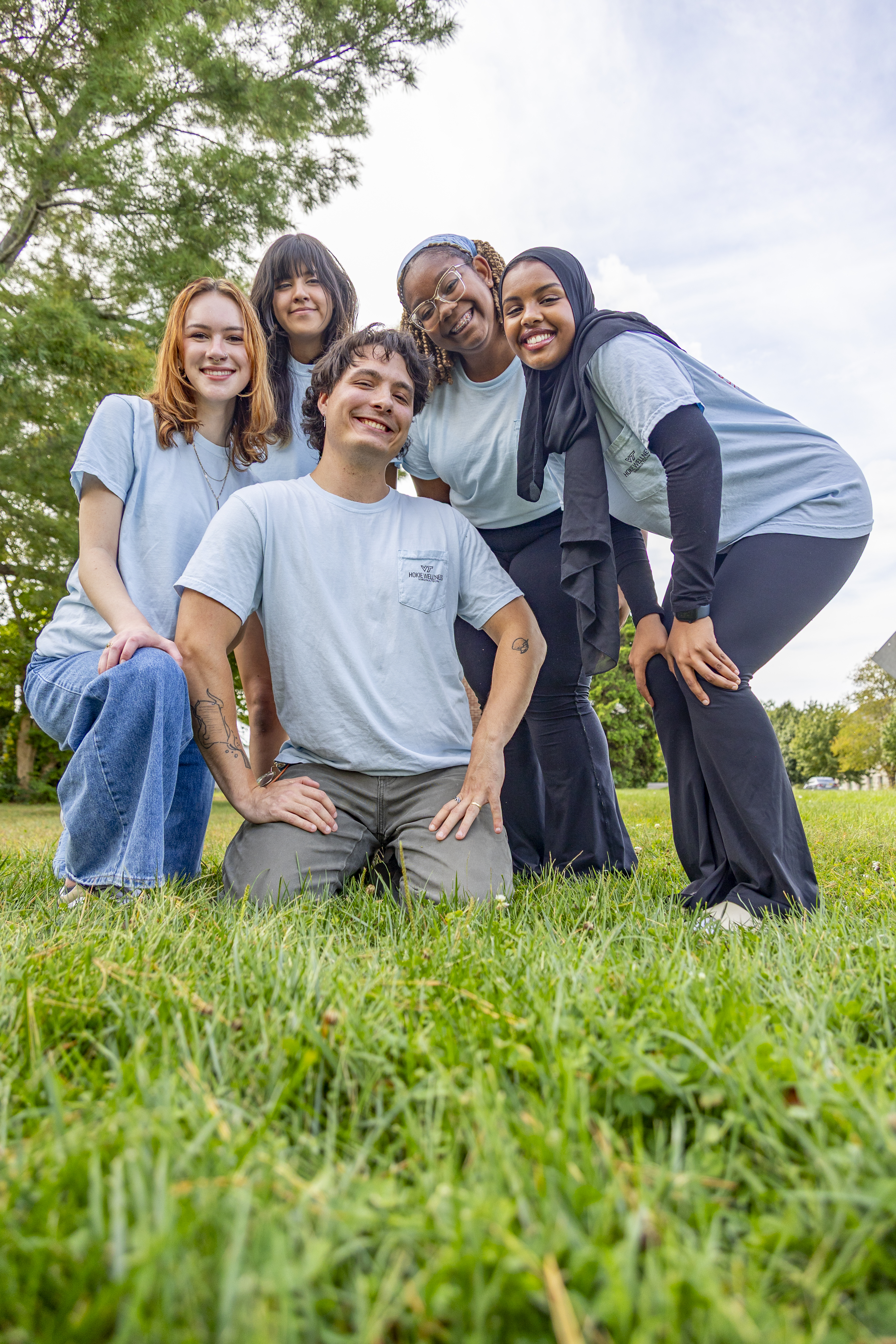
Serving as a facilitator has allowed Hall to help other students feel heard and connected. As she gains real-world experience in her major, she also gains a sense of impact on her campus community.
“It builds an environment rooted in comfort and reliability. The power difference between a professor and student normally creates a barrier to openness and honesty due to expectations. Those same pressures are often not there in this program,” Hall said. “In my most recent group, I had two participants message me a photo of them hanging out with the message ‘Jocelyn! We miss you. Go connection project for bringing us together.’ It was genuinely the most rewarding experience, knowing that I was able to help these students connect.”
Unlike Hall, senior psychology major Caroline Hopkins was never a participant in The Connection Project before becoming a facilitator. Hopkins initially joined the program last fall for field study credit because of its similarities to counseling work, but after completing facilitator training and leading groups herself, she said she wishes she had discovered the program earlier in her college career.
“I genuinely think my biggest regret as a graduating senior is not getting involved in this program earlier,” Hopkins said. “It has had such a big impact on me and on others who have participated as well.”
Hopkins said the program helped her build relationships across campus while developing skills she hopes to use as a therapist one day. In one session, she recalled watching participants rally around a peer who was struggling with self-confidence. For Hopkins, this moment demonstrated the type of environment The Connection Project aims to create.
“At one point during a group, one of our participants was talking negatively towards herself and multiple participants jumped in to explain why they thought this participant was amazing and a valuable individual,” Hopkins said. “This was truly amazing because it wasn’t prompted by me or my cofacilitator, but was genuinely just participants wanting to make someone else feel better by explaining what they see in her that she might not be able to see in herself.
This conversation was part of the broader Connection Project curriculum. Over the span of 12 weeks, conversations move from lighthearted icebreakers and group games to deeper discussions about conflict, relationships, identity and emotional resilience to gradually increase vulnerability and trust among students.
Driscoll said the course intentionally avoids forcing students into uncomfortable conversations too quickly. Early sessions focus on activities like “speed friending” and games of “Would You Rather?” meant to help participants feel comfortable with one another before tackling more personal topics. By the third week, students discuss concepts like the “masks” people wear in different social settings and how those barriers affect authentic connection.
“If we just sat down and asked those questions, people would not want to be a part of the class because those are big, scary questions,” Driscoll said, “but because we do it through games and activities, students really enjoy it.”
At the end of the experience, data shows that students in both HDFS and engineering education sections experience less loneliness, a decrease in anxiety and depression symptoms and an increase in belonging and self-worth.
“All of our programs are evidence-based, but I think the evidence behind this one shows that our students truly enjoy it and want more,” Driscoll said. “What we’re doing is listening to the students and hearing, ‘We don’t feel like we belong, and you coming in and doing an hour lecture on belonging isn’t going to help us, but actually investing in this space of let’s create spaces for connection does help.’”
As participation in The Connection Project continues to grow, organizers hope to expand the program’s reach across campus. Greene-Havas plans to offer more sections during the fall semesters, and Driscoll continues to speak with other academic departments to make the course accessible to more students in different majors and class years.
“Students spend so much time focusing on academic success that sometimes they forget connection and belonging are just as important to their well-being,” Greene-Havas said. “The Connection Project gives students a dedicated space to slow down, reflect and realize they are not alone in what they’re experiencing.”
Whether students leave the program with new friendships, less loneliness or simply another credit on their transcript, organizers say the goal remains the same: creating a campus where connection is treated as an essential part of student success rather than an afterthought.

