How ICE intersects with Virginia Tech campus policing 

Michaela Scott, crime, safety and justice reporter 

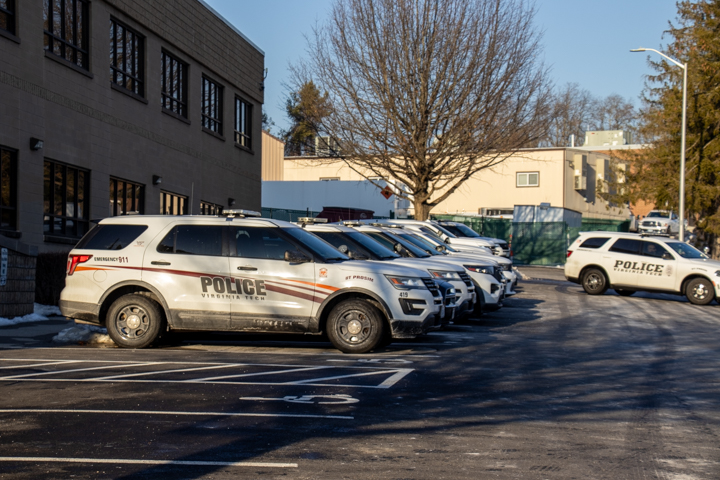
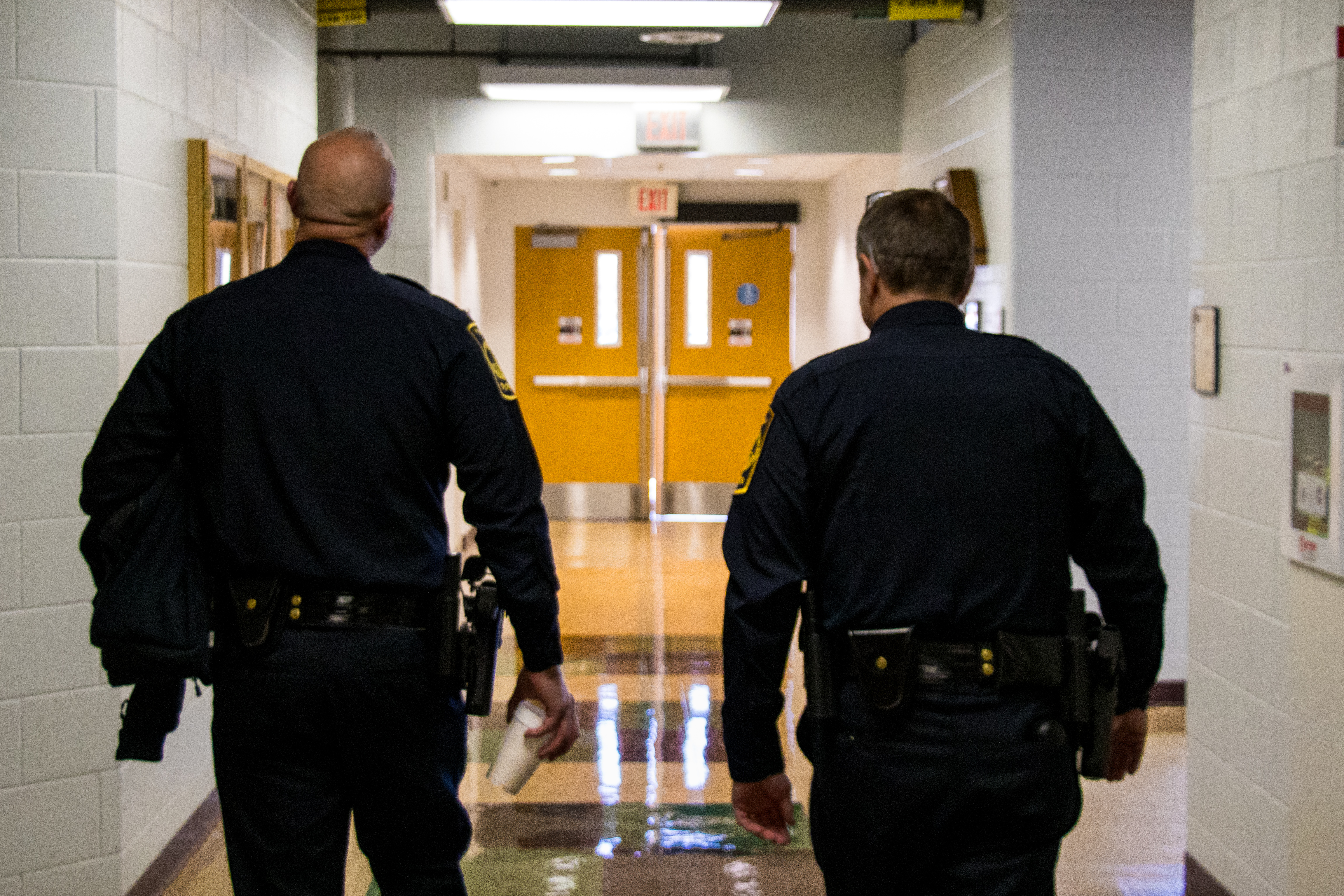
Virginia Tech Police Department Chief Deputy Tony Haga and Chief Mac Babb leave a meeting in the campus Public Safety Building on Feb. 12, 2026. (Michaela Scott/TheNewsFeedNRV.com) 

Federal immigration detentions have surged nationwide this year, and the detention of a Virginia Tech student early last July continues to raise questions in the New River Valley about how federal immigration policy intersects with local policing.  

As of Dec. 26, 2025, there are 212 active detention centers operated by U.S. Immigration and Customs Enforcement, which is roughly double the number in operation at the start of the year. Some local law enforcement agencies across the country have participated in what are known as 287(g) agreements, which are federal partnerships that allow trained officers to perform certain immigration enforcement functions. Similarly, at some universities, campus police departments have entered agreements with the federal government authorizing officers to assist in immigration enforcement.  

According to ABC News, the Trump Administration’s surge in law enforcement has created a chilling effect on student attendance in districts nationwide. Thousands of students in counties across the U.S. are being reported absent from school daily in fear of ICE agents.  

In Virginia, however, state policy shifted earlier this year. 

On her first day in office, Gov. Abigail Spanberger rescinded Executive Order 47 (2025). It had originally required state law enforcement agencies to cooperate directly with federal immigration authorities and encouraged participation in federal deputization programs. 

In essence, the order removes the initial mandate, allowing state law enforcement to refocus on their core responsibilities, such as keeping Virginians safe.  

The move marked a shift in state policy and offered reassurance for students. The Virginia Tech Police Department says their mission has always remained the same.  

“Nothing changed from the day before to the day after the new executive order,” said Mac Babb, VTPD chief of police. “We’ve been the consistent agency all along in our focus on supporting the community.” 

However, social media and conversations across campus have raised questions regarding whether VTPD would honor a criminal ICE detainer.  

Anonymous posts warning of ICE sightings have continuously circulated on Yik Yak, a location-based social media, amplifying uncertainty among some students about what authority campus police hold in immigration matters. Babb emphasized that the department encourages students to contact campus police if federal agents are reported nearby, in order to verify legitimacy and to prevent unnecessary escalation.  

Babb added that none of these claims have been proven to be true.  

Virginia Tech Police Department officer responds in a patrol vehicle with emergency lights activated on campus on Feb. 12, 2026. (Michaela Scott/TheNewsFeedNRV.com) 

“A lot of what VTPD would do is more for the community than it would be for ICE, but it would be perceived as, oh, you’re helping ICE.” Babb said. “If ICE was on campus, our purpose there would be to deescalate the situation, so we don’t expose more people to investigations by ICE and potentially subject additional people to arrest, which doesn’t need to happen.”  

In regard to the Virginia Tech student detained in July 2025, Babb explained that VTPD was not a part of the enforcement action but later conducted an internal review to assess preparedness and potential implications.  

“I think it’s important that everybody understands that the detention last July occurred after an actual criminal event, and unfortunately, it triggered an inspection during the arrest process,” Babb said. “So those are the types of things that we try to watch out for, and to make sure that we don’t have more people end up in situations where they’re under review as well.” 

With international students making up 12% of the total student population at Virginia Tech, Deputy Chief Tony Haga explained that his team has devoted time to connect with the student population to build assurance in students. 

“Some of those students are coming from places of origin where there is no relationship with the police department at all,” Haga said. “So already stepping into our community, we are somebody they’re not going to trust.”  

To bridge that gap, VTPD has partnered with the Cranwell International Center to provide presentations and informational sessions outlining students’ rights and campus procedures.  

 University leaders say that those efforts reflect a broader institutional commitment to international students.  

“If we’re going to save the environment, cure cancer, and develop the hottest technology in AI, we need to know how the world interacts with it,” said Mark Owczarski, VT university spokesperson. “From the very beginning, we truly welcome and seek out individual international folks from all over the world to come here.” 

Babb reiterated that immigration enforcement is a federal responsibility, and that VTPD’s role remains focused strictly on criminal matters and campus safety. 

While state policy shifts and national enforcement trends continue to evolve, university officials maintain that their role remains focused on campus safety rather than immigration enforcement. For some students, however, broader national debate means concerns about immigration policy are unlikely to fade.  

“In light of current events, say what you will, but the values and the approach that Virginia Tech takes haven’t changed,” Owczarski said. 

Virginia Tech Board of Visitors approves on-campus residential housing and athletic facility improvements

By Megan Reese, politics and government reporter

On Thursday, Feb. 5, the Virginia Tech Board of Visitors met virtually for a special meeting to discuss improvement and funding plans made to the Beamer-Lawson indoor practice facility and on-campus residential facilities. 

During the special meeting, two resolutions were discussed. The first was authorizing Virginia Tech to move forward with an $800,000 planning authorization, which is to make improvements to the Beamer-Lawson indoor practice facility. The second was authorizing planning funds and target timelines for several on-campus residential housing renovations, such as Slusher Hall, Pritchard Hall and Hoge Hall. Both plans were approved by the 13 board members in attendance unanimously.

“As a freshman I lived in Pritchard, and I think renovating should definitely be a priority for this school. Not only is there no air conditioning, but the bathrooms need a little love and the carpet in Pritchard needs to go,” said junior Virginia Tech student Leila Sarkarzadeh.

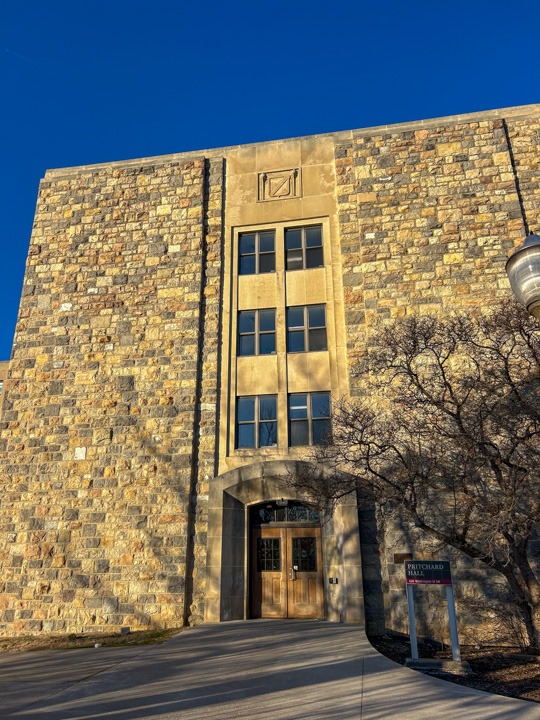
An entryway to Pritchard Hall, a residence hall on Virginia Tech’s campus.

 Photo taken by Megan Reese.

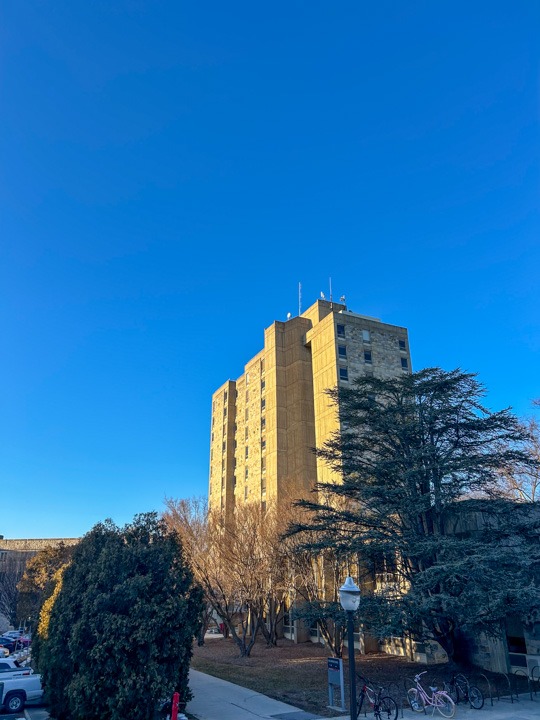
A full view of Slusher Hall, a residence hall on Virginia Tech’s campus. Photo taken by Megan Reese.

Many students complain of the lack of air conditioning in those residential halls during the hotter months, and the university is prioritizing that in the renovations. The renovation goals include heating, ventilation and air conditioning, as well as environmental quality, addressing modern program needs and safety needs. 

Virginia Tech made an effort to better understand students’ needs and priorities by bringing in Brailsford and Dunleavy, a consulting company, to meet with students. The board also has an undergraduate student representative that conveys those needs. This person is a non-voting member, but still contributes to conversations, giving students a voice. There are four other non-voting members, the staff, faculty, administrative/professional faculty, and graduate student representatives. 

“I sat in on one of [the Brailsford and Dunleavy] meetings as an RA, and I sat in on it as a student leader, and then I met with them in my capacity as the representative,” said Thomas Feely, the undergraduate student representative. “So I think they tried to cover their bases quite well. Emails went out to all of the residents saying, if you want to be part of a focus group, they’re meeting today for this.”

Amy Sebring, Virginia Tech’s vice president and chief operating officer, explained the plans in immense detail during her presentation. There was a refresher on all of the plans that were previously discussed, the renovations’ financial impact and a preliminary housing framework scenario discussing enrollment growth. 

Slusher Hall was built in 1972 and the target construction start date will be summer of 2028. The proposed planning authorization is $6.5 million. Hoge Hall is the next building to start construction, with a target start date of the summer of 2030. It was built in 1966 and the proposed planning authorization is $9 million. The last building in this plan is Pritchard Hall, built in 1967, with the first phase of construction planning to begin in summer of 2032 and phase two in summer of 2034. The proposed planning authorization is $12 million. 

The plan also noted that residential rates will increase with inflation and the renovations. The plan states “by 2032, to cover project costs, residential rates would need to increase by 4.2% per annum. By 2032 this would equate to 25.2% or $2,326, which equals a bed rate of $11,576.”

Annual increase needed to cover project costs is 4.2% and the annual increase projected to cover inflation is 3%, which combines to 7.2%. However bed rates are different based on the category. There is non air-conditioned multiple occupancy, air-conditioned multiple occupancy, and air-conditioned single occupancy. The new bed rate will apply based on the category. 

“That 7% is being applied per category. The reason why I think this is reasonable is because we’re behind. We have a lot of deferred maintenance on these facilities,” said Feely. “3% goes to inflation and then the 4% is for the cost of renovations, which it’s tough to argue with 4%. To me it seems like a pretty good deal.” 

Although the on-campus residential resolution was the bigger proposition of the meeting, the indoor practice plans were approved as well. The plan notes, “a conditioned interior practice environment is critical to remain competitive with other Atlantic Coast Conference and NCAA Division I athletics programs.” 

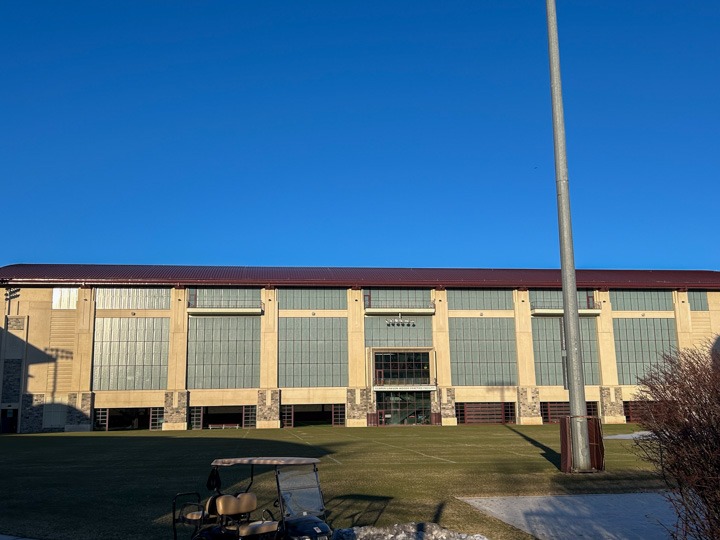
Beamer-Lawson indoor practice facility. Photo taken by Megan Reese.

The board recently made headlines for approving a $229 million plan to invest in athletics for the next four years. This plan aligns with the need to be competitive with other Division I athletic programs. 

Feely noted that although there may be concern about more money going towards athletics, that this plan is funded by athletics auxiliary revenues, like ticket sales, which is money that the athletics department already has. 

The next board of Visitors meeting is planned for April 13-14. 

Pulse Pilates Studio: Who they are and where they’re going  

On Jan. 26th, Pulse Pilates debuted its Mat Studio, diversifying its class selections. 

Since opening in May 2023, the establishment sports a staff of 13, and offers a variety of classes, ranging from high to low impact. Notably, Pulse Pilates provides specialty services including pre/post natal, 50+ and private sessions for those recovering from injuries or surgery. 

In an interview, managing director, Sheryl Heath touched on a variety of topics, including her journey founding Pulse Pilates, service specifics and the studio’s relationship with the Blacksburg community. 

Sheryl Heath of Pulse Pilates Studio.

Her comments were edited slightly for length and clarity. 

You’re not a Blacksburg native; can you tell me about how you ended up here?

I’m from Florida. I was a nurse practitioner for 35 years. I started doing travel work because you make more money and travel the country. I landed here with a travel position with Carilion Clinic.

They had me start at Rocky Mount, then I was at Lexington for a while, and then Roanoke. I ended up being offered a full-time position at New River. I’ve always wanted to be in the mountains. I hated Florida; it’s too hot.

I accepted that full-time job, and formally became a Virginia resident in 2017.

How did you go from nurse practitioner to Pilates studio founder?

I was doing my nurse practitioner job, and then along came COVID. After going through two years of that, I was just fried. I didn’t want to see anything medicine, I was done.

I decided that I was going to retire from nursing. In the meantime, I had gained a lot of weight.  When I finally did retire, I started taking Pilates lessons with my business partner, Ashlin.

I really liked it, and she and I had a great rapport. She was in a teeny tiny studio that was about the size of a bedroom. She wanted some help because she had too many clients. She encouraged me to go into Pilates training.

At the time, I saw places like Club Pilates that had group classes. I presented her with the idea to expand. It took me a while; I finally convinced her around December of 2022. We decided to go ahead and take the plunge – open the bigger business, start offering group classes and form this partnership.

Pulse Pilates debuted its Mat Studio on January 26th. What was the expansion process like?

We took over the suite next door and made that our Mat Studio. Our grand opening for Mat was this week. The first day, we had to cancel because of the snowstorm. The second, we had decent class numbers, but had a bunch of no-shows. Today is our fourth day open, and we had decent numbers, where people were showing up and filling up the class.

Sheryl Heath poses in her professional headshot. 

On your website, a variety of specialized services are advertised. Can you tell me about the pre/post-natal courses?

Usually, with our prenatal classes, we give them a couple of private sessions to teach them techniques they’re going to need to know as they go through pregnancy.

Eventually, once they learn these techniques, they can flow in with the general public and be able to participate in group exercise. The majority of our pregnant women, up until about 20 weeks, can do any type of exercise. Further on, we start modifying exercises so they don’t develop diastasis recti.

The biggie is the pelvic floor. We try to focus more on abdominal and pelvic floor work to restore the body to where it was before they were pregnant and had the baby.

Pertaining to 50+ classes, how do you tailor Pilates to an older population?

The first thing we do is incorporate some kind of hand weight. They hate it, but we incorporate weights into our sessions, the thought being that you build muscle mass and bone density. Stronger bones equal less fractures.

We also incorporate balance work, whether we’re using a BOSU or a wobble cushion. We’re doing something requiring them to move and balance themselves to try to get that proprioception back so we can prevent falls down the road.

You require five level one reformer sessions in order to participate in level two classes; can you expand on this?

It depends on the person. Our Focus class routines were created by Joseph Pilates and is the classical repertoire. When we bring newcomers in, we want them to do classical moves, primarily to get them used to the machine.

We don’t want them potentially setting themselves up for an injury or not getting the most out of the class. The other key piece with Focus, or level one, is teaching control and pace. Pilates is about slow, controlled movements.

We generally stick to the five-class rule, but with younger students – able bodies who are a lot stronger – they may complete three classes and ping-pong into an Evolve class, our level two. Usually by then, I know who they are. Despite what it says on the website, it is person-by-person. 

Being so close to Virginia Tech, I am curious about your relationship with the students. Can you speak to that?

We love our students. Every year, when they leave for breaks and summertime, we have to cut back our class load. We wait for that September-January surge when everybody comes running back.

We offer a 25% off special for the first class. We’re hoping that if the first class is effective, it will be enough to bring them back. Occasionally, it doesn’t – students are very transparent. They’ll say, “I love the class, but I can’t afford it.” 

Those I put on a list, and say, “We have a teacher trainee who needs practice hours. You can volunteer for them, and can get free Pilates.”

We also opened the Mat Studio next door if the student cannot afford Reformer. It’s cheaper than any other business in town; you could attend for 10 bucks.

How have you used your studio to make a community with your clients?

It’s getting to know people. We bring them into class, introduce them to other students. During classes we queue, walk around, correct, give high fives, and call people out for doing great things – which makes them more comfortable. That’s partly why we’ve capped our classes at eight. 

We also try to include our clients in our online pictures. We don’t use models, we don’t use ourselves, we use actual clients. We want to say that Pilates is for everybody, of every age.

INTERNATIONAL: Russia’s ban on photographers

Photo by Lian Rodriguez

by Anna Payne, Justin Patrick–

Photojournalism serves as a vital tool for political transparency, capturing the reality of politics and serving as a form of communication to the public. The Russian State Duma’s recent ban on photographers, sparked by complaints of “unflattering” images, highlights the growing friction between public appearances and the public’s right to know. When photography is taken out of the equation to protect a politician’s image, the line between governance and performance begins to blur.

From the Duma’s restrictions to Christopher Anderson’s intimate Vanity Fair portraits of the Trump administration, visual storytelling remains a powerful tool for debate, truth, and outright information. These moments force a choice between objective reporting and artistic taste.

Students’ opinions about Blacksburg Transit

By Sean Hughes and Kyle Rupe–

Photo by Jakob Scholz

Blacksburg Transit is the main bus system in Blacksburg and takes on the responsibility of getting thousands of students to class. Recently, the transit system has been facing problems due to the winter storms. Routes have been changing and delays have caused students to be late to class. Some students are also concerned about overcrowding on the busses. In this vodcast students give their opinions on Blacksburg Transit and its current state. Not all students have been negatively impacted recently, but most of them at least know one person who has been.

POLITICS: Va. governor’s tax increases

By: Sophia Tarabola & Walker Milstead–

Governor Abigail Spanberger’s early time in office has brought attention to a long list of new tax proposals being discussed by lawmakers in Richmond. Although Spanberger ran on making life more affordable for Virginians, several bills would add taxes to everyday goods and services that many people already use. These proposals include taxes on delivery services like Amazon, Uber Eats, and FedEx, as well as gym memberships, dog walking and grooming, dry cleaning, storage units, ride-share services, and certain equipment used by small businesses. There are also ideas to change income and investment taxes, which could affect higher earners.

Supporters say these taxes could help raise money for public programs and state needs. Critics argue they could increase costs for families, small business owners, and gig workers. Many of the proposals have not passed yet and are still being debated. According to reporting from 12 On Your Side
and 7News, the debate centers on whether these ideas match promises to keep Virginia affordable.

Hokie Wellness pushes harm reduction as Virginia Tech social life returns

By Isabella Ubillus, crime, safety, and justice reporter

Annie Chalmers-Williams poses for a headshot. (Courtesy Virginia Tech)

As the spring semester begins for Virginia Tech students, so does a familiar part of campus life, the party scene. For Hokie Wellness, their goal is to teach students safer ways to celebrate and still stay in control. 

Virginia Tech’s Hokie Wellness has become a central hub for substance misuse prevention on campus. Annie Chalmers-Williams, Assistant Director for Substance Misuse Prevention, oversees programs that combine education, peer support and hands-on training to guide students in making safer decisions. 

Since joining Hokie Wellness in 2020, Chalmers-Williams has brought over a decade of experience in clinical social work and substance use treatment, including working with the Eastern Band of Cherokee Indians and youth aged 6 to 18 with the Juvenile Justice Treatment Continuum. 

Her role focuses on all things prevention related to substance use as well as managing the IMPACT team, which facilitate workshops such as Party Positive for alcohol harm reduction, Higher Education for cannabis education and safety and REVIVE! for opioid overdose response training. Beyond managing the IMPACT team, she also manages the BASICS program, offering early educational interventions for students with infractions related to substance use aimed to provide a supportive environment rather than punishing students.

In an interview, Chalmers-Williams discussed how Hokie Wellness defines “safer partying”, trends she sees among students and the resources available on and off campus.

Her comments have been slightly edited for length and clarity.

How do you define safe partying at Virginia Tech?

The first thing we talk about is that we can’t ever stay safe, we have to stay safer. We emphasize harm reduction, thinking about ways to make things safer.

Hokie Wellness teaches six main strategies: choosing if and when you are going to drink, pacing, hydration, tracking your drinks, eating properly and having a safe ride home.

Education about binge drinking and alcohol poisoning is also key. One of my favorite things to teach is the “Party Positive Zone”, which is an optimal blood alcohol concentration (BAC) between 0.00 and 0.06. We tell people that if they are going to party, we want you to party in that zone because you’re more likely to experience the euphoria that comes with alcohol without the negative side effects.

We have a Party Positive card that estimates the number of standard drinks to keep someone in that zone based on sex, body weight and time spent partying. We want to try to keep people from having negative experiences.

What are the biggest alcohol related problems that you see among students? Is there a difference between the beginning of the semester versus the end?

Our culture is steeped into alcohol, especially among college students. We’ve seen a rise in drinking and driving and DUIs. Binge drinking continues to be an issue. Health wise, drinking 10 drinks in one night is more harmful on your body and brain than drinking moderately throughout the week.

In the fall semester, we see younger students getting involved with substances as a way to connect socially, leading to early-on alcohol infractions, specifically in the dorms. By the end of the year, due to graduation, we see these similar situations with our students who are of an older age.

Are there additional steps that Hokie Wellness takes around big events, like football games or graduation?

Hokie Wellness tries to plan for that. We have our social media accounts pushing public health information and outreach on how to party safely. Hokie Wellness is part of the recovery community, and they have sober tailgates for students who want to enjoy the game day atmosphere without alcohol or other substances.

At the beginning of the school year, we do a lot of work during those weeks of welcome as well as having programming at GobblerFest. It’s about getting ahead and encouraging people to come and pay attention. We are aware of those higher risks and a goal we always have is to work harder to remind students to think about their safety and their futures.

What steps can students take to drink more responsibly?

The biggest thing is learning about it so that if you choose to drink, you know what you’re doing, because a lot of people don’t know what they’re doing. Have strategies to protect yourself. Start your night out early, hydrate, eat a good meal, count your drinks, pace yourself and make sure you have a safe ride home, that’s going to protect you. Learn all about it so that you’re in charge, not your friends or the alcohol, you.

How does Hokie Wellness address consent when it comes to party environments?

We do a lot of education on what consent means and teaching people when alcohol is present, most of the time, consent is not a thing you can do. We partner really closely with sexual violence prevention staff to get on the same page. When working with fraternities and sororities, we always embed consent in there, it’s in everything but we do more of a discussion then.

Besides alcohol, what other substance trends should students be aware of?

We do a lot of cannabis education because Virginia has only decriminalized it, but people think it’s legal. It puts them at risk for unhealthy use or legal risk. We spend time teaching people about the laws, so they can make good choices for themselves.

Through REVIVE!, we discuss opioids and the most common way that students are experiencing overdoses is through counterfeit pills. Cocaine is included in those conversations due to its risk of contamination.

Tobacco and nicotine support is currently in production. Right now, we do one-on-one sessions with students and referrals to Schiffert Health Center for medical and behavioral support.

What other resources are available for students that they might not be aware of?

We have useful links and resources on the Hokie Wellness website, making it a good first resource. On campus, Schiffert Health Center, Cook Counseling, TimelyCare and the recovery community offer both medical and mental health support. National resources such as SAMHSA, NIDA and RAINN provide additional help.

Our health department can help students get connected with resources such as free testing strips and Narcan. Rec Sports is also great, getting involved in physical activity can help with withdrawal as your body heals. Exercise is the way to build that capacity for your brain to start creating dopamine again.

If you could give students one piece of advice, what would it be?

A good simple strategy would be that you should not have more than one drink per hour. Pacing wise, that is probably the easiest thing to remember and the best way to pace. That would be my advice right now, stick to one drink an hour or less.