Student influencers: Earning a degree and building a brand 

Aspiring collegiate lifestyle influencers build their online persona and earn money along the way. 

By Sarah Shrader, health and wellness reporter

Getting Started

“My dream would be to be a full-time content creator,” said Rayhona Jafarzadeh, a senior at Virginia Tech going by the username @rayhonajafar. “People are not joking when they say being delusional works.”

Jafarzadeh, started her social media accounts in late November 2025 in order to share the impact her fitness journey had on her. The 21-year-old embarked on a weight-loss journey, which she first found challenging to navigate as a petite woman. Jafarzadeh’s account advocates against food restriction, instead focusing on sustainable lifestyle and dietary shifts. Her account features her workouts, recipes and tips. Jafarzadeh’s Instagram account grew quickly, as it now stands at 29,200 followers. 

Bobby Tandel, a senior at Virginia Tech, started his Instagram page, @tandalebobby, in June 2025. His account also had a quick start, with his first video receiving enough attention to gain him 10,000 followers in a few days. Today, he has 19,800 followers. 

Tandel posts a variety of lifestyle, fitness and business-partnered content. He focuses on promoting healthy lifestyle choices. Vidoes on Tandel’s page discuss his journey of healthy eating, self-improvement, eliminating alcohol from his diet and entrepreneurship. 

Both Tandel and Jafarzadeh are classified as micro-influencers, which are defined as individuals with 10,000 to 100,000 followers, according to AdAge

Caleb Grider, a senior at Virginia Tech who goes by the username @trazanlifts1, started his online persona three years ago when he was 18 years old after his brother, Tim, suggested that he start a YouTube channel. After an initial period of hesitation, Grider found his passion in social media and fully immersed himself in his accounts. 

Grider recording an Instagram reel showcasing a low-calorie recipe. 

Grider currently has 1,121 Instagram followers, 826 YouTube subscribers and 547 TikTok followers. His Instagram follower count qualifies him as a nano-influencer, which, according to ethos-marketing, is defined as an individual with 1,000 to 10,000 social media followers. 

Grider’s page is focused on advocating for and showcasing natural bodybuilding, which entails gaining large amounts of muscle without the use of performance-enhancing drugs. 

Building a Brand & Making Money

College is often a financially stressful time in a student’s life. Ellucian reported that 71% of college students reported worrying about money and 68% reported actually running out of money in 2024-25. Likewise, lifestyle influencing accounts for 57% of Media Impact Value on Instagram, according to Better Marketing. With no “one-size-fits-all” path to influencing success, each content creator faces the difficult task of distinguishing their own unique flavor, on which they hope to grow a follower base. 

“I would say there’s not a lot of Middle Eastern women fitness influencers,” Jafarzadeh said. “I feel like those women can relate more to me or my journey.” 

Jafarzadeh said that what she found to be the best method to creating a brand is by avoiding curating a strict persona and being yourself – an opinion that was echoed by Tandel and Grider. She further commented that she is planning a “rebrand,” which will entail showcasing a more authentic version of her personality online in order to connect with her audience. 

Jafarzadeh continued to build her online brand by starting her own small business, Rayhonafit Fat-Loss Guide. The guide sells for $15 and claims to be a sustainable fat-loss plan for petite women without extreme dieting. Her package includes meal plans, workouts and progress trackers, that are included in the one-time fee. 

Jafarzadeh stated that she currently uses her social media pages to promote the guide but mentioned that later on, she will accept more brand deals that offer the potential to earn her additional money. 

According to Tandel, he makes an income of five figures from his online pursuits. He attributed his drive to make money from social media to his dedication to keeping a promise he made to his parents at his high school graduation, which is to give them $2.5 million each. 

“I had to find my “why” for posting, and then I studied other creators and their formats to see what has worked,” Tandel said. “From there, it was a matter of testing and iterating. Overall, posting and looking at the data and trends has led me to build up my account.”

Tandel filming a video promoting an upcoming bar in Blacksburg, Olakia. 

Tandel earns income through the companies that reach out to him to promote their brand via short-form content on his Instagram page. These include several local Blacksburg businesses, such as Olaika, Ocean Samurai and Moeya Cafe. 

Work-Life Balance

“I had to find my “why” for posting.”

– Bobby Tandel 

All three student influencers noted that posting consistently was key in increasing follower counts, gaining sponsorships and growing their accounts overall. However, life in college is busy. At any given moment a working student is balancing the pressures of classes, work and a social life – a reality that Tandel, Jafarzadeh and Grider know all too well. 

“It’s super hard, I can’t lie,” Tandel stated. “At one point I wasn’t posting for months because I was focused on college and my relationships. Content can definitely take a toll on the mental, and I feel like it’s not talked about enough.”

Recently, Tandel felt he needed to take a step back from social media. While he continued to maintain his page and sponsorships, he began dedicating significantly less time to it, about four hours per week, in order to focus on graduating this spring. 

On any given day, Jafarzadeh stated that she dedicates three to four hours to content creation and various upkeep of her social media pages. 

“It is extremely stressful for me sometimes because I am still in the growing stage,” Jafarzadeh said. “I need my content to be good quality while also on trend. My brain is very scattered when it comes to this because I have so many fun ideas in my head that I can never finish one video fully without jumping to another one.” 

For Grider, his content creation process is always in flux. He commented that Instagram is his casual short-form platform, while his YouTube videos are heavily thought out, planned and executed. Grider will spend about 10 hours of the week working on content ideation and creation.

Motivation, Challenges and Success 

“People are not joking when they say being delusional works.”

– Rayhona Jafarzadeh

Being a student lifestyle creator means positioning oneself as a public figure in a tight-knit community that provides almost guaranteed visibility. Using common hashtags, like #collegelife, #Blacksburg, #VirginiaTech etc. increases the likelihood that social media algorithms will pour a student creator’s content onto the feeds of their peers, professors and even friends. 

“Putting yourself on social media in college is so weird, and it’s actually terrifying,” Jafarzadeh stated in a TikTok post. “Everyone and their mother is going to see you.” 

Jafarzadeh poses for the camera while filming an Instagram Reel. 

Grider said he had to learn to “fail forward” while growing as a creator. Influencing forced him to develop skills in public speaking, talking to strangers and growing the required confidence to set up a camera and record in public. 

“When you understand nobody actually cares about you, it honestly is freeing,” Grider stated.

In the early stages of his social media career, Grider reported struggling with his confidence. In particular, he faced a long journey of self-discovery and confidence growth while establishing himself online. He commented that he struggled with being his complete self on camera at first, but that the longer he continued to post, the more that fear faded away. 

Social media also isn’t just about monetary gain for Jafarzadeh, Tandel and Grider. A sentiment shared among all three creators was their passion for inspiring others and seeing the impact their content has on real lives. 
Jafarzadeh said that her fuel and motivation for posting stems from the messages she receives from women online. According to her, countless women have shared with her how much Jafarzadeh’s videos have helped them, whether that be with healthy recipes, relationship with food, workouts or occasional motivation. Similarly, since coming to college, Grider recounted that about 100 students have approached him to share the inspiration they take from his videos.

Fighting hunger through community outreach

By Savannah May, The News Feed NRV

While millions of Americans face food insecurity each year, tons of edible food still go to waste every day. At the Giles Community Garden, Charlie Herbert is working to bridge that gap, growing fresh produce for families in need and showing how local action can make a measurable difference. This story explores the realities of hunger, waste and the community efforts fighting both across America.

By students, for students: The Connection Project unlocks belonging at Virginia Tech

Emma Duncan, education reporter

Student facilitators for the Connection Project post on a ledge outside of McComas Hall (Photo Courtesy of Colleen Driscoll).

In a course built on community rather than lectures, Hokies are helping their peers navigate something many college students struggle with: loneliness. Through The Connection Project, student facilitators lead discussions on belonging and well-being in an effort to make the transition to college feel less isolating.

First created by Hoos Connected at the University of Virginia, The Connection Project responds to a mental health issue plaguing college campuses in the 21st century. According to the UVA website, “college campuses are dealing with an epidemic of loneliness and depression among their students, with overtaxed student counseling centers in need of low-intensity preventative interventions.”

Studies show that college-aged students are more likely to be vulnerable with peers before they seek mental health support from older adults. This idea was further proven by The Connection Project, as students saw a substantial increase in “sense of school membership” from pre- to post-program surveys. 

As this research was published, UVA created opportunities to bring the program to other campuses. So far, The Connection Project has spread to Virginia Tech, Georgetown University, Pennsylvania State University and Arizona State University

In Blacksburg, The Connection Project is hosted by Hokie Wellness. Previously, the department offered the FEELS Support Circle every other week. Also led by students, the meeting was less structured and allowed students to pop in and out as they pleased. As a result, the program saw a lack of engagement and student retention. 

“We realized that students are trying to find belonging in these spaces we’re offering, but it’s not getting the engagement, which prevented us from solving the problem,” said Colleen Driscoll, assistant director of mental health initiatives for Hokie Wellness.

In summer 2023, the Hokie Wellness team attended a training with UVA, and The Connection Project was launched for students to enroll in spring 2024.

“I think the time worked out really well, especially since we were just a few years post-COVID, so we were seeing those spikes in loneliness, isolation and lack of belonging,” Driscoll said. “All of our programs are evidence-based, but I think the evidence behind this one shows that our students truly enjoy it and want more. What we’re doing is listening to the students and hearing, ‘We don’t feel like we belong, and you coming in and doing an hour lecture on belonging isn’t going to help us, but actually investing in this space of let’s create spaces for connection does help.’”

Students enroll in The Connection Project for a number of reasons. Most notably, first-year and some second-year students struggle to balance making friends early with sustaining those relationships long term. Others experience a fear of rejection. Some are generally nervous to introduce themselves to new people. As members of a technology-driven generation, many students (especially from 2020-2022) faced challenges socializing in person rather than online. 

The Connection Project is registered as a one-credit course in two departments: Human Development and Family Science and Engineering Education. The former is open to all majors and years, while the latter is only offered for first-year engineering students. Driscoll oversees The Connection Project overall, but especially the HDFS section. Maia Greene-Havas, academic and career advisor for engineering education, oversees the engineering education section. 

“Engineering is a unique college at Virginia Tech. The courses are pretty challenging and taught very differently than what students are used to coming from high school or community college,” Greene-Havas said. “I think it can be a bit daunting for first-year students because it takes time to figure out how much time they need to put toward studying. They are susceptible to higher levels of loneliness.”

While faculty and staff oversee the course, much of The Connection Project is driven by student facilitators who guide discussions and create space for vulnerable conversations. Most facilitators were participants in The Connection Project first, and because of the impact it had on their lives, they chose to become facilitators. For students who simply have a passion for creating space for their peers, they participate in The Connection Project as the first part of their training.

The second part of peer mentor training is learning what it takes to lead a group. 

“We work on learning skills like radical kindness, vulnerable leadership, boundaries and emotion management,” Driscoll, who leads peer mentor training, said. “If you’re in a group and somebody says something out of pocket, how do we make sure that we’re not judging that person? We talk about how you acknowledge somebody when they’ve shared something really difficult and how you make sure they feel seen, heard and validated. We also help our facilitators understand that while they’re leading the group, they’re still a part of the group.”

Finally, students revisit the curriculum they once experienced as participants, and perfect how to present those concepts as facilitators.

Sophomore and human development major Jocelyn Hall first enrolled in The Connection Project during her freshman year after hearing it could support students interested in counseling careers. As she adjusted to college life and navigated relationship challenges, she said the course helped her feel less isolated while teaching her mindfulness. 

“Since I’ve been a participant, I’ve felt more connected to my community,” Hall said. “My facilitators encouraged me to get involved and as a result, I try to do everything and anything. I got back into colorguard and joined the indoor team. The next semester, I became a Connection Project facilitator, a mental health initiatives peer educator and an orientation intern with New Student and Family Programs. I’ve felt more confident in knowing I deserve happiness as much as I want others to.”

Connection Project Facilitator Jocelyn Hall (second from right) smiles alongside other facilitators (Courtesy of Colleen Driscoll).

Serving as a facilitator has allowed Hall to help other students feel heard and connected. As she gains real-world experience in her major, she also gains a sense of impact on her campus community. 

“It builds an environment rooted in comfort and reliability. The power difference between a professor and student normally creates a barrier to openness and honesty due to expectations. Those same pressures are often not there in this program,” Hall said. “In my most recent group, I had two participants message me a photo of them hanging out with the message ‘Jocelyn! We miss you. Go connection project for bringing us together.’ It was genuinely the most rewarding experience, knowing that I was able to help these students connect.”

Unlike Hall, senior psychology major Caroline Hopkins was never a participant in The Connection Project before becoming a facilitator. Hopkins initially joined the program last fall for field study credit because of its similarities to counseling work, but after completing facilitator training and leading groups herself, she said she wishes she had discovered the program earlier in her college career.

“I genuinely think my biggest regret as a graduating senior is not getting involved in this program earlier,” Hopkins said. “It has had such a big impact on me and on others who have participated as well.”

Hopkins said the program helped her build relationships across campus while developing skills she hopes to use as a therapist one day. In one session, she recalled watching participants rally around a peer who was struggling with self-confidence. For Hopkins, this moment demonstrated the type of environment The Connection Project aims to create.

“At one point during a group, one of our participants was talking negatively towards herself and multiple participants jumped in to explain why they thought this participant was amazing and a valuable individual,” Hopkins said. “This was truly amazing because it wasn’t prompted by me or my cofacilitator, but was genuinely just participants wanting to make someone else feel better by explaining what they see in her that she might not be able to see in herself.

This conversation was part of the broader Connection Project curriculum. Over the span of 12 weeks, conversations move from lighthearted icebreakers and group games to deeper discussions about conflict, relationships, identity and emotional resilience to gradually increase vulnerability and trust among students.

Driscoll said the course intentionally avoids forcing students into uncomfortable conversations too quickly. Early sessions focus on activities like “speed friending” and games of “Would You Rather?” meant to help participants feel comfortable with one another before tackling more personal topics. By the third week, students discuss concepts like the “masks” people wear in different social settings and how those barriers affect authentic connection.

“If we just sat down and asked those questions, people would not want to be a part of the class because those are big, scary questions,” Driscoll said, “but because we do it through games and activities, students really enjoy it.”

At the end of the experience, data shows that students in both HDFS and engineering education sections experience less loneliness, a decrease in anxiety and depression symptoms and an increase in belonging and self-worth.

 “All of our programs are evidence-based, but I think the evidence behind this one shows that our students truly enjoy it and want more,” Driscoll said. “What we’re doing is listening to the students and hearing, ‘We don’t feel like we belong, and you coming in and doing an hour lecture on belonging isn’t going to help us, but actually investing in this space of let’s create spaces for connection does help.’”

As participation in The Connection Project continues to grow, organizers hope to expand the program’s reach across campus. Greene-Havas plans to offer more sections during the fall semesters, and Driscoll continues to speak with other academic departments to make the course accessible to more students in different majors and class years.

“Students spend so much time focusing on academic success that sometimes they forget connection and belonging are just as important to their well-being,” Greene-Havas said. “The Connection Project gives students a dedicated space to slow down, reflect and realize they are not alone in what they’re experiencing.”

Whether students leave the program with new friendships, less loneliness or simply another credit on their transcript, organizers say the goal remains the same: creating a campus where connection is treated as an essential part of student success rather than an afterthought.

Above the Crowd: Inside Virginia Tech’s Viral Parachuter Rescue 

By Alexis Edwards, crime, safety & justice reporter 

Thousands of fans packed into Lane Stadium on April 18 for Virginia Tech’s spring football game when a planned pregame parachute entrance suddenly took a dangerous turn. During the jump into the stadium, one of the parachutists, decorated U.S. Army special operations veteran Pasha Palanker, was caught by powerful wind gusts and slammed into the scoreboard. The impact left him tangled and dangling more than 60 feet above the field as nearly 40,000 fans watched in shock. Within minutes, firefighters from the Blacksburg Fire Department rushed toward the structure, launching a complex technical rescue operation that would soon gain national attention across social media and news outlets. 

What many spectators saw as a shocking viral moment was, for emergency responders, a carefully coordinated rescue involving quick decisions, specialized equipment, and years of training. Behind the hundreds of videos circulating online was firefighter Kyle Guinn, who was in the basket of the 100-foot ladder truck to reach the stranded parachuter suspended high above the field. 

Firefighter Kyle Guinn was one of the first responders tasked with reaching the stranded parachuter above Lane Stadium. 
Photo by Alexis Edwards 

The incident quickly spread online after videos posted to social media showed the parachuter tangled near the scoreboard while emergency personnel gathered below. News outlets across the 

country picked up the story, including coverage from ESPN and NBC News, as viewers questioned how the rescue would unfold. 

For Guinn, however, the focus never shifted toward publicity. 

“We are helping people every single day,” Guinn said. “So it was just more of us doing our job.” 

At the time of the incident, Guinn was not initially stationed inside Lane Stadium. Instead, he and the department chief were responding to a fire alarm near Oak Lane while separate personnel worked the football game itself. 

The Blacksburg Fire Department divides emergency responsibilities during game days, assigning some crews directly to Lane Stadium while others remain available to respond throughout town. 

While investigating the fire alarm, Guinn received a radio update from dispatchers covering the game. 

“We get a phone call from the officer who was dispatching for the game saying that there was a parachuter stuck on the board,” Guinn said. 

After clearing the fire alarm, Guinn and the chief immediately responded toward Lane Stadium. By the time they arrived, emergency crews had already attempted to use one ladder truck to reach the parachuter, but it was not tall enough. 

The scoreboard towered above the field, leaving the stranded parachuter suspended beyond the reach of the first truck. 

“So we had to improvise and get the second ladder out,” Guinn said. 

Dispatchers called for Ladder 12, the department’s 100-foot ladder truck. While firefighters waited for the truck to arrive, rescue personnel discussed alternate plans, including the possibility of rappelling from the top of the scoreboard if the ladder could not safely reach the parachuter. 

“Rescue wanted to rappel from the top,” Guinn said. “That would have taken a lot longer to get set up.” 

Instead, crews focused on positioning the taller ladder truck beneath the scoreboard while command personnel coordinated the scene below. 

From the stands, fans watched emergency officials coordinate plans while the parachuter remained suspended above the stadium. On social media, videos and speculation spread rapidly before many people fully understood what was happening. 

For firefighters below the scoreboard, however, the attention from the crowd became background noise. 

“There wasn’t too much debate on who was going up there,” Guinn said. 

Although no formal certification was required to operate inside the basket, Guinn had extensive experience working with the ladder truck during emergency calls and training exercises. 

“I had more experience in the basket,” he said. 

Many of the department’s senior ladder operators were either not present yet or were serving in command positions on the ground, where they coordinated operations instead of participating directly in the rescue. 

As the ladder slowly rose toward the scoreboard, Guinn focused less on the crowd surrounding him and more on the technical details of safely reaching the parachuter. 

Emergency responders maneuver Ladder 12 toward the Lane Stadium scoreboard during the parachuter rescue operation
Photo by Alexis Edwards. 

“I was more focused on just getting the ladder to him,” Guinn said. 

The plan required careful positioning. The parachuter needed enough space to step safely onto the ledge outside the basket before firefighters could help him inside and begin untangling the parachute cords. 

When Guinn finally reached him, the parachuter remained surprisingly calm despite hanging above thousands of people. 

“He was really calm, really chill,” Guinn said. “He was doing everything he could to just basically stay on the board.” 

Additional rescue personnel worked simultaneously inside the scoreboard structure itself. A supervisor from Blacksburg Rescue communicated with Guinn through a small opening while helping move tangled cords away from the ladder basket. 

Then, responders identified another potentially dangerous problem. 

A smaller chute responsible for deploying the parachuter’s reserve parachute had become caught dangerously close to the basket. If the cord accidentally snagged while firefighters worked, the reserve parachute could deploy directly into the basket itself. 

“That would have been really bad for us,” Guinn said. 

With assistance from the rescue supervisor inside the scoreboard, Guinn located the cord and secured it before the reserve chute could accidentally deploy. 

At the same time, additional technical rescue crews moved inside the structure, preparing backup rescue systems in case firefighters needed to transition into a rappelling operation. 

Most of that coordination happened completely out of public view. 

“There’s definitely a lot more that goes into it than what people see,” Guinn said. 

The viral clips posted online captured only brief moments of the rescue, often without context about the planning and communication occurring behind the scenes. 

“The biggest thing that I kind of took away was that you can’t judge too much based on a 30-second clip,” Guinn said. “There’s a lot more happening behind the scenes.” 

Emergency responders communicated constantly over radios while managing equipment, personnel, and crowd safety below. Guinn said one of the biggest challenges was not necessarily the rescue itself, but managing the overwhelming number of people surrounding the operation. 

“We were pretty coordinated on who was doing what,” he said. “The biggest challenge was just keeping people back and managing personnel.” 

The department also worked to limit unnecessary involvement from individuals not directly connected to the rescue operation. While some members of the parachute team assisted firefighters by identifying equipment concerns, responders intentionally restricted access around the scene to avoid additional risks. 

“We try to keep anyone who’s not directly operational involved in the rescue effort as blocked off as possible,” Guinn said. 

Although the rescue became one of the most widely viewed moments connected to Virginia Tech athletics that season, Guinn said firefighters approached it no differently than any other emergency call. 

One reason, he explained, was the department’s extensive training schedule. 

“One of the things that the Blacksburg Fire Department does really well is training its members beyond just what the basic fire standard is,” Guinn said. 

In addition to standard firefighter certifications, crews regularly train on ladder operations, technical rescues, and emergency scenarios involving specialized equipment. 

According to the National Fire Protection Association, technical rescue incidents require advanced operational coordination and extensive equipment familiarization because of the unpredictable nature of rescue environments. 

Guinn said his station trains several times each week in addition to department-wide training sessions held monthly. 

“Part of our truck checks is also raising the ladder, climbing it, and making sure everything works,” Guinn said. 

That constant repetition ultimately helped firefighters remain calm while operating in front of a packed football stadium and a national audience. 

Even after videos of the rescue spread online, Guinn said he never viewed the situation as extraordinary compared to the work firefighters routinely perform. 

“I didn’t expect it was going to be national news or anything,” he said. 

Instead, he viewed the rescue as another example of firefighters relying on preparation and teamwork under pressure. 

“It’s just nice to be part of a department that trains enough to do our job and get stuff done,” Guinn said. 

By the end of the rescue, the parachuter had been safely removed from the scoreboard, and the crowd inside Lane Stadium erupted in applause. Within minutes, attention shifted back toward football. 

Fans watched as emergency crews safely completed the rescue operation above Lane Stadium. 
Photo by Tech Sideline. 

For Guinn and the firefighters below the scoreboard, however, the moment ended much more quietly. 

After the equipment was packed away and the field cleared, they returned to work, just as they do after every other call.  

A new era: President Sands’ legacy and what comes next for Virginia Tech

By Megan Reese, politics and government reporter

On April 9, Virginia Tech’s President Tim Sands addressed Hokies everywhere in a letter that he would be stepping down from his position. He acknowledged what the community has accomplished in the 12 years since he began his presidency, and confirmed he and his wife plan to stay in Blacksburg. 

“It is now time, while Virginia Tech has momentum on so many fronts, for me to start the process of stepping aside so that the next president can take the baton in full stride,” Sands said in his letter to Hokie Nation. 

Virginia Tech has gained significant momentum in Sands’ 12-year tenure. According to Virginia Tech News, the university experienced a 30% increase in undergraduate enrollment, 200% increase in applications, 70% increase in extramural research expenditures and 185% increase in the university’s endowment. 

Although the numbers show impact, you can see it on the Blacksburg campus as well. 

“Ten years ago, [North Academic District] was nothing but a big old parking lot,” said Mark Owczarski, university spokesperson. “Now we have state-of-the-art labs, attracting world-class faculty that are working on huge massive things, everything from curing cancer to engineering improvements.”

The North Academic District is nearly 500,000 square feet that directly impacts students with new academic buildings, a new dining hall and the Undergraduate Science Laboratory. This expansion has not only impacted students currently on campus, but attracts potential students and faculty to join the Virginia Tech community. 

Beyond the Blacksburg campus, there have been advancements in Roanoke, Va. with the Virginia Tech’s Health Sciences and Technology Campus. The campus is home to Fralin Biomedical Research Institute at VTC, the Virginia Tech Carilion School of Medicine, the Translational Biology, Medicine, and Health Graduate Program, the Virginia-Maryland College of Veterinary Medicine’s Animal Cancer Care and Research Center, and more. Virginia Tech News reported the campus doubled the university’s economic impact in Roanoke. 

There were also significant strides made in the Washington D.C. area. In the spring of 2025, Virginia Tech opened its Innovation Campus in Alexandria, Va. The building is known as Academic Building One and is home to the new Institute for Advanced Computing. The institute supports industry and government partnerships, and with its close proximity to the nation’s capital, benefits graduate students immensely with learning how to address global issues. 

The building also houses graduate programs for the Pamplin College of Business and College of Engineering.

“I would say we are a globally recognized premier research university that is going to go out and make the world a better place, and President Sands played a pivotal role in that,” Owczarski said. 

Another highlight of Sands’ legacy is the Virginia Tech Advantage, which is a university-wide initiative to provide support for in-state students to do research, study abroad or complete internships with fewer financial barriers. 

Providing students with a full experience inside and outside of the classroom helps to contribute to Virginia Tech’s strategic priorities. Virginia Tech Advantage will achieve these goals by doubling the amount of Hokies in the Presidential Scholarship Initiative to 800 students, provide more opportunities for paid internships and provide study abroad experiences and so much more. 

Another huge part of Sands’ legacy will be the support he provided to Virginia Tech Athletics. The athletics program is currently in the process of rebuilding with an approved $229 million being invested in it, a new head coach for Virginia Tech football and the search for a new Athletic Director as Whit Babcock announced his retirement. 

It is no secret that an elevated athletics program attracts national visibility and the attention of prospective students, which is greatly beneficial to the university as a whole. Although Sands is passing the baton, he will be remembered for helping begin this new chapter. 

The question remains, who will come next? Although a successor has not been named yet, Sands plans to help assist with the transition until the new president is ready to lead. 

“The university is grateful for President Sands giving our community the advanced notification that he is approaching that time [to step down] but willing to stay on board until a new person is identified,” Owczarski said. 

The university has already begun the process as the search committee met virtually on Monday, May 11 to discuss next steps. The committee includes the members of the Board of Visitors and because of that, there was a livestream. The committee did move to a closed session, but more information is to be expected as soon as they can update the community. 

The Virginia Tech community was invited to two listening sessions, one for students and one for faculty and staff. The purpose of the sessions was to allow students, faculty and staff to share their insights on the characteristics they seek in the next Virginia Tech president. 

“A university president has to balance all these competing interests, while also demonstrating they are a rational leader, who shows empathy, a belief in equity, and in institutional strengths such as academic freedom and shared governance,” said Justin Lemkul, Virginia Tech Faculty Senate President

Lemkul is a voice for the faculty on the search committee, and he intends on making sure that voice is heard. 

“Faculty, staff, and students are central to everything we do here,” Lemkul said. “University presidents set priorities, advocate on behalf of the university, and establish a vision for where the institution will go. Executing that vision requires collective buy-in and support from all constituents at the university.”

There is a concern for the search happening prominently over the summer, while many faculty and students are away. According to the livestream of the search committee, they can only meet one more time virtually this year, then they must be in-person for meetings, which can be difficult with members of the committee being located all over the country. 

“It is essential that the process have the trust of the university community,” Lemkul said. “Any appointment made while many individuals (faculty and students) are away from campus and thus somewhat dissociated from university business risks undermining the confidence we have in the search process and the next president, regardless of who it is.”

Lemkul also emphasized the importance of providing sufficient opportunities for finalists for the position to interact with students, faculty and staff as it builds a strong foundation for relationships made with the new president. 

Leading a large land-grant institution is no simple task, and that is why the presidential search committee will take time. As for who it will be, there are certain boxes that person must check. 

“We need a leader who has the capability of leading a large institution of higher education, and knowledgeable for the attributes that Virginia Tech has,”  Owczarski said. “A longer answer will come on [a presidential search] website as we post the position description and the attributes that the search committee believes is essential for that next leader.”

For now, a community thanks Sands as he steps down from what was a very successful 12-year tenure. His predecessors set him up for success, and he plans to do the same.

“[Sands recognizes] that he can’t do it all in a 12, 15, 20 year block,” Owczarski said. “He has got to be able to pass that baton in full stride as he says, and make sure that the future of Virginia Tech is secure.”

Twelve years is a long time with a long list of accomplishments, so how do you sum up a legacy like that? The university’s spokesperson puts it simply.

“President Sands was able to take that potential and make it reality,” Owczarski said. 

Although he is approaching retirement, Sands and his wife, Laura P. Sands, have no plans on leaving Blacksburg. In his letter to the community, he said the two will always be Hokies, and this place is home for them. The search for a new president remains, and Sands will be in Blacksburg to guide his successor in a smooth transition.

How politics and security are shaping Virginia Tech commencement

By Isabella Ubillus, crime, safety, and justice reporter

Graduates gather in Lane Stadium for Virginia Tech’s commencement ceremony. (Courtesy Virginia Tech)

As Virginia Tech prepares for its university commencement on May 15, thousands of graduates, families and visitors will arrive in Blacksburg, but another layer of preparation is happening behind the scenes — security planning.

This year’s commencement speaker, Gov. Abigail Spanberger, brings not only public attention, but additional coordination between university officials, campus police, and state law enforcement. While most attendees may only notice the increased traffic or increased police presence, university officials say that months of planning go into ensuring the ceremony runs safely and smoothly.

Abigail Spanberger will deliver Virginia Tech’s 2026 university commencement speech. (Courtesy Governor’s office)

But in a political climate shaped by protests, heightened national tensions, and growing concerns about campus safety, hosting a high-profile political figure can shift the atmosphere surrounding majoring campus events, changing how student’s experience those events.

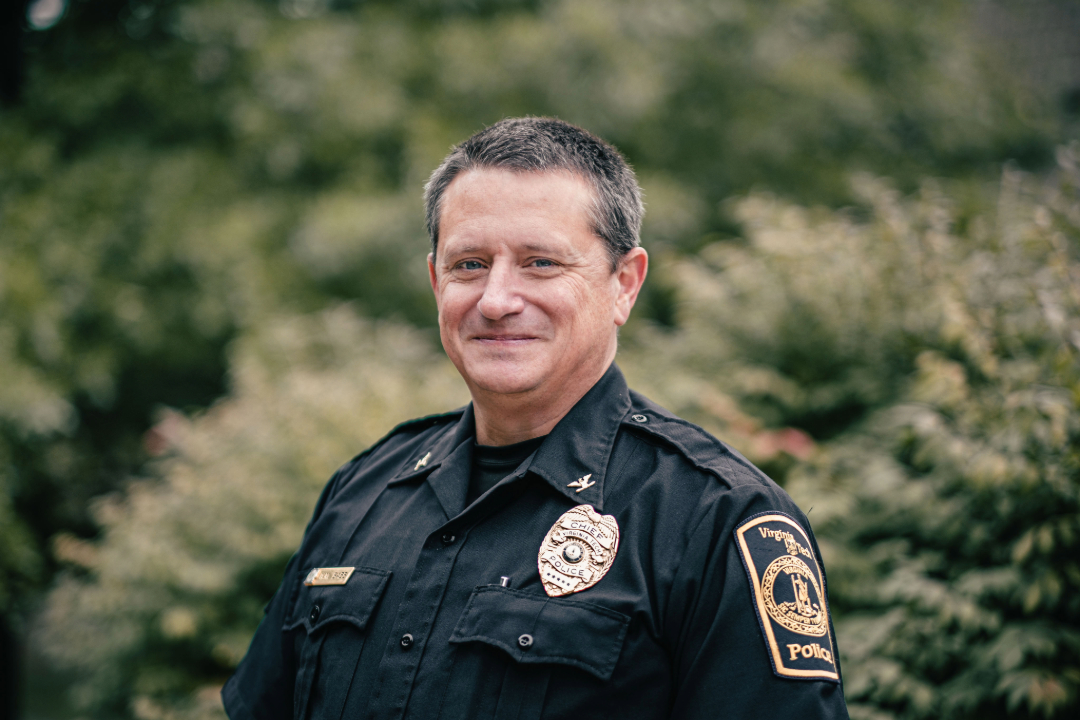
For Lt. Milford Palmer of the Virginia Tech Police Department, the planning begins long before graduates and their families ever step foot into Lane Stadium.

“For commencement itself, I’ve been in meetings for probably the last six months,” Palmer said.

According to Palmer, planning involves a high level of coordination between Virginia Tech Police, emergency management, event staff, and state law enforcement. Officers will inspect the venues, monitor crowd flow, prepare evacuation procedures, and conduct explosive canine sweeps.

“We have officers at every commencement ceremony,” Palmer said. “It doesn’t matter where it’s at — Burruss, Center for the Arts, Lane Stadium, Cassell — we still take the same precautions.”

The process becomes more complex when a political figure is involved.

“When we have these high-profile political figures, they have their own security teams,” Palmer said.

For events involving elected officials such as Spanberger, Virginia Tech Police coordinates with Virginia State Police and outside security teams while continuing to manage the safety for students, graduates, and visitors across campus.

Planning shifts based on what is happening nationally or globally, but the goal remains the same — protecting the overall community.

“The world’s climate definitely heightens my security levels depending on what’s going on in the world at the time,” Palmer said.

Still, he emphasized that increased precautions are intended to protect everyone attending, not only the invited speaker.

“The world’s climate definitely heightens my security levels depending on what’s going on in the world at the time.”

According to Mark Owczarski, the university spokesperson, commencement planning is part of the university’s larger infrastructure for hosting large scale events year-round.

“The key to running big events well is planning,” he said.

Commencement involves a year-round planning committee involving multiple parties such as university administrators, emergency management, law enforcement agencies, and operations staff. Different aspects like parking, traffic patterns, accessibility, inclement weather plans, and emergency communications are all taken into account before guests even arrive on campus.

Owczarski said the planning process extends beyond coordination between security and emergency management, requiring nearly every aspect of university operations to adjust throughout graduation weekend.

The university transforms its normal operations to accommodate the influx of visitors in Blacksburg. Roads surrounding Lane Stadium experience increased traffic and security personnel are stationed across the multiple venues hosting ceremonies throughout the week. Employees are encouraged to work remotely to reduce congestion and create additional parking near Lane Stadium.

“We change the circumstances of the day and what we’re asking people to do based on how many people will be there,” Owczarski said.

The level of preparation and emergency coordination the university has in place became visible during Virginia Tech’s spring football game when a skydiver crashed into the Lane Stadium scoreboard after strong winds pushed him off course. The incident delayed the game as emergency personnel and stadium staff worked to rescue the skydiver.

While officials describe the incident as an unexpected accident, it highlights the type of emergency response planning required during large-scale public events hosted by the university.

“If that didn’t happen three weeks ago it probably would’ve sounded silly,” Owczarski said. “But you prepare for all the potential things, and you plan accordingly.”

Although much of the planning happens behind the scenes, students are often most aware of security measures when there is an increased police presence.

Earlier in the fall semester, increased security surrounding a Turning Point USA event on campus drew attention from students as protesters gathered outside Burruss Hall, where the event was taking place.

“There were police on the Drillfield surrounding every corner and so students took notice,” Emma Roshioru, president of the Undergraduate Student Senate, said.

The event took place two weeks after the fatal shooting of conservative commentator Charlie Kirk at Utah Valley University in Orem, Utah, intensifying national conversations surrounding political gatherings and campus safety.

For some students, visible security measures can create reassurance, but for others they can significantly alter the atmosphere of campus.

“Our attention naturally goes to law enforcement presence,” Roshioru said.

Moments of heightened security can quickly shift the atmosphere on campus, even for students who are not directly attending the event, according to Roshioru.

“A student could just be trying to walk to class and then they notice a ton of police officers,” she said. “That can be alarming and also stressful for anyone.”

“I think the tension will always be there, but it balances out with wanting to feel safe.”

Roshioru said that students often interpret increased police presence differently based on their own experiences and relationships with law enforcement.

“Everyone has very different experiences with law enforcement,” she said. “For other students who have not had positive experiences, that can be alarming.”

At the same time, she said that students understand why universities are becoming more cautious surrounding political events.

“It’s hard for that tension to go away,” Roshioru said. “I think the tension will always be there, but it balances out with wanting to feel safe.”

That tension — between campus safety and openness — has become increasingly common on college campuses nationwide as universities navigate political polarization, protests, and growing concerns surrounding campus violence.

Across the country, universities have become sites of political demonstrations, politically divisive speakers, and debates surrounding free expression and public safety. From pro-Palestine encampments to controversial speaker events, colleges have faced a growing pressure to balance students’ rights to protest with maintaining a safe campus environment.

This balancing act has become especially visible during events involving political figures, where heightened security measures can unintentionally change how students experience public spaces on campus.

At Virginia Tech specifically, those conversations hold additional weight due to the university’s history. After almost 20 years since the April 16 shooting, campus safety remains a core aspect in the university’s infrastructure and identity.

For many students, perceptions of safety are often shaped by the atmosphere surrounding major campus events than the policies behind the scenes.

Roshioru said that students today are politically active and more willing to participate in protests than in the previous years.

“Virginia Tech didn’t really experience that many protests that often, especially from students, and now they’ve gotten the ball rolling,” she said. “Students feel more empowered to do that, and they feel safe in doing so.”

Palmer said that Virginia Tech Police work directly with protest organizers to ensure that they remain safe while protecting students’ rights to free expression.

“It’s really not something that we’re concerned that protesters are there, it’s a common thing now, it’s just we would like to educate them to do it the proper way,” he said.

Instead, officers focus on maintaining safety while preventing conflicts between opposing groups.

“This is a freedom of speech, it’s not something that we want to say no to,” Palmer said.

Roshioru said that communications from the university remains one of the most important factors in helping students feel more informed rather than alarmed during high profile events.

“Communications is something that we could always have more of,” Roshioru said. “Having communications put out further in advance for students, their families, the greater community would be beneficial.”

As commencement approaches, Virginia Tech has published online guidance for graduates and guests outlining important information and expectations ahead of the ceremonies. The university’s commencement FAQ page outlines security expectations for visitors attending events across campus, part of a larger effort to prepare for the thousands of visitors expected to arrive in Blacksburg.

As political tensions and security concerns continue shaping campuses nationwide, communication has become part of how universities manage the atmosphere surrounding major campus events.

While much of the security planning for commencement will remain invisible for attendees, the visibility of police presence and heightened precautions surrounding political figures can shape how students experience campus during those moments.

For many attendees, commencement will feel the same — graduates walking across the stage, families filling Lane Stadium, and crowds gathered throughout campus.

Behind the scenes, however, months of coordination between university officials, law enforcement agencies, and emergency responders will continue operating quietly in the background, reflecting how universities are increasingly balancing celebration, free expression, and security in a changing political climate.