By Megan Reese, politics and government reporter
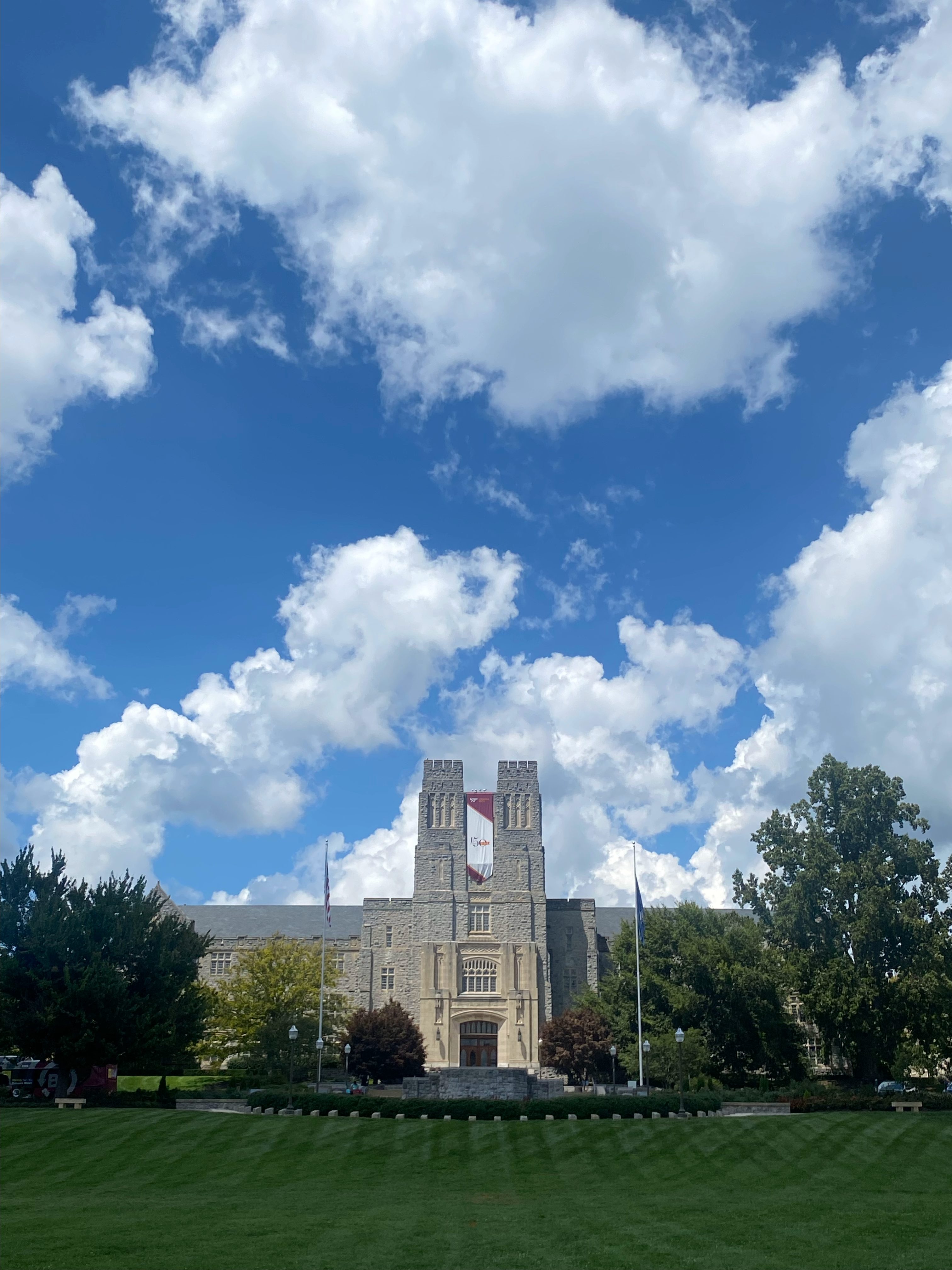
On April 9, Virginia Tech’s President Tim Sands addressed Hokies everywhere in a letter that he would be stepping down from his position. He acknowledged what the community has accomplished in the 12 years since he began his presidency, and confirmed he and his wife plan to stay in Blacksburg.
“It is now time, while Virginia Tech has momentum on so many fronts, for me to start the process of stepping aside so that the next president can take the baton in full stride,” Sands said in his letter to Hokie Nation.
Virginia Tech has gained significant momentum in Sands’ 12-year tenure. According to Virginia Tech News, the university experienced a 30% increase in undergraduate enrollment, 200% increase in applications, 70% increase in extramural research expenditures and 185% increase in the university’s endowment.
Although the numbers show impact, you can see it on the Blacksburg campus as well.
“Ten years ago, [North Academic District] was nothing but a big old parking lot,” said Mark Owczarski, university spokesperson. “Now we have state-of-the-art labs, attracting world-class faculty that are working on huge massive things, everything from curing cancer to engineering improvements.”
The North Academic District is nearly 500,000 square feet that directly impacts students with new academic buildings, a new dining hall and the Undergraduate Science Laboratory. This expansion has not only impacted students currently on campus, but attracts potential students and faculty to join the Virginia Tech community.
Beyond the Blacksburg campus, there have been advancements in Roanoke, Va. with the Virginia Tech’s Health Sciences and Technology Campus. The campus is home to Fralin Biomedical Research Institute at VTC, the Virginia Tech Carilion School of Medicine, the Translational Biology, Medicine, and Health Graduate Program, the Virginia-Maryland College of Veterinary Medicine’s Animal Cancer Care and Research Center, and more. Virginia Tech News reported the campus doubled the university’s economic impact in Roanoke.
There were also significant strides made in the Washington D.C. area. In the spring of 2025, Virginia Tech opened its Innovation Campus in Alexandria, Va. The building is known as Academic Building One and is home to the new Institute for Advanced Computing. The institute supports industry and government partnerships, and with its close proximity to the nation’s capital, benefits graduate students immensely with learning how to address global issues.
The building also houses graduate programs for the Pamplin College of Business and College of Engineering.
“I would say we are a globally recognized premier research university that is going to go out and make the world a better place, and President Sands played a pivotal role in that,” Owczarski said.
Another highlight of Sands’ legacy is the Virginia Tech Advantage, which is a university-wide initiative to provide support for in-state students to do research, study abroad or complete internships with fewer financial barriers.
Providing students with a full experience inside and outside of the classroom helps to contribute to Virginia Tech’s strategic priorities. Virginia Tech Advantage will achieve these goals by doubling the amount of Hokies in the Presidential Scholarship Initiative to 800 students, provide more opportunities for paid internships and provide study abroad experiences and so much more.
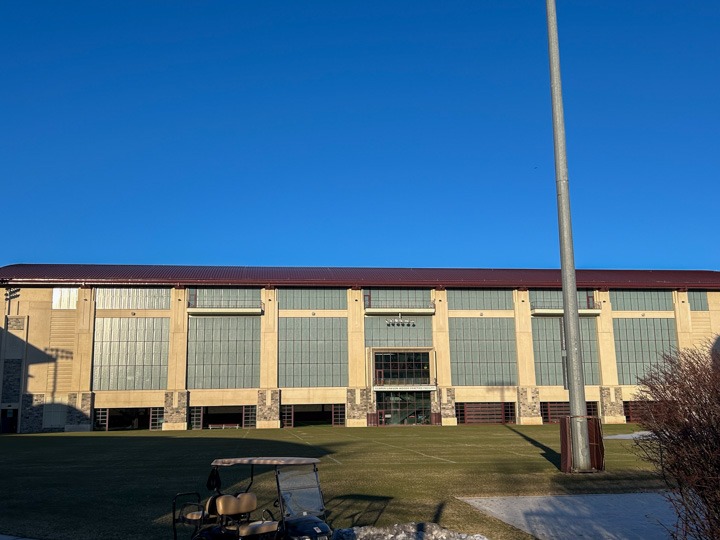
Another huge part of Sands’ legacy will be the support he provided to Virginia Tech Athletics. The athletics program is currently in the process of rebuilding with an approved $229 million being invested in it, a new head coach for Virginia Tech football and the search for a new Athletic Director as Whit Babcock announced his retirement.
It is no secret that an elevated athletics program attracts national visibility and the attention of prospective students, which is greatly beneficial to the university as a whole. Although Sands is passing the baton, he will be remembered for helping begin this new chapter.
The question remains, who will come next? Although a successor has not been named yet, Sands plans to help assist with the transition until the new president is ready to lead.
“The university is grateful for President Sands giving our community the advanced notification that he is approaching that time [to step down] but willing to stay on board until a new person is identified,” Owczarski said.
The university has already begun the process as the search committee met virtually on Monday, May 11 to discuss next steps. The committee includes the members of the Board of Visitors and because of that, there was a livestream. The committee did move to a closed session, but more information is to be expected as soon as they can update the community.
The Virginia Tech community was invited to two listening sessions, one for students and one for faculty and staff. The purpose of the sessions was to allow students, faculty and staff to share their insights on the characteristics they seek in the next Virginia Tech president.
“A university president has to balance all these competing interests, while also demonstrating they are a rational leader, who shows empathy, a belief in equity, and in institutional strengths such as academic freedom and shared governance,” said Justin Lemkul, Virginia Tech Faculty Senate President.
Lemkul is a voice for the faculty on the search committee, and he intends on making sure that voice is heard.
“Faculty, staff, and students are central to everything we do here,” Lemkul said. “University presidents set priorities, advocate on behalf of the university, and establish a vision for where the institution will go. Executing that vision requires collective buy-in and support from all constituents at the university.”
There is a concern for the search happening prominently over the summer, while many faculty and students are away. According to the livestream of the search committee, they can only meet one more time virtually this year, then they must be in-person for meetings, which can be difficult with members of the committee being located all over the country.
“It is essential that the process have the trust of the university community,” Lemkul said. “Any appointment made while many individuals (faculty and students) are away from campus and thus somewhat dissociated from university business risks undermining the confidence we have in the search process and the next president, regardless of who it is.”
Lemkul also emphasized the importance of providing sufficient opportunities for finalists for the position to interact with students, faculty and staff as it builds a strong foundation for relationships made with the new president.
Leading a large land-grant institution is no simple task, and that is why the presidential search committee will take time. As for who it will be, there are certain boxes that person must check.
“We need a leader who has the capability of leading a large institution of higher education, and knowledgeable for the attributes that Virginia Tech has,” Owczarski said. “A longer answer will come on [a presidential search] website as we post the position description and the attributes that the search committee believes is essential for that next leader.”
For now, a community thanks Sands as he steps down from what was a very successful 12-year tenure. His predecessors set him up for success, and he plans to do the same.
“[Sands recognizes] that he can’t do it all in a 12, 15, 20 year block,” Owczarski said. “He has got to be able to pass that baton in full stride as he says, and make sure that the future of Virginia Tech is secure.”
Twelve years is a long time with a long list of accomplishments, so how do you sum up a legacy like that? The university’s spokesperson puts it simply.
“President Sands was able to take that potential and make it reality,” Owczarski said.
Although he is approaching retirement, Sands and his wife, Laura P. Sands, have no plans on leaving Blacksburg. In his letter to the community, he said the two will always be Hokies, and this place is home for them. The search for a new president remains, and Sands will be in Blacksburg to guide his successor in a smooth transition.