
By Josie Sellers, health and wellness reporter
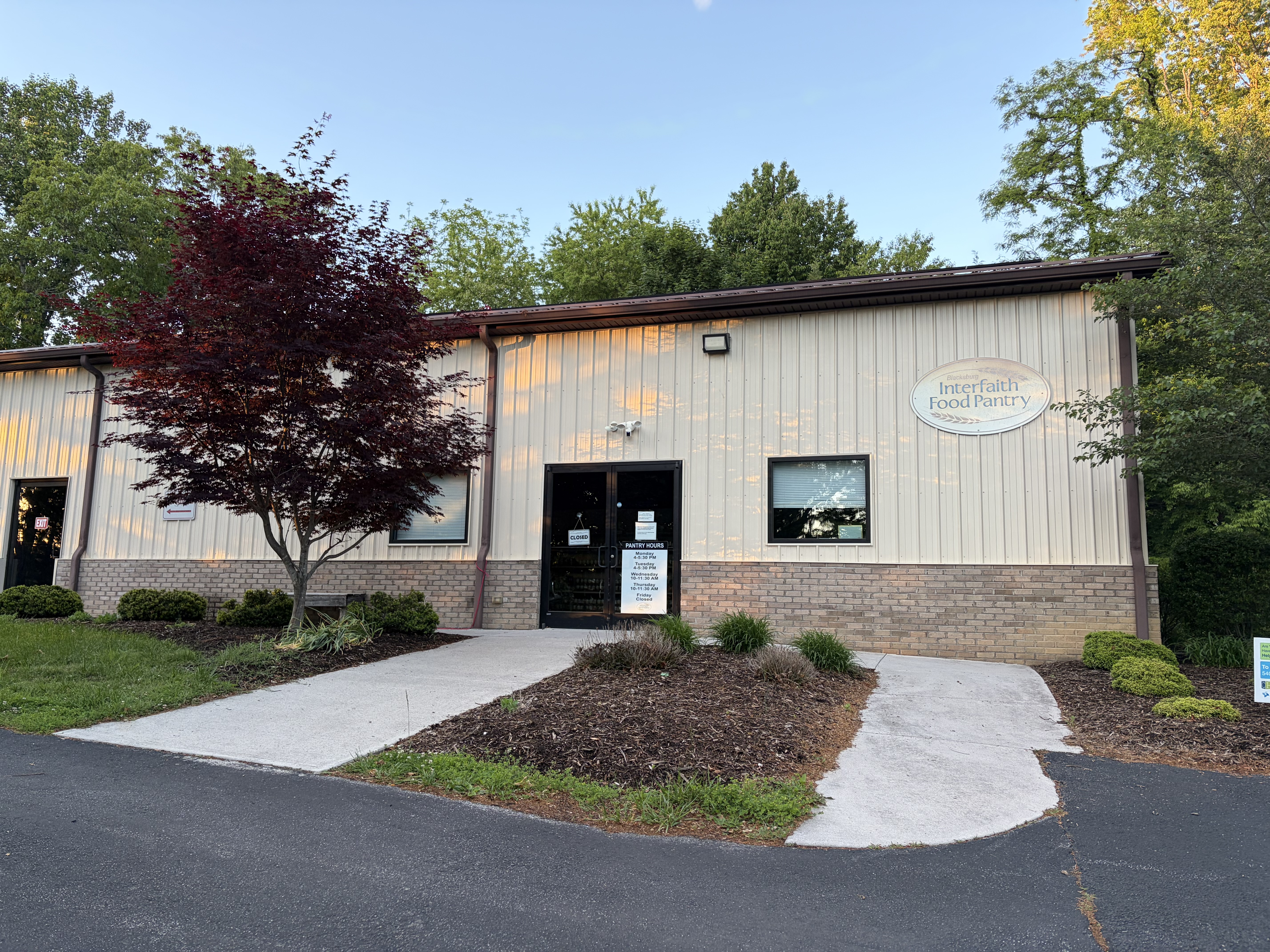
Interfaith Food Pantry in Blacksburg, Va., Monday, May 11, 2026. (Josie Sellers, TheNewsFeedNRV) 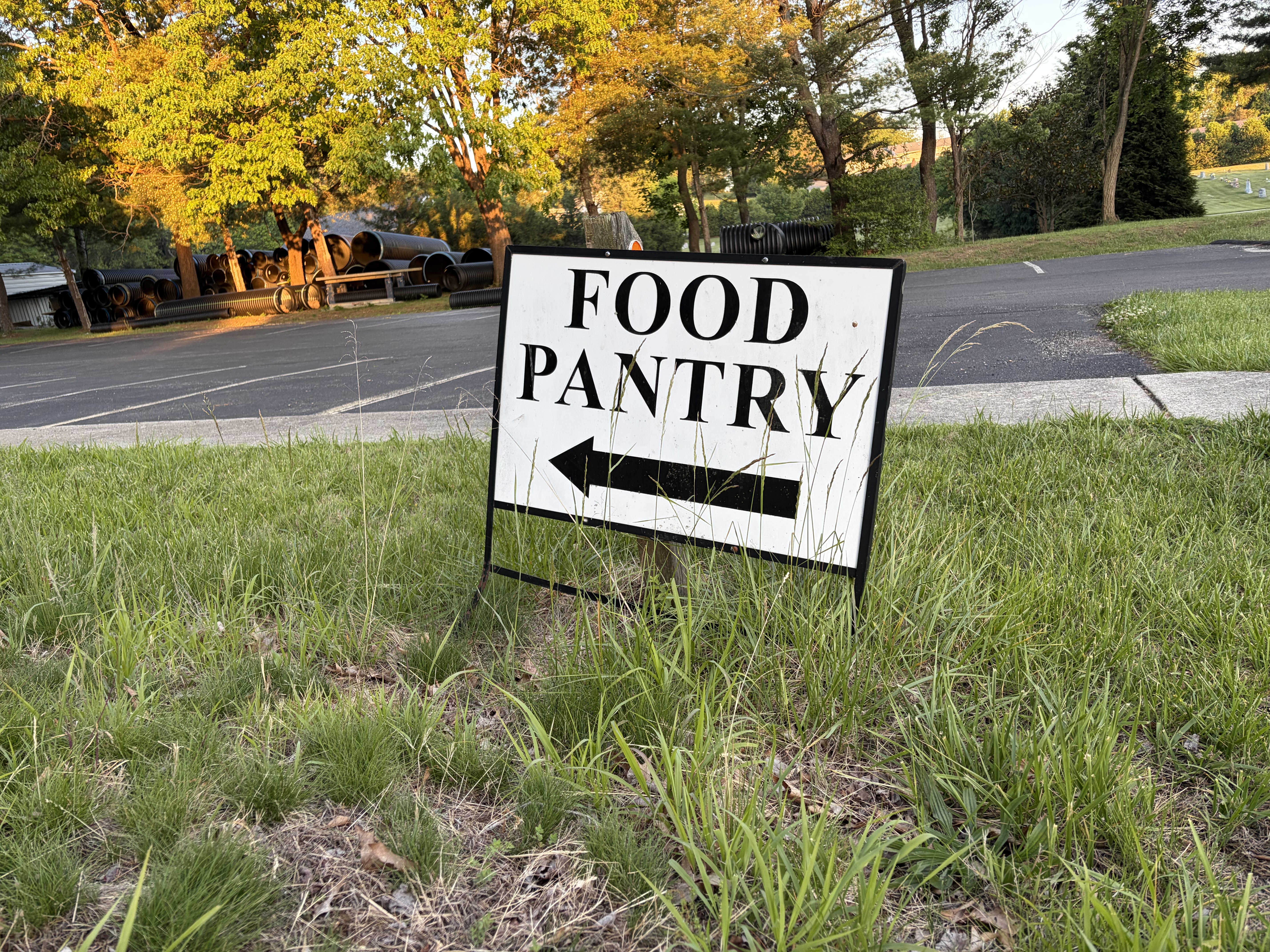
Sign giving directions to Interfaith Food Pantry in Blacksburg, Va., Monday, May 11, 2026. (Josie Sellers, TheNewsFeedNRV) 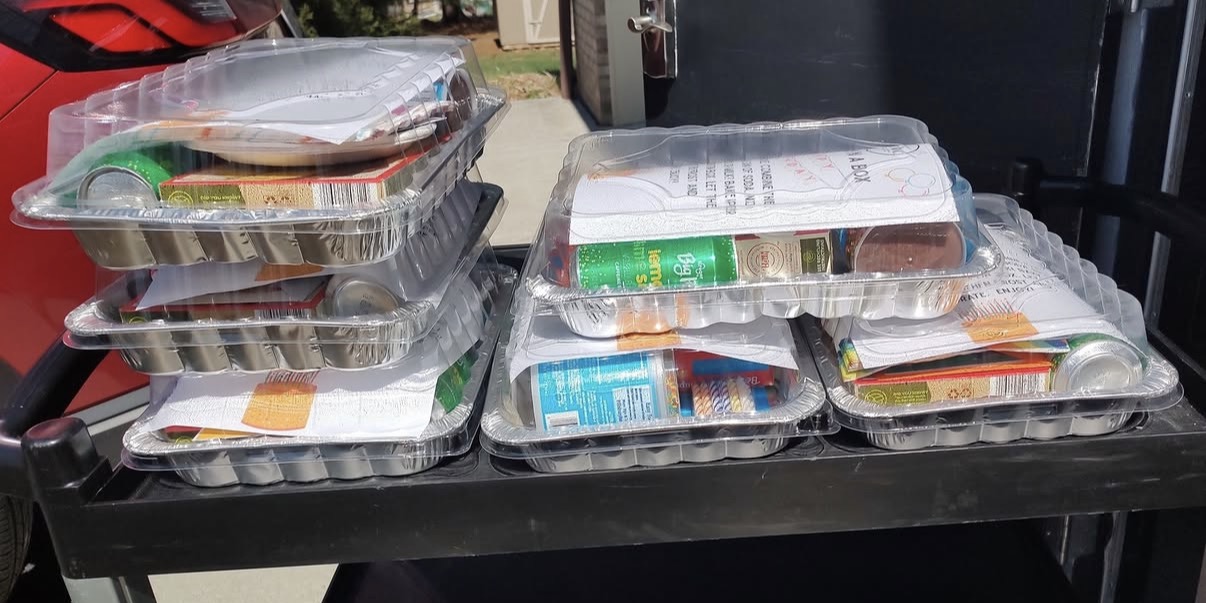
Donation boxes from the Blacksburg Junior Women’s Club to the Interfaith Food Pantry in Blacksburg, Va., March 31, 2026. Photo via Instagram/@blacksburgfoodpantry
Food is something most of us never think twice about. But according to the Community Foundation of the New River Valley (NRV), roughly one in ten families in the region struggle to get enough to eat. The nonprofit says food insecurity here stems from a tangle of overlapping causes, and that tackling it requires just as many solutions.
In the NRV, there are many reasons why a person or family may be considered food insecure, and many times, they are intertwined.
“Food insecurity is such a complex issue in and of itself, but if you’re experiencing food insecurity, it could be that that’s a chronic issue for you, and maybe you’re dealing with an illness, or you can’t afford childcare,” said Community Foundation of the New River Valley Assistant Director Lindsey Gleason-Reed. “So often, you don’t see just one issue. You see many interconnected issues.”
In the NRV specifically, a lack of transportation contributes largely to food insecurity. In the region, 6% of residents lack a vehicle and more than half live more than two miles from a grocery store. Also, rising gas prices can cause financial strain. This limits not only access to food in general but also access to nutritious or culturally appropriate foods, meaning foods that align with a person’s cultural identity.
“It’s really hard for somebody who doesn’t have stable housing to think about food preparation, meal preparation and eating healthy when they just need to get something to sustain them,” said New River Health District Director Noelle S. Bissell.
However, a lack of healthy food can lead to chronic health issues like obesity, heart disease, diabetes and high blood pressure. In addition, it contributes to mental health problems such as anxiety, depression, sleep disorders and eating disorders.
Another consequence of food insecurity is that it can be hard for people to complete their everyday tasks when they are hungry.
“If you are a child or a college student, either in school or on campus, and you don’t have access to food or you’re hungry, it’s hard to focus,” said Virginia Tech research assistant professor Sarah Misyak. “It’s hard to study. It’s hard to be as productive at work.”
In the region, there are initiatives designed to combat food insecurity. For example, food pantries and donations provide nourishment and meals. The Market at Virginia Tech provides food for students who need assistance, and it also offers times when anyone enrolled in the institution can come to get non-perishable items.
One of the largest organizations working to address local food access issues is called Thrive. Thrive is a network of food organizations in the NRV, including “farms, food banks and pantries, community gardens and meals programs.” By working together and sharing information, they try to maximize the amount of food they can give to those in need. In addition, they hold monthly workshops for their nonprofit partners and give out grants designed to optimize their work.
“There’s a lot of different ways to distribute food, but what we’ve seen for a long time in this community is how collaborative everyone is,” said Gleason-Reed. “So, people want to help one another. They want to share ideas.”
Bissell emphasizes the importance of helping those in need without judging them.
“Those in health care who are decision makers and policymakers are the very people who stigmatize the most marginalized populations the most,” said Bissell. “So, those folks tend to get forgotten, and certainly those with substance use disorders. We kind of vilify or criminalize those who have issues with substance use. Same thing with those who are homeless. We tend to kind of judge them and say that it’s through their own making, their own doing, that they end up homeless, when the reality is that a lot of these folks are dealing with so many generational issues.”
There are certain methods of distributing food that make it more likely that people will use their services. The more convenient it is to get food, the more likely it is that people will come. People also tend to enjoy having a say about the kinds of food they receive, so some like going to places with more choices. People are also more likely to go somewhere they feel a sense of community.
Additionally, some places require more documentation to receive help than others. For example, some organizations need to see a pay stub, while others will give anyone food who says they need it. However, the more documentation required, the more barriers to accessing food.
Many Americans are only one financial emergency away from being food insecure. According to a Federal Reserve poll, 13% of Americans would not be able to cover a $400 emergency, and many others would struggle to pay it.
“It could be any one of us,” said Bissell. “Maybe you just lease a really nice new car, and you lose your job, and then you drive up to the food pantry and people think, ‘Well, why is this person here?’ And it’s because you don’t know their story.”
According to Misyak, recent changes to the Supplemental Nutrition Assistance Program, SNAP, will impact many citizens’ ability to get food. Previously known as food stamps, the programhelps about 42 million Americans buy food each month, or about one in eight.
“When you increase the administrative burden to apply for SNAP, that is effectively a way to kick people off of SNAP,” said Misyak. “So, you’re going to see huge changes across the country, and we’re already seeing them in some states where millions of people are losing access to benefits to help supply food.”
In 2025, federal budget negotiations included proposals to reduce funding for SNAP and tighten eligibility requirements. These proposals would expand work requirements for some adults and increase documentation requirements, which changes critics say could make it harder for eligible individuals to receive benefits. Some proposals also sought to narrow eligibility for certain non-citizens.
“People are going to have all these benefits cut, and the benefits weren’t that great to begin with,” said Gleason-Reed. “People are not living large on these benefits. So, the fear was with our pantries, was ‘Are we going to be able to help people?’ We think that there’s going to be a flood of people. Anecdotally, what folks have told us is we are seeing more people serving more people than ever, and we’re finding ways to make it meet, but I think so many organizations are stretched to capacity, and they need more volunteers.”
The Urban Institute estimates that 5.4 million Americans will be affected. In Virginia, families could lose an average of $112 in benefits each month, limiting their ability to feed themselves.
“People want to help one another.”
To try to keep up with the demand for food, food pantries in the area are working together with other organizations like Thrive. In addition, individual volunteers provide help. For example, Pearisburg resident Charlie Herbert started the Giles Community Garden in his backyard.
Herbert grows food in this garden and, with the help of volunteers, delivers truckloads of food multiple times a week to organizations around the region. Since 2024, he has delivered over 124,000 pounds of food. He emphasizes the need for help as SNAP benefit reductions leave more people struggling to afford food.
“It could be any one of us.”
Ending food insecurity involves more than just providing meals. It means reducing stigma, improving transportation and expanding access to local support.
Volunteer opportunities are available throughout the NRV, including through the Agape Center, Blacksburg Interfaith Food Pantry and Feeding Southwest Virginia.
“It can feel like sometimes you’re like, chipping a little bit of ice off of this massive iceberg, but when you’re all chipping away together, it feels like it feels good to have those little wins likehelping a family or a student get food,” said Gleason-Reed. “And sometimes that’s all you can do within the structure that we’re living in.”
Residents seeking food assistance can find local resources through the NRV Food Assistance Directory, which includes food pantries, churches and other organizations throughout the region.

