
By: Diego Canales, education reporter
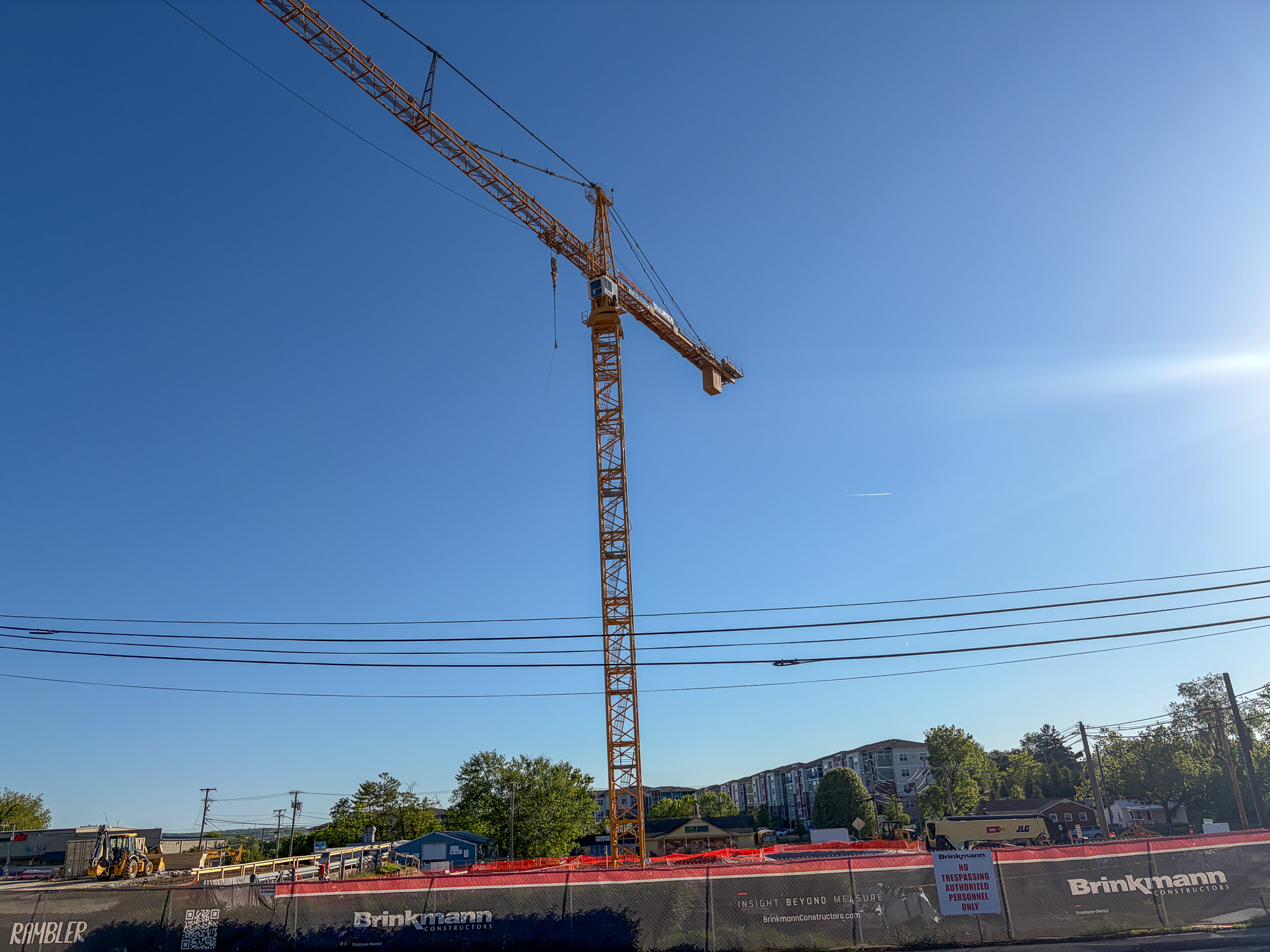
Planning: Eight story project The Rambler under construction Blacksburg, Va., May 11, 2026 (Diego Canales, The Newsfeed NRV)
Blacksburg, Va.— Ongoing and simultaneous construction projects across Virginia Tech’s campus are creating widespread disruptions for students this semester, affecting daily movement, study environments, and overall campus experience.
University officials and private developers have continued expanding housing and infrastructure in response to rising enrollment, increased demand for student housing, and long-term campus growth planning. One of the most visible and disruptive projects is an eight-story apartment building currently under construction along North Main Street near Virginia Tech’s campus.
The project, known as Rambler, is being developed by Brinkwater Constructors. It is designed to add hundreds of student housing units to the area and includes studio, one-bedroom, and multi-bedroom apartments. The building will include shared study lounges, fitness areas, and retail space on the ground floor.
Construction began in late 2025 and is expected to continue for several years before completion. According to reporting from WDBJ7, the project is one of several large developments shaping the North Main Street corridor and is part of a broader push to increase housing capacity in Blacksburg.
While the long-term goal is to help ease housing shortages and support growing enrollment, the short-term effects are already shaping daily student life.
At the same time, Virginia Tech has multiple other construction projects underway. These include academic building renovations, infrastructure upgrades, utility work, and additional housing development across campus.
Because so many projects are happening at once, disruption is not limited to one area. Instead, it spreads across multiple parts of campus, often overlapping in key student routes.
Sidewalks are frequently closed or redirected without long notice. Temporary fencing often shifts pedestrian flow into narrow paths, which slows movement between buildings. This added extra stress to student routing when getting to school on time. This leads to adapting to different ways to get to school because some areas do not have accessible ways to get around campus.
The eight-story North Main Street apartment building has become one of the most noticeable sources of disruption due to its scale and location. It sits near heavily used student corridors, meaning construction activity directly affects daily movement for many students.
Heavy machinery, cranes, and construction trucks operate throughout the day. This creates constant noise that spreads into nearby academic buildings, sidewalks, and residential areas.
The sound is not limited to the immediate construction site. Because of the size of the project, noise often travels across surrounding blocks, especially during peak daytime construction hours.
With multiple projects occurring at the same time, students describe the overall campus environment as constantly changing. New fences, detours, and blocked entrances appear frequently, forcing students to adjust routines repeatedly.
For senior student Bryan Smith, the impact of construction has become a regular part of his daily schedule. He explained that even basic movement across campus now requires more planning than before.
“It feels like every week something new is blocked off or rerouted,” Smith said. “You can’t just assume your normal path is open anymore, so I always have to leave earlier just to make sure I’m not late.”
Smith also said that construction noise has affected his ability to focus during the day. He noted that studying between classes or sitting near academic buildings has become more difficult because of constant background sound. He also emphasized that the noise can make it difficult to maintain a consistent sleep schedule, especially on weekdays when construction is most active.
“It’s hard to concentrate when you hear drilling or trucks all day,” he said. “Even when you try to ignore it, it still breaks your focus.”
Matt Gambria, a project manager involved in the eight-story Rambler development in Blacksburg, explained that developments like this are designed with both current and future students in mind, offering updated amenities and higher-density housing close to campus. At the same time, Gambria acknowledged that construction can be disruptive in the short term, especially in busy student areas. He noted that teams try to manage noise, traffic, and safety concerns as much as possible, but with a project of this scale, some level of disruption is unavoidable while the building is underway.
“Any project of this scale is going to have short-term impacts on the surrounding area, but the goal is to deliver long-term value for students and the community,” Gambria said.
Town officials have also pointed to continued development as a response to long-term housing demand in Blacksburg. With more students enrolling each year, both the university and private developers have increased efforts to expand housing capacity close to campus. These projects are intended to reduce strain on the local housing market while keeping students within walking distance of classes.
Students like Bryan Smith say that what used to be simple routines, like walking from residence halls to class or meeting friends between lectures, now require more time and planning. Many have experienced unpredictability has become one of the most frustrating parts of the experience.
Beyond transportation and noise issues, students have also reported reduced access to common outdoor and social spaces. Many areas that were previously used for studying, relaxing, or meeting between classes are now partially or fully blocked due to construction staging zones, equipment storage, or safety fencing.
These changes have reduced the number of open gathering areas available on campus. As a result, students often cluster in fewer remaining spaces, which can lead to congestion and less comfortable environments during peak hours between classes.
Some students have been affected by the loss of open spaces that have changed how they interact socially on campus. Informal meetups, group studying, and spontaneous gatherings that used to happen in open quads or grassy areas now occur less frequently or are moved indoors.
Faculty and staff are also affected by the ongoing construction. Some classrooms and office buildings experience temporary access changes, altered entrances, or nearby noise disruptions. In certain cases, scheduled routes for campus services or deliveries must be adjusted due to blocked roads or restricted access points.
Even when updates are provided, overlapping construction timelines across multiple projects can still cause confusion. Students and staff often have to adjust plans depending on which areas are active at a given time.
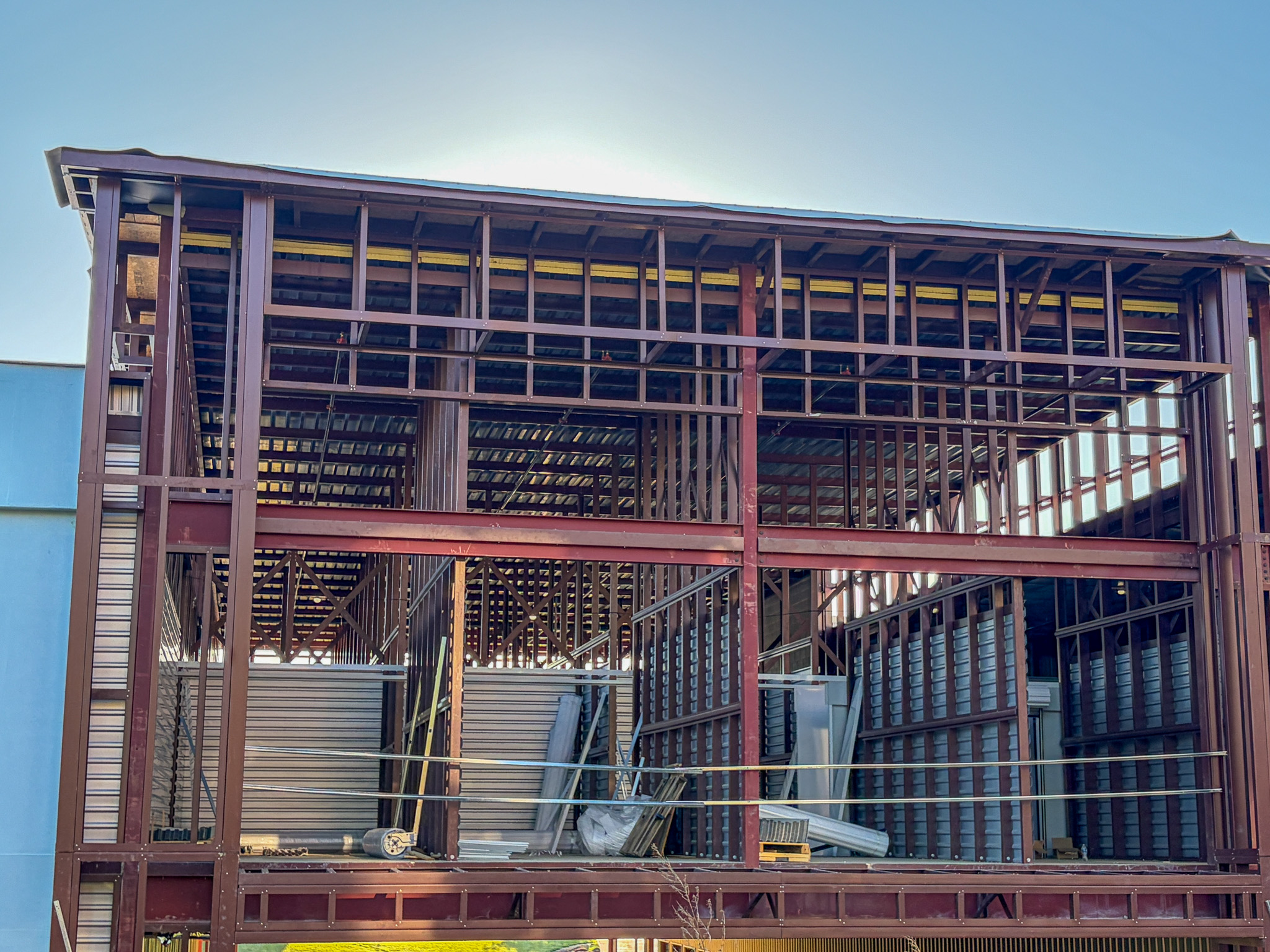
Management: Steel beams rise as ongoing construction continue to reshape campus infrastructure Blacksburg, Va., May 11, 2026 (Diego Canales, The Newsfeed NRV)
Despite these disruptions, university officials and developers say the construction is necessary. Virginia Tech continues to grow, and Blacksburg is facing ongoing housing shortages that require expanded capacity.
Projects like the eight-story Rambler apartment building are intended to increase housing supply, reduce pressure on the local rental market, and provide more modern living spaces for future students.
“The goal is to deliver long-term value for students and the community.”
Still, students overall have been faced with a current experience that is defined by disruption. Noise, detours, and blocked pathways have become part of everyday campus life.
Many describe Virginia Tech as being in a constant state of transition, where movement across campus requires flexibility and patience.
Students say communication about construction changes could be improved. While updates are sometimes provided, sudden closures or unclear detour signage can make it difficult to plan ahead. Students say clearer maps, more consistent updates, and better signage could help reduce confusion and make navigating campus easier during ongoing projects.
As construction continues across campus and the surrounding Blacksburg area, students are navigating a university that is actively being rebuilt around them—one project at a time.
“You can’t just assume your normal path is open anymore, so I always have to leave earlier just to make sure I’m not late.”
Students also say the constant changes across campus have affected how they manage their time. Many now build extra minutes into their schedules to account for detours, crowded walkways, and unexpected closures. For some, this means leaving earlier in the morning or cutting down time between classes to avoid being late.
In addition to time management, construction has influenced where students choose to spend their day. With some study areas and outdoor spaces blocked off, students are often forced to find alternative locations. Libraries and common indoor spaces have become more crowded, especially during peak hours, making it harder to find quiet places to work.
Despite the challenges, some students understand the purpose behind the construction. While the current experience can be frustrating, many recognize that the new buildings and improvements will benefit future students.

