How ownership and politics are shaping TikTok and the social media landscape in Virginia

by Hunter Grove, science and technology reporter

Over the past couple of years the popular social media app TikTok has become a “political football” among U.S. lawmakers and state governments. Now, with TikTok’s new ownership and Virginia’s new governor, Virginians might see some changes regarding regulation and app usage, but the future is still uncertain.

TikTok’s new ownership deal had been underway for a couple of years but was officially enacted on January 22nd, 2026. The app’s U.S. operations were transferred to a newly created company called TikTok USDS Joint Venture LLC. The change was made in order to keep the app unbanned in the U.S. and to give lawmakers more domestic control. After suspicions arose of information being stolen and anti-American propaganda being fed through the app, it was important to the U.S. government to see the app banned if kept in foreign hands. 

With the change in ownership now finalized, attention in Virginia has shifted toward how the state’s new governor plans to approach TikTok and similar platforms moving forward. Governor Abigail Spanberger emphasized data security, transparency, and the protection of public institutions in the past, signaling that Virginia’s policies would likely coincide with federal suggestions. This could mean continued restrictions on government-issued devices and state networks, as well as an overall increased push for accountability. However, at this stage, not much is known about Virginia’s plans for mandating the app or what federal guidance might suggest.

For more information, I spoke with Dr. Megan Duncan, an associate professor in the School of Communication at Virginia Tech. The following interview has been edited for clarity and length.
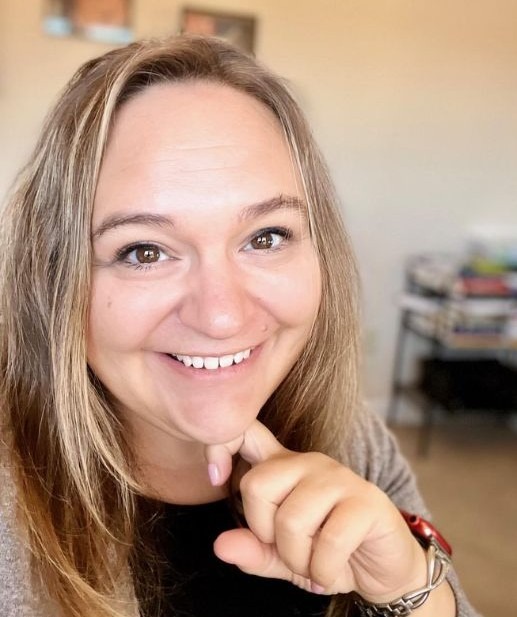
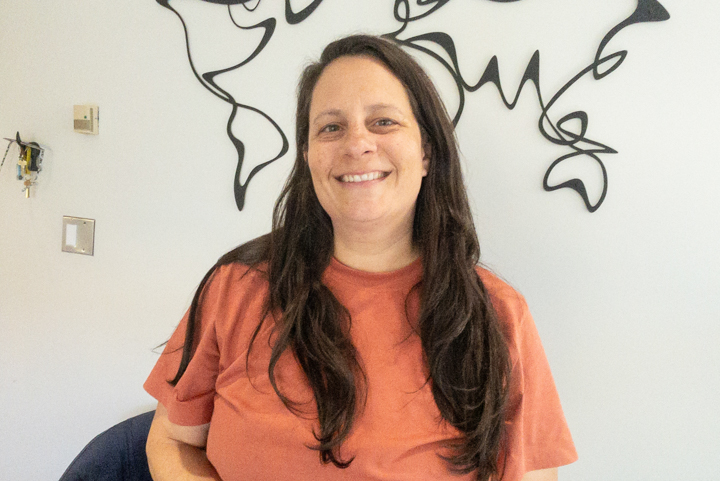
Dr. Megan Duncan, professor of communications and social media at Virginia Tech

How has TikTok’s role changed in the U.S. political and cultural landscape over the years?

TikTok has become a political football in the sense that debates at the national and state level often aren’t really about the app itself. While the push for a U.S. buyer was initially framed as a national security issue, much of the discussion—especially early in this administration—shifted toward using TikTok as leverage in negotiations over things like tariffs or taxation. As a result, the focus among policymakers has drifted away from national security and toward broader political goals.

How does TikTok’s new owner and Virginia’s new governor change the conversation about the app’s regulations as a whole?

I think we have yet to see what Governor Spanberger is going to do specifically about TikTok. She’s addressing some other concerns first. But there are a lot of concerns about regulation and policy around TikTok, especially at public institutions like Virginia Tech, where it’s banned and where there’s related legislation.

There are also broader concerns because in Richmond there are many state employees, and in Northern Virginia there are many federal employees who are still banned from having TikTok on their devices. A lot of this policy directly affects Virginia residents, federal workers, and people who work and learn at places like Virginia Tech.

The laws Virginia passed regarding state employees don’t include any trigger that would lift the ban if TikTok were sold to a U.S. buyer. Even if legislators believe a sale resolves the security concerns, fixing that issue appears to be a low priority right now, as they’re focused on other matters at different levels of government.

That said, there’s an opportunity to raise awareness with Governor Spanberger and state delegates to address this at the state policy level. As for new ownership, lawmakers are likely to trust the president and the executive administration to determine whether it resolves the security concerns outlined in the law.

How does new ownership for TikTok matter to the US lawmakers, and what concerns do you think they might have with that? 

It seems like lawmakers are going to trust the president and the executive administration to say that the new ownership fixes the security concerns addressed in the law. There was a mechanism in the law that said Congress was supposed to determine whether a new deal resolved those concerns, but instead we got an executive order saying that it does.

Congress could push back and argue that certification is their responsibility, but it doesn’t look like they’re going to. At the same time, we could see other legislation depending on how international relations develop. Part of how we got the law in Virginia was increased awareness, especially after the surveillance balloon incidents raised broader national security concerns.

What kind of authority does Abigail Spanberger have to regulate this kind of thing for Virginians? 

In conjunction with the state legislature, she can issue some executive orders, but mostly we’ll have to wait for legislation. Reversing the ban at public institutions or for public employees would require going through the legislature because it was passed by the delegates and state senators and signed into law by Governor Youngkin. If it had been just an executive order, she could have undone it easily, but changing a law requires legislative action.

Do you think Virginia’s approach to TikTok at all is going to change within the next couple of years? 

In a couple of years, we might see a change. There are a lot of organizations that go state to state to influence social media policy and law. That’s how we got the ban that went into effect on January 1st, limiting screen time for users 16 and under to just one hour. One advocacy group focuses on reducing mental health harms and screen time for that age group.

Because federal policy can move slowly, a common strategy is to get multiple states to implement similar policies. That’s exactly what this group did—they coordinated a consortium of states to pass similar legislation. You could think of these advocacy groups as lobbyists, but without the negative connotations; they have a mission to change policy. When they can’t influence federal law effectively, they target several states to achieve similar outcomes.
SCI/TECH: Inside Moltbook

By Jackson Woodling and Caitlin Whitfield —

Moltbook, the internet’s latest viral phenomenon. Moltbook, a social network created exclusively for artificial intelligence agents, where humans are allowed to observe but not post themselves.

Launched in January 2026 by entrepreneur Matt Schlicht, the site mimics the look and feel of Reddit but replaces human users with autonomous AI agents that can post, comment, and upvote discussions ranging from technical tips to philosophical musings.

We explore why this experiment in “AI social interaction” has captivated millions online, sparked debates about machine autonomy, and even led to security concerns after vulnerabilities in the system’s design were exposed.

How AI is changing everyday life at Virginia Tech and higher education

By Timothy Kwon, science and technology reporter

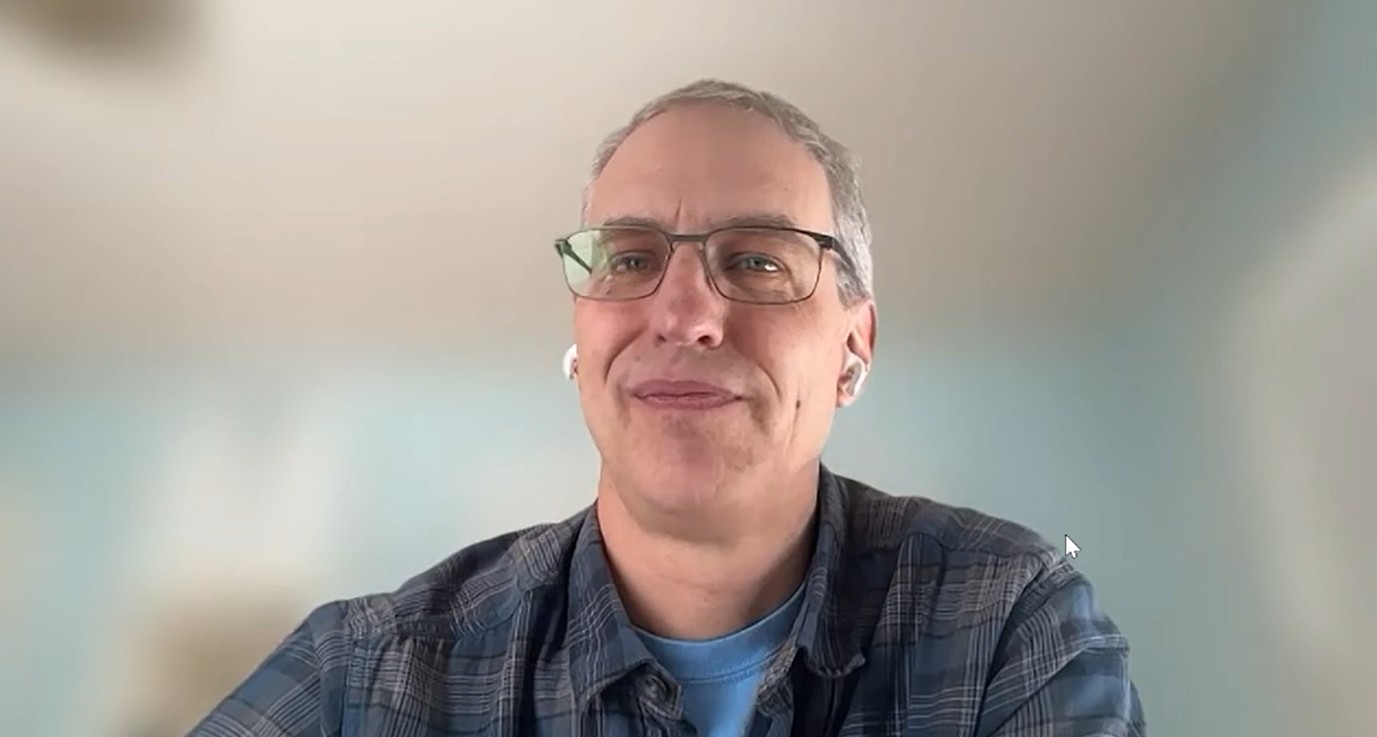
Artificial intelligence is becoming a regular part of daily life at Virginia Tech, affecting how students complete assignments, how professors teach classes and how research is conducted. From AI-powered writing tools to software that generates computer code, the technology is increasingly used across campus and is raising questions about learning, ethics and the future of higher education.

To better understand how AI is changing everyday academic life and what it means for students, Chris North, a professor of computer science at Virginia Tech, discussed how AI is already being used on campus, how it is influencing teaching and coursework and why adaptability will be important for students entering an AI-driven workforce.

This interview has been edited for length and clarity.

How do you define artificial intelligence for people who use it every day but don’t have a technical background?

Artificial intelligence is a broad term, but in general it refers to designing computer systems that behave in intelligent ways. These systems rely on large amounts of data and past experience to guide how they respond to users.

A common example is large language models like ChatGPT. These tools are trained on massive amounts of text from across the internet, which allows them to produce responses that sound realistic. They work by learning patterns from how people communicate and then using those patterns to generate new responses.

How has AI changed everyday academic life for students and faculty at Virginia Tech?

It affects different people in different ways. One example from my own experience involves mentoring graduate students who are writing and publishing research papers. Many of those students are international students, and English is not their first language.

In the past, I spent a lot of time correcting grammar and improving the readability of their drafts. That was time-consuming and not really the main focus of my job, which is to evaluate the quality of the research. Over the past few years, language models have helped take on that proofreading role. Now, when students submit drafts, the writing is usually clearer, and I can focus more on the science rather than grammar.

From the students’ perspective, AI can also help them think more critically about their writing. Some students use AI tools to summarize their work. If the summary does not match what they intended to say, it shows them that their writing needs improvement before they submit it.

How is AI changing the way professors teach and design coursework in higher education?

AI has forced professors to rethink traditional assignments. Many quizzes, homework problems and programming exercises can now be completed easily using AI tools. That raises questions about what students are actually learning if the technology can generate answers on its own.

In computer science, it is still important for students to learn the basics of programming. AI can write good code, but it can also write bad code. Students need to understand how to evaluate code, fix problems and think about issues like security.

The challenge for educators is figuring out how to teach these skills in a way that feels meaningful. Some professors are experimenting with assignments that allow students to use AI for an initial draft and then require them to critique or improve the work. The goal is to use AI as a tool while still encouraging critical thinking.

How should universities balance innovation with concerns about academic integrity, privacy and bias in AI systems?

There are still many unknowns. Higher education is very much in a trial-and-error phase when it comes to AI. Academic integrity is a major concern, especially when students can submit AI-generated work without fully understanding it.

Creating assignments that encourage thoughtful use of AI is difficult, and grading that type of work takes more time. In the past, many assignments relied on automated grading systems that simply checked whether an answer was correct. Evaluating students’ reasoning and reflection is more subjective.

Bias is another concern. AI systems may push users toward certain ways of thinking or problem-solving that are not always ideal. Universities are still figuring out how to address these issues, and it will likely take time to understand the long-term effects.

What advice would you give students who are worried that AI might replace certain jobs or career paths?

Concerns about AI are understandable, but they are not new. Similar worries existed during the rise of internet search engines like Google. At the time, people feared those tools would destroy jobs or harm society. Instead, they changed industries and created new opportunities.

AI will likely change jobs rather than eliminate them entirely. Some roles may disappear, but new ones will be created. The most important thing for students is adaptability. Education should focus on helping students learn how to adjust, be creative and use new tools as technology continues to evolve.

That is why banning AI outright in education is not helpful. Students need to learn how to use these tools responsibly so they are prepared for an AI-driven world.

Looking ahead five to 10 years, how do you expect AI to further change college campuses?

I am not very good at predicting the future, but I think mindset matters more than specific predictions. Approaching AI with fear is not productive. Instead, students and educators should view it as an opportunity to do new and innovative things.

AI will continue to develop quickly, and success will depend on how well people adapt. Universities should focus on teaching creativity, critical thinking and flexibility so students can take advantage of new technologies as they emerge.

How climate change impacts Indigenous communities 

By Emily Southern, science reporter

Eranga Galappaththi, an assistant professor at Virginia Tech, teaches a variety of classes surrounding geography, ecological systems and sustainability. 

His research focuses on complex human-environmental system changes and has a strong focus on Indigenous communities across the world. 

“I’m trying to understand how Indigenous people or communities experience climate change, specifically within the context of a climate-food-health nexus,” Galappaththi said. “I am also trying to understand the issues and dynamics around how they respond to climate change.”  

Galappaththi has strong research partnerships with the Indigenous communities in Sri Lanka, Canada and the Artic. He has published 36 peer-reviewed research articles in leading journals, including The Lancet Planetary Health, Nature Climate Change and One Earth, along with three book chapters. He has contributed to high-profile reports for the United Nations, like the IPCC and FAO. Galappaththi received his doctoral degree from McGill University in Canada.  

In an interview last week, Galathappaththi spoke on issues regarding climate change and affected communities. 

His comments were slightly edited for length and clarity.  

What motivates your passion for focusing on climate change affecting Indigenous communities? 

Fifteen years ago, I migrated to Canada because I’m originally from Sri Lanka. After I moved to Canada, I worked in the northern communities reserves which were mostly occupied by Indigenous people.  

Within my first three months I connected with those communities. I thought they would be a developed community, but I found that they were a very underdeveloped country. I was very touched, and I connected with those people and that’s how I continued my research with these communities. Slowly after my doctoral degree, I expanded to other countries as well with the help of other researchers and globally connected networks. 

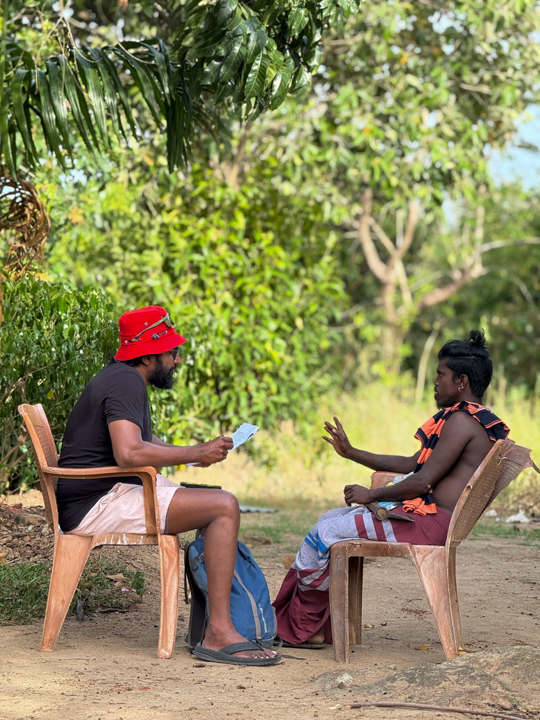
Eranga Galappaththi interviewing Indigenous community members in Sri Lanka. Photo courtesy of Eranga Galappaththi.

From your view, what are the biggest impacts of climate change on Indigenous people or minorities? 

We have worked with over 100 Indigenous communities internationally and have a network of 14 partner countries as well. Based on this research and the work so far, we found that the way people experience climate change is very different.  


Each Indigenous community has their own problems. For example, one community in Sri Lanka might experience tourism related issues because they get more tourists. Indigenous people are used as a tool to do tourism, and they are not given any benefits for doing so. For them, there’s a lot of social power gaps, marginalization, education problems and food security issues.  

If you go to the Arctic, they have very different issues. They don’t have roads. They’re isolated communities and they have lot of food related health issues because of nutrition. They’re still highly relying on hunting, trapping and fishing for their food security. It’s because of the isolation and lack of economic opportunities that cause a high level of suicidal rates and high level of drug and violence issues.  

These are very complex issues, and each community is affected in different ways. Climate change acts as a central hub for these issues because Indigenous people are still relying on natural systems for their food security.  

When they lose their food security it causes food contamination, and they start to face different food related health impacts as well. That’s why I study a nexus of climate-food-health. These topics are interconnected especially when it comes to rural communities. 

In your view, why do some individuals remain unconvinced about the reality of climate change?  

I travel to places that specifically experience climate change. For example, in the Arctic you can see climate change because these places are totally covered with ice. They experience global warming at a very high level, so when they lose ice and lose their food, it’s obvious that it is real.  

The problem is people have trouble believing in something that they can’t see. It’s all evidence based and it has a high-level of research. I contributed to the Intergovernmental Panel on Climate Change Assessment reports, and we know it’s real.  

Have you seen any like climate change impacts in Blacksburg, Virginia? 

I moved from Canada in 2021, and we got a really good snow here that winter. I was so happy. The next couple of years, we have gotten less and less snow each year, at least to my standards. 

I’ve heard from a lot of elders here in Blacksburg, that have said we used to get a lot of snow in Blacksburg, but now we don’t. That’s one observation that I have made during my time here. Another thing I have noticed is the predictions. They’re sometimes inaccurate which could be a result of climate change impacts.  

How do you think educators could better integrate Indigenous knowledge or concepts into student learning? 

Most people limit their education to western knowledge systems. There are non-western knowledge systems like Indigenous knowledge, local knowledge and other knowledge systems. We need to go beyond science to integrate those systems. For example, I invite some of the Indigenous researchers and Indigenous community members to give guest talks with my students, so they get that opportunity.  

My aim is to not only deliver knowledge to students, but to create a core learning environment. This makes an equal base learning environment. I want to learn, and they want to learn as well. It turns into a group learning environment; it’s not just reading and studying a textbook.  

Do you include approaches or perspectives in your teaching that weren’t part of your own education?  

I’m trying to integrate a lot of community perspectives and non-western type of perspectives. I’m really just trying to bring different perspectives into my classroom which was something I didn’t experience.  

What advice would you give students who want to pursue research or careers focused on climate resilience and sustainability? 

In any research, it’s very important to integrate multiple perspectives and to respect all of them.

Researchers at Virginia Tech Combine Public Health and Geography Expertise to Understand a Concerning Trend.

By: Eli Lamport, science reporter

Dr. Korine Kolivras in her office in Wallace Hall, on Virginia Tech’s campus.

Dr. Korine Kolivras is a medical geographer with more than 20 years of experience in her field. At Virginia Tech, she has embarked on research into the spread of Lyme disease in the New River Valley area.

Dr. Kolivras also teaches several undergraduate courses and works directly with graduate students in Virginia Tech’s Department of Geography. I sat down with Dr. Kolivras to discuss her background, research, and thoughts on the current state of science in the United States.

(Editied for clarity)

You describe yourself as a medical geographer. Can you elaborate on that? What does that mean? What does your day-to-day look like? 

Stepping back a little bit, as a geographer we study why things are where they are. So some people call it the science of where, because we’re understanding why is that type of plant here and not there? Why is this city here and not somewhere else? So I study why diseases and health concerns are where they are, what factors are unique to making certain places healthy or less healthy and also how diseases spread from place to place. So day to day, I do research related to that. 

How do medical geographers work alongside other kinds of geographers, and what other fields does your work overlap with?

Yeah, so I collaborate with people within geography as well as in other fields and disciplines. It’s pretty interdisciplinary. So, within geography, we’re trying to figure out where diseases are, but oftentimes that’s where certain insects are. So it’s like, where are ticks living? Where they’re living, we’ve found that Lyme disease is higher, where we have land cover change, where we have different land covers next to each other. So a forest, a large forest patch next to a farm field, for example, that’s the type of place where we would have Lyme disease more typically. And so I could work with bio-geographers and people that study land cover change. And then outside of geography, I collaborate with people in epidemiology and public health, but also, I could collaborate with people in sociology, because they understand population patterns and population level decision making within society. 

How did you end up in this field? Do you remember a moment where you realized this is what you wanted to do long term?

First of all, in K-12 education we don’t get a really good understanding of what geographers do. Students come into my class, and it’s just like memorizing capitals and where rivers are and stuff. That’s not really what we do, you know, the location of things is definitely important, but it’s more about what else is going on in that place?

In college, I started out as a Spanish major because I love to travel. I love languages, and then I just randomly took a geography class. And I’m like, oh my gosh, this is where the cool stuff is, the stuff that I’m excited about. So I switched my major to geography. And actually, it was my senior year of undergrad when I first took a medical geography class. It was fascinating to combine this idea of geography and why things are where they are, with thinking about human health. It also made me realize that I could do research that could make a difference. I feel like everyone deserves good health, and so by doing this kind of research, it could help with that. So I went on, I got my master’s degree and then my PhD doing medical geography related work.

You have done extensive research on Lyme disease trends within Virginia. Can you tell me more about that process, and why Lyme disease continues to spike in this area?

I first got started working on it a little over 15 years ago when the Virginia Department of Health noted that Lyme diseases were increasing in Virginia. I think the number of cases tripled over a 20 year span, and they were looking to do a study to try to understand why that was happening. And so that’s when I first got started on it. And then eventually I got funding from the National Science Foundation, which was critical in getting this research started and trying to understand Lyme diseases spread. Early on, we had a lot of cases around northern Virginia. There’s a lot of people living there. There’s also a lot of suburbanization. Suburban areas are often hotspots for the disease. Starting around 2014, the New River Valley was a hot spot. We had a lot of cases down here. So my research is centered around  trying to understand why that spread happened and why some places have high rates of Lyme disease and some places have low rates. 

Even when we standardize and adjust by population, some areas stand out as having a lot of cases. And so what we found is that within plots of land that had high rates of forest patches next to herbaceous land. So like a pasture, a farm field, you know, grassy areas, those  were the census tracks that had the highest rates of Lyme disease. And honestly, if you drive around, that’s what a lot of neighborhoods around Blacksburg are like. And honestly it’s kind of a cultural thing where that’s what we want our suburban developments to look like. We want to live in areas where you’re close to forest or greenspace, which is understandable, but at the same time, it supports this Lyme disease cycle. 

How do you feel about the state of your field going forward? 

I’ll speak about science more broadly. The United States has been an innovator and leader within science for decades. Developing new things, new solutions, discoveries. And I am a bit concerned about the decreased focus on research funding that we’ve seen recently. I’ve gotten funding from the NSF, and that’s definitely something that could be in jeopardy. Science research is so important, and I’m not just saying that as a researcher, but also as a member of the public.

SCI/TECH: Complexities of Vaping

by Ava Dorn, Eden Kaplan –

Vaping has become increasingly popular in recent years, but what do we really know about it? This podcast explores the science, technology, and risks of vaping, and provides a balanced perspective on this complex topic. News Feed Reporter Eden Kaplan shares a personal experience to the topic. This podcast demonstrates the real health risks that come along with vaping. Whether you’re a current smoker, a concerned parent, or someone who’s just curious about vaping, this podcast will explore how vaping works, the health effects, and the marketing tactics that led to the younger demographic obtaining the addiction.

The catalyst for this podcast topic was the FDA’s recent ban on menthol pods. Here is an article discussing the recent ban. We discussed how even with the FDA’s efforts there are still room for appeals from these large companies. Only time will tell what the future has in store for vaping. For now, the technology and science of it all is still evolving every day. The Real Cost has made it their mission to inform young teens and adults on the health effects of vaping. Their website has a lot of extensive and accurate information regarding vaping, the long term effects and also resources on how to quit.

SCI/TECH: Metaverse disconnected from reality

by Colleen Henneberry, Gabriel Philipsen–

The News Feed pocasters Gabriel Philipsen and Colleen Henneberry discuss why the Metaverse, the big virtual environment closely tied with Facebook’s rebrand into the company Meta, has entirely disappeared after less than 3 years.

The shutdown of the assumed 13 trillion dollar entity is one that does not have a definite single-point cause of death, but rather many disparate causes, failures and problems that created a whirlwind that suckered investors and gained lots of hype, only to disappoint everyone who bought in and prove skeptics correct.

What makes this a body worth dissecting is the night-and-day difference between expectation and reality, and as a cautionary tale for the rest of the Web 3.0 tech crowd. Facebook is still one of the most popular websites around, but the Metaverse could only muster up 38 daily users.

With Apple’s upcoming plans for VR and the extreme backlash to generative AI art and text generation, tune into this short podcast by Gabriel and Colleen to get an overview on how Facebook learned the lesson of novelty-based-products the hard way.

SCI/TECH: DNA sequencing advances

by Alycia Baker & Alex Conkey –

The News Feed podcasters Alycia Baker and Alex Conkey discuss Virginia Tech’s exploration in DNA sequencing advances. Securing a game-changing $200,000 grant from the National Animal Health Health Laboratory Network.

The grant fuels their cutting-edge research in nano-pore sequencing technology, led by Dr. Kevin Lahmers. The primary focus of this funding is to enhance efficiency in managing the massive data generated by nano-pore tech, a promising but costly genomics tool. The grant provides invaluable training opportunities for emerging talents.

Dr. Michelle Todd plays a key role, envisioning the grant’s use in education and training others in the techniques developed at Virginia Tech. Their aim is to empower individuals to diagnose diseases accurately in various organisms

For an in-depth exploration on these groundbreaking research implications for genomics and animal health, tune in to Alycia and Alex’s podcast episode. It delves into how this grant is revolutionizing DNA sequencing and transforming the realm of science and technology.

AI: Changing the music listening experience

by Kate Haas-

A Spotify Premium user listening to the new AI-powered DJ on her iPhone. Photo was taken by Kate Haas on 3/23/23 in Blacksburg, Va.

With artificial intelligence becoming a hot topic across various industries, Spotify’s new AI-powered DJ has raised concerns about the future of music streaming platforms.

As a leading music streaming service, Spotify attributes its success to one major hallmark: they provide a personalized music experience for users. By partnering with the company that owns the ubiquitous ChatGPT, OpenAI and Spotify launched one of the most personalized features for Premium users. 

This new feature, currently only available in the United States and Canada, creates a unique radio station for each listener based on past favorites, recent repeats and new recommendations.

In between each song, the AI-powered host, DJ X, provides commentary about different artists and tracks using a generated, realistic-sounding radio voice.

DJ X also updates commentary each month to include cultural references during song breaks. In honor of Women’s History Month, DJ X has been recommending users listen to the playlist  “Women of Pop Throughout the Ages.” 

The goal of the new feature, explained Spotify, is for the platform to get to know listeners well enough for the DJ to choose what to play with the click of a single button. Or, as Spotify said in their press release, it’s putting an “AI DJ in your pocket.” 

Spotify’s new AI-generated radio station is a popular choice for students as background noise while doing homework. Photo was taken by Kate Haas on 3/23/23 in Blacksburg, Va.

How do other online music streaming services plan to compete with Spotify by integrating AI into their own systems? Will AI change the future of the music business? Experts within the industry have their own responses to these burning questions. 

“I think that we’ll see other platforms attempt to integrate AI into their systems in unique ways – maybe YouTube Music will implement AI searching or Pandora will try to create AI talk shows,” said Artem Bank, an esteemed audio engineer and professor of audio technology at Virginia Tech. “I think for any service, AI integration is the buzzword right now, just as ‘algorithm’ was for search relevance not too long ago.”

Bank said there are several dangers that arose when Spotify merged AI with music. 

The priorities of Spotify’s version of AI focus on data sets of popularity. This means when DJ X is recommending artists for a user to listen to, popular artists with a higher listener count will get priority over a smaller artist, even if the user listens to both. This specific piece of the algorithm could be threatening to smaller names trying to gain popularity on streaming platforms. 

“AI can replicate based on what it’s learned, but it struggles to create something brand new in terms of style and genre,” said Bank, the lead live audio engineer for the PBS series “Live at 9:30.” 

Bank also noted that until AI seeks to replace composers and songwriters as a whole, a major shift in the future of the music industry won’t happen. 

Although Spotify has taken the lead in integrating cutting-edge AI technology into their streaming service, the challenge for musicians to create unique and innovative sound becomes even more difficult amidst an evolving industry landscape.

Understanding the “spy balloon”

by Thomas Mundy-

It has been several weeks since the spy balloon from the People’s Republic of China was shot down by a United States jetfighter and lots of controversy has been stirred since the beginning. 

What started out as an apparent weather balloon gone astray from The People’s Republic of China has thrown the public into a frenzy, when United States officials announced that there were instruments on the aircraft that were capable of sending intelligence back over to the controllers. Scientists like Ella Atkins, department head of aerospace and ocean engineering at Virginia Tech, said that this reaction seems a little overboard.

“People are overreacting to the data that could possibly have been collected by this one spy balloon,” Atkins said. “The reality is, we have satellites in low earth orbit from countries all over the world.” 

American Flag and the Virginia Flag on the Virginia Tech Campus in Blacksburg, Virginia. (Thomas Mundy) February 16, 2023.

Airspace is more strict than what could be expected. A country owns the air above its country. This ownership leads all the way up to where the breathable atmosphere reaches non-breathable atmosphere according to Jamie McGrath, a retired Navy Captain involved in the Rice Center for Leader Development at Virginia Tech and the Corp of Cadets. 

“Primarily the airspace that we are talking about are spaces that air-breathing equipment can operate in, so think of airplanes,” McGrath said. “The airspace above a country is sovereign territory just like the land and then that sovereignty stretches out 12 nautical miles from the coastline.”

Engineering Students at Virginia Tech sanding their next project. (Thomas Mundy) February 16, 2023. Blacksburg, Va.

With this balloon, along with any other aircraft flying, it is required to gain permission from the country to fly over top of the territory according to McGrath. This is where the problems began for the balloon. Above the country, there are a plethora of flying objects moving through the atmosphere. Much of the things in the atmosphere are non-recognizable, like the bugs and birds that fly around. Then there is the man-made equipment sent out in the atmosphere, and if this equipment is not monitored, it can become hazardous to others in the same airspace according to Atkins. 

Currently, there have been multiple sightings of other alleged spy balloons. The major thought that Captain McGrath wants to get across is that, even though this seems to have turned into a foreign policy breach and national security issue, there are objects in the sky and in orbit around the Earth that are capable of this very incident, the only difference is that this balloon might have been able to stay in one spot longer than a passing satellite. 

“There are capabilities that fly over our nation and other nations, that I would say, are probably equal to, if not superior to, what could be hanging from a balloon,” McGrath said. “It might be able to loiter in a single location for a longer period of time, so instead of collecting information every time it passes overhead, it was potentially able to collect a larger volume of information while it was in one place.”