Registration opens for Virginia Tech Rape Aggression Defense (R.A.D.) System Program

By: Josie Sellers, health and wellness reporter
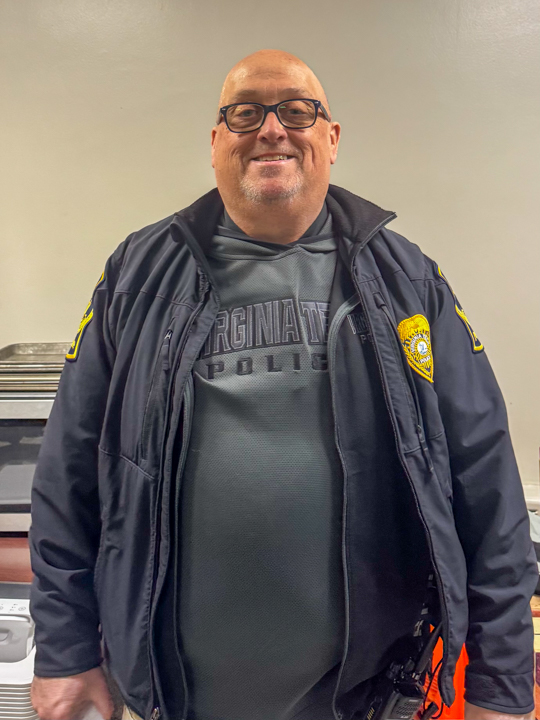
VTPD Cpl. John Tarter in his office. Photo by Gabi Vessal.

BLACKSBURG, Va.- Registration remains open for the next two to three weeks for Virginia Tech’s Rape Aggression Defense (R.A.D.) System program, a national course designed to teach males and females how to defend themselves in emergencies. 

Offered by the Virginia Tech Police Department, the program consists of four classes throughout the semester. Registration remains available until the day before each session begins or until the class reaches its maximum capacity of about 50 participants.  

I spoke with VTPD Cpl. John Tarter about the program’s purpose, format and background. 

His responses have been slightly edited for clarity and conciseness. 

Can you please give me a background on the program and what it is designed to do? 

It was started by a police officer. He’d been in the Marine Corps. He was into martial arts, and he went to the police academy in Hampton, Virginia. Then he ended up going to Christopher Newport as a cop.  

He went to one of his police chiefs and said, “Hey, can you come up with a basic self-defense class for women?” 

And he started one. He got cops because he taught cops how to do defensive tactics at the police academy. Then he got other cops that taught defensive tactics to help him teach the R.A.D. program. And so, it’s spread. It’s not everywhere in the country, but a lot of colleges, universities and police departments have it.  

It is four nights. It’s nine hours or 12 hours. The first night is in the classroom: how to stay safe on and off campus. The next two nights are punching: how to get out of chokes, how to get out if they grab your wrists and how to get out of that ground defense. Then the last night we do is each session is called simulation night, but I call it “Fight Night.”  

And so basically, you put on a red suit and we put you through two or three scenarios. Most sexual assaults occur between people that know each other. We can’t simulate that. So, we simulate stranger-type situations. Somebody grabs you by the wrist and pulls you- how you can get away from that kind of thing.  

Each night is three hours, and we do ours, say, four Mondays in a row. The next time, we’ll do four Thursdays in a row. It empowers a lot of people.  

I can’t tell you when to defend yourself, and when not to defend yourself. That’s what the individual has to make the decision to do. 

Can you please explain a typical class from start to finish? 

On the first night, we meet at the police department. We go over the paperwork, review the manual, do a PowerPoint and talk about safety topics—like what to do if someone is following you home, whether it’s to your apartment or your house. We discuss where to keep a spare key, how to lock your windows and general safety tips for the public. 

On the second night, like I said, we focus on upper-body techniques. We practice strikes, punches and blocks. We cover what to do if someone grabs you by the wrist and how to get out of it. 

On the third night, we work on ground defense. If you get knocked down, we teach you how to get back up. We show you how to kick from the ground and what to do if you’re on your back and someone gets on top of you—how to throw them off. The instructors demonstrate these techniques on each other, but no one ever gets on top of the students. 

We also teach how to escape choking from the front and from the back. I always tell participants that they don’t have to do anything they’re uncomfortable with. They are in control of what they choose to practice. 

I explain that they’ll partner up with someone who will gently place their hands around their neck so they can safely practice escaping. But if someone is a survivor of choking and finds that triggering, I tell them not to do it. They can watch and learn instead. No one is forced to participate in anything. 

I noticed you offer a men’s and women’s program. What is the difference between the two? 

If you decide to defend yourself, we try to amp you up, right? The men’s program, we try to amp them down. We try to deescalate. Because, you know, a lot of times guys are like, “I don’t need no self-defense class. I can take care of myself” and puff out their chests.  

Well, that’s what Sergeant Michael Pascal also teaches the police officers: how to deescalate situations like on traffic stops and things like that. So, for me that is the big difference. One is if you decide to defend yourself, we try to amp you up a little bit. And then, if you’re in the men’s program, we try to deescalate them or amp them down. 

How do you deal with those who may find the program triggering? 

We’ve had people that have been triggered, like when we do the simulations and Fight Night. I’ll never forget, we were in our Dietrich police office, and this young lady came in. She had the fight suit on, and we put her through a scenario.  

After she fought—she did well—I said, “Go over there in the corner. Take your helmet off so you can rest. We’re going to go through this first scenario, and then we’re going to put you through a second scenario.” 

She went over and sat down, watching the next person come in. She became very upset. She started crying and yelling, saying, “You’re teaching these people wrong. It’s not some stranger at a bus stop—it’s somebody you know.” 

Was she right? Absolutely. The vast majority of the time, it is somebody you know. So, she was triggered by that situation. When the next person came in and went through it, she was triggered again as well. 

We’ve never had two back-to-back cases where you could tell someone was triggered by the situation. Both of them, we got counseling. We offered them counseling, came out and talked to them, and then they came back and they continued the fighting part. We didn’t make them, but they finished it.  

So, in a class, I don’t know who is going to be a survivor of a sexual assault. In that class, there’s probably going to be at least one person that has experienced something in their life. And if we know they’re triggered, we get them resources.  

If we don’t know, we still push resources. Now I can’t go ask them, obviously, but over the years, we have had people come forward to us. And we tell them at the beginning of class, “We’re mandated reporters.” So you can’t come up to me and say, “Hey, can I tell you something? But I don’t want to tell anybody else.” That’s not the way it works as far as mandated reporters go, because you have to report it to make a police report. 
What the WHO Withdrawal Means for Virginia Tech

By Savannah May, Politics & Government reporter

Local officials say the WHO withdrawal is unlikely to cause changes for Blacksburg’s flu season. Here’s why.

On Jan. 22, 2026, the United States withdrew from the World Health Organization (WHO) through an executive order signed by President Donald Trump. The WHO is a United Nations global health agency with 194 member states and includes public health experts such as doctors, epidemiologists, and scientists. The organization operates in more than 100 countries, with efforts to “respond to health emergencies, promote well-being, prevent disease and expand access to health care,” according to its website.

Since the U.S. joined the WHO back in 1948 as one of the organization’s initial members, the country has played a crucial role in supporting the WHO as the largest single donor and funder. By contributing $1.284 billion during the 2022–2023 biennium, which is 12-15 percent of the organization’s total funding, the U.S. has significantly helped provide assistance to essential health programs in identifying and responding to emergencies, preventing threat of disease spreading across borders and advancing systematic health systems by focusing on more vulnerable populations around the world. 

In March 2020, the WHO declared Covid-19 as a global pandemic. This meant working across borders from the initial report of the virus. In crises such as the Covid-19 outbreak, the WHO plays an important role in connecting experts, initiating response protocols and providing guidance on public health concerns across the organization. 

On January 10, 2020, WHO provided a package of technical guidance with advice for regional emergency directors to share with WHO representatives in countries on how to “detect, test and manage potential cases.” 

The U.S. Centers for Disease Control and Prevention (CDC) is a federal public health institute. It provides resources and science-based guidance to federal, state and local health agencies. During the pandemic, the CDC activated its Emergency Operations Center (EOC) to coordinate response efforts nationally and share information with international partners, including the WHO. 

The New River Health District is an example of a jurisdictional public health department that relies on information exchange from the CDC to guide decisions and stay informed about national and international developments.

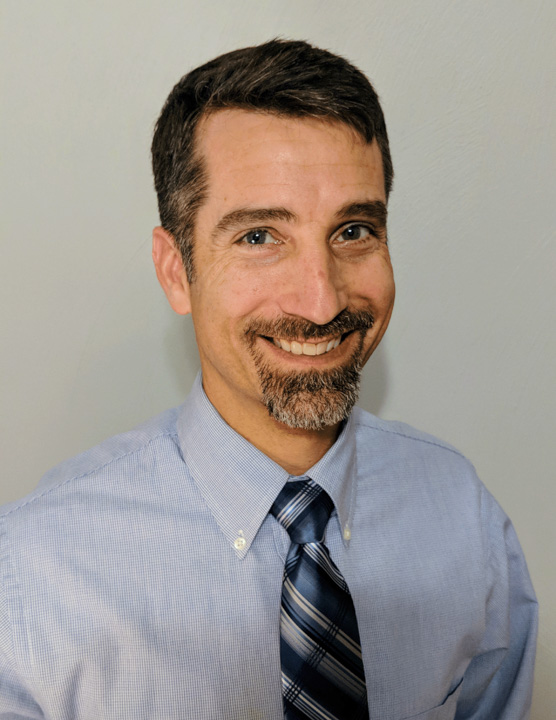
Sr. Epidemiologist Jason Deese from the New River Health District addresses what this might mean for the community and for Virginia Health operations.

His comments have been lightly edited for length and clarity.

Dr. Jason Deese

How does disease surveillance typically work at the local level?

Our surveillance structure starts with a doctor or other provider who has a high suspicion of something on the [reportable disease] list. They can lab-confirm it or report it if they strongly suspect it. Then we do an investigation.

Here’s an example. Say someone with whooping cough gets diagnosed. The provider reports it to us, we in turn find the patient to identify close contacts and bounce it against the CDC’s case definition, a set criteria. 

The verified case is then sent to the Virginia Department of Health to look over the work, who will pass it along to the CDC. The CDC collects and verifies this information, which becomes part of the surveillance record. 

When would the health district get directly involved with flu cases?

If there’s a novel strain or an outbreak in an institution. If Virginia Tech has a huge number of flu cases and we can relate it to a specific dorm, then we might call it an outbreak of flu, a condition above what’s expected. Our people at the state will evaluate it and offer up resources and  if it turns out to be some type of strange flu, then the CDC will offer up resources as well.

Does being in a college town change how you approach public health?

Yes, a lot of communities around the nation are hosting universities… we all have to be conscious of the fact that you’ve got international students and students that will go to another continent for their field work. Sometimes they come back with a disease that’s on this list.

I’ve seen malaria, dengue fever or typhoid, and that kind of just comes with the territory, because people travel, then they can come back with those things.

From your perspective, will the U.S. withdrawal from the WHO change how you do your job locally?

From the Virginia perspective, I personally don’t see my daily job or ability to respond to anything that’s on this list as impacted at this moment.

Disease surveillance starts with a patient. Someone who’s not feeling well will generally go in to see a provider, and if they — the provider — sees or suspects someone of having any of these things (reportable disease), it gets reported to the local health department, and we address them according to CDC protocols. So, I don’t really see it changing at the local level at all.

Some people worry about delays in global communication. Is that a concern locally?

Domestically, the ports of entry with CDC are doing targeted health screenings and reporting those rapidly to state and local jurisdictions. That side of things isn’t going to change. Most of these illnesses have come from overseas, individual cases, and you’re not going to catch every single exposure before they board a plane.

What we’re most concerned about is detecting it rapidly when they arrive here. We have a mantra — it’s called person, place, and time — it begins with an individual. If you ask the right questions in the right way, you get the right answers.

What do you want people to understand about public health locally?

Virginia has a robust public health system, from the local level up, with really good professionals that work in the Virginia Department of Health and strong collaboration with institutions like Virginia Tech. 

One Health – connecting human, animal, and environmental health – is a big focus, along with encouraging healthier lifestyles through nutrition, physical activity, and reducing risks like tobacco use and diabetes.

Who this will affect

Although local experts don’t foresee any changes in public health concerns at the state and local levels, the U.S partnership with the WHO was extremely impactful for low- and middle-income countries. These essential health programs rely heavily on global health financing, which allows for improvements that optimize resources, address health disparities and improve equitable access to care. 

Even though local communities like Blacksburg are not affected, it’s crucial to consider the impact on the communities that will be affected without the funding previously provided by the United States, and what this could mean for international access to critical healthcare services. 

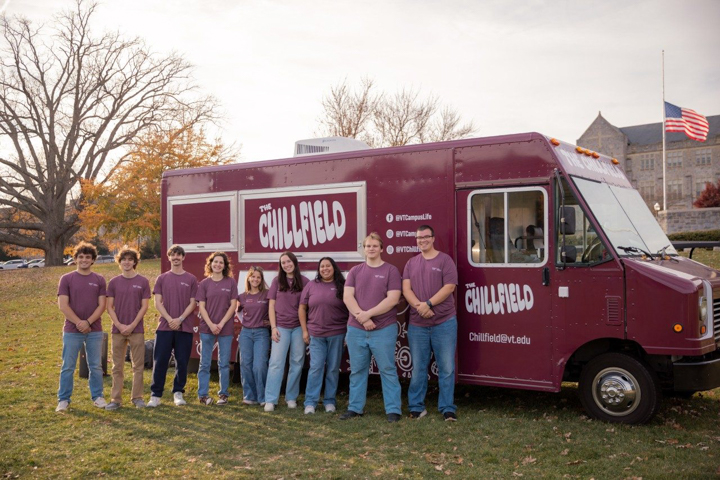
Not a food truck, but a fun truck: The Chillfield celebrates one year of mobile programming

By Emma Duncan, education reporter

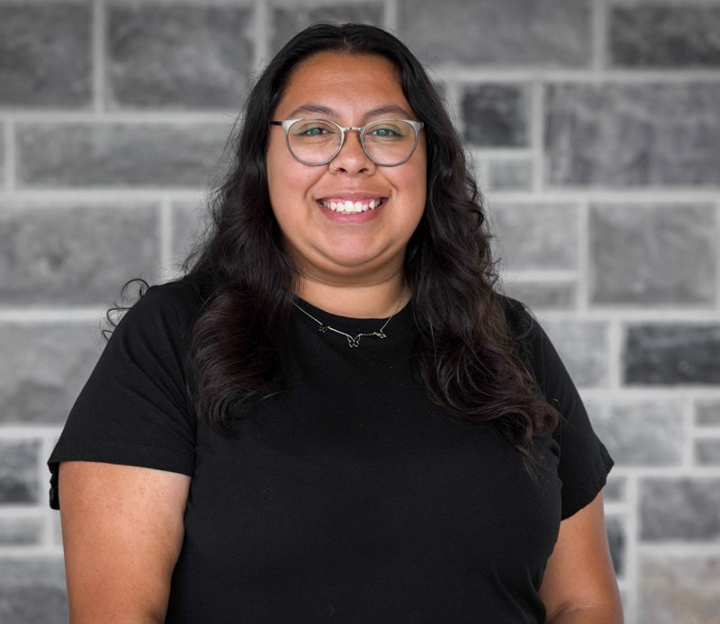
As an engagement engineer, Jazmyne Barron designs student experiences, coordinates partnerships and develops new programming strategies. (Photo Courtesy of Virginia Tech)

One year after its launch, The Chillfield has changed how Virginia Tech students find entertainment, bringing events to Hokies where they are through mobile programming.

Designed by Ben Evans, lead engagement engineer at Student Engagement and Campus Life, The Chillfield uses interactive activities to connect students to campus partners and each other. The truck hosts events in Blacksburg once a week, at the Roanoke campus once a month and in the D.C. area once a semester.

Hokies can play Tetris Tumble or Connect 4, compete in Nintendo Switch games, customize tote bags and koozies using a heat press, decorate vinyl records and more. In its first year, The Chillfield hosted approximately 52 events and reached over 10,000 students. Jazmyne Barron, coordinator for student experiences, shares her team’s highlights from year one and aspirations for the future. 

[This interview was edited for clarity and content.]

What gap did The Chillfield fill in the SECL office?

During the pandemic, there was a large gap in student programming. It was harder to engage students because we needed to follow safety guidelines like social distancing. As we transitioned into a more normal sense of campus life and programming, we noticed it was harder to get students to come to things because they hadn’t been doing anything for such a long time. So, the idea was to go to them instead. 

Think back to The Chillfield’s very first event. How did you feel when it ended?

The Chillfield’s very first event was the launch party. Honestly, I had no real expectations at the time. The event ended up being very successful and ran smoothly. We hosted it on the Drillfield and had a lot of different activities available, some of which have become staples in our programming. I think it really set a positive tone for what was to come in the year ahead.

The Chillfield often hosts events on the Drillfield and outside of Squires Student Center. (Photo Courtesy of Virginia Tech)

Can you share a story that illustrates the impact of The Chillfield?

When the truck launched, we were a team of three undergraduate students and one graduate student assistant. Now, our team has doubled. One of those undergraduate students, Filip DeHaven, is now my graduate assistant. Seeing them grow from last year to this year has been very rewarding. 

We wanted to culminate all our success during the first year into our first birthday party, which was a collective effort. Each of my student staff put all of themselves into that event for it to be so successful. I think it really shows how they are passionate about this work and want to share fun experiences with other students. They continue to return every semester and I’m proud to work with them.

What have you and your team learned about designing events that resonate with students across such diverse schedules and interests? 

When you work in student programming, it’s important to ask yourself how you can create an experience for everybody. We try to provide a variety of options for people, some that are very low stakes, like our grab-and-go goodies, but also opportunities for people to sit with their friends and do a fun craft. We try to play around with the times to reach different students and allow everyone to attend our events. 

Has there been an activity or event that didn’t work as planned? What did the team learn from that experience?

I can definitely say weather is our biggest enemy. Our most recent event, National Lego Day, was supposed to be outside. However, we had to shift inside because of the huge snowstorm.

When we’re hosting events on the Drillfield, a little bit of wind can make everything go flying. Even if the forecast is decent, wind can keep students away. The weather definitely keeps us on our toes.

As you enter year two, what are your biggest goals for The Chillfield?

Our team is trying to constantly think outside the box. My student employees really want to bring in new people and expand what we can offer. We have our favorites that we know the truck can easily do, but I think we’re getting to a point where we’re ready to branch out. A new location could help us reach hundreds of new students. My personal goal is to eventually start working with some community partners. 

I read that enhancements like a better backup camera and accessible storage are being discussed. What is the status of these upgrades and how will they improve events or operations?

The Chillfield is a pretty old truck, so many parts are outdated. Over the break, we got new seats installed and the dashboard rewired with CarPlay. The heating and conditioning actually work now; that’s very nice to have. We are working to get a new horn installed that will play the intro to “Enter Sandman.” We also installed a jump seat in the back for when we’re driving around campus. The truck has its quirks, and we’ve learned to work with them. 

In March, you and Ben will be presenting at the 2026 NASPA conference. What does it mean to bring The Chillfield story to a national audience, and what do you hope other campuses take away from it?

I’m only a year and a half out of graduate school and I’m presenting at a national conference, which, to me, is insane. Our goal is to provide these campuses with a packet of resources and say, ‘Here’s what we did, take it, replicate it with what works for you.’ We’ll make a point to tell people that you don’t need this big truck to do mobile programming if you’re on a smaller campus. You could build out a really cool golf cart. Our emphasis is make it work for your campus.

As someone who has worked with The Chillfield since its first event, how do you hope you feel one year from now?

This is gonna sound funny, but it’s true. Every time we’re out, students love to come up to us and ask what food we’re serving. I’m trying to sell this idea that we’re not a food truck, but a fun truck. I hope that, by the time we’re entering year three, people know that we’re not a food truck. We like to make jokes and make light of the situation that we’re in. However, we purposefully avoid food for our events.

Is there anything else you would like to share? 

The Chillfield is truly one of a kind. It’s not on any other campus, which I think is really cool. Going to one of our events should be a bucket list item for students during their time here, especially since, if they decided to attend another school, they would never get a Chillfield experience.

How Southwest Virginia residents should prepare for tax filing season with changes in policy and impact

By Megan Reese, politics and government reporter

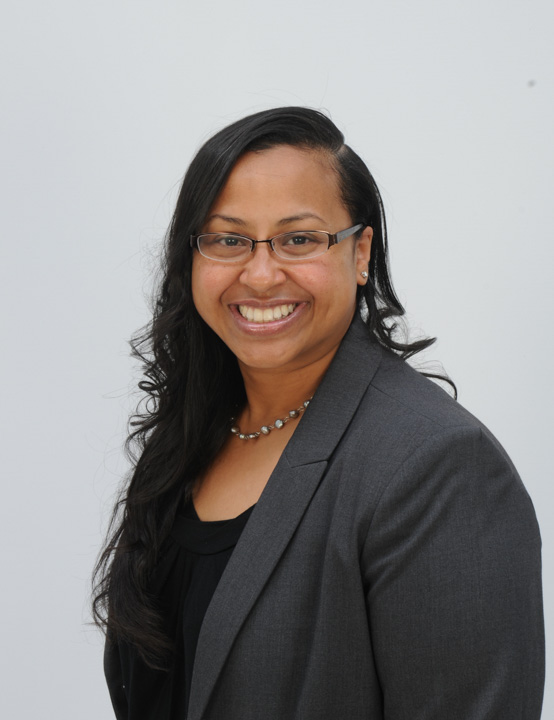
Photo courtesy of Dr. Michelle Harding

According to Benjamin Franklin, there are two things certain in life: death and taxes. Because of that, it is important to understand what you are paying and why you are paying it.

Jan. 26 marked the first day of tax filing season for Americans, and this time of year can be extremely stressful and confusing. Each year there are new laws and regulations put into place by Congress, and most people don’t have the time to fully understand what they mean. 

U.S. Rep. Morgan Griffith, R-Va., of Virginia’s 9th District, recently wrote an article for NRVNews.com explaining how the new reconciliation package, called the “Working Families Tax Cuts,” could affect Southwest Virginia.

I spoke with Dr. Michelle Harding to discuss the basics of tax filing season, understand the new policies and how they will impact the local residents. Harding is a licensed certified public accountant specializing in taxation, and she joined the Pamplin College of Business in 2017 to teach the next generation of accounting professionals. 

Harding’s comments were edited slightly for length and clarity purposes.

Can you give a quick summary of what tax filing season is?

Every year, people who have an income have to file a tax return. There’s some requirements where if your income’s below a certain level, you may not be required to file a tax return. But, if you have wage income, that means your employer has likely already deducted taxes. So, even if you’re not required to file a tax return, you should anyway in order to get a refund of those taxes that you’ve already paid. 

What we typically think of as tax filing season is that employers are required to give their employees a W-2 form, which is their annual wage report for all the income they’ve earned over the last year, by Jan. 31. Basically, tax season is the time when you receive that W-2 wage report from your employer, until the April 15th filing deadline. 

What is your overall main advice to young people and families going through this tax season?

When you get a W-2, 1099 form or your annual bank interest statement, those businesses are sending you a copy, but they’re also sending the IRS a copy. It’s really important that you pay attention and make sure you include all of your sources of income in your tax return. 

Often people are just intimidated by taxes, it seems overwhelming and daunting. For people whose primary source of income is their paycheck, they absolutely should not be intimidated by this process because their W-2 is the main piece of information they need to file their tax return. Most Americans will actually receive a refund. So yeah, that’s good news. 

There are also free tax filing services available. The IRS has on their website, it’s called IRS Free File. If your adjusted gross income is less than $89,000, then there is this online service that’s free for you to file your taxes. Also, the New River Valley Community Action Group sponsors VITA, which is Volunteer Income Tax Assistance. I definitely encourage people to take advantage of those resources.

Every year we see changes in tax policy, which directly impacts taxpayers. Can you explain, in plain terms, what the “Working Families Tax Cuts” are designed to do?

Tax deductions are rules that Congress passes. That’s another misconception. People blame the IRS, but Congress passes tax laws, and the IRS is responsible for enforcement of those tax laws. Every year Congress decides how much each taxpayer is allowed to deduct. So, every taxpayer gets a standard deduction, and that standard deduction reduces the amount of your income that you have to pay taxes on. It is a flat amount that everyone gets based on their filing status. 

The first change under these “Working Families Tax Cuts” is that the amounts increased a little bit more than they usually do from year to year. That’s Congress saying, we’re allowing you to pay taxes on less of your income. 

Then we get into some other very specific targeted tax deductions. For taxpayers that are 65 and older and have other sources of income, they get an extra $4,000 of standard deduction. 

Also, qualified tip income. This is going to benefit people who work in service industries where a lot of their income is from tips. You’re able to exclude up to $25,000 as a single person. But if you’re married filing jointly, up to $50,000 of your income. That can be quite meaningful to people who get a lot of their income from tips.

There is also a new deduction for qualified overtime compensation. People who are paid on an hourly basis, if you work more than 40 hours a week, you’re entitled to overtime.

Based on what we know, how might these tax cuts affect working families in Southwest Virginia or the NRV specifically?

So if you qualify for these taxes; if you have tip income, if you have overtime income or if you’re 65 or older, these things will benefit you. But if I am a salary worker, for example, let’s talk about Virginia Tech. An administrative assistant may make $30,000 a year. So they have no tip income and they have no overtime income because they’re a salary employee. So, none of those deductions will benefit them. Now, everyone having the higher standard deduction will likely provide some tax relief. That effect is likely between $100 and $200 if your income is around the national salary average of $62,000, which again, more tax saving is always better. 

Would this policy meaningfully change the tax filing experience? Would filing taxes become simpler, more complicated, or mostly unchanged?

It’s definitely not becoming simpler. Because as I described those tax deductions, there are a lot of if-then statements. So what will I advise them? Number one, don’t be intimidated by the process, especially if your income is primarily a W-2 and then you have some interest from your savings account. That’s a very straightforward tax return. If you know how to use a computer and the internet, using one of the free online tax filing resources, should be a really straightforward experience. So don’t be intimidated by it because the tax software walks you through the process. 

How weather, transit and safety shape Virginia Tech’s closure decisions 

Michaela Scott, crime, safety, and justice reporter 

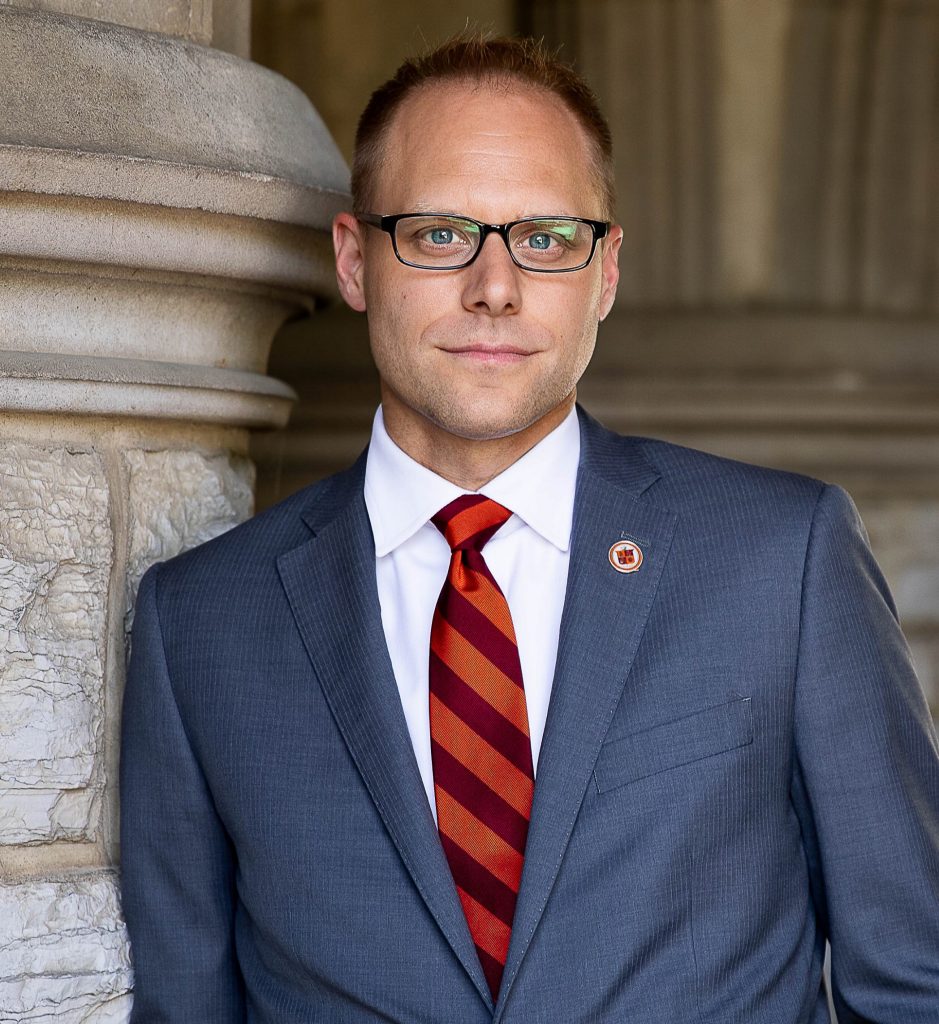
Photo courtesy of VT Emergency Management homepage. Executive Director of VT Emergency Management Andrew Marinik shares a look inside Virginia Tech’s winter weather calls. 

As winter weather progresses in the New River Valley and winter storm challenges arise, executive director of Virginia Tech Emergency Management, Andrew Marinik speaks to the critical safety measures and response initiatives overseen by his office.  

Over the past two weeks, Virginia Tech has reduced operations three times due to the major East Coast storm. As executive director, Marinik’s responsibilities include setting direction, leading the office, and prioritizing safety on campus and across Blacksburg. 

[This story was slightly edited for length and clarity] 

When a major winter storm is forecasted, what does the decision-making process actually look like from the first weather alert to a campus-wide decision? 

Much of what emergency management does is coordination. We don’t shovel the snow. 

We are coordinating across different groups to make sure that we can minimize the impact to the extent we can. Weather is not reliable outside of 48-72 hours at best. The balance of what we do is making people aware there’s the possibility of something. 

When something like winter weather comes in, we’re looking at transportation networks. We’re looking at our ability to feed, educate, keep the power on, and make sure that we have public safety assets in place. We can’t cancel emergencies. So even if we’re going to reduce operations today for classes, we still have to make sure to the extent that we possibly can that fire trucks, ambulances and police cars can get around campus.  

You’ve been at Virginia Tech since 2007. Can you walk me through a past winter storm that was particularly challenging for the university? 

I will say this past weekend was challenging for a couple of reasons. The past weekend’s forecasts were all over the place. At one point, it said 36 inches. Thirty-six inches would be a serious problem for us in a weekend.  

Another one that comes to mind is in 2009. It was during commencement and we bring in tons of people along I-81 and 460, and the snow just dumps.  

And it got so bad in that storm that cars just got parked on I-81 and people walked into Christiansburg. They gave up on their car, couldn’t move, and were freezing, so they walked into town looking for help.  

Commencement, athletics events and stuff that has a bigger audience are much harder to delay or relocate.  

You can’t take a basketball game with an ESPN contract and be like, we’ll do it next week. 
It just doesn’t work that way. For commencement, we can’t just be like, I know your family flew in from Oklahoma. We’re going to do this again next week because it’s bad weather.  

Those add some extra challenges to the process.  

What preparations are happening on campus before most students even realize a storm is coming? How is your team specifically planning for the uncertainty? 

We start with what we call SITREPs, which is just an old military term for situation reports. We’ll do weather briefings if nothing’s actually happened yet, because all we’re really saying is, here’s what we’re expecting to happen.  

We start getting everybody to think about it. The different organizational operational people, Facilities on campus, also monitor the weather all the time because they’re responsible for all buildings and grounds. We wrap everybody into the same call or email. 

The snow emergency route is part of our preparation. If you look at a map of the snow emergency route, you’ll see that it largely brings us around residence halls, so that if there’s a fire, EMS, law enforcement emergency, we’re prioritizing the ability for those emergency services to get to those buildings, and to get to where our people are.  

We try to give everybody time to react. And then the messaging itself takes a while to try and craft each individual word to have the meaning you want it to have. 

I know that a lot of students often ask why decisions aren’t made earlier – what goes into determining the timing of alerts and announcements?  

The timing is often the nature of the storm. When we make a decision on that, it’s a safety decision, primarily.
 

We also incorporate if Blacksburg Transit is able to operate. Lots of people use Blacksburg Transit. If the BT says, ‘we’re not going to be operating,’ it makes it difficult.  

I don’t know if you noticed this morning, (Jan. 29) we were notified very late, that Blacksburg Transit had an issue with a bunch of their buses, and so very late in the morning, they said, ‘we’re not running a full schedule.’ I’m sure that was impactful. 

We tried to scramble and get a message out really quickly for as many people as we could within a few minutes of getting notified about that, in hopes people would realize it. 

We have a conversation, a recommendation is made, and then senior leadership makes the ultimate decision on whether we’re open or closed.  

After a major storm, how does your team evaluate what worked and what needs improvement? 

That’s a very common thing for our office. Emergency management has its own processes and cadences.  

We document a lot, keep track, and write SITREPs. We’re documenting who’s doing what and what they’re doing and what kind of issues we’ve had, and have we had accidents or have we had slip and falls on campus?  

And then we try to use that to help us improve our process. We put a huge emphasis on continuous improvement. Nobody is perfect. We can always do better.  

The idea is to try and do the absolute best you can and then find any opportunities to do better moving forward.  

Is there anything that we or haven’t discussed that you would like to touch on before we wrap up this call? 

One of the things that we’re always looking for is to try and engage the students on taking more ownership of their safety, security, surroundings, like checking the weather every day and building that habit. 

Our hope, our dream, if you will, is that every Hokie, when they graduate, has these really good preparedness habits built in, and that they go off to wherever they work, and everyone’s like, ‘man, you guys are always so prepared.’  

We would love for that to be one of the cultural norms of Virginia Tech, that these students leave here fully prepared. 
 

Virginia Tech’s Center for the Arts showcases new exhibit “Things I Had No Words For”

By Zoe Santos, arts, culture, and sports reporter

BLACKSBURG, Va. (Sept. 11, 2025)– Artists Clare Grill and Margaux Ogden converse in front of one of Grill’s paintings. (Zoe Santos, Newsfeed NRV)

Visitors gathered Sept. 12 at the Center for the Arts at Virginia Tech for Beyond the Frame, a monthly tour series that gives audiences a closer look at current exhibitions. September’s tour focused on “Things I Had No Words For”, featuring the paintings of Clare Grill and Margaux Ogden.

Beyond the Frame takes place on the second Thursday of each month at noon. The program invites audiences into the galleries for informal conversations about the art on display. This fall’s exhibitions, which opened Sept. 4 and run through Nov. 22, include Grill and Ogden’s “Things I Had No Words For” on the first floor and “Seeing and Reading” featuring Dana Frankfurt and Josephine Halberstam, upstairs. 

The exhibition is part of CFA’s rotating series of gallery shows, which change out each semester. Visitors can view the works during regular gallery hours, Tuesday through Friday, 10 a.m.- 5 p.m., and Saturday, 10 a.m.- 4 p.m.

BLACKSBURG, Va. (Sept. 11, 2025)– Margaux Ogden, Clare Grill, and Brian Holcombe discuss one of Ogden’s pieces on display. (Zoe Santos, Newsfeed NRV)


Curated by Brian Holcombe, director of the visual arts program, “Things I Had No Words For” pairs Grill’s contemplative canvases with Ogden’s energetic, color-driven abstractions. Holcombe said he was first introduced to the two artists in 2014 through a mutual friend and immediately saw their work as complementary. “It struck me that they would have a wonderful conversation together,” Holcombe said during the gallery tour.

Clare Grill, lives and works in New York, received her Master’s of Fine Arts from the Pratt Institute in 2005, according to her biography on M + B’s website. She builds her work from a personal archive of images, memories, and textures. Her paintings often incorporate faint outlines and muted tones that evoke a sense of layers of history. She told the group that she begins with fragments from the past, mostly from antique embroidery, and allows them to inspire her to create something new on the canvas.

“I really think of painting as an excavation,” Grill said, “I’m looking for something, and I’m not exactly sure what it’s going to be until I’m there.”

BLACKSBURG, Va. (Sept. 11, 2025)– Artist Margaux Ogden poses for a photo in front of one of her pieces on display titled “Bathers.” (Zoe Santos, Newsfeed NRV)

Ogden, who is based in Brooklyn, uses a very different process. Her works are full of bright colors and geometric shapes, and she paints without sketches or strict plans. She explained that her studio workflow thrives on risk and spontaneity. All of her pieces are seemingly perfectly symmetrical, but she shared with the group that she only measures the first four lines of a painting and then relies on her judgment for the rest. “The way I work is improvised,” Ogden said. “It’s not predetermined. It’s about responding in the moment.” View more of Ogden’s works here.

Holcombe said bringing both artists into the same gallery space emphasizes the contrasts while also showing how abstraction can take multiple forms. “Clare is often working from history, while Margaux is responding to the present moment,” he said. “That tension is what makes this exhibition really exciting.”

The gallery tour drew a mix of students, community members, and regional art enthusiasts. Among them was an older couple who had travelled from Roanoke specifically for the event.

As Holcombe guided visitors through the space, the group moved slowly between large canvases that filled the white-walled gallery. Grill’s pieces provoke close looking, with texture and subtle brushstrokes that reveal themselves the longer you look at the piece. Ogden’s paintings, in contrast, catch viewers’ attention immediately with bright bursts of pink, green, and orange.

Standing in front of one of Ogden’s pieces, Holcombe described the effect of viewing both artists side by side, “There’s an energy in the room when you put these two bodies of work together,” he said. “You start to notice connections you wouldn’t see otherwise.” 

Beyond the Frame and “Things I Had No Words For” continues CFA’s mission to showcase contemporary art while engaging both the campus and surrounding communities. Previous exhibitions have included national and international artists, but Holcombe emphasized the importance of highlighting painters like Grill and Ogden, who are contributing to ongoing conversations in abstract art today.

Both artists spoke about the balance between personal meaning and public reception in their work. Grill said she hopes viewers bring their own experiences to her paintings rather than looking for a single interpretation. “I want the work to feel open, like there’s room for the viewer to enter,” she said.

Ogden shared that thought, noting that the intensity of the color often provokes strong reactions. “People might see joy, chaos, or even confusion,” she said. “All of that is valid. It’s about how the painting meets you.”

For visitors, the tour was not only about viewing paintings but also about connecting with artists and ideas. Some lingered after the formal program ended, continuing to talk with Grill and Ogden about their processes. A few students took notes, while others snapped photos to remember specific works.

The CFA hopes that kind of engagement continues throughout the fall. With the exhibition open until Nov. 22, Holcombe encouraged visitors to come back more than once, noting that abstraction often rewards repeat viewings.

“You can walk into this show on different days and notice new things each time,” he said. “That’s the beauty of work that resists easy answers.”

“Clare Grill and Margaux Ogden: Things I Had No Words For” is on display at the Center for the Arts at Virginia Tech through Nov. 22. Admission is free. More information is available on the Center for the Arts at Virginia Tech’s website.

Engineers Turn to Nature for Inspiration at Virginia Tech

By Eli Lamport, science reporter

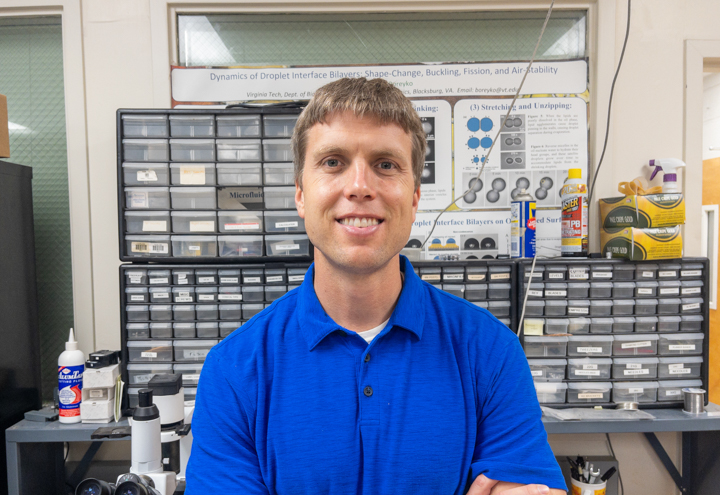
At Virginia Tech’s Nature Inspired Fluids and Interfaces (NIFI) lab, a team of student researchers are studying how jumping water droplets can be used to keep crops healthy, and improve energy efficiency.

The NIFI lab is the brainchild of Dr. Jonathan Boreyko, an associate professor in Mechanical Engineering. Boreyko’s research synthesizes environmental and life sciences concepts with his engineering background. A common thread in Boreyko’s work is biomimicry. Biomimicry is when natural phenomena are used as inspiration for systems or products that solve human problems. “Why be radically creative and think of completely new things when you can look around at how creative nature already is” says Borekyo.

Currently, a dozen Virginia Tech students work in the NIFI lab on a variety of projects. One of these students is Grant Helm, a senior studying Mechanical Engineering. Helm started researching at NIFI earlier this summer. One project that Helm has been working on is using high speed videography to analyze how disease spores spread between barley plants. Helm explains how “when water droplets coalesce on a hydrophobic surface like a plant leaf, they release a little bit of kinetic energy and jump off the surface.” If a plant is sick, fungal spores on its leaves can hitch a ride on these jumping water droplets. Once the water droplets clear the “boundary layer” immediately around the leaf, the spores can be blown downwind, quickly spreading to nearby plants. 

Jumping droplets were first discovered by Boreyko in 2012, who was studying the phenomena in wheat plants. Helm is trying to identify any differences in the behavior of jumping droplets on Barley leaves. Something new that Helm has observed is a “billiard ball” effect where all of the energy created by droplets fusing together is transferred directly into a spore, launching it into the air. All of this research is made possible by the NIFI lab’s Phantom high speed camera, which can capture up to 1 million frames per second. “The imaging is something that I didn’t expect to do in the lab, and it’s been really fun,” says Helm. 

Another project that Helm is working on at NIFI involves figuring out how to improve the efficiency of heat transfer in boiling processes. Every liquid has a critical heat flux, which is the rate of heating at which a vapor barrier forms between the liquid and the heating element. At that point, the heat is no longer being transferred effectively into the liquid. “You aren’t heating the water anymore, you’re just melting the pot,” Helm explains. It’s been established that the best way to improve the efficiency of boiling is to raise the critical heat flux, which can be achieved by shrinking the size of the bubbles in the liquid.

What researchers at the NIFI lab are trying to do is get these small bubbles to leave the surface of the liquid prematurely, which would further improve efficiency. What they have found is that when the bubbles are small enough, they begin to act similarly to the jumping water droplets on a leaf. They merge together and jump off the surface, preventing a vapor barrier from forming and allowing for more heat to be transferred to the liquid. 

A major practical application of this concept is in power generation. Most power plants, conventional and nuclear, use boilers to create steam to spin turbines. Improving the energy efficiency of this process at the source could have significant positive effects, including a reduced carbon footprint to cheaper energy costs for consumers.

Boreyko and his team are also interested in applying these same principles to cooling processes. Data centers are a particularly compelling use case because they are putting an increasingly significant strain on the power grid. “Currently we are just blowing chilled air across these entire facilities, so it’s not very efficient,” says Boreyko. As condensation forms on cooling equipment, it becomes less efficient. If this equipment was coated in a hydrophobic material those droplets could jump off the surface and evaporate, allowing for more heat to be absorbed.

The NIFI lab not only offers students the opportunity to work hands-on on a variety of projects, it also fulfills a longtime personal goal of Boreyko. “I didn’t do any research as an undergraduate, I didn’t have those experiential learning moments,” Boreyko explains. Running the NIFI lab allows Boreyko to provide the experience that he wishes he had gotten as a student. “I’ve published over 80 papers now, so that’s not necessarily going to blow my socks off anymore. But it never gets old seeing a student run up to my office to show me something they just discovered.” says Borekyo. Grant Helm says that “looking at things experimentally is a really great way to learn about how things work in the real world.” Helm is looking forward to the next breakthrough moment in the lab. “That’s going to be really really satisfying.” For more information on the NIFI lab at Virginia Tech, visit their website.

Stretch, Breathe, Belong: Yoga’s Impact on Campus and Community

By Sage Mayhew, Health and Wellness Reporter

In a town known for its fast pace and high expectations, yoga is helping Blacksburg residents and Virginia Tech students slow down — and breathe. During National Yoga Awareness Month, both professors and students say the practice is reshaping how they navigate life.

Yoga has been praised for its physical benefits for decades, but in Blacksburg, it’s receiving attention for something deeper: its power to transform how people show up, carry themselves and connect with each other. With the spotlight on this September, local voices are highlighting yoga’s unique impact on both mind and body.

From student-led classes at Virginia Tech Recreational Sports to seasoned professionals teaching at In Balance Yoga Studio, the message is the same: yoga isn’t just a workout. It’s a way of life, and one that many say they didn’t know they needed until they found it.

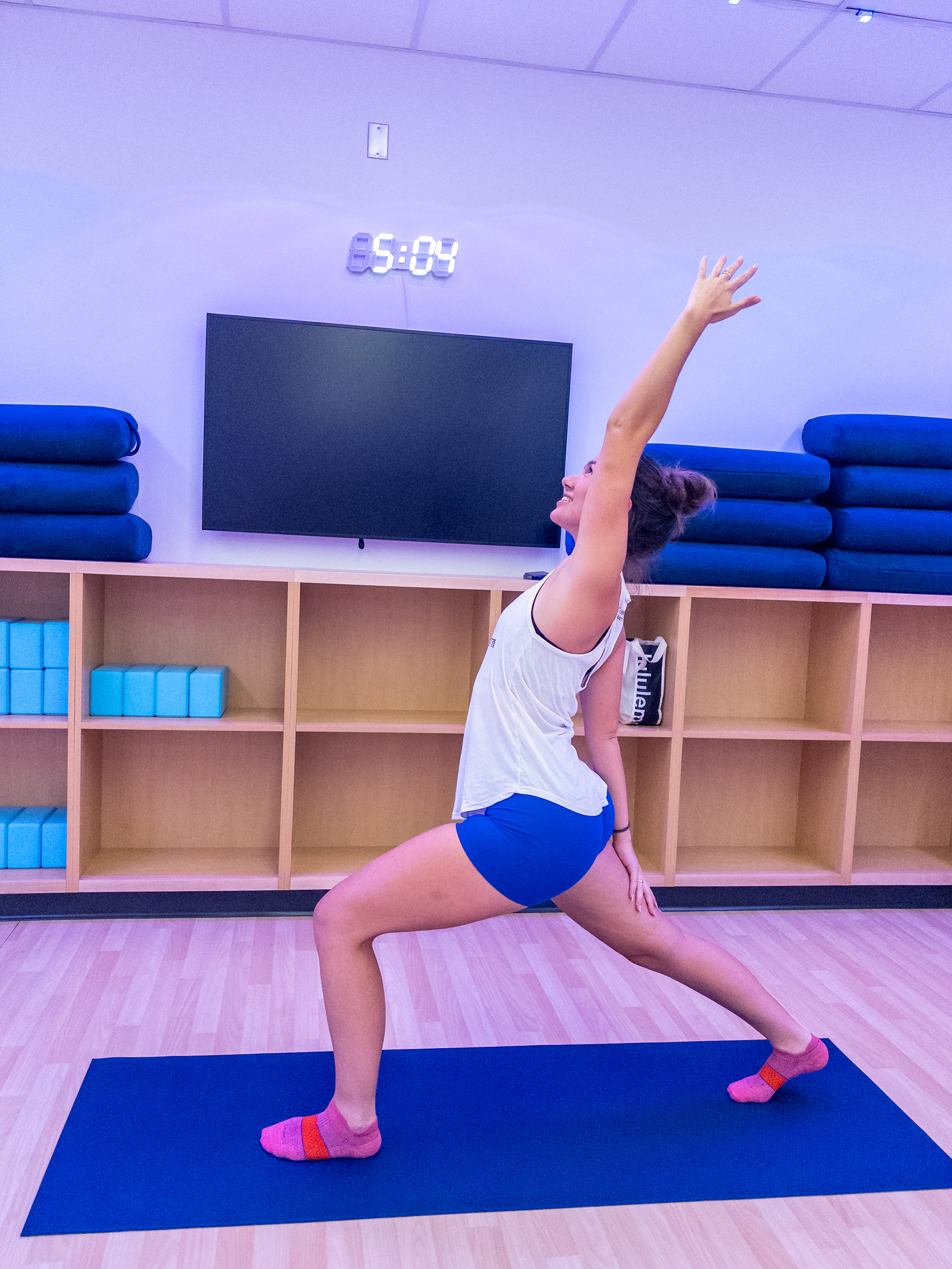
For Virginia Tech senior Emma Roland, the weight of pursuing majors in both biological sciences and human nutrition, foods and exercise can pile up quickly. Roland always thought that yoga was just about stretching, but when she was introduced to it through one of her courses, she not only found a way to slow down the pace of her own life and catch her breath, but a way to give back to others as well. Roland was hooked and earned her 200-hour yoga instructor certification from In Balance Yoga studio in Blacksburg. Now she teaches weekly classes with Virginia Tech’s Rec Sports. Her classes focus on being present in the moment, setting goals and finding an outlet in all the chaos of life. She emphasizes the importance of letting go of everything exterior and taking time to relax your body and mind. When talking about her classes and participants, Roland says, “We’ve all had a long day and it’s like, okay, the next 45 minutes we can just worry about what’s going on within these four walls.” 

Ella Roland instructing yoga at Virginia Tech Rec Sports. Blacksburg, Va. Sept. 16, 2025
(Sage Mayhew, Newsfeed NRV)

The impact of yoga extends beyond just helping students. “Yoga saved my life, and I think it’s going to help me help others,” said Dr. Samantha Harden, a 500-hour registered yoga instructor at In Balance Yoga Studio, dissemination and implementation science researcher and professor. Like many, Harden was constantly chasing success, climbing the ladder, and reaching for career excellence. However, she found that her best self isn’t rooted in professional success, but in authentic moments where she can breathe, process, and slow down. Once she started, the shift was undeniable. Colleagues began to ask what had changed, how did she become more professional, more present, more positive? Her answer? Yoga. 

When Harden first discovered yoga, she thought it was superficial and more about the look than anything else. However what she found couldn’t have been more different. “It’s just other people trying to breathe, and use story, and posture and community to heal.” She shared, “You can learn so much about yourself – your level of surrender, your discipline, your grit. There’s a lot more to it than postures…It’s your interaction with someone on the sidewalk, or behind the wheel, or in a class. Your ability to create union goes way beyond the mat…being present with others is how yoga can change Blacksburg and how we can be a bright light in the darkness.” That’s exactly what yoga is doing, creating change.

Both Roland and Harden, grateful for what yoga has done for them, agree that it’s about more than just personal improvements, but a way to give back and to build community. Harden shared that “The United States is facing a social isolation and loneliness pandemic, and yoga is an opportunity to improve your social health as much as it is your mental and physical health.” The benefit of entering a studio, seeing familiar faces, learning and growing together, builds community, consistency, and connection in a time when it’s needed most. 

When it comes to yoga, “The doors are always open,” says Harden. Both student and professor urge more people to make the first stretch, and try yoga. “Just come and see the impact just one class can have, how it leaves the body and the mind in a more relaxed and present state.” , says Roland. With two separate locations in Blacksburg, and classes online, In Balance Yoga Studio offers over 40 classes weekly for all ages and experience levels. For students looking to get involved and stay on campus, Virginia Tech Rec Sports also offers various types of yoga classes every week for anyone to join. 

In Balance Yoga Studio on Main St. Blacksburg, Va. Sept. 18, 2025 (Sage Mayhew, Newsfeed NRV)

Yoga isn’t just a practice for super fit people or people that seem to have all the money and time in the world. It’s for anyone needing to breathe, find an outlet and give their mind and body rest. “No matter what time of day or who you are there’s a class that can meet you where you are,” says Harden. 

Voter Accessibility in Montgomery County; Early Voting for General Election Began Sept. 19

By Emily Dorsey, politics and government reporter

“Our board has historically been reactive instead of proactive in terms of establishing satellite voter facilities,” Board of Supervisors Chair April DeMotts (District G) said.

On Aug. 11, 2025, Montgomery County’s Board of Supervisors unanimously approved a draft ordinance for three voter satellite offices for the General Election. Those locations were the Blacksburg Community Center, Shawsville Middle School cafeteria and Auburn High School cafeteria. This proposed ordinance provided in-person voting locations for those living in eastern and southern Montgomery County. 

On Aug. 25, 2025, the Board of Supervisors adopted one location as a voter satellite office. Four out of seven supervisors were in favor of this ordinance. Supervisor Anthony Grafsky (District E), Vice Chair Steve Fijalkowski (District C) and Supervisor Todd King (District D) opposed the ordinance. 

From the conversations between supervisors regarding the ordinance, comments from citizens, the concept of equitable voting, previous changes in voting and more, voter accessibility in Montgomery County is not a topic to ignore. 

The state of Virginia has witnessed a lot of change over the past decade regarding voting. Taking effect July 1, 2020, Virginia required a 45-day early voting period. The Voting Rights Act of Virginia was passed in 2021 which brought about various changes with absentee ballot handling and voter discrimination. Other implementations include same-day registration at a citizen’s precinct and shortening the registration deadline from 21 to 10 days before a general or primary election. 

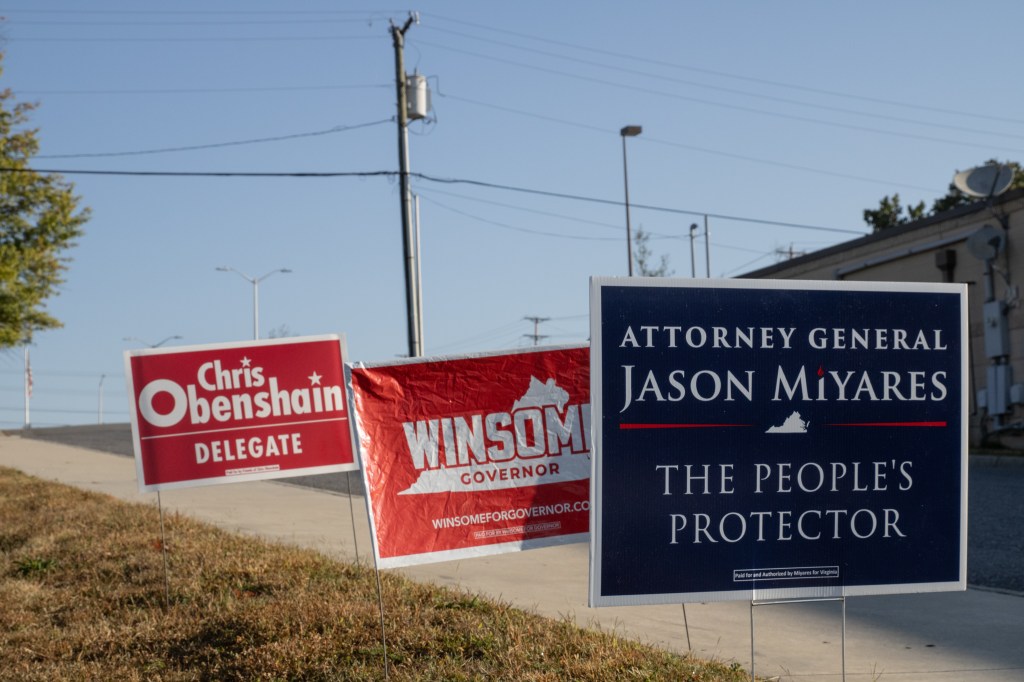
Sept. 19, 2025, Christiansburg, Va. – Campaigns for various offices fill the parking lot at the Office of Elections as early voting begins. (photo by Emily Dorsey, TheNewsFeedNRV.com)

Providing satellite locations alongside mail-in ballots and early voting options is an extra guarantee that all citizens of Montgomery County have the necessary means to vote. 

The Board of Supervisors selected the Blacksburg Community Center as the singular satellite location. This site will provide in-person, early voting Oct. 25 and Nov. 1 from 9 a.m. to 5 p.m, in addition to Election Day on Nov. 4.

The Blacksburg location was chosen for four main reasons: Blacksburg Transit’s (BT) accessibility, statistics from previous years, citizen opinion and staffing concerns. 

“We have numbers that we were able to look at from the last time we did satellite voting in Blacksburg,” DeMotts said. “Twenty-five percent of the early votes came from the Blacksburg satellite location.” 

There is a correlation between a satellite location in Blacksburg and the routes BT provides. The free, public bus runs along popular streets for commuters to easily access grocery stores, Virginia Tech (VT) campus or popular Christiansburg locations like the Office of Elections.  

Sept. 19, 2025, Christiansburg, Va. – Office of Elections officially open for early voting; conveniently located next to Food Lion and the Christiansburg Recreation Center. (photo by Emily Dorsey, TheNewsFeedNRV.com)

Traveling to the Office of Elections from Virginia Tech or Blacksburg via the BT takes about 80 minutes round trip. This option may not be feasible for voters who have busy schedules, full-time jobs, extracurriculars and other responsibilities. Also, the BT doesn’t reach all parts of Montgomery County like Shawsville and Riner. 

Multiple citizens of Montgomery County spoke at the Aug. 25 Board of Supervisors meeting. 

“This is your opportunity, as a board, to again show that you care about excessive and  unnecessary spending of our tax dollars,” Wayman Pack, resident of Riner, said. “Let us all use the resources already available to us instead of spending taxpayers’ money on something that is not needed.”

“We need to not be afraid of who people are gonna vote for but give everybody ample opportunity to voice their vote,” Cindy Barton, resident of Montgomery County, said. “I think we can spend money on way worse things than making sure everybody has access to cast their vote.” 

DeMotts explained why there are no satellite locations in other parts of Montgomery County. 

“There was absolutely no demand,” DeMotts said. “Nobody from those areas emailed, called or came to the board and requested it. The two supervisors from those districts were also very clear they did not want satellite voting location in their district.”

Below are direct quotes from the Aug. 25 Board of Supervisors meeting:

“Voting couldn’t be easier than it is right now,” Fijalkowski said. “This proposal is unnecessary. I think it is a waste of tax payers dollars. It’s a burden on the registrar’s office and employees. Even if Shawsville had remained on the list, that doesn’t make it equitable.”

“I’m a big advocate for making sure [residents of Montgomery County] have access, but the flipside of that is how hard we worked our registrar’s office,” Supervisor Derek Kitts (District B) said. “I think it was 250, 260 hours of overtime … There are two sets of facts in this one. One is the workload, one is the access … Just cause one area of the county asked for it, and the other rest of the county doesn’t, we’ve got to be able to weigh that in.” 

According to Connie Viar, director of elections and general registrar, this election was different because Viar’s electoral board was under the opinion, Montgomery County did not need a satellite location. Hence, the decision fell to the Board of Supervisors.

Viar’s team tested the potential sites in Shawsville and Auburn – primarily for internet connectivity. Shawsville did not pass the test, which meant there was no reliable internet to run poll books. 

“Auburn tested perfect, but Supervisor King felt like it was not something his locality would be interested in,” Viar said. “The stats show that [voters] come [to the Christiansburg location].”

In previous years, the Office of Elections has been overworked because of the large voter turnout.

“When same day registration came about in 2020, that killed us,” Viar said. “Same day registration in 2023, it was horrible. Last year was worse. Last year we received 4,340 same day registrations. Counting myself, there are six of us here. For five people there were 756 hours of comp time last election cycle. Over and above your normal working hours…There’s never enough hands-on, so we work around the clock to meet the state’s deadline.”

In past elections, the registrar staff received comp-time. For this election, the Board of Supervisors gave the staff the choice between comp-time or overtime pay. In the future, the board will allocate money in their budget for temporary election staff. 

There are many factors to consider when planning early voting options. DeMotts said it may be “possibly something the board will kind of have to deal with every election cycle.”

“Coming out of it this year, we have some pretty good direction for our staff,” DeMotts said. “What we want to do is proactively budget for future satellite voting locations as part of an early in the year process.”

Early, in-person voting at the Montgomery County Office of Elections in Christiansburg runs from Sept. 19 through Oct. 31, with one closure on Oct. 13. For more information, visit montva.com.

After 40 years Brent Watts sets to retire as WDBJ7’s chief meteorologist 

By Emily Southern, science writer

After nearly four decades of dedicated service to the Roanoke Valley, WDBJ7’s Chief Meteorologist Brent Watts has announced his retirement from broadcasting. His final day will be Sept. 19. 

Watts, a familiar and trusted face to viewers across Southwest Virginia, is not stepping away from public service entirely. He has accepted a new role as director of communications for Botetourt County, where he has already begun the onboarding process. 

Watts first came to WDBJ7 as a news photographer. He then transitioned years later into a meteorologist and then finally as chief meteorologist as he developed a love for the forecast.  

Throughout his career, Watts has been known not only for his accurate forecasting and calm presence during severe weather events. As Watts steps into his new chapter, WDBJ7 announced that meteorologist Justin Povick has been named the station’s next chief meteorologist.  

Coverage in 2004 of tornadoes during Hurricane Ivan, one of Watts’ first severe storms with Meteorologist Leo Hirsbrunner on the left and Watts on the right. 

As director of communications, Watts will be the interface between government sectors, various emergency departments and the people of Botetourt County, using his emergency protocol skills he developed at WDBJ7.  

Watts is excited for his new position, exclaiming that he’s ready for a change after decades in broadcasting.  

“I am looking for something more of a challenge, something that would give me more skills and meet people that that I haven’t met before,” Watts said. “I still wanted to use some of the same skills that I had when it came to weather and media, public relations and crisis management.” 

During his time at WDBJ7, Watts’ most memorable moment was when a Roanoke resident, Sharanda Totty, told him that one of his weather alerts saved her and her baby’s life during an EF3 tornado. 

“She got a weather alert, and she took her baby into the basement, which literally was just some cinder blocks,” Watts said. “She got under an old mattress that was down there and when she got out, the entire structure was gone. Her home was gone; everything was missing. It kind of got me thinking like, ‘What would have happened if she had not gotten that warning?’” 

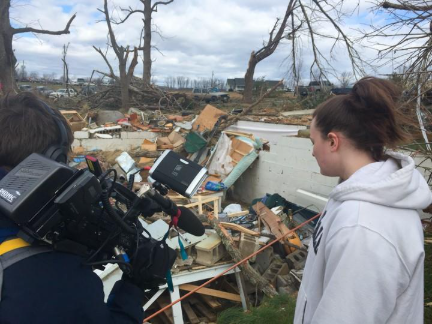
WDBJ7 interviewing Sharanda Totty, covering an EF3 tornado that hit Sharanda Totty’s house.  

Viewers of WDBJ7 who have watched and trusted Watts’ forecast for many years are sad to see him go. Jordan McDaniels, an avid WDBJ7 viewer has enjoyed watching Watts over the years.  

“Watts is a great meteorologist,” McDaniels said. “When you watched, you could tell he really cared about his work and that’s why I loved watching him. I’m sad to see him leave for sure.” 

Watts appreciates the support he has received from viewers since his departure was announced.  

“After the announcement that I was going to be leaving WDBJ7, there was a huge outpour from people I’d never even met before,” Watts said. “It truly means the world to me that everyone trusted me with their forecast over the years and that I did a better job than I thought I did, actually, of getting the word out and giving them comfort during times when the weather was threatening or when they were scared.” 

As chief meteorologist, it was Watts’ job to cover the newsroom if they were short-staffed or if someone had to stay overnight if the weather permitted. Watts is looking forward to a better work-life balance. 

“I love traveling,” Watts said. “My wife and I love to travel, and I want to travel more locally as well. I love music, so getting out and hearing some local bands and being able to visit family more is going to be really nice.” 

While he is stepping away from the green screen, Watts says that his curiosity and passion for learning will continue to serve him. 

“I think the biggest thing over the years that I’ve learned is to never stop learning,” Watts said. “I’ve never wanted to be one of those people because I always feel like there’s something more that I can learn. 

One of the most meaningful aspects of his job, Watts says, was sharing that knowledge with the next generation.  

“The biggest thing that I have enjoyed over the years is teaching kids and being able to go visit schools over the years,” Watts said. “I’ve visited probably hundreds of schools during my time and met with thousands of kids of all ages. To be able to see their eyes light up when we do a really cool weather experiment or that moment where they understand something that they learned in class has been the most rewarding.” 

Watts plans to continue to watch the weather but on his own time and as a hobby. 

“I’ll be able to go watch storms more and observe them outside instead of being in the studio, which is going to be really cool,” Watts said. “While my main position is no longer a meteorologist on television, it’s one of those skills that you really nobody can take away from you.”