By Sophia Gerni, crime, safety and justice reporter.
Self-defense is an important skill for everyone to know, especially within a college town. While living on your own, you have to find ways to protect yourself. Whether that is learning to de-escalate from a situation or growing stronger with physical activity. Any form of self-defense can help you when a situation may arise.
Student protestors at Virginia Tech gathered in front of Burruss Hall in Blacksburg, Va. on Friday, Feb. 21. The organization met in response to changes at the university regarding DEI, ICE enforcement and compliance of the university with Trump’s executive orders.
HYPNOS, a team in the Calhoun Honors Discovery Program at Virginia Tech, has developed Selene, an innovative sleep technology designed to improve sleep for astronauts. After dedicating more than 400 hours to its development, the prototype will be showcased at the prestigious Biennale Exhibition in Venice this May. With a focus on transdisciplinary innovation, the team has worked tirelessly to refine their design, and their efforts will be on display for a global audience, marking a significant milestone in their journey.
By Evan Hull, environment, climate, and sustainability reporter
Solar panels at Perry Street Parking Garage.
For a second time, the U.S. is set to exit the Paris Climate Agreement, but Virginia Tech isn’t backing down from its climate action commitments.
Why it matters: As an internationally recognized institution for environmental engineering and natural resources management, Virginia Tech plays a key role in researching sustainable practices across the globe. With President Donald Trump’s signing of the “Putting America First in International Environmental Agreements” executive order, many environmental initiatives across the country are now in limbo.
The big picture: Virginia Tech will not stray away from its nearly 16-year-old Climate Action Commitment, but there may be some hurdles for researchers.
“Our impact on the environment matters to us,” said Mark Owczarski, interim vice president of communications and marketing at Virginia Tech. “It’s part of ‘Ut Prosim.’ We’re serving our community. We’re serving our students and faculty. We serve our environment because, without our environment, we can’t function.”
Carbon neutrality and 100% renewable electricity are among the goals Virginia Tech currently has set for its Blacksburg campus by 2030. It is one of many universities that remains in-tune with international climate initiatives.
“Right now, there are governors, mayors, and institutions across the U.S. saying ‘we’re still in,’ and ‘we’re going to comply with the Paris Agreement,’” said Carol Franco, senior research associate at Virginia Tech, and climate advisor to the Ministry of the Environment of the Dominican Republic.
While the university isn’t concerned about continuing their plans for a more sustainable campus, questions have been raised about research funding—particularly from the federal level.
“As faculty, we apply for funding—even departments apply for funding,” Franco said. “Having that funding will impact our availability and our capacity to do research in certain areas.”
Still in the early stages of Trump’s second administration, it remains unclear as to what environmental programs and projects will continue to receive federal funding.
Zoom in: While Virginia Tech is unwavering in its commitment to climate action initiatives, officials recognize that times of intense change can always be met with adaptability.
“The university believes that responsible stewardship of the environment is important, and that may look different from generation to generation,” Owczarski said. “The plan will continue to change, evolve, and grow over time.”
Virginia Tech’s Climate Action Commitment has been revised twice since initial approval in 2009.
World leaders celebrate the signing of the Paris Climate Agreement in Paris, Dec. 12, 2015. (Photo/Carol Franco)
Flashback: Over the last several years under the Biden administration and the Paris Agreement, U.S. sustainability plans closely resembled those of Virginia Tech.
In April 2021, Biden created a goal of reducing U.S. emissions by 50 to 52% by 2030 according to the Natural Resources Defense Council. By December 2024, the goal was changed to 61 to 66% by 2035.
What we’re watching: While Virginia Tech’s climate initiatives remain safe from federal intervention, experts from countries still in the Paris Agreement are keeping a close eye on the U.S. before they officially exit.
The U.S. will still be members of the agreement until January 26, 2025 according to Reuters.
“During the first administration of President Trump, the U.S. basically stayed on the sidelines,” Franco said, noting that United Nations Framework Convention on Climate Change decisions must be made by consensus. “Now, if the idea is to stay on the sidelines, we’re going to be able to move forward. If the idea is to oppose, then we’re going to have issues.”
Universities and higher education are left with uncertainty after President Trump’s executive order, calling for the elimination of diversity, equity, and inclusion in all spaces of the federal government. The executive order conveniently dropped less than two weeks before Black History Month.
Virginia Tech’s Black History Month post Photo Credits: Virginia Tech Instagram
Why it matters: President Trump has yet to clearly define what is viewed as DEI programs which leaves heritage months like Black History Month hanging in question of whether that violates the executive order.
Virginia Tech has several organizations dedicated to diversity and inclusion. One is the Student Opportunity & Achievement Resources Program, more commonly known as SOAR. This support program is “dedicated to welcoming and retaining underrepresented minority students at Virginia Tech and promoting their success through campus collaborations.”
The big picture: The Virginia Tech campus has been left in a state of confusion as the state of its DEI programs has been threatened. Zora Dancy a student intern with SOAR noted that diversity, equity, and inclusion span much broader than people realize.
“A lot of people are realizing that DEI isn’t just about race. It’s about people with disabilities, it’s about veterans, and a lot of aspects of this presidency that we’ve seen in the last few weeks, you’ve seen a lot of people say “Oh well I didn’t know’ yeah because you didn’t do your research, you’re just going based off of what you think and what you hear.” Dancy said.
When speaking about the misconceptions regarding DEI, Dancy noted, “…DEI is more than just a ‘Black vs. White’ issue. There’s so many layers to the people who are affected by DEI.”
“This idea that DEI is somehow saying that it’s not allowed or open to white people is really interesting to me because a lot of these spaces did have to start and be developed because Black people and other people of color were not welcomed into white spaces,” Dancy concluded.
The push for answers: Virginia Tech President Tim Sands, officially addressed Trump’s executive orders at his State of the University Address this past week.
“I would like to acknowledge the challenges that many of you are facing as we interpret and respond to a flurry of executive orders that impact higher education.” Sands continued, “We will follow the law, but we’ll do so once we fully understand the directives and the applications to Virginia Tech.
Sands concluded his statement, “We do not yet have many of those answers, but we are collecting information and providing guidance where we can.
President Tim Sands at the 2025 State of the University Address
Zoom in: Mark Owczarski, Interim Vice President of Communications and Marketing provided insight on the future of inclusion at Virginia Tech and the institution’s stance.
“We believe that in order to do our very best teaching, research, and engagement which is our three missions, it’s why we exist, we need to be able to attract the very best talent. Everybody and anybody who wishes to engage, regardless of who or what they are and what they believe in…” Owczarski stated when asked about the state of DEI at Virginia Tech.
The university’s biggest challenge is that a clear definition of what is classified as DEI has yet to be stated by the Trump administration, “It’s interesting because, the fundamental response is ‘Okay, so we have these orders, what are we doing?’ and really at this point we’re at the stage, we’re trying to understand what they mean.”
What we’re watching for: The town of Blacksburg is going to hold upcoming meetings to further address the executive orders made by President Trump once more details are released.
“I think when you start to take away Black people and people of color when you start to take them out of whatever space, they’re gonna realize how necessary they were in that space. Any person of color, especially Black people, have to work twice as hard, three times as hard to get to where you wanna go. So you put in all that work and make it to that position, you get your degree, and then they’re pulling you out of these spaces, obviously, it’s frustrating but just wait and see because they will quickly realize how much you are needed.” said Dancy.
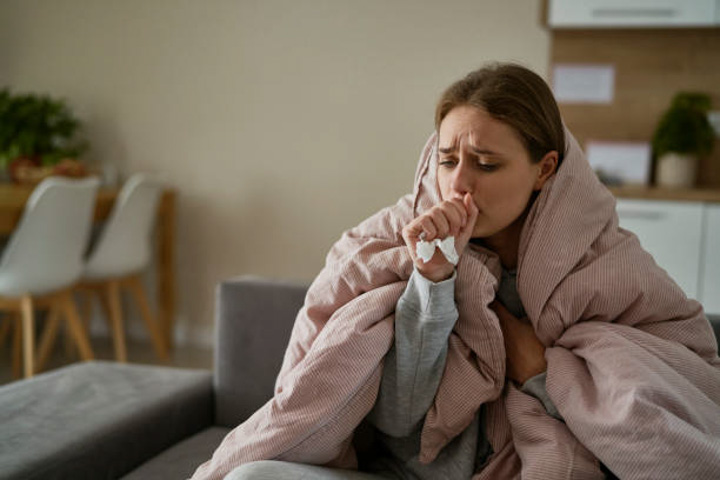
Photo Courtesy: iStock.com Photo credit to Getty Images
By Madi Poole, Health and wellness reporter
A look into what Influenza, a viral infection of the nose, throat and lungs, and also better known as “the flu”, has done and caused this year for all ages. Giving you a 2025 flu update from how many people got their flu shot this year to how many suffered from the flu this year and just how intense was this year’s flu season compared to past years?
Why it matters: The flu continues to take over each year, this year produced some new records on flu rates and deaths caused by the flu taking precautions where needed like getting your flu vaccine can be critical especially those of high risk.
As of February 1st, 2025 the CDC has reported that 45% of adults have received a flu vaccination and 45.7% of children have received a flu vaccination.
These rates are just about the same as compared to last year. Unable to see a huge increase in people getting their flu shots each year.
While only less than half the United States received their flu vaccination it has been reported that the CDC estimates at least 24 million people have had the seasonal flu this season.
Of the 24 million who caught the flu this season 310,000 were hospitalized and 13,000 deaths caused by the flu this 2024-2025 flu season, 57 of those deaths were children.
The Big Picture: Looking at statistics from just a few weeks ago it was reported for the week of January 25th through February 1st:
31.6% of people who visited a doctors tested positive for the flu
48,661 people with the flu were admitted into the hospital
2% of deaths attributed to the flu
10 pediatric deaths due to the flu were all reported in just one week.
Jaymie Bollman, a pediatric nurse, tells us about how bad it has been in her office for the flu this year “I have been at this office for four years now and this has probably been the most intense flu season I have seen yet.” Bollman tells us that she has seen children ranging from all ages come in and test positive for the flu “Seeing the flu in kids is not super rare just because once it starts in school it doesn’t stop for a while but we have had kids from three years old all the way to 17 come in here and test positive for it just in the past two weeks.”
Zoom In: One aspect of this year’s flu season that surprised doctors was for the first time since the pandemic there was a week that had more deaths caused by the flu than COVID-19. CBS News reported the week ending on January 25th, 2025:
1.7% of all deaths reported were due to the flu
1.5% were reported due to COVID-19
Rates of hospitalizations due to the flu were three times higher than COVID-19 because of this season’s record high of Influenza cases.
Luke Darrah talked to us right after having the flu, comparing it to COVID-19 “I have had both Covid and the flu multiple times but the flu I had this year was worse than any other year and worse than when I had covid.” Darrah tells us a little about the symptoms he was feeling this time around “I just felt very weak and exhausted but the congestion was the worst part. I struggled breathing out of my nose for a while.”
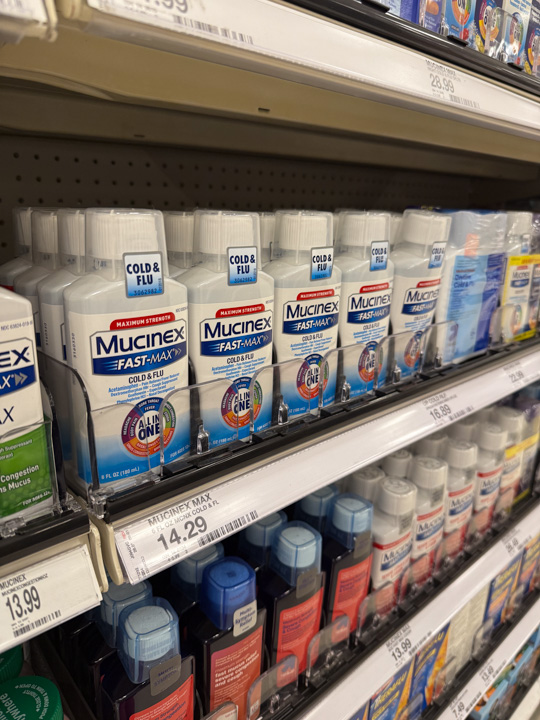
Stores like Target, Walmart, CVS, and Walgreens are making sure cold and flu medicine stays stocked due to the high demand for the medicine during flu season.
What we’re watching for: Moving forward this year as “flu season” comes to an end precautions should still be taken. The CDC always recommends health advice on how to avoid or minimize the chance of getting the flu. The CDC recommends:
Everyone six months or older should get a flu vaccine
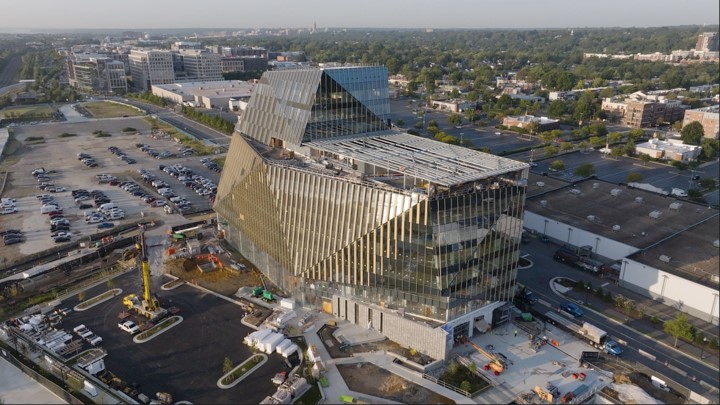
Virginia Tech’s new Innovation Campus, a striking and architecturally bold facility in Alexandria, opens Feb. 28. The cutting-edge campus in Northern Virginia will offer students state-of-the-art amenities to help them thrive in their future careers. The opening marks a transformative moment for the university.
Innovation Campus under construction (Photo: Virginia Tech News)
Why it matters: This major investment by Virginia Tech expands the university’s footprint in the greater Washington, D.C. area and reinforces its commitment to serving the Commonwealth. The facility will focus on high-demand fields like computer science and computer engineering, directly addressing the region’s growing need for tech talent, especially with the continued expansion of companies like Amazon’s HQ2.
Located near the soon-to-open Potomac Yard Metro station, the campus offers convenient access for students, faculty and collaborators. Its proximity to major transportation hubs, including Reagan National Airport, further enhances accessibility and strengthens connections between Virginia Tech and the region’s booming tech sector.
Flashback: Construction on Academic Building One, the first building on Virginia Tech’s Innovation One campus, began in September 2021. The 300,000-square-foot, 11-story building was always going to be a major undertaking.
SmithGroup, the architects behind the building’s design, and Whiting-Turner, the construction contractor, are collaborating to bring this complex vision to life. The finished building will showcase their combined creativity, teamwork and expertise.
Virginia Tech News spoke with Sven Shockey, a 1996 alumnus and vice president and design director at SmithGroup, about the project.
“We all felt this project was ideally suited for us because Virginia Tech set ambitious goals for a building with a high level of sustainability and wanted to house the computer science and computer engineering programs in a top-tier research environment,” Shockey said.
“The building and site need to function as a self-sufficient mini-campus,” he added. “It must stand on its own for a while until the surrounding buildings are developed,” Shockey added.
Zoom in: The Alexandria campus offers a range of revolutionary features designed to foster a sustainable and educational environment. From energy-generating windows to an indoor drone testing facility, the campus offers unique opportunities for research and collaboration.
Sunlight powers the building through photovoltaic panels integrated into the south and southeast-facing windows. Unlike traditional rooftop solar installations, these window-mounted panels harness solar energy directly within the building’s facade.
A two-story, 465-square-foot drone testing cage spans the third and fourth floors. This indoor facility complements the outdoor drone park near the Oak Lane community in Blacksburg, providing Innovation Campus students with year-round access to drone technology.
The spacious 3,000-square-foot Boeing Auditorium, conveniently located adjacent to the two-story lobby, will host lectures and presentations. Naming the auditorium after Boeing recognizes the company’s role as the Innovation Campus’s first foundational partner.
Rendering of the Boeing Auditorium (Photo: Virginia Tech News)
The design also incorporates a touch of Virginia Tech’s Blacksburg roots. While the Blacksburg campus features iconic Hokie Stone, the Alexandria building uses terracotta masonry.
“We have our Hokie Stone masonry in Blacksburg, and the new building utilizes terracotta masonry,” said Liza Morris, university architect, in an interview with Virginia Tech News. “In this way, we’re still maintaining a textural masonry element. It felt like the right materiality and the right way to honor the legacy of collegiate Gothic stone architecture of our Blacksburg campus, but in a way that’s appropriate for the new context.”
What we’re watching for: The Innovation Campus’s Academic One building opens Feb. 28, marking the start of what promises to be a hub for cutting-edge research and education. The official opening ceremony and ribbon-cutting will commence at 10 a.m. and is an event open to the public.
This is just the first step for the Innovation Campus, which plans to add two more academic buildings to accommodate a growing number of students and faculty.
A new outbreak of the avian influenza virus, otherwise known as bird flu, caused by the H5N1 strain, has been confirmed in many states, including Virginia. Rapid increase in the number of cases raises concern among the state’s public and health officials.
Wild turkeys by the side of the road. Photo by Gracie Gosier.
The big picture: There is a statewide demand for all poultry farmers to improve biosecurity to preserve the health and welfare of all chicken raised in Virginia
Why it matters:
On January 16, 2025, Virginia Department of Agriculture and Consumer Services (VDACS) stated that testing of a commercial poultry flock in Accomack County revealed positive findings for H5 bird flu.
Hunt Club Farm in Virginia Beach killed nearly 300 birds after a handful tested positive for H5 bird flu.
H5 bird flu outbreaks have also been found at three poultry sites in the Delmarva region, affecting over 500,000 chickens.
The Virginia Department of Wildlife Resources (VDWR) has reported an increasing number of sick or dead wild birds along the Eastern Shore. Due to this increase the VDWR released a list of recommended precautionary measures for dealing with dead wild birds that may end up on one’s property to avoid it spreading to people. The Virginia Department of Health also has a resource page on the virus and what to do if you think the H5 bird flu is present. However, almost all the cases where H5 bird flu was found in humans in the U.S were people who work with poultry and cattle regularly. Still, this doesn’t mean that the outbreak shouldn’t be of public concern.
Dr. Mike Persia, John W. Hancock Professor and Extension Specialist, Poultry Nutrition & Management. Photo by Virginia Tech School of Animal Science.
Zoom in: Poultry expert Dr. Mike Persia, warns that wild birds migrating toward flocks and cattle have the ability to fly over local farms and spread the virus. According to Persia, the virus causes 60-80% death in birds, and it just takes a few extra precautions to keep the entire flock safe. Persia outlined extra preventive steps to avoiding the virus among wild birds. “The alternative is if you have a positive, you’re going to lose your entire flock,” said Dr. Persia.
What we’re watching: Although H5 bird flu has not been discovered in people or dairy cattle in Virginia, the latest cases are extremely troubling for the state’s economy. Cattle, dairy, and eggs are some of the top commodities that the state produces. The outbreak has already contributed to record high egg prices and low demand, as the H5 bird flu has reduced the total number of laying hens.
According to the VDACS, Virginia’s agriculture industry has an economic impact of $82.3 billion annually and provided more than 381,800 jobs in the past year.
Since December 1, 2024, over 16 million laying chickens have been infected and depopulated due to the virus, which represents approximately 5% of our total national flock lost.
Although the prevalence overall in the country seems relatively low, tracking human infections in the dairy industry has been an ongoing challenge throughout the bird flu outbreak. Residents and officials can work together to reduce the effect of the outbreak and limit its spread by remaining informed, adopting sufficient biosecurity, and following recommended health precautions.
Members of UNICEF at Virginia Tech gathered on February 6th, 2025, to create activity kits for children who are currently receiving care at the LewisGale Hospital Montgomery.
How it started: Freshman Sarah Soltani founded UNICEF at Virginia Tech in the spring semester of 2025.
Soltani was a member of her high school’s own UNICEF and was searching for a similar club when she arrived in Blacksburg for her freshman year at Virginia Tech.
Soltani values the meaning and mission of UNICEF and wanted to re-establish the club on Virginia Tech’s campus to spread those values in the Blacksburg area. “I feel like the mission is so important, basically helping disadvantaged children, and I feel like it really serves Virginia Tech’s motto, Ut Prosim,” said Soltani.
Zoom in: UNICEF at Virginia Tech dedicated their first meeting to create activity kits for children who are receiving care at the LewisGale Hospital Montgomery.
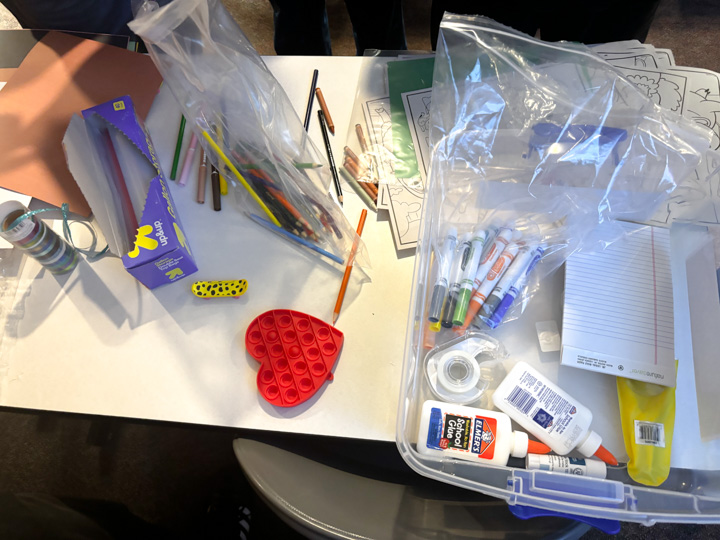
Students gathered in Torgersen Hall to put together bags of art activities to give to the children in the hospital.
The activity bags contained coloring pages, markers and colored pencils, ribbons, stickers, and fidget trinkets.
“When they come in, either visiting because their sibling is in the hospital or they themselves in the hospital, it’s a way to kind of cheer them up and provide some entertainment in a place that can be very scary for a child,” said Soltani, when asked why she wanted to have this be the first project for UNICEF at Virginia Tech.
Zoom out: Art therapy is a highly recommended practice for children who are currently sick or hospitalized.
Having activities for children to engage in can help to take their mind off of their treatments and what they are currently going through.
According to The Crayon Initiative, an organization dedicated to bringing art therapy to pediatric patients, “a study from 2018 documented that letting pediatric patients engage in art activities decreased their stress levels. There was also a noticeable improvement in the children’s moods.”
The big picture: UNICEF at Virginia Tech is dedicated to bettering the lives of disadvantaged children living in the New River Valley.
UNICEF at Virginia Tech has a goal to provide resources to children in the New River Valley to help shape their futures and help them overcome disadvantages they may face.
When asked about her goals as the President of UNICEF at Virginia Tech, Soltani said “the goal of the club is basically to deliver the fundamental necessities that try to give every child an equitable chance in life. So, from safe water to nutrition to education to sanitation, we’re really trying to help children that are in communities that are a little bit neglected.”
What’s next: UNICEF at Virginia Tech is just starting on campus and they are looking forward to growing the club in the future.
The club plans to host meetings every two weeks where they will be working on various initiatives to benefit children in the New River Valley.
Soltani is hoping to get more students out to their meetings to help make a difference. “I think we had a really great turn out for our first meeting, so I just want to continue on growing,” said Soltani.
The operations director for UNICEF at Virginia Tech, Iman Monday, wants to get other clubs involved in their initiatives as well. “In the future, I really hope that we can collaborate with other clubs, even with sororities and fraternities, so we can get more recognition and more people to join the club,” said Monday.
Blacksburg locals check out at Kroger. Photo by Julia Lagano.
By Julia Lagano, Politics reporter
February 1, President Trump announced a 25% tariff on imports from Canada and Mexico. He also stated a 10% tariff will be applied on imports from China. Although these haven’t come into effect yet, the impact on the American consumer has already begun.
Why it matters: The economy is always a main concern for voters when it comes to the Presidential election. How will this candidate improve the economy? Many Americans felt that now-President Trump was the best fit for the job. One of President Trump’s main talking points during his campaign was to lower grocery store prices. He promised to do this on his first day in office.
Flashback: In 1992, the U.S., Canada, and Mexico signed the North American Free Trade Agreement (NAFTA). The trade pact was inspired by the European Economic Community. It eliminated most tariffs and other trade barriers between the three countries. The act provided mixed results; Mexico increased its exports. However, there was little economic growth for the United States and Canada. In 2020, a new trade agreement was enacted, the United-States-Mexico-Canada-Agreement (USMCA).
Zoom in: The average price for a dozen eggs in 2019 was $1.55. In 2025, it has soared to $4.95, a 219% increase. With this spike in prices, consumers nationwide are waiting to see the impact. They want to know how this will affect their community, like the New River Valley. There is concern for lower-income families. Will Supplemental Nutrition Assistance Programs (SNAP) adjust the allotted balances in response to these increases?
“The estimated poverty rate in the NRV is about 19%, almost double the rate for Virginia as a whole. Poor people spend about 33% of after-tax incomes on food (compared to about 14% for the median household), explains Jeffrey Alwang, Agricultural and Applied Economics Professor at Virginia Tech
“We do have a fairly good proportions of customers that come in with EBT,” Ella White, Assistant Store Manager at the local grocery store, Earth Fare, shares, “If they see a decrease in what their benefits are, then we will probably lose customers to stores that offer more economical choices.”
Eggs are one of the food products that have increased in price the most. Photo by Julia Lagano
Zoom out: The United States relies on both Mexico and Canada for popular food and beverage products. These include fresh fruits, vegetables, and beer.
“About 17% of food consumed in the U.S. is imported and Canada and Mexico are first and third in terms of value of exports to the U.S. (the E.U. is second),” says Alwang.
To be specific, fresh fruits are the biggest import from Mexico. Last year, that was about $9 billion worth. Avocados made up one-third of that total.
Yes, but: A tariff is a tax on imported goods. These taxes are paid by companies that import the goods in question. Advantages of tariffs are that they protect American industries, increasing federal revenue, and encourage domestic manufacturing. President Trump is using these tariffs to put “Americans’ safety and our national security first.” His approach of an isolationism is also a way to promote American companies.
“It’s a bleak period right now,” White states. “I am trying to have a positive outlook on the whole thing. I would like to see that [the tariffs] will drive up the country’s economy by encouraging consumers to buy from within the United States.”
What we’re watching for: This was originally supposed to go into effect on February 4. Trump postponed the starting date to March 4. These tariffs could lead to a trade war with Canada and Mexico. The two countries have begun to retaliate in response. If the tariffs are implemented, only time will tell those effects, positive or negative, on groceries and Americans.