Governor Abigail Spanberger’s early time in office has brought attention to a long list of new tax proposals being discussed by lawmakers in Richmond. Although Spanberger ran on making life more affordable for Virginians, several bills would add taxes to everyday goods and services that many people already use. These proposals include taxes on delivery services like Amazon, Uber Eats, and FedEx, as well as gym memberships, dog walking and grooming, dry cleaning, storage units, ride-share services, and certain equipment used by small businesses. There are also ideas to change income and investment taxes, which could affect higher earners.
Supporters say these taxes could help raise money for public programs and state needs. Critics argue they could increase costs for families, small business owners, and gig workers. Many of the proposals have not passed yet and are still being debated. According to reporting from 12 On Your Side and 7News, the debate centers on whether these ideas match promises to keep Virginia affordable.
By Isabella Ubillus, crime, safety, and justice reporter
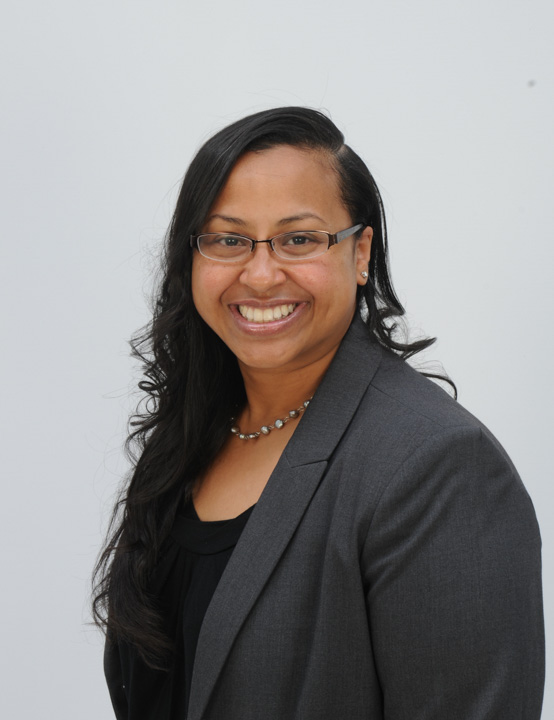
Annie Chalmers-Williams poses for a headshot. (Courtesy Virginia Tech)
As the spring semester begins for Virginia Tech students, so does a familiar part of campus life, the party scene. For Hokie Wellness, their goal is to teach students safer ways to celebrate and still stay in control.
Virginia Tech’s Hokie Wellness has become a central hub for substance misuse prevention on campus. Annie Chalmers-Williams, Assistant Director for Substance Misuse Prevention, oversees programs that combine education, peer support and hands-on training to guide students in making safer decisions.
Since joining Hokie Wellness in 2020, Chalmers-Williams has brought over a decade of experience in clinical social work and substance use treatment, including working with the Eastern Band of Cherokee Indians and youth aged 6 to 18 with the Juvenile Justice Treatment Continuum.
Her role focuses on all things prevention related to substance use as well as managing the IMPACT team, which facilitate workshops such as Party Positive for alcohol harm reduction, Higher Education for cannabis education and safety and REVIVE! for opioid overdose response training. Beyond managing the IMPACT team, she also manages the BASICS program, offering early educational interventions for students with infractions related to substance use aimed to provide a supportive environment rather than punishing students.
In an interview, Chalmers-Williams discussed how Hokie Wellness defines “safer partying”, trends she sees among students and the resources available on and off campus.
Her comments have been slightly edited for length and clarity.
How do you define safe partying at Virginia Tech?
The first thing we talk about is that we can’t ever stay safe, we have to stay safer. We emphasize harm reduction, thinking about ways to make things safer.
Hokie Wellness teaches six main strategies: choosing if and when you are going to drink, pacing, hydration, tracking your drinks, eating properly and having a safe ride home.
Education about binge drinking and alcohol poisoning is also key. One of my favorite things to teach is the “Party Positive Zone”, which is an optimal blood alcohol concentration (BAC) between 0.00 and 0.06. We tell people that if they are going to party, we want you to party in that zone because you’re more likely to experience the euphoria that comes with alcohol without the negative side effects.
We have a Party Positive card that estimates the number of standard drinks to keep someone in that zone based on sex, body weight and time spent partying. We want to try to keep people from having negative experiences.
What are the biggest alcohol related problems that you see among students? Is there a difference between the beginning of the semester versus the end?
Our culture is steeped into alcohol, especially among college students. We’ve seen a rise in drinking and driving and DUIs. Binge drinking continues to be an issue. Health wise, drinking 10 drinks in one night is more harmful on your body and brain than drinking moderately throughout the week.
In the fall semester, we see younger students getting involved with substances as a way to connect socially, leading to early-on alcohol infractions, specifically in the dorms. By the end of the year, due to graduation, we see these similar situations with our students who are of an older age.
Are there additional steps that Hokie Wellness takes around big events, like football games or graduation?
Hokie Wellness tries to plan for that. We have our social media accounts pushing public health information and outreach on how to party safely. Hokie Wellness is part of the recovery community, and they have sober tailgates for students who want to enjoy the game day atmosphere without alcohol or other substances.
At the beginning of the school year, we do a lot of work during those weeks of welcome as well as having programming at GobblerFest. It’s about getting ahead and encouraging people to come and pay attention. We are aware of those higher risks and a goal we always have is to work harder to remind students to think about their safety and their futures.
What steps can students take to drink more responsibly?
The biggest thing is learning about it so that if you choose to drink, you know what you’re doing, because a lot of people don’t know what they’re doing. Have strategies to protect yourself. Start your night out early, hydrate, eat a good meal, count your drinks, pace yourself and make sure you have a safe ride home, that’s going to protect you. Learn all about it so that you’re in charge, not your friends or the alcohol, you.
How does Hokie Wellness address consent when it comes to party environments?
We do a lot of education on what consent means and teaching people when alcohol is present, most of the time, consent is not a thing you can do. We partner really closely with sexual violence prevention staff to get on the same page. When working with fraternities and sororities, we always embed consent in there, it’s in everything but we do more of a discussion then.
Besides alcohol, what other substance trends should students be aware of?
We do a lot of cannabis education because Virginia has only decriminalized it, but people think it’s legal. It puts them at risk for unhealthy use or legal risk. We spend time teaching people about the laws, so they can make good choices for themselves.
Through REVIVE!, we discuss opioids and the most common way that students are experiencing overdoses is through counterfeit pills. Cocaine is included in those conversations due to its risk of contamination.
Tobacco and nicotine support is currently in production. Right now, we do one-on-one sessions with students and referrals to Schiffert Health Center for medical and behavioral support.
What other resources are available for students that they might not be aware of?
We have useful links and resources on the Hokie Wellness website, making it a good first resource. On campus, Schiffert Health Center, Cook Counseling, TimelyCare and the recovery community offer both medical and mental health support. National resources such as SAMHSA, NIDA and RAINN provide additional help.
Our health department can help students get connected with resources such as free testing strips and Narcan. Rec Sports is also great, getting involved in physical activity can help with withdrawal as your body heals. Exercise is the way to build that capacity for your brain to start creating dopamine again.
If you could give students one piece of advice, what would it be?
A good simple strategy would be that you should not have more than one drink per hour. Pacing wise, that is probably the easiest thing to remember and the best way to pace. That would be my advice right now, stick to one drink an hour or less.
(Roanoke, VA) — It’s been half a century since the bulldozing of historically black communities, Gainsborough and Northeast, but the city of Roanoke is moving towards an apology to those affected and their descendants.
Beginning in the 1930s, the federal government began creating color-coded maps that redlined Black and immigrant neighborhoods as risks for loans and housing assistance. These maps gauged roughly 250 neighborhoods across the various cities in Virginia including Norfolk, Richmond, and Roanoke.
Twenty years later in the 1950s, the Roanoke City Council labeled the Northeast area as a ghetto and proceeded to level over 1,000 homes, flattened roughly 200 homes, eviscerated a dozen churches, and uprooted nearly 1,000 graves. These efforts eventually made way for the construction of Interstate 581, the civic center, and the post office.
Late last year, the city’s Equity and Empowerment Advisory Board, chaired by Angela Penn, drafted an apology for the urban renewal efforts of the past. After previous stalled efforts, the apology could open the door for a reparations fund for families that suffered financial losses and opportunities for generational wealth.
After a meeting with council members on Jan. 8, Mayor Joe Cobb announced in an email that he plans to work with the council in the following months to review the draft and consider additional advice.
“Shortly after I came on to city council – I was selected on to city council in 2018, we began conversations with a group of African American elders and African American young adults to talk about an apology and reparative actions related to urban renewal which started in the mid to late 50s and then didn’t really finish until the 80s.”
“What were some of the key points that needed to be outlined in that apology and then what are some reparative actions because we all agree that an apology without action that seeks to repair the harm done is really just words on a page.”
If Roanoke’s draft apology is approved, not only would there be an additional tax on Berglund center tickets to generate revenue for the reparations fund, but Roanoke would join other cities that have formally apologized for their participation in urban renewal that resulted in the destruction of thriving Black communities. These cities include the Carolina’s Charlottesville, Asheville, and Spartanburg.
In an online interview Wednesday, Mayor Cobb went on to provide some background information surrounding the council’s decision to move forward with their reparations plan, the potential barriers it may face, and how the Roanoke community could benefit from such a plan.
Comments were slightly edited for length and clarity
Does the Equity and Primary Advisory Board have a concrete plan when it comes to distributing financial reparations? For example, the Roanoke Rambler wrote an outline with recommendations such as a tax on Berglund Center tickets, developing Henry Street, or history markers.
So the city in Virginia, because we’re a Dillon rule state, we cannot as a local government set up a reparation fund and award money to individuals. We have to have General Assembly approval to do that. What we can do is make investments, whether they’re capital investments or other investments that can improve the quality of life for people who either lived in and had to relocate in the urban renewal area. So it could be something like creating a program where people who were forced to move have greater access to capital or equity to purchase their own home for first time home buyers or for business owners to be able to start a business or for faith communities to be able to enhance their facility in some way. We’ve already done a lot of work in terms of historical markers in renaming things affected by urban renewal. A lot of that’s taken place in Gainsborough, a lot of it downtown. The Berglund Center is actually renamed a lot of its rooms after African American elders who were alive and still are but lived through that time of urban renewal. So one answer is yes, there are numerous potential action items we could take on, but we have to make sure that we do so in such a way that we have the authority as a local government.
For those who may be seeing this as a subtle resurfacing of DEI, what do you have to say to those who are against these efforts?
Because of this current presidential administration’s tirade and work against practices that reflect diversity, equity and inclusion, we’ve had to kind of scale back the priority outwardly of the equity and Empowerment Advisory Board. But as I remind people in Roanoke, DEI is in our DNA. If you just look at the history of Roanoke, we’re a place for immigrants, refugees, we’re kind of this multicultural melting pot of people and cultures and experiences, and that’s always been part of who we are and it’s just increasing and growing. So even though we may not outwardly always talk about it, it’s who we are and it’s how we go about our daily work and so it’s important for me and for us to reiterate that. Just because you did one thing or two things or three things, it doesn’t fully replace the centuries of harm that has come upon different people and different cultures.
Within five years, what do you hope to see from either Roanoke or similar cities such as Charlottesville, Asheville, and Spartanburg who are doing the same thing you’re doing?
Well I always hope that we can, when we take steps like this, that we can see tangible and sometimes intangible signs of healing in a community. I think if we never do the healing work, community healing work, the tendency is just to put band aids over very deep wounds. We have to embody this desire to be dedicated and committed to healing work as a community, and that’s not typically something that a local government is an expert in. So that’s where we have to really draw on partners in the community that understand the nature of healing work and why it’s so critical to making us stronger and healthier as a community.
As winter illnesses surge, a local epidemiologist claims that it is not the cold itself making people sick, but the crowding indoors and recycling of air that people often find themselves in during the winter months.
Many assume that dropping winter temperatures brings with it the flu season, increase in the common cold, and flare-ups in other health issues. With the high case rates of the influenza virus this past winter and sicknesses often flaring up during the colder months, questions arise about what role does cold weather actually play. During this time of year many other factors could be potential causes as well. From the large number of holidays with themes of coming together to celebrate, to the lack of outdoor areas for people to congregate during the colder months, the tight contact of the winter months could also be a factor. In addition to the rise of infectious diseases we see a rise of the effects of chronic diseases during this time.
Jason Deese, the District Epidemiologist with the New River Health District, sat down for an interview on Jan. 29 to explain how the cold winter weather actually affects the travel of infectious diseases and how the cold weather can trigger certain chronic diseases. And even though it is not his expertise, he was able to answer some questions on how the cold and winter weather can affect chronic diseases as well.
[Edited for Clarity]
How does cold weather affect the spread of illnesses like the flu or COVID-19?
It doesn’t necessarily directly affect it. It’s what we do in response to the cold air. So we’re sitting here in a closed space with limited air exchange, and when we breathe, talk, cough, sneeze, those droplets, or possibly aerosol particles concentrate in the air, and you’re more likely to end up breathing them in an infectious dose. That’s more or less how it happens.
There is some research out there about cool, dry air is maybe more efficient in carrying those particles so that they might remain suspended in the air for longer by outdoor air, the fact that it is cold air doesn’t make any difference. In fact, I’d say during covid, the best place you could be is outdoors in fresh air because when you are inside you are breathing concentrated droplets or aerosol.
Is it the cold itself or our winter behaviors that drive outbreaks?
The weather outside does not impact it directly. When you are indoors, your responsive cold air is to turn on heat, recycle the air to a certain degree so that we are losing heat. And you know, the most efficient model for keeping a place warm is basically to keep as much of that warm air trapped in the structure that you are in versus bringing in a whole bunch.
Does reduced sunlight and vitamin D impact immune function in winter?
Vitamin D does play a role in the body’s immune system, as many other nutritional components. Studies have shown, and I forget the exact percentage, people that live in North America during the winter do dip below what is considered optimal for vitamin D.
Are certain populations more vulnerable to winter-related infections?
In general, vulnerable would mean someone who’s got some type of issue with their immune system. The weaker immune systems tend to be in our older people. Additionally, very young people who haven’t established an immune system yet are vulnerable. People undergoing cancer therapy or therapy that suppresses the immune system, such as commercials on TV for Crohn’s disease or psoriasis, those are immune suppressing medications. Those types of things can make you a little bit more susceptible to various different types of infection. And that isn’t just necessarily during the winter, that will be at all times.
Here’s another example, the number one risk factor for bacterial meningitis infection is being a college freshman in a dormitory. Why do you think that is? Maybe not sanitary? What happens in the first few weeks of college. You’re interacting with a lot of new people. Maybe new study habits, burning the candle at both ends, partying at night, working in the day, wearing down your immune systems. Even people that start out perfectly healthy, can do things to themselves that can, you know, make them more susceptible to illness. Mono is another one that you know tends to spread in dorms with freshmen.
How does winter weather affect people with asthma and heart disease?
I’ll start out with heart disease, because when people go out in the cold, what happens? What happens to the blood vessels, they constrict and may lead to potential cardiac events? That’s fairly well established. In fact, when I was a kid, 12 or 13 years old, I saw a guy across the street shoveling his driveway and died of a heart attack. That’s actually fairly common. That plus doing activities that they’re not used to doing. If you did any shoveling snow in the last few days, it’s pretty vigorous activity. For some people, it is the first trip off the couch in a couple of weeks. It can put a lot of stress on the cardiovascular system.
There are many things that can precipitate asthma attacks in people, whether they be allergens, maybe dramatic changes in temperature. Some people stepping from a warm house and going and exercising out in the cold might precipitate asthma attacks. There’s potential there. It tends to be more likely in a cooler, drier environment.
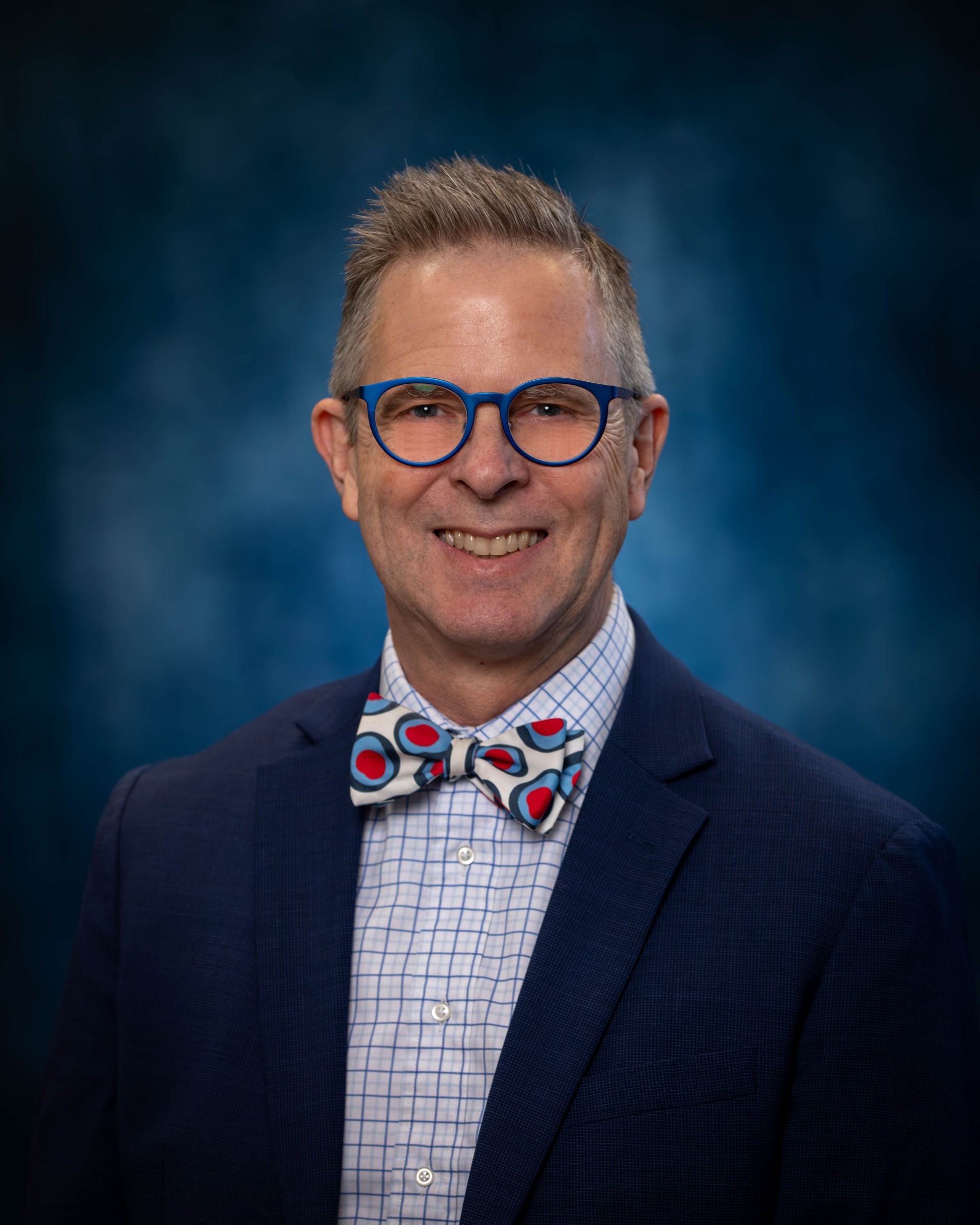
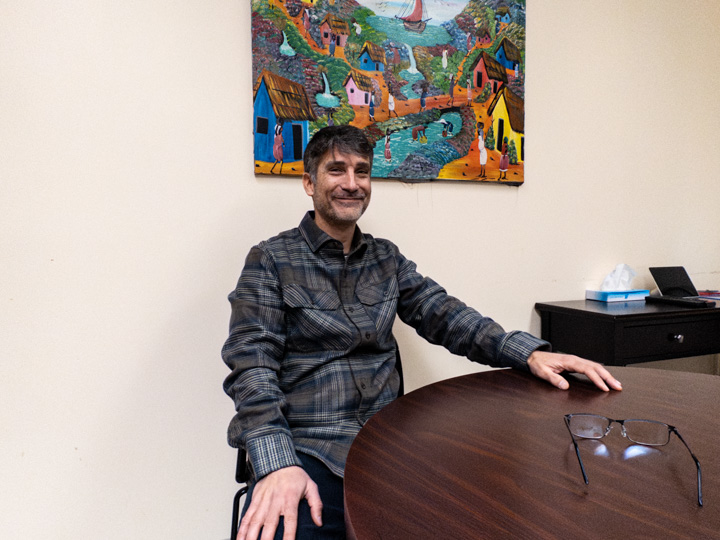
Jason Deese in the Montgomery Health District Office conference room. Christiansburg, Va. Jan 29 2026. Deese did not want to take a picture in the area he actually worked due to the worry that someone’s medical information could accidentally be out.
Dr. Andrew Ellis, professor and director of graduate studies in Virginia Tech’s department of geography.
Last week, the United States experienced a significant winter weather event that stretched from New Mexico to the far corners of Maine. Forecasts saw conditions such as consistent heavy snow, freezing rain, and harsh temperatures across more than 30 states.
While the U.S. is no stranger to powerful winter storms, questions have been raised regarding the nature of the storm and how it developed. The sheer size and reach were without a doubt anomalous characteristics. Areas that hadn’t experienced such fierce weather in 3-4 years, such as Blacksburg, VA, were met with dangerous conditions that have lingered since. The storm also managed to travel across the entire country, forming in the Pacific Ocean and making its way across the Midwest to the East Coast.
Dr. Andrew Ellis, a Virginia Tech professor and director of graduate studies in the department of geography, gave an in-depth look at the science behind Storm Fern and whether or not its conditions could be deemed unnatural. His background as a hydro-climate scientist brought great insight to what factors allowed the storm to develop, how it maintained strength during its course, and how its harsh conditions arose.
(Edited for clarity)
What was your first reaction to the storm?
Impressive aerial coverage. That was fairly unprecedented in terms of the length of the storm. We haven’t had many storms in recent years that have come out of the Southwest and all the way across the southern tier and up the east coast of the US.
What factors came into play regarding how the storm stretched so far and how it became so large?
This winter, we’ve had little storm systems that have been associated with the northern jet stream, which is basically dropping out of Canada. We haven’t had much interaction from what’s called the subtropical jet stream, which is more of a Southern Tier coming in off the Pacific Ocean. This was really the first instance where the subtropical southern jet stream got involved. Usually, that jet stream brings the moisture, and the northern jet stream brings the cold. We’ve had cold but not a lot of moisture. This one brought a heck of a lot of moisture. The subtropical jet, the wet jet from the south, is really what made this one more unique than what we’ve been dealing with, not just this winter, but in recent years.
Did climate change have any impact on the storm?
Probably not this one. These things have been happening like this for as long as we’ve been looking at records. In fact, it’s been less frequent here in the last few years. The climate change angle probably has more to do with the cold that was associated with this one, which sounds counterintuitive, right? Global warming and cold outbreaks. That northern jet that we were talking about, it gets a little bit more wavy with global warming, and so it can sort of drop farther south at times and bring cold air into places that don’t necessarily typically experience that.
Arctic amplification, the rapid warming up at the Arctic region of the Northern Hemisphere, has caused the jet to be a little weaker. That weakness of the jet, less strong winds, has caused it to sort of meander a little bit more. When it meanders it can drop south and that’s when the cold air comes into play. Back in the 1970s really strong jet cold air tended to stay bottled up more to the north. But here, in recent years, we get these episodes of cold air outbreaks when the jet weekends and drops South from time to time. You could make the argument that the warming climate change has played a role in the temperature, at least at the surface.
How often do these powerful winter storms occur?
In recent years, it hasn’t been the case. It’s probably been four or five years since we’ve had a really strong east coast storm like that. Traditionally, a handful, two or three of these a year, would be fairly typical up until the recent period.
In Blacksburg, we saw heavy snow, sleet, and ice. How did we get such a variety in the forecast?
The amount of cold that we had at the surface was a bit unusual. The models started to move the storm more northwest, and so we were on the warm side of the storm, drawing warm air up from the south. Once you start to inject some warm air in the middle part of the atmosphere, the snowflakes on their way down melt. If they completely melt, when you’ve got some really warm air in the middle part of the atmosphere, then it remains liquid all the way down until it hits the cold surface and freezes as freezing rain.
The warm air aloft was really indicative of a pronounced freezing rain event. The forecast here was pretty dire, with half inch accumulation of ice, if not more, which would have been crippling. The cold air really hung in there for us, and kind of held most of the warm air to the south and didn’t let it get in here and totally turned it over to a freezing rain event, which is great.
Could you go into more detail on Blacksburg’s icy conditions?
What’s on the ground is like a block of ice. It’s like concrete. That’s because of the prolonged period of sleet events that we experienced, which was really rare. But I think the biggest issue too is we had an inch and a quarter of water equivalent. There was a ton of water in this little, tiny snow and ice pack that we have out there, so it’s not surprising that it’s like concrete.
Is there anything you’d like to add?
Looking ahead it does not look as extreme cold as we’ve had, but the pattern is still on the cold side. Anytime you’ve got the northern jet dropping down and bringing cold air, there’s always chances for little storms to spin up on the periphery. I don’t think we are heading into a totally snow free period for the next few weeks. I think we’ve got some more interesting weather on the horizon.
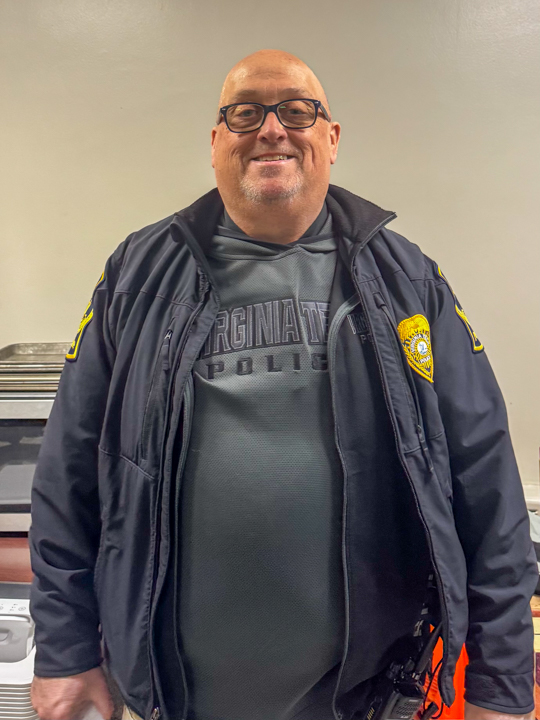
VTPD Cpl. John Tarter in his office. Photo by Gabi Vessal.
BLACKSBURG, Va.- Registration remains open for the next two to three weeks for Virginia Tech’s Rape Aggression Defense (R.A.D.) System program, a national course designed to teach males and females how to defend themselves in emergencies.
Offered by the Virginia Tech Police Department, the program consists of four classes throughout the semester. Registration remains available until the day before each session begins or until the class reaches its maximum capacity of about 50 participants.
I spoke with VTPD Cpl. John Tarter about the program’s purpose, format and background.
His responses have been slightly edited for clarity and conciseness.
Can you please give me a background on the program and what it is designed to do?
It was started by a police officer. He’d been in the Marine Corps. He was into martial arts, and he went to the police academy in Hampton, Virginia. Then he ended up going to Christopher Newport as a cop.
He went to one of his police chiefs and said, “Hey, can you come up with a basic self-defense class for women?”
And he started one. He got cops because he taught cops how to do defensive tactics at the police academy. Then he got other cops that taught defensive tactics to help him teach the R.A.D. program. And so, it’s spread. It’s not everywhere in the country, but a lot of colleges, universities and police departments have it.
It is four nights. It’s nine hours or 12 hours. The first night is in the classroom: how to stay safe on and off campus. The next two nights are punching: how to get out of chokes, how to get out if they grab your wrists and how to get out of that ground defense. Then the last night we do is each session is called simulation night, but I call it “Fight Night.”
And so basically, you put on a red suit and we put you through two or three scenarios. Most sexual assaults occur between people that know each other. We can’t simulate that. So, we simulate stranger-type situations. Somebody grabs you by the wrist and pulls you- how you can get away from that kind of thing.
Each night is three hours, and we do ours, say, four Mondays in a row. The next time, we’ll do four Thursdays in a row. It empowers a lot of people.
I can’t tell you when to defend yourself, and when not to defend yourself. That’s what the individual has to make the decision to do.
Can you please explain a typical class from start to finish?
On the first night, we meet at the police department. We go over the paperwork, review the manual, do a PowerPoint and talk about safety topics—like what to do if someone is following you home, whether it’s to your apartment or your house. We discuss where to keep a spare key, how to lock your windows and general safety tips for the public.
On the second night, like I said, we focus on upper-body techniques. We practice strikes, punches and blocks. We cover what to do if someone grabs you by the wrist and how to get out of it.
On the third night, we work on ground defense. If you get knocked down, we teach you how to get back up. We show you how to kick from the ground and what to do if you’re on your back and someone gets on top of you—how to throw them off. The instructors demonstrate these techniques on each other, but no one ever gets on top of the students.
We also teach how to escape choking from the front and from the back. I always tell participants that they don’t have to do anything they’re uncomfortable with. They are in control of what they choose to practice.
I explain that they’ll partner up with someone who will gently place their hands around their neck so they can safely practice escaping. But if someone is a survivor of choking and finds that triggering, I tell them not to do it. They can watch and learn instead. No one is forced to participate in anything.
I noticed you offer a men’s and women’s program. What is the difference between the two?
If you decide to defend yourself, we try to amp you up, right? The men’s program, we try to amp them down. We try to deescalate. Because, you know, a lot of times guys are like, “I don’t need no self-defense class. I can take care of myself” and puff out their chests.
Well, that’s what Sergeant Michael Pascal also teaches the police officers: how to deescalate situations like on traffic stops and things like that. So, for me that is the big difference. One is if you decide to defend yourself, we try to amp you up a little bit. And then, if you’re in the men’s program, we try to deescalate them or amp them down.
How do you deal with those who may find the program triggering?
We’ve had people that have been triggered, like when we do the simulations and Fight Night. I’ll never forget, we were in our Dietrich police office, and this young lady came in. She had the fight suit on, and we put her through a scenario.
After she fought—she did well—I said, “Go over there in the corner. Take your helmet off so you can rest. We’re going to go through this first scenario, and then we’re going to put you through a second scenario.”
She went over and sat down, watching the next person come in. She became very upset. She started crying and yelling, saying, “You’re teaching these people wrong. It’s not some stranger at a bus stop—it’s somebody you know.”
Was she right? Absolutely. The vast majority of the time, it is somebody you know. So, she was triggered by that situation. When the next person came in and went through it, she was triggered again as well.
We’ve never had two back-to-back cases where you could tell someone was triggered by the situation. Both of them, we got counseling. We offered them counseling, came out and talked to them, and then they came back and they continued the fighting part. We didn’t make them, but they finished it.
So, in a class, I don’t know who is going to be a survivor of a sexual assault. In that class, there’s probably going to be at least one person that has experienced something in their life. And if we know they’re triggered, we get them resources.
If we don’t know, we still push resources. Now I can’t go ask them, obviously, but over the years, we have had people come forward to us. And we tell them at the beginning of class, “We’re mandated reporters.” So you can’t come up to me and say, “Hey, can I tell you something? But I don’t want to tell anybody else.” That’s not the way it works as far as mandated reporters go, because you have to report it to make a police report.
Local officials say the WHO withdrawal is unlikely to cause changes for Blacksburg’s flu season. Here’s why.
On Jan. 22, 2026, the United States withdrew from the World Health Organization (WHO) through an executive order signed by President Donald Trump. The WHO is a United Nations global health agency with 194 member states and includes public health experts such as doctors, epidemiologists, and scientists. The organization operates in more than 100 countries, with efforts to “respond to health emergencies, promote well-being, prevent disease and expand access to health care,” according to its website.
Since the U.S. joined the WHO back in 1948 as one of the organization’s initial members, the country has played a crucial role in supporting the WHO as the largest single donor and funder. By contributing $1.284 billion during the 2022–2023 biennium, which is 12-15 percent of the organization’s total funding, the U.S. has significantly helped provide assistance to essential health programs in identifying and responding to emergencies, preventing threat of disease spreading across borders and advancing systematic health systems by focusing on more vulnerable populations around the world.
In March 2020, the WHO declared Covid-19 as a global pandemic. This meant working across borders from the initial report of the virus. In crises such as the Covid-19 outbreak, the WHO plays an important role in connecting experts, initiating response protocols and providing guidance on public health concerns across the organization.
On January 10, 2020, WHO provided a package of technical guidance with advice for regional emergency directors to share with WHO representatives in countries on how to “detect, test and manage potential cases.”
The U.S. Centers for Disease Control and Prevention (CDC) is a federal public health institute. It provides resources and science-based guidance to federal, state and local health agencies. During the pandemic, the CDC activated its Emergency Operations Center (EOC) to coordinate response efforts nationally and share information with international partners, including the WHO.
The New River Health District is an example of a jurisdictional public health department that relies on information exchange from the CDC to guide decisions and stay informed about national and international developments.
Sr. Epidemiologist Jason Deese from the New River Health District addresses what this might mean for the community and for Virginia Health operations.
His comments have been lightly edited for length and clarity.
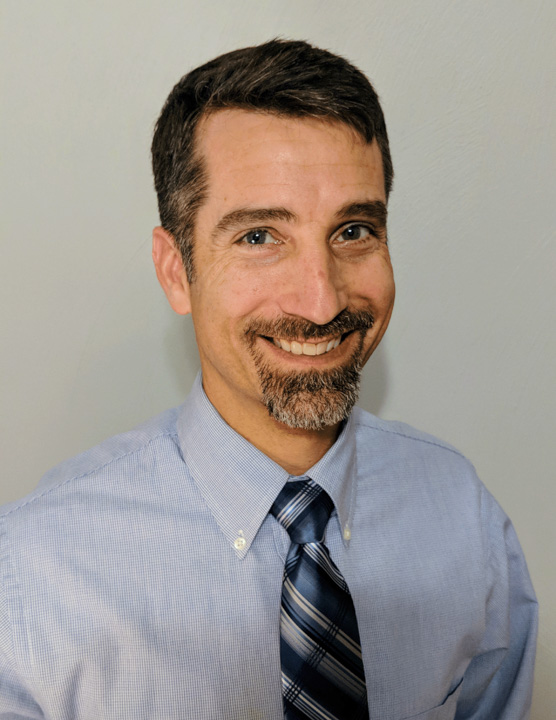
Dr. Jason Deese
How does disease surveillance typically work at the local level?
Our surveillance structure starts with a doctor or other provider who has a high suspicion of something on the [reportable disease] list. They can lab-confirm it or report it if they strongly suspect it. Then we do an investigation.
Here’s an example. Say someone with whooping cough gets diagnosed. The provider reports it to us, we in turn find the patient to identify close contacts and bounce it against the CDC’s case definition, a set criteria.
The verified case is then sent to the Virginia Department of Health to look over the work, who will pass it along to the CDC. The CDC collects and verifies this information, which becomes part of the surveillance record.
When would the health district get directly involved with flu cases?
If there’s a novel strain or an outbreak in an institution. If Virginia Tech has a huge number of flu cases and we can relate it to a specific dorm, then we might call it an outbreak of flu, a condition above what’s expected. Our people at the state will evaluate it and offer up resources and if it turns out to be some type of strange flu, then the CDC will offer up resources as well.
Does being in a college town change how you approach public health?
Yes, a lot of communities around the nation are hosting universities… we all have to be conscious of the fact that you’ve got international students and students that will go to another continent for their field work. Sometimes they come back with a disease that’s on this list.
I’ve seen malaria, dengue fever or typhoid, and that kind of just comes with the territory, because people travel, then they can come back with those things.
From your perspective, will the U.S. withdrawal from the WHO change how you do your job locally?
From the Virginia perspective, I personally don’t see my daily job or ability to respond to anything that’s on this list as impacted at this moment.
Disease surveillance starts with a patient. Someone who’s not feeling well will generally go in to see a provider, and if they — the provider — sees or suspects someone of having any of these things (reportable disease), it gets reported to the local health department, and we address them according to CDC protocols. So, I don’t really see it changing at the local level at all.
Some people worry about delays in global communication. Is that a concern locally?
Domestically, the ports of entry with CDC are doing targeted health screenings and reporting those rapidly to state and local jurisdictions. That side of things isn’t going to change. Most of these illnesses have come from overseas, individual cases, and you’re not going to catch every single exposure before they board a plane.
What we’re most concerned about is detecting it rapidly when they arrive here. We have a mantra — it’s called person, place, and time — it begins with an individual. If you ask the right questions in the right way, you get the right answers.
What do you want people to understand about public health locally?
Virginia has a robust public health system, from the local level up, with really good professionals that work in the Virginia Department of Health and strong collaboration with institutions like Virginia Tech.
One Health – connecting human, animal, and environmental health – is a big focus, along with encouraging healthier lifestyles through nutrition, physical activity, and reducing risks like tobacco use and diabetes.
Who this will affect
Although local experts don’t foresee any changes in public health concerns at the state and local levels, the U.S partnership with the WHO was extremely impactful for low- and middle-income countries. These essential health programs rely heavily on global health financing, which allows for improvements that optimize resources, address health disparities and improve equitable access to care.
Even though local communities like Blacksburg are not affected, it’s crucial to consider the impact on the communities that will be affected without the funding previously provided by the United States, and what this could mean for international access to critical healthcare services.
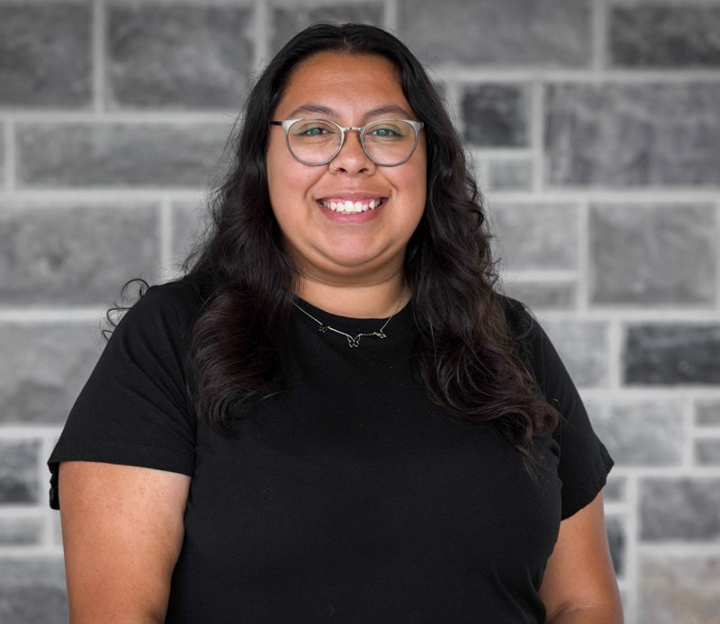
As an engagement engineer, Jazmyne Barron designs student experiences, coordinates partnerships and develops new programming strategies. (Photo Courtesy of Virginia Tech)
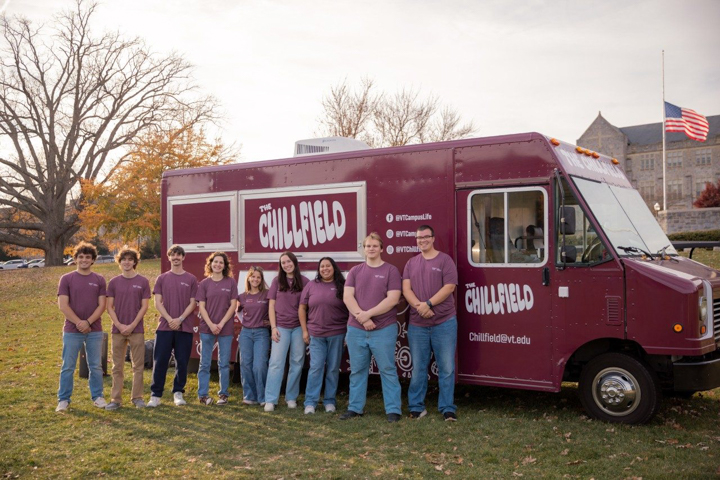
One year after its launch, The Chillfield has changed how Virginia Tech students find entertainment, bringing events to Hokies where they are through mobile programming.
Designed by Ben Evans, lead engagement engineer at Student Engagement and Campus Life, The Chillfield uses interactive activities to connect students to campus partners and each other. The truck hosts events in Blacksburg once a week, at the Roanoke campus once a month and in the D.C. area once a semester.
Hokies can play Tetris Tumble or Connect 4, compete in Nintendo Switch games, customize tote bags and koozies using a heat press, decorate vinyl records and more. In its first year, The Chillfield hosted approximately 52 events and reached over 10,000 students. Jazmyne Barron, coordinator for student experiences, shares her team’s highlights from year one and aspirations for the future.
[This interview was edited for clarity and content.]
What gap did The Chillfield fill in the SECL office?
During the pandemic, there was a large gap in student programming. It was harder to engage students because we needed to follow safety guidelines like social distancing. As we transitioned into a more normal sense of campus life and programming, we noticed it was harder to get students to come to things because they hadn’t been doing anything for such a long time. So, the idea was to go to them instead.
Think back to The Chillfield’s very first event. How did you feel when it ended?
The Chillfield’s very first event was the launch party. Honestly, I had no real expectations at the time. The event ended up being very successful and ran smoothly. We hosted it on the Drillfield and had a lot of different activities available, some of which have become staples in our programming. I think it really set a positive tone for what was to come in the year ahead.
The Chillfield often hosts events on the Drillfield and outside of Squires Student Center. (Photo Courtesy of Virginia Tech)
Can you share a story that illustrates the impact of The Chillfield?
When the truck launched, we were a team of three undergraduate students and one graduate student assistant. Now, our team has doubled. One of those undergraduate students, Filip DeHaven, is now my graduate assistant. Seeing them grow from last year to this year has been very rewarding.
We wanted to culminate all our success during the first year into our first birthday party, which was a collective effort. Each of my student staff put all of themselves into that event for it to be so successful. I think it really shows how they are passionate about this work and want to share fun experiences with other students. They continue to return every semester and I’m proud to work with them.
What have you and your team learned about designing events that resonate with students across such diverse schedules and interests?
When you work in student programming, it’s important to ask yourself how you can create an experience for everybody. We try to provide a variety of options for people, some that are very low stakes, like our grab-and-go goodies, but also opportunities for people to sit with their friends and do a fun craft. We try to play around with the times to reach different students and allow everyone to attend our events.
Has there been an activity or event that didn’t work as planned? What did the team learn from that experience?
I can definitely say weather is our biggest enemy. Our most recent event, National Lego Day, was supposed to be outside. However, we had to shift inside because of the huge snowstorm.
When we’re hosting events on the Drillfield, a little bit of wind can make everything go flying. Even if the forecast is decent, wind can keep students away. The weather definitely keeps us on our toes.
As you enter year two, what are your biggest goals for The Chillfield?
Our team is trying to constantly think outside the box. My student employees really want to bring in new people and expand what we can offer. We have our favorites that we know the truck can easily do, but I think we’re getting to a point where we’re ready to branch out. A new location could help us reach hundreds of new students. My personal goal is to eventually start working with some community partners.
I read that enhancements like a better backup camera and accessible storage are being discussed. What is the status of these upgrades and how will they improve events or operations?
The Chillfield is a pretty old truck, so many parts are outdated. Over the break, we got new seats installed and the dashboard rewired with CarPlay. The heating and conditioning actually work now; that’s very nice to have. We are working to get a new horn installed that will play the intro to “Enter Sandman.” We also installed a jump seat in the back for when we’re driving around campus. The truck has its quirks, and we’ve learned to work with them.
In March, you and Ben will be presenting at the 2026 NASPA conference. What does it mean to bring The Chillfield story to a national audience, and what do you hope other campuses take away from it?
I’m only a year and a half out of graduate school and I’m presenting at a national conference, which, to me, is insane. Our goal is to provide these campuses with a packet of resources and say, ‘Here’s what we did, take it, replicate it with what works for you.’ We’ll make a point to tell people that you don’t need this big truck to do mobile programming if you’re on a smaller campus. You could build out a really cool golf cart. Our emphasis is make it work for your campus.
As someone who has worked with The Chillfield since its first event, how do you hope you feel one year from now?
This is gonna sound funny, but it’s true. Every time we’re out, students love to come up to us and ask what food we’re serving. I’m trying to sell this idea that we’re not a food truck, but a fun truck. I hope that, by the time we’re entering year three, people know that we’re not a food truck. We like to make jokes and make light of the situation that we’re in. However, we purposefully avoid food for our events.
Is there anything else you would like to share?
The Chillfield is truly one of a kind. It’s not on any other campus, which I think is really cool. Going to one of our events should be a bucket list item for students during their time here, especially since, if they decided to attend another school, they would never get a Chillfield experience.
According to Benjamin Franklin, there are two things certain in life: death and taxes. Because of that, it is important to understand what you are paying and why you are paying it.
Jan. 26 marked the first day of tax filing season for Americans, and this time of year can be extremely stressful and confusing. Each year there are new laws and regulations put into place by Congress, and most people don’t have the time to fully understand what they mean.
U.S. Rep. Morgan Griffith, R-Va., of Virginia’s 9th District, recently wrote an article for NRVNews.com explaining how the new reconciliation package, called the “Working Families Tax Cuts,” could affect Southwest Virginia.
I spoke with Dr. Michelle Harding to discuss the basics of tax filing season, understand the new policies and how they will impact the local residents. Harding is a licensed certified public accountant specializing in taxation, and she joined the Pamplin College of Business in 2017 to teach the next generation of accounting professionals.
Harding’s comments were edited slightly for length and clarity purposes.
Can you give a quick summary of what tax filing season is?
Every year, people who have an income have to file a tax return. There’s some requirements where if your income’s below a certain level, you may not be required to file a tax return. But, if you have wage income, that means your employer has likely already deducted taxes. So, even if you’re not required to file a tax return, you should anyway in order to get a refund of those taxes that you’ve already paid.
What we typically think of as tax filing season is that employers are required to give their employees a W-2 form, which is their annual wage report for all the income they’ve earned over the last year, by Jan. 31. Basically, tax season is the time when you receive that W-2 wage report from your employer, until the April 15th filing deadline.
What is your overall main advice to young people and families going through this tax season?
When you get a W-2, 1099 form or your annual bank interest statement, those businesses are sending you a copy, but they’re also sending the IRS a copy. It’s really important that you pay attention and make sure you include all of your sources of income in your tax return.
Often people are just intimidated by taxes, it seems overwhelming and daunting. For people whose primary source of income is their paycheck, they absolutely should not be intimidated by this process because their W-2 is the main piece of information they need to file their tax return. Most Americans will actually receive a refund. So yeah, that’s good news.
There are also free tax filing services available. The IRS has on their website, it’s called IRS Free File. If your adjusted gross income is less than $89,000, then there is this online service that’s free for you to file your taxes. Also, the New River Valley Community Action Group sponsors VITA, which is Volunteer Income Tax Assistance. I definitely encourage people to take advantage of those resources.
Every year we see changes in tax policy, which directly impacts taxpayers. Can you explain, in plain terms, what the “Working Families Tax Cuts” are designed to do?
Tax deductions are rules that Congress passes. That’s another misconception. People blame the IRS, but Congress passes tax laws, and the IRS is responsible for enforcement of those tax laws. Every year Congress decides how much each taxpayer is allowed to deduct. So, every taxpayer gets a standard deduction, and that standard deduction reduces the amount of your income that you have to pay taxes on. It is a flat amount that everyone gets based on their filing status.
The first change under these “Working Families Tax Cuts” is that the amounts increased a little bit more than they usually do from year to year. That’s Congress saying, we’re allowing you to pay taxes on less of your income.
Then we get into some other very specific targeted tax deductions. For taxpayers that are 65 and older and have other sources of income, they get an extra $4,000 of standard deduction.
Also, qualified tip income. This is going to benefit people who work in service industries where a lot of their income is from tips. You’re able to exclude up to $25,000 as a single person. But if you’re married filing jointly, up to $50,000 of your income. That can be quite meaningful to people who get a lot of their income from tips.
There is also a new deduction for qualified overtime compensation. People who are paid on an hourly basis, if you work more than 40 hours a week, you’re entitled to overtime.
Based on what we know, how might these tax cuts affect working families in Southwest Virginia or the NRV specifically?
So if you qualify for these taxes; if you have tip income, if you have overtime income or if you’re 65 or older, these things will benefit you. But if I am a salary worker, for example, let’s talk about Virginia Tech. An administrative assistant may make $30,000 a year. So they have no tip income and they have no overtime income because they’re a salary employee. So, none of those deductions will benefit them. Now, everyone having the higher standard deduction will likely provide some tax relief. That effect is likely between $100 and $200 if your income is around the national salary average of $62,000, which again, more tax saving is always better.
Would this policy meaningfully change the tax filing experience? Would filing taxes become simpler, more complicated, or mostly unchanged?
It’s definitely not becoming simpler. Because as I described those tax deductions, there are a lot of if-then statements. So what will I advise them? Number one, don’t be intimidated by the process, especially if your income is primarily a W-2 and then you have some interest from your savings account. That’s a very straightforward tax return. If you know how to use a computer and the internet, using one of the free online tax filing resources, should be a really straightforward experience. So don’t be intimidated by it because the tax software walks you through the process.
Michaela Scott, crime, safety, and justice reporter
Photo courtesy of VT Emergency Management homepage. Executive Director of VT Emergency Management Andrew Marinik shares a look inside Virginia Tech’s winter weather calls.
As winter weather progresses in the New River Valley and winter storm challenges arise, executive director of Virginia Tech Emergency Management, Andrew Marinik speaks to the critical safety measures and response initiatives overseen by his office.
Over the past two weeks, Virginia Tech has reduced operations three times due to the major East Coast storm. As executive director, Marinik’s responsibilities include setting direction, leading the office, and prioritizing safety on campus and across Blacksburg.
[This story was slightly edited for length and clarity]
When a major winter storm is forecasted, what does the decision-making process actually look like from the first weather alert to a campus-wide decision?
Much of what emergency management does is coordination. We don’t shovel the snow.
We are coordinating across different groups to make sure that we can minimize the impact to the extent we can. Weather is not reliable outside of 48-72 hours at best. The balance of what we do is making people aware there’s the possibility of something.
When something like winter weather comes in, we’re looking at transportation networks. We’re looking at our ability to feed, educate, keep the power on, and make sure that we have public safety assets in place. We can’t cancel emergencies. So even if we’re going to reduce operations today for classes, we still have to make sure to the extent that we possibly can that fire trucks, ambulances and police cars can get around campus.
You’ve been at Virginia Tech since 2007. Can you walk me through a past winter storm that was particularly challenging for the university?
I will say this past weekend was challenging for a couple of reasons. The past weekend’s forecasts were all over the place. At one point, it said 36 inches. Thirty-six inches would be a serious problem for us in a weekend.
Another one that comes to mind is in 2009. It was during commencement and we bring in tons of people along I-81 and 460, and the snow just dumps.
And it got so bad in that storm that cars just got parked on I-81 and people walked into Christiansburg. They gave up on their car, couldn’t move, and were freezing, so they walked into town looking for help.
Commencement, athletics events and stuff that has a bigger audience are much harder to delay or relocate.
You can’t take a basketball game with an ESPN contract and be like, we’ll do it next week. It just doesn’t work that way. For commencement, we can’t just be like, I know your family flew in from Oklahoma. We’re going to do this again next week because it’s bad weather.
Those add some extra challenges to the process.
What preparations are happening on campus before most students even realize a storm is coming? How is your team specifically planning for the uncertainty?
We start with what we call SITREPs, which is just an old military term for situation reports. We’ll do weather briefings if nothing’s actually happened yet, because all we’re really saying is, here’s what we’re expecting to happen.
We start getting everybody to think about it. The different organizational operational people, Facilities on campus, also monitor the weather all the time because they’re responsible for all buildings and grounds. We wrap everybody into the same call or email.
The snow emergency route is part of our preparation. If you look at a map of the snow emergency route, you’ll see that it largely brings us around residence halls, so that if there’s a fire, EMS, law enforcement emergency, we’re prioritizing the ability for those emergency services to get to those buildings, and to get to where our people are.
We try to give everybody time to react. And then the messaging itself takes a while to try and craft each individual word to have the meaning you want it to have.
I know that a lot of students often ask why decisions aren’t made earlier – what goes into determining the timing of alerts and announcements?
The timing is often the nature of the storm. When we make a decision on that, it’s a safety decision, primarily.
We also incorporate if Blacksburg Transit is able to operate. Lots of people use Blacksburg Transit. If the BT says, ‘we’re not going to be operating,’ it makes it difficult.
I don’t know if you noticed this morning, (Jan. 29) we were notified very late, that Blacksburg Transit had an issue with a bunch of their buses, and so very late in the morning, they said, ‘we’re not running a full schedule.’ I’m sure that was impactful.
We tried to scramble and get a message out really quickly for as many people as we could within a few minutes of getting notified about that, in hopes people would realize it.
We have a conversation, a recommendation is made, and then senior leadership makes the ultimate decision on whether we’re open or closed.
After a major storm, how does your team evaluate what worked and what needs improvement?
That’s a very common thing for our office. Emergency management has its own processes and cadences.
We document a lot, keep track, and write SITREPs. We’re documenting who’s doing what and what they’re doing and what kind of issues we’ve had, and have we had accidents or have we had slip and falls on campus?
And then we try to use that to help us improve our process. We put a huge emphasis on continuous improvement. Nobody is perfect. We can always do better.
The idea is to try and do the absolute best you can and then find any opportunities to do better moving forward.
Is there anything that we or haven’t discussed that you would like to touch on before we wrap up this call?
One of the things that we’re always looking for is to try and engage the students on taking more ownership of their safety, security, surroundings, like checking the weather every day and building that habit.
Our hope, our dream, if you will, is that every Hokie, when they graduate, has these really good preparedness habits built in, and that they go off to wherever they work, and everyone’s like, ‘man, you guys are always so prepared.’
We would love for that to be one of the cultural norms of Virginia Tech, that these students leave here fully prepared.