Keeping up with everyday responsibilities can be another challenge for busy college students. Taskr, a new app built around students helping students, connects Hokies who need a hand with everyday tasks to other students looking to earn money on their own schedules.
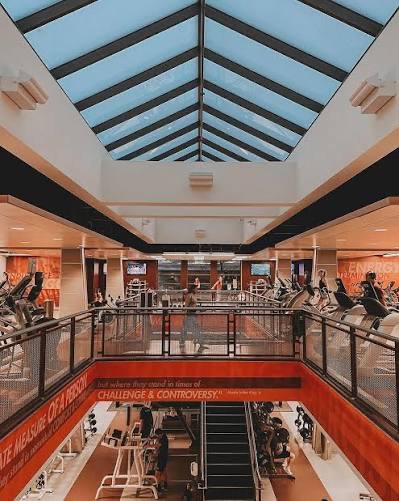
The fitness center in McComas Hall is one of Virginia Tech’s facilities available to students. Photo courtesy of Virginia Tech Admissions.
For young adults, fitness advice is no longer limited to the gym floor. TikTok and Instagram feeds are helping shape what students eat, how they work out and what they believe it takes to get fit.
Social media serves as an accessible tool for finding motivation, community and information about exercise. However, the same feeds that introduce students to new workouts can also blur the line between evidence-based advice, personal experience, marketing and misinformation.
For Owyn Dawyot, a recent Virginia Tech graduate and fitness content creator, creating fitness content means navigating a constant tension between what he wants to make and what the algorithm wants people to watch.
Short-form platforms reward quick, visually engaging content, and creators often find themselves replicating videos that have already performed well. The pressure to chase views can make it easy to lose sight of why a creator started making content in the first place.
“Some of my favorite videos are the ones that perform the worst,” said Dawyot.
As Dawyot explained, this distinction is part of what makes fitness content difficult to evaluate: Popularity can tell viewers what is getting attention, but not necessarily whether the information is accurate or useful.
There is an additional layer to that polished version of fitness. Social media often shows viewers the parts of people’s lives they want others to see.
Dawyot describes social media as “the highlight reel of everyone’s lives.”
That highlight reel can be especially noticeable in fitness content, where workouts, physiques and transformations are highly visual and typically perform well in the realm of views and engagement. Viewers may see the result without seeing the time, effort or circumstances behind it.
That is part of why fitness advice can be difficult to apply from one person to another.
“Just because someone shares what has worked for them doesn’t mean that it’s going to work for everyone,” said Dawyot.
That distinction matters when students use social media as a source of health and fitness information.
“We know that there’s such beauty to social media, but then there’s such bad to social media,” said Volpe.
Students may see an influencer who looks fit and assume that person has the expertise to explain how others should exercise or eat. But appearance and popularity do not necessarily establish expertise. Volpe noted that some influencers may promote practices that “may or may not be right.”
The difference between personal experience and evidence becomes especially important when social media advice involves nutrition or weight loss. Protein and supplements can fall into this category.
“Don’t just read the bottle and believe any claims you might see on social media, because not all of those claims are true,” said Volpe.
The same distinction matters as trending conversations about weight loss, including GLP-1 medications, continue to circulate online.
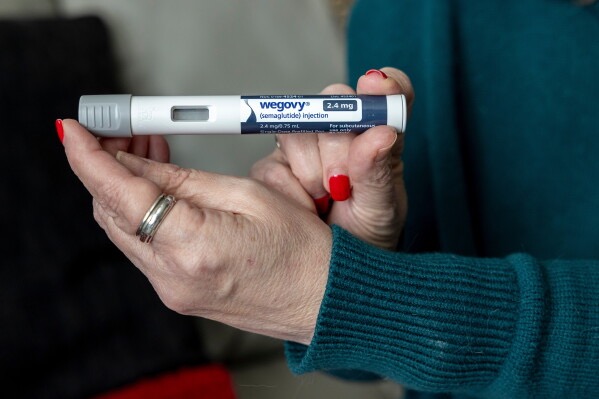
A person holds a Wegovy injection pen. Photo courtesy of The Associated Press.
For students, figuring out what information to trust does not mean avoiding social media altogether.
Social media can be a useful tool for finding health and fitness information, but Volpe emphasized that it should not be the final source for health and fitness decisions, encouraging students to look to credible sources, including the National Institutes of Health and the Centers for Disease Control and Prevention.
“Try your very best to go to the science first, not to social media,” said Volpe.
Even research can be misinterpreted or taken out of context, making it important for students to consider where information comes from rather than relying on a single post or video.
The issue extends beyond whether a workout or nutrition claim is technically accurate. Fitness content can also shape what students think their bodies and progress are supposed to look like.
Volpe discussed how students may see someone online showcasing their physique and assume that person achieved it in a matter of weeks. Comparing that image with their own progress can leave students feeling discouraged about both exercise and their appearance.
Volpe mentioned the importance of students focusing on their own progress rather than using people they see online as a measurement for where they should be.
“You can be fit at any weight; there is good research on that,” said Volpe.
For college students and young adults scrolling through fitness content, social media can still be a place to find new workout splits, inspiration and a community of like-minded users. But the most visible video is not necessarily the most valuable, and the most confident voice is not necessarily the most informed.
Dawyot’s experience as a creator points to one side of that equation: What performs well online is not always what holds the most value. Volpe’s advice points to the other: What appears convincing online is not necessarily what the evidence supports.
For students and young adults trying to figure out what fitness looks like for them, navigating social media may mean knowing when to take inspiration from the screen and when to look beyond it.
Editor’s note: Owyn Dawyotis a graduate of the Virginia Tech School of Communication which produces The News Feed NRV. Owyn is a former reporter for The News Feed NRV.
Virginia Tech Dining Services has introduced several changes this semester, from a new all-you-care-to-eat model at Owens Food Court to adjustments in how students access other dining locations.
Owens Food Court now operates as an all-you-care-to-eat dining center alongside D2. Students with unlimited meal plans can access those locations once every 60 minutes during operating hours. Other locations, including Turner Place, Perry Place, West End and Squires Food Court, offer different combinations of meal exchanges and declining-balance options.
According to Margaret Ashburn, associate director of media relations and deputy spokesperson, the changes were more than a year in the making. Dining Services developed the new plans in response to concerns that the previous Flex Plans were not meeting students’ needs and growing interest in unlimited dining options. Owens was also added to increase dining capacity for students on unlimited plans.
The new system has become a source of confusion during the first weeks of the semester. Students have questions about which locations accept their meal plans, what qualifies as a meal exchange and how to access food when popular dining centers become crowded or other concepts are closed.
To better understand the transition, a Virginia Tech Dining Services student employee who works in a leadership role and is based in Owens Hall discussed what they have observed during the first weeks of the semester. The employee requested anonymity due to their position within the department.
The employee’s comments were edited slightly for length and clarity.
From your perspective as someone working in dining, what are the biggest changes students are experiencing this semester?
The biggest issues I’m seeing are meal plan confusion, frustration and inaccessibility. The department has been changing how the plans function during the first few weeks of the semester, which has made it difficult for students and employees to understand how everything works. Building the ship as we’re sailing it, really.
Staffing is another major challenge. Because of staffing needs, some dining concepts have had to close or reduce their hours, which means students do not always have access to the variety of food options available on campus.
What has the transition to Owens’ all-you-care-to-eat model looked like from the employee side, particularly during busy periods?
It has required a significant adjustment. The way Owens is set up physically does not always align easily with the new model, particularly during peak meal times.
The biggest challenge is the combination of increased demand and the way the dining space is structured. Between noon and 2 p.m., when demand is highest, it can become especially difficult for employees to keep up with the volume of students.
The peak meal rushes have become a significant challenge. There is a mismatch between how many students need food at certain times and how much capacity the dining operation has during those periods.
Long lines and crowds are some of the biggest issues. Seating can also become limited during peak periods. Outside of those peak periods, the system can be easier to manage. During rushes, the biggest challenges are long lines, frequent instances of items being unavailable and keeping up with housekeeping.
How has the increased demand at Owens affected staffing at other dining locations?
Employees have been moved from other dining locations to help staff Owens. For example, personnel have been pulled from Hokie Grill to support the increased demand at Owens.
That redistribution of employees can mean other concepts have to close or operate with reduced staffing. I’ve seen Choolah, Pizza Hut and Dunkin’ close around noon on many days to accommodate staffing needs at Owens.
How have the changes affected the way food is prepared and served?
The focus on serving a high volume of students can affect how food is prepared. When speed and output become the priority, maintaining the same preparation process can be difficult.
For example, at Pop’s in Owens, burgers may be precooked and then warmed on the grill before being served. That differs from a made-to-order model like the one at West End.
What questions or confusion do you hear most often from students about the new dining setup?
A lot of students ask whether they chose the wrong meal plan and whether it is too late to change it. Meal exchanges are another major source of confusion. Students ask how they work and why they cannot necessarily get everything they want with one exchange.
Students also ask why so many dining concepts are closed and how they are supposed to get meals when their only free time happens to be during the busiest dining periods.
What should students understand about meal exchanges?
Meal exchange equivalencies are a big one. A meal exchange generally works like an employee meal voucher: an entrée, two sides and one drink, with a value of around $15. However, individual dining concepts can determine what qualifies as a meal exchange.
For example, at Choolah, a bowl with a Mango Lemonade may qualify as a meal exchange, while a wrap and Mango Lassi may not.
What do you think students should know about navigating Dining Services this semester?
Speak up. Students should contact Hokie Passport Services or speak with a manager if they have questions about their meal plans or dining options. They should make sure they understand the parameters of the new freedoms and the restrictions that come with them.
Student employees are doing their best to help, but ultimately we are messengers. When policies change, especially when they change quickly, it can be difficult for employees to have all of the answers immediately.
Students and their families are investing a significant amount in these meal plans, so I think it is important that the system remains transparent and user-friendly.