
By Nichelly Lysy, Government & Politics reporter
As inflation and shifting safety net requirements continue to strain household budgets across Southwest Virginia, emergency food pantries in Montgomery County face unprecedented demand for essential nutrition assistance. Reg Crockett, Director of the Agape Center NRV in Christiansburg, works on the front lines to coordinate volunteer supply chains, support local families, and expand community awareness surrounding regional hunger.
According to regional food bank assessments from Feeding America Southwest Virginia, rising cost-of-living pressures have heightened food access challenges across the New River Valley. At the local level, Crockett estimates that more than 40% of households in the area—and over 60% of school-aged children—experience short-term or chronic food insecurity. Independent, non-governmental pantries serve as a vital lifeline for low-income residents, fixed-income seniors, and working families who fall outside federal assistance thresholds. Understanding the factors driving local hunger and supporting community-based distribution networks remain essential to maintaining regional stability.
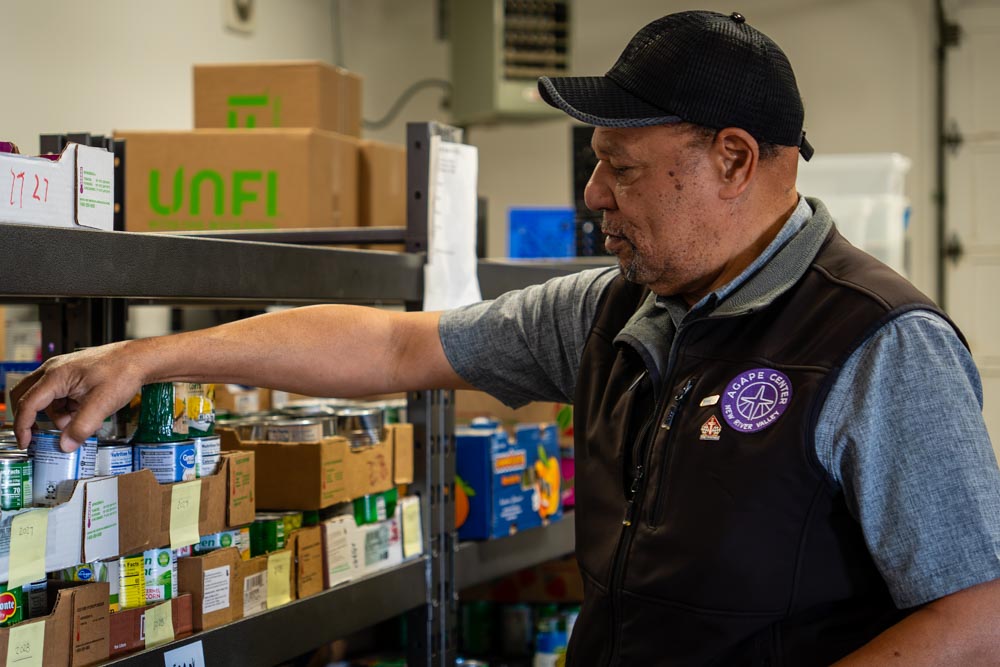
From your position leading the Agape Center NRV, what does food insecurity actually look like across Montgomery County today, and how has the volume of families seeking assistance shifted over recent months?
“I don’t have the exact percentage statistics in front of me right now, but in Southwestern Virginia particularly, the incidence of food insecurity—whether short-term or longer-term—is above 40% of households. That equates to above 60% for school-aged children. What we’ve seen here at the Agape Center is that in the beginning of 2025, we had approximately 300 families per month that we served, which equates to about 1,000 individuals. By the end of that year and into early 2026, we were seeing approximately 600 families, serving almost 2,000 individuals. Over a 10- to 11-month period, we saw an almost 100% increase in the number of individuals we were serving.”
Why is public awareness surrounding local hunger so critical right now, and what is the biggest misconception community members have about who experiences food insecurity in our area?
“The biggest misconception is that it’s somehow related to a poor decision that the individual or family has made. If you really think about what leads to food insecurity or homelessness, a sudden job loss or a medical episode can cause someone to lose their income and home. That means losing your food sources, making pantries necessary. It is an overgeneralization to think that hunger is an individual’s mistake or poor decision-making. While substance issues exist, those situations do not apply to the majority of people seeking help.”
How do independent food pantries fill the critical gaps left by federal and state safety net programs for local residents?
“Once government funding runs out or is impacted by budget cuts, it relies on private food pantries to fill that gap. Our neighbors can visit us once a month, or more in emergency situations. We receive approximately 26,000 pounds of food from our 20-plus pickup partners—including Food Lion, Kroger, Walmart, and Target. We provide enough staples, fresh produce, and frozen foods to supply families for at least two weeks to a full month. Without non-government pantries, there are people in our community who would literally starve.”
How do partnerships with local organizations, volunteers, and regional food banks sustain your daily inventory and distribution capacity?
“Being an all-volunteer organization, everyone here—myself included—does not receive a paycheck. We rely entirely on the community and the good hearts of people who volunteer whatever time they have. We also have volunteers coming from local businesses, partner organizations, and churches who supply the talent and hard work required to maintain an operation like this.”
Looking toward the future, what key message do you hope community leaders and attendees take away from regional summits regarding long-term solutions for food access?
“I want people to gain a deeper knowledge of all the areas that affect food security. A great deal of this issue involves the elderly, the disabled, and children. When certain government programs face cuts or funding reductions, that directly affects households with children. For instance, reductions in SNAP benefits can alter eligibility for free school lunches. I hope leaders come away with greater insight into how policy changes directly drive food insecurity on the ground.”
For Montgomery County residents or college students looking to make a direct impact, what are the most urgent ways they can support local food pantries right now?
“Volunteer. That’s the easiest answer. But in addition to volunteering time in person, spreading the word is huge. If a student is involved in a social club, fraternity, or sorority, they can organize group volunteer efforts or offer specialized skills. We have remote opportunities where students can help manage our YouTube channel, create social media content, or assist with digital outreach. Spreading awareness goes a long way in keeping these pantries operating.”

