Local lab aims to improve water quality

Screen Shot 2017-05-05 at 10.22.34 AM
Blacksburg, Va., May 3-Rippling River: Strouble’s Creek, which runs through Virginia Tech’s campus, has been listed as an impaired waterway since 2000. Photo: Stephen Dixon

by Stephen Dixon, Sidney Cook–

Stroubles Creek is a waterway that runs underneath the town of Blacksburg and flows into the Duck Pond. It is also an important tributary to the New River and provides water for a variety of plant and animal life in the region. However, in 2000 the Virginia Department of Environmental Quality registered the creek as an impaired waterway.

In order to constantly collect data on Stroubles Creek to know the full extent of its impairment, Virginia Tech formed the LEWAS Lab. The LEWAS, or Learning Enhanced Watershed Assessment System, uses instruments to measure the flow rate, pH level, dissolved oxygen, conductivity, depth and temperature. According to their website, it also has WiFi capability so that the live data updates in real time.

Dr. Daniel Brogan, a postdoctoral associate for the LEWAS Lab, developed the user interface for the data and works on how to best educate the public. He has been presenting the interface in classes at Virginia Tech and seven other institutions. He believes that “having access to this interactive, live data increases students’ motivation and learning about environmental monitoring issues.”

While college students make up a large part of the program, having access to this data is important for all members of the New River Valley. Brogan has also attended science fairs around the area to help educate the youth in the community. He noted that educating people when they are young is a key component to ensuring that they are environmentally conscious through their adult lives.

While the LEWAS Lab mostly focuses on measuring data of Stroubles Creek, the StREAM Lab does more in terms of reducing the sediment and bacteria loadings in the stream. According to StREAM’s website, their goal is to “remove Stroubles Creek from the Clean Water Act list of impaired waters.”

Dr. Cully Hession, the lab director, noted that since 2009 the lab has excluded livestock from stream access, planted riparian zones and installed bioretention cells at the Blacksburg Community Center and Foxridge Apartments. However, there is still much to be done in order to accomplish the goal of removing Stroubles Creek from the list of impaired waters.  Starting this summer, Hession will partner with the Stroubles Creek Restoration Initiative and work with a $6,000 grant from the VT Green RFP program.

While not necessarily working together, Dr. Brogan and Dr. Hession both share a common passion for educating the public about this issue.

“The more people that know about the problems in this creek and know that it’s there, the more that people will care,” Dr. Hession said.

In the end, that is exactly what Dr. Brogan is doing as well, communicating the data effectively in order to educate the public.

Digital News Delivery: Audio technologies for journalists

microphone-with-screen-with-chart
Photo credit: Foter.com

by Sara Joy-Hogg, Stephen Dixon–

Mobile technology is quickly changing the ways in which journalists record interviews and audio. Instead of using heavy and expensive high-tech equipment, journalists are using their smartphones and switching to mobile journalism.

A large reason for the switch to mobile technology is how cheap and easy it is to use. According to a poll by Pew Research Center, 77 percent of Americans had a smartphone in 2016. Since many journalists already have the smartphones, downloading a voice recording app is convenient and either free or very cost efficient.

However, a key issue with cheaper, mobile technology is the lack of quality. These mobile apps are free for a reason, resulting in many people questioning if journalists should be using them instead of standard, high-tech equipment.

In the vodcast below, we compare mobile apps such as Voice Recorder and Voice Memos, a digital audio recorder, and a lavalier mic.

https://www.youtube.com/watch?v=s1zmj-IW0Mc&feature=youtu.be

Blacksburg leaps into environmental awareness

img_4315
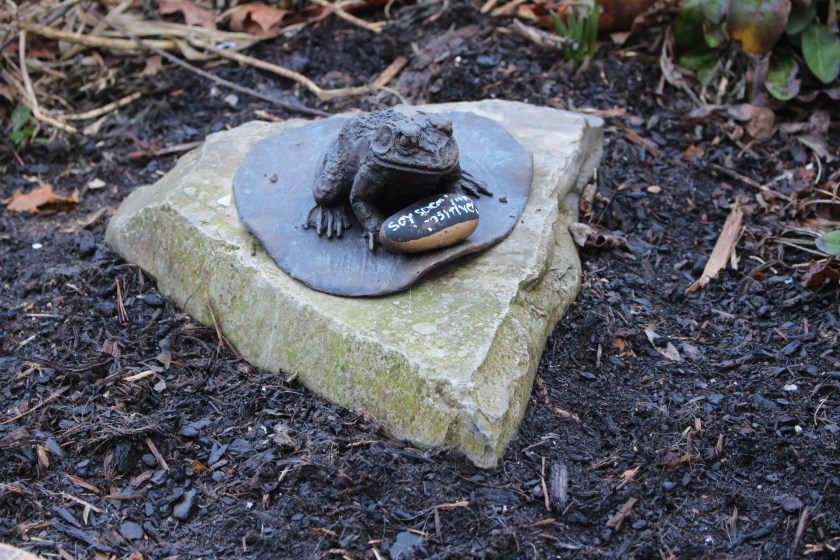
Blacksburg, Va., Feb. 24-Oscar: This frog, nicknamed Oscar, is placed right outside of the Lyric Theater in downtown Blacksburg. A child set a rock with a note next to him, showing that he is a local favorite. Photo: Stephen Dixon

About a year ago, Leslie Hager-Smith turned her dream of increasing environmental awareness in downtown Blacksburg into a reality when she started the 16 Frogs project. An avid history lover and the vice-mayor of Blacksburg, Hager-Smith has seen the decline of the health of local water firsthand and knew something needed to be done.

“The year of our bicentennial was 1998, and that was the year that Stroubles Creek was put on the state’s most impaired waterways list, and it has remained there ever since,”Hager-Smith said.

According to the Virginia Water Resources Research Center, Stroubles Creek originates from three springs in Blacksburg, flows through the town, and combines together to run into the Duck Pond. Hager-Smith noted that despite the necessity of clean water in the environment, many people in the Blacksburg area are unaware of the current state of Stroubles Creek.

For this reason, Hager-Smith and the rest of the town council feel like the 16 Frogs project is a simple solution to this problem. She believes that it is vital to “bring attention to this environment, what makes it special, exactly why we got here and how town history revolves around waterways.”

In order to achieve this goal, 16 bronze statues of frogs will be strategically placed around the town of Blacksburg. Locals, college students and tourists will all be able to enjoy these unique pieces of artwork, while learning more about how they can make a difference in the health of Stroubles Creek. Several frogs are already installed and can be found next to the Blacksburg Municipal Building, in front of the Lyric Theater and next to the Main Street Inn.

New business hopes to contribute to local economy

brownstone-window-1-of-1
Blacksburg, Va., Feb. 1 – Barber Shop: The Brownstone Barber Shop, on South Main Street, officially opened its doors to customers with a ribbon cutting ceremony on February 1. Photo: Stephen Dixon

On Feb. 1, 2017, a new business officially opened on South Main Street in downtown Blacksburg. Brownstone Barber Shop, which technically opened its doors to customers in late December 2016, held a ribbon cutting ceremony to celebrate their success thus far and announce themselves to the public.

Co-owner Patti Schrantz, a master barber for 34 years, and her three coworkers left Sports Clips to start Brownstone and get out of the corporate world. “We got really tired of the corporate setting. So we decided to make this LLC and formed the barber shop from there,” Schrantz said.

Being something new and different is not the only reason that Schrantz founded Brownstone. She wanted to help the local economy by keeping the tax dollars in Blacksburg as well as helping residents participate in the downtown Blacksburg loyalty card program.  According to the downtown Blacksburg website, the card program encourages customers to shop local by rewarding them with a five dollar gift card to a local business, when they make purchases at five different local businesses.

Adam Workman, assistant vice president at First Citizens Bank and ambassador for the Montgomery County Chamber of Commerce, agreed that local businesses like this are crucial for the local economy. “It creates a community atmosphere. The more diversity we have in our community, the better we’re going to be. So having a business, like the barber shop here, in downtown Blacksburg, makes it more attractive.”

Brownstone Barber Shop is located at 301 S. Main Street next to Mellow Mushroom.