
By Isabella Ubillus, crime, safety, and justice reporter
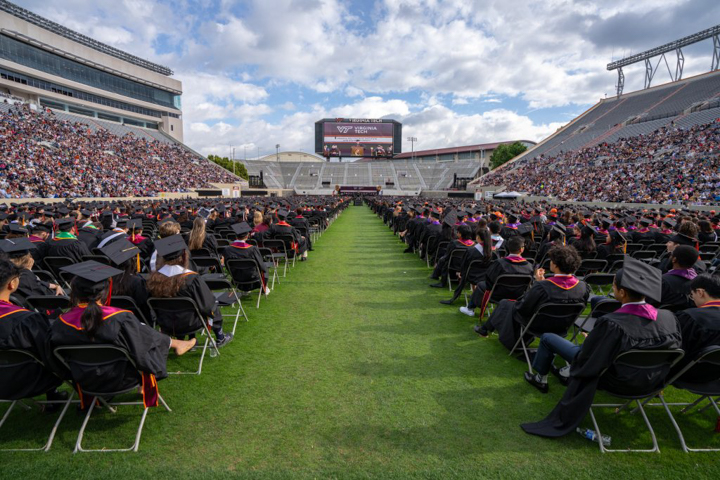
As Virginia Tech prepares for its university commencement on May 15, thousands of graduates, families and visitors will arrive in Blacksburg, but another layer of preparation is happening behind the scenes — security planning.
This year’s commencement speaker, Gov. Abigail Spanberger, brings not only public attention, but additional coordination between university officials, campus police, and state law enforcement. While most attendees may only notice the increased traffic or increased police presence, university officials say that months of planning go into ensuring the ceremony runs safely and smoothly.
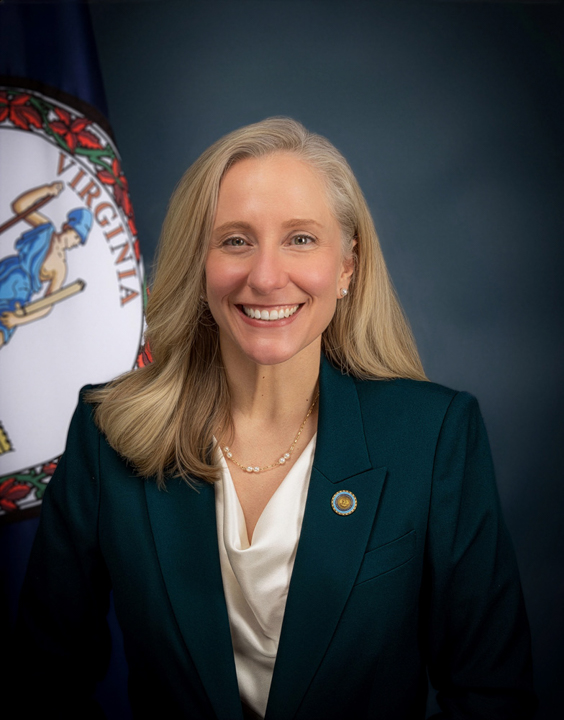
But in a political climate shaped by protests, heightened national tensions, and growing concerns about campus safety, hosting a high-profile political figure can shift the atmosphere surrounding majoring campus events, changing how student’s experience those events.
For Lt. Milford Palmer of the Virginia Tech Police Department, the planning begins long before graduates and their families ever step foot into Lane Stadium.
“For commencement itself, I’ve been in meetings for probably the last six months,” Palmer said.
According to Palmer, planning involves a high level of coordination between Virginia Tech Police, emergency management, event staff, and state law enforcement. Officers will inspect the venues, monitor crowd flow, prepare evacuation procedures, and conduct explosive canine sweeps.
“We have officers at every commencement ceremony,” Palmer said. “It doesn’t matter where it’s at — Burruss, Center for the Arts, Lane Stadium, Cassell — we still take the same precautions.”
The process becomes more complex when a political figure is involved.
“When we have these high-profile political figures, they have their own security teams,” Palmer said.
For events involving elected officials such as Spanberger, Virginia Tech Police coordinates with Virginia State Police and outside security teams while continuing to manage the safety for students, graduates, and visitors across campus.
Planning shifts based on what is happening nationally or globally, but the goal remains the same — protecting the overall community.
“The world’s climate definitely heightens my security levels depending on what’s going on in the world at the time,” Palmer said.
Still, he emphasized that increased precautions are intended to protect everyone attending, not only the invited speaker.
“The world’s climate definitely heightens my security levels depending on what’s going on in the world at the time.”
According to Mark Owczarski, the university spokesperson, commencement planning is part of the university’s larger infrastructure for hosting large scale events year-round.
“The key to running big events well is planning,” he said.
Commencement involves a year-round planning committee involving multiple parties such as university administrators, emergency management, law enforcement agencies, and operations staff. Different aspects like parking, traffic patterns, accessibility, inclement weather plans, and emergency communications are all taken into account before guests even arrive on campus.
Owczarski said the planning process extends beyond coordination between security and emergency management, requiring nearly every aspect of university operations to adjust throughout graduation weekend.
The university transforms its normal operations to accommodate the influx of visitors in Blacksburg. Roads surrounding Lane Stadium experience increased traffic and security personnel are stationed across the multiple venues hosting ceremonies throughout the week. Employees are encouraged to work remotely to reduce congestion and create additional parking near Lane Stadium.
“We change the circumstances of the day and what we’re asking people to do based on how many people will be there,” Owczarski said.
The level of preparation and emergency coordination the university has in place became visible during Virginia Tech’s spring football game when a skydiver crashed into the Lane Stadium scoreboard after strong winds pushed him off course. The incident delayed the game as emergency personnel and stadium staff worked to rescue the skydiver.
While officials describe the incident as an unexpected accident, it highlights the type of emergency response planning required during large-scale public events hosted by the university.
“If that didn’t happen three weeks ago it probably would’ve sounded silly,” Owczarski said. “But you prepare for all the potential things, and you plan accordingly.”
Although much of the planning happens behind the scenes, students are often most aware of security measures when there is an increased police presence.
Earlier in the fall semester, increased security surrounding a Turning Point USA event on campus drew attention from students as protesters gathered outside Burruss Hall, where the event was taking place.
“There were police on the Drillfield surrounding every corner and so students took notice,” Emma Roshioru, president of the Undergraduate Student Senate, said.
The event took place two weeks after the fatal shooting of conservative commentator Charlie Kirk at Utah Valley University in Orem, Utah, intensifying national conversations surrounding political gatherings and campus safety.
For some students, visible security measures can create reassurance, but for others they can significantly alter the atmosphere of campus.
“Our attention naturally goes to law enforcement presence,” Roshioru said.
Moments of heightened security can quickly shift the atmosphere on campus, even for students who are not directly attending the event, according to Roshioru.
“A student could just be trying to walk to class and then they notice a ton of police officers,” she said. “That can be alarming and also stressful for anyone.”
“I think the tension will always be there, but it balances out with wanting to feel safe.”
Roshioru said that students often interpret increased police presence differently based on their own experiences and relationships with law enforcement.
“Everyone has very different experiences with law enforcement,” she said. “For other students who have not had positive experiences, that can be alarming.”
At the same time, she said that students understand why universities are becoming more cautious surrounding political events.
“It’s hard for that tension to go away,” Roshioru said. “I think the tension will always be there, but it balances out with wanting to feel safe.”
That tension — between campus safety and openness — has become increasingly common on college campuses nationwide as universities navigate political polarization, protests, and growing concerns surrounding campus violence.
Across the country, universities have become sites of political demonstrations, politically divisive speakers, and debates surrounding free expression and public safety. From pro-Palestine encampments to controversial speaker events, colleges have faced a growing pressure to balance students’ rights to protest with maintaining a safe campus environment.
This balancing act has become especially visible during events involving political figures, where heightened security measures can unintentionally change how students experience public spaces on campus.
At Virginia Tech specifically, those conversations hold additional weight due to the university’s history. After almost 20 years since the April 16 shooting, campus safety remains a core aspect in the university’s infrastructure and identity.
For many students, perceptions of safety are often shaped by the atmosphere surrounding major campus events than the policies behind the scenes.
Roshioru said that students today are politically active and more willing to participate in protests than in the previous years.
“Virginia Tech didn’t really experience that many protests that often, especially from students, and now they’ve gotten the ball rolling,” she said. “Students feel more empowered to do that, and they feel safe in doing so.”
Palmer said that Virginia Tech Police work directly with protest organizers to ensure that they remain safe while protecting students’ rights to free expression.
“It’s really not something that we’re concerned that protesters are there, it’s a common thing now, it’s just we would like to educate them to do it the proper way,” he said.
Instead, officers focus on maintaining safety while preventing conflicts between opposing groups.
“This is a freedom of speech, it’s not something that we want to say no to,” Palmer said.
Roshioru said that communications from the university remains one of the most important factors in helping students feel more informed rather than alarmed during high profile events.
“Communications is something that we could always have more of,” Roshioru said. “Having communications put out further in advance for students, their families, the greater community would be beneficial.”
As commencement approaches, Virginia Tech has published online guidance for graduates and guests outlining important information and expectations ahead of the ceremonies. The university’s commencement FAQ page outlines security expectations for visitors attending events across campus, part of a larger effort to prepare for the thousands of visitors expected to arrive in Blacksburg.
As political tensions and security concerns continue shaping campuses nationwide, communication has become part of how universities manage the atmosphere surrounding major campus events.
While much of the security planning for commencement will remain invisible for attendees, the visibility of police presence and heightened precautions surrounding political figures can shape how students experience campus during those moments.
For many attendees, commencement will feel the same — graduates walking across the stage, families filling Lane Stadium, and crowds gathered throughout campus.
Behind the scenes, however, months of coordination between university officials, law enforcement agencies, and emergency responders will continue operating quietly in the background, reflecting how universities are increasingly balancing celebration, free expression, and security in a changing political climate.

