The next generation of bluegrass in the New River Valley

By Lila Trochlil, Arts, Culture and Sports reporter

Young musicians in the New River Valley are carrying on the traditions and community of bluegrass, a genre deeply rooted in Appalachian culture and history.

Bluegrass emerged as a distinct genre in the Appalachian region more than 80 years ago, drawing elements from Appalachian folk, blues and old-time mountain music. The genre features acoustic string instruments such as guitar, mandolin, fiddle, banjo and upright bass, alongside fast tempos and high vocal harmonies that create its energetic sound. Bluegrass also relies heavily on informal gatherings known as jams, where musicians play together without a rehearsed setlist. These sessions often involve significant improvisation, with individual musicians taking breaks, or solos, while the rest of the group provides accompaniment.
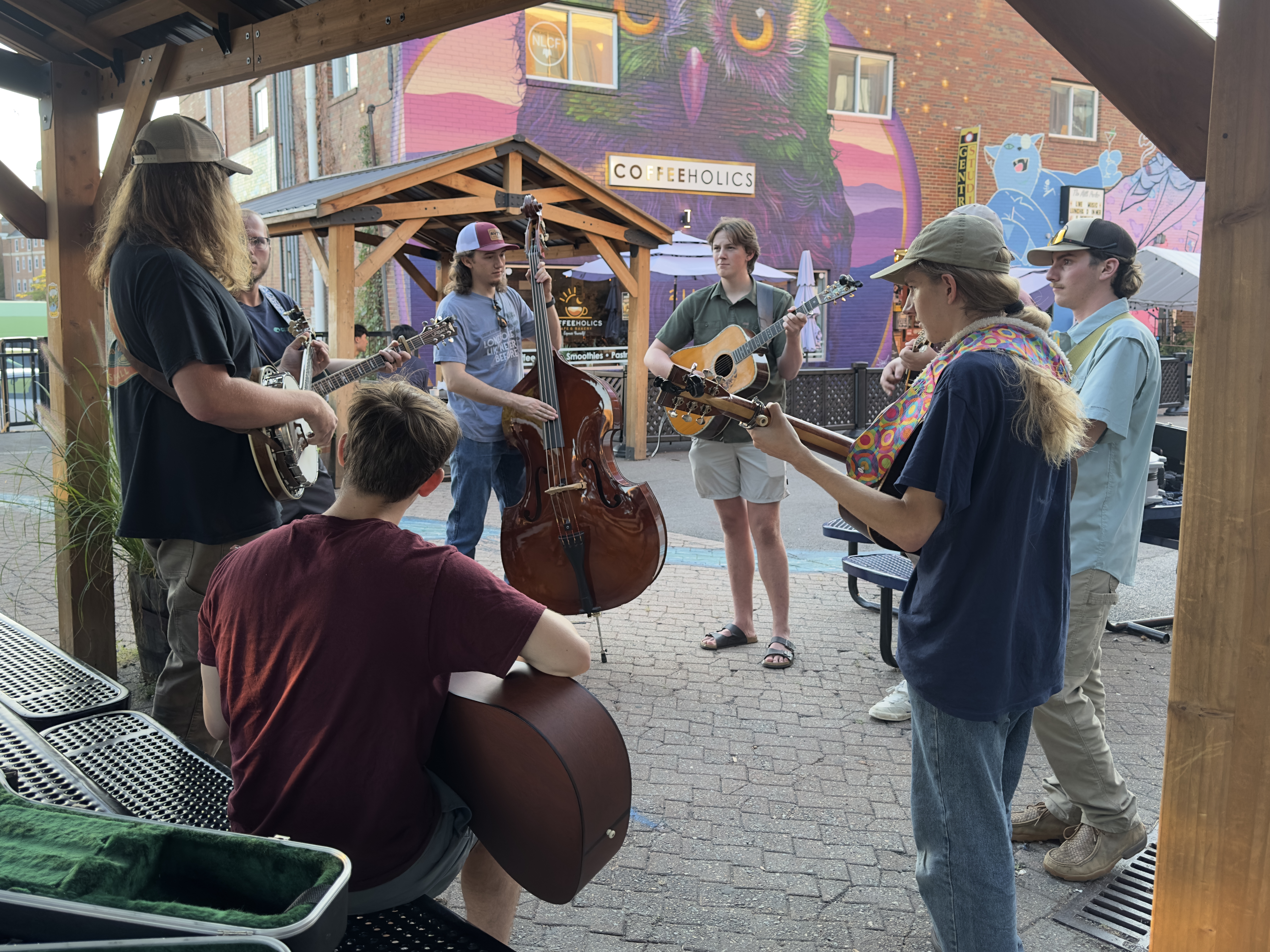
Members of Hokie Grass, a Virginia Tech bluegrass student organization, play together during a jam session in downtown Blacksburg, Virginia, on Sept. 15, 2026. (Photo by Lila Trochlil, The NewsFeedNRV.com)

Noah Lohr, a Virginia Tech senior, is no stranger to these jam sessions. Near the end of high school, a local banjo player introduced Lohr to bluegrass by playing him music by John Hartford, a popular folk and bluegrass artist from the 1960s and ‘70s. That initial exposure sent Lohr down a bluegrass rabbit hole, as he listened to the genre’s greats before eventually finding a Richmond bluegrass band to play with.

“The first time playing was definitely a learning experience,” Lohr said. “Everyone was super cool and nice, pointing me in the right direction, but there’s a little learning curve that you just have to go through. It got better from there.”

One of Lohr’s favorite aspects of the genre is how easy it is to get involved in local jams. Local bluegrass musicians often know many of the same songs and tunes, allowing for strangers to immediately join in. The loose structure of many bluegrass songs also lets musicians pass breaks and solos around the group, creating a natural flow within the music.

“Someone will sing a verse, then someone will take a break, then we’ll pass that around a little bit, and then come back to a verse or a chorus,” Lohr said. “You can go to a bluegrass jam anywhere, or find bluegrass musicians anywhere, and just start jamming right away, which is pretty cool.”

One of the New River Valley’s most notable bluegrass gathering places is in Floyd, Virginia, at The Floyd Country Store. Recurring events such as the Friday Night Jamboree and Sunday Music Jams bring musicians together for regular open jam sessions, drawing not only those who play but also audience members who come to watch and dance. Liam Weikart, an instructor of sociology at Virginia Tech, said there is value in attending live jam sessions rather than simply listening to recorded bluegrass music.
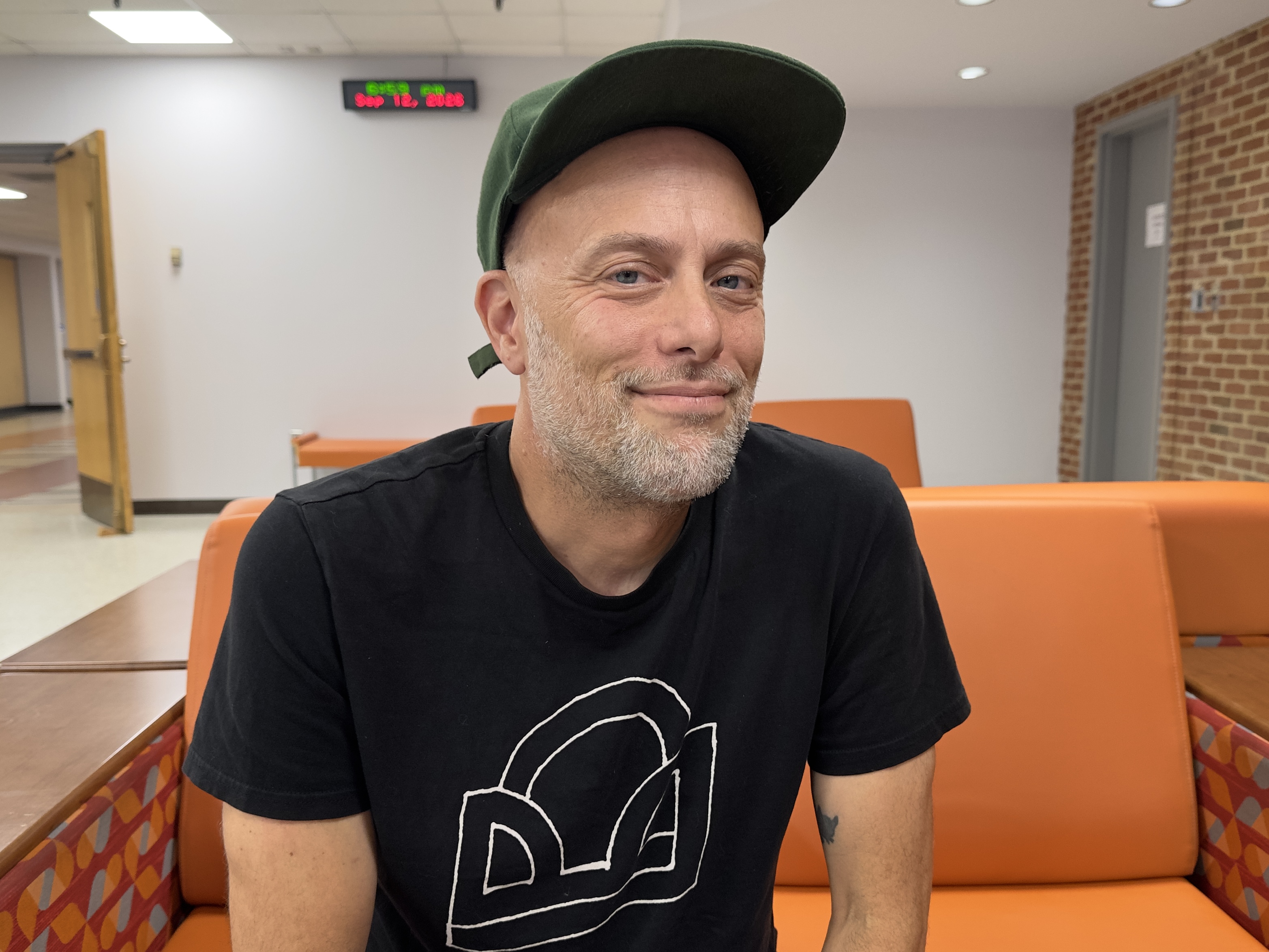
Liam Weikart, an instructor of sociology at Virginia Tech who studies popular music, at Virginia Tech on Sept. 12, 2026. (Photo by Lila Trochlil, The NewsFeedNRV.com)

“Live music performances create a collective effervescence, a kind of inspiration that only comes when you’re there in person,” Weikart said. “You lose your sense of self in a moment of communal togetherness, which is something you’ll miss if you only listen to recordings.”

This communal tradition is continuing in Blacksburg through Hokie Grass, a Virginia Tech bluegrass student organization. Lohr is one of the organization’s founding members, which was established at the start of the 2025 school year. Since then, Hokie Grass has played at a variety of Blacksburg events and venues, including Rising Silo Brewery, Gillies Vegetarian Cuisine and The Milk Parlor. The organization also hosts weekly open jams downtown on Tuesdays, where musicians are encouraged to join with whatever instrument they are comfortable playing.

Jesse Ankney, a Virginia Tech senior and member of Hokie Grass, first began exploring bluegrass after seeing a Billy Strings concert in Norfolk about three years ago. The show inspired him to learn a few bluegrass songs on guitar, eventually leading him to a jam hosted by the Tidewater Bluegrass Society, a nonprofit bluegrass organization. Since then, Ankney has largely expanded his musical skills by learning to play a range of string instruments, including mandolin, upright bass and banjo.

“There were a couple months where every night I would go out in my garage, put my headphones on and start playing bluegrass,” Ankney said. “I would play along to Spotify and try to learn licks and songs. For a while, I didn’t listen to anything else.”

Ankney was previously invited to play on the youth stage at the International Bluegrass Music Association (IBMA) World of Bluegrass event, an annual festival featuring performances from bluegrass bands and musicians. Playing alongside other musicians his age, Ankney noticed a more relaxed approach to the genre.

“Everyone playing was my age or younger, and it’s just a different vibe, but a good vibe,” Ankney said. “It tends to produce more creativity or mess. You’re not uptight, and you’re not trying to impress any gatekeepers.”
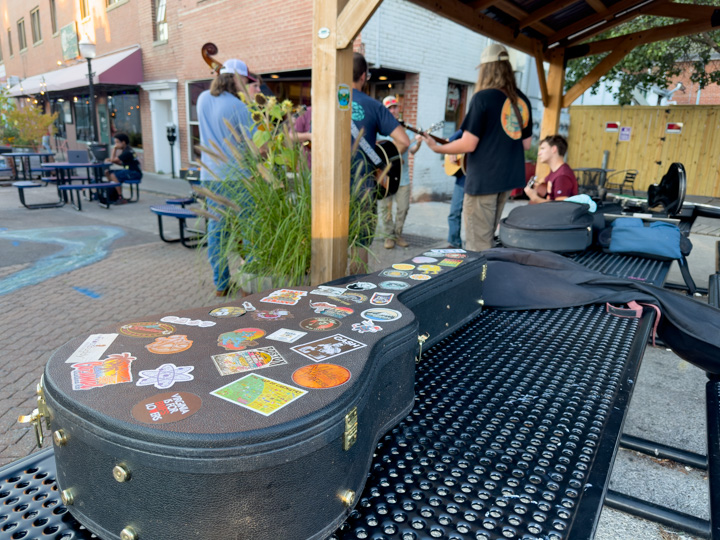
A guitar case sits in the foreground while members of Hokie Grass play together in the background in downtown Blacksburg, Virginia, on Sept. 15, 2026. (Photo by Lila Trochlil, The NewsFeedNRV.com)

Even as younger musicians bring a looser approach to the genre, bluegrass continues to prioritize live collaboration and community, which can be especially meaningful in a digital age. For young musicians in the New River Valley, participating in jams and festivals provides an opportunity not only to connect with others but also to engage with musical traditions that have been part of the region for decades.

For Lohr, simply being involved in bluegrass is a way to help preserve the genre.

“If people are wanting to play, I feel like that’s a win,” Lohr said. “Go find a jam.”

Editor’s note: Jesse Ankney is a student in the Virginia Tech School of Communication. The News Feed NRV is produced and published my senior journalism students in the Virginia Tech School of Communication.
Finding a stage in Blacksburg

By Lila Trochlil, arts, culture and sports reporter

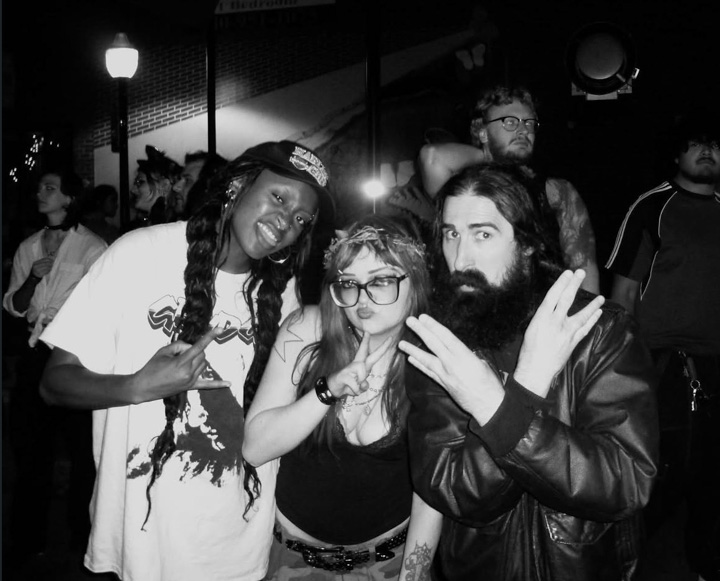
Booking shows in Blacksburg can be challenging for local bands, especially with a limited selection of venues. As a result, musicians often rely on personal connections to navigate the booking process and organize their own house shows to create more opportunities to share their music with the community. 

How artists at Virginia Tech find value in making art by hand

By Lila Trochlil, arts, culture and sports reporter

While digital tools continue to transform the art world, some Virginia Tech artists still prioritize working with physical materials. Studio art major Lula Bovino and art professor Mitch Miller discuss the satisfaction of hands-on creation and how mistakes can become a valuable part of a finished piece.

How Lizzy Jacobs turned her passion for hardcore into a growing Blacksburg community

By Lila Trochlil, Arts, Culture and Sports reporter

Screenshot

Lizzy Jacobs built Blacksburg Hardcore from the ground up, bringing bands and fans together through a growing DIY music community. 

After experiencing hardcore scenes in Maryland, Northern Virginia and Roanoke, Jacobs decided to bring one to Blacksburg. Her initial plan was to create a student club, but she quickly shifted to an independent scene with the help of other local students. Since its debut in August 2025, Blacksburg Hardcore has gained 2,068 Instagram followers, with more than 200 people attending its first show. The organization has since hosted 28 bands throughout the East Coast at various shows and fundraisers. Jacobs has created a largely DIY operation that relies on community support to create an exciting and welcoming space for all hardcore fans.

[Edited for clarity]

What inspired you to start a hardcore scene in Blacksburg?

I first got into hardcore in high school, when I didn’t have a lot of friends. I had transferred from a private to public school after moving to another part of Maryland, so I didn’t know anyone. My school was also really small, and everyone was pretty cliquey. Since I didn’t have many friends, I started going to shows in the area, and that’s how I met people. What I love about hardcore shows and alternative scenes is how open and welcoming the people are. I didn’t have friends, and then I met so many cool people just by going to shows. I saw people having fun at shows in Maryland and thought, “Why don’t we bring it down here? I don’t see why people wouldn’t have fun with it here, too.” 

What do you think makes hardcore different from other music scenes?

I think the culture definitely stands out. A lot of people are familiar with punk culture,  which is very similar to other alternative scenes, but there are slight differences between genres, which I think are all awesome. The basics are politics, fashion and music, along with a shared ideology. Alternative culture started as anti-establishment, and decades of DIY culture have continued that tradition of going against the establishment. Hardcore is also a safe space for people, especially communities that have faced discrimination, such as queer people and people of color. It’s really important to maintain those safe spaces while also preserving the history of hardcore.

How would you describe the community experience at hardcore shows? 

It’s different in the sense that it’s not just a show that you attend for music. Yes, you’re there for the music, but people also go to hardcore shows to meet alternative and like-minded individuals, socialize and mosh. Moshing is a big aspect of it; you can’t have a hardcore show without it. That’s not to say you couldn’t have similar experiences at other shows, but I think the hardcore and alternative scenes are more of a hangout and social experience instead of just being about the music. I don’t typically have those same experiences at certain other concerts or shows.

How did you start building the Blacksburg Hardcore scene?

Something I’ve always been interested in is logistics and management, which is why I’m studying project management. So, the logistics of organizing events have never been that hard, but finding a venue is always difficult. I think a lot of people tend to discriminate against the hardcore genre because they hear “hardcore” and think moshing, so they get scared that their belongings will be stolen or destroyed. 

We’ve also had to figure out how to host events without any money because we don’t make or keep any money. All the money we make goes to the bands and venues, so after a show, we’re broke. We have no money for future venues. So you’re probably thinking, “How is this sustainable? How are you able to afford other venues and shows?” The answer is that we do a lot of DIY and pop-up shows in random places. Luckily, we can still pay bands through donations from people who come to the shows. If people go to a free show, they’re very willing to donate to the bands, which is really awesome. 

How did you manage to build an audience?

I made a poster promoting Blacksburg Hardcore and our Instagram account and started placing them all over Blacksburg. If you were in Blacksburg during the summer of 2025, you would have seen the posters everywhere. We also talked with a lot of downtown store owners, and many liked the idea of a hardcore scene and put the posters up in their stores. 

We gained a ton of followers from the posters alone, and more than 200 people attended our first show. We actually had to turn people away at the door because we had reached capacity. I didn’t think that many people would show up. I always expected the scene to be somewhat small and niche, but I’m really glad it’s grown. I’ve had a lot of people tell me that their first hardcore show was one of ours, which is so cool. It’s great to think that Blacksburg Hardcore has opened a lot of people’s eyes to the hardcore scene in general.

How do you decide what bands you want to host at your shows?

I love giving anyone who wants to play a chance. Whenever I hear from new bands or people who may not have as much credibility but are really excited to work with us, I’ll always hear them out and take a chance on them. I want local bands to feel comfortable playing for us. As long as they fit within the hardcore genre or a similar alternative genre, we’ll let them play. 

I also really like bringing out-of-town bands to play for us, even if they’re just from Roanoke. I feel like the Blacksburg music scene can get repetitive quickly since it’s often the same mix of bands playing every weekend, so it’s nice to bring in new people and have a refreshing lineup. And, to be honest, I love the Roanoke bands that play for us. They’re super awesome and always willing to help us with our DIY shows. We’ve even had bigger bands drop out at the last minute, and Roanoke bands immediately filled their spots. They’re always down for anything and really supportive of us.