
Aspiring collegiate lifestyle influencers build their online persona and earn money along the way.
By Sarah Shrader, health and wellness reporter
Getting Started
“My dream would be to be a full-time content creator,” said Rayhona Jafarzadeh, a senior at Virginia Tech going by the username @rayhonajafar. “People are not joking when they say being delusional works.”
Jafarzadeh, started her social media accounts in late November 2025 in order to share the impact her fitness journey had on her. The 21-year-old embarked on a weight-loss journey, which she first found challenging to navigate as a petite woman. Jafarzadeh’s account advocates against food restriction, instead focusing on sustainable lifestyle and dietary shifts. Her account features her workouts, recipes and tips. Jafarzadeh’s Instagram account grew quickly, as it now stands at 29,200 followers.
Bobby Tandel, a senior at Virginia Tech, started his Instagram page, @tandalebobby, in June 2025. His account also had a quick start, with his first video receiving enough attention to gain him 10,000 followers in a few days. Today, he has 19,800 followers.
Tandel posts a variety of lifestyle, fitness and business-partnered content. He focuses on promoting healthy lifestyle choices. Vidoes on Tandel’s page discuss his journey of healthy eating, self-improvement, eliminating alcohol from his diet and entrepreneurship.
Both Tandel and Jafarzadeh are classified as micro-influencers, which are defined as individuals with 10,000 to 100,000 followers, according to AdAge.
Caleb Grider, a senior at Virginia Tech who goes by the username @trazanlifts1, started his online persona three years ago when he was 18 years old after his brother, Tim, suggested that he start a YouTube channel. After an initial period of hesitation, Grider found his passion in social media and fully immersed himself in his accounts.
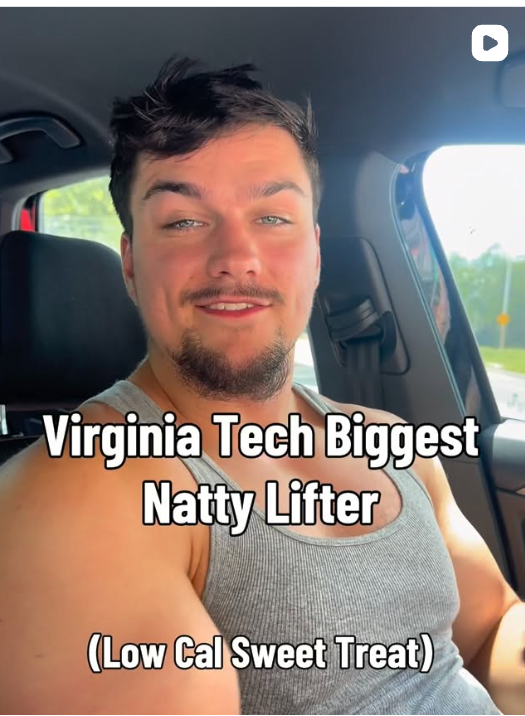
Grider recording an Instagram reel showcasing a low-calorie recipe.
Grider currently has 1,121 Instagram followers, 826 YouTube subscribers and 547 TikTok followers. His Instagram follower count qualifies him as a nano-influencer, which, according to ethos-marketing, is defined as an individual with 1,000 to 10,000 social media followers.
Grider’s page is focused on advocating for and showcasing natural bodybuilding, which entails gaining large amounts of muscle without the use of performance-enhancing drugs.
Building a Brand & Making Money
College is often a financially stressful time in a student’s life. Ellucian reported that 71% of college students reported worrying about money and 68% reported actually running out of money in 2024-25. Likewise, lifestyle influencing accounts for 57% of Media Impact Value on Instagram, according to Better Marketing. With no “one-size-fits-all” path to influencing success, each content creator faces the difficult task of distinguishing their own unique flavor, on which they hope to grow a follower base.
“I would say there’s not a lot of Middle Eastern women fitness influencers,” Jafarzadeh said. “I feel like those women can relate more to me or my journey.”
Jafarzadeh said that what she found to be the best method to creating a brand is by avoiding curating a strict persona and being yourself – an opinion that was echoed by Tandel and Grider. She further commented that she is planning a “rebrand,” which will entail showcasing a more authentic version of her personality online in order to connect with her audience.
Jafarzadeh continued to build her online brand by starting her own small business, Rayhonafit Fat-Loss Guide. The guide sells for $15 and claims to be a sustainable fat-loss plan for petite women without extreme dieting. Her package includes meal plans, workouts and progress trackers, that are included in the one-time fee.
Jafarzadeh stated that she currently uses her social media pages to promote the guide but mentioned that later on, she will accept more brand deals that offer the potential to earn her additional money.
According to Tandel, he makes an income of five figures from his online pursuits. He attributed his drive to make money from social media to his dedication to keeping a promise he made to his parents at his high school graduation, which is to give them $2.5 million each.
“I had to find my “why” for posting, and then I studied other creators and their formats to see what has worked,” Tandel said. “From there, it was a matter of testing and iterating. Overall, posting and looking at the data and trends has led me to build up my account.”
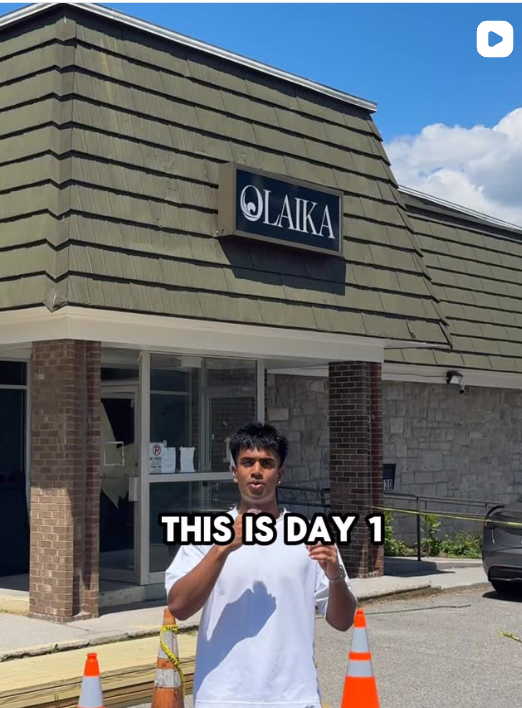
Tandel filming a video promoting an upcoming bar in Blacksburg, Olakia.
Tandel earns income through the companies that reach out to him to promote their brand via short-form content on his Instagram page. These include several local Blacksburg businesses, such as Olaika, Ocean Samurai and Moeya Cafe.
Work-Life Balance
“I had to find my “why” for posting.”
– Bobby Tandel
All three student influencers noted that posting consistently was key in increasing follower counts, gaining sponsorships and growing their accounts overall. However, life in college is busy. At any given moment a working student is balancing the pressures of classes, work and a social life – a reality that Tandel, Jafarzadeh and Grider know all too well.
“It’s super hard, I can’t lie,” Tandel stated. “At one point I wasn’t posting for months because I was focused on college and my relationships. Content can definitely take a toll on the mental, and I feel like it’s not talked about enough.”
Recently, Tandel felt he needed to take a step back from social media. While he continued to maintain his page and sponsorships, he began dedicating significantly less time to it, about four hours per week, in order to focus on graduating this spring.
On any given day, Jafarzadeh stated that she dedicates three to four hours to content creation and various upkeep of her social media pages.
“It is extremely stressful for me sometimes because I am still in the growing stage,” Jafarzadeh said. “I need my content to be good quality while also on trend. My brain is very scattered when it comes to this because I have so many fun ideas in my head that I can never finish one video fully without jumping to another one.”
For Grider, his content creation process is always in flux. He commented that Instagram is his casual short-form platform, while his YouTube videos are heavily thought out, planned and executed. Grider will spend about 10 hours of the week working on content ideation and creation.
Motivation, Challenges and Success
“People are not joking when they say being delusional works.”
– Rayhona Jafarzadeh
Being a student lifestyle creator means positioning oneself as a public figure in a tight-knit community that provides almost guaranteed visibility. Using common hashtags, like #collegelife, #Blacksburg, #VirginiaTech etc. increases the likelihood that social media algorithms will pour a student creator’s content onto the feeds of their peers, professors and even friends.
“Putting yourself on social media in college is so weird, and it’s actually terrifying,” Jafarzadeh stated in a TikTok post. “Everyone and their mother is going to see you.”
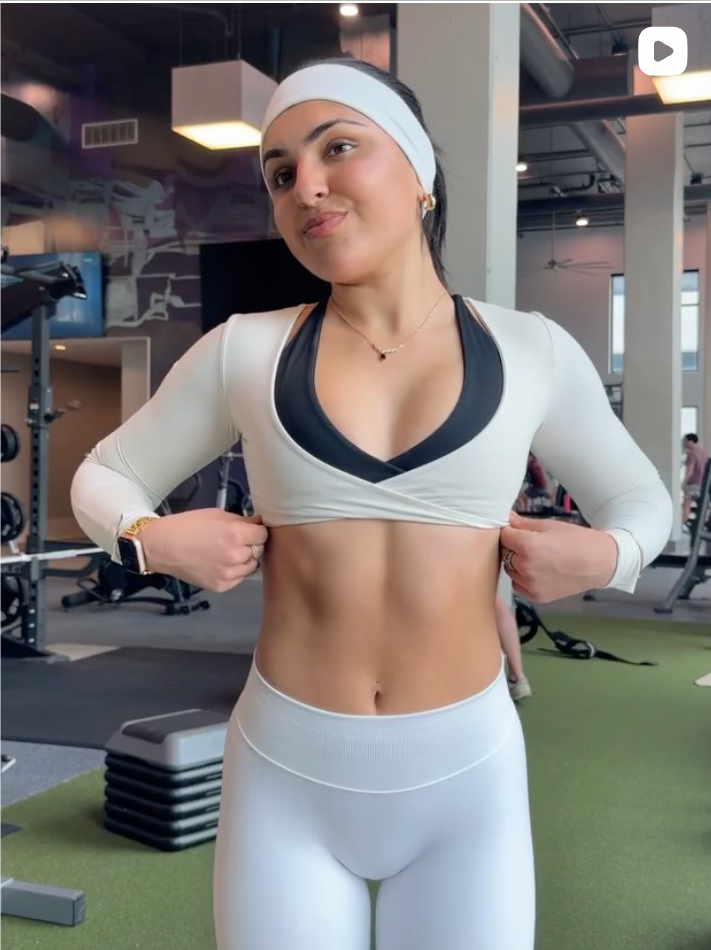
Jafarzadeh poses for the camera while filming an Instagram Reel.
Grider said he had to learn to “fail forward” while growing as a creator. Influencing forced him to develop skills in public speaking, talking to strangers and growing the required confidence to set up a camera and record in public.
“When you understand nobody actually cares about you, it honestly is freeing,” Grider stated.
In the early stages of his social media career, Grider reported struggling with his confidence. In particular, he faced a long journey of self-discovery and confidence growth while establishing himself online. He commented that he struggled with being his complete self on camera at first, but that the longer he continued to post, the more that fear faded away.
Social media also isn’t just about monetary gain for Jafarzadeh, Tandel and Grider. A sentiment shared among all three creators was their passion for inspiring others and seeing the impact their content has on real lives.
Jafarzadeh said that her fuel and motivation for posting stems from the messages she receives from women online. According to her, countless women have shared with her how much Jafarzadeh’s videos have helped them, whether that be with healthy recipes, relationship with food, workouts or occasional motivation. Similarly, since coming to college, Grider recounted that about 100 students have approached him to share the inspiration they take from his videos.
 > THE NEWS FEED <