Almost Two Years In: The Effects of MCPS Cellphone Policies at Christiansburg Middle School

By Emily Dorsey, politics and government reporter

I sat down with Joseph Caldwell, an assistant principal at Christiansburg Middle School, to discuss the effects of cellphone policies he sees day to day. 

CMS has implemented phone policies beginning in March 2024, ahead of Gov. Glenn Youngkin’s Executive Order 33, which took effect Jan. 1, 2025. CMS began with prohibiting cell phones and other electronic devices during the school day. By June 2024, all Montgomery County Public Schools issued a county-wide policy. In its final guidance for cellphone-free education, the Virginia Department of Education in September 2024 established the “bell-to-bell” cell phone-free policy.

Caldwell has 16 years of teaching experience including transition programs for students with behavior challenges, civics and economics and U.S. history from 1865 to present. Last year was his last year teaching in the classroom before this administrative role. Looking back on the last 17 months, Caldwell addresses the support from the community, policy details that acknowledge unique circumstances and the next challenge the education system is facing: artificial intelligence. 

Caldwell’s comments were edited slightly for length and clarity.

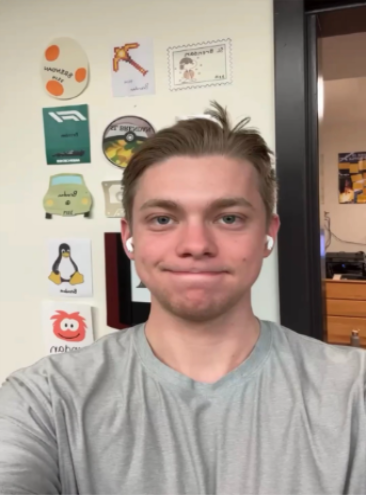
Joseph Caldwell, assistant principal at Christiansburg Middle School. (Courtesy of Joseph Caldwell)

MCPS was doing cellphone free school days last academic year. In January, a bell-to-bell phone ban was implemented. What changes, positive or negative, have you seen with that extra implementation? 

Students are more engaging academically than they were previously. Technology still tends to be a challenge; now the technology is Chromebooks. We’ve been trying this year, as an administrative team, to communicate with teachers to use Chromebooks less than they are used to because students will find ways to be distracted. They are really quick about flipping tabs. Even though there is software teachers can use to monitor it, teachers get more distracted with management than they do teaching.

Students on a limited English proficiency plan or students with disabilities have access to programs on their phone or Chromebook. Why is it important for these students to have access to certain platforms other students may not have

We will still make exceptions for students to use it [phones] for tools like translating purposes. Students with monitoring devices for their diabetes are allowed to carry their phones. That is just a different conversation we have with those students. And then there’s also 504 plans and IEPs in place that allow for that. But a lot of the tools that students would need their phone for, their Chromebook can serve that purpose, as well. 

According to Cardinal News, policy violation does not lead to suspension or expulsion without being tied to an instance of disruptive behavior. Why is it important for administrators to see the differences between certain circumstances? 

State law doesn’t allow us to expel students for phones. The heaviest punishment we have in our policy is to assign Saturday school and that’s either on the third or fourth offense. Those consequences become inconvenient enough for the parent that we usually don’t get that far. We have other systems in place, for students that need that technology, that becomes part of a bigger conversation. Like being responsible with technology and how they use it. 

How do you or the MCPS staff navigate various parent or student opinions regarding these state laws?

We had a lot of positive support from the community. Last year we allowed it [cellphones] during bus-wait in the morning and afternoon, while other schools in the county did not. This year we became even more restrictive because we changed it to where they couldn’t have it during bus-wait and I expected a lot of push back from that, but we didn’t have any. We had a couple road bumps along the way, but for the most part parents didn’t say anything. 

What day-to-day changes have you seen in students as a teacher over these couple of years with the cellphone policies implemented? 

As a teacher I have observed the changes in young people not just phones, but screens in general. I observed a noticeable decline in academic achievement in my first decade of teaching. I started to unofficially poll my students asking them who owned phones.  Those that didn’t, were more academically successful than those that did.  Now, there’s not really an observable difference because most young people have some kind of screen in front of them at some point during the day.  Behaviorally what I have observed in the building are kids being more social with one another.

How do you see the future of cellphone policy usage in schools? 

I don’t see it changing any, we aren’t seeing a lot of public pushback from it. I think they [families] see the challenges of technology, too, so I think they are supportive of it [current cellphone policies]. If anything the bigger conversation is centering around what to do with AI. 

Students seem to rely on AI as a crutch versus a resource. How should teachers and administrators approach AI in the classroom? Do you see a benefit to this technology as a learning function or is it disruptive like cellphones? 

I see it costing students more at this point, since traditional classroom practices require us to process information deeper to get to places of real understanding. I think it needs to be a part of classroom conversations, but, at least for middle schoolers, not sure it is something that needs to be handed over to them. Most often we do have students use it [AI] to cheat which most of the time is blatantly obvious. Also, if it is used for feedback from a teacher to a student I believe it only weakens the role of the teacher to build authentic relationships with her/his students. 

The benefits of not using cellphones definitely extend after the school day. Research shows the harmful correlations between cellphones and children. How can families help support this cause outside the classroom? How and why should students limit their cellphone usage even outside the classroom? 

I think this goes for all of us, not just young people. I know that I am impacted by it, and now that I have been mindful of it, I know how it impacts me. At the end of the day, we don’t like people telling us what to do. It’s not really effective for genuine buy-in to bring change. I think parents need to be mindful of their use of technology in the home as well as the young people they are raising. 

RCPS submits a proposal for a historical marker celebrating educator Lucy Addison

Will Frank, arts and culture reporter

Roanoke City Public Schools is currently in the process of applying for a state historic marker to highlight the pioneering education work of Lucy Addison.

The Big Picture: Lucy Addison was born to enslaved parents in 1861 in Fauquier County, Virginia. She ventured to Philadelphia to earn her education degree and returned to Virginia to teach in Loudoun County. After some time there, Addison was offered the position of interim principal at Roanoke’s First Ward Colored School in 1887. 

In 1918, she became the principal of Roanoke’s Harrison High School. At this time, the high school only offered classes as high as the eighth grade. Addison tenaciously campaigned and advocated for a secondary school curriculum and was able to steadily add advanced classes. The State Board of Education accredited Harrison as a high school in 1924, establishing it as the first black high school in Roanoke and providing Black students their first opportunity to receive an education.   

In 1928 the city renamed the school after Addison, attaining the title of Roanoke’s first public building named after one of its citizens.

 (Lucy Addison, photo curtsey of RCPS)

Zoom Out: The process of getting a marker proposal approved is complex and challenging. The Roanoke County Public School (RCPS) is opening the Booker T. Washington Community Empowerment and Education Center where the proposed marker would be located. RCPS is working with Nelson Harris, a Roanoke historian and former mayor, to help review and submit the proposal. He has had 10 proposals approved by the VDR

  • “The Virginia Department of Historic Resources (DHR) only approves about 25 per year for the entire state. Your marker application will compete with marker applications from Richmond, Lynchburg, Northern Virginia, Shenandoah Valley, Charlottesville, and anywhere else that people are submitting historic marker applications”, stated Harris.

For the marker, the team submitting has to provide research that backs up their claim on why the proposed individual, institution, or organization is historically significant. Once the research is completed the proposal is submitted to the DHR for review. They go over the research to make sure everything is accurate or add additional information. After the vetting process, if they accept your proposal, they then will work with the group who submitted it on editing and drafting the final text on the marker.

  • “Everything will take anywhere from four to six months. If the marker is approved, then the order is placed and it goes to the foundry. Right now, there’s about a six to eight-month lag time from the time the orders are placed until the marker arrives. So by the time I mail in my marker application, and everything goes well, the marker arrives in the city after a year and a half”, explained Harris.    

Zoom In: RCPS plans to open the new Booker T. Washington Community Empowerment and Education Center in the old RCPS Central Office, which is set to be the new hub for the Roanoke community, as well as the location of the proposed marker. Claire Mitzel, the school’s division spokesperson who also works very closely with Harris, has high hopes for the new community center’s impact.

  • “It’s going to serve, I hope, to support our students and families from all around the city. It’ll act as a welcome center, so families can come here to enroll their students, get immunizations, receive needed resources, and have a sort of parent and guardian empowerment workshop series”, Mitzel remarked hopefully. 

The idea of the new education center came from the inspiration of Lucy Addison, and her pioneering work in black education.

  • “Honoring Miss Lucy Addison, who the school is named after, is just a small way that we can shine a light on history, and make sure that generations of students and families know who she is. The building was built almost 200 years ago, and going into the future, we want to honor those who came before us”, stated Mitzel.

(Roanoke County Public School when it was first constructed circa 1920, photo courtesy of RCPS)

The opening of this center brings Addison’s achievements full circle. A new community center, by the community and for the community, supports students and families throughout Roanoke and provides them with the tools to help them thrive.

Montgomery County Schools Introduces Nonstop Student Counseling 

By: Elizabeth Ann Miller, health and wellness student reporter 

Montgomery County Public Schools is offering students free access to 24/7 mental health counseling through a new pilot program called Reach Out by Gaggle, providing around-the-clock support via call or text.

Reach Out by Gaggle in use. Photo by Gaggle.

 Why it matters: Reach Out by Gaggle reduces mental health barriers for students, aiming to improve holistic wellbeing.  

  • By ensuring support is available beyond school hours, the program addresses crises in real time, catering to the urgency of mental health concerns.  
  • When a serious issue arises, professionals can quickly intervene and notify school staff or law enforcement, offering a level of immediate support that was previously unavailable to students. 
  • This initiative removes physical and logistical obstacles to care, ensuring students can seek help anytime, anywhere. As mental health challenges continue to rise among young people, school officials hope the program will provide critical, life-changing support and set a new standard for student well-being. 

The big picture: Students need strong mental health support not only to thrive but to learn and perform at their best, both in and out of the classroom. 

  • Identifying and addressing mental health concerns early can prevent crises. With immediate access to professional support, students can receive real-time guidance and coping strategies to manage challenges before they escalate. 
  • This proactive approach enhances student safety while fostering a culture of mental health awareness and prevention across Montgomery County Schools
  • “MCPS supports the whole person and recognizes that mental health impacts learning.  We desire that students have the resources they need during school hours with school counselors, and outside of school hours with Gaggle Reach Out,” said Jane Greenough, Montgomery County Public Schools Supervisor of School Counseling. 

Zoom in: Students spend much of their time in school, making access to mental health support critical to their overall well-being and success. 

  • Parents and educators see the initiative as a vital step in addressing student mental health concerns, ensuring help is available when and where it’s needed. 
  • “I think this program will provide a proactive approach to students mental health and is a great step towards fostering a supportive environment for our children’s growth and success,” said Lindsey Hamden, former school counselor and Montgomery County Schools parent. 
Lindsey Hamden and children. Photo by Elizabeth Ann Miller.

What we’re watching: Montgomery County Public Schools will evaluate the program’s effectiveness at the end of the academic year, analyzing student usage, counselor response times, and overall impact. 

  • If successful, officials may extend the service to middle school students, recognizing the increasing need for early mental health intervention. 
  • Feedback from students, parents, and educators will shape future improvements, refining the program to better serve Montgomery County’s youth. 
  • “We hope to see our students flourish and grow in confidence with the resource provided by Gaggle Reach Out.  It is our desire that students who are in need will be identified and connected to additional resources so that they can gain resilience.  We want them to know that someone is always available to talk with them and they do not have to struggle alone,” Jane Greenough said. 

Executive orders create uncertainty for researchers and admin at Virginia Tech

By Wilbert Ramirez, Politics reporter

A flurry of executive orders having been made by President Donald J. Trump since his inauguration on Jan. 20 has led to confusion and fear among students/researchers and principal investigators at Virginia Tech regarding the freeze on federal grants towards higher education institutions.

Why it matters:

  • Research is predominant part of Virginia Tech, a designated R1 university, the highest designation for research universities, with 4,000 plus researchers and $453.4 million in sponsored research expenditures in 2024 according to Virginia Tech.
  • “There may be questions that are raised from the various orders and memorandum that come in. So, we try to understand what it what the impact will be at Virginia Tech and then as information and an understanding comes in, we communicate that back to the university”, said Mark Owczarski, Interim Vice President of Communications and Marketing and Chief Spokesperson for Virginia Tech.

Misconceptions about the Executive orders:

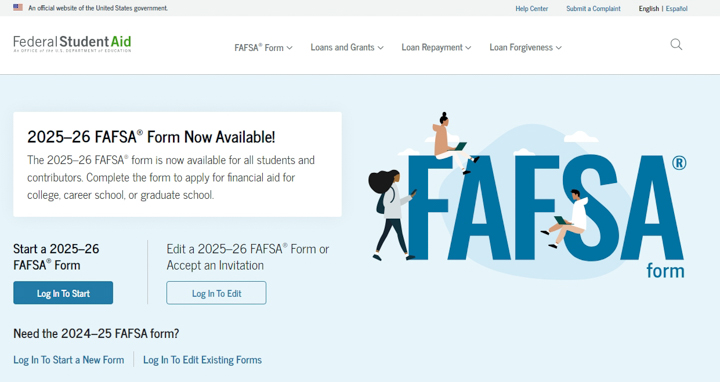
According to the Federal Student Aid Office of the U.S. Department of Education stated, “Federal student aid funds (for example, Direct Loans and Pell Grants) were not impacted by the initial guidance, and we continue to award and disburse federal student aid.”

A screenshot of the current Federal Student Aid website taken on Feb 14, 2024

How is it impacting students and researchers:

According to student researchers who requested anonymity to speak freely without fear of retaliation, many are worried about funding suddenly being cut if the content their research does not align with Executive Order 13985 that stated,

  • “Terminate, to the maximum extent allowed by law, all DEI, DEIA, and “environmental justice” offices and positions (including but not limited to “Chief Diversity Officer” positions); all “equity action plans,” “equity” actions, initiatives, or programs, “equity-related” grants or contracts.”
  • “With the list of words that the National Science Foundation released they are flagging grant applications now, but it’s stuff like “trauma,” “multicultural, “advocate” and it’s like how you do even do social science?” said a psychology student and researcher at Virginia Tech whose research project is focused on substance abuse on LGBTQ+ young adults’.
  • “We were told last week that the State Department pulled the program, so Dr. Hodges and our team leads told us, ‘hey just keep doing what you’re doing but as of right now,’ said an international relations student and researcher from the Diplomacy Lab at Virginia Tech, who also asked to remain anonymous fearing retribution against his fellow researchers. “This is literally useless, we’re just doing it in the hopes that they would accept it by May, which I have extreme doubt they will because I don’t see why they would.”

What university administrators have said and done:

  • “We are following the situation closely and reaching out to our congressional representatives in Washington, D.C., to express our deep concern about this decision and its potential effect on our university and our nation’s long-term viability as a science and technology leader,” said Tim Sands, president of Virginia Tech in an official message.

In response to the dynamic and rapid changes caused by the executive orders, the university created a page that offers guidance to those with questions regarding research and updates on the “Federal Agency Updates” page.

Mark Owczarski in an office at Virginia Tech during a Zoom interview on Feb. 14, 2024, in Blacksburg, VA. (Photo, Wilbert Ramirez)
  • “It’s going to evolve, and we recognize that this community is vested into this, and so as we figure out things, and as the landscape externally changes as well, some things have been rolled back. Some things might be in the courts. Some things will be changed because of additional directives or instruction,” Owczarski said. “What we do know is we are committed to communicating, we are committed to research. We’re not going to just say we’re done, it’s who we are, and it’s challenging.”

International Art Exchange Gets It’s Start at Virginia Tech.

By Zain Omar

The Art, Research, and Technology Exchange (ARTx) was founded in collaboration with Virginia Tech’s Institute for Creativity, Arts and Technology (ICAT) and hosts conferences in specialized performance venues with universities on the advancement of technology’s role in art.

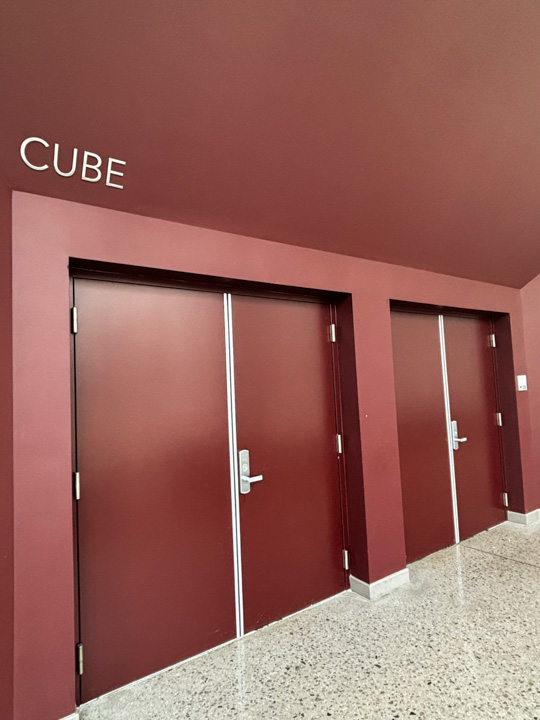
The idea of ARTx came to fruition when Kyle Hutchins, assistant professor of practice at Virginia Tech, played a piece that was composed specifically to be played at the Cube in Moss Arts Center. He realized that certain works could not be duplicated or transferred to digital media because the experience of the performance is affected by the environment.

ARTx allows for professionals and students in the art space to research the impact that advancements in technology affect the way art is shared, learned and taught. Universities and organizations have the opportunity to be awarded grants for their research to keep advancing multimedia performance spaces on their campuses. Virginia Tech was awarded the SEAD grant to fund future projects at the Cube during the spring 2024 ARTx conferences.

ARTx features guest lectures at their event where researchers and art faculty from around the world can share how they found that technology has impacted the learning and performance landscape. Music therapist, Grace Carr, has experienced first-hand how technology has affected the way we learn art. “As a music therapist, I have seen first-hand how teaching music and understanding it have changed because of technology. It is my opinion that technology has allowed for teaching to become much more accessible and readily available to people,” said Carr.

ARTx research focuses on advancements in technology and how they impact the way art is shared, whether in educational environments or in specialized performance venues, such as the Cube. According to Virginia Tech’s Institute for Creativity, Arts and Technology, “The initiative emphasizes collaborations with peer institutions that feature spatial audio and multimedia performance spaces and festivals.”

Advancements in technology also play a role in art classrooms. As new technology is being introduced each year, students and teachers must adapt to new ways to create.

Advancements in technology change the learning landscape for students who are pursuing careers in artistic fields. Former music education student and Music Therapist Grace Carr found that technology has enhanced the learning environment when it comes to artistic fields. “I would say that technology has changed the way we learn art, in that it had simply added on to what we learn. That is not to say that I didn’t learn anything the “old fashioned” way. When I was learning to transcribe music, I would first learn on paper, then on a computer software. So, I would say that in leaning art, technology can help us enhance what we already know,” said Carr.

With the rise of art created for specialized research environments, institutions have found that sharing their work in other settings can be difficult. “When institutions have highly specialized research spaces for art-making, sharing work with other institutions can become challenging, if not impossible,” according to ICAT. ARTx is a way for these institutions to team up to find ways to develop these works to be shared in other space.

Through ARTx, researchers are finding ways to better be able to share these works that have been composed to fit only certain environments. This research will open doors or new ideas and innovative ways that art can be created.

ICAT hosts collaborations with festivals, universities, and organizations throughout the year. They have currently teamed up with 11 partners with locations all around the world. Currently, ARTx has partners in Canada, California, Ireland, New York, and Washington, D.C.

Virginia Tech hosts the New Music and Technology Festival every two years, where faculty and researchers apart from ARTx convene to share their research through lectures, performances and installations. The festival also features student works and is an environment for art and technology disciplines to learn and collaborate with each other. According to ICAT, “the festival highlights diverse disciplines, including music, theatre, cinema, dance, visual art, creative coding, computer science, neuroscience, molecular biology, robotics, and cybersecurity.”

Events for this festival are held in specialized research and performance spaces around Virginia Tech’s campus, such as the Cube, the Sandbox, and Perform Studio.

When Virginia Tech is not hosting the organizations that are part of ARTx, faculty is sent to attend conferences all over the world hosted by other institutions in the art exchange. The most recent conference that Virginia Tech attended was a five-day conference at the Center for Interdisciplinary Research in Music Media and Technology in Montreal, Canada.

Through the collaboration with ARTx and ICAT, along with the other universities and organizations that have joined the art exchange, new understandings of the way technology and art intertwine will start to change the way we share and view art.

The Price of Education: Unpacking the Financial Strain on First-Generation College Students 

Image Credits: Virginia Polytechnic Institute and State University

By Janae Neely, Education reporter 

The bold “Congratulations!” and confetti bursting from a college acceptance letter evoke feelings of exhilaration, pride, and the promise of endless opportunities. However, for first-generation students, those initial feelings quickly fade as they are faced with an overwhelming question; how are they going to pay for it? 

According to a 2024 study, the average cost of college tuition has risen 141% over the last 20 years. And while resources such as student loans and grants are available, those systems can be faulty and don’t succeed in helping first-generation students. Citizens and Everfi reported, “51% of first-generation students said they were nervous about paying for college” and 11% of students said that the price of college wasn’t worth it. 

Over 6,000 first-generation students have found a home at Virginia Tech, and the university has taken strides to make sure that first-generation students have easy access to education and resources regarding finances and how to pay for higher education. 

GenerationOne, a living-learning community created solely to provide a support system for first-generation college students, held an event this Thursday called Thinkful Thursday: Being Fruitful with Your Finances/FAFSA. This event, hosted in collaboration with Virginia Tech’s Financial Aid Office, educated students on the federal student loan process and provided tips on how first-generation students can manage their finances over the next four years. Hannah Banks, a sophomore at Virginia Tech and a Student Leader in GenerationOne is extremely familiar with the stresses of the financial aid process, “On a scale of one to ten, I would say the stress of financials was a seven when I was deciding where to go to college. Finances were my deciding factor to come to Virginia Tech rather than JMU because they gave me more money.” 

Financial Aid Specialist, Diane Roberson headlined the event and gave thorough tips on how to navigate FAFSA, scholarships, grants, and questions from other students on how to navigate the strain of finances on the college experience. 

“It’s extremely important to have events like this,” said Banks, “When you’re coming to a large university like this, it is refreshing to be in a community where people have gone through the same experience as you.” A 2022 study conducted by The Ohio State University found, “First-generation students were significantly more likely to use federal student loans, private student loans, money from a job, scholarships/grants, and credit cards to fund their education…” (Rehr et al., 2022). However, the study also showed that first-generation students have less knowledge than their counterparts when it comes to financial literacy and financial self-efficacy. This highlights a clear issue in the education and resources that first-generation students receive. 

Image Credits: Ellucian

One of the resources that first-generation students have access to is scholarships. However, only two scholarships out of the 3,000 that Virginia Tech offers are designed for first-generation students. This by far is not enough to help first-generation students with grants and funds. Savannah Stephens, a first-generation senior felt like she didn’t receive the proper education when applying to college, “The FAFSA process was so confusing, and no one in my family had done it before, it was hard trying to find the right information and figure out what to do.” The lack of resources only felt like it continued once Stephens reached Blacksburg, “There were and are plenty of social, emotional, and academic resources but I didn’t need any of those, which wasn’t helpful. I received no financial help as a first-generation student which was extremely stressful at the time.” 

In a 2024 article discussing the difficulties of the FAFSA process, the CEO of iMentor, Heather Washington explained, “…I think students are generally sort of frustrated, but I think the real frustration starts to set in, and I think we’re starting to see this with each passing day as the acceptances come in,” Washington continued, “It almost undermines their excitement about getting in and going, because they either haven’t completed the FAFSA, they’re stuck getting it in, or they just submitted it so they know that this acceptance letter isn’t really telling them yet what they can do with this college acceptance that they have” (Anderson, 2024). 

In almost every area, first-generation students are starting at a disadvantage. It is constantly an uphill battle that needs to be recognized by universities, advisors, and organizations like FAFSA. There needs to be sectors to help these students so that they can succeed to the best of their ability.  Experiences continue to show the significant impact that finances have on first-generation students, highlighting the delicate balance between their success and discouraging them from pursuing higher education altogether. “There is definitely more to be done,” Banks concluded, “ First-generation students still don’t have the resources we need. I think it would be interesting to see a first-generation center where thousands of Virginia Tech students who are first-generation can have access to more resources.”

A Taste of Home: Virginia Tech celebrates the 50th International Cafe Hour

By Elizabeth Hill, education reporter

 Braised pork with rice, sweet potato balls and brown sugar bubble tea at the International Cafe Hour (Photo: Elizabeth Hill)

The aroma of braised pork and rice mingled with the sweet scent of brown sugar bubble tea at Virginia Tech’s Deet’s Place on Jan. 31 as students and community members gathered for the 50th International Cafe Hour. This milestone event, hosted in collaboration with the Taiwanese Student Association, celebrated Taiwanese culture and traditions, reinforcing the university’s mission to foster a welcoming environment for international students and promote cross-cultural understanding.

Since its formation, the International Cafe Hour has provided students with a platform to share their cultures, develop a sense of belonging and connect with the wider community. These free events featuring food, presentations and interactive activities have become a vital part of campus life, enriching the student experience and encouraging global connections.

Fawna Zwart, assistant director for campus and community engagement at the Cranwell International Center, has led the initiative since the beginning. “I think one of the biggest goals is to help international students feel more welcome and more at home here at Virginia Tech,” Zwart said. “What I have discovered is that when students share their culture, they just light up. It helps them develop a sense of belonging, express pride in their culture and also helps them find their people.”

The event started as a small gathering in the Cranwell Center’s community room, offering students a space to connect. “We had 112 people in the first hour,” Zwart recalled. “We had a line out the door.” The overwhelming response quickly turned the event into a campus favorite, necessitating a move to a larger venue. Today, it takes place in Deet’s Place, where attendance continues to grow.

As participation increased, so did the offerings. In collaboration with Virginia Tech Dining Services, the program now provides authentic cuisine that resonates with the featured country or region. “We get their home recipes, and the chefs choose a sweet, a savory and a beverage,” Zwart said. This approach ensures each gathering feels like a taste of home for international students while inviting the broader campus community to explore global flavors.

Each cafe hour is unique, showcasing different cultures through food, music, presentations and hands-on activities. To mark the 50th event, organizers extended the celebration to three hours, offering attendees a deeper dive into Taiwanese culture. The event featured information boards, traditional dishes and a Mandarin calligraphy station. Attendees also participated in trivia with questions about Taiwan and the chance to win tickets to a Moss Arts Center performance. The Global Education Office (GEO) and the Council of International Student Organizations (CISO) were also on hand to connect students with international opportunities.

A student learning the art of Mandarin calligraphy (Photo: Elizabeth Hill)


For Maya Collins, a student eager to explore different cultures, the event offered an immersive experience. “This is my first time at an international cafe hour,” she said. “Since I have not had the opportunity to study abroad, this event made me feel like I teleported to a new country, even if it was just for a couple of hours.”

Beyond the event itself, the Cranwell International Center strives to maintain long-term cultural engagement. A key element of this initiative is the creation of “culture boxes”—collections of decorations and artifacts representing different countries.

Student groups receive a small budget to curate these materials, ensuring a meaningful representation of their heritage. “I have created the culture boxes for them because many of them don’t have things from home,” Zwart said. “You know, they are restricted with their two suitcases to get here. They are not packing all the things from home, so I try to buy a few things for them that they can use and decorate with.” These boxes serve as valuable resources, not only for the cafe hours but also for student organizations presenting at local schools and community events.

With its growing popularity, the International Cafe Hour has become a highly sought-after opportunity for student groups, with several already expressing interest in participating next year. Zwart envisions the program as a living travelogue, offering the entire community a chance to learn about different cultures and break down barriers. 

The impact of this program extends far beyond the walls of the cafe itself, highlighting the importance of international education outside of the traditional classroom setting. Experiences like these foster crucial intercultural skills, such as communication, empathy and adaptability, that are essential for success in today’s globalized world. These skills aren’t always effectively taught in lectures or textbooks; they are best learned through direct interaction and shared experiences, like those offered at the International Cafe Hour. 

By fostering global awareness and mutual understanding, the International Cafe Hour prepares students to navigate an increasingly interconnected world. Through food, conversation and shared traditions, the event continues to bridge cultures, create connections and celebrate the diverse voices that make up the Virginia Tech community.  

Winter weather prompts worries regarding student attendance and well-being in local school districts  

by Kyndall Hanson, education reporter 

January brought freezing temperatures and chilling winds to Southern Virginia, making local school districts weigh the costs of school closures with student well-being. Operational decisions made by administrators prompted backlash from local parents and community members.  

“There are two sides to this,” commented Christina Chrisley on a Montgomery County Public Schools (MCPS) Facebook post notifying of a two-hour delay in the district. “Is attendance important? Yes. Is the student body and their safety during travels and waiting for buses in freezing temperatures, their health and well-being, more important? In this situation, I think so.”  

According to the National Weather Service, areas across Montgomery County received 0.5-3 inches of snowfall from Jan. 6-7. Persisting freezing temperatures and icy road conditions in early January brought community members to express concerns regarding school operations through comments on MCPS Facebook posts.    

An MCPS Facebook post notifying of a two-hour delay receives over a hundred comments, reactions, and shares.  

During January, MCPS schools had two closures and two two-hour delays due to inclement weather. Pulaski County Public Schools (PCPS), a neighboring district, had two closures and four two-hour delays. The two days MCPS was closed, Jan. 6-7, were teacher workdays at PCPS and not considered closures due to weather conditions.  

Robert Graham, superintendent of PCPS, said the district considers the weather forecast, temperatures, windchill, and the possibility for dangerous weather events when determining school closures on the basis of inclement weather.  

According to MCPS policy, “the division superintendent or superintendent’s designee may order the closing, the delay in opening, or the early dismissal of any or all Montgomery County public schools in order to protect the safety and welfare of students, staff, and patrons.” MCPS was unable to provide comment on the explicit considerations taken into account in determining school closures or delays. 

“Dr. Bragen, please think about some of our rural areas that have not been cleared and whose roads are sheets of ice, some teachers are still without power, and the temperature won’t go above freezing,” commented Alana Benavides, addressing Superintendent Bernard Bragen Jr. on an MCPS Facebook post. “It will feel like single digits, even at 9 a.m. when some students are having to wait for their bus at a stop – at those temperatures, frostbite is possible. Some of us have been fortunate enough not to worry about these things, but many other people do.” 

According to Dr. Anne Washofsky, director of the pediatric residency program and interim section chief of pediatric hospitalists at Virginia Tech Carilion, children have a larger body surface area to mass ratio than adults, making them lose body heat more rapidly and be at a greater risk for cold weather-related ailments, such as hypothermia or frostbite.  

“Kids aren’t always able to recognize or get out of environments that expose them to the risk of hypothermia,” said Washofsky. “That’s one of the reasons why it’s so important to make sure that they’re appropriately clothed, in particular, including a hat to help hold heat in their head when they go outside.”   

MCPS transportation bus stop lists detail that students taking the bus are expected to be at their stops “five minutes prior to pickup time.” Stops for elementary school students may require up to 0.3 miles of walking and up to 0.5 miles for middle or high school students, meaning additional time spent in the cold on winter mornings.  

According to Washofsky, brief periods spent waiting outside for buses in freezing temperatures, within a 20-minute window or less, are likely safe for children when they are appropriately dressed for the weather.  

“Wearing hats, gloves, mittens, scarves, long sleeves, multiple layers, and making sure children are wearing stuff that’s water resistant is really important, said Washofsky. “Once you get that cold, that wet or damp, you’ll lose heat more quickly.”  

While getting to school in cold weather may pose safety concerns, staying home for extended periods of time may have adverse health implications as well – especially for those who rely on the National School Lunch Program.  

“It’s not just school lunches, but a lot of kids get their breakfast at school too – it might be two meals of the day,” said Washofsky. “Those might be their two biggest or primary meals based of family’s ability to otherwise provide.” 

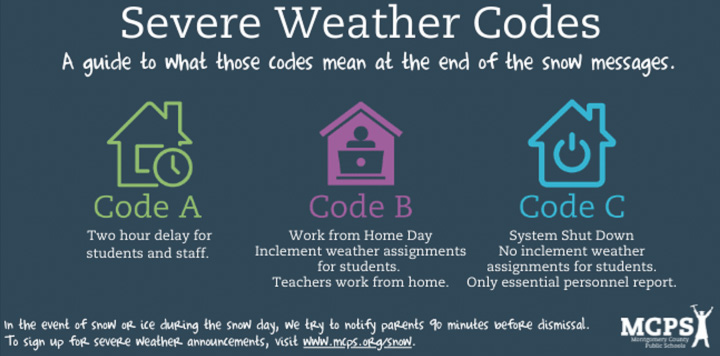
Six of 20 schools in the MCPS system offer free breakfast and lunch to students when school is in session. When schools are closed due to severe weather under severe weather code B and road conditions are deemed safe, meal services are available for pickup at specified locations. The district’s two January closures did not fall under severe weather code B. 

An informational graphic by MCPS depicts the district’s severe weather codes.  

“Maybe it would have been better to simply open the schools for students and families without heat or power and offer meals like other counties are doing – for those who can make it there safely, of course,” said Lauren Black on an MCPS Facebook post. “Prioritize being human and empathetic rather than focusing on attendance and accreditation.”  

According to the Code of Virginia, school closures due to “severe weather conditions or other emergency conditions” result in the addition of make-up days to the school calendar. Schools must be in session for 180 teaching days to avoid reduced funding due to closures. 

“It’s not just that period that they’re outside in the cold, but there are a lot of other things that play into health if school is being canceled because it’s too cold to be able to go in,” said Washofsky.  

Prioritizing Violence Prevention: Community Builders

by Bianca Campoverde, crime, safety, and justice reporter

James Madison Middle School’s Community Builders program prioritizes violence prevention by creating comfortable, supportive environments that help students build a foundation for a bright future.

Gun violence is not just an isolated problem but a public health crisis that affects communities nationwide. In the United States, it remains a pressing concern, particularly among young people. The impact of gun violence on communities, schools, and families is devastating. However, efforts are underway to prevent it. One initiative is the James Madison Middle School Community Builders program in Roanoke, Virginia.

The program incorporates strategies to de-escalate conflict without resorting to violence by teaching students to recognize the signs and respond appropriately. This approach creates a generation of young people who are more informed, responsible, and proactive in preventing violence.

Students are also involved in community outreach and awareness campaigns, giving them a sense of responsibility to create safer environments for themselves and others. This engagement has a ripple effect throughout the community, as students who are educated in community safety advocate for change in their families, neighborhoods, and beyond.

Early intervention for middle school students is crucial, as this period serves as a pivotal turning point in their development. During this time, students develop the skills to navigate real-world challenges, avoid harmful behaviors, and build habits that will guide them toward success in high school and beyond. The program aims to curb violence and build a reliable foundation for students through early intervention and comprehensive support systems.

In speaking with various high school students, Joshua Johnson, youth development intervention coordinator for Roanoke City Public Schools, noted, “Many of them felt like they were becoming detached from school and less motivated around middle school. This is why we wanted to target them during this transition period, looking at some positive experiences that combat some of the adverse childhood experiences (ACEs) they’ve had.”

This detachment can be linked to a range of factors, including personal struggles, family challenges, and exposure to ACEs. These factors not only impact academic success but can also increase the likelihood of involvement in violence.

Regarding logistics, the program tracks participating students’ data to identify areas of challenge where resources and support can be provided to alleviate external factors outside of the school environment. The program offers support through conflict resolution, healthy coping strategies, and other resources.  In an effort to reach as many students as possible, those outside of the program who display academic struggles are contacted and directed toward it.

“I affectionately call them our temperature changers. They’re a small group, but depending on where they come in that day-good or bad-they can really change the temperature of a room. Those are the kids we really want to pour a lot of attention into, making sure they don’t slip through the cracks, ensuring they are seen, heard, and feel like they belong,” Johnson said.

In addition to educational resources, the program creates a stable and comfortable environment where students experience inclusivity, strong ties to their school and peers, healthy relationships, and an overall atmosphere that encourages their self-esteem and nurtures their self-worth. These elements are essential for building resilience in the face of external challenges.

Corey Allder, director of Community Engagement for Roanoke City Public Schools, said, “If students are engaged and have a sense of belonging, they are less likely to be a part of a violent group or community violence.”

The goal of the program is to provide students with real-world experiences and career opportunities to combat community and domestic violence, while also raising awareness about gun violence prevention. Allder and Johnson were tasked with developing a program to help students set and work toward personal goals.

From visiting colleges, businesses, and government agencies to organizing events at their school, students in the program learn to cultivate their leadership skills. They demonstrate the program’s effectiveness through their academics and overall attitude toward their community. These opportunities help students understand their potential and the importance of goal setting. The exposure helps broaden their understanding, motivating them to pursue academic excellence and future career aspirations.  

“It could be a good opportunity to find ways to be more adult and find more ways to be better in life,” said Javon Kotz, an eighth grader at James Madison, when asked what about the program interested him.

Kotz hopes to attend Radford University in the future to pursue a degree in real estate.

“I feel like some people don’t want to sell a home; they just care about the money. I want people to know what they’re buying and not get ripped off. I want them to get a good deal, not just a house that’s terrible,” Kotz said.

By emphasizing these emotional and social aspects, the program is working to address the root causes of violence.  

The General Assembly’s decision to provide two years of funding for the pilot of the Community Builders program is an important first step. However, the program remains temporary, and long-term funding and community support are essential for its success to be sustained. The results from this initial phase will help shape future efforts to expand and refine the initiative. Ensuring that more students benefit from its resources and guidance.

Gun violence remains a significant challenge in many communities, but through early intervention and comprehensive support, programs like James Madison Middle School’s Community Builders are taking steps to prevent it before it begins. With continued support, the program will play an important role in shaping a safer, more positive future for students, families, and communities.

SOL Results are in for the New River Valley

By Caroline Reed

As students adjust to a new version of normal, so are the Standard of Learning (SOL) scores across the New River Valley.  

After looking at the data released by the Department of Education, numbers are still not where they were in prior years, even after 2020 when the cutoff score was lowered for math and reading. Naturally, there is worry from student, teachers, and parents alike about the post pandemic numbers.

Overall, the passing rate looks very similar to the previous year with a slight improvement in math. According to the Virginia Mercury, the proficient score is “evidence that the student demonstrated the skills and knowledge defined in the Standards of Learning as appropriate for the grade level or course.”

After students returned to in-person classes, in 2021, there was a jump in both the math and reading categories. But while questions rise about the accuracy and necessity of standardized testing, Superintendent of Salem City Schools, Dr. Curtis Hicks is excited about this year’s results looking forward to making the necessary adjustments to ensure that every student succeeds, whatever that may look like.

“I think SOLs accurately reflect how well students know and can demonstrate their acquisition of learning standards.  The only thing I would add is that SOL tests are only one of the many ways that schools impact children and communities,” said Hicks.

Statewide we have seen 70% of schools show improvement from the previous year. WSLS 10 News reports Roanoke City scored higher in all subjects except history. Montgomery Country tested above the state average as well. While Salem places 32nd in the Commonwealth, Daleville, and Bedford also saw major improvements.

(Data found at https://doe.virginia.gov/data-policy-funding/data-reports/statistics-reports/sol-test-pass-rates-other-results)

But in Pulaski County, SOL numbers still fall below pre-pandemic levels, putting it at No. 95 out of 131 school districts. Last year only 18 schools in all of Virginia remained consistent or improved their pre-pandemic scores.

Many parents and teachers hear that and become fearful, but success in the education system is not linear, and unfortunately takes time. “The key is to focus on what matters most. I think sometimes we add other “requirements” to the point of getting in the way of what matters most, or in some cases, we continue to do things because that’s what we have always done even though the standards have changed,” said Hicks.

But with the help of the state, there are many ideas and plans in place to help tackle some of the obstacles that are opposing the SOL results: tutoring, absenteeism, cellphones, and many other factors that impact a students’ ability to learn.

Gov. Youngkin’s “All In Virginia” plan is an education bill trying to reteach kids how to learn in classrooms after growing accustomed to learning at home focusing on three major components: attendance, literacy, and learning.

With the “All In Virginia” education plan, there is hope for those in charge. As chronic absenteeism is down 16% from the previous school year.

The DOE of Virginia released a statement the end of August: “These [SOL] results show that Virginia students are beginning to recover from the post-pandemic learning loss they suffered after 2020 and 2021. But the results also show that we must continue to focus every day on helping them catch up to pre-pandemic levels and move ahead,” said Superintendent of Public Instruction Lisa Coons.

The “All In” house bill increased state funding; an approach that encourages school districts focus 70% of fund on tutoring, 20% on the VA Literacy Act and 10% on chronic absenteeism. This budget bill was signed on September 14th, 2023.

As the pandemic changed the states approach to education, the overall test itself has also changed. “In general, the SOLs continue to move away from basic recall fixed response items to questions that require more application and explanation of your answers.  As a result, students will have to have a greater depth of understanding regarding the standards and know how to apply their learning in new situations,” said Hicks.

The understanding we gain from the testing provides numerical understanding of our education. But from teachers to students, the fear of failure and pressure can be overwhelming. For some students passing an SOL could be the final achievement needed to graduate. However, if a student fails tutoring and retesting are required in order to meet the requirement.

Darlene Marshall, retired elementary school teacher and now substitute, shares some encouragement to teachers: “More tests do give the power to gather more data, but it is at the expense of good quality teaching. Teaching is a craft. I am a believer in teaching the whole child to do what they can become to be lifelong learners. Teachers have so much pressure and on them today and I just want to hug and thank them all,” said Marshall.

But at the end of the day, the pressure does not rely amongst the shoulders of the individual but an understanding into how overall schools and districts are learning. The data that comes back each year is crucial to those in charge.

“I would say we are measuring both students and teachers but using the results to rate schools not children. Students and families need to know how well they are progressing, but we never use scores to label or rate students,” Salem’s Superintendent continues, “it is important for schools to use the data to make the changes necessary to propel learning further,” said Hicks

Despite all the new plans, tests, and other implemented standards and rules, patience and kindness to teachers and students alike is the main priority. Making sure they have the help and guidance they need to succeed. “I would just say that you have to be able to block out the noise and the distractions and focus on what matters most,” said Hicks to encourage teachers and students.  

Students everywhere have suffered at the hands of Covid-19, mental health issues, and teacher shortages. But at a state and local level there are those that care. Those striving to improve the systems in place, adapting to a new generation of both students and teachers.