Category: No category
How Southwest Virginia residents should prepare for tax filing season with changes in policy and impact
By Megan Reese, politics and government reporter

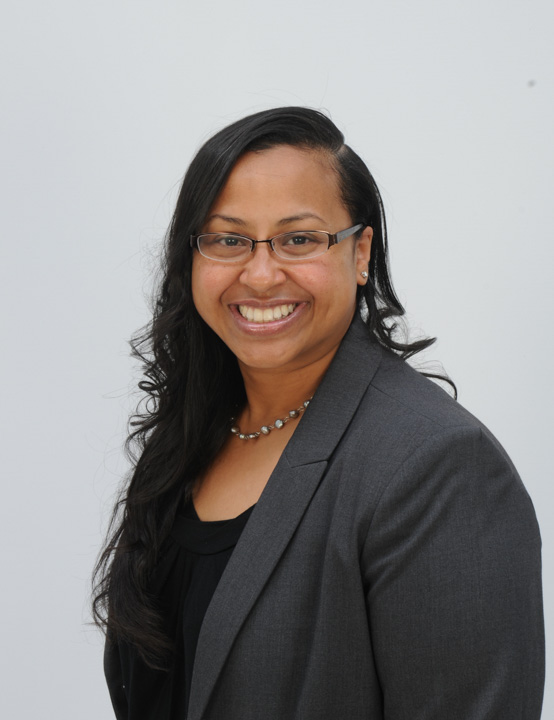
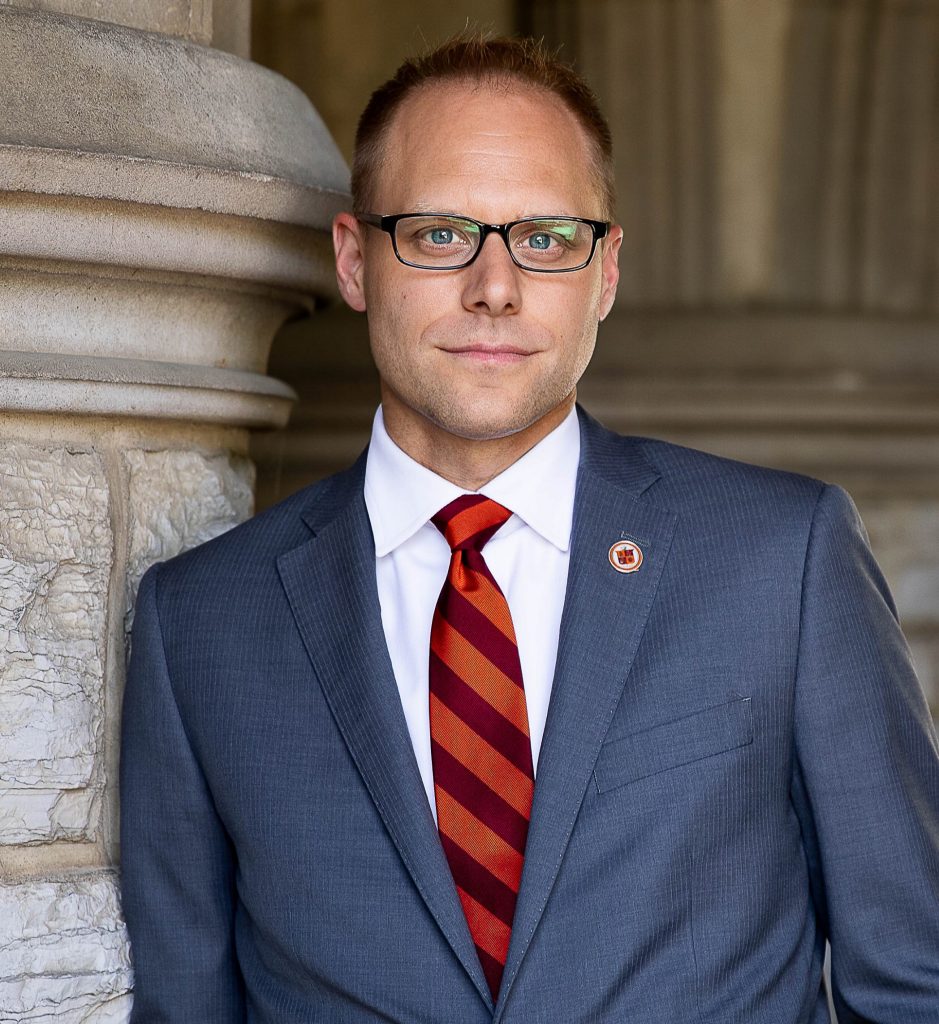
Photo courtesy of Dr. Michelle Harding
According to Benjamin Franklin, there are two things certain in life: death and taxes. Because of that, it is important to understand what you are paying and why you are paying it.
Jan. 26 marked the first day of tax filing season for Americans, and this time of year can be extremely stressful and confusing. Each year there are new laws and regulations put into place by Congress, and most people don’t have the time to fully understand what they mean.
U.S. Rep. Morgan Griffith, R-Va., of Virginia’s 9th District, recently wrote an article for NRVNews.com explaining how the new reconciliation package, called the “Working Families Tax Cuts,” could affect Southwest Virginia.
I spoke with Dr. Michelle Harding to discuss the basics of tax filing season, understand the new policies and how they will impact the local residents. Harding is a licensed certified public accountant specializing in taxation, and she joined the Pamplin College of Business in 2017 to teach the next generation of accounting professionals.
Harding’s comments were edited slightly for length and clarity purposes.
Can you give a quick summary of what tax filing season is?
Every year, people who have an income have to file a tax return. There’s some requirements where if your income’s below a certain level, you may not be required to file a tax return. But, if you have wage income, that means your employer has likely already deducted taxes. So, even if you’re not required to file a tax return, you should anyway in order to get a refund of those taxes that you’ve already paid.
What we typically think of as tax filing season is that employers are required to give their employees a W-2 form, which is their annual wage report for all the income they’ve earned over the last year, by Jan. 31. Basically, tax season is the time when you receive that W-2 wage report from your employer, until the April 15th filing deadline.
What is your overall main advice to young people and families going through this tax season?
When you get a W-2, 1099 form or your annual bank interest statement, those businesses are sending you a copy, but they’re also sending the IRS a copy. It’s really important that you pay attention and make sure you include all of your sources of income in your tax return.
Often people are just intimidated by taxes, it seems overwhelming and daunting. For people whose primary source of income is their paycheck, they absolutely should not be intimidated by this process because their W-2 is the main piece of information they need to file their tax return. Most Americans will actually receive a refund. So yeah, that’s good news.
There are also free tax filing services available. The IRS has on their website, it’s called IRS Free File. If your adjusted gross income is less than $89,000, then there is this online service that’s free for you to file your taxes. Also, the New River Valley Community Action Group sponsors VITA, which is Volunteer Income Tax Assistance. I definitely encourage people to take advantage of those resources.
Every year we see changes in tax policy, which directly impacts taxpayers. Can you explain, in plain terms, what the “Working Families Tax Cuts” are designed to do?
Tax deductions are rules that Congress passes. That’s another misconception. People blame the IRS, but Congress passes tax laws, and the IRS is responsible for enforcement of those tax laws. Every year Congress decides how much each taxpayer is allowed to deduct. So, every taxpayer gets a standard deduction, and that standard deduction reduces the amount of your income that you have to pay taxes on. It is a flat amount that everyone gets based on their filing status.
The first change under these “Working Families Tax Cuts” is that the amounts increased a little bit more than they usually do from year to year. That’s Congress saying, we’re allowing you to pay taxes on less of your income.
Then we get into some other very specific targeted tax deductions. For taxpayers that are 65 and older and have other sources of income, they get an extra $4,000 of standard deduction.
Also, qualified tip income. This is going to benefit people who work in service industries where a lot of their income is from tips. You’re able to exclude up to $25,000 as a single person. But if you’re married filing jointly, up to $50,000 of your income. That can be quite meaningful to people who get a lot of their income from tips.
There is also a new deduction for qualified overtime compensation. People who are paid on an hourly basis, if you work more than 40 hours a week, you’re entitled to overtime.
Based on what we know, how might these tax cuts affect working families in Southwest Virginia or the NRV specifically?
So if you qualify for these taxes; if you have tip income, if you have overtime income or if you’re 65 or older, these things will benefit you. But if I am a salary worker, for example, let’s talk about Virginia Tech. An administrative assistant may make $30,000 a year. So they have no tip income and they have no overtime income because they’re a salary employee. So, none of those deductions will benefit them. Now, everyone having the higher standard deduction will likely provide some tax relief. That effect is likely between $100 and $200 if your income is around the national salary average of $62,000, which again, more tax saving is always better.
Would this policy meaningfully change the tax filing experience? Would filing taxes become simpler, more complicated, or mostly unchanged?
It’s definitely not becoming simpler. Because as I described those tax deductions, there are a lot of if-then statements. So what will I advise them? Number one, don’t be intimidated by the process, especially if your income is primarily a W-2 and then you have some interest from your savings account. That’s a very straightforward tax return. If you know how to use a computer and the internet, using one of the free online tax filing resources, should be a really straightforward experience. So don’t be intimidated by it because the tax software walks you through the process.
How weather, transit and safety shape Virginia Tech’s closure decisions
Michaela Scott, crime, safety, and justice reporter

Photo courtesy of VT Emergency Management homepage. Executive Director of VT Emergency Management Andrew Marinik shares a look inside Virginia Tech’s winter weather calls.
As winter weather progresses in the New River Valley and winter storm challenges arise, executive director of Virginia Tech Emergency Management, Andrew Marinik speaks to the critical safety measures and response initiatives overseen by his office.
Over the past two weeks, Virginia Tech has reduced operations three times due to the major East Coast storm. As executive director, Marinik’s responsibilities include setting direction, leading the office, and prioritizing safety on campus and across Blacksburg.
[This story was slightly edited for length and clarity]
When a major winter storm is forecasted, what does the decision-making process actually look like from the first weather alert to a campus-wide decision?
Much of what emergency management does is coordination. We don’t shovel the snow.
We are coordinating across different groups to make sure that we can minimize the impact to the extent we can. Weather is not reliable outside of 48-72 hours at best. The balance of what we do is making people aware there’s the possibility of something.
When something like winter weather comes in, we’re looking at transportation networks. We’re looking at our ability to feed, educate, keep the power on, and make sure that we have public safety assets in place. We can’t cancel emergencies. So even if we’re going to reduce operations today for classes, we still have to make sure to the extent that we possibly can that fire trucks, ambulances and police cars can get around campus.
You’ve been at Virginia Tech since 2007. Can you walk me through a past winter storm that was particularly challenging for the university?
I will say this past weekend was challenging for a couple of reasons. The past weekend’s forecasts were all over the place. At one point, it said 36 inches. Thirty-six inches would be a serious problem for us in a weekend.
Another one that comes to mind is in 2009. It was during commencement and we bring in tons of people along I-81 and 460, and the snow just dumps.
And it got so bad in that storm that cars just got parked on I-81 and people walked into Christiansburg. They gave up on their car, couldn’t move, and were freezing, so they walked into town looking for help.
Commencement, athletics events and stuff that has a bigger audience are much harder to delay or relocate.
You can’t take a basketball game with an ESPN contract and be like, we’ll do it next week. It just doesn’t work that way. For commencement, we can’t just be like, I know your family flew in from Oklahoma. We’re going to do this again next week because it’s bad weather.
Those add some extra challenges to the process.
What preparations are happening on campus before most students even realize a storm is coming? How is your team specifically planning for the uncertainty?
We start with what we call SITREPs, which is just an old military term for situation reports. We’ll do weather briefings if nothing’s actually happened yet, because all we’re really saying is, here’s what we’re expecting to happen.
We start getting everybody to think about it. The different organizational operational people, Facilities on campus, also monitor the weather all the time because they’re responsible for all buildings and grounds. We wrap everybody into the same call or email.
The snow emergency route is part of our preparation. If you look at a map of the snow emergency route, you’ll see that it largely brings us around residence halls, so that if there’s a fire, EMS, law enforcement emergency, we’re prioritizing the ability for those emergency services to get to those buildings, and to get to where our people are.
We try to give everybody time to react. And then the messaging itself takes a while to try and craft each individual word to have the meaning you want it to have.
I know that a lot of students often ask why decisions aren’t made earlier – what goes into determining the timing of alerts and announcements?
The timing is often the nature of the storm. When we make a decision on that, it’s a safety decision, primarily.
We also incorporate if Blacksburg Transit is able to operate. Lots of people use Blacksburg Transit. If the BT says, ‘we’re not going to be operating,’ it makes it difficult.
I don’t know if you noticed this morning, (Jan. 29) we were notified very late, that Blacksburg Transit had an issue with a bunch of their buses, and so very late in the morning, they said, ‘we’re not running a full schedule.’ I’m sure that was impactful.
We tried to scramble and get a message out really quickly for as many people as we could within a few minutes of getting notified about that, in hopes people would realize it.
We have a conversation, a recommendation is made, and then senior leadership makes the ultimate decision on whether we’re open or closed.
After a major storm, how does your team evaluate what worked and what needs improvement?
That’s a very common thing for our office. Emergency management has its own processes and cadences.
We document a lot, keep track, and write SITREPs. We’re documenting who’s doing what and what they’re doing and what kind of issues we’ve had, and have we had accidents or have we had slip and falls on campus?
And then we try to use that to help us improve our process. We put a huge emphasis on continuous improvement. Nobody is perfect. We can always do better.
The idea is to try and do the absolute best you can and then find any opportunities to do better moving forward.
Is there anything that we or haven’t discussed that you would like to touch on before we wrap up this call?
One of the things that we’re always looking for is to try and engage the students on taking more ownership of their safety, security, surroundings, like checking the weather every day and building that habit.
Our hope, our dream, if you will, is that every Hokie, when they graduate, has these really good preparedness habits built in, and that they go off to wherever they work, and everyone’s like, ‘man, you guys are always so prepared.’
We would love for that to be one of the cultural norms of Virginia Tech, that these students leave here fully prepared.
How to create constructive conversations around disabilities
By: Emily Southern, science reporter
After President Trump’s recent claim linking Tylenol use during pregnancy to autism, public conversations about autism are increasing, but not always in a constructive way.
Autism is a neurological developmental disability that affects millions, and the language we use matters.
Featuring insight from Nathaniel Porter, a social data scientist at Virginia Tech and disability advocate, and Ashdon Sigmon, a mother and autism advocate, we explore why education, empathy, and curiosity are key to better conversations.
The Local Effects of the Government Shutdown
By John Tuason, Politics and Government
From delayed services to employee furloughs, we take a closer look at the real-life impact of the Government shutdown on people, businesses, and upcoming elections.
American Chestnut’s Road to Reintroduction
By: Eli Lamport, science reporter
The American Chestnut tree has a facinating history. It’s nutrient rich nuts, prized lumber, and large size made it an icon of eastern forests, until the species was wiped out by disease in the early 20th century. For years, groups have been working to develop a disease resistant American Chestnut tree, enabling the species to make a comeback.
From Reels to Real Customers: Inside 310 Rosemont’s Social Media Approach
By: Zoe Santos, arts, culture, and sports reporter
Local boutique 310 Rosemont in Blacksburg is using social media marketing to connect with Virginia Tech students and new residents. Social media manager Nicole Zuckerman explains how consistent posting and creative content help the store reach new audiences.
Why Poppi Is Taking Over College Campuses
By: Sage Mayhew, Health and Wellness Reporter
It looks like soda, tastes like soda, but claims to help your gut. Poppi is everywhere on college campuses right now — but is it actually good for you, or just good marketing? I put it to the test.
How to register to vote before (and on) Election Day
by Jonathan Mususa, politics and government reporter
VT Engage civic engagement coordinator Billy McKeon shares some important information about voter registration in Virginia as Election Day grows ever closer.
Center-Lane Mayhem
By Landon Swanson, Sports reporter
Students try to enter Lane Stadium as Center St festivities end and cause mayhem. Getting into the stadium is the hardest part of student’s gamedays. The ability for a student to enter the game is incredibly hindered and they need help.