
Category: News
Spring Break and Traffic Incidents
Pros/Cons of local data centers | NRV redistricting | Black History Month proclamation’s meaning
Student section crackdown | Dining Hall food theft | Graduation hotel reservations
Community Support Helps Interfaith Food Pantry Feed Blacksburg
By Megan Reese, politics and government reporter
In Blacksburg, Va., the Interfaith Food Pantry is helping address food insecurity by providing food and personal care items for those in need. Through strong community partnerships and volunteer support, the pantry is expanding its services and working to ensure no one goes without food.
Virginia Tech’s Black Culture LLC dismantling
A new home for Southpaw
By Kailey Watson, arts, culture & sports reporter
The Future Economy Collective, a volunteer-run mutual aid group for the New River Valley, opens a new community space called Southpaw. It acts as a meeting place for the organization and as a space to host community-oriented events and initiatives.
Huckleberry Trail to continue connecting Montgomery County
By Josie Sellers, health & wellness reporter
Once used to transport coal between Blacksburg and Christiansburg, the now-paved Huckleberry Trail has connected Montgomery County for more than a century. As warmer weather arrives and construction wraps up, residents are eager for full access to the trail.
How an Alternative Protein Club at Virginia Tech is Advancing Food Education, Research and Innovation
By Allera Bee, education reporter
In the midst of a culture dominated by animal-based protein the Alternative Protein Project at Virginia Tech is actively creating conversations around plant-based foods, fermented foods and cultivated meat.
In January of this year, the FDA significantly reconstructed the food pyramid for the first time in decades. The federal reset urged Americans to eat “real foods” while also heavily pushing protein and full-fat dairy consumption. The nationwide chapter of The Alternative Protein Club is here to tell us that there are better and more sustainable solutions to America’s quest for protein.
The nationwide network of Alternative Protein Projects operates under “The Good Food Inc” which is an international nonprofit think tank. The organization is working to advance education around alternative proteins that can help countries “meet climate, global health, food security and biodiversity goals,” according to The Good Food Inc. Each of the 94 chapters of the Alternative Protein Project provide education and opportunities to a smaller audience on their college campuses.
According to Evelyn Nelson-Pennebaker, the president of Virginia Tech’s Alt Protein Project chapter, “One thing GFI has always been working towards is showing the difference between various types of food processing.” The FDA’s reconstruction directly targets all processed foods, which she says “impacts plant-based meat and how people feel and think about it.” Marty Makary, the commissioner for the FDA, said that the new administration and FDA together “want to call out ultra-processed foods.” However, “plant-based meats when used in place of meat, as part of an otherwise healthy diet, can actually reduce the risk of heart disease and many other common illnesses that most get from overconsumption of red meat,” says Nelson-Pennebaker. Nelson-Pennebaker explained that this is why it is critical to discuss the distinction between various forms of processing amidst the new food pyramid and its narrative that targets all processed foods.
Many Americans for a long time have thought that animal product based diets are the only solution to protein deficiencies. For example, Nelson-Pennebaker pointed out that the new food pyramid emphasizes full-fat dairy milk consumption while “water is most other countries’ choice for their food guidelines.” When we think of protein in America, we often visualize steak, eggs or yogurt. Because of the United States history with animal-based protein there have been rising concerns related to both how this consumption affects our health and environment. According to The Sustainable Nutrition Initiative “By switching to sustainable sugar production, renewable electricity, and innovative production systems, protein production via precision fermentation could have lower environmental effects than animal-derived proteins.” Though as stated by the SNI, alternative protein is a new niche topic of research and conversation. To get the word out there, the GFI and Alternative Protein Project’s mission is to advance education so that Americans have a broader understanding of what healthy and sustainable protein consumption can look like as well as how it benefits our environment.
Notably, because alternative protein is an emerging concept, one of GFI’s major objectives inside of their mission is to stimulate open-access research. That is their goal is not to blindly lead Americans into a new protein haze without scientific backup. With a greater global audience, GFI is able to secure funding and recognition to further alternative protein research and academic collaborations and expand what scientists know about the pros and cons of this food. Katy Schwartz, the outreach and social media director of Virginia Tech’s Alt Protein chapter, points out that it’s also important to “separate the hard line of veganism from our diets.” She says “It can be intimidating for people to completely cut out meat and other dietary products.” Unlike the FDA’s new strict food guidelines, GFI and the Alternative Protein Project are not drawing a line in the sand between what is considered good and bad protein. Conversely, it is clear that their goal is to expand the conversation surrounding alternative proteins in an effort to learn more through discussion and research.
Each semester, the Virginia Tech Alternative Protein Project holds events and meetings to both engage and educate students. Some of these previously included sensory food evaluation lab tours, live discussions with doctors and experts in the field, as well as taste testing vegetarian and vegan protein-packed foods. With each activity, the students and student leaders spread the word about alternative proteins. The organization is also a welcoming space for students who are interested or curious about alternative protein to meet like minded people and learn more together. Each student lead chapter is issued 1:1 guidance from mentors involved in the alternative protein innovation and research process.
As Katy Schwartz says, “Alternative proteins don’t have to be this gross and foreign concept.” “They can honestly be really delicious and provide a lot of cool opportunities to see the behind the scenes of some really cool institutions that we have on our campus.”
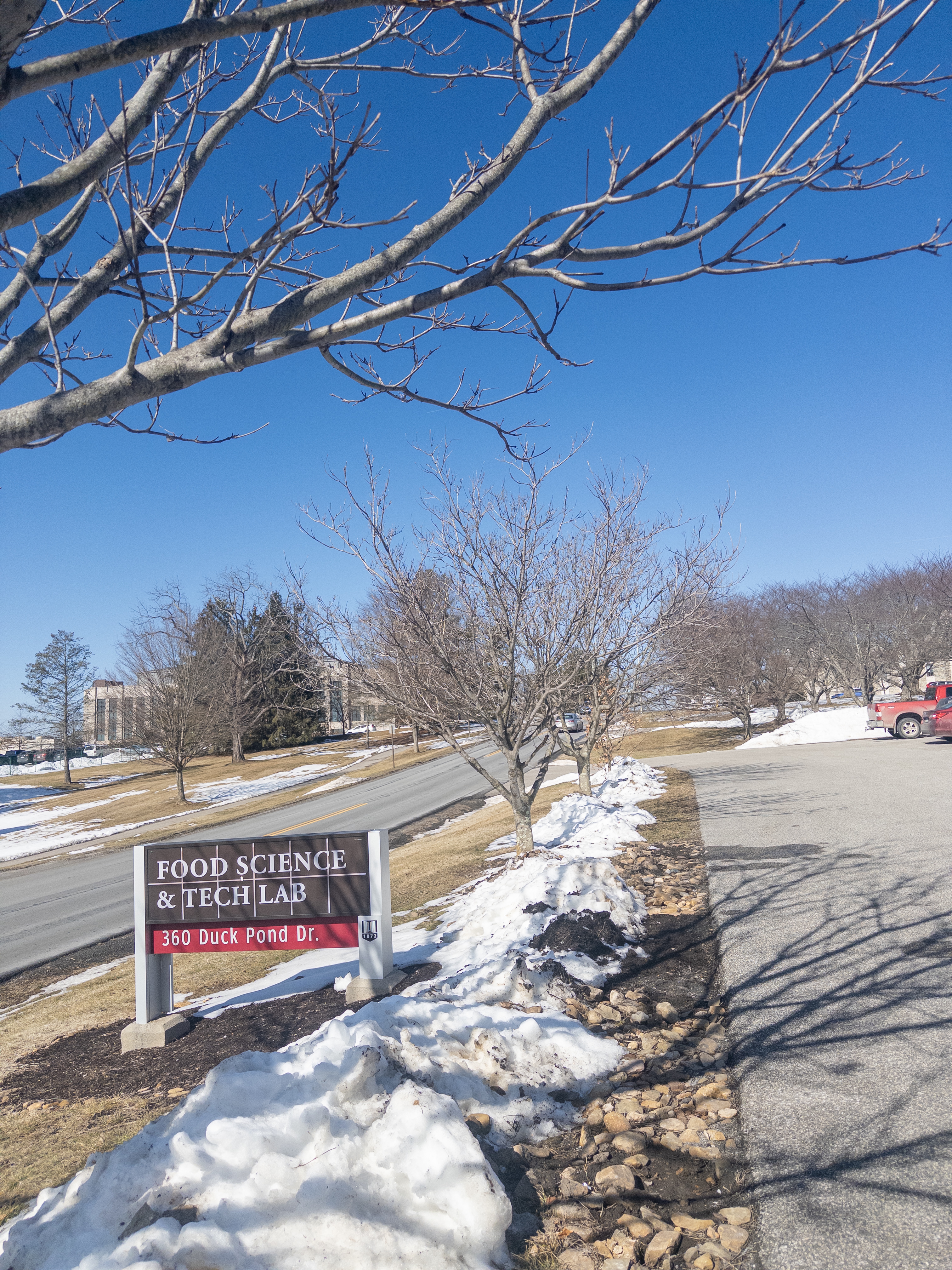
Much of The Alternative Protein Project’s work is completed in the Food Science & Technology Lab on campus.
Thursday, Feb. 12, 2026. Blacksburg, Va.
Photo by Allera Bee
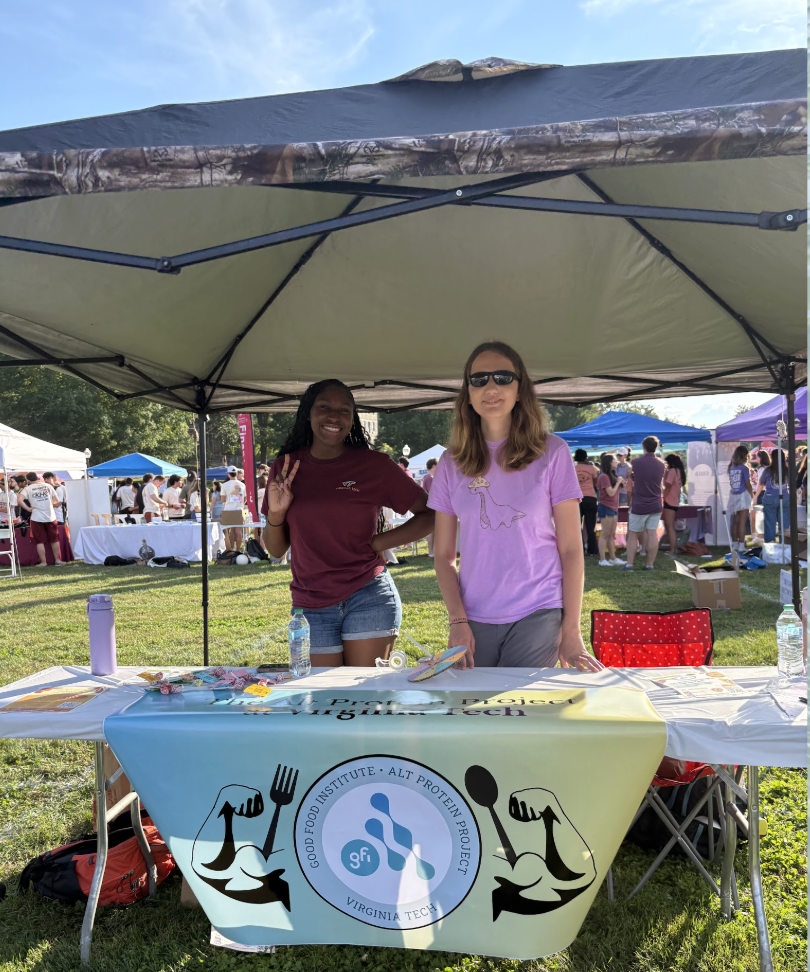
Executive members of The Alternative Protein Project Participate in Gobbler Fest.
Friday, Aug. 29, 2025. Blacksburg, Va.
Photo by Katy Schwartz
How AI is revolutionizing the medical industry
by Hayden McNeal, health & wellness reporter
AI is growing in more ways than thought possible and people in almost all fields are starting to use it, including clinical professionals. Professionals from Virginia Tech’s Carilion School of Medicine explain what can come out of the use of AI.
With the rising use of AI in medicine, there can be a number of different outcomes when it comes to using this technology. AI could analyze data points faster, significantly better determine what and how much medicine a patient needs, determine risk levels quicker, make clinical work more efficient, and lower burnout. It could also harm humans’ ability to complete steps in a task or tool.
“Now we can leverage AI to help us determine what is the best medical chemotherapeutic regimen for that patient in front of you, which may be a different chemotherapeutic regimen from the patient you saw yesterday,” said Professor Jon Sweet, chair of the Virginia Tech Carilion School of Medicine. “As genomic information becomes way cheaper and much more widely deployed, AI will help us figure out which medications might work best for a certain person.”

Sweet noted that with the help of AI, doctors will be able to analyze data points faster. Many electronic health records have some early warning signs with up to 70 data points to find an illness then alerts a clinician to start diagnostics or therapeutics. Sweet claimed with AI churning in the background, analyzing and identifying causes will most likely make it easier to efficiently make an accurate diagnosis from finding nodes during lung cancer screenings to detecting breast masses on mammograms.
This quick and thorough analysis of patients will also determine the exact type and dosage of medicine based on their genomic makeup. Additionally, Sweet thinks that this will cut down on the cost of medicine.
Eventually, Sweet believes that AI will not only be able to identify diseases before they become noticeable to clinicians, but identify the risk levels of the patients. This will allow doctors to focus on higher-risk patients rather than putting efforts into curing those who may not need it. That is a point Sweet noted, the amount of overtreatment that is happening currently and how much money and how many materials are being wasted by it. He claimed that has been costly and can even be dangerous, and AI can help mitigate this problem.
“I think in efficiency in looking at information and potentially calling out what is not really relevant while looking for patterns, AI could help in following trends that could be really efficient for the practicing physician,” said Dr. Rebecca Pauly, vice dean of the Virginia Tech Carilion School of Medicine. “I think in some of the studies that have looked at, AI’s ability to interpret radiology has been quite efficient and accurate, as well as in reading EKGs. I look at it as an augmenting tool to what the physicians, time, energy, and mind can accomplish.”
According to the National Institutes of Health, by integrating AI into VR/AR technologies, the potential to boost radiological efficiency, improve diagnostic accuracy, and improve treatment planning exponentially exists.
“We have open notes so the patients can read their notes that the doctor writes, which is a very good way to communicate,” Sweet said. “And as you can imagine, the note that our AI scribe generates is easy to read, it’s organized, it’s pithy as opposed to what the doctor does with typos and doctor speak and all this imported crap. The modern note has become unintelligible to patients and families, but when you use AI to soften it up and make it helpful to the patients and the rest of the health care team, you make it better.
This efficiency that AI machines offer helps clinicians mitigate some of that clerical administrative burden that accompanies practicing medicine. The tedious recording of every patient’s data may be a thing of the past. Patients will be able to review their doctors’ written feedback much faster post-clinical session.
“There’s this concept in the broader house of the various medical specialties, where there’s a lot of burnout,” Sweet remarked. “Oftentimes, 40% of people who are burning out and are thinking about leaving medicine, which is very problematic because one, we actually need more healthcare providers around the country and especially in certain specialty areas.”
Sweet noted that of the 300 clinicians at the Virginia Tech Carilion School of Medicine’s Department of Internal Medicine there was a 48% burnout last year. Now, the burnout rate is at 38%. He credits this to the incorporation of AI in their workplace.
Additionally, Sweet remarked about his wife. She is a busy family physician who sees patients all day long. When she incorporated AI into her work it saved her all her late nights of documentation and clinical work after a long day at the office. Even Sweet himself admitted that the use of ChatGPT has made his job much easier.
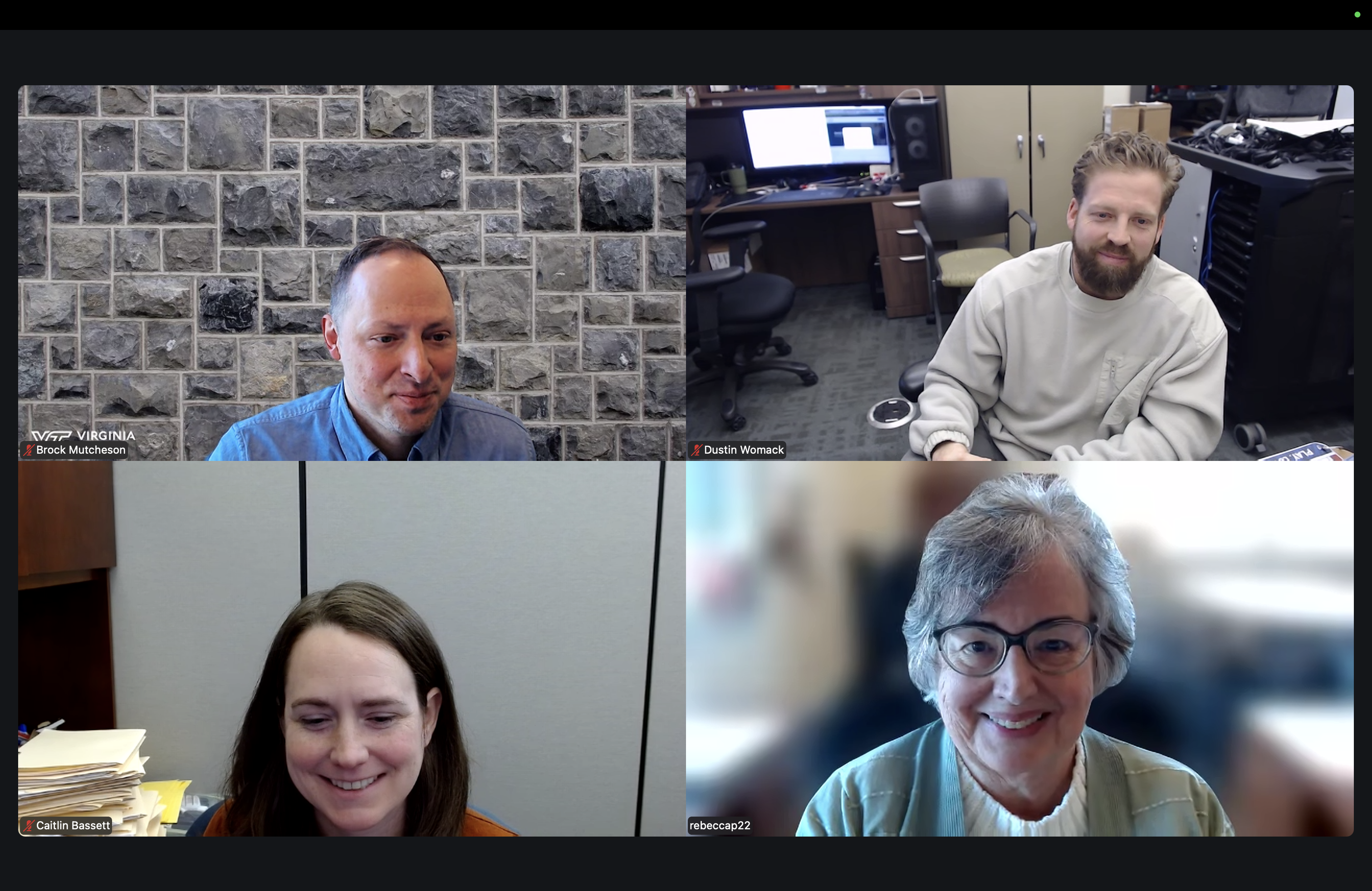
“We’ve used AI for API development processing, and it does fill some gaps of skills that you may not be super knowledgeable in,” said Dustin Womack, director of IT at the Virginia Tech Carilion School of Medicine. “I like to call it the microwave, you can put in and get the desired outcome, but you kind of miss the home cooked meal. You’re missing some of the steps in the processing and then long-term development and maintenance of a task or tool. I think that’s kind of important when we’re thinking about the risk and long-term usage of AI.”
AI is a rapidly developing and popular tool that humans will use for years and years to come. Although humans are starting to incorporate it into medical practices, patients still heavily rely on human clinicians for their medical needs. AI could heavily improve the medical industry and could change how humans go about seeking medical advice. It could also limit humans. Only time will tell.
 > THE NEWS FEED <