Virginia Tech Continues Sustainable Practices in Dining Halls

By Sean Weinstock

With a return to the school year, Virginia Tech continues its efforts to create a more sustainable packaging system for all campus dining facilities.

“Several new initiatives are on the horizon and on-going, said Emily Williams, Dining Services Sustainability Manager. “We are continuously working on transitioning from single-use plastics to compostable options”.

In 2020 Virginia Tech adopted the Climate Action Commitment dedicating itself to being a leader in climate action to the community, the commonwealth, and the world. One of the key tenets of the commitment was for Virginia Tech to become a zero-waste campus by 2030. Dining Services is playing a key role in this effort.

Over the summer Virginia Tech Dining Services began updating packaging systems and incorporating new methods to reduce waste. One of the first steps was implementing new plastic containers that can be returned to dining halls. Single use plastics is one of the biggest sources of waste at the university. Another more recent change was the removal of plastic bags and water cups from all dining facilities. The removal of plastic bags aligns with a broader statewide initiative to charge for or remove plastic bags from many retail locations. “At the start of the semester I didn’t really notice that they were gone, but now not having them has made picking up food a little more annoying,” said Ryan Erickson, Virginia Tech student. While some students are less than thrilled with the changes in packaging, the sustainability team is confident that students will adjust, and the benefits far outweigh any inconvenience. “There has been some concern about the reduction of plastic bags in our dining centers,” said Williams. “We understand that plastic bags are a convenient option, and this change can be challenging for those accustomed to using them.”

Additionally, a new reusable tracking system is now being tested, starting at the West End Dining Hall. The program is called the West End Pilot Program. Sponsored by GrubHub and Topanga, the program is designed to track the reusable food containers so they can be returned properly and be ready for use again. Food delivery and carry out containers are another major source of plastic waste and developing a viable mechanism to switch to multiple use options is another important element of the university’s sustainability program.  “The pilot at West End has only been active for a little over a week but initial results are promising”, said Williams. “We are observing about an 89% return rate for containers; this marks a significant improvement compared to past semesters.” Since the start of the semester and the Pilot, the sustainability team has seen over 2,700 containers used and returned by Virginia Tech customers.

As with most sustainability and recycling efforts, separating materials early in the process is critical to the success of the initiative. This semester students in most dining facilities were greeted by new signage providing students with clear guidance on how to properly dispose of waste. In addition to signage, trash receptacles contain unique icons and color coding designed to make it easier for students to identify the appropriate bins at a quick glance, thereby increasing the likelihood of correct waste disposal. Having a universal system across all dining halls ensures consistency, which helps reinforce proper sorting habits. This new signage is intended to enhance front-end sorting by aligning student behavior with established back-end practices with the ultimate goal of bridging the gap between students’ waste disposal actions and Dining Services’ sustainability goals.

Efficiently disposing of organic waste is another important pillar of Virginia Tech’s sustainability program. Southgate Food Center has now implemented a Biodigester into their dining hall. A Biodigester works by using a process called aerobic digestion, to break down food waste by turning it into gray water and adding it into the plumbing system. Gray water requires less sewage treatment and can be used for gardening and other uses. The first Biodigester was implemented into Southgate Food Center in January 2024. “There are plans to explore the expansion of biodigesters to other dining facilities in the future”, said Williams. “The technology has proven to be quite effective at Southgate, and there is a strong desire to extend its use across more locations”. Virginia Tech’s sustainability team does not have a current timeline on when new biodigesters will be seen in dining facilities but assure that there are plans for more.

The Dining Facilities office does not operate in a vacuum and actively collaborates with various environmental and sustainability groups at Virginia Tech. “I work closely with other sustainable departments on campus, including the Office of Sustainability and Waste Management,” said Williams. “Additionally, I engage with student groups such as Rhizome, the Honors College, and several classes within the College of Agriculture and Life Sciences. The office is continually exploring new opportunities for collaboration to further our sustainability goals and support student involvement in these initiatives.”

Williams emphasized that although progress has been made, it is still early days, and much work remains to achieve the university’s sustainability goals. There are several new initiatives on the horizon, many with a focus on transitioning from single-use plastics to compostable options. “We have hundreds of different items to convert and it’s something that can be time-consuming to complete,” said Williams.

Another important sustainability focus area is increasing local purchasing of produce and other food products. Buying locally supports local businesses and reduces the carbon footprint associated with transporting food across the countries. The Dining Services office has internal goals to increase local purchasing. There is also an effort to expand the availability of organic products available to students. The Dining Services offices has an outreach and marketing program that targets local farmers.

With all of these new plans being set in motion at Virginia tech, there still comes the matter of cost. “Our primary goal as a department is to support the campus in achieving its Climate Action Commitment goals, this can sometimes come as an added expense,” said Williams. “We believe that the long-term benefits of these initiatives, both in terms of environmental impact and alignment with our sustainability objectives, outweigh the immediate costs”.

Virginia Tech Students Prepare to Vote

By Spencer Davidson

Virginia Tech students are being encouraged to register to vote before Oct. 15 from a variety of groups on campus.  

While the issue appears to be a concern of student engagement, some voter registration groups have additional goals during classroom visits.

Traditional grassroots campaigns spread the word to encourage students to register ahead of elections, whether for a primary, congressional or presidential race. Recently, however, organized campaigns such as NextGen America have suggested students register in Blacksburg.

The organization’s representatives have visited Virginia Tech classrooms to present an argument: Students spend anywhere from nine to 12 months of the year in the town limits. They should vote for a delegate who represents the students as equally as town residents. So, Virginia Tech students should register to vote in Blacksburg. 

Peyton Dofflemyer, a Virginia Tech senior majoring in graphic design, has not formally affiliated with any of the local “Get Out the Vote” campaigns but has taken it upon herself to encourage her peers to vote regardless. 

“It feels like there’s a lot of apathy surrounding the idea of voting, especially for younger or newer voters,” said Dofflemyer. “These feelings are what hold some people back from casting their ballots.” 

 
While campaigning personally, Dofflemyer is also part of a movement in the Virginia Tech School of Visual Arts to create and distribute informational flyers around campus encouraging students to register. 

“I think enthusiasm is important, and being a voice that’s coming from someone else who’s in the same boat as you can really be what pushes some people to see the value in it,” Dofflemyer said. 

Dofflemyer also believes that it is important to raise voter awareness as early as possible, as it can encourage students to participate in state and local elections. She further argues these elections are more important in terms of voter turnout. 

According to VT Engage, the university-affiliated Center for Leadership and Service Learning, which compiles statistics about student voter registration, during the 2020 presidential election, while 90.7% of students eligible were registered to vote, only 80.4% actually voted.  

In 2016 VT Engage reported a 73% actual voting rate for the presidential election, and while this demonstrates a 15.1% increase, other groups are aiming to fill the remaining 9.3% for the 2024 election. 

According to Dr. Cayce Myers, a communication law professor in the Virginia Tech School of Communication, voter registration groups often aggressively target large lecture-based classrooms in order to yield a higher return of voters.

Myers also believes that while faculty are supportive of the push to encourage students to register, they may not be aware of the underlying motivations of the organizations that target such classrooms, or that they have a right to say no to such visits. 

NextGen America is an organization that aims to improve voter registration on college campuses including Virginia Tech. The organization is paid for in part by NextGen Climate Action Committee, a super PAC which aims to raise awareness of climate-related issues among young voters. 

According to their mission statement, “NextGen America is the nation’s largest youth voting organization, using innovative digital and field strategies to turn out young voters in key states. We’re empowering the largest and most diverse generation in American history through voter education, registration, and mobilization. At NextGen, we share lessons learned with the broader progressive community to build a stronger and more effective democracy. By working with young people across the country, we’re shaping a government that respects us, reflects us, and represents us — not just for an election cycle but for generations to come.”

In classroom visits, NextGen America has used tactics such as having representatives visit early in the instruction period. The representatives share their platform for registering to vote in Blacksburg. Following class the representatives wait in the hallway to collect completed registration forms from students.

Once students are registered to vote, their name, address, and party affiliation becomes public. According to Virginia Code section 24.2-406, the Virginia Department of Elections can “furnish at reasonable price” lists of persons who voted at any primary, special, or general election held in the preceding four years to political party committees, and political action committees which can only collect such records for political purposes only.

The statute additionally cites that the Commonwealth can sell “members of the public or a nonprofit organization seeking to promote voter participation and registration by means of a communication or mailing without intimidation or pressure exerted on the recipient, for that purpose only.”

“I’ve always had an awareness for voter registration and there’s also been leveraging of voter registration drives in classrooms,” said Myers. “I think it largely is presented as a nonpartisan drive, although there are questions around whether or not it actually is partisan, and that’s to benefit one party or another.” 

Myers also believes this raises concerns of transparency regarding political speech on campus, as to whether the groups are truly nonpartisan or a political group encouraging a political registration for a certain outcome, though he also notes that classroom visits must be conducted with permission from the professor instructing the course. 

“I think that the university has to stay aware of this as a movement,” said Myers. “It’s an evolving sort of movement and in the past, there have been very aggressive attempts to do voter registration on campus by some groups with the faculty and allowing them to come to their classes.” 

NextGen America did not return requests for comment at the time of publishing, however, Myers has experienced requests for such visits in his classes and has declined to accept visits from voter registration organizations. Myers elaborated on the ethical issues raised by such visits. 

“What I think is concerning to some people is organizations that are super PACs that may be more Democratic leaning than Republican, but it could be either side– that disrupts the educational mission of the class,” Myers said. 

While the university has not addressed the issue directly, VT Engage provides resources on how to register, which voting method to use, upcoming election information, candidate information, and local governance information for university students.  

Additionally, students can view voter registration guides or utilize a personalized response form for questions not frequently asked. 

“The 2024 election season is a very tight election nationally,” Myers said. “Voter registration is a big part of changing the votes. It could be either side doing the registration because we have such a razor-thin margin in November, and I think folks are very aware of that on both sides.” 

Train track trade primes the NRV for Amtrak by 2027  

By Ainsley Cragin

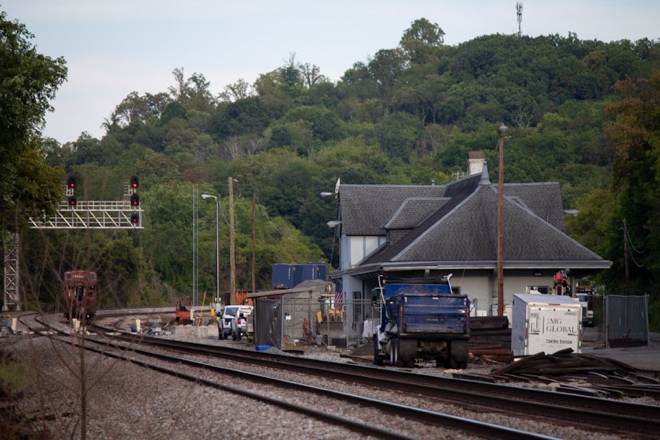
CHRISTIANSBURG, V.A. – An exchange of train tracks in Northern Virginia will bring a 121-year-old Christiansburg train station back to life.  

1906 Rail Station in Christiansburg, VA 

Virginia Passenger Rail Authority (VPRA) announced updates Sep. 5 to the New River Valley (NRV) Passenger Rail project after an unexpected purchase agreement with Norfolk Southern.  

“As early as January of this year, we were told there was no way that Norfolk Southern is going to let us on their tracks,” said D. Michael Barber, Mayor of Christiansburg.  

Colin Burch, senior planning manager for the VPRA, described the transaction as “an in-kind exchange of roughly 28 miles of the Virginian Line (V-Line) for about 24 miles of the Manassas Line (M-Line).”  

“This new agreement with Norfolk Southern allows passenger rail to reach Christiansburg years earlier and at a better location,” said Secretary of Transportation Shep Miller after the VPRA announcement Thursday.  

Barber says it will take about one and a half years to prepare the site and restore the 1906 Passenger Rail Station in Cambria to full operation. If the project stays on track, the doors to the new NRV passenger station will open in 2027.  

“We’d like to think sooner,” Barber said, “but we don’t know. We’re just much closer than we were when we started.”  

In 2022, the VPRA purchased the V-Line from Norfolk Southern as part of a plan to build a passenger station in the NRV. 

According to Barber, the discovery of a mile-long freight tunnel under Route 460 derailed plans to bring passenger rail to Christiansburg using the V-Line section of track.  

“Just to renovate that tunnel was going to be $740 million – in addition to another $350 million to build the station and the other tracks,” Barber said, “And so it was a $1 billion set-up. The VPRA and the state, rightfully so, didn’t want to commit that kind of money.”  

Barber said Norfolk Southern decided in May of this year that they were interested in making a deal with the VPRA to buy back the V-Line.  

Burch explained the new trade deal offered an opportunity to exchange the V-Line track for a portion of Norfolk Southern’s Seminary Passage, a section of the M-Line tracks in Northern Virginia.  

“The Seminary Passage piece of the agreement was important for the Commonwealth,” Burch said, “because it would allow Virginia Railway Express (VRE) – which is the commuter rail line serving Northern Virginia and D.C. commuters – to improve service with weekend and late-night service.” 

The trade provides an opportunity for the Commonwealth to maintain the NRV budget while supporting intercity rail and enabling additional services in Northern Virginia.  

Sec. Miller said, “the deal achieves all of this while saving nearly $100 million.”  

As Chairman of the Passenger Rail Station Authority, Barber made it a priority to avoid spending unnecessary funds to create an artfully designed passenger station. 

“They projected the cost of that station to get everything ready is about $4.5 million, but we were looking at the potential of hundreds of millions to build a station,” Barber said, “I told my group we’re not going to build a monument to an architect.” 

According to Barber, 20 of 29 possible sites for the New River Valley project were in Christiansburg, VA. The coveted Cambria location – made possible by the track exchange deal – served the Cambria neighborhood in Christiansburg from 1906-1979.  

“I’m just over the moon that we’re going to be able to restore that building,” Barber said, “My goal all along has been to restore that station because, when I was a kid, I rode that train every so often going out to Lynchburg.”  

Located on a well-kept road near the Christiansburg Aquatic Center, the rail station will be easy to access by car and will continue to be served by public transportation.   

According to Barber, the renovation project will include the addition of about 150 parking spaces and two canopy-covered areas. In the coming months, crews will begin the process of cleaning and restoring the existing building to meet safety and ADA standards. 

The new Cambria station could prompt a steady migration of travelers toward Christiansburg.  

According to Burch, “when gas prices are higher, people tend to take the train more. And we typically see higher ridership during the holidays, summer travel months, and college spring breaks.”  

The New River Valley Regional Commision assisted in forecasting passenger demand by using public transportation data.  

“Essentially they determined that roughly 1 million people travel from the NRV to Washington, D.C. and the Northeast Corridor every year,” Burch said.  

“I think the increased traffic in the Cambria section of Christiansburg will be very beneficial,” Barber said, “they’re figuring around 40,000 riders a year.” 

According to Barber, two trains will come through the station each day. One will depart from the station at 4:30 a.m. and the other will likely depart around midday.  

“We could see a coffee shop or even a train related sales type thing, that would be great,” Barber said.  

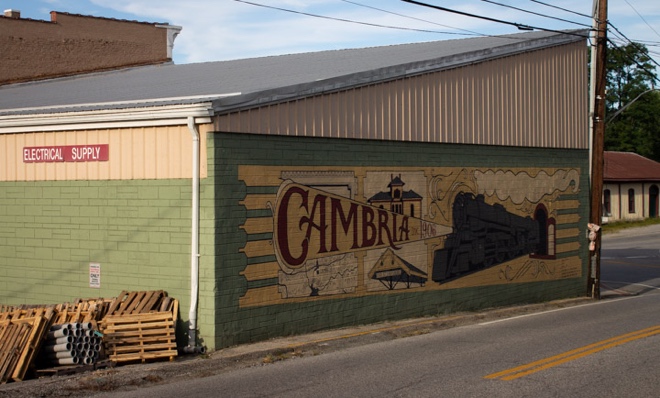
In 2023 the Town of Christiansburg commissioned a mural depicting the station’s history.  

“We’ve already been kind of anticipating this, there is a beautiful mural depicting Cambria and the train history and all this kind of stuff,” Barber said, “it’s right next to the station, right where the train will come.”  

According to Barber, there have likely been no people allowed to enter the 1906 station since late 1979.  

“They’ve got to clean up and build another maintenance shop and do some maintenence type things.” Barber said, “So it’ll, I don’t really expect see any personality to the station itself for at least another year and a half, possibly.” 

Adding a passenger train station near the Virginia Tech and Radford University campuses may increase student ridership, reducing the heavy traffic associated with college events in the NRV.  

Mary Biggs, the legislative liaison for Montgomery County to the New River Valley Passenger Rail Station Authority and chair of the Montgomery County Board of Supervisors, said, “The investment from the state, Norfolk Southern, and our localities will benefit our citizens, our universities and their students, businesses and economic development for our region.  It is a much needed asset for our area.” 

SOL Results are in for the New River Valley

By Caroline Reed

As students adjust to a new version of normal, so are the Standard of Learning (SOL) scores across the New River Valley.  

After looking at the data released by the Department of Education, numbers are still not where they were in prior years, even after 2020 when the cutoff score was lowered for math and reading. Naturally, there is worry from student, teachers, and parents alike about the post pandemic numbers.

Overall, the passing rate looks very similar to the previous year with a slight improvement in math. According to the Virginia Mercury, the proficient score is “evidence that the student demonstrated the skills and knowledge defined in the Standards of Learning as appropriate for the grade level or course.”

After students returned to in-person classes, in 2021, there was a jump in both the math and reading categories. But while questions rise about the accuracy and necessity of standardized testing, Superintendent of Salem City Schools, Dr. Curtis Hicks is excited about this year’s results looking forward to making the necessary adjustments to ensure that every student succeeds, whatever that may look like.

“I think SOLs accurately reflect how well students know and can demonstrate their acquisition of learning standards.  The only thing I would add is that SOL tests are only one of the many ways that schools impact children and communities,” said Hicks.

Statewide we have seen 70% of schools show improvement from the previous year. WSLS 10 News reports Roanoke City scored higher in all subjects except history. Montgomery Country tested above the state average as well. While Salem places 32nd in the Commonwealth, Daleville, and Bedford also saw major improvements.

(Data found at https://doe.virginia.gov/data-policy-funding/data-reports/statistics-reports/sol-test-pass-rates-other-results)

But in Pulaski County, SOL numbers still fall below pre-pandemic levels, putting it at No. 95 out of 131 school districts. Last year only 18 schools in all of Virginia remained consistent or improved their pre-pandemic scores.

Many parents and teachers hear that and become fearful, but success in the education system is not linear, and unfortunately takes time. “The key is to focus on what matters most. I think sometimes we add other “requirements” to the point of getting in the way of what matters most, or in some cases, we continue to do things because that’s what we have always done even though the standards have changed,” said Hicks.

But with the help of the state, there are many ideas and plans in place to help tackle some of the obstacles that are opposing the SOL results: tutoring, absenteeism, cellphones, and many other factors that impact a students’ ability to learn.

Gov. Youngkin’s “All In Virginia” plan is an education bill trying to reteach kids how to learn in classrooms after growing accustomed to learning at home focusing on three major components: attendance, literacy, and learning.

With the “All In Virginia” education plan, there is hope for those in charge. As chronic absenteeism is down 16% from the previous school year.

The DOE of Virginia released a statement the end of August: “These [SOL] results show that Virginia students are beginning to recover from the post-pandemic learning loss they suffered after 2020 and 2021. But the results also show that we must continue to focus every day on helping them catch up to pre-pandemic levels and move ahead,” said Superintendent of Public Instruction Lisa Coons.

The “All In” house bill increased state funding; an approach that encourages school districts focus 70% of fund on tutoring, 20% on the VA Literacy Act and 10% on chronic absenteeism. This budget bill was signed on September 14th, 2023.

As the pandemic changed the states approach to education, the overall test itself has also changed. “In general, the SOLs continue to move away from basic recall fixed response items to questions that require more application and explanation of your answers.  As a result, students will have to have a greater depth of understanding regarding the standards and know how to apply their learning in new situations,” said Hicks.

The understanding we gain from the testing provides numerical understanding of our education. But from teachers to students, the fear of failure and pressure can be overwhelming. For some students passing an SOL could be the final achievement needed to graduate. However, if a student fails tutoring and retesting are required in order to meet the requirement.

Darlene Marshall, retired elementary school teacher and now substitute, shares some encouragement to teachers: “More tests do give the power to gather more data, but it is at the expense of good quality teaching. Teaching is a craft. I am a believer in teaching the whole child to do what they can become to be lifelong learners. Teachers have so much pressure and on them today and I just want to hug and thank them all,” said Marshall.

But at the end of the day, the pressure does not rely amongst the shoulders of the individual but an understanding into how overall schools and districts are learning. The data that comes back each year is crucial to those in charge.

“I would say we are measuring both students and teachers but using the results to rate schools not children. Students and families need to know how well they are progressing, but we never use scores to label or rate students,” Salem’s Superintendent continues, “it is important for schools to use the data to make the changes necessary to propel learning further,” said Hicks

Despite all the new plans, tests, and other implemented standards and rules, patience and kindness to teachers and students alike is the main priority. Making sure they have the help and guidance they need to succeed. “I would just say that you have to be able to block out the noise and the distractions and focus on what matters most,” said Hicks to encourage teachers and students.  

Students everywhere have suffered at the hands of Covid-19, mental health issues, and teacher shortages. But at a state and local level there are those that care. Those striving to improve the systems in place, adapting to a new generation of both students and teachers.

Pawpaw season in the New River Valley

By Emelia Delaporte

As the first crisp notes of autumn begin to cut through the air, somewhere nearby North America’s largest native fruit falls quietly to the ground. Bewilderingly tropical and often overlooked, the pawpaw is in season and here to stay.

Pawpaws in the New River Valley – they ripen in early September. For a few weeks, they hold a cultural spotlight in the area. With festivals, tasting events and foraging available, this is possibly the best time of year to learn about this unique fruit – and why it is not commercially available. 

Despite their lack of year-round availability, and their lack of availability in stores in general, the pawpaw has a loyal following as an edible native. People want it in their hands, in their kitchens and in their yards. Passionate growers like Jesse Kelly are working to make that possible. 

“Just in Virginia, the extremes of flavor…. [It’s] often described from banana to mango to cardamom, almost,” said Kelly, executive director of the nonprofit Nursery Natives. “Or a caramel-type flavoring.”

While there is not an abundance of pawpaw-related recipes, due to their lack of longevity, fans find them great to eat as they are or find new ways to use them. Common recipes include pawpaw bread, pawpaw ice cream, pawpaw salsa and more. 

Ava Pope, a landowner in Giles County, sources her pawpaws from two trees that her partner planted around 25 years ago. Purchasing saplings has the potential to be wildly successful. With six or seven years of patience, a healthy tree can produce hundreds of fruit with each harvest.

“Trees that produce, we have two,” Pope said. “Between those two trees, we’ve gotten anywhere between 100 and 200 pounds per season.”

Her average pawpaw weighs about a third of a pound, and her biggest one weighs three quarters of a pound. Her two producing trees are six to eight inches in diameter at breast height and around fifteen feet tall.

Pope also has pawpaw trees on her property that were not human-planted. She is not sure whether these other trees were completely wild or whether they sprouted from seeds dispersed from her planted trees. 

Either way, typically these other trees do not produce. This could be for a variety of reasons; for starters, they receive less light than the two fruiting trees, which were carefully positioned. These other trees are smaller, potentially from being of a more wild stock, or also due to lack of sunlight, or both. 

Additionally, they might be clones of each other, which would limit fertilization necessary to produce fruit. Wild pawpaws sprout most often from suckers instead of seeds. Suckers are sprouts from the roots of an existing tree, resulting in a genetic clone of the original tree. To that end, pawpaws in the wild often exist in colonies, or clonal stands. For those stands to bear fruit, pollen must come from pawpaws outside of the colony. 

The two fruiting trees are enough for Pope, though. For her and her eight year old son, Onyx, their fruiting trees are fun to eat fresh, to give away to loved ones and to sell to festivals, farms and more.

“Before we realized that lots of people liked them, they would just rot in the backyard. I think it was five or six years ago I realized, oh, maybe we should do something with these,” Pope said.

Growing your own pawpaws is not always easy, but it does not need to be complicated. John Peterson, an advanced lab specialist at Virginia Tech, grows saplings at his farm.

“I have had really good luck planting larger pawpaws. If they’re three feet high, containerized – almost guaranteed success,” Peterson said. “ Eight inch high, bare root? Almost guaranteed they’ll die. All my successful pawpaws were tall when I planted them.”  

If starting from seed, prospective growers will need to wait a while. Pawpaws need a cold, moist stratification period to complete their embryo dormancy period. Putting fresh seeds in damp paper towels in the fridge through the winter will mimic them spending the winter in the ground. Once the stratification period is over, the seeds will be better able to sprout. 

Pawpaws do best in a rich, moist soil. According to Peterson, much of their range is underlaid by limestone. This indicates also that they do better with a less acidic – or, sweet – soil. Trees like sugar maple, bitternut hickory and American basswood are possible associates. 

They have an expansive range – most of the eastern United States, the southern United States and the midwest have pawpaw species native to them. They even grow north into Canada. Asimina triloba, the common pawpaw, is the local species to the New River Valley and has the greatest range of the multiple species in the Asimina genus. 

So far, Peterson says, the range is not contracting or expanding with climate change. However, the tree seems to be proliferating within its pre-existing range. Human development practices like clear-cutting are creating much more space where sunlight reaches the ground, and that is what pawpaw loves most. 

This increasing availability of the fruit itself does not mean that shoppers will see pawpaws on grocery store shelves any time soon. 

“In order to make [pawpaws] a marketable product, we have to figure out how to store them and ship them… once you’ve picked them, the fruits are only good for like, two days,” Peterson said. “They really fall apart fast, they bruise easily – they are, I think, a terrible marketable product.”

For the coming month, though, they will be marketed at festivals. The two festivals being advertised in the New River Valley are the 2024 Paw Paw Festival in Pearisburg on Sept. 28 and 29 and the New River PawPaw Fest in Radford on Oct. 5. 

Hopefully someday, growers and scientists will figure out how to make the fruits last longer. Until then, the most reliable way to get pawpaws will be to know where to forage, to go to festivals or to grow them in your own backyard.

What’s the “Hokie Plague”? It’s a little bit of everything!

As empty classrooms fill up after a lonely summer, there’s a small chorus of keyboard clicking, backpack zipping, and chatter among eager students as a hopeful year begins. But that back-to-school melody is paired with the disgruntled harmony of coughing, sneezing and whatever sound that kid behind you is making who you swear is hacking up a lung.

At Virginia Tech, we call it the Hokie Plague. It’s a sinister sickness that hits almost every student at some point in the first month of the semester and drives a motivation to make it to class every day to a moment of I can’t leave my bed, I feel horrible! But this “Hokie Plague” isn’t new to Blacksburg, and like many seniors, it isn’t hoping to leave campus anytime soon.

“Definitely heard that over many years,” joked Monica Martin, the Health Quality Manager at Schiffert Health Center at Virginia Tech. “It’s sort of a love-hate relationship. Because we get that students are like, ‘Oh, it’s the Hokie Plague,’ but we also want them to understand it’s not just one thing that’s going around getting everybody, it’s a number of viruses.”

So, there you have it – As much as we all would love to see the “Hokie Plague” listed in the Center for Disease Control as one of the deathliest illnesses (Because, at the moment, it really feels deathly,) it isn’t just one thing. It is not just Virginia Tech that battles an illness at the beginning of each year. Talk to anyone on a college campus, and they’ll tell you the witty name they use for the campus-wide sickness – Like James Madison’s “JMFlu,” Penn State’s “PSFlu” and Virginia Military Institute’s “Barracks Plague.”

If you were hoping for a diagnosis, CareSpot Urgent Care identifies the most common college illnesses as the flu, upper respiratory infections (“illnesses that leave you hacking, coughing and just feeling miserable”), mononucleosis (mono), and stomach bugs.

And let’s not forget that pesky pandemic that banned us from the classrooms for nearly a year. Although many people have gotten their vaccines, Coronavirus is still on the loose, hoping to latch onto anyone.

“I know across the country there was some spikes at the end of summer, so I’m sure there is some circulating,” said Martin. She’s not wrong – The Virginia Department of Health reports that 0.56% of all emergency visits resulted in COVID-19 diagnoses in the first week of April this year. Four months later, in the first week of August, that rate was 2.78%. The highest rate in August for diagnoses was in the third week of August, where it was 3.24%… Right around the same time students are coming back to school.

Students gathered outside Lavery Hall during the first week of school.

“You have thousands of individuals coming into a very concentrated area in a short period of time. And so as everybody convenes back on campus, they bring with them any germs, bacteria and viruses that they may be carrying with them, and that are just in our environment in general,” said Martin. “If you think of it as like a pool, it’s an empty pool. And then you throw everybody into this pool, everybody’s going to get exposed at some point. And depending on what bacteria or viruses that [are] in our community, they kind of have different rates of how they spread and how infectious they are.”

The entire campus is that pool, and it makes it extremely difficult to avoid getting sick between dining halls, football games, dorm buildings, and downtown life. Luckily, Martin said that within the first week of school, the health center wasn’t seeing too many people coming in feeling sick.

“I think last week wasn’t terribly bad,” she said. “That’s also just the first-time students getting together. So it will take time for those all to spread and then people to develop symptoms. I think we’re starting to see some of that now after the long weekend, and individuals have been gathering together and those symptoms are now trying to show after two or three days.”

Although the possibility of sicknesses getting worse as the beginning of the semester progresses, Martin said there are steps students can take to prevent catching the “Hokie Plague.”

“The first thing I would make sure students know, and it’s the hardest one I know for folks, is if you’re sick and feeling sick you should try to stay away from others and stay away from crowds,” said Martin. “Because you are going to be the infectious person who’s spreading it around to everyone else, and that’s where it will start.”

Martin recommends that if you’re feeling that tickle in your throat or a bit of a sniffle to always mask up. Schiffert Health Center has masks available to students in the lobby and Martin said staff would be more than happy to give students any available masks if they want to stay safe.

Masks available to students at the entrance of Schiffert Health Center.

“The second one is washing hands,” continued Martin. “Obviously, it’s been drilled into us since COVID. Wash your hands, wash your hands. So that really is important, whether you’re the ill person or if you’re a well person and you are just trying to prevent getting sick.”

Even if you take every precaution possible to avoid catching the Hokie Plague, sometimes it’s inevitable. But Martin wants to assure all students that Schiffert Health Center is right on campus and willing to help if they feel themselves starting to get sick.

“If it’s the middle of the night and you’re starting to feel sick, you can make an appointment in the evening time and then there’s usually appointments the next day,” said Martin. She encourages students to schedule appointments online at the Healthy Hokies Portal. “If students are really feeling awful and ill and they have concerns that’s like ‘This feels more than just a cough or cold,’ they can call us to talk to a triage nurse and try to get in earlier if they feel like it’s urgent,” she added.

So, whatever you do this semester – Don’t be the person hacking up a lung behind someone in class. But resources are available if you find yourself coming down with the Hokie Plague.