VT adds more vegan options to dining

by Tatjana Kondraschow–
IMG_2053
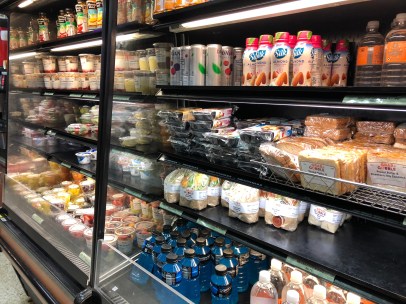
Blacksburg, Va. Feb. 19, Vegan options on display for purchase –  In each of Virginia Tech’s dining halls, one may find a refrigerated section with vegan options available for purchase.  Some of the possibilities include vegetable wraps, soy milk, and fruit. Photo by: Tatjana Kondraschow

Virginia Tech adds new menu items and additional labels on their packaging to expand food options for those who are vegan. According to the People of Ethical Treatment of Animals, a vegan is someone who does not consume meat, dairy products, and virtually any food source that is derived from an animal.  After numerous requests from students, Virginia Tech’s dining hall coordinator’s agreed to bring in more vegan options.

One of those coordinators being the Executive Chef of West End Market, Mark Bratton, who claims, “We’ve heard the requests, so we want to add more vegan options but also ensure that our food that is vegan is not coming in contact with any animal products. So we use separate pans and stovetops.”

Vegan options that are available at West End Market include desserts, quesadillas, and numerous vegetable and fruit dishes. Bratton said he sees the highest increase in vegan options in their Leaf and Ladle food stand. Some of the new menu items in Leaf and Ladle include a braised tempeh dish and an edamame rice bowl.

Bratton is most proud of his partnership with the vegan company, Daiya, which is his main provider for food items such as vegan cheese, sour cream, and yogurt. Bratton hopes to continue to expand his use of vegan cheese in food.

Virginia Tech student and current vegan, Reilly Scott, said, “As a vegan, it can be really hard for me to find foods that align with my dietary restrictions, but I am happy to see a steady increase in vegan options. One of my favorite meals at West End is the vegetable primavera pasta.”

Scott is not alone in her choice to be vegan, according to the research firm, Global Data, there has been a 600 percent increase in people claiming they are vegan. This means that out of every six U.S. consumers, one is vegan.

With this increase in veganism, the dining halls have also added new labels to their packaging that classify what is vegan. For example, the red pepper hummus has always been considered a vegan dish but it was not advertised as so, now there is a label that states that the dip is vegan.

However, Bratton claims there is still a lot of gray areas related to the process of labeling. One of the examples Bratton gives is about the vegan chocolate cake. On the packaging of the cakes, it says vegan, but dining services also have to place a disclaimer that states the ingredients in the cake are made in a factory where there is a chance that it could come in contact with eggs.

“I think it could have been great if I had known freshmen year what was vegan, I would have had a lot more options,” Scott said.

Bratton plans to add even more vegan items in the future such as baked ziti, an Asian vegetable soup, and ice cream.


Facing reality: the issue of drinking and driving in college towns

Blacksburg, Va., Feb. 20 – Downtown Blacksburg: The stretch of road between the intersections of Alumni Mall and Clay Street with South Main Street contains the 16 bars of Blacksburg’s downtown area, right next to Virginia Tech’s campus.  Photo: Sara Gordon

by Sara Gordon–

According to the Magnitude of and Trends in Alcohol-Related Mortality and Morbidity Among U.S. College Students Ages 18-24 study published in 2005, 3,360,000 college students across the country between the ages of 18 and 24 drove under the influence of alcohol. While there are no overarching statistics regarding whether these students got caught and potentially received a charge for Driving Under the Influence (DUI), the issue is clear: college students getting behind the wheel of a car after they have consumed alcohol.

As a university with approximately 35,000 students enrolled each school year at Virginia Tech, with nearly half of those students being of legal drinking age, the issue of alcohol-related incidents is much higher. This is particularly true in a town where most students only have to drive 5-10 minutes to reach their destination. 16 bars are located right in downtown Blacksburg, along with a multitude of beer, wine, and liquor stores also in close proximity.

Assistant Director of Virginia Tech Hokie Wellness, David Andrews, sees a common misconception among students believing that as long as they remain under the legal blood alcohol concentration (BAC) limit of .08, they are fine to drive. “There’s a disconnect between ‘don’t be drunk and drive’ and ‘don’t be drinking at all and drive.’ It doesn’t take much, like I said, to become impaired to some degree, regardless of [what] might happen legally or not,” he said.
Click the image above to be taken to a site for an interactive version of this infographic.

If a driver’s BAC is below the legal limit, their ability to drive safely is still impaired. According to the Virginia Department of Motor Vehicles, “drunk driving” refers to driving with a BAC at the level where a person can be arrested for a DUI, while impaired driving means that a person’s judgment and response time are affected much earlier before they reach a BAC of .08.

Results of the most recent National College Health Assessment, which is completed every two years at Virginia Tech, revealed 22% of college students, out of the approximately 1000 students that responded, reported driving after consuming any amount of alcohol in the past 30 days and 1.4% reported driving after having five or more drinks in the past 30 days. Statistics from the Virginia Tech Police Department show a total of 62 DUI arrests made during the 2016-2017, 2017-2018, and 2018-2019 school years.

Sergeant David Tribble of VTPD has applied for the DMV DUI Grant for the past four years, which allocates government funds to address the issue of drinking and driving to all of the local departments. “Virginia Tech has been able to get some of that money to pay for extra officers to be on the street, looking specifically for alcohol or drug-impaired drivers,” he said.

According to Sergeant Tribble, curbing the issue of drinking and driving all comes down to accountability: “You’re not going to stop people from drinking, but the main thing you want to do is get them to stop driving. If you’ve had a few drinks, don’t plan on driving home, find another way.”

VT cadet looks to future after miraculous recovery

elmers fall (1 of 2)
Blacksburg, Va., Nov. 28 – No entry: Elmer fell from the upper area of the cascade falls into the freezing water below. Photo: Zack Perhach

by Zack Perhach–

The last thing Christian Elmer, a Virginia Tech student and Cadet, remembers before falling off the top of the Cascades waterfall in Giles County Virginia, was his friend lunging to grab him. The next thing he remembers was being pulled out of the water, laying on his back waiting for the slick water rescue team to come to help him.

That team would arrive three hours later and would evacuate Elmer by helicopter to Carilion Roanoke Memorial Hospital. The doctors would tell him his injuries: his right hip, both elbows, and his neck had broken during the 69-foot fall.

“I thought I lost my scholarship, my job in the army, and then I thought I might not be able to walk again,” said Elmer.

The recovery process for Elmer included multiple surgeries and months of physical therapy. Friends and family raised thousands of dollars to cover his medical expenses. His recovery progressed quickly, and within four months Elmer had begun lifting weights in the gym.

To get cleared for service, Elmer had to compile a medical report from all 12 doctors he saw during his recovery. He sent the 1,300-page document to the Army Surgeon General. Within the month he submitted it, Elmer had received the verdict.

“I got the email so fast I thought ‘there’s no way I got approved if they’re replying this fast,’” said Elmer, “but my medical determination was approved, so I’m good to serve.”


The Army clearly defines the medical conditions that can limit or disqualify a person from service. Elmer’s main concerns were his elbows and hips, both of which the army has specific ranges of motion that are deemed acceptable.

With his medical determination now cleared, Elmer’s eyes are set on his future in the Army. Just this month, he received his assignment as an explosive ordnance disposal or EOD technician. A job he had a 5-7 percent chance of receiving. Elmer had to go through multiple interviews to join the EOD team, and he’s excited to join a small community in the Army.

“I had to have a good attitude from the start and I knew that,” said Elmer, “I truly believe that your mind and your body are so connected that if you have a bad attitude, you won’t heal as fast or as well as you could.”

Elmer is set to graduate from Virginia Tech in December. The New Jersey native will then be working in Richmond as an EOD technician in the summer.

The gift of walking

IMG_0145
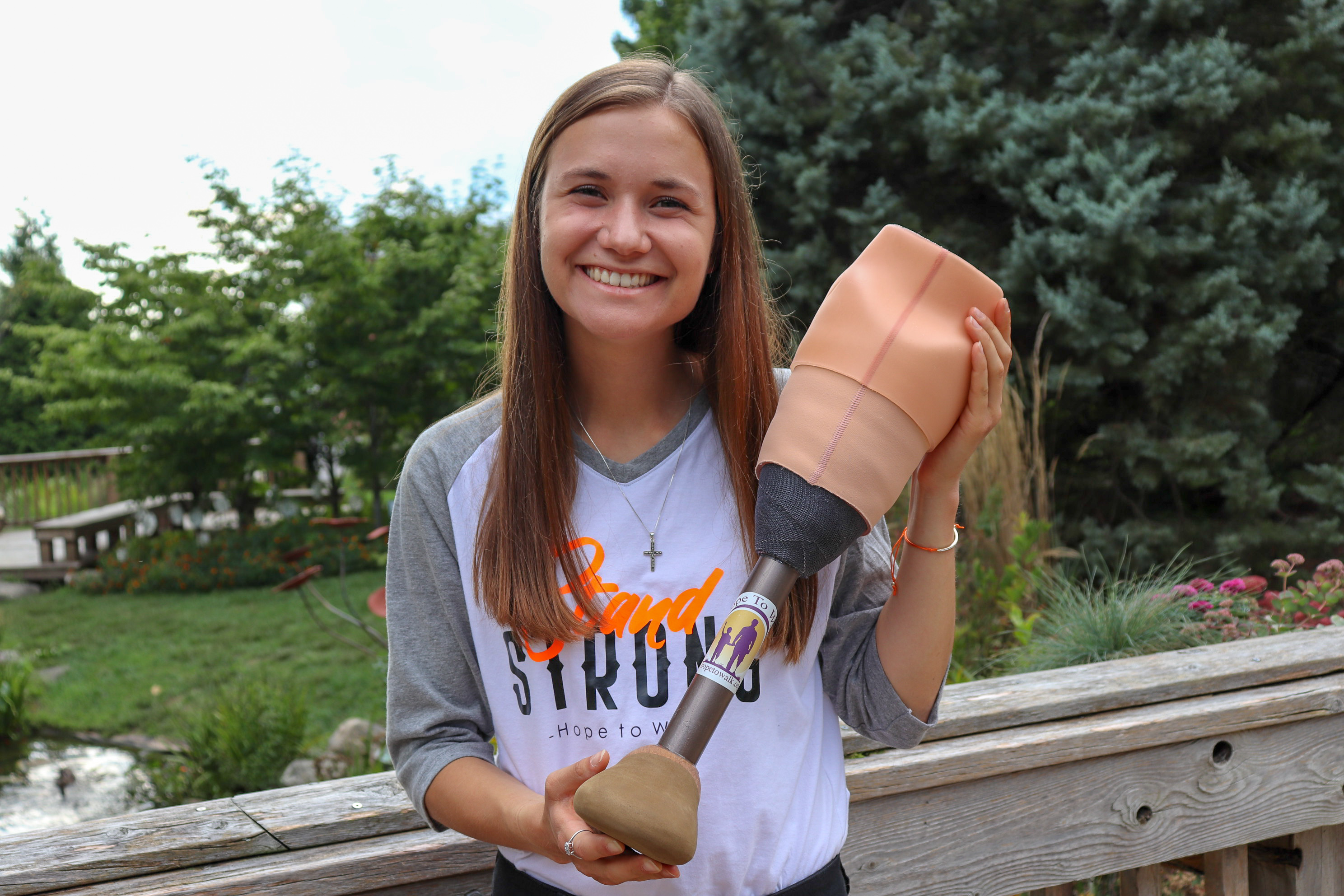
Blacksburg, Va., Nov. 28- Homecoming court: Virginia Tech senior Allison Burns represented Hope to Walk as a queen candidate, finishing second in the voting. Photo: Billy Parvatam

by Billy Parvatam

BLACKSBURG, Va.- A local nonprofit in the New River Valley is working with Virginia Tech students to help others walk again around the world.

Hope to Walk is an organization dedicated to providing affordable prosthetic legs for those in need. Created in 2013 by Phil Johnson and Michael Mabry, the duo was able to create a design that not only was cheaper than standard costs but one that they could give to patients for free.

According to a Jordan Thomas Foundation article, prosthetics can cost thousands of dollars for amputees. Hope to Walk however has been able to make these legs using materials that can be found in a hardware store such as, PVC pipes, wood, and other welding tools. The total cost, as a result, comes out to be around $100. The organization has been able to provide these legs across the globe while also training locals in the community on how to construct them. Countries, where there is a current focus, include Honduras, Guatemala, Haiti, and Vietnam.   

The nonprofit has also made its presence known on Virginia Tech’s campus. Senior Allison Burns represented Hope to Walk on the homecoming court as her platform earlier this semester. Burns, who finished second in the queen voting, said her campaign was unique because people could make a difference “with more than just a vote.” Through selling t-shirts and other donations, the campaign was able to raise $3000 or the equivalent of 30 legs for Hope to Walk.

Although Burns did not become homecoming queen, she believes victory was achieved a different way.

“We totally won in the way we had some many people at Virginia Tech encouraged and wanting to invest in the organization,” she said. “That was my whole heart and vision behind it.”

Burns is not the only student associated with Hope to Walk. Junior Brooke Merryman got involved her freshman year due to her interest in prosthetics and traveled with them to Honduras to help in their ventures. Currently, she is involved in a research project in the mechanical engineering department with the next step being to redesign the prosthetic to fit above the knee amputees, as the organization had to previously turn away such patients because they had not created one yet. According to Merryman, the group will test the knees in Peru in Jan. 2019, and if all goes well Hope to Walk will be able to “take it and run with it.”

Other students will have the opportunity to volunteer with Hope to Walk as well. The organization will partner with Burns in the spring to host a workshop where those who come will help in the construction of the leg.

“We want to be able to bring people together and get them involved,” Burns said. “In turn, we can give back to individuals in need.”


Hokies assist fellow student with muscular dystrophy

Sara Margagret Cooking for Matthew
Blacksburg, Va., Oct. 2 – THE CARE OF A FRIEND: Muscular dystrophy patient, Matthew Lefkowitz, enjoys spending quality time with one of his personal attendants, Sara Margaret Kelly. Photo: Riley Wyant


by Riley Wyant–

When Matthew Letkowitz was accepted to Virginia Tech in 2015, many people in his life doubted that he would be able to successfully live in a college environment with his disability.

“In my early childhood, I was diagnosed with an extremely rare mutation of limb-girdle muscular dystrophy (LGMD) that had never been discovered before,” said Lefkowitz.

According to the Muscular Dystrophy Association, LMGD isn’t really one disease. It’s a group of disorders affecting voluntary muscles, mainly those around the hips and shoulders. Over time, the person with LGMD loses muscle bulk and strength and he or she may need a power wheelchair or scooter.

Bound to a wheelchair, Lefkowitz knew that coming to college meant he would need an immense amount of help from individuals he never had met.

“I knew going into college initially…at the same time that I would be gaining more independence, I would almost be taking a step back,” he said. “I’m putting my life and faith in someone else’s hands.”

Lefkowitz and his family created his team in 2015 through a simple advertisement, which led him to find 14 personal care attendants. Now, in 2018, “Matthew’s Army,” as he likes to call it, has risen to 44 student personal aides purely through the means of mutual friends and word of mouth.

“Each year that it has expanded has been such a beautiful thing,” claimed Lefkowitz. “Without them, I can’t be here. I rely on them day in and day out.”

Each personal care attendant has several duties to ensure that he remains safe and comfortable. Lefkowitz likes to use the analogy of being an infant; even though he is intellectually mature, he needs all of the care that an infant would need in order to survive.

“We help bathe him, dress him, cook for him and do many other personal things but it just flows naturally,” said one of his caregivers, Sara Margaret Kelly. “He makes it feel like we are all friends helping each other and it’s no big deal.”

The student attendants are by his side 24/7 and rotate through a schedule which includes night shifts. The students also go through intensive training to learn how to care for him without injuring him.

“At first, I decided to become an attendant for Matthew because I want to go into physical therapy after college,” said another student aide, Alexa Rose. “But through getting to know him, I realized that it’s much more than just getting experience for grad school applications. He’s now one of my closest friends.”

For many other students, this experience has become more than just a job.

“This experience has been so rewarding because of who Matthew is,” said another student caregiver, Cyma Mounzer. “We almost never talk about his disability because he has the best attitude and acts like any other student.”

For Lefkowitz, the help he has gotten from his team has made all the difference and has given him new inspiration to attend grad school. “Now, there isn’t anything or anyone saying I can’t achieve that, so why not go for it? I have the best support system there is.”


An ever-changing science

IMG_9538
Christiansburg, Va., Sept. 26- Monitor your health: A VCOM student administers a free blood pressure test. The health and wellness fair had cholesterol, sugar, and therapy tests available to visitors. Photo: Billy Parvatam

by Billy Parvatam

BLACKSBURG, Va.- The New River Valley is making a mark on finding innovating ways to improve the realm of public health.

Numerous organizations and individuals in the area conduct research and do outreach to educate residents on staying healthy. Dr. Kerry Redican, a professor in the Virginia Tech College of Veterinary Medicine, helps conduct the Youth Risk Behavior Survey– a biennial study that monitors high school students behaviors especially with substance use and misuse. Topics of research that are emphasized in the survey include marijuana, tobacco, alcohol, and prescription drug abuse. The information is then used to educate school boards, parents, and especially the students on how to best stay away from risky decisions.

Redican believes the time is now for young people to start thinking about their health.

“The under 30 age group tends to feel they’re immortal,” he said. “But the types of behaviors you adopt now will become lifestyles that potentially over time could have a negative effect.”

Focusing on the other side of the spectrum, the 2018 health and wellness fair in Christiansburg provides older citizens an opportunity to learn how to age healthier. The fair, hosted by the Blacksburg chapter of the AARP and the VCOM medical school, saw over 100 exhibitors looking to raise awareness on a variety of topics.

Dr. Pamela Ray, population health community coordinator at the Virginia Department of Health, described these conversations as “getting a sense of their daily life and how much activity they do.” The fair also had various screenings available such as blood pressure and sugar that allowed visitors to get tested for free.

One vendor, the New River Valley Community Service, looks to change the stigma of drug abuse and addiction. According to a WDBJ7 article, in 2017 there were nearly 30 overdose deaths in the NRV.   

One way to potentially combat specifically opioid is through REVIVE! training. According to the Virginia Department of Behavioral and Developmental Services, it provides training on responding to an overdose emergency with a counter drug called Naloxone. The drug, in essence, would cancel out the consequences of an opioid overdose.

Ray, who is also an adjunct professor at Virginia Tech, said that she doesn’t like to get into the game of which drug is more harmful because “any addictive substance produces negative effects.”

While technology is already making tremendous advances in regards to health, Redican sees a day where it will be the widespread approach.

“Your interactions with physicians may be through telemedicine,” he said. “The prevention-related and early detection approaches will become more technological as we can efficiently get patients the information that they need.”

Ultimately, however, Ray believes it is up to each individual to make their health a priority in their life.

“We need to take responsibility for our own health,” she said. “Depending on everyone else to provide health to you if you’re not a willing participant as a recipient gets us nowhere.”


PopSockets: Added element to distracted driving

by Jordan Nichols–

IMG_4245
Blacksburg, Va., Sept. 11–Basket Of PopSockets: PopSockets are small accessories that can be attached to the back of cell phones.


Blacksburg, Va. – “PopSockets” have become the new craze adding a new level to distracted driving.

PopSockets are small adhesive accessories on the back of cell phones. These accessories have accessories that can be mounted into cars, which can be helpful or distracting behind the wheel.

According to the National Highway Traffic Safety Administration (NHTSA), during the day around 481,000 drivers are by their distracted cell phones. Distracted drivers make up 3,477 fatalities each year with 391,000 being injured.

The installation of these simple accessories can be catastrophic. Fourteen states plus the District of Columbia have outlawed any use of the cell phone behind the wheel. While 46 states have ended texting while driving. Police have recognized this issue and feel it is one of the biggest problems for drivers.

Although PopSockets have the ability to aid in the hands-free movement while driving, this can also draw more attention to driver’s phones instead of the road.

Ages 16 to 24-year-olds have the highest cell phone use behind the wheel, and women have more fatal car crashes due to cell phone use than men, according to the AAA Foundation for Traffic Safety. This issue of distracted driving is an easy fix when drivers only have to keep their eyes on the road and hands off their phones.

Jared Havens, a Virginia Tech student, realizes the danger of distracted drivers, “I see drivers every day around campus and it’s dangerous. People aren’t paying attention behind the wheel and on-campus people don’t look, which can really be a serious combination for pedestrians and drivers.”

The U.S. Department of Transportation and the National Highway Traffic Safety Administration just had their 5th Annual U Drive. U Text. U Pay. Campaign. This campaign promotes drivers to stay off their mobile devices behind the wheel through a series of advertisements on multiple platforms.

Distracted driving takes the focus from the road. Although PopSockets have the ability to reduce the distraction, mounting your cell phone to an easier location can still be a threat to safety. Hand-free is not distraction free for any driver.


Pregnancy resource center gives women support they need


PRC Pic.png
BLACKSBURG, Va., May 2 — LITTLE ONE: Fetus is Latin for “little one.” A fetus at 10 weeks old is only slightly larger than a female Virginia Tech class ring. Photograph: Kat Schneider


by Kat Schneider–

An unplanned pregnancy can be a terrifying thing for women to face. The Valley Women’s Clinic in the New River Valley aims to love and support women who seek help.

“What we do really makes a difference by coming alongside people and giving them support, and not just in a pregnancy but as a woman,” said Debbie Christian, the CEO of Valley Women’s Clinic. “We encourage them to grow and help them be the best they can be.”

Valley Women’s Clinic is a pregnancy resource center that offers free services to women in need. The clinic offers STI testing, pregnancy testing, consultations, educational classes, counseling and goods for the mother and child. All services are free of charge. This way any woman has access to them and the clinic can offer services without a financial influence.

“The Pregnancy Resource Center wants to give you the capabilities to continue with your pregnancy and feel you are equipped to be a mother,” said Margot Davis, a student at Virginia Tech who has previously worked with the center.

When women choose to keep their child the resource center offers parenting and life skills classes through which the mothers, as well as fathers, can earn materials such as baby clothes, diapers, bottles, maternity clothes, cribs and strollers.

Christian explains that the Valley Women’s Clinic saw 792 distinct clients last year alone. With two locations in the NRV – Blacksburg and Radford – the clinic is able to help many women of the New River Valley who are not able to make the trip up to the nearest Planned Parenthood located in Roanoke.

Pregnancy resource centers are able to fill that need all over the state of Virginia as well as the rest of the country. According to the American Association of Pro-Life Obstetricians and Gynecologists, there are over 2,300 pregnancy resource centers in North America. However, according to CNN based on Planned Parenthood’s official reports, PP has 650 affiliated health centers across the country. In the Commonwealth of Virginia alone, there are five Planned Parenthood locations: Charlottesville, Hampton, Richmond, Roanoke and Virginia Beach. To compensate for that, there are 39 pregnancy resource centers around the commonwealth.

The accessibility, free services and variety of resources are not the only things that separates the Valley Women’s Clinic from Planned Parenthood. The clinic is pro-life and faith-based. While it does give information about abortion and offers counseling post-abortion, the clinic does not refer for or offer abortions.

“We provide help from a holistic perspective, and we do offer a spiritual component to what we do by permission, of course,” Christian said. She believes the support and counseling the clinic provides helps women to feel strong enough to choose life. Over 90 percent of women who have stepped into Valley Women’s Clinic have chosen parenting, either for themselves or through adoption.

Proper disposal

AlexisWalsh
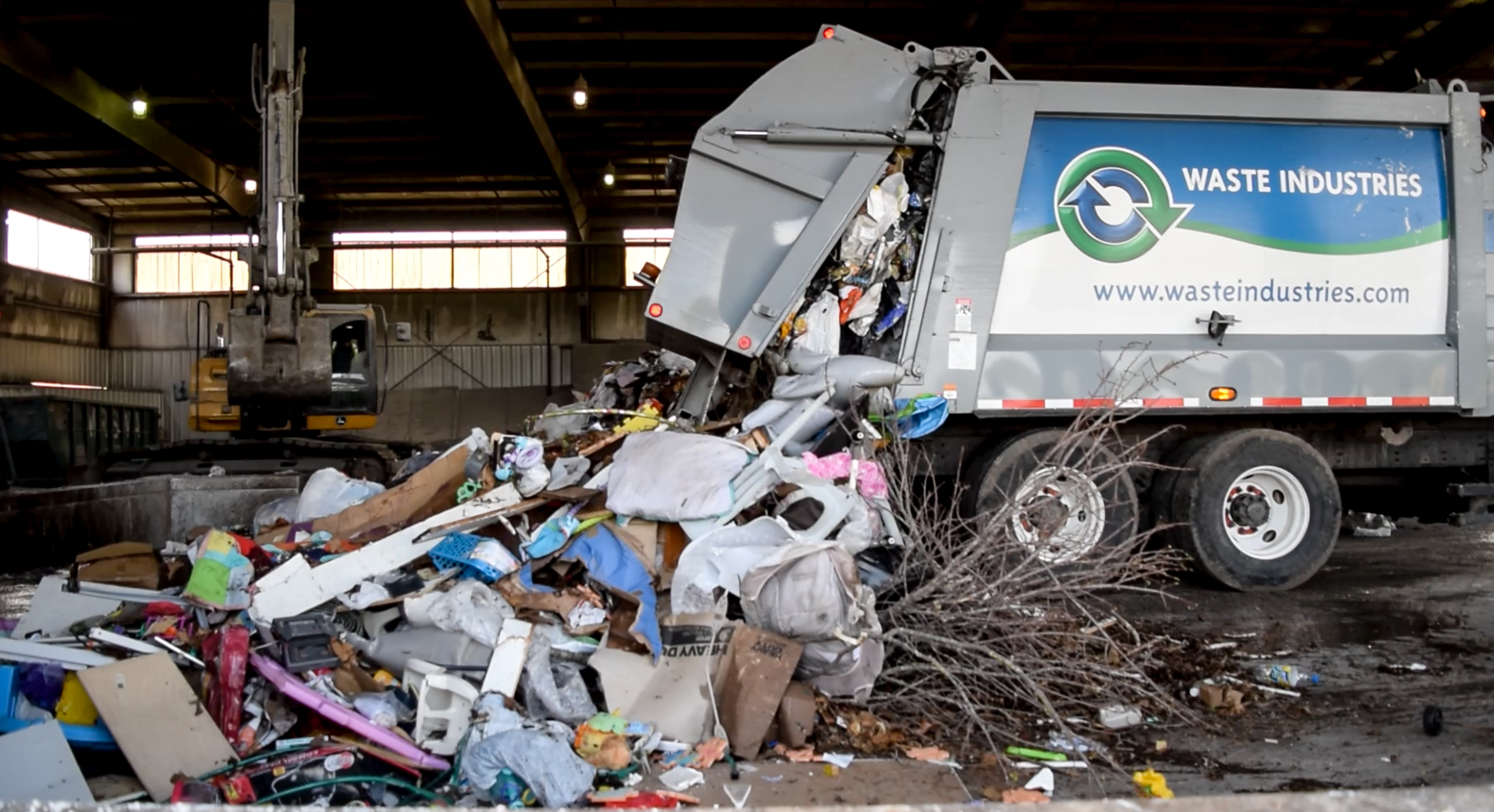
CHRISTIANSBURG, Va., April 26—The Town of Christiansburg hosted its annual “Spring Cleanup” for fourteen days beginning on April 14. Photo: Alexis L. Walsh

by Ellie Matthews, Alexis Leianna Walsh —

Appropriate waste disposal is important for the overall health of the environment, people and animals.  The Montgomery Regional Solid Waste Authority, MRSWA, continues to work towards educating the New River Valley community on proper waste disposal.

According to DoSomething.org, “The EPA estimates that 75 percent of the American waste stream is recyclable, but we only recycle about 30 percent of it.” DoSomething explains that it is time for individuals to take actions against careless and improper waste disposal.

Teresa Sweeney, MRSWA Education and Training Coordinator, stated, “Plastic bags are still a problem; People put things in the plastic bags that can end up in the trees and waterways because they easily blow away when trash vehicles are emptied.”

Sweeney works to educate businesses, schools, industries, the general public, etc., on how to recycle, setup recycling programs and develop proper waste disposal habits that are necessary for a healthy atmosphere. She explained that people often do not realize the effects their actions can have on the environment. She said that even the smallest changes—such as eliminating the use of plastic bags—could make the environment substantially healthier.

According to Healthfully, “properly disposing of waste is not just a personal responsibility; some kinds of waste, usually hazardous, must be properly disposed of according to law set forth by the Environmental Protection Agency.” Healthfully explains, “toxic waste can seep into the ground and contaminate water supplies, and sometimes cause widespread disease.”

Sophia Lee, an Undergraduate Research Assistant at Virginia Tech, works with Dr. Marc Edwards and his team on mitigating the Flint Michigan Water Crisis. Her lab explores chemical and microbial contaminants in water due to corrosion. Lee stated, “The longterm pollution of the Flint River, through runoff and treated/untreated waste dumping, made the water incredibly toxic.”

Lee explained that due to the high corrosion potential, caused by the harsh disinfectants and waste dumping, the water exposed the old lead pipes of the Michigan town, and contaminated the water with lead—poisoning Flint’s residents. She stated, “If this river had been cleaner to begin with, a large part of this problem could have been avoided.”

Lee also works as an intern for the Office of Sustainability at Virginia Tech. Through her internship she explained that she learned about the importance of carefully sorting what one puts into a recycling bin in order to avoid the whole batch ending up in a landfill.

She stated, “Recycling facilities are actually fairly selective, and if there is a certain level of food, moisture, or other materials that can’t be recycled, it makes the bin too difficult for the facility to sort.” She added, “Try your best to remove caps from bottles, dump and rinse anything filled with liquid or food, and check labels to make sure you sort your waste correctly.”

Online activism

Activism.jpg
BLACKSBURG, Va., April 2 — ONLINE DONATION: Rachel Malloy, senior mechanical engineering major at Virginia Tech, prepares to click on the donation button for a contribution toward Noshin Abedin’s UNICEF fundraiser. Photograph: Aly De Angelus

by Aly De Angelus —

First came poodle skirts and bomber jackets. Then came scrunchies and no-tie sneakers. The question is, does the new generation define coolness as more than a commodification of objects, but rather of goodness and activism?

The answer may not be as clear as you think.

2018 has been a rigorous year for protesters and Parkland shooting survivors Emma Gonzalez and David Hogg have taken the political arena by storm. The Atlantic for example even goes as far to say that these kids are model children that just happen to service the general public as advocates for gun reform. Is it fair to say that Gonzalez and Hogg are cool when their activism might only resonate with the political orientation of liberals?

William Taggart is an instructor for the department of modern and classical languages and literature at Virginia Tech. In 2000 Haggart conducted research about online activism and the phenomenon of hacktivism at the start of the millennium.

“I think social media has changed the way people think about politics,” Haggart said. “I kind of think in this country we are almost descending into this sort of tribalism, at least along some political lines  … so activism for whom and by whom is part of the question.”

Since March 2017 social media has aided the role of fundraising on a digital platform. According to The Guardian, an influx of cash toward charitable causes is most likely traced back to the influence of big businesses and their manipulation of current cultural trends. But is that what this is for the younger generation – Is activism merely a trend for happening Instagram photos and buzzworthy tweets that will inevitably fade over time?

Noshin Abedin, a sophomore environmental horticulture major at Virginia Tech, doesn’t think so. Abedin argues that online activism is what has allowed introverts to find their voice and stake a case in a particular movement without all of the hustle and bustle that may turn other potential supporters away.

“I feel like social media makes it easier to be more of a social activist,” Abedin said. “I can’t really do that so easily as a person on my own. I am not a big fan of pushing people like, ‘Hey, donate to me.'”

Abedin is just one in a sea of social media users that have decided to opt out of birthday gifts in exchange for donations to a non-profit organization.

Abedin’s family comes from Bangladesh, a third world country that often struggles with high poverty rates and little introduction to good hygiene practices. She hopes that her contributions to UNICEF will provide the resources needed before activism can even become a possibility.

With Nike’s equality commercial, and Starbuck’s employment pledge to hire refugees, there is no debate that business approval is skyrocketing. Are activists, on the other hand, using their platforms efficiently?

“I think a lot of people get involved in activism that is fashionable but it’s not clear that real gains can be made,” Taggart said. “To what extent can real gains be made on national issues standing down on the corner across from Moes?”

At the end of the day, will this concept of coolness cloud judgment to the brink of political collapse?

And worse, when the door to activism closes, will we be left with no choice but to return to a closet full of meaningless merchandise?

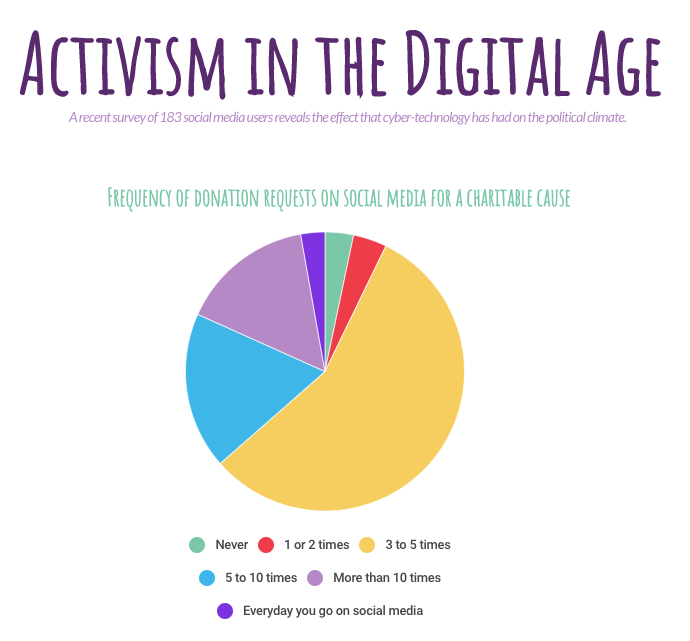
For more information on activism in 2018, check out the infographic below.

Screen Shot 2018-04-03 at 9.18.52 AM