
Category: Life & Style
The cost of living a healthy lifestyle as a college student
By Owyn Dawyot, Health and Wellness Reporter
The demands of living as a college student who prioritizes their health and fitness are almost as challenging as getting through the school itself.
College is a crucial time in a person’s life when they’re making decisions that will affect their future. Coincidentally, something that often gets neglected during the busy life of a student is their health, both physical and mental, which directly affects how the rest of their lives will play out.
Many of these young adults don’t want to think about taking the extra time to work out or spending the extra money on healthier groceries, but those two factors are more important for your well-being than you think.
While in college, students are bombarded with strenuous class schedules, spending time with clubs and organizations they’re involved in, and looking for jobs and internships over the summer, all while attempting to maintain a social life. It’s an extremely draining time, so why would it make sense to add something else to your plate, like going to the gym?
“I think your mental and physical health go together, so you have to prioritize one to work on both,” Nick Owen, a senior at Virginia Tech, said when describing why going to the gym is important for him. Owen believes that if you work on your physical health, then your mental health will follow. He’s also a believer that if you have a healthy, balanced diet, then you will see significantly more progress in each of these areas.
Owen regularly trains at The Weight Club, an off-campus gym located in Blacksburg, Va., which raises the question: Why spend the money to train at a gym off campus when Virginia Tech offers three fully-functional facilities on campus, intended for the use of students enrolled at the university – McComas Hall, War Memorial Hall, and the VT Rec Sports Field House (also known as “The Bubble”)?
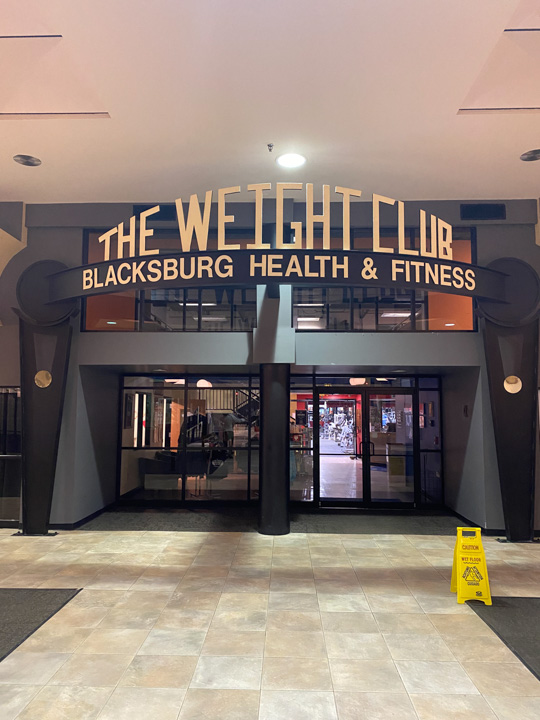
“The on-campus gyms don’t have a sauna, and Weight Club is less crowded,” Owen stated, expressing that he believes it is crucial for his health and well-being, and that he would make the sacrifice to pay $414 for the year to have the luxury of using a sauna.
Another student, Mathew Hale, a sophomore at Virginia Tech, also purchased an off-campus gym membership at Very Good Gym in Christiansburg, Va. Hale pays for the semester plan that Very Good Gym offers, which is $180 for four months, and describes the membership he pays for as a “quality of life” purchase.
“I feel like I’m almost saving money by not having to worry about parking on campus or getting a parking pass to go to an on-campus gym,” Hale stated. “It’s never busy, and it’s a 24-hour gym, so while I’m there, I don’t have to worry about hours or anything like that.”
While both Owen and Hale seem to have their reasons for spending the extra money on exercising each month, healthy eating is a completely different animal and needs to be done with strategic planning, as described by Maddie Reis, another senior at Virginia Tech, who believes that living a healthy lifestyle as a college student is much more than just working out.
“I shop in Christiansburg, and I have my groceries listed for when I go to Aldi and when I go to Walmart, depending on the prices,” Reis stated. “I know each item that I have to get at each store to get the lowest price point.”
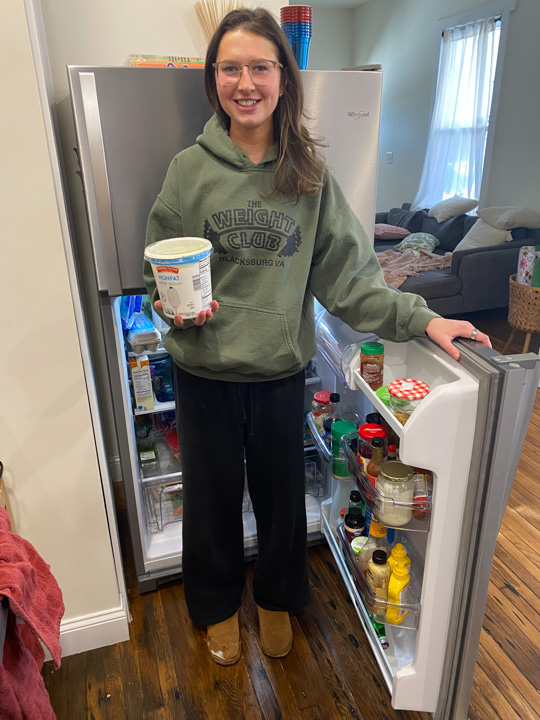
Reis also said that she is constantly browsing the internet searching for deals on healthy food and drink items. She claimed that Olli Pop is her favorite healthy drink. She knows the exact date they go on sale each month at Food Lion and is ready to stock up.
However, it doesn’t stop there. Reis strategically plans out her grocery list for every week, down to the serving size of each dish she’s preparing the following week.
Reis said that she also has suffered from insomnia throughout college and purchases around $40 of various supplements per week to help ensure that she gets adequate rest for recovery.
Owen and Hale both stated that they also purchase supplements, creatine, and protein powder. Owen doesn’t stop there, also taking ashwagandha, magnesium, and fish oil. Both claim this excess supplementation doesn’t just help their performance in the gym, it also plays a huge role in their energy levels throughout the day, during classes, and long study sessions.
All three students stated that they rarely eat out, as the healthier restaurants in Blacksburg, such as Greens, Roots, and Chipotle, are typically their go-to options when they do, expressing that they are very costly on their tight budgets.
Although college is a very stressful time, and it may not make much sense to some to spend the extra time and money on worrying about prioritizing their health, many students, including these three, would disagree, arguing that it may be worth the effort.
Not a food truck, but a fun truck: The Chillfield celebrates one year of mobile programming
By Emma Duncan, education reporter
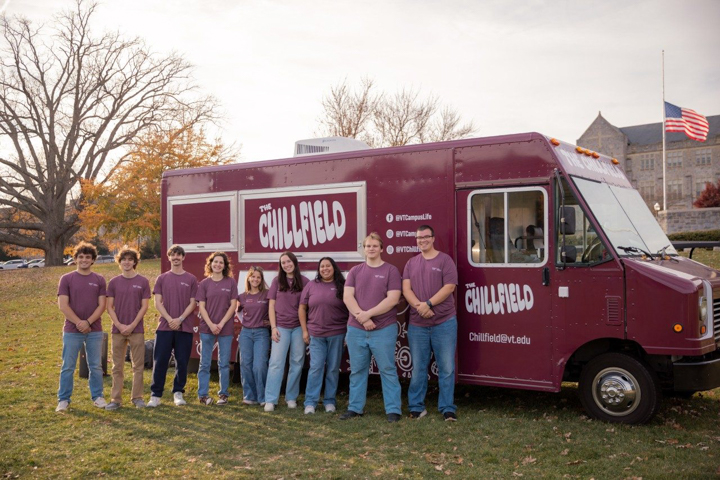
One year after its launch, The Chillfield has changed how Virginia Tech students find entertainment, bringing events to Hokies where they are through mobile programming.
Designed by Ben Evans, lead engagement engineer at Student Engagement and Campus Life, The Chillfield uses interactive activities to connect students to campus partners and each other. The truck hosts events in Blacksburg once a week, at the Roanoke campus once a month and in the D.C. area once a semester.
Hokies can play Tetris Tumble or Connect 4, compete in Nintendo Switch games, customize tote bags and koozies using a heat press, decorate vinyl records and more. In its first year, The Chillfield hosted approximately 52 events and reached over 10,000 students. Jazmyne Barron, coordinator for student experiences, shares her team’s highlights from year one and aspirations for the future.
[This interview was edited for clarity and content.]
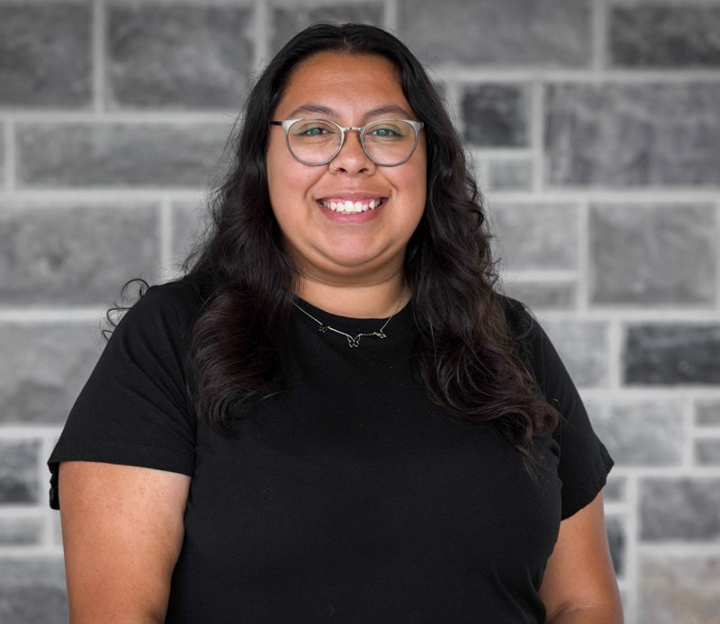
What gap did The Chillfield fill in the SECL office?
During the pandemic, there was a large gap in student programming. It was harder to engage students because we needed to follow safety guidelines like social distancing. As we transitioned into a more normal sense of campus life and programming, we noticed it was harder to get students to come to things because they hadn’t been doing anything for such a long time. So, the idea was to go to them instead.
Think back to The Chillfield’s very first event. How did you feel when it ended?
The Chillfield’s very first event was the launch party. Honestly, I had no real expectations at the time. The event ended up being very successful and ran smoothly. We hosted it on the Drillfield and had a lot of different activities available, some of which have become staples in our programming. I think it really set a positive tone for what was to come in the year ahead.
Can you share a story that illustrates the impact of The Chillfield?
When the truck launched, we were a team of three undergraduate students and one graduate student assistant. Now, our team has doubled. One of those undergraduate students, Filip DeHaven, is now my graduate assistant. Seeing them grow from last year to this year has been very rewarding.
We wanted to culminate all our success during the first year into our first birthday party, which was a collective effort. Each of my student staff put all of themselves into that event for it to be so successful. I think it really shows how they are passionate about this work and want to share fun experiences with other students. They continue to return every semester and I’m proud to work with them.
What have you and your team learned about designing events that resonate with students across such diverse schedules and interests?
When you work in student programming, it’s important to ask yourself how you can create an experience for everybody. We try to provide a variety of options for people, some that are very low stakes, like our grab-and-go goodies, but also opportunities for people to sit with their friends and do a fun craft. We try to play around with the times to reach different students and allow everyone to attend our events.
Has there been an activity or event that didn’t work as planned? What did the team learn from that experience?
I can definitely say weather is our biggest enemy. Our most recent event, National Lego Day, was supposed to be outside. However, we had to shift inside because of the huge snowstorm.
When we’re hosting events on the Drillfield, a little bit of wind can make everything go flying. Even if the forecast is decent, wind can keep students away. The weather definitely keeps us on our toes.
As you enter year two, what are your biggest goals for The Chillfield?
Our team is trying to constantly think outside the box. My student employees really want to bring in new people and expand what we can offer. We have our favorites that we know the truck can easily do, but I think we’re getting to a point where we’re ready to branch out. A new location could help us reach hundreds of new students. My personal goal is to eventually start working with some community partners.
I read that enhancements like a better backup camera and accessible storage are being discussed. What is the status of these upgrades and how will they improve events or operations?
The Chillfield is a pretty old truck, so many parts are outdated. Over the break, we got new seats installed and the dashboard rewired with CarPlay. The heating and conditioning actually work now; that’s very nice to have. We are working to get a new horn installed that will play the intro to “Enter Sandman.” We also installed a jump seat in the back for when we’re driving around campus. The truck has its quirks, and we’ve learned to work with them.
In March, you and Ben will be presenting at the 2026 NASPA conference. What does it mean to bring The Chillfield story to a national audience, and what do you hope other campuses take away from it?
I’m only a year and a half out of graduate school and I’m presenting at a national conference, which, to me, is insane. Our goal is to provide these campuses with a packet of resources and say, ‘Here’s what we did, take it, replicate it with what works for you.’ We’ll make a point to tell people that you don’t need this big truck to do mobile programming if you’re on a smaller campus. You could build out a really cool golf cart. Our emphasis is make it work for your campus.
As someone who has worked with The Chillfield since its first event, how do you hope you feel one year from now?
This is gonna sound funny, but it’s true. Every time we’re out, students love to come up to us and ask what food we’re serving. I’m trying to sell this idea that we’re not a food truck, but a fun truck. I hope that, by the time we’re entering year three, people know that we’re not a food truck. We like to make jokes and make light of the situation that we’re in. However, we purposefully avoid food for our events.
Is there anything else you would like to share?
The Chillfield is truly one of a kind. It’s not on any other campus, which I think is really cool. Going to one of our events should be a bucket list item for students during their time here, especially since, if they decided to attend another school, they would never get a Chillfield experience.
More Than a Professor: How Angela Anderson Leads Students Beyond the Classroom
By Sage Mayhew, Health and Wellness Reporter

Anderson’s impact doesn’t end when class is over. She fosters well-being and sustainable habits for students to support more fulfilling, healthier lives.
Anderson teaches in the Department of Human Nutrition Foods and Exercise at Virginia Tech. Gaining her PhD from Virginia Tech in cancer metabolism and her expertise in exercise science, her research navigates how student motivation and performance are influenced by physical health. Her lessons reach beyond the end of a lecture. Through community engagement and mentorship, Anderson’s commitment to student wellness helps Hokies succeed in both their academic and personal lives.
[Edited for clarity]
Tell me a little bit about your role here and how you got to where you are today
I am collegiate faculty, so I’m teaching faculty. One piece of collegiate faculty is research. That research is more pedagogical. So, how can I effectively teach in the classroom? How can I draw students in and increase their engagement and learning?
We moved to Colorado in 2014 for my husband’s job. I taught part time at Pikes Peak Community College and at Colorado College. During that time, we really missed Blacksburg, so I had reached out to my PhD advisor, who was the department head at the time, and said, ‘Hey, would there ever be any opportunities for me to come back?’ And he said, ‘Actually, they’ve started collegiate faculty, and I think it would be great.’ So we moved back in 2018!
How do you advise a student’s well-being?
Having an active lifestyle is really important for undergraduates, but also trying to keep things in perspective. What I try to remind my students is that I was 44 when I got hired back here at Virginia Tech. I went back to graduate school at 34 when my first son was born. Life is long, so I try to remind them everybody has a different path and that’s okay.
How does stress impact students physically and academically?
It can put your back up against the wall, where you make poor moral choices. You get to the point where you’re like, I’ve just got to check the box. And then maybe you look over at someone else’s computer on an exam because you didn’t put the hours in to study. I think there’s a lot of negative impacts of stress, and that’s one of the reasons why I think carving out time to be physically active can help reduce that.
Aside from stress, what other health concerns do you see among college students?
Digital wellness is a big one. I think the isolation that comes from our digital environment is really real. Having a phone at our fingertips, having air pods in our ear, having ChatGPT to have a relationship with makes it easy for us to be socially isolated, which increases depression and anxiety. I think what is really important is making students feel cared for, and making them feel that they belong, not just in my classroom, but also with each other. I’m not anti social media by any means. It’s just how we choose to use it. It’s a balance, having tech breaks to do things like exercise and engage in relationships with others.
What’s the connection between physical health and academic motivation?
I’ve done some research with that and it’s really hard to measure in humans, because there’s so many other confounders, such as their sleep schedule, their work schedule, and so many other things to really tease out. We did see some changes in executive functioning, specifically with memory after acute exercise. So there is some evidence out there. It’s just not as clear cut, but we do know that exercise increases blood flow to our brain. That correlation is the increase of our brain functioning would help us to be better learners.
What sustainable health habits do you recommend to students?
Finding physical activity that you enjoy, and then having a regular, scheduled time for it. Don’t be a runner if you don’t like running. It’s about finding something that you like and making it a routine. I’ve always said the hardest part about exercise is getting dressed, because it’s like, once you’ve gone over that mental mountain of actually getting dressed you’re like, okay, let’s just do it.
Have you seen any positive health trends among students recently?
One thing that those of us that grew up in the 80s and 90s see about
Gen Z is water. You guys are such better water drinkers! I also think our students here are a really active community. You see people exercising all the time.
Do you collaborate with any programs on campus or in the community?
Yes, through my class, Exercise and Health. We have a partnership with Rec Sports, the students come up with pitches for ways to get college students more active. If they like one, they roll it out. One rolled out this past spring, for girls and women in sports day which was really exciting! It was a women’s only weight lifting time, because some female college students feel intimidated in the weight room, but they want to be able to lift weights, and so having a protected time where they could go and lift was a way that we have partnered with rec sports to help increase physical activity.
Another way that I connect students with our community is as a board member for the soccer club with New River United. I reach out to students to be soccer coaches for kids in the community.
What’s one thing you wish students understood about long-term health?
That it is a life long process of balancing.
It is easy when you’re in college to prioritize exercise. As you get older, you just have more demands. So the habits that they’re making now are easier, and they’re going to be harder when you transition. So it’s continuing this healthy lifestyle that we’ve started in college and forming habits now that we will be able to take with us.
Can you share any moments that remind you why you love this work?
I think it’s when students email me after they’ve graduated, and they will say, ‘Oh my gosh, I am just finishing my first semester in med school, and your class really prepared me.’ That’s a win! I have set them up to be successful!
But I think my heart really goes out to the struggling students. It’s easy to think when students aren’t performing well, that they’re just not working hard enough. But we don’t always know what’s going on and that they’re having to adult through some things that really they shouldn’t have to. So it’s watching them overcome those things, seeing them be successful and move on from here into what they are passionate about, and then getting to hear from them later.
West End Hosts Annual Saint Patrick’s Day Celebration.
By: Zain Omar, Arts and Culture reporter
West End at Virginia Tech hosted a Saint Patrick’s Day event on March 17th, 2025.
The event offered Irish themed dishes all day, including Shepards Pie, Irish Stew, and Rueben Sandwiches.
West End hosts a Saint Patrick’s Day event every year, along with events throughout the year to celebrate different holidays and embrace cuisine from other cultures.
Dry January makes for a healthy start to the year for college students

By Madi Pool , health and wellness reporter
Participating in “Dry January” as seen on social media is on the rise for college students due to many health benefits stemming from the trend.
Dry January is taking all 31 days of January and choosing to not drink any alcohol. The trend has continued to rise in popularity due to social media and many influencers hopping on the trend. When doing the trend many have seen some significant benefits to their health and have even chosen to continue with sobriety for months after January or even the entire year.
The popularity in dry January brought to social media actually stems more from a fear of alcohol and some of its side effects that have been brought to light and caused concern for people especially those aging from 18 to 29 years old.
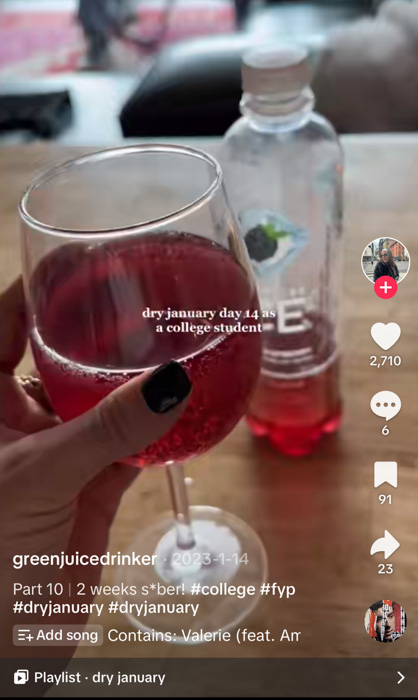

It is no secret that college students like to drink and have fun but they don’t always know what this alcohol can do to their body especially if it is a consistent part of their week. Research shows 80% of college students consume alcohol to some degree and estimated 50% of those students engage in binge drinking. They don’t realize what this may be doing to their body in the moment and down the road for their health in the future.
Taking just 31 days to not drink and show their body what it is capable of feeling has been rejuvenating for some as they have taken on dry January. Reagan Shiley, a student at Radford University is in her junior year and has decided to participate in dry January this year and she says the changes she has seen to her health have changed her mindset on drinking as a whole.
“I am currently on my 27th day of dry January and I have never felt better.” says Shiley. She feels she has been more energized, less bloated, more efficient, and even able to focus better due to cutting out alcohol. “I saw people on social media talking about a few health trends for the new year and I knew I wanted to participate in one to better myself and I felt this was the most obtainable for me.” Other trends like “75 Hard” or just “going to the gym more in the new year” are goals we see for everyone in the new year but dry January is one of the only long lasting trends society is seeing.
Students are able to learn a lot about themselves when participating in the trend as well as aspects they would not expect if they did not take on the trend. College students don’t realize how much of a social aspect there is to drinking or what some say “peer pressure” there is to drinking. Many students feel the need to drink because their peers are or because if everyone is drunk they can’t be the only sober ones. But by participating in the trend some have been able to see there is a balance and finding a healthy balance between the two is possible.
“A big concern for me going into this challenge was what my friends would think or say to me, and they did make comments or jokes at first but once they realized I still want to hangout with them and can still have fun without drinking they barely even noticed I wasn’t drinking with them.” says Shiley.
As more and more people participate and are able to see these health benefits more will be inclined to the trend and caring less about what their friends have to say. Dry January has shown that you can experience benefits like weight loss, better sleep, balanced mood, clearer skin, less acid reflux, better liver function and a lower risk for cancer. These are all essential to college students and perfect for the 18 to 29 age range.
Shiley states her favorite part to this whole trend “I think out of all the benefits I have seen from this trend my favorite has to be waking up knowing I don’t feel hungover or sluggish and can be productive with my day or my weekends.”
Shiley will continue participating and believes she will have no trouble making it to day 31 and claims she may even go longer or at least cut back on her alcohol habits once she does start drinking again. That is what the trend hopes people are able to take away from the experience. It is shown that about 75% of people who participate in the trend are able to complete it. But what is next after doing so? According to data, 25% of people who completed dry January reported reduced alcohol consumption even after the month was over. It was particularly noticeable in younger generations like Gen Z and specifically college students where participation in the trend is higher.
Dry January is not only for the young generation though, people of all ages have participated in the trend and are able to learn a lot about themselves from it. Katrina Lamberton, was 42 when she decided to take on the dry January trend in 2024. She said the trend saved her life for the better and she has still not had a drop of alcohol to this day over a year later. “I did dry January for more than just the physical benefits. I felt it was really good for my mental health as well.” says Lamberton. “I felt I had more control over my life when I stopped drinking, I made better decisions, I woke up feeling better about myself, and I got more done so I never felt a reason to go back to alcohol.”
Alternative Transportation Campus: Students’ Take
by Jonah Saacke and Brooke Van Beuren–
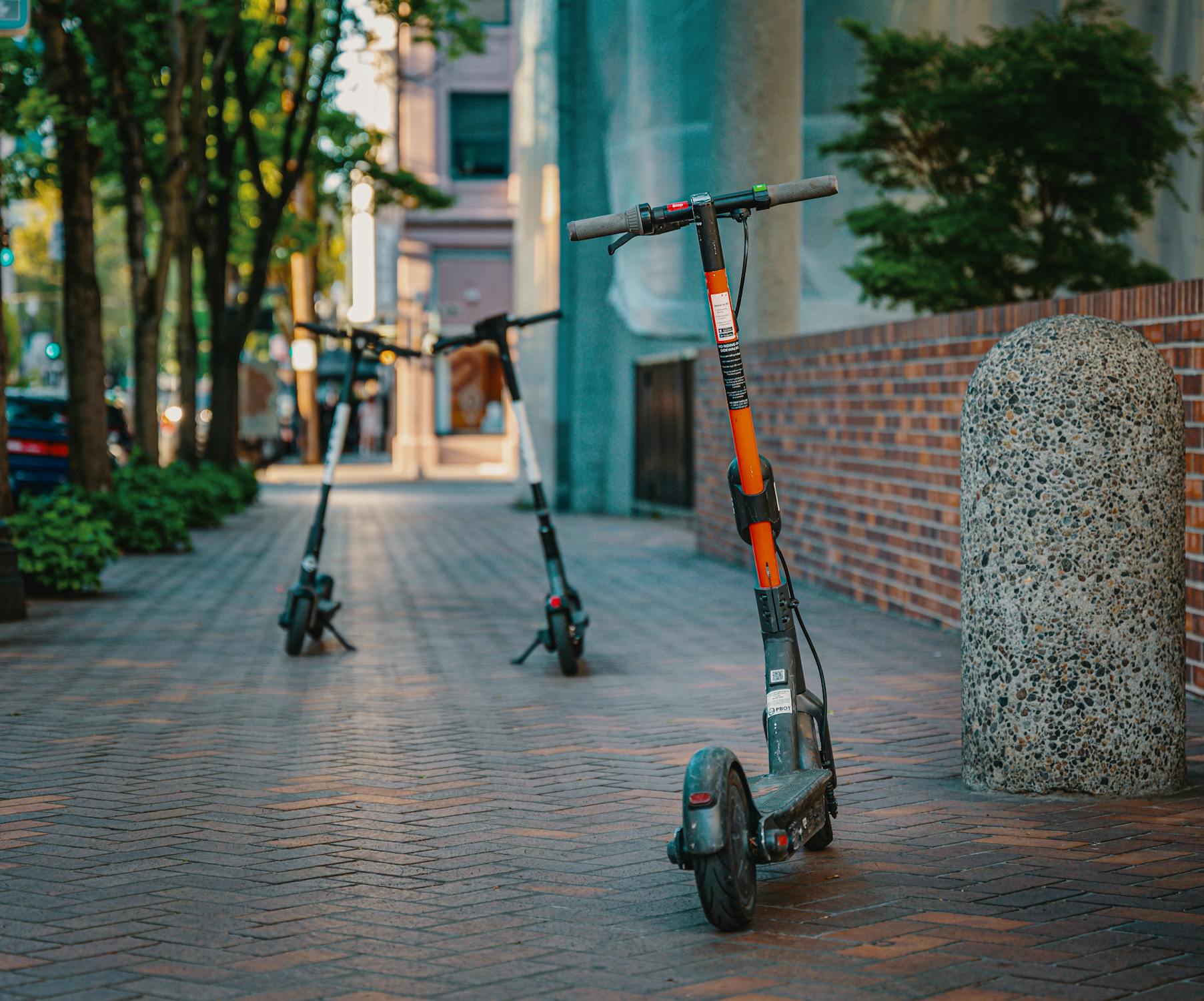
According to a university official, there is a possibility Virginia Tech could move to an alternative transportation campus in the future. This would mean that there would be no cars on campus, leaving the bus, scooters, walking, and skateboards as the only way to get to campus. Virginia Tech already encourages people to try a car-free lifestyle.
Parking is a hot topic on Virginia Tech’s campus, with many students and staff saying there is not enough. Therefore, taking away all parking is bound to create an even bigger conflict. However, many also argue that taking away cars is eco-friendly, safer, and a solution to Virginia Tech’s parking problem.
Students outside Turner Dining Hall shared their opinions with The News Feed if they believe Virginia Tech should become an alternative transportation campus or not.
Mental illness trends in the U.S.
by Anthony Cusat-
In the United States, mental health and mental illness are topics that have slowly become more accepted with 87% of American adults agreeing that mental illness is nothing to be ashamed of during a 2019 poll.
As more and more people recognize the validity of mental illness, the number of people receiving treatment and diagnoses is also escalating. However, some mental illnesses are becoming increasingly common while others are seeing a dip in prevalence.

Unearth the power of ‘Earthing’
by Kayla Frank–
Earth Day celebrates the accomplishments of environmental movements and raises awareness of the moral duties of protecting our environment.

On Saturday, April 22, ways to honor Earth Day include picking up trash, planting trees, or even just going outside. Getting grounded is another way to engage with nature, but not the kind that comes from your parents or sends you to your room.
Grounding, also referred to as “earthing,” involves direct skin contact with the Earth’s surface, like walking barefoot or sitting outside on the grass, sand, or dirt. Emerging yourself in a body of water can also be considered grounding.

Scientific research supports reductions in chronic pain, inflammation, and muscle damage, along with better sleep and improved moods when connecting with Earth’s surface electrons.
Extra amounts of reactive oxygen species that contain atoms with unpaired electrons can create chaos in the body. Known as free radicals, these can aid in development of cancer, Alzheimer’s, and irritable bowel syndrome.
Due to modern lifestyles that keep us inside, grounding can help restore our “electron deficiency,” realigning our primordial electric connection to Earth. Like our ancestors did for thousands of years, walking barefoot absorbs ions from the Earth’s surface, acting as antioxidants to improve our health.
If going outside isn’t an option, there are other ways to unearth grounding. Alternatives range from grounding mats, sheets, blankets, socks, bands, and patches that are available from a range of sources.
In an initial grounding experiment conducted by Clint Ober, the CEO of Earthing FX and innovator behind the grounding movement, Ober gathered 60 volunteers with chronic sleep and pain difficulties who were either grounded or sham-grounded during sleep.
Grounding was through means of a conductive pad connected to a rod outside their bedroom. The results showed those who were grounded saw significant improvements in sleep and pain versus sham-grounded .

Remember to be intentional while earthing or grounding if you plan to take part this Earth Day. Earthing is a great way to connect with nature and reduce anxiety, but should be practiced often to achieve ample effects.
On its way to becoming a massive movement worldwide, shed your shoes and get to grounding.
Religion’s influence on health
by Savannah Webb-

Religion and health are often kept separate, but studies show there is more overlap than might be expected.
“Religious involvement is related to virtually every single aspect of health — mental, social, behavioral and physical,” said Harold Koenig, director of Duke University’s Center for Spirituality, Theology and Health. “Literally every health outcome is in some way connected to religious involvement.”
Koenig has over four decades of research experience studying the health effects of monotheistic religions like Christianity, Islam and Judaism.
“It’s really about devoutness,” Koenig said. “To what extent is a person’s attitudes and lifestyle driven by their religious beliefs? If it doesn’t affect the way they make their decisions and the way they treat other people and think about themselves, it’s not going to help.”
Positive mental health benefits such as lower levels of anxiety and lower risk of suicide are associated with religious devotion, and Koenig explained that religious involvement also lowers risk of cardiovascular disease.
“If you have a sense of purpose and meaning and you feel that you’re in control, because God is in control, all of that lowers your stress level,” Koenig said. “It makes perfect, logical, rational sense that you would then be at lower risk for high blood pressure, stroke or a heart attack.”
The Harvard School of Public Health has found similar results with larger research samples, specifically in women. While there’s no foolproof explanation for this gender disparity, Koenig offered insight on the phenomenon.
“I think religion is a little bit easier for women to engage in because they’re more social, and they’re more in touch with their emotions,” he said. “It’s harder for men. There’s a general tendency for them to not be as social or in touch with their emotions.”

While gender seems to play a part in the relationship between religion and health, Koenig said the research indicates there is another factor at play — locus of control.
An individual with an internal locus of control believes their health is heavily influenced by their behavior and decisions, whereas an external locus of control places an individual’s health outcomes in the hands of fate or God. Surprisingly, Koenig has found that greater religious involvement is related to an internal locus of control.
“People who have strong faith actually have a greater sense of control, but it’s an indirect control through their dependence and belief in God,” he said. “They believe they can do things to influence God’s actions — like prayer — and in giving up control, there is actually an increase in control. It’s extraordinary how it all psychologically works.”
Finally, Koenig’s research indicates that the extent of psychological and physical relief from anguish depends on how long a person has been practicing religion.
“The people who benefit the most are those who are younger, because they have their entire lifetime to reap the benefits of that religious faith,” Koenig said. “Religious involvement protects you from drug and alcohol abuse, cigarette smoking, and stress levels — all of which keeps you healthier.”
 > THE NEWS FEED <