A recent statement by President Donald Trump suggesting a link between Tylenol (acetaminophen) use during pregnancy and autism has sparked concern among families, medical experts, and the autism community. In this video, we speak with Ashdon Sigmon, a Rocky Mount mother of a nonverbal autistic child, and Nathaniel Porter, a social science data consultant at Virginia Tech, autistic adult, and father of three autistic children.
Together, they break down the emotional, scientific, and social impact of such claims, from how they influence public perception, to the pressure they place on parents.
A small group of protesters gathered on the Drillfield during the Turning Point USA event at Virginia Tech, chanting slogans such as “Hey hey, ho ho, trans hate has got to go” and “No Trump, no KKK, no Fascist USA.” They stood opposite the event line but maintained a peaceful posture, often observed by attendees who held phones and filmed rather than engaging.
BLACKSBURG, Va. – Business instructor Josiah Showalter has created a well-loved persona for himself known as “Judge on a Scooter”.
Showalter rides a maroon Honda scooter wrapped in the university’s logo around Virginia Tech’s campus. His chosen mode of transportation is not only effective, but instantly recognizable by many Tech students, especially those in the Pamplin College of Business.
In addition to his scooter, Showalter is known for his signature bowtie and oval glasses. Students often spot him at Gillie’s, where he has breakfast every Sunday with his wife, and Weight Club, where he exercises regularly.
Showalter has also gained a following online. His Instagram account, with more than 3,000 followers, features educational and campus related content. During finals week last semester, he interviewed his students and quizzed them on class material as a method for review.
As Judge on a Scooter, Showalter is best known by his business law students, though his charism and authenticity has spread across campus. He even has his own merchandise, with t-shirts with the catchphrase: “Can you feel the law?”
Showalter refers to his wife affectionately as “Pure Evil” and his two children as “Evil One” and “Evil Two”.
The following interview has been edited for length and clarity.
How long have you been teaching at Virginia Tech and what classes do you currently teach?
I’ve been teaching for 15 years and I teach Business Law. I’ve always taught business law.
When did you first purchase your scooter and what inspired it?
It was a gift to my family from a dear friend. They wrapped it.
How did your nickname as “Judge on a Scooter” emerge?
My son, Evil Two.
You’ve developed a very recognizable brand and persona. Was that intentional or did it occur more naturally?
All natural.
I’m sure you’ve been recognized across campus and in Blacksburg pretty often. What’s it like being such a familiar face?
And I’m not. I mean, every now and then people will say, “Oh!”. It’s primarily the scooter. It’s not me. My wife does. Pure evil, my wife.
Do you ever get recognized at Weight Club?
I would say maybe every now and then. But a lot of students, not because of the Instagram page but because of the students.
Can you recall any instances with any students that told you that your presence made an impact or a difference?
It’s really moved me the people that have said that I’ve impacted their life.
What positive impacts do you hope to bring to the student body?
Instagram. I was never gonna do it and toyed with the idea because all of you young people are on social media whether its Twitter, TikTok, Instagram, Snapchat. Last year, the way that the spring semester spring break landed, it was right before an exam. My son suggested, “Why don’t you start an Instagram page?” So I mentioned it in class and one of my TA’s got four or five emails asking if I was going to do it for a review. It’s primarily for education. If you look at the ones during the week, they’re educational. They help to review the concepts we learned in class and my grades went up this past semester. I love that, so that’s good.
Do you think the reels encourage people to study harder?
It gave them an opportunity to review. I didn’t give them all the answers in terms of the questions, but it let them know where I was looking. That started in March. I started that.
Do you have a social media team that runs your Instagram?
My son, Evil Two, and my daughter, Evil One. They collaborated and my wife, Pure Evil, sometimes has a little part in it. But, my son just started law school. He’s not here so I have my adopted Evil Three and Four. They help me out and they are wonderful.
What overall impact do you hope that your scooter rides bring to the student body?
I hope that everybody realizes, and this is what I tell my class: the law impacts everything that you do. I mean, could you feel it when we went to Bollo’s, the law? I mean, seriously, could you feel the law? Because we did. I entered into an implied contract when I bought our coffee. Exceptions, consideration, legality, capacity. It was all there, you know? Think about it.
Are you trying to provide more real world context for students?
Absolutely.
If you could give one piece of advice to Virginia Tech students, what would it be?
I told my kids this every day and I tell my students this because Tech students are the best students. Do your best. Be happy.
At sunrise in the New River Valley, tractors still roll across fields of soybeans and corn, but the math isn’t adding up. Farmers say they’re paying more than ever to grow crops that sell for less than ever, thanks to the ripple effects of tariffs.
Tariffs have negatively affected many industries in Virginia, but in the New River Valley, it is farming and manufacturing that have been hit the hardest.
Dramatic increases in prices of fertilizer, seed, and diesel fuel plus the retaliatory tariffs by other countries are causing drastic income cuts to farmers across Virginia. Increased prices of raw materials, electronics, and decreased export ability have caused Virginia manufacturers to get hit hard as well. Donald Trump’s tariffs are no longer an abstract concept; they are beginning to shape the landscape of agriculture and commerce in the New River Valley.
Uncertainty is what is highlighting the US global trade policy right now and tariffs are what are causing the most rippling effects among smaller, rural communities.
On August 7th, 2025, Donald Trump’s invocation of the International Emergency Economic Powers Act (IEEPA) was put in full swing. The trade disputes caused by these tariffs are beginning to show the ripple effects on rural Virginia businesses. There are both winners and losers in this international game of chicken, with agribusiness bearing the brunt.
“These tariffs implemented by Donald Trump are gambling with farmers’ lives” said John Boyd, the founder of the National Black Farmers Association. “All of my costs have just about tripled and I’m selling my product for a fraction of what I was just a year ago.” Boyd is a farmer in Baskerville, Virginia and he grows soybeans, corn, and wheat. “This is a bad time to be a farmer.”
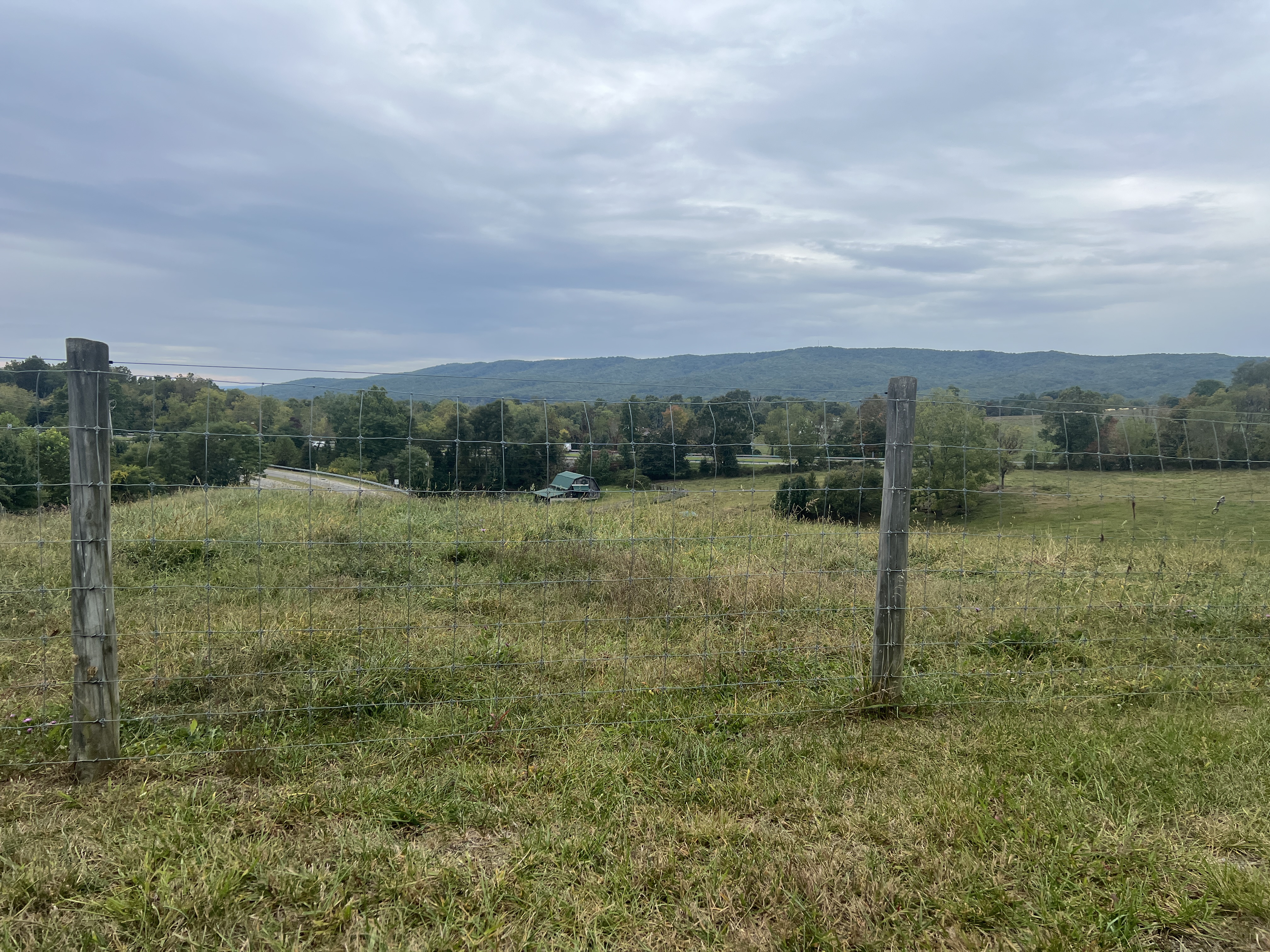
Photo of the Entrance of John Boyd’s Farm in Baskerville, VA by John Tuason, TheNewsFeedNRV.com
Xi He is an agricultural trade policy analyst at Virginia Tech. She explained the reasons behind the price increases and the decrease in sellable crops hitting the Shenandoah Valley right now. “Potash is a vital fertilizer that comes from Canada and supplies nearly 90% of the US’ agricultural needs. The production costs of tobacco, corn, soybeans, and wheat have been hit the hardest because of this. This, in combination with the retaliatory tariffs from other countries that are causing reduced demand for US products are hitting Virginia soybeans particularly hard right now.” Said He. These uncertainties have caused many Virginia Farmers to have to gamble their livelihoods.
According to the Observatory of Economic Complexity (OEC), Virginia exports have decreased by almost 6%. This is due in part to China’s boycott of Virginia’s agricultural products like soybeans. “The only thing we do better than anybody is corn, wheat, and soybeans. It’s all ready to be shipped, but these tariffs are squeezing farmers for more than they can take. Farm bankruptcies are up and so are suicides.” Said Boyd.
“Before the tariffs, Virginia’s agriculture contributed about $3 billion in 2024 and is heavily dependent on agricultural exports. The higher expenses are a huge strain on the broader supply chain, and this causes ripple effects on rural economies.”
Small farms are especially vulnerable to the effects of these tariffs because they lack the financial safety net that bigger farms have. This means less competition for these bigger farm operations. The same market shocks that are rattling farmers are also disrupting Virginia’s other economic foundation: manufacturing.
Manufacturing contributes over $52.3 billion to Virginia’s economy. According to Bill Donahue, the CEO of Genedge, a company that specializes in enhancing the performance of manufacturing businesses in Virginia, “There are really 4 main challenges that we’re seeing because of the tariffs: [1] increased costs for raw materials like steel and aluminum are hitting automotive and construction industries the hardest right now. [2] The supply chain disruptions are interrupting global trade flows coming through the Port of Virginia. [3] Job cuts are hitting everyone right now, but it’s the mid-sized businesses we work with that are getting hit the hardest. [4] The general uncertainty of the economic landscape is disrupting the futureproofing and planning that we develop with these manufacturers.”
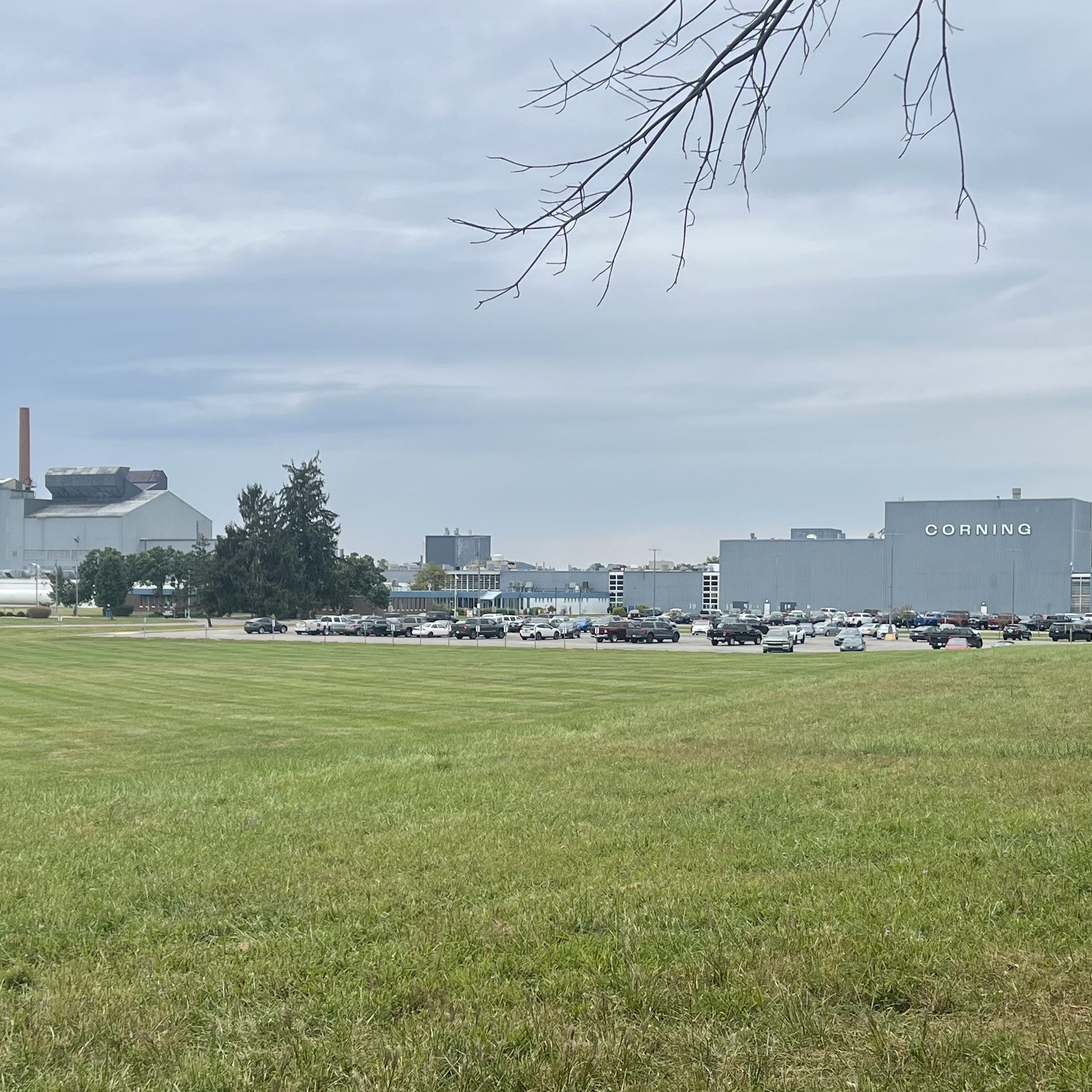
Photo of the Corning Plant in Christiansburg, VA by John Tuason, TheNewsFeedNRV.com
All this disruption has caused forced adaptation within both agriculture and manufacturing in Virginia. Farmers have had to diversify their crop production very quickly in response to the effects of tariffs while manufacturers have had to adjust their supply chains and seek domestic suppliers to stay afloat.
The government has responded to these concerns of farmers by aiding them with the Supplemental Disaster Relief Program (SDRP) and manufacturing has seen more exemptions being put into place to help with their increased costs.
Local economies like that of the New River Valley are deeply connected to global trade policy, yet these effects are hardly felt instantly. It will be years until we can understand the full impact of these policies, and it is the smallest farms; the smallest manufacturers that will get hit first.
“We’re just trying to hold steady until this storm passes.” Boyd said.
BLACKSBURG, Va. – A little over three years ago, Blacksburg thought they needed a change. Zack Leonard was hired as the Blacksburg High School football coach to help a struggling program. Now in his fourth season, he is trying to revitalize a team that had been struggling for so long.
After taking over in 2022, the vision was clear build a stable foundation and start from the ground up. The goal was to play with readiness and confidence before they ever took the field. Being prepared before the game helps you execute during the game.
Foundation Building
Football season has begun, and Blacksburg High School has started to find its stride lately under fourth year coach Zack Leonard. Leonard has brought persistence and steady leadership leading the team to victories in a big way.
When Leonard arrived in 2022, the Bruins were struggling as a program in more ways than on the field. With multiple losing seasons in a row before he arrived, things were looking up after his first free seasons in charge.
This fall’s hard work has been paying off as the Bruins started 2-1. The team has shown much resilience and confidence that is key in winning games. The team has gotten steadily better each year under Leonard.
“It’s been a process,” Leonard said. “We had to take every game one at a time, it was tough at the beginning.” Blacksburg struggled to win games for years prior to Leonard to being introduced to the team.
Stepping Stones
The team’s progress this season came into test earlier this season in an away game at Giles which resulted in a win for the Bruins, 40-8. The team came out with tremendous energy easily beating the first opponent of their season, which seemed to transition to week two as well. Week two led to a home game against James River which the Bruins came out on top once again.
Blacksburg High School Football in action. Blacksburg, Va. Sept. 19. 2025. (Landon Swanson, TheNewsFeedNRV)
“When you walk into the locker room there is a major energy difference from where we started to where we are now,” Assistant coach Mike Reynolds said. The belief in the team this year should be the highest it has been in a while.
Not many knew what could be done to bring life back into the program. A coaching change after the previous coach retired required a new system and new methodology for such a struggling team. The team relies more on each other than they do themselves and that is what has become key.
Finding an Identity
The Bruins aren’t leaning on major college prospects every week it takes a team effort. Even the offense and defense work together where the offense might attempt to take a long drive to give the defense a break. This led to Leonard and Blacksburg wanting to play a tough style of football.
“Wanting to play as tough as possible while getting the most out of my players is one of my top priorities this season,” Leonard said.
Playing as a team is the most important thing for many but especially for this Blacksburg team. Each player does well individually they seem to all put together as team when it matters most. Nothing is more important than good communication in football because without it nothing functions properly.
More Than Football
Off the field there are just as many important aspects of football where building strong team chemistry is essential to having a good team. Hanging out as a team and bonding through school or other activities has led Blacksburg to a stronger team chemistry.
Academics is also a major focus for Leonard and the team. “The student part of student-athletes will always come first no matter the circumstance,” he said.
Marcus Green, player, once thought of football as just as a fall activity, something he could do to fill the time but now he sees it as a commitment to his teammates and everyone else to participate. Green also believes this commitment he has brought to this team will help him far beyond high school football as well.
Looking Forward
With majority of the season still to go the Bruins football team has a lot to look forward to. The team wants to win as much as anyone else, but the hunger is stronger as much this year as ever before. The ability this team must win games has already been proven at the beginning of the year when they started with two wins.
Blacksburg High School Sign before their football game. Blacksburg, Va. Sept 19, 2025. (Landon Swanson, TheNewsFeedNRV)
“I thought this would just be something to do at first, but this has become something much more,” Green said. Coming together as a team has meant so much to Green and the rest of the team.
The hopes are high for the coaches and players this year at Blacksburg High School. The transition made from several winless seasons to playoff aspirations are real. Now it’s time to just put everything to the test as they continue playing this season.
by Jonathan Mususa, politics and government reporter
On Wednesday, Sept. 24 at 6:30 p.m., young conservatives from Virginia Tech and elsewhere heard Virginia Governor Glenn Youngkin (R) and political commentator Megyn Kelly speak on politics, faith, and Charlie Kirk’s legacy, as part of Turning Point USA’s nationwide “This Is The Turning Point” tour of college campuses.
BLACKSBURG, Va. (Sept. 11, 2025)– Artists Clare Grill and Margaux Ogden converse in front of one of Grill’s paintings. (Zoe Santos, Newsfeed NRV)
Visitors gathered Sept. 12 at the Center for the Arts at Virginia Tech for Beyond the Frame, a monthly tour series that gives audiences a closer look at current exhibitions. September’s tour focused on “Things I Had No Words For”, featuring the paintings of Clare Grill and Margaux Ogden.
Beyond the Frametakes place on the second Thursday of each month at noon. The program invites audiences into the galleries for informal conversations about the art on display. This fall’s exhibitions, which opened Sept. 4 and run through Nov. 22, include Grill and Ogden’s “Things I Had No WordsFor” on the first floor and “Seeing and Reading” featuring Dana Frankfurt and Josephine Halberstam, upstairs.
The exhibition is part of CFA’s rotating series of gallery shows, which change out each semester. Visitors can view the works during regular gallery hours, Tuesday through Friday, 10 a.m.- 5 p.m., and Saturday, 10 a.m.- 4 p.m.
BLACKSBURG, Va. (Sept. 11, 2025)– Margaux Ogden, Clare Grill, and Brian Holcombe discuss one of Ogden’s pieces on display. (Zoe Santos, Newsfeed NRV)
Curated by Brian Holcombe, director of the visual arts program, “Things I Had No Words For” pairs Grill’s contemplative canvases with Ogden’s energetic, color-driven abstractions. Holcombe said he was first introduced to the two artists in 2014 through a mutual friend and immediately saw their work as complementary. “It struck me that they would have a wonderful conversation together,” Holcombe said during the gallery tour.
Clare Grill, lives and works in New York, received her Master’s of Fine Arts from the Pratt Institute in 2005, according to her biography on M + B’s website. She builds her work from a personal archive of images, memories, and textures. Her paintings often incorporate faint outlines and muted tones that evoke a sense of layers of history. She told the group that she begins with fragments from the past, mostly from antique embroidery, and allows them to inspire her to create something new on the canvas.
“I really think of painting as an excavation,” Grill said, “I’m looking for something, and I’m not exactly sure what it’s going to be until I’m there.”
BLACKSBURG, Va. (Sept. 11, 2025)– Artist Margaux Ogden poses for a photo in front of one of her pieces on display titled “Bathers.” (Zoe Santos, Newsfeed NRV)
Ogden, who is based in Brooklyn, uses a very different process. Her works are full of bright colors and geometric shapes, and she paints without sketches or strict plans. She explained that her studio workflow thrives on risk and spontaneity. All of her pieces are seemingly perfectly symmetrical, but she shared with the group that she only measures the first four lines of a painting and then relies on her judgment for the rest. “The way I work is improvised,” Ogden said. “It’s not predetermined. It’s about responding in the moment.” View more of Ogden’s works here.
Holcombe said bringing both artists into the same gallery space emphasizes the contrasts while also showing how abstraction can take multiple forms. “Clare is often working from history, while Margaux is responding to the present moment,” he said. “That tension is what makes this exhibition really exciting.”
The gallery tour drew a mix of students, community members, and regional art enthusiasts. Among them was an older couple who had travelled from Roanoke specifically for the event.
As Holcombe guided visitors through the space, the group moved slowly between large canvases that filled the white-walled gallery. Grill’s pieces provoke close looking, with texture and subtle brushstrokes that reveal themselves the longer you look at the piece. Ogden’s paintings, in contrast, catch viewers’ attention immediately with bright bursts of pink, green, and orange.
Standing in front of one of Ogden’s pieces, Holcombe described the effect of viewing both artists side by side, “There’s an energy in the room when you put these two bodies of work together,” he said. “You start to notice connections you wouldn’t see otherwise.”
Beyond the Frame and “Things I Had No Words For”continues CFA’s mission to showcase contemporary art while engaging both the campus and surrounding communities. Previous exhibitions have included national and international artists, but Holcombe emphasized the importance of highlighting painters like Grill and Ogden, who are contributing to ongoing conversations in abstract art today.
Both artists spoke about the balance between personal meaning and public reception in their work. Grill said she hopes viewers bring their own experiences to her paintings rather than looking for a single interpretation. “I want the work to feel open, like there’s room for the viewer to enter,” she said.
Ogden shared that thought, noting that the intensity of the color often provokes strong reactions. “People might see joy, chaos, or even confusion,” she said. “All of that is valid. It’s about how the painting meets you.”
For visitors, the tour was not only about viewing paintings but also about connecting with artists and ideas. Some lingered after the formal program ended, continuing to talk with Grill and Ogden about their processes. A few students took notes, while others snapped photos to remember specific works.
The CFA hopes that kind of engagement continues throughout the fall. With the exhibition open until Nov. 22, Holcombe encouraged visitors to come back more than once, noting that abstraction often rewards repeat viewings.
“You can walk into this show on different days and notice new things each time,” he said. “That’s the beauty of work that resists easy answers.”
“Clare Grill and Margaux Ogden: Things I Had No Words For”is on display at the Center for the Arts at Virginia Tech through Nov. 22. Admission is free. More information is available on the Center for the Arts at Virginia Tech’s website.
At Virginia Tech’s Nature Inspired Fluids and Interfaces (NIFI) lab, a team of student researchers are studying how jumping water droplets can be used to keep crops healthy, and improve energy efficiency.
The NIFI lab is the brainchild of Dr. Jonathan Boreyko, an associate professor in Mechanical Engineering. Boreyko’s research synthesizes environmental and life sciences concepts with his engineering background. A common thread in Boreyko’s work is biomimicry. Biomimicry is when natural phenomena are used as inspiration for systems or products that solve human problems. “Why be radically creative and think of completely new things when you can look around at how creative nature already is” says Borekyo.
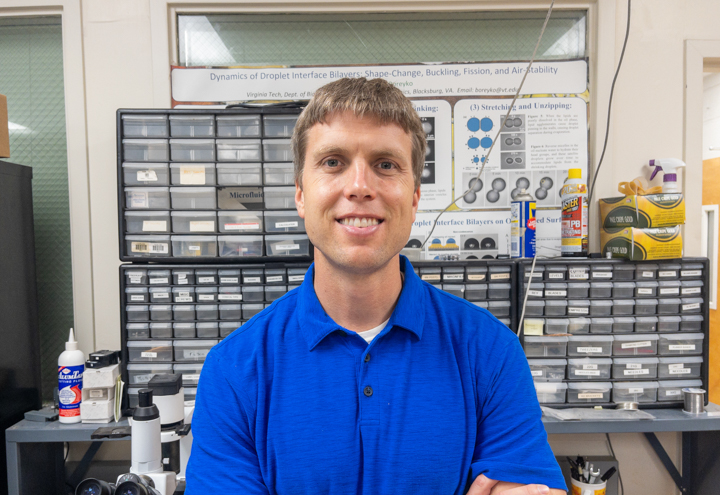
Sept. 12, 2025, Blacksburg Va. – Jonathan Boreyko leads the Nature Inspired Fluids and Interfaces Lab, located in Norris Hall at Virginia Tech. (Eli Lamport, News Feed NRV)
Currently, a dozen Virginia Tech students work in the NIFI lab on a variety of projects. One of these students is Grant Helm, a senior studying Mechanical Engineering. Helm started researching at NIFI earlier this summer. One project that Helm has been working on is using high speed videography to analyze how disease spores spread between barley plants. Helm explains how “when water droplets coalesce on a hydrophobic surface like a plant leaf, they release a little bit of kinetic energy and jump off the surface.” If a plant is sick, fungal spores on its leaves can hitch a ride on these jumping water droplets. Once the water droplets clear the “boundary layer” immediately around the leaf, the spores can be blown downwind, quickly spreading to nearby plants.
Jumping droplets were first discovered by Boreyko in 2012, who was studying the phenomena in wheat plants. Helm is trying to identify any differences in the behavior of jumping droplets on Barley leaves. Something new that Helm has observed is a “billiard ball” effect where all of the energy created by droplets fusing together is transferred directly into a spore, launching it into the air. All of this research is made possible by the NIFI lab’s Phantom high speed camera, which can capture up to 1 million frames per second. “The imaging is something that I didn’t expect to do in the lab, and it’s been really fun,” says Helm.
Another project that Helm is working on at NIFI involves figuring out how to improve the efficiency of heat transfer in boiling processes. Every liquid has a critical heat flux, which is the rate of heating at which a vapor barrier forms between the liquid and the heating element. At that point, the heat is no longer being transferred effectively into the liquid. “You aren’t heating the water anymore, you’re just melting the pot,” Helm explains. It’s been established that the best way to improve the efficiency of boiling is to raise the critical heat flux, which can be achieved by shrinking the size of the bubbles in the liquid.
What researchers at the NIFI lab are trying to do is get these small bubbles to leave the surface of the liquid prematurely, which would further improve efficiency. What they have found is that when the bubbles are small enough, they begin to act similarly to the jumping water droplets on a leaf. They merge together and jump off the surface, preventing a vapor barrier from forming and allowing for more heat to be transferred to the liquid.
Sept. 12, 2025, Blacksburg, Va. – Boreyko and a research student using the Phantom high speed video camera in the lab. (Eli Lamport, News Feed NRV)
A major practical application of this concept is in power generation. Most power plants, conventional and nuclear, use boilers to create steam to spin turbines. Improving the energy efficiency of this process at the source could have significant positive effects, including a reduced carbon footprint to cheaper energy costs for consumers.
Boreyko and his team are also interested in applying these same principles to cooling processes. Data centers are a particularly compelling use case because they are putting an increasingly significant strain on the power grid. “Currently we are just blowing chilled air across these entire facilities, so it’s not very efficient,” says Boreyko. As condensation forms on cooling equipment, it becomes less efficient. If this equipment was coated in a hydrophobic material those droplets could jump off the surface and evaporate, allowing for more heat to be absorbed.
The NIFI lab not only offers students the opportunity to work hands-on on a variety of projects, it also fulfills a longtime personal goal of Boreyko. “I didn’t do any research as an undergraduate, I didn’t have those experiential learning moments,” Boreyko explains. Running the NIFI lab allows Boreyko to provide the experience that he wishes he had gotten as a student. “I’ve published over 80 papers now, so that’s not necessarily going to blow my socks off anymore. But it never gets old seeing a student run up to my office to show me something they just discovered.” says Borekyo. Grant Helm says that “looking at things experimentally is a really great way to learn about how things work in the real world.” Helm is looking forward to the next breakthrough moment in the lab. “That’s going to be really really satisfying.” For more information on the NIFI lab at Virginia Tech, visit their website.
In a town known for its fast pace and high expectations, yoga is helping Blacksburg residents and Virginia Tech students slow down — and breathe. During National Yoga Awareness Month, both professors and students say the practice is reshaping how they navigate life.
Yoga has been praised for its physical benefits for decades, but in Blacksburg, it’s receiving attention for something deeper: its power to transform how people show up, carry themselves and connect with each other. With the spotlight on this September, local voices are highlighting yoga’s unique impact on both mind and body.
From student-led classes at Virginia Tech Recreational Sports to seasoned professionals teaching at In Balance Yoga Studio, the message is the same: yoga isn’t just a workout. It’s a way of life, and one that many say they didn’t know they needed until they found it.
For Virginia Tech senior Emma Roland, the weight of pursuing majors in both biological sciences and human nutrition, foods and exercise can pile up quickly. Roland always thought that yoga was just about stretching, but when she was introduced to it through one of her courses, she not only found a way to slow down the pace of her own life and catch her breath, but a way to give back to others as well. Roland was hooked and earned her 200-hour yoga instructor certification from In Balance Yoga studio in Blacksburg. Now she teaches weekly classes with Virginia Tech’s Rec Sports. Her classes focus on being present in the moment, setting goals and finding an outlet in all the chaos of life. She emphasizes the importance of letting go of everything exterior and taking time to relax your body and mind. When talking about her classes and participants, Roland says, “We’ve all had a long day and it’s like, okay, the next 45 minutes we can just worry about what’s going on within these four walls.”
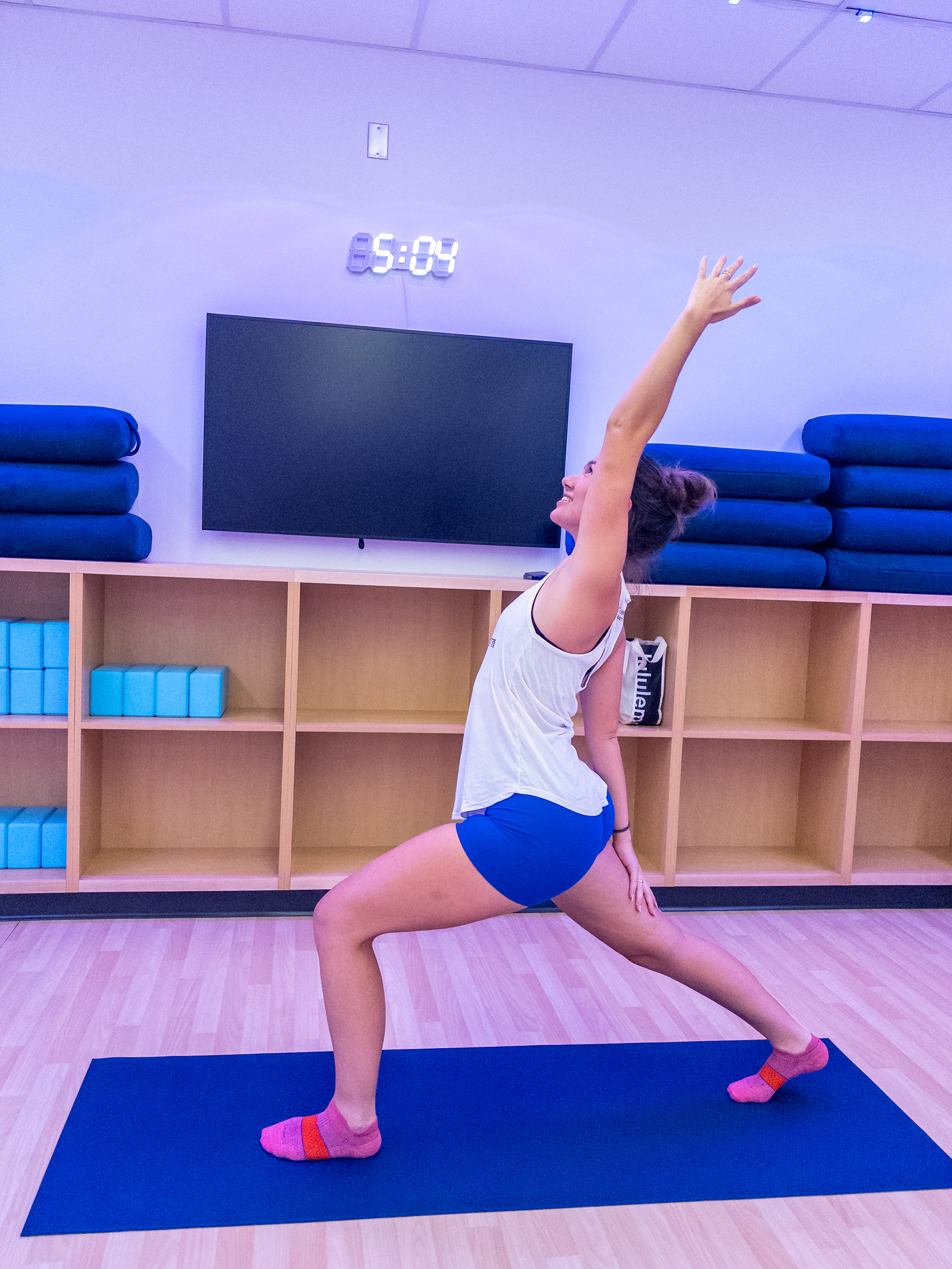
Ella Roland instructing yoga at Virginia Tech Rec Sports. Blacksburg, Va. Sept. 16, 2025 (Sage Mayhew, Newsfeed NRV)
The impact of yoga extends beyond just helping students. “Yoga saved my life, and I think it’s going to help me help others,” said Dr. Samantha Harden, a 500-hour registered yoga instructor at In Balance Yoga Studio, dissemination and implementation science researcher and professor. Like many, Harden was constantly chasing success, climbing the ladder, and reaching for career excellence. However, she found that her best self isn’t rooted in professional success, but in authentic moments where she can breathe, process, and slow down. Once she started, the shift was undeniable. Colleagues began to ask what had changed, how did she become more professional, more present, more positive? Her answer? Yoga.
When Harden first discovered yoga, she thought it was superficial and more about the look than anything else. However what she found couldn’t have been more different. “It’s just other people trying to breathe, and use story, and posture and community to heal.” She shared, “You can learn so much about yourself – your level of surrender, your discipline, your grit. There’s a lot more to it than postures…It’s your interaction with someone on the sidewalk, or behind the wheel, or in a class. Your ability to create union goes way beyond the mat…being present with others is how yoga can change Blacksburg and how we can be a bright light in the darkness.” That’s exactly what yoga is doing, creating change.
Both Roland and Harden, grateful for what yoga has done for them, agree that it’s about more than just personal improvements, but a way to give back and to build community. Harden shared that “The United States is facing a social isolation and loneliness pandemic, and yoga is an opportunity to improve your social health as much as it is your mental and physical health.” The benefit of entering a studio, seeing familiar faces, learning and growing together, builds community, consistency, and connection in a time when it’s needed most.
When it comes to yoga, “The doors are always open,” says Harden. Both student and professor urge more people to make the first stretch, and try yoga. “Just come and see the impact just one class can have, how it leaves the body and the mind in a more relaxed and present state.” , says Roland. With two separate locations in Blacksburg, and classes online, In Balance Yoga Studio offers over 40 classes weekly for all ages and experience levels. For students looking to get involved and stay on campus, Virginia Tech Rec Sports also offers various types of yoga classes every week for anyone to join.
In Balance Yoga Studio on Main St. Blacksburg, Va. Sept. 18, 2025 (Sage Mayhew, Newsfeed NRV)
Yoga isn’t just a practice for super fit people or people that seem to have all the money and time in the world. It’s for anyone needing to breathe, find an outlet and give their mind and body rest. “No matter what time of day or who you are there’s a class that can meet you where you are,” says Harden.
“Our board has historically been reactive instead of proactive in terms of establishing satellite voter facilities,” Board of Supervisors Chair April DeMotts (District G) said.
On Aug. 11, 2025, Montgomery County’s Board of Supervisors unanimously approved a draft ordinance for three voter satellite offices for the General Election. Those locations were the Blacksburg Community Center, Shawsville Middle School cafeteria and Auburn High School cafeteria. This proposed ordinance provided in-person voting locations for those living in eastern and southern Montgomery County.
On Aug. 25, 2025, the Board of Supervisors adopted one location as a voter satellite office. Four out of seven supervisors were in favor of this ordinance. Supervisor Anthony Grafsky (District E), Vice Chair Steve Fijalkowski (District C) and Supervisor Todd King (District D) opposed the ordinance.
From the conversations between supervisors regarding the ordinance, comments from citizens, the concept of equitable voting, previous changes in voting and more, voter accessibility in Montgomery County is not a topic to ignore.
The state of Virginia has witnessed a lot of change over the past decade regarding voting. Taking effect July 1, 2020, Virginia required a 45-day early voting period. The Voting Rights Act of Virginia was passed in 2021 which brought about various changes with absentee ballot handling and voter discrimination. Other implementations include same-day registration at a citizen’s precinct and shortening the registration deadline from 21 to 10 days before a general or primary election.
Sept. 19, 2025, Christiansburg, Va. – Campaigns for various offices fill the parking lot at the Office of Elections as early voting begins. (photo by Emily Dorsey, TheNewsFeedNRV.com)
Providing satellite locations alongside mail-in ballots and early voting options is an extra guarantee that all citizens of Montgomery County have the necessary means to vote.
The Board of Supervisors selected the Blacksburg Community Center as the singular satellite location. This site will provide in-person, early voting Oct. 25 and Nov. 1 from 9 a.m. to 5 p.m, in addition to Election Day on Nov. 4.
The Blacksburg location was chosen for four main reasons: Blacksburg Transit’s (BT) accessibility, statistics from previous years, citizen opinion and staffing concerns.
“We have numbers that we were able to look at from the last time we did satellite voting in Blacksburg,” DeMotts said. “Twenty-five percent of the early votes came from the Blacksburg satellite location.”
There is a correlation between a satellite location in Blacksburg and the routes BT provides. The free, public bus runs along popular streets for commuters to easily access grocery stores, Virginia Tech (VT) campus or popular Christiansburg locations like the Office of Elections.
Sept. 19, 2025, Christiansburg, Va. – Office of Elections officially open for early voting; conveniently located next to Food Lion and the Christiansburg Recreation Center. (photo by Emily Dorsey, TheNewsFeedNRV.com)
Traveling to the Office of Elections from Virginia Tech or Blacksburg via the BT takes about 80 minutes round trip. This option may not be feasible for voters who have busy schedules, full-time jobs, extracurriculars and other responsibilities. Also, the BT doesn’t reach all parts of Montgomery County like Shawsville and Riner.
Multiple citizens of Montgomery County spoke at the Aug. 25 Board of Supervisors meeting.
“This is your opportunity, as a board, to again show that you care about excessive and unnecessary spending of our tax dollars,” Wayman Pack, resident of Riner, said. “Let us all use the resources already available to us instead of spending taxpayers’ money on something that is not needed.”
“We need to not be afraid of who people are gonna vote for but give everybody ample opportunity to voice their vote,” Cindy Barton, resident of Montgomery County, said. “I think we can spend money on way worse things than making sure everybody has access to cast their vote.”
DeMotts explained why there are no satellite locations in other parts of Montgomery County.
“There was absolutely no demand,” DeMotts said. “Nobody from those areas emailed, called or came to the board and requested it. The two supervisors from those districts were also very clear they did not want satellite voting location in their district.”
Below are direct quotes from the Aug. 25 Board of Supervisors meeting:
“Voting couldn’t be easier than it is right now,” Fijalkowski said. “This proposal is unnecessary. I think it is a waste of tax payers dollars. It’s a burden on the registrar’s office and employees. Even if Shawsville had remained on the list, that doesn’t make it equitable.”
“I’m a big advocate for making sure [residents of Montgomery County] have access, but the flipside of that is how hard we worked our registrar’s office,” Supervisor Derek Kitts (District B) said. “I think it was 250, 260 hours of overtime … There are two sets of facts in this one. One is the workload, one is the access … Just cause one area of the county asked for it, and the other rest of the county doesn’t, we’ve got to be able to weigh that in.”
According to Connie Viar, director of elections and general registrar, this election was different because Viar’s electoral board was under the opinion, Montgomery County did not need a satellite location. Hence, the decision fell to the Board of Supervisors.
Viar’s team tested the potential sites in Shawsville and Auburn – primarily for internet connectivity. Shawsville did not pass the test, which meant there was no reliable internet to run poll books.
“Auburn tested perfect, but Supervisor King felt like it was not something his locality would be interested in,” Viar said. “The stats show that [voters] come [to the Christiansburg location].”
In previous years, the Office of Elections has been overworked because of the large voter turnout.
“When same day registration came about in 2020, that killed us,” Viar said. “Same day registration in 2023, it was horrible. Last year was worse. Last year we received 4,340 same day registrations. Counting myself, there are six of us here. For five people there were 756 hours of comp time last election cycle. Over and above your normal working hours…There’s never enough hands-on, so we work around the clock to meet the state’s deadline.”
In past elections, the registrar staff received comp-time. For this election, the Board of Supervisors gave the staff the choice between comp-time or overtime pay. In the future, the board will allocate money in their budget for temporary election staff.
There are many factors to consider when planning early voting options. DeMotts said it may be “possibly something the board will kind of have to deal with every election cycle.”
“Coming out of it this year, we have some pretty good direction for our staff,” DeMotts said. “What we want to do is proactively budget for future satellite voting locations as part of an early in the year process.”
Early, in-person voting at the Montgomery County Office of Elections in Christiansburg runs from Sept. 19 through Oct. 31, with one closure on Oct. 13. For more information, visit montva.com.









 > THE NEWS FEED <