Just as Blacksburg began to see warmer temperatures, it was hit with a wintry mix. St. Patrick’s Day saw freezing temperatures and even light snowfall. Locals are confused by the varying weather, which does not fit common expectations for springtime.
By Alexis Edwards, crime, safety, and justice reporter
My video project explored how often emergency blue lights on college campuses are actually used and whether students consider turning to them in moments of uncertainty.
The Virginia Tech Climate Action, Sustainability, and Energy Committee met Monday, Feb. 23, at Newman Library to discuss new proposals for how the university should move forward with its Climate Action Commitment. Student representatives are urging others to get involved in their initiatives and to help create a sustainable Virginia Tech community.
The Peer Assistance for Learning or PAL program at Virginia Tech is a peer lead initiative to spread mental health awareness and education on campus. The program is a unique way for students to learn about resources available to them and how they can best utilize them. Executive members Seneca McCaw and Madisyn Paris of the PAL program speak to the mission, training and initiatives behind the PAL program.
At Virginia Tech, the Rape Aggression Defense system (R.A.D.) teaches women self-defense techniques. Gabrielle Vessal is a senior and VT police department intern taking the course for the first time. She shared her experience and key takeaways she learned from the R.A.D. program.
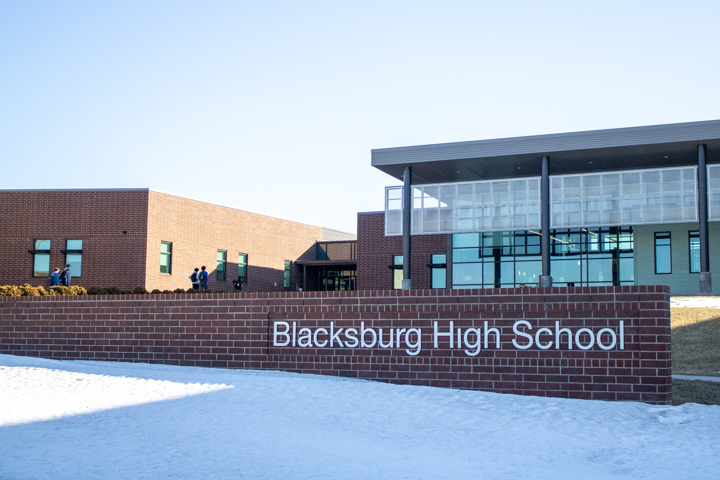
Students walk into Blacksburg High School for class on Friday, Feb. 13 in Blacksburg, Va (Photo by Emma Duncan, TheNewsFeedNRV).
Montgomery County goes by many titles—rural community, persistent-poverty county, the greater Blacksburg area, home. Some of these titles carry more weight than others.
For Montgomery County Public Schools, being classified as a rural area or not can stand between receiving federal funding and benefits.
The National Center for Education Statistics, a division of the Department of Education, uses a 12-category classification system to define locales as one of four categories: city, suburban, town and rural. Locales are different from counties: counties house an entire school district of locales, while locales typically represent one community or 1-3 schools.
According to the June 2007 NCES Status of Education in Rural America report, “The new measures or locale codes are assigned to each school according to the school’s physical longitude and latitude. Thus, these new locale codes make school data more consistent, accurate, and useful to policymakers, researchers, and educators concerned with rural education issues.”
The NCES Locale Lookup map shows that Montgomery County is majority rural, with most of the county falling in the rural fringe category. At the center of the county, two bubblegum pink regions dictate small cities, better known as Blacksburg and Christiansburg.
This map and data from NCES are used by other government agencies and departments as the basis for resource allocation. The U.S. Department of Agriculture has its own FNS Rural Designation Map used to qualify students for free or reduced lunch and the summer meals program. On this map, all of Montgomery County is green and classified as rural, except for Blacksburg and Christiansburg.
“We have four unique strands in our county: Blacksburg, Christiansburg, Shallsville-Elliston, and Reiner,” said Andrew Webb, coordinator of communications and public relations for MCPS. “Shawsville and Reiner qualify. Christiansburg does not. Blacksburg Middle and High schools don’t necessarily qualify, but Price’s Fork Elementary School does; it’s not necessarily within the town of Blacksburg limits, but it’s got a Blacksburg address.”
Webb explained that MCPS bases its internal classification and allocation on this map, acknowledging that most of the county is rural. However, some scholarship and financial aid programs don’t agree.
The George Washington Carver Assistantship Program through Virginia Tech’s College of Agriculture and Life Sciences “[supports] the development of high-achieving graduate students with varied, diverse experiences and backgrounds.” U.S. resident graduate students in this college can apply for the scholarship if they meet at least one of the following criteria: are a first-generation student, have a disability, are a veteran or come from a disadvantaged background, such as a rural area.
While the HRSA does not consider Montgomery County rural, the county is classified as a persistent poverty county, an area “in which poverty rates of 20 percent or higher have persisted for 30 years or more,” according to an article from the USDA. This definition may cause some to conclude that, if an area is rural for so long, it can lose its rural status and be redefined by its poverty, limiting scholarship access to a county that historically needs it.
The HRSA was contacted for a comment, but only referenced their “How We Define Rural” website. One aspect of the administration’s rural definition read, “outlying metropolitan counties with no population from an urban area of 50,000 or more people.” This is where the bubble gum pink regions come into play.
The Town of Blacksburg defines itself as “a vibrant college community with a daily population of over 50,000 people.” When Virginia Tech is in session, over 30,000 students call Blacksburg home. The population of Blacksburg disqualifies Montgomery County as a rural area.
As a tax-exempt organization, Virginia Tech does not pay local taxes to Montgomery County. However, the university still impacts its community and serves Montgomery County students economically and through development and education efforts.
“Virginia Tech gives in so many different ways and we can’t limit ourselves just to one measure,” said Mark Owczarski, chief spokesperson. “At our university, impact is about bringing families together, empowering students, bringing faculty into the local schools and hosting programming, not to mention living here. Faculty and staff have kids in the Montgomery County school system. When they decide to live here, they bring whatever talents and gifts they have to the community at large, along with investing their salaries in the area. Virginia Tech is Montgomery County, so as Virginia Tech changes, our impact changes.”
Many classes, including Community Writing in the Department of English, visit county schools weekly to teach students, host programming and support the development of Montgomery County. Clubs such as Primeros Pasos mentor disadvantaged students as they navigate post-secondary education and life.
While the Office of Undergraduate Admissions in Blacksburg, Va sits empty on Friday. Feb. 13, the building was full of hopeful Hokie applicants in November as onsite admission decisions were announced (Photo by Emma Duncan, TheNewsFeedNRV).
Although students from Montgomery County may not qualify for state and federal scholarships based on rural status, the Virginia Tech Office of Undergraduate Admissions offers onsite admission, a service that gives early application review and decision to high schools in the New River Valley and Roanoke Valley.
“They have their own process just for local kids,” Owczarski said.” “They don’t do it because they have to, they do it because they want to. We want Virginia Tech to be an obvious choice for students in surrounding areas.”
In mid-February, Virginia Tech will receive its economic impact report, completed by Tripp Umbach, which will detail the location and reach of the university’s cited multi-billion-dollar impact. Owczarski shared that he will be briefed on the report and able to answer questions about it beginning Wednesday, Feb. 18.
With a mixture of classifications, resources, and support services in Montgomery County’s reach, Webb clarified that the school district doesn’t let titles prevent its students from succeeding.
“Equity is a big part of what we do here,” Webb said. “We have a director of equity who strives to make education as accessible as possible, reducing barriers, whether it be transportation, meals, anything we can do to help level the playing field. If you don’t have a fair share, it’s hard to want to go to school every day, and we want to make our schools a place where every kid feels welcome and wanted.”
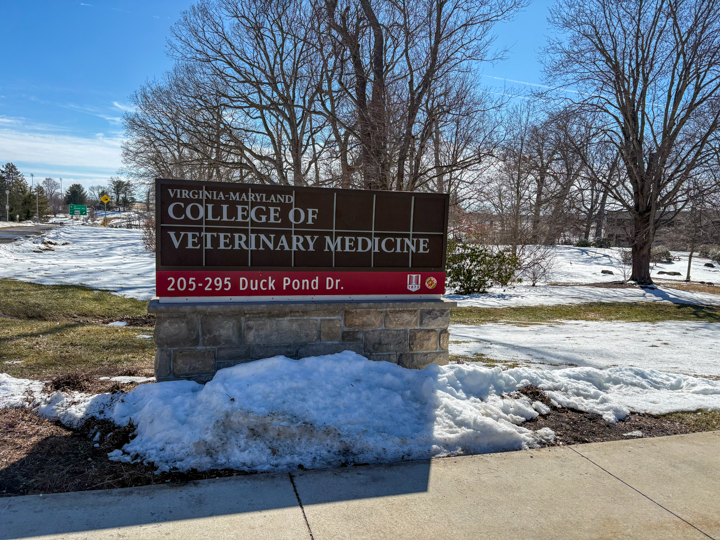
Sign outside the Virginia-Maryland College of Veterinary Medicine (Josie Sellers, TheNewsFeedNRV.com)
By: Josie Sellers, health and wellness reporter
BLACKSBURG, Va. (Feb. 13, 2026)- Researchers at the Virginia-Maryland College of Veterinary Medicine at Virginia Tech are testing a new approach to treating brain tumors using the drug verteporfin in combination with photodynamic therapy.
Dr. John Rossmeisl working at the Virginia-Maryland College of Veterinary Medicine. Photo by @vamdvetmet
Led by Dr. and Mrs. Dorsey Taylor Mahin Professor of Neurology and Neurosurgery at Virginia Tech, Dr. John Rossmeisl, the study will test three dogs diagnosed with brain tumors over 180 days to determine a safe and effective dose of the photosensitive verteporfin, “NanoVP.”
The trial specifically targets glioblastomas, which are extremely aggressive and infiltrative. In the United States, about 12,000 people are diagnosed each year, and they account for 14% of brain tumors. They are especially hard to remove because they lack a clear border.
Hopefully, the findings from the trial will aid in research on tumors in humans, once again giving reason to believe dog is a man’s best friend.
Cancerous cells in brain tumors, especially glioblastomas, can travel from the tumor that is visible using diagnostic techniques, such as magnetic resonance imaging (MRI). Because it is difficult to see the invasive cells, it is a challenge to remove the entire mass. As a result, it often recurs.
Rossmeisl is collaborating with the University of Maryland Associate Professor Dr. Joe Huang, who developed NanoVP. He compares it to an eraser at the end of surgery, where cells that are not removed by hand are eradicated.
“The goal of this particular study will be to administer the drug and then shine the light into the resection cavity after the main tumor mass is removed, with the goal of the drug in the photodynamic therapy killing any remaining cancer cells that remain behind that we can’t see,” said Rossmeisl.
NanoVP differs from other photosensitizing drugs because it crosses the blood-brain barrier. This barrier is a wall of cells that defends the brain from harmful substances, preventing about 98% of small-molecule drugs from entering.
Because of the relatively small size of the drug, it can cross the barrier to reach tumors.
Already, data from previous trials on mice show that the drug effectively kills tumor cells. In preclinical trials, it extended the life of the mice beyond other treatments. The current study will determine effective doses with limited side effects for the dogs.
The target doses will be based on the data they already have from the mice. Because dogs are much bigger than mice, they will likely need more.
However, because of the photosensitization, the patient may have complications when they are exposed to light. This study aims to research the ideal amount of injection.
While the dogs are under anesthesia, as much of the tumor as possible will be removed through surgery. Then, NanoVP will be injected through a vein. Once the tumor is removed, a laser will shine to activate the drug, killing the remaining tumor cells.
Within the next two hours, five blood samples from each dog will be collected for research.
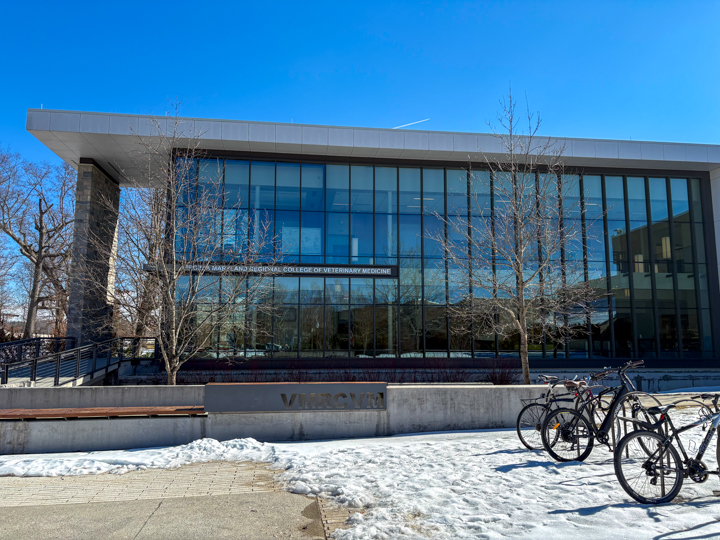
Virginia-Maryland College of Veterinary Medicine building (Josie Sellers, JMC 4814)
For the next six months, they will have follow-up visits, and owners may withdraw them at any point.
This trial differs from conventional animal testing, which involves generating a disease. Instead, his study focuses on dogs who already have brain tumors, which Huang says is a more ethical approach.
“If we give the drug with no drug-associated side effects in this trial, we’ll consider the trial successful,” said Rossmeisl. “It’s a very early-stage trial, so we’re not trying to prove that it’s going to totally eliminate cancer. That’ll be later on down the road.”
Rossmeisl hopes that in the future, this treatment will be used more frequently in combination with other forms of more traditional cancer treatment, such as chemotherapy or radiation.
While this trial specifically works with brain cancer, the drug is effective against any kind of tumor.
In fact, Dr. Huang has already used the drug for various kinds of tumors.
“You might need certain doses for certain types,” said Rossmeisl. “You might have to tweak the dosage or the exposures to light for certain types of tumors. But then again, those are details that would be answered in a different study.”
Researchers also want to utilize findings from the trial to improve treatment for humans, giving hope to those who may benefit.
“As a patient who has a brain tumor- and actually has had a couple- and has undergone two surgical interventions for it, I am really glad that they are doing this experiment, and it’s going through the phases of clinical trials before it approaches the patient,” said Virginia Tech student Sydney Hill. “It seems like a really good therapy, and I hope that it has some promising results.”
This trial is working with a European glioblastoma study using the same photodynamic therapy approach in people. Both trials are funded by the same company, Modulight, using a translational approach where the data from the trials are shared to improve both studies.
As of now, there are no dogs enrolled in the study. Those interested in the trial can find more information here.
Protein is the latest health craze in the U.S. However, the exponential rise in protein-marketed products and consumption has experts warning that this may have gone too far.
“Now, protein is part of the marketing environment,” stated Vivica Kraak, who holds a doctorate and is an associate professor of food and nutrition policy at Virginia Tech University. “It’s the new gluten-free.”
Hyper protein consumption is a predominantly younger facing health trend. Younger generations, such as Millennials and Generation Z, on average, spend $71 on protein items (meat, dairy, powders, chips, etc.) per week, whereas older generations tend to spend about $27, according to Empower’s recent “The Protein is Extra” study.
Additionally, 43% of Americans reported that they are willing to pay higher prices for protein-enhanced items. That percentage is higher among Generation Z, 56% of whom reported splurging on protein goods. The study further affirms Americans’ protein preference; it found that 50% of respondents check protein content first when reading nutrition labels, and that 45% consciously look for protein-labeled items.
The muscle-building macro further solidifies itself as a health stamp of approval as 72% of study respondents reported that if a product is labeled as protein-enhanced, they are more likely to pay extra. A majority of respondents also stated that they are looking to increase their protein intake – enter Simple Truth Protein Line.
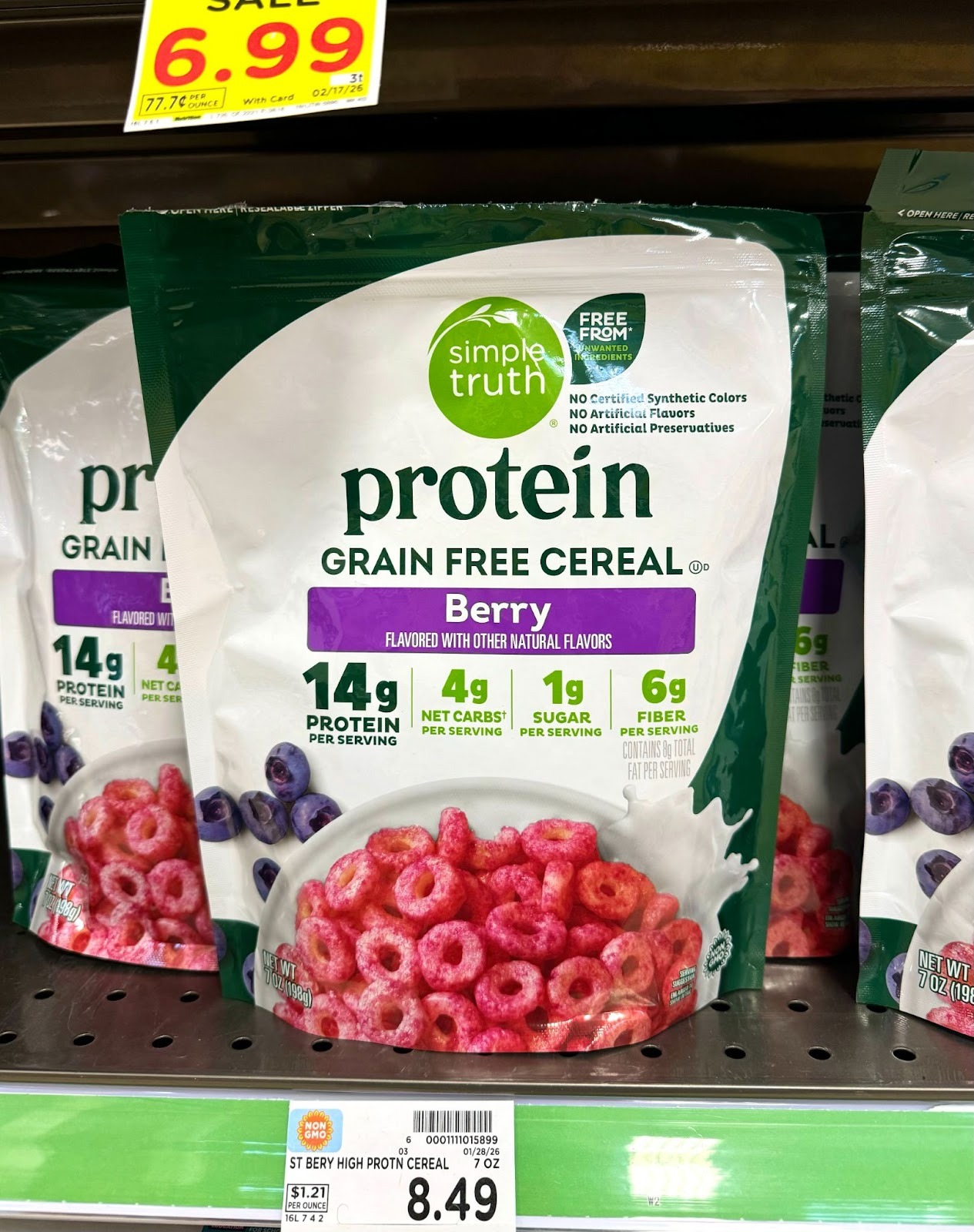
Launched on September 17, 2025, and marketed as an affordable and “free from unwanted ingredients” protein option, Kroger’s Simple Truth brand offers more than 110 protein-enhanced grocery items.
The line boasts everyday products enhanced with whey, pea, and various concentrated protein sources. Additionally, products that are already protein-rich are featured, like Simple Truth’s protein cottage cheese. Their version sports 15 grams per ½ cup serving, in juxtaposition to Good Culture’s 14 grams for the same serving size.
Other merchandise includes, but is not limited to:
Simple Truth Protein’s grain free berry flavored cereal on grocery store shelf. (photo by Sarah Shrader TheNewsFeedNRV.com)
The Simple Truth Protein Line appeals to health-conscious consumers, looking to eat right. While it may be grocery supplies, the line is marketed as health products and an investment in one’s overall well-being.
“We’re just talking about wellness more like a product or a service, but not comprehensively,” Kraak stated. “We live in a very saturated environment with commercial messages. That’s just the nature of American society.”
The U.S. is by far the largest health economy in the world. Valued at $2 trillion, it represents one-third of the global wellness economy according to the Global Wellness Institute.
“I think the opposite of mindful living and mindful eating is this optimization culture that’s being driven by marketers and advertisers,” Kraak stated. “There’s a whole monetary economy behind it. I think it’s going to have detrimental impacts if you can never reach perfection.”
As wellness is packaged and sold to American consumers, health fads often present themselves as a capitalist opportunity to gain market share. Spanning from ketogenic diets, Whole30, juice cleanses, gluten-free and now to protein-centric diets, Kraak noted that pervasive health claims and marketing have oversaturated the market and led to confusion surrounding nutrition.
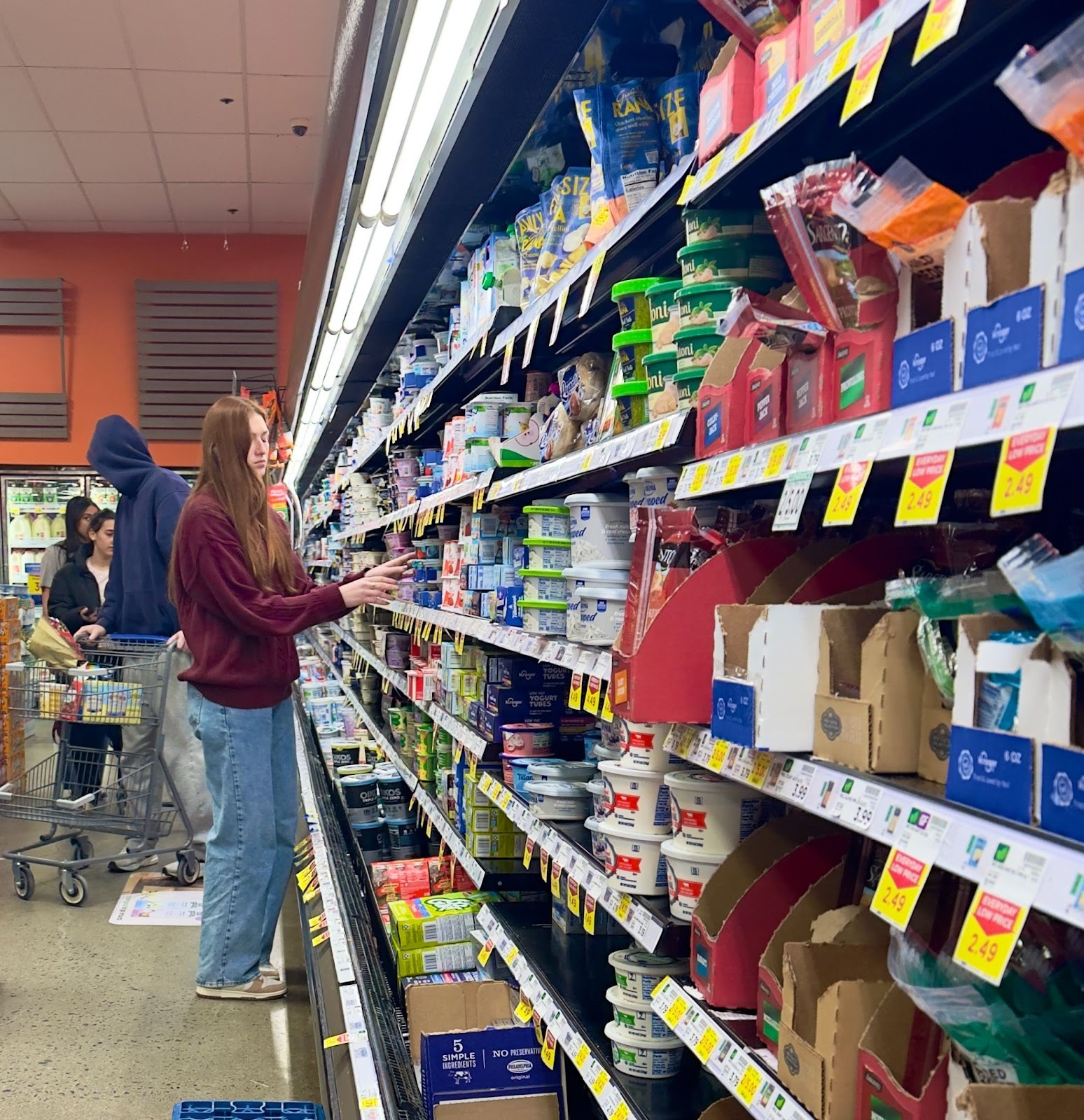
Woman compares yogurt brands at Kroger in Blacksburg, VA. (photo by Sarah Shrader TheNewsFeedNRV.com)
“We don’t yet know how much ultra-processed food can be consumed without having health risks,” stated Brenda Davvy, who holds a doctorate and is a professor in the department of human nutrition, foods and exercise at Virginia Tech University.
Kroger’s push for protein is also a symptom of a larger trend in the U.S., according to Kraak. While American protein intake increased in recent years, the new federal dietary guidelines encourage greater protein intake across the board.
“For decades, the recommended daily intake of protein has been 0.8 grams of protein per kilogram of body weight,” Davvy stated. “The latest version of our dietary guidelines, which were just released, increase this a bit to about 1.2 grams protein per kilogram of body weight.”
Kraak addressed the change in nutrition guidance, asserting that, today, most Americans are not underconsuming protein, but more likely overconsuming it. She noted that without proper movement, excess protein stores as fat in the body. Further, Kraak added that protein diversity, specifically consuming plant-based proteins, is more crucial than eating it in large quantities.
Experts, like Davvy and Kraak, endorse the Mediterranean diet, which is ranked as the healthiest diet in 2025 by U.S.News. The diet focuses on whole foods with an emphasis on diverse plant consumption. Intuitive eating is also promoted, in contrast to other diets, which tend to suggest restriction of calories or elimination of food groups.
Kraak also emphasized the importance of integrating movement into daily life, such as ditching the car and walking, using public transport, engaging in frequent exercise and overall simplifying wellness in a media landscape that is designed to complicate it.
As Northern Virginia fills with massive data centers, tech companies are increasingly turning to rural counties for land. Places like Montgomery County, Va., may not have proposals yet, but experts warn that land-use decisions like these can affect communities for generations.
Nearly every Google search, social media post or online purchase passes through a data center somewhere. Companies rely on these facilities to store information, run websites and apps and manage internal operations like payroll, human resources and sales.
Data centers operate at different capacities. Hyperscale facilities differ from traditional data centers in their ability to host and operate at least 5,000 servers and cover at least 10,000 square feet of physical area.
“The number of operational hyperscale data centers continues to grow inexorably, having doubled over the past five years,” according to John Dinsdale, a chief analyst at Synergy Research Group. Not only will numbers increase, but so will their size. Advances in AI (artificial intelligence)-focused, GPU (graphics processing unit)-powered infrastructure are expected to roughly double the computing capacity of the next generation of hyperscale centers.
Companies like Google build at such a massive scale due to the demand for AI, data storage and other big-data computing pursuits. Hyperscale facilities are expanding rapidly across the United States. The number of hyperscale data centers doubled between 2019 and 2024, with more than 135 coming online in 2024 alone.
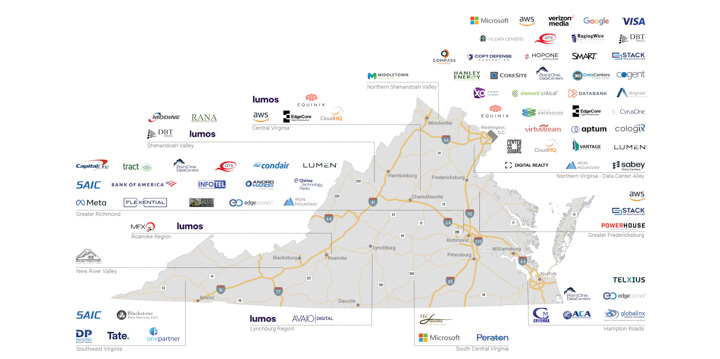
A map depicting the locations of major data centers across Virginia. (Map courtesy of Virginia Economic Development Partnership, vedp.org)
Today, local constituents in these communities are pushing back against projects once considered “guaranteed approvals,” due to economic and political resistance.
For residents like Carlos Balvin, a cinema major at Virginia Tech, the impact is visible. “They’re a real eyesore and a stain on what would often otherwise be a beautiful day,” he says.
With this ongoing growth, companies are shifting to locations that offer large tracts of cheap land compared to dense urban areas.
Jurisdictions in Northern Virginia heavily invested in fiber-optic and network infrastructure to build a higher network capacity, which has helped attract data center development. Many companies in the region overlap with the defense and logistics industry. By developing near Washington D.C., a strategic decision, companies are closer to that infrastructure.
“In many ways, data centers are probably taking advantage of the fact that the infrastructure was prioritized here and developed here,” says Margaret Cowell, associate professor of Urban Affairs and Planning at Virginia Tech.
Rural communities offer reliable grid connections for resource adequacy and open terrain, making line-of-sight transmission easier. Areas with less development become easy targets, potentially swayed by financial incentives.
“In the past, there were debates about whether it was fair to site landfills in poor, rural communities that didn’t have much economic opportunity,” says Cowell. “Waste management companies would approach them and say, ‘You’ve got land, you could make money off it.’” While landfills and data centers are quite different, weighing their strategic approaches may offer insight into the industry’s next moves.
For Montgomery County, the primary operating data center facility is located in Blacksburg. Brush Mountain Data Center, located within the Corporate Research Center at Virginia Tech, is a subsidiary of Advanced Logic Industries, a Virginia-based company. Brush Mountain is a smaller-scale data center compared to the majority of facilities located in Northern Virginia.
Planning commissions approve development for several reasons. Developments could be seen as a way to increase the tax base or improve the economic conditions within your community.
“If you’re doing smart economic development, you’re concerned with the workforce. If you’re going to say yes to one of these companies, ideally, there would be a guarantee of a certain number of jobs being created,” says Cowell.
Michael Cary, research assistant professor in the Department of Agricultural and Applied Economics at Virginia Tech, wrote in an email, “The one area of research that does have some preliminary results that I am aware of is labor markets. There is no evidence of job creation beyond temporary spikes in construction jobs.”
This means that as research further develops, local politicians will still consider these impacts in making economic decisions for their constituents. As data centers continue to grow across the United States, including Virginia, it’s important to remember that if constituents are loud enough, they can have a real influence on what does or does not develop in their communities.
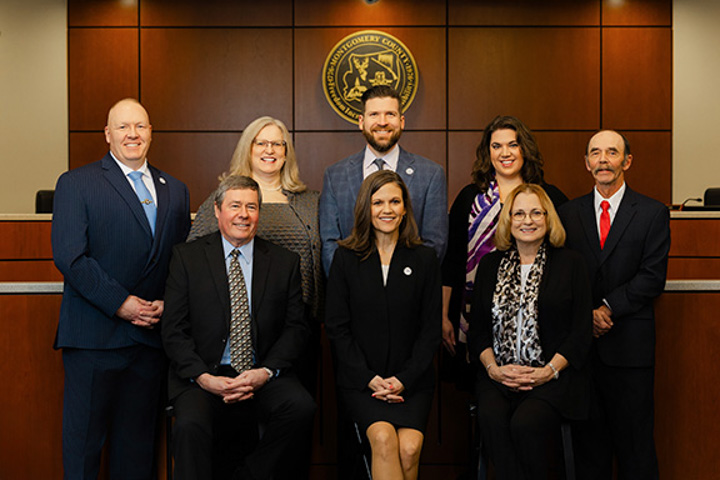
Montgomery County Board of Supervisors pose for a group photo. (Photo courtesy of BoardDocs)
The Montgomery County Planning Commission said there are currently no proposals or zoning changes under consideration for data centers, and the Board of Supervisors has only discussed the issue. Planning staff said no formal action has been taken beyond preliminary discussion.
“Montgomery County probably doesn’t draw much benefit from a data center, but it could be persuaded by promises of revenue,” says Cowell. “There’s a real tension about whether we should allow this in our backyards, because, in some ways, it feels exploitative.”
Michaela Scott, crime, safety and justice reporter
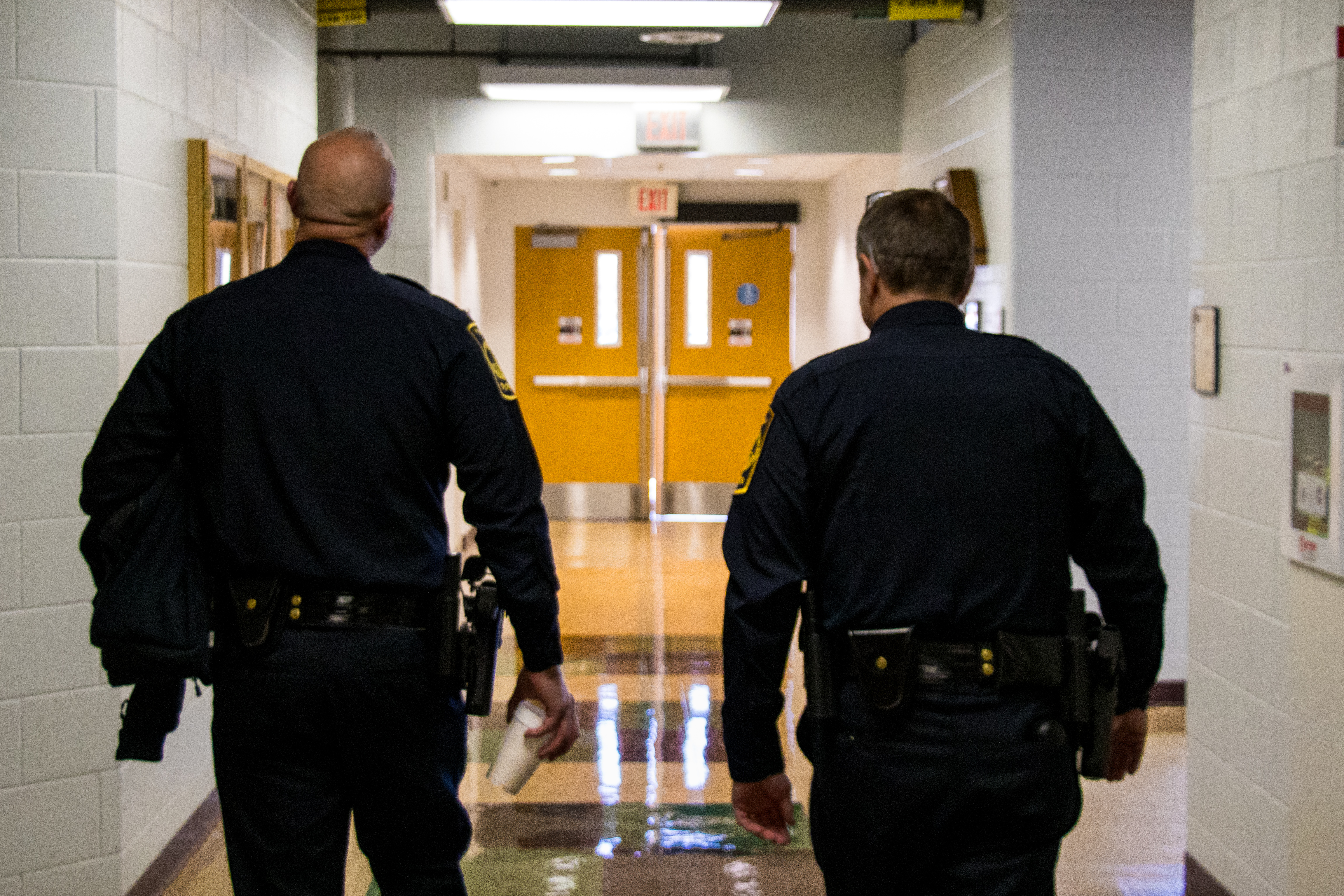
Virginia Tech Police Department Chief Deputy Tony Haga and Chief Mac Babb leave a meeting in the campus Public Safety Building on Feb. 12, 2026. (Michaela Scott/TheNewsFeedNRV.com)
Federal immigration detentions have surged nationwide this year, and the detention of a Virginia Tech student early last July continues to raise questions in the New River Valley about how federal immigration policy intersects with local policing.
As of Dec. 26, 2025, there are 212 active detention centers operated by U.S. Immigration and Customs Enforcement, which is roughly double the number in operation at the start of the year. Some local law enforcement agencies across the country have participated in what are known as 287(g) agreements, which are federal partnerships that allow trained officers to perform certain immigration enforcement functions. Similarly, at some universities, campus police departments have entered agreements with the federal government authorizing officers to assist in immigration enforcement.
According to ABC News, the Trump Administration’s surge in law enforcement has created a chilling effect on student attendance in districts nationwide. Thousands of students in counties across the U.S. are being reported absent from school daily in fear of ICE agents.
In Virginia, however, state policy shifted earlier this year.
On her first day in office, Gov. Abigail Spanberger rescinded Executive Order 47 (2025). It had originally required state law enforcement agencies to cooperate directly with federal immigration authorities and encouraged participation in federal deputization programs.
In essence, the order removes the initial mandate, allowing state law enforcement to refocus on their core responsibilities, such as keeping Virginians safe.
The move marked a shift in state policy and offered reassurance for students. The Virginia Tech Police Department says their mission has always remained the same.
“Nothing changed from the day before to the day after the new executive order,” said Mac Babb, VTPD chief of police. “We’ve been the consistent agency all along in our focus on supporting the community.”
However, social media and conversations across campus have raised questions regarding whether VTPD would honor a criminal ICE detainer.
Anonymous posts warning of ICE sightings have continuously circulated on Yik Yak, a location-based social media, amplifying uncertainty among some students about what authority campus police hold in immigration matters. Babb emphasized that the department encourages students to contact campus police if federal agents are reported nearby, in order to verify legitimacy and to prevent unnecessary escalation.
Babb added that none of these claims have been proven to be true.
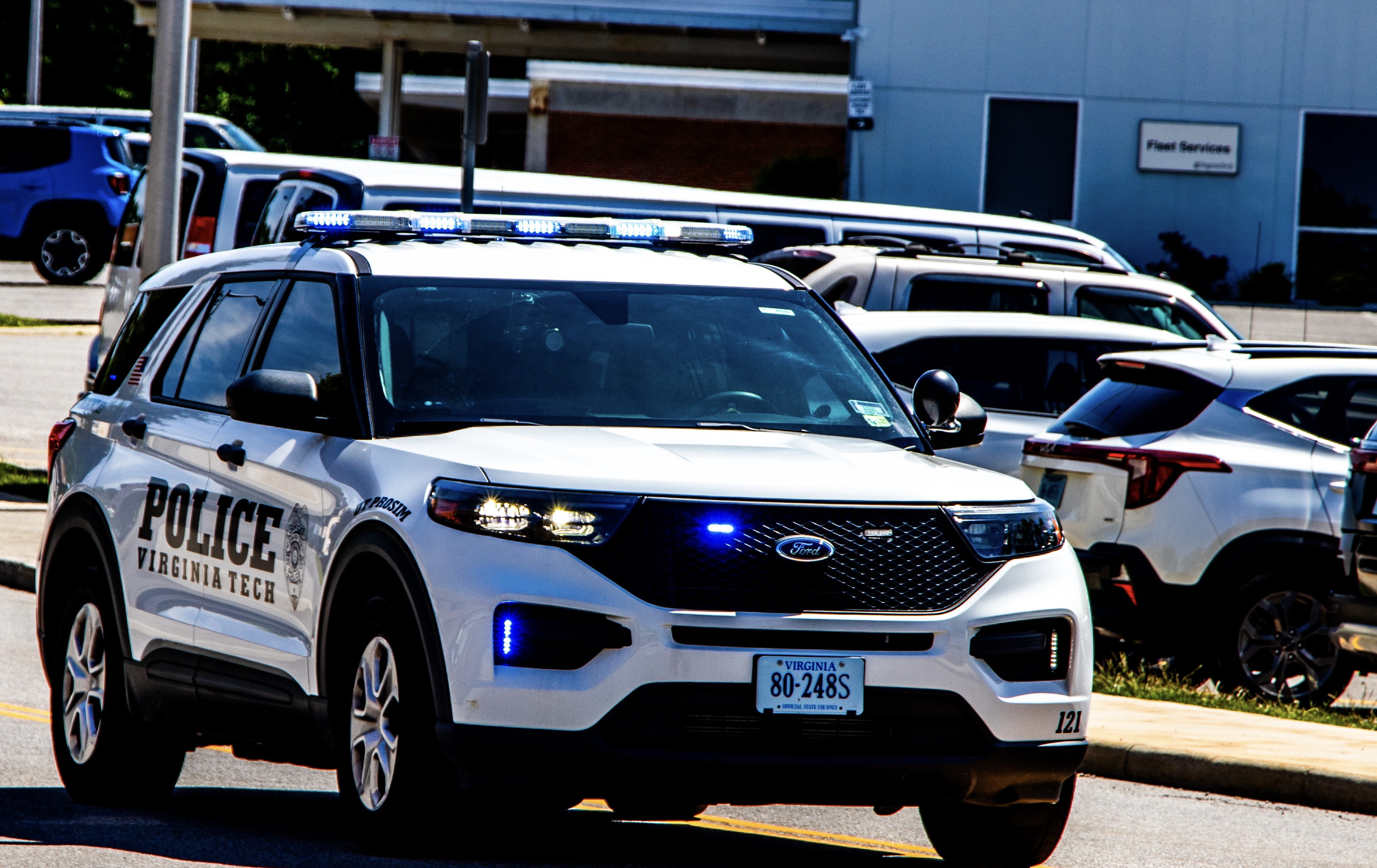
Virginia Tech Police Department officer responds in a patrol vehicle with emergency lights activated on campus on Feb. 12, 2026. (Michaela Scott/TheNewsFeedNRV.com)
“A lot of what VTPD would do is more for the community than it would be for ICE, but it would be perceived as, oh, you’re helping ICE.” Babb said. “If ICE was on campus, our purpose there would be to deescalate the situation, so we don’t expose more people to investigations by ICE and potentially subject additional people to arrest, which doesn’t need to happen.”
In regard to the Virginia Tech student detained in July 2025, Babb explained that VTPD was not a part of the enforcement action but later conducted an internal review to assess preparedness and potential implications.
“I think it’s important that everybody understands that the detention last July occurred after an actual criminal event, and unfortunately, it triggered an inspection during the arrest process,” Babb said. “So those are the types of things that we try to watch out for, and to make sure that we don’t have more people end up in situations where they’re under review as well.”
With international students making up 12% of the total student population at Virginia Tech, Deputy Chief Tony Haga explained that his team has devoted time to connect with the student population to build assurance in students.
“Some of those students are coming from places of origin where there is no relationship with the police department at all,” Haga said. “So already stepping into our community, we are somebody they’re not going to trust.”
To bridge that gap, VTPD has partnered with the Cranwell International Center to provide presentations and informational sessions outlining students’ rights and campus procedures.
University leaders say that those efforts reflect a broader institutional commitment to international students.
“If we’re going to save the environment, cure cancer, and develop the hottest technology in AI, we need to know how the world interacts with it,” said Mark Owczarski, VT university spokesperson. “From the very beginning, we truly welcome and seek out individual international folks from all over the world to come here.”
Babb reiterated that immigration enforcement is a federal responsibility, and that VTPD’s role remains focused strictly on criminal matters and campus safety.
While state policy shifts and national enforcement trends continue to evolve, university officials maintain that their role remains focused on campus safety rather than immigration enforcement. For some students, however, broader national debate means concerns about immigration policy are unlikely to fade.
“In light of current events, say what you will, but the values and the approach that Virginia Tech takes haven’t changed,” Owczarski said.


 > THE NEWS FEED <