Executive orders create uncertainty for researchers and admin at Virginia Tech

By Wilbert Ramirez, Politics reporter

A flurry of executive orders having been made by President Donald J. Trump since his inauguration on Jan. 20 has led to confusion and fear among students/researchers and principal investigators at Virginia Tech regarding the freeze on federal grants towards higher education institutions.

Why it matters:

  • Research is predominant part of Virginia Tech, a designated R1 university, the highest designation for research universities, with 4,000 plus researchers and $453.4 million in sponsored research expenditures in 2024 according to Virginia Tech.
  • “There may be questions that are raised from the various orders and memorandum that come in. So, we try to understand what it what the impact will be at Virginia Tech and then as information and an understanding comes in, we communicate that back to the university”, said Mark Owczarski, Interim Vice President of Communications and Marketing and Chief Spokesperson for Virginia Tech.

Misconceptions about the Executive orders:

According to the Federal Student Aid Office of the U.S. Department of Education stated, “Federal student aid funds (for example, Direct Loans and Pell Grants) were not impacted by the initial guidance, and we continue to award and disburse federal student aid.”
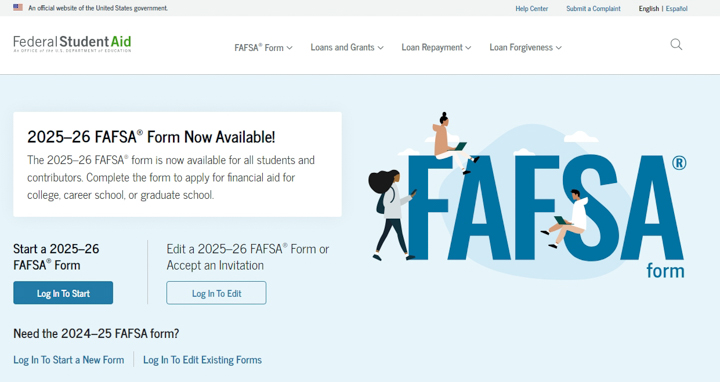
A screenshot of the current Federal Student Aid website taken on Feb 14, 2024

How is it impacting students and researchers:

According to student researchers who requested anonymity to speak freely without fear of retaliation, many are worried about funding suddenly being cut if the content their research does not align with Executive Order 13985 that stated,

  • “Terminate, to the maximum extent allowed by law, all DEI, DEIA, and “environmental justice” offices and positions (including but not limited to “Chief Diversity Officer” positions); all “equity action plans,” “equity” actions, initiatives, or programs, “equity-related” grants or contracts.”
  • “With the list of words that the National Science Foundation released they are flagging grant applications now, but it’s stuff like “trauma,” “multicultural, “advocate” and it’s like how you do even do social science?” said a psychology student and researcher at Virginia Tech whose research project is focused on substance abuse on LGBTQ+ young adults’.
  • “We were told last week that the State Department pulled the program, so Dr. Hodges and our team leads told us, ‘hey just keep doing what you’re doing but as of right now,’ said an international relations student and researcher from the Diplomacy Lab at Virginia Tech, who also asked to remain anonymous fearing retribution against his fellow researchers. “This is literally useless, we’re just doing it in the hopes that they would accept it by May, which I have extreme doubt they will because I don’t see why they would.”

What university administrators have said and done:

  • “We are following the situation closely and reaching out to our congressional representatives in Washington, D.C., to express our deep concern about this decision and its potential effect on our university and our nation’s long-term viability as a science and technology leader,” said Tim Sands, president of Virginia Tech in an official message.

In response to the dynamic and rapid changes caused by the executive orders, the university created a page that offers guidance to those with questions regarding research and updates on the “Federal Agency Updates” page.

Mark Owczarski in an office at Virginia Tech during a Zoom interview on Feb. 14, 2024, in Blacksburg, VA. (Photo, Wilbert Ramirez)
  • “It’s going to evolve, and we recognize that this community is vested into this, and so as we figure out things, and as the landscape externally changes as well, some things have been rolled back. Some things might be in the courts. Some things will be changed because of additional directives or instruction,” Owczarski said. “What we do know is we are committed to communicating, we are committed to research. We’re not going to just say we’re done, it’s who we are, and it’s challenging.”

Snow forces Fiber Arts Collective and other events to adapt at Virginia Tech

Fiber Arts Collective details written on chalk board: Courtesy of VT Perspective Art Gallery Instagram

By Caroline Herbert, Arts and Culture Reporter


The Fiber Arts Collective event was supposed to take place at Virginia Tech’s Perspective Gallery on Tuesday, Feb. 11, but was cancelled due to snow.

Why It Matters: Events like the Fiber Collective at Virginia Tech are important because they bring students together that have similar passions and interest, to create a community. But when obstacles like weather get in the way of doing so, all those involved must adapt.

The Big Picture: Virginia Tech’s decision to close schools due to the snow on both Feb. 11 and 12 not only affected classes and regular activities, but also planned events scheduled for these days.

  • Virginia Tech’s statement on their website: “Due to inclement weather, the Virginia Tech campus in Blacksburg will be closed on Tuesday, Feb. 11, 2025. All Blacksburg campus in-person classes and activities are canceled for Tuesday.”
  • Examples of events this effected: Beginner bowling tournament, Financial Wellness Workshop, movie night at the student center, and the School of Communication Professors Q & A

Zoom In: Olivia Coutre, Art Program Coordinator for Student Engagement and Campus Life, works with Studio 72. Coutre designed and facilitates the Fiber Art Collective Program and the weekly events that take place.

  • About Fiber Art Collective: Fiber Art Collective is one of the “crafternoon” events among others such as Watercolor Wednesday and pop-up programs in Johnston Student Center on Thursdays.
  • This week’s event was supposed to be in a similar format to previous weeks.
  • “We do everything from crocheting, knitting, punch needling, embroidery, hand-sewing, needle felting, and I also just introduced some weaving,” said Coutre. “I am available to help teach them any of the projects that they want to start but don’t know how to do yet.”
  • “Typically, we have a pretty good group of returning students that come every week, and then we’ll have a few new students that will show up,” said Coutre.
Activity at Perspective Gallery: Courtesy of VT Perspective Art Gallery Instagram

How they adapted: Although Coutre says they are bummed that this week’s event fell on a snow day, she said they found ways to adapt to the circumstances.

  • “People were sharing updates on their projects through a group me that one of the students started, which was a nice alternative if we couldn’t meet.” said Coutre, “I encouraged people to work on their projects on the snowy day.”

Zoom Out: Beyond the Fiber Art Collective, there were many other events that were affected by the snow cancellations. On Tuesday, Feb. 11 there was supposed to be a School of Communication Professors Q and A.

  • Emma Duncan, Society of Professional Journalists (SPJ) member who has been
    playing a role in the planning of the School of Communication Professors Q and A, shares her experience with the event cancellations in Blacksburg. Originally supposed to be on Feb. 4, this event has been through a long planning process due to the room and professor availability. With the rescheduled date being Feb. 11, the snow cancellation date, they are having to reschedule once again. Duncan and others involved with the planning of this event decided to move it to Tuesday, Feb 18, on zoom to avoid any further rescheduling due to weather in the future.
  • Duncan shares that for SPJ, this type of cancellation is unusual.
  • “With planning any event, you never really think about weather because most of the events we do for our club are indoors. Our biggest challenges are normally scheduling guests to come,” said Duncan “It was the first time we’ve had to reschedule for weather.”
  • Duncan is adapting with a positive mindset. “We’re hoping zoom might even bring out more attendance,” said Duncan.

Looking forward from Winter Storm Harlow: How to prepare for the next weather event

By Sophia Gerni crime, safety, and justice reporter

The New River Valley has experienced many power outages due to Winter Storm Harlow. With falling trees, power lines down, and high gusts of wind, many realized they were unprepared. And with the potential threat of winter weather ongoing, it is never too late to begin preparing.

Why it matters: People often underestimate the importance of preparation for power outages, especially when the temperatures drop below freezing. It is important that people prepare, just in case it happens again. 

  • “ I wasn’t prepared, not at all,” said Clemie Cahir, a student at Virginia Tech. “If I took anything away from my experience, it was that I should probably have a safety kit ready for if the power goes out again.”  
Appalachian Power employees working to restore the power lines. Photo courtesy Appalachian Power via Facebook.

The big picture: Appalachian Power has provided continuous updates within the New River Valley as they work to repair the damages caused by Winter Storm Harlow. Appalachian Power also provided a list of essential items to have in preparation for the next time there might be a major storm. 

  • Flashlights and Fresh Batteries 
  • Candles, matches, or lighters 
  • Portable heater, oil or gas
  • Battery-powered radio or televisions 
  • Important over-the-counter medicines 
  • Camping equipment, such as sleeping bags, camp stoves, and lanterns 

Yes, but: We can’t always rely on our phones during power outages. Using your phone’s flashlight for extended periods of time can drain the battery quickly. If there is no portable charger, your phone will not be able to recharge. 

  • “We had our phones’ flashlights, but our phones were dying very quickly,” Cahir said. “I never thought about getting a flashlight. Honestly, I just relied on my phone, but after that I am going to get one for sure.” 
  • Having a portable phone charger prepared at all times could be beneficial in many situations. This could help to stay in touch with loved ones, having the ability to receive updates on the situation, and a way to call for help if something becomes a serious emergency.

Zoom in: About 37,000 people lost power starting Wednesday morning and continuing into the night. Without knowledge and preparation, perishable food spoils quickly. It is important to know how long frozen and refrigerated food can last without power.

  • Renee Boyer, head of Virginia Tech’s Food Science and Technology department understands that dealing with food during a power outage can be frustrating. She offers  some tips on what to do and things to look for if this situation shall occur. 
  • “As soon as the power goes out, the big recommendation is to not open the freezer or refrigerator doors. As long as you keep those doors shut, the food will last longer,” Boyer said. “If the power is out and you can keep the refrigerator closed, it can actually last four to six hours and be relatively safe.” 
  • “In terms of your food in your refrigerator, if that food gets down to room temperature then that food should be discarded,” Boyer said. “The issue with refrigerated foods is that a lot of those foods are considered TCS foods (Time and temperature controlled foods for safety). If there are bacteria or pathogens in that food, if the food doesn’t stay cold then the bacteria can reproduce and reproduce to high enough levels that it can make you sick.” 
  • “This time when the power went out it was cold outside. If it is below 40 degrees outside, you can actually take food from your refrigerator and leave it outside. This will make it last longer,” Boyer said.
Chart screenshot from Food Safety.Gov. Recommended by Renee Boyer.

The next time there is a power outage, it is important to have to have the essentials  on hand and a clear understanding of food safety when lights go out. 

Shared Responsibility: Construction Safety on I-81


by Bianca Campoverde
crime, safety, and justice reporter

Construction on I-81 near Salem, aimed at improving safety with added lanes and widening projects, has created work zones that increase the risk of accidents due to narrowed lanes, sudden lane shifts, and uneven surfaces. Drivers must follow posted speed limits and remain cautious in these areas to avoid collisions. This becomes even more important during the bad weather the New River and Roanoke Valleys have seen in recent days.

Why it matters: Implementing the necessary measures to protect everyone on the road and the cooperation of travelers in following posted guidelines are crucial to keeping families and friends within our community safe.

  • Construction began in December 2021 on the section between exits 137 and 140 to widen the road to three lanes and is expected to be completed by January 2026.  

The big picture: The shoulders are closed off, forcing vehicles to stay within the narrower lanes, which are often merged or shifted to accommodate the construction zone. Signs encouraging attentiveness within these zones are posted.

  • “I have a big fear around the construction zones, the roads are narrow and there isn’t much space for cars if something were to occur,” said Tulio Ceballos, Junior at Virginia Tech.
  • The ground is uneven in several places, creating bumps and dips that disrupt the smooth flow of traffic, presenting a challenging and somewhat chaotic driving environment.
  • “There is definitely an increased wear and tear on my car due to rocks and potholes, and the construction markers and signs are not easy to follow; they typically have only one sign instead of multiple throughout,” said Laura Funes Quiñones, who uses I-81 to commute to and from work.
  • The implementation of consistent and clearer signage, visible and reflective lane markings, and upkeep of road conditions are needed to ensure safety and minimize disruption for travelers.
Photo courtesy: Virginia Department of Transportation

Yes, but: Travelers must also be vigilant and adhere to posted signals, where increased hazards are present, which encourage safe driving behavior, such as reducing speed and following lane keeping signs, ensuring their own safety as well as the safety of others.

  • “Switching lanes and exceeding the speed limit in these areas puts everyone at risk, but people seem not to care and ignore what is meant to keep themselves and others safe” Quiñones said.
  • By ignoring safety guidelines, the risk within these zones increases immensely, contradicting the purpose of the project of creating safer travel conditions despite efforts to encourage safer and precautions within these areas.
  • “The zones are maintained well, but it is others who bring danger in these areas due to their carelessness while driving,” Ceballos said.

What we’re watching: With construction in the area estimated to last year-round, the consideration of enforcing penalties and fines to maintain safety guidelines is underway.

  • While authorities can create safer environments with better signage, lane markings, and road upkeep, it’s ultimately up to drivers to follow rules, adjust their behavior, and reduce risk.
  • “It would be a lot easier to navigate if everyone did their part to keep each other safe,” Ceballos said.

Maintaining a safer road environment is a shared responsibility between drivers and construction workers, as their cooperation is essential to ensuring safe driving in construction zones through collective vigilance and active participation.

Mill Mountain Theater welcomes in new Producing Artistic Director

By Will Frank, arts and culture reporter

Photo courtesy of https://www.visitroanokeva.com

The Mill Mountain Theater’s Producing Artistic Director, Ginger Poole, has officially retired, placing the theater’s future in new hands. 

Mill Mountain Theater has been a symbol of arts and culture in Southern Virginia for over 60 years, hosting hundreds of talented artists and programs on its stage since 1964. What makes the theater unique is its emphasis on supporting the arts with various performances and programs, not just the typical musical or theater performances expected at a theater. 

Ginger Poole, the previous Producing Artistic Director of the last 15 years, is credited for revving the theater twice through financial struggles and leading it through the COVID-19 pandemic. During the economic struggles, she continued to open the doors by hosting classes and a holiday show once a year for four years, while being the only full-time employee at the theater. 

“It’s an interesting take to apologize for a problem that you didn’t create. I knew the past of Mill Mountain and the quality of productions, and it would have been a detriment to the community if it were lost. That was my thought line to keep fighting for the theater, while we were digging ourselves out of a big, big hole. The other part was I truly enjoyed the people that I was working with”, stated Poole.   

While at the top of their game, like most other art organizations, the COVID-19 pandemic lowered the theater’s curtains. Poole led the charge of navigating the theater through this difficult period and was able to skillfully revive the theater to its present-day stature.

“Through COVID, however, it was different, because the first round of debt was Mill Mountain’s problem, and it was Mill Mountain’s problem to fix, where COVID was out of all of our control. It wasn’t just a Roanoke-centric problem, we were all in it together, nationally and globally. It had a different flavor [than the debt] but I had the same drive of wanting to keep Mill Mountain going. I wanted to keep my staff and my guest artists in my community and my volunteers safe. We were all in it together, and that comradery, and accountability, kept us going”, remarked Poole.    

Poole journeyed to Roanoke 18 years ago to pursue her career in acting and was asked to perform and choreograph in the MainStage Seasons, which turned into an opportunity to join the Mill Moutain Theater family as the Director of Education. She became the first female to hold the position of Producing Artistic Director at the theater. 

“My first time in Roanoke, I was brought in as an actor, and then I was brought back as a director, choreographer, and actor. I would come and go from Flatrock, North Carolina to Roanoke, for probably two years, back and forth, just being a guest artist in productions. From that, I built the relationship with Mill Mountain and became their Director of Education in a pinch”, Poole recounted.    

After a staggering 35-year career in the industry, 18 of which were with Mill Mountain, Poole will step down from her leadership role but will remain on a consulting contract with the theater to ensure a smooth transition.    

After a grueling 11-month period and reviewing hundreds of applicants, Matt Shields, a Radford University alum with a BS in theater, was selected to fulfill Poole’s position.

Shields grew up outside of Washington D.C. and fell in love with Southwest Virginia after his time studying in Radford. He has worked in the Mill Mountain Theater family for seven years, learning the ins and outs of every corner of the theater, previously handling the responsibilities of Director of Productions, prop master, costume manager, teaching artist scenic designer, and company manager. 

When asked what about Southwest Virginia influenced Shields to stay he remarked, “I loved the lack of traffic and how beautiful it is. The mountains, the rivers, the streams, we don’t have anything like that where I’m from, and lastly its sense of community. Roanoke is still a city, but it has a small-town feel. You get to meet your neighbors and the community members have so much support for what’s going on around here. That was awesome, to be a part of a community.” 

Shields plans to continue in the direction that Poole has been leading the theater down and wants to embody the leadership that he saw Poole demonstrate.

“Always lead with compassion. I don’t think any leader is successful unless they’re compassionate about the people who work with them and the staff around them. Secondly, it is being a servant leader. I try not to just sit at my desk all day, I try to be up helping the production staff build the show, or a development person write a grant or our business person write a budget. We are a team and it’s important that your staff sees that you’re still a working member of the staff”, said Shields. 

Poole and Shields have been working closely with each other during this period process to ensure a smooth transition between responsibilities. 

“Ginger and I have a great working relationship, so I think it makes the transition a lot easier, knowing that I can call on her when I need help. She is still in an advisory role while I put everything in my name. We are going to continue to prioritize our staff, our people, and our community. I want Mill Moutain to be a full experience as opposed to a ‘just come and see a show’. There will be small changes, but it’s still going to be the Mill Mountain that people know and love”, expressed Sheilds. 

Everyone in the Mill Mountain teams seems to believe that Shields is the perfect replacement to fill the gap that is left with Poole’s departure.  

International Art Exchange Gets It’s Start at Virginia Tech.

By Zain Omar

The Art, Research, and Technology Exchange (ARTx) was founded in collaboration with Virginia Tech’s Institute for Creativity, Arts and Technology (ICAT) and hosts conferences in specialized performance venues with universities on the advancement of technology’s role in art.

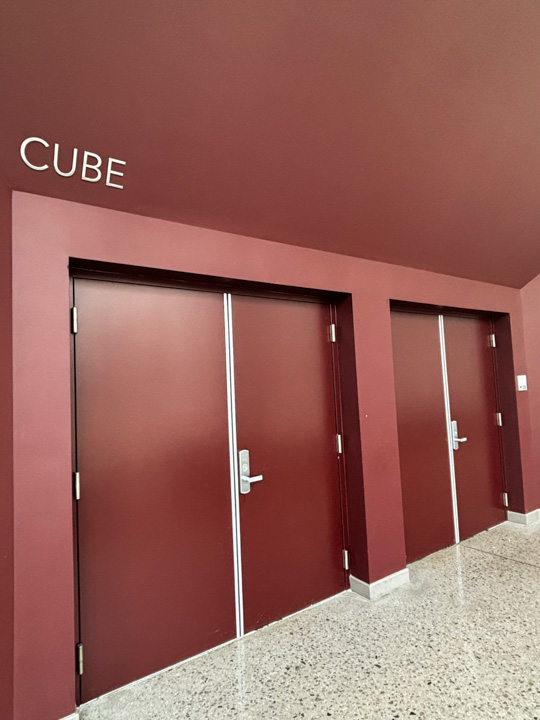
The idea of ARTx came to fruition when Kyle Hutchins, assistant professor of practice at Virginia Tech, played a piece that was composed specifically to be played at the Cube in Moss Arts Center. He realized that certain works could not be duplicated or transferred to digital media because the experience of the performance is affected by the environment.

ARTx allows for professionals and students in the art space to research the impact that advancements in technology affect the way art is shared, learned and taught. Universities and organizations have the opportunity to be awarded grants for their research to keep advancing multimedia performance spaces on their campuses. Virginia Tech was awarded the SEAD grant to fund future projects at the Cube during the spring 2024 ARTx conferences.

ARTx features guest lectures at their event where researchers and art faculty from around the world can share how they found that technology has impacted the learning and performance landscape. Music therapist, Grace Carr, has experienced first-hand how technology has affected the way we learn art. “As a music therapist, I have seen first-hand how teaching music and understanding it have changed because of technology. It is my opinion that technology has allowed for teaching to become much more accessible and readily available to people,” said Carr.

ARTx research focuses on advancements in technology and how they impact the way art is shared, whether in educational environments or in specialized performance venues, such as the Cube. According to Virginia Tech’s Institute for Creativity, Arts and Technology, “The initiative emphasizes collaborations with peer institutions that feature spatial audio and multimedia performance spaces and festivals.”

Advancements in technology also play a role in art classrooms. As new technology is being introduced each year, students and teachers must adapt to new ways to create.

Advancements in technology change the learning landscape for students who are pursuing careers in artistic fields. Former music education student and Music Therapist Grace Carr found that technology has enhanced the learning environment when it comes to artistic fields. “I would say that technology has changed the way we learn art, in that it had simply added on to what we learn. That is not to say that I didn’t learn anything the “old fashioned” way. When I was learning to transcribe music, I would first learn on paper, then on a computer software. So, I would say that in leaning art, technology can help us enhance what we already know,” said Carr.

With the rise of art created for specialized research environments, institutions have found that sharing their work in other settings can be difficult. “When institutions have highly specialized research spaces for art-making, sharing work with other institutions can become challenging, if not impossible,” according to ICAT. ARTx is a way for these institutions to team up to find ways to develop these works to be shared in other space.

Through ARTx, researchers are finding ways to better be able to share these works that have been composed to fit only certain environments. This research will open doors or new ideas and innovative ways that art can be created.

ICAT hosts collaborations with festivals, universities, and organizations throughout the year. They have currently teamed up with 11 partners with locations all around the world. Currently, ARTx has partners in Canada, California, Ireland, New York, and Washington, D.C.

Virginia Tech hosts the New Music and Technology Festival every two years, where faculty and researchers apart from ARTx convene to share their research through lectures, performances and installations. The festival also features student works and is an environment for art and technology disciplines to learn and collaborate with each other. According to ICAT, “the festival highlights diverse disciplines, including music, theatre, cinema, dance, visual art, creative coding, computer science, neuroscience, molecular biology, robotics, and cybersecurity.”

Events for this festival are held in specialized research and performance spaces around Virginia Tech’s campus, such as the Cube, the Sandbox, and Perform Studio.

When Virginia Tech is not hosting the organizations that are part of ARTx, faculty is sent to attend conferences all over the world hosted by other institutions in the art exchange. The most recent conference that Virginia Tech attended was a five-day conference at the Center for Interdisciplinary Research in Music Media and Technology in Montreal, Canada.

Through the collaboration with ARTx and ICAT, along with the other universities and organizations that have joined the art exchange, new understandings of the way technology and art intertwine will start to change the way we share and view art.

The Cost of Distance: Push for a Kidney Transplant Center in Southwest Virginia 

by Elizabeth Ann Miller, health and wellness reporter

Carilion Clinic is fighting to provide Southwest Virginia its first kidney transplant program, bringing life-saving care closer to home. The biggest obstacle remains support from state regulators. 

Carilion Roanoke Memorial Hospital. Photo by Emily Schabacker. 

Southwest Virginia is one of the few regions in the state without a kidney transplant center, forcing patients to travel up and down the east coast to facilities in Richmond, Charlottesville, or North Carolina. Carilion Clinic believes a local program would limit that burden and save more lives. However, the proposal lacks support from select state regulators. This hurdle highlights the broader challenges in providing specialized medical care to rural communities, where patients often face long wait times and logistical barriers to treatment. 

According to a report by Cardinal News, The Roanoke-based health system defended its proposal during a four-hour hearing in Richmond. Eight individuals, including a kidney transplant recipient, Joey Shervey, spoke in support. The state’s Certificate of Public Need division recommended denying Carilion’s request, raising concerns expressed by the University of Virginia (UVa), which currently operates the only transplant center in the region. 

Patient Struggle 

Joey Shervey spoke during the hearing to represent local patients. At 28, Shervey has already endured the emotional and financial burden of kidney failure and transplant. He was diagnosed with Stage 5 kidney failure at 26. Throughout the treatment and transplant process, Shervey and his wife, Jessica, were living in Roanoke. Appointments required them to frequently make the nearly two-hour drive to Charlottesville, straining their finances, careers, and daily lives. During the hearing, Shervey expressed that for patients like him, Carilion’s proposal represents a shot at a better life.  

“I’ve become the person I did not want to be. I am a 30-year-old man living in my parents’ basement. That’s not the goal I want to set for my future family,” Shervey said during his testimony. 

The Sherveys traveled to Richmond to advocate for Carilion’s proposal, hoping future transplant patients in the region won’t face the same struggles. Jessica Shervey took on the role of primary caregiver and spoke about the sleepless nights, constant travel, and anxiety that came with her husband’s health crisis. 

Opposition and Support 

UVa is the only health system opposing Carilion’s plan, arguing that the biggest barrier to kidney transplantation is the limited availability of donor organs in Southwest Virginia. In their opposition letter, UVa noted that it already operates outpatient transplant clinics in Roanoke, Martinsville, and Lynchburg, allowing Southwest Virginia patients to receive most of their care closer to home. 

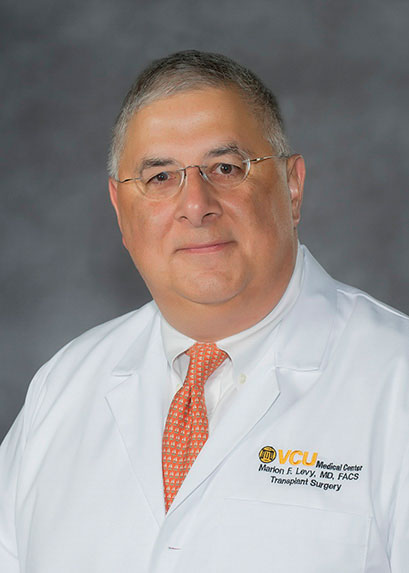
Dr. Marlon Levy, CEO of Virginia Commonwealth University (VCU) Health System and Senior Vice President for VCU Health Sciences, disagrees with UVa’s statement. VCU, one of the largest transplant centers in the country, often works closely with UVa. Levy noted that many donated kidneys go unused due to logistical challenges such as organ transfer delays and overwhelmed surgical teams. 

“Sometimes it’s because of organ quality. Sometimes it’s because of geography that prevents the organ from being transferred to the organ center. Sometimes it’s because the surgical teams are too busy to accept another organ,” Levy said during the hearing. 

Dr. Marlon Levy, CEO of VCU Health. Photo by Allen Jones.

In an interview, Levy emphasized that access to a transplant center is key, as quality of life improves significantly post-transplant compared to being on dialysis. He explained how a transplant center in Roanoke would help increase organ utilization rates by reducing the distance organs must travel and alleviate strain on existing transplant centers. 

“In 30 plus years of surgery, I’ve learned that it’s all about the patients,” Levy said, stressing the importance of better serving patients across the region. “Kidney transplantation is not just about survival—it’s about quality of life.” 

Carillion’s Plan 

The transplant program in Roanoke is led by Dr. Arnold Salzburg, Carillion transplant and general surgeon. Carilion has performed well in organ procurement, securing more deceased kidney donors over the past three years than any other Virginia health system. However, without a local transplant center, these organs are sent to other hospitals for transplantation. 

“As many as 5,000 people in our region are experiencing advanced stages of kidney disease—more than any other region in Virginia—and around 2,300 people in the state are on the transplant list, often staying on the list for two or more years before they can schedule a transplant,” Salzburg said in an article published by Carilion Clinic. 

For many in Southwest Virginia, access to a kidney transplant program isn’t just about convenience. Patients requiring transplants must undergo frequent medical evaluations before and after the procedure. For those living in Roanoke and surrounding areas, traveling to Charlottesville or Wake Forest adds a layer of difficulty and financial strain. 

“We have the infrastructure, we have the ability, now we just need the approval,” Salzburg said during the hearing. 

The Virginia Department of Health is set to close the public record on Feb. 28. The state health commissioner will review the case before issuing a final decision in the spring of 2025.  

Beyond the immediate decision, debate over Carilion’s proposal has sparked broader discussions about healthcare access in rural regions. Advocates argue that the regulatory process should prioritize patient needs, while opponents warn against creating programs without established records of success. If Carilion’s plan is approved and successful, it has potential to encourage other health systems to pursue transplant programs in areas currently lacking access. 

Virginia Tech provides Safe Ride services to ensure transportation safety

By Sophia Gerni, crime, safety, and justice reporter.


Virginia Tech Safe Ride van. Photo by the Virginia Tech Police Department.

Blacksburg, Va. — Walking around campus or the greater Blacksburg area during late-night hours can bring uneasiness and possibilities of feeling unsafe. Virginia Tech’s Police Department provides Safe Ride, which ensures safe and free transportation for anyone who may feel unsafe.

Virginia Tech’s nighttime safety escort, “Safe Ride,” starts in the evening and runs well into the night. Through a request on the TransLoc Rider app, they will provide walking escorts as well as car pickup by trained student drivers. Safe Ride is there to help students, faculty and staff, visitors of the university and Blacksburg locals get to their next destination around the Virginia Tech campus safely. With the usual form of transportation being a van, there are times when the van is not in operation. In this case, a member of the Virginia Tech Police Department will drive a police car to your location or give a walking escort if requested.

TransLoc Rider app showing the outline of Safe Ride pick up area. Screenshot from the TransLoc Rider app.

Kendrah Cline, Administrative Captain and Safe Ride Supervisor at Virginia Tech Police Department, said she wants people to be and feel safe when walking around Virginia Tech.

“The premise of Safe Ride is that you feel safe going from one place on campus to the next. Whether that’s in the van, an officer comes to pick you up, a security officer comes to pick you up or we walk.”

Cline knows that requesting a Safe Ride could be intimidating to those who have never used the service before, which is why the drivers are instructed to not to ask questions regarding the reason for the ride.

“We don’t really need to know your business or why you want a Safe Ride; we shouldn’t be asking you,” Cline said. “Whether it’s a safety thing or you just really don’t feel like walking, we don’t ask. I don’t want to say that we don’t care, but that’s not our judgment to make; we’re always going to say, ‘Okay, where do you need to go?’

Brooke Nicholes, a junior at Virginia Tech, called Safe Ride to avoid walking alone in the dark. “I was in my car and ordered a Safe Ride to get back to campus. I didn’t want to walk alone at night,” Nicholes said. “They didn’t ask me any questions; it was great.” 

Nicholes understands the importance of having someone with you when walking alone, especially for freshmen who don’t have easy or quick access to their cars.

“I remember when I was a freshman, I wouldn’t want to go to my car at night if I had to go somewhere. I would only go places during the day because I was too scared to walk alone at night,” Nicholes said. “I think it’s nice for freshmen, especially because at night you park so far away from your dorm. I think a Safe Ride is nice because you can get picked up from your car and go straight to your dorm safely.”

Safe Ride’s goal is to provide comfortable, easy, and safe access around the Virginia Tech campus. Cline understands that in some circumstances, some may feel unsure about calling, especially if the van isn’t running and a police officer comes to help instead.

“We’re very well aware that if you call for a Safe Ride, maybe you’ve had a little too much to drink and you don’t want an officer to come pick you up. Because of this, we want to have more student drivers so those requesting a ride feel more comfortable.” 

Safe Ride’s goal for student drivers is to provide a friendly face when being picked up. The Safe Ride service runs from 8 p.m. to 3 a.m. Sunday through Friday in the fall semester and 7 p.m. to 3 a.m. during the Spring Semester. On Saturdays, both during the spring and fall semesters, Safe Ride service begins at 4 a.m. With many students not ready to commit to the late work hours, these positions have been hard to fill. 

Cline would like to have these positions filled sooner than later. “One way that Safe Ride can be improved is to try to get these positions filled so that it’s a really efficient, full set of drivers, every night of the week,” Cline said. 

While Safe Ride is available for use, Cline understands that people may use other forms of transportation alone. With Uber and Lyft being popular for students at Virginia Tech, it is important to be aware of your surroundings and with another person if possible. 

“There are going to be occasions where you will need to order an Uber or something, and you are getting in that vehicle by yourself. In that case, I think it’s good for someone to know where you are and that you have taken this Uber,” Cline said. “Try to have a good, trusted group or friend with you, even if you are walking across campus or out in Blacksburg. Whether you’ve had some drinks or not, I think it’s good just to stay with a trusted group, or at least one person.”

Transportation safety of any kind is always important. When you are in the car with someone that you don’t know, stay focused and aware at all times.

Virginia communities brace for change in light of Trump’s immigration orders 

U.S. President Donald Trump signs an executive order in the Oval Office of the White House, in Washington, U.S., January 23, 2025. REUTERS/Kevin Lamarque

By Julia Lagano, Political reporter

Since his inauguration, President Trump has issued eight executive orders on immigration, sending waves of uncertainty through communities across the nation. In Virginia, where immigrants make up about 12.6% of the population and approximately 227,100 individuals are undocumented, the impact is expected to be significant. With Virginia’s proximity to Washington, D.C., many fear it is only a matter of time before federal enforcement actions begin. 

One policy at risk under these executive orders is Deferred Action for Childhood Arrivals (DACA), a program initiated by former President Obama in 2012 that provides temporary protection from deportation and work authorization to undocumented individuals who arrived in the U.S. as children. While it is not a direct path to citizenship, DACA has allowed thousands of recipients, “Dreamers,” to pursue higher education and secure employment. 

Cities all over the state have already begun to prepare. In the New River Valley, help can be found in Roanoke and Blacksburg. Virginia Tech organizations, like Latin Link, are coming together to support those who are at risk of being affected. Latin Link is one of the largest Latinx student organizations on campus that strives to be a tight-knit community and a safe space for minority students attending a predominantly white institution. The club promotes its members’ cultures and heritages on campus through educational, cultural, and social events. Jennifer Lopez-Perez, senior and president of Latin Link, emphasized the importance of advocacy at this moment, “There is a community here at Virginia Tech that will not stand down and that will continue to fight for their [immigrants’] rights. They [Immigrants] are here for a better future, and they are seen.”  

One way that the club takes a stand is by participating in Undoculliance, a week-long event hosted every year by the Latino Association of Student Organizations (LASO). With the goal to raise campus awareness about immigrant rights and the undocumented experience, the event shows support for DACA recipients and children of immigrants. “We have various guest speakers on a panel, hosted by a few organizations, that will talk about their experiences throughout college and within the workforce,” Lopez-Perez describes, “On social media, there are more organizations that will provide informational videos and provide resources for students both in and out of VT.” 

Outside of Virginia Tech, Commonwealth Catholic Charities (CCC) is making efforts to support immigrants all over Virginia. The CCC has been serving vulnerable populations in Virginia since 1923. They offer a range of services, including but not limited to housing assistance, refugee resettlement, legal support, language education, and permanent residence status. The order, Realigning the United States Refugee Admissions Program, put a freeze on refugee admissions by suspending applications, and ceasing federal funding to resettlement programs. Katie Dillion, Communications Manager for the CCC, explains the impact of this, “Without federal funding, we are struggling to provide these services to newcomers during their first 90 days, which is the most intense time of support.” The CCC’s immigration team is small to begin with, their Roanoke office only has one staff person, making the capacity to help low.  

For many in Virginia, the fear is not hypothetical —it’s personal. Lopez-Perez, like many others, has witnessed the hardships and sacrifices made by her parents to provide a promising future for their children. “As a daughter of immigrants, I have seen first-hand the battle that my parents have struggled through and continue to struggle through to be able to provide a better future for myself and my siblings. There are countless people that are just trying to live day by day to provide the same for themselves and their families,” she shared, “There are systems that are set in place that leave so many at a disadvantage and yet, they continue to fight and continue to work for that opportunity.” 

Double trouble: the impacts of Trump pulling out of Paris Climate Agreement, again

by: Gracie Gosier, environment reporter.

President Donald Trump signed an executive order titled “Putting America First In International Environmental Agreements,” instructing the United States to immediately pull out of the Paris Agreement on January 20, 2025.

UNFCCC at the 2015 UN climate change conference that resulted in the Paris Agreement. Photo from Britannica.

The Paris Agreement, first signed in 2015 at the UN Climate Change Conference,  is a legally binding treaty where nations all over the world committed to reduce greenhouse gas emissions and maintain the global temperature increase below 1.5°C over pre-industrial levels, in an attempt to control global warming and slow down the effects of climate change. 

In September 2016, the United States and China, the world’s two greatest emitters of greenhouse gases, confirmed their combined commitment to the deal, boosting its worldwide momentum. In June 2017, President Donald Trump announced his intention to remove the United States from the Paris Agreement. The formal withdrawal procedure began in November 2019 and was completed on November 4, 2020, making the United States the first country to leave the deal. On January 20, 2021, President Joe Biden issued an executive order to rejoin the Paris Agreement, highlighting the need of combating climate change. The United States formally rejoined on February 19, 2021, reiterating its support for global climate policies.

Why it matters: Despite the fact that 2024 is the world’s hottest year on record, President Trump wants to shift the federal government away from former President Joe Biden’s climate program and toward a wider embrace of fossil fuels. Climate change raises the probability of storms, causes more severe rainfall, and increases the likelihood of intense and devastating wildfires.

  • During his first term, Trump fulfilled a campaign promise by withdrawing the United States from the climate accord, joining Iran, Libya, and Yemen as the only countries not part of the agreement.
  • When Biden resumed office in early 2021, he quickly rejoined the Paris Agreement after a brief absence of less than four months. Biden’s climate change policy focused on reducing greenhouse gas emissions, and many of the actions taken by the Biden administration reversed or attempted to reverse the first-term policies of Donald Trump.
  • In 2022, Biden signed the Inflation Reduction Act . The legislation allocated hundreds of billions of dollars to promote renewable energy, electric vehicles, and greener manufacturing. He also developed comprehensive new regulations to reduce pollution from automobiles and power plants during his term.
  • Environmental organizations such as the Sierra Club, Sunrise Movement, and Earthjustice, say that President Biden performed more environmental policy than any other president in history.

The big picture: Trump’s announcement to withdraw again from the Paris Agreement marks a return to isolationism at a moment when collective global action is most needed. Exiting the deal twice is enough to damage U.S. credibility internationally and sabotage global climate diplomacy. It would also serve as a risky model for other countries to ignore their climate obligations, which could have a cascading effect and undo the progress that has been made collectively.  

  • Countries must submit emission reduction targets and give quarterly progress updates under the terms of the Paris Agreement. Before leaving office, Biden declared a new US goal: to reduce greenhouse gas emissions by more than 60% from peak levels by 2035, which would likely require a quick transition away from fossil fuels.
  • During Trump’s inaugural address on January 20, 2025, he proclaimed a “national energy emergency” and urged oil companies to “drill baby, drill,” that would allow him to reverse many of Biden’s environmental regulations and open up additional places for oil and gas production on protected lands.
Donald Trump at Capitol One Arena giving his inauguration speech. Photo by USNews.com.

Zoom in: Environmental activist groups such as the POWHR Coalition, have taken the next step into fighting against the withdrawal with their own plans. Their current campaign is towards defunding the new Mountain Valley Pipeline (MVP).  

  • The MVP has been associated with several negative environmental and social impacts such as deforestation, water quality degradation, and lower property value for surrounding areas of the pipeline. 
  • POWHR goes after JPMorgan Chase, Bank of America, MUFG, TD Bank, PNC, and Wells Fargo, the top investors of the pipeline. 

Zoom out:  U.S Senator Tim Kaine (D-VA), as well as many other experts and officials, have shown their support for the Paris Climate Agreement.

  • “From sea level rise in Hampton Roads and on the Eastern Shore to hurricanes in Southwest Virginia, climate change is affecting us all and threatening the safety of our communities,” said Kaine. “I’m disappointed, but not surprised, by President Trump’s short-sighted withdrawal from the Paris Accords, and that’s why I’m joining my colleagues in introducing this resolution to express support for the goals of the climate agreement. I remain committed to building on our progress in recent years to reduce greenhouse gas emissions, improve resiliency, accelerate clean energy production, and keep Americans safe.”
  • The America Is All In coalition, which formed following the United States’ initial departure from the Paris Agreement, continues to motivate climate action. These initiatives have increased in power, with bipartisan leadership from the U.S. Climate Alliance, a coalition of 24 states (including Virginia) and territories that represents more than half of the US economy and committed to fulfilling the Paris Agreement’s targets.

What we’re watching: The pullout was a component of a larger plan to decrease funding for renewable energy sources and increase support for fossil fuels. The administration is giving traditional energy sectors precedence over renewable projects and underlying the significance of energy independence.

With the globe experiencing more severe climate consequences, the U.S. decision has prompted other big polluters, such as China, to reevaluate their own pledges to the Paris Agreement. Despite the U.S. position, many nations are moving forward with their climate initiatives.

Relying on fossil fuels might be detrimental to the nation’s long-term interests. The energy transition has great promise for job creation, economic vibrancy, and global competitiveness, as well as for the environmental health of the United States and the world. The U.S may find it more difficult to control those developing sectors in the future if it continues to concentrate on fossil fuels.