Virginia battles against bird flu outbreak

by: Gracie Gosier, environment reporter.

A new outbreak of the avian influenza virus, otherwise known as bird flu, caused by the H5N1 strain, has been confirmed in many states, including Virginia. Rapid increase in the number of cases raises concern among the state’s public and health officials.

Wild turkeys by the side of the road. Photo by Gracie Gosier.

The big picture: There is a statewide demand for all poultry farmers to improve biosecurity to preserve the health and welfare of all chicken raised in Virginia

Why it matters:

  • On January 16, 2025, Virginia Department of Agriculture and Consumer Services (VDACS) stated that testing of a commercial poultry flock in Accomack County revealed positive findings for H5 bird flu.
  • On January 20, the Metro Richmond Zoo reported H5 bird flu detections in two deceased cranes.
  • Hunt Club Farm in Virginia Beach killed nearly 300 birds after a handful tested positive for H5 bird flu.
  • H5 bird flu outbreaks have also been found at three poultry sites in the Delmarva region, affecting over 500,000 chickens.

The Virginia Department of Wildlife Resources (VDWR) has reported an increasing number of sick or dead wild birds along the Eastern Shore. Due to this increase the VDWR released a list of recommended precautionary measures for dealing with dead wild birds that may end up on one’s property to avoid it spreading to people. The Virginia Department of Health also has a resource page on the virus and what to do if you think the H5 bird flu is present. However, almost all the cases where H5 bird flu was found in humans in the U.S were people who work with poultry and cattle regularly. Still, this doesn’t mean that the outbreak shouldn’t be of public concern.

Dr. Mike Persia, John W. Hancock Professor and Extension Specialist, Poultry Nutrition & Management. Photo by Virginia Tech School of Animal Science.

Zoom in: Poultry expert Dr. Mike Persia, warns that wild birds migrating toward flocks and cattle have the ability to fly over local farms and spread the virus. According to Persia, the virus causes 60-80% death in birds, and it just takes a few extra precautions to keep the entire flock safe. Persia outlined extra preventive steps to avoiding the virus among wild birds. “The alternative is if you have a positive, you’re going to lose your entire flock,” said Dr. Persia.

What we’re watching: Although H5 bird flu has not been discovered in people or dairy cattle in Virginia, the latest cases are extremely troubling for the state’s economy. Cattle, dairy, and eggs are some of the top commodities that the state produces. The outbreak has already contributed to record high egg prices and low demand, as the H5 bird flu has reduced the total number of laying hens.

  • According to the VDACS, Virginia’s agriculture industry has an economic impact of $82.3 billion annually and provided more than 381,800 jobs in the past year.
  • Since December 1, 2024, over 16 million laying chickens have been infected and depopulated due to the virus, which represents approximately 5% of our total national flock lost.

Although the prevalence overall in the country seems relatively low, tracking human infections in the dairy industry has been an ongoing challenge throughout the bird flu outbreak. Residents and officials can work together to reduce the effect of the outbreak and limit its spread by remaining informed, adopting sufficient biosecurity, and following recommended health precautions.

UNICEF at Virginia Tech is Making a Difference in The New River Valley.

By Zain Omar

Members of UNICEF at Virginia Tech gathered on February 6th, 2025, to create activity kits for children who are currently receiving care at the LewisGale Hospital Montgomery.

How it started: Freshman Sarah Soltani founded UNICEF at Virginia Tech in the spring semester of 2025.

  • Soltani was a member of her high school’s own UNICEF and was searching for a similar club when she arrived in Blacksburg for her freshman year at Virginia Tech.
  • Soltani values the meaning and mission of UNICEF and wanted to re-establish the club on Virginia Tech’s campus to spread those values in the Blacksburg area. “I feel like the mission is so important, basically helping disadvantaged children, and I feel like it really serves Virginia Tech’s motto, Ut Prosim,” said Soltani.

Zoom in: UNICEF at Virginia Tech dedicated their first meeting to create activity kits for children who are receiving care at the LewisGale Hospital Montgomery.

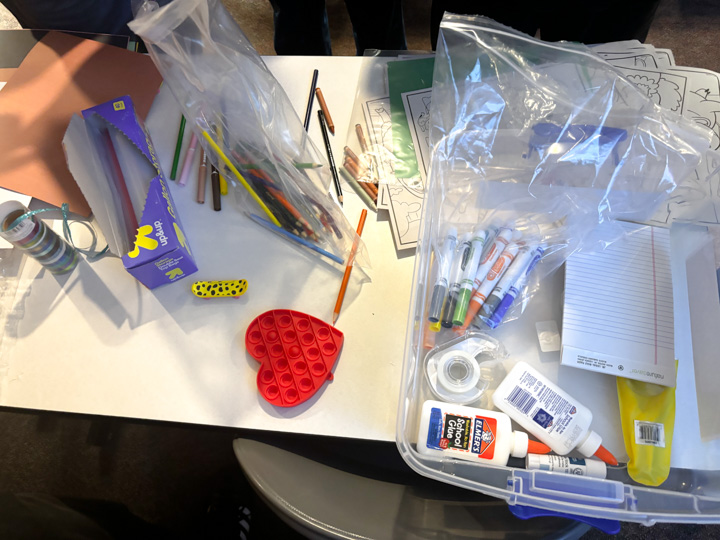
  • Students gathered in Torgersen Hall to put together bags of art activities to give to the children in the hospital.
  • The activity bags contained coloring pages, markers and colored pencils, ribbons, stickers, and fidget trinkets.
  • “When they come in, either visiting because their sibling is in the hospital or they themselves in the hospital, it’s a way to kind of cheer them up and provide some entertainment in a place that can be very scary for a child,” said Soltani, when asked why she wanted to have this be the first project for UNICEF at Virginia Tech.

Zoom out: Art therapy is a highly recommended practice for children who are currently sick or hospitalized.

  • Having activities for children to engage in can help to take their mind off of their treatments and what they are currently going through.
  • According to The Crayon Initiative, an organization dedicated to bringing art therapy to pediatric patients, “a study from 2018 documented that letting pediatric patients engage in art activities decreased their stress levels. There was also a noticeable improvement in the children’s moods.”

The big picture: UNICEF at Virginia Tech is dedicated to bettering the lives of disadvantaged children living in the New River Valley.

  • UNICEF at Virginia Tech has a goal to provide resources to children in the New River Valley to help shape their futures and help them overcome disadvantages they may face.
  • When asked about her goals as the President of UNICEF at Virginia Tech, Soltani said “the goal of the club is basically to deliver the fundamental necessities that try to give every child an equitable chance in life. So, from safe water to nutrition to education to sanitation, we’re really trying to help children that are in communities that are a little bit neglected.”

What’s next: UNICEF at Virginia Tech is just starting on campus and they are looking forward to growing the club in the future.

  • The club plans to host meetings every two weeks where they will be working on various initiatives to benefit children in the New River Valley.
  • Soltani is hoping to get more students out to their meetings to help make a difference. “I think we had a really great turn out for our first meeting, so I just want to continue on growing,” said Soltani.
  • The operations director for UNICEF at Virginia Tech, Iman Monday, wants to get other clubs involved in their initiatives as well. “In the future, I really hope that we can collaborate with other clubs, even with sororities and fraternities, so we can get more recognition and more people to join the club,” said Monday.

Trump’s Tariffs: The Cost of America First on Your Grocery Bill

Blacksburg locals check out at Kroger. Photo by Julia Lagano.

By Julia Lagano, Politics reporter

February 1, President Trump announced a 25% tariff on imports from Canada and Mexico. He also stated a 10% tariff will be applied on imports from China. Although these haven’t come into effect yet, the impact on the American consumer has already begun.

Why it matters: The economy is always a main concern for voters when it comes to the Presidential election. How will this candidate improve the economy? Many Americans felt that now-President Trump was the best fit for the job. One of President Trump’s main talking points during his campaign was to lower grocery store prices. He promised to do this on his first day in office.

Flashback: In 1992, the U.S., Canada, and Mexico signed the North American Free Trade Agreement (NAFTA). The trade pact was inspired by the European Economic Community. It eliminated most tariffs and other trade barriers between the three countries. The act provided mixed results; Mexico increased its exports. However, there was little economic growth for the United States and Canada. In 2020, a new trade agreement was enacted, the United-States-Mexico-Canada-Agreement (USMCA).

Zoom in: The average price for a dozen eggs in 2019 was $1.55. In 2025, it has soared to $4.95, a 219% increase. With this spike in prices, consumers nationwide are waiting to see the impact. They want to know how this will affect their community, like the New River Valley. There is concern for lower-income families. Will Supplemental Nutrition Assistance Programs (SNAP) adjust the allotted balances in response to these increases?

  • “The estimated poverty rate in the NRV is about 19%, almost double the rate for Virginia as a whole.  Poor people spend about 33% of after-tax incomes on food (compared to about 14% for the median household), explains Jeffrey Alwang, Agricultural and Applied Economics Professor at Virginia Tech
  • “We do have a fairly good proportions of customers that come in with EBT,” Ella White, Assistant Store Manager at the local grocery store, Earth Fare, shares, “If they see a decrease in what their benefits are, then we will probably lose customers to stores that offer more economical choices.”
Eggs are one of the food products that have increased in price the most. Photo by Julia Lagano

Zoom out: The United States relies on both Mexico and Canada for popular food and beverage products. These include fresh fruits, vegetables, and beer.

  • “About 17% of food consumed in the U.S. is imported and Canada and Mexico are first and third in terms of value of exports to the U.S. (the E.U. is second),” says Alwang.

To be specific, fresh fruits are the biggest import from Mexico. Last year, that was about $9 billion worth. Avocados made up one-third of that total.

Yes, but: A tariff is a tax on imported goods. These taxes are paid by companies that import the goods in question. Advantages of tariffs are that they protect American industries, increasing federal revenue, and encourage domestic manufacturing. President Trump is using these tariffs to put “Americans’ safety and our national security first.” His approach of an isolationism is also a way to promote American companies.

  • “It’s a bleak period right now,” White states. “I am trying to have a positive outlook on the whole thing. I would like to see that [the tariffs] will drive up the country’s economy by encouraging consumers to buy from within the United States.”

What we’re watching for: This was originally supposed to go into effect on February 4. Trump postponed the starting date to March 4. These tariffs could lead to a trade war with Canada and Mexico. The two countries have begun to retaliate in response. If the tariffs are implemented, only time will tell those effects, positive or negative, on groceries and Americans.

The Impact of Hate Speech in Schools: What Montgomery County Public Schools Incoming Policy Could Mean for Students and Staff 

By: Nyles Stone, Politics Reporter

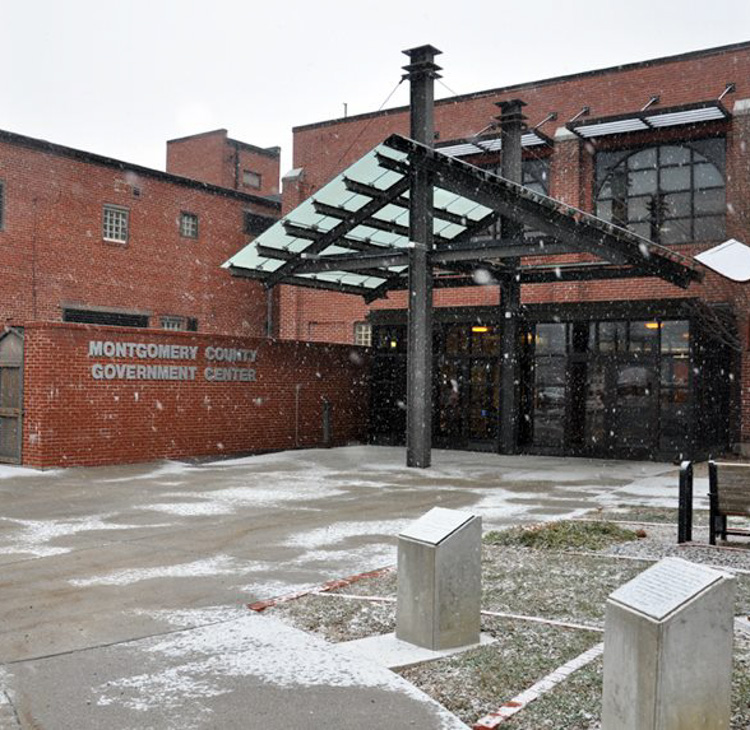
1/5/2025 – Montgomery County Government Center – Photo Credit, Montgomery County, VA Facebook Page

What will the new policy look like: While there is no current update on policies on the MCPS website, multiple sources including Cardinal News and News Messenger have been able to provide information regarding the new policy. 

  • The new policy will outline hate speech, structuring ways for reporting and investigating instances of hate speech;  
  • Elementary students could face up to three days of in-school suspension, while middle schoolers and high schoolers could face detention or in-school suspension on the first offense and 10-days of out-of-school suspension on the third offense. This could bring a longer punishment if student has persistent behavioral issues regarding the policy. 
  • The policy is said to not address staff related issues, having staff related issues investigated by human resources. 
Blacksburg High School Hallways, Photo Credit, Branch Builds

How does hate speech impact students and staff: James Hawdon, a sociology professor at Virginia Tech advises that exposure to hate speech can have serious psychological consequences. 

  • These include mood swings, fear, feelings of anger, and feelings of loneliness. Long term exposure can lead to lower levels of trust in individuals as well as social institutions. It can also lead to perpetuation of stereotypes and intergenerational transmission of prejudices.” said Professor Hawdon. 
  • Teachers and staff could not only be affected by being targeted by hate speech, but they can also witness and emotional strain, “if they see children they work with every day and who they have come to really care about use hate speech or be targeted by someone using hate speech, that is likely to be hard to watch.” 

But where does it start: For many students, hate speech is something that isn’t fully understood, being something that is repeated after hearing it from their parents, siblings, or peers. 

  • “Much of this is likely simply children parroting what they hear parents, other adults, or older siblings say. People often hate that which is different and unknown, but we have to learn that many characteristics that are often targeted for hate are “worthy” of being considered different and feared,” Hawdon explained. 
  • “So why hate some differences and not others?  We have to be told that this difference is somehow “so different” that it is deserving of being targeted for hate, and, more often than not, it is the people closest to us who tell us that.” 

Challenges: Hate speech falls into a gray area in U.S. law, with schools needing to find a balance enforcing students first amendment rights while also implementing a policy to stop hate speech in classrooms. 

  • “Speech, even that professing hate, is considered free speech that is protected by the First Amendment unless it meets very specific criteria about the imminent threat of violence,” Said by Hawdon. 
  • MCPS could follow a similar framework to that of other districts, an example of a policy that tackles harassment and discrimination while protecting first amendment rights is Richmond Public Schools’ Title IX procedures. 

Next Steps: As the district plans to move forward with the hate speech policy, we could possibly see staff training to ensure adequate enforcement of the policies. With multiple hate speech polices in place all around Virginia, MCPS possesses the resources to combat hate speech. 

The impact of substance addiction on the New River Valley community

By Evvy Fite, health & wellness reporter.

Photo by Pixabay

Among the many difficulties faced by rural communities, one that often goes unnoticed and under-discussed is the prevalence of substance use and abuse. In many cases, the resources that could help are few or non-existent, and life’s circumstances leave people defeated and more likely to turn to drugs or alcohol.

Why it matters: 

  • According to the Rural Information Health Hub (RIHH), “substance use disorders can result in increased illegal activities as well as physical and social health consequences, such as poor academic performance, poorer health status, changes in brain structure, and increased risk of death from overdose and suicide.” 
  • These problems perpetuate existing difficulties within many rural communities, and in many cases people in these areas are held back from improving themselves and their lives because of them.
  • The vicious cycle of substance abuse and other compounding problems holds these communities back and makes them a place to get out of, rather than a home to be proud of.

The big picture: RIHH states that “factors contributing to substance use in rural America include:

  • Low educational attainment
  • Poverty
  • Unemployment
  • Lack of access to mental healthcare
  • Isolation and hopelessness
  • A greater sense of stigma”
Screenshot from Rural Information Health Hub website.

Alcohol and nicotine are the most notable offenders. 

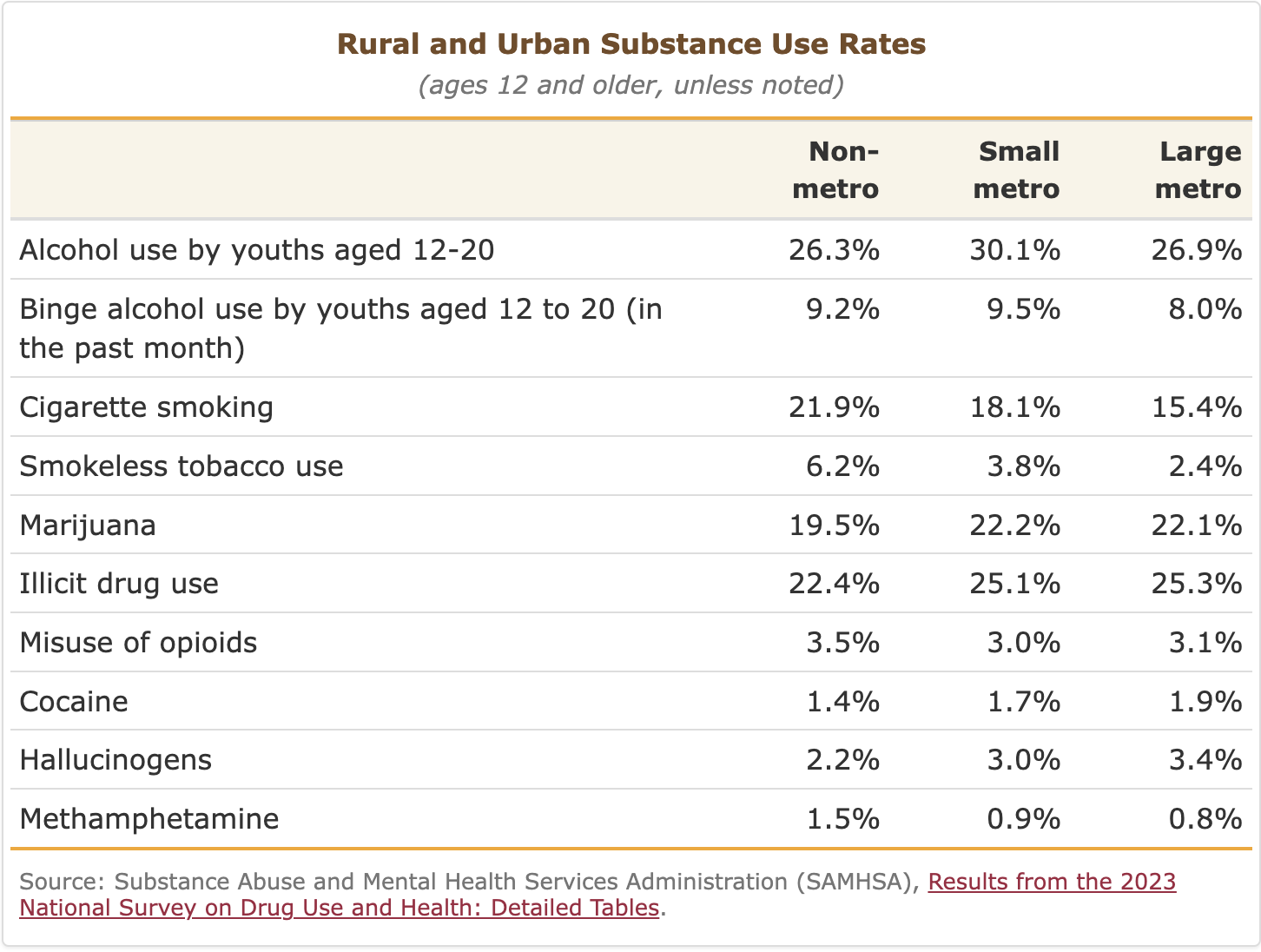
  • According to the RIHH chart on Rural and Urban Substance Use Rates in youths age 12-20, youths in non-metro areas use and abuse alcohol at similar rates to youths in metro areas, but use cigarettes, smokeless tobacco and methamphetamine at significantly higher rates.

Zoom in: The New River Valley is very rural, with over 15% living below the poverty line and nearly 25% considered cost-burdened. 

Photo by cottonbro studio from Pexels
  • A 2021 New River Valley Community Health Assessment by Carilion Clinic on the overall health of the NRV community found that “rates of drug overdoses higher than the national and state average [were] present in the New River Valley—especially in Pulaski and Wythe County.” 
  • As may be expected, those two counties also have the highest percentages of their population living below the poverty line – 24% and 21% respectively as of 2021.

In addition to substance abuse problems, the New River Valley also sees a large portion of the population experiencing other health problems. 

  • Chronic disease rates are higher than the Virginia average, including chronic lower respiratory disease, coronary heart disease and high blood pressure. 
  • Carilion Clinic also reports that much of the population lives in food deserts, and that “23.8% of adults report no leisure time physical activity.”

These are the situations that lead people to use and abuse substances. 

  • An updated 2024 New River Valley Community Assessment by United Way of Southwest Virginia found that rates of death by drug overdose have been climbing since 2018, with an increase of 105% in the past five years.

What is being done: Various organizations in the New River Valley are working to provide the resources that are often lacking in rural communities. 

The existence of any resources is a major step forward. 

Yes, but: Despite the efforts of these organizations, rates of addiction and health issues in the New River Valley remain high.

  • Even though resources are present, greater effort will be needed to connect people with those resources and decrease the stigma of asking for help. 
  • Time and the next NRV Community Assessment will tell how effective these resources truly are and what more is needed to free the New River Valley community from the shackles of substance addiction.

RCPS submits a proposal for a historical marker celebrating educator Lucy Addison

Will Frank, arts and culture reporter

Roanoke City Public Schools is currently in the process of applying for a state historic marker to highlight the pioneering education work of Lucy Addison.

The Big Picture: Lucy Addison was born to enslaved parents in 1861 in Fauquier County, Virginia. She ventured to Philadelphia to earn her education degree and returned to Virginia to teach in Loudoun County. After some time there, Addison was offered the position of interim principal at Roanoke’s First Ward Colored School in 1887. 

In 1918, she became the principal of Roanoke’s Harrison High School. At this time, the high school only offered classes as high as the eighth grade. Addison tenaciously campaigned and advocated for a secondary school curriculum and was able to steadily add advanced classes. The State Board of Education accredited Harrison as a high school in 1924, establishing it as the first black high school in Roanoke and providing Black students their first opportunity to receive an education.   

In 1928 the city renamed the school after Addison, attaining the title of Roanoke’s first public building named after one of its citizens.

 (Lucy Addison, photo curtsey of RCPS)

Zoom Out: The process of getting a marker proposal approved is complex and challenging. The Roanoke County Public School (RCPS) is opening the Booker T. Washington Community Empowerment and Education Center where the proposed marker would be located. RCPS is working with Nelson Harris, a Roanoke historian and former mayor, to help review and submit the proposal. He has had 10 proposals approved by the VDR

  • “The Virginia Department of Historic Resources (DHR) only approves about 25 per year for the entire state. Your marker application will compete with marker applications from Richmond, Lynchburg, Northern Virginia, Shenandoah Valley, Charlottesville, and anywhere else that people are submitting historic marker applications”, stated Harris.

For the marker, the team submitting has to provide research that backs up their claim on why the proposed individual, institution, or organization is historically significant. Once the research is completed the proposal is submitted to the DHR for review. They go over the research to make sure everything is accurate or add additional information. After the vetting process, if they accept your proposal, they then will work with the group who submitted it on editing and drafting the final text on the marker.

  • “Everything will take anywhere from four to six months. If the marker is approved, then the order is placed and it goes to the foundry. Right now, there’s about a six to eight-month lag time from the time the orders are placed until the marker arrives. So by the time I mail in my marker application, and everything goes well, the marker arrives in the city after a year and a half”, explained Harris.    

Zoom In: RCPS plans to open the new Booker T. Washington Community Empowerment and Education Center in the old RCPS Central Office, which is set to be the new hub for the Roanoke community, as well as the location of the proposed marker. Claire Mitzel, the school’s division spokesperson who also works very closely with Harris, has high hopes for the new community center’s impact.

  • “It’s going to serve, I hope, to support our students and families from all around the city. It’ll act as a welcome center, so families can come here to enroll their students, get immunizations, receive needed resources, and have a sort of parent and guardian empowerment workshop series”, Mitzel remarked hopefully. 

The idea of the new education center came from the inspiration of Lucy Addison, and her pioneering work in black education.

  • “Honoring Miss Lucy Addison, who the school is named after, is just a small way that we can shine a light on history, and make sure that generations of students and families know who she is. The building was built almost 200 years ago, and going into the future, we want to honor those who came before us”, stated Mitzel.

(Roanoke County Public School when it was first constructed circa 1920, photo courtesy of RCPS)

The opening of this center brings Addison’s achievements full circle. A new community center, by the community and for the community, supports students and families throughout Roanoke and provides them with the tools to help them thrive.

Embracing native plants for ecosystem health

Blacksburg, VA, Feb. 14, 2025 – Newly planted native trees line the riparian restoration area near Stroubles Creek, part of a vital effort to enhance biodiversity and stabilize the ecosystem in response to urban expansion and climate variability. (Photo by Alana Powell)

by Alana Powell, environment and climate reporter 

In the quest for ecological balance, the critical role of native plants has surged to the forefront. With urban expansion and climate variability reshaping landscapes, local ecosystems in the New River Valley increasingly depend on these species to maintain biodiversity and ecological stability.

Why it matters:

  • Native plants are pivotal for their ecological benefits, supporting local wildlife and stabilizing ecosystems.
  • They improve water quality and reduce erosion, directly benefiting the environment and communities.
  • Initiatives like Homegrown National Park highlight the need to transform personal spaces into wildlife-supportive landscapes.

The big picture: Leighton Reed, a professor of Ecological Restoration at Virginia Tech, emphasizes the foundational role of native species:

  • “Native plant species are the biodiversity of the New River Valley. These species not only enhance local biodiversity but also support critical trophic interactions that non-native species cannot match, which are essential for maintaining diverse and stable ecosystems,” says Reed.

Zoom in: Nicole Hersch, campaign coordinator for the Plant Southwest Virginia Natives initiative, discusses the specific advantages of native plants:

  • “Native plants typically have deeper root systems, which help reduce runoff and erosion, maintaining clearer and healthier water systems,” Hersch notes.
  • Their ability to manage stormwater and conserve river ecosystems by slowing down water flow during heavy rain events prevents soil erosion and water pollution, crucial for maintaining clean waterways and healthy aquatic life.

Yes, but: Despite their ecological benefits, widespread adoption of native plants faces challenges:

  • “Understanding what a native plant is remains a major hurdle. Many people mistakenly believe that commonly seen plants in commercial and residential landscapes are native due to their prevalence,” explains Hersch.
  • Shifting from traditional mowing and landscaping to practices that support sustainable, native-focused ecosystems is seen as more complex and unfamiliar to most property owners.

What we’re watching:

  • Virginia House Bill 1941 aims to promote native plant use by requiring nurseries to label invasive species, enhancing consumer awareness and encouraging more environmentally responsible purchasing decisions
  • The bill has not yet passed.
  • It was last referred to the Committee on Education and Health January 29, 2025.
  • Currently in the process of engrossment, facing discussions and revisions.

Zoom out:

  • Projects across Virginia, highlighted by the Virginia Native Plant Society offer templates for integrating native flora into public and private spaces. These gardens serve as educational and inspirational resources that encourage community members to consider native species for their landscaping needs.
  • Research cited in Desiree Narango’s study on the impact of native plants on pollinators underscores the ecological benefits of maintaining native plant populations, especially in supporting biodiversity and food web stability.
Blacksburg, VA, Feb. 14, 2025 – The Heritage Park Nature Play Space stands bare in winter, hinting at its usual bustling state with native plants that thrive in warmer months. (Photo by Alana Powell)

By fostering native plant growth and supporting initiatives that encourage their use, communities can significantly enhance ecological sustainability and resilience. This movement not only preserves the local environmental heritage but also provides a framework for engaging with nature in ways that enrich both the land and community life.

Fire safety and prevention through the lens of architectural design

By Bethany Lenhardt, crime, safety and justice reporter

View of Burchard Hall, home of the architecture department, from above ground. Photo by Bethany Lenhardt

When considering the design of a building, architects must balance aesthetics with fire safety considerations, including prevention, suppression and egress.

Why it matters: The design of a building determines the safety of those inside and their route to leave in the event of an emergency.  

  • “It’s [fire] a top priority when an architect is planning a building,” said Jim Bassett, Director of the School of Architecture at Virginia Tech. “All materials have a fire rating, and it’s really not just single materials, but also materials that come together as assemblies, so you’re talking about the way in which those things might perform together.” 
  • For example, steel encased by concrete. Without concrete, steel is more vulnerable to fire. 
  • “Steel loses 50% of its strength at 1100 degrees,” Bassett said. “A conventional structure fire can reach 1000 degrees in 10 minutes. You basically turn steel into spaghetti almost 10-15 minutes into a fire. This is why you have this network of responses, and the first one is protection of the assemblies.” 

Zoom in: Three major variables factor into the building’s function and design relative to fire. 

  • “The first one is occupancy/use,” Bassett said. “What is the building going to be used for? Then type of construction; that is really the combustibility rating of the structure. The third one is the maximum height and area of your building.” 
  • Bassett says that the three variables are integral to each other. They help determine the answers to practical questions and represent the balance between beautiful design and practical safety.  
  • “How does it have to function relative to fire,” Bassett asked. “What and where do your walls – interior and exterior load-bearing walls – need to be? What do your non load bearing walls and partitions need to be? What does your floor and roof construction need to be?” 

Flashback: Historical events, like the Cocoanut Grove Fire of 1942, significantly impact and update building code over time. 

  • According to the National Archives, a small fire in a popular Boston club, “The Grove,” took the lives of 492 people. A decorative palm tree began to light up in the basement lounge. Wall and ceiling decor acted as fuel, and the fire quickly spread and smoked, taking the lights out with it.  
  • “An inward-opening door effectively became a wall as the panicked crowd pushed forth in an attempt to flee to the streets,” according to the National Archives website. “Additional exits, if they could be located in the dark, were either blocked or obscured, leaving hundreds trapped within the inferno.”  
  • Bassett believes that the Grove fire is an example of an event that fundamentally changed building codes, and that fire is easily one of the most major shapers of code.  
  • “You might not even notice, but all doors swing out in public spaces, especially rooms of a certain size,” Bassett said. “Sometimes they swing in, like my office, but that’s just because the occupancy load is very small; there’s just one or two people that have to get out.”   

Zoom out: In the grand scheme of things when a fire occurs, the number one priority is to get everyone out of the building.  

  • Areas of egress are the exit routes for all individuals in a building. You need at least two exit strategies; more if the building composition is larger or holds a greater quantity of individuals. Common egress is an enclosed staircase, but accessibility also needs to be taken into account.  
  • “Accessibility is very important when designing areas of egress specifically for those who are disabled,” said Julia Briner, senior architecture student. “My top considerations would be width of pathways and doorways, nonslip surfaces with tactile paving for those with visual impairments, proper lighting and signage, and safe areas where individuals can wait for assistance.” 
  • “An area of refuge is simply an area where people that are unable to use the stairs can await emergency evacuation,” Bassett said. “If somebody in a wheelchair is in that space, for example, there’s an emergency button that they can press. When first responders show up, they will go through those routes to make sure there are not people stuck in those places.” 
Area of refuge in Burchard Hall. Photo by Bethany Lenhardt

Montgomery County Schools Introduces Nonstop Student Counseling 

By: Elizabeth Ann Miller, health and wellness student reporter 

Montgomery County Public Schools is offering students free access to 24/7 mental health counseling through a new pilot program called Reach Out by Gaggle, providing around-the-clock support via call or text.

Reach Out by Gaggle in use. Photo by Gaggle.

 Why it matters: Reach Out by Gaggle reduces mental health barriers for students, aiming to improve holistic wellbeing.  

  • By ensuring support is available beyond school hours, the program addresses crises in real time, catering to the urgency of mental health concerns.  
  • When a serious issue arises, professionals can quickly intervene and notify school staff or law enforcement, offering a level of immediate support that was previously unavailable to students. 
  • This initiative removes physical and logistical obstacles to care, ensuring students can seek help anytime, anywhere. As mental health challenges continue to rise among young people, school officials hope the program will provide critical, life-changing support and set a new standard for student well-being. 

The big picture: Students need strong mental health support not only to thrive but to learn and perform at their best, both in and out of the classroom. 

  • Identifying and addressing mental health concerns early can prevent crises. With immediate access to professional support, students can receive real-time guidance and coping strategies to manage challenges before they escalate. 
  • This proactive approach enhances student safety while fostering a culture of mental health awareness and prevention across Montgomery County Schools
  • “MCPS supports the whole person and recognizes that mental health impacts learning.  We desire that students have the resources they need during school hours with school counselors, and outside of school hours with Gaggle Reach Out,” said Jane Greenough, Montgomery County Public Schools Supervisor of School Counseling. 

Zoom in: Students spend much of their time in school, making access to mental health support critical to their overall well-being and success. 

  • Parents and educators see the initiative as a vital step in addressing student mental health concerns, ensuring help is available when and where it’s needed. 
  • “I think this program will provide a proactive approach to students mental health and is a great step towards fostering a supportive environment for our children’s growth and success,” said Lindsey Hamden, former school counselor and Montgomery County Schools parent. 
Lindsey Hamden and children. Photo by Elizabeth Ann Miller.

What we’re watching: Montgomery County Public Schools will evaluate the program’s effectiveness at the end of the academic year, analyzing student usage, counselor response times, and overall impact. 

  • If successful, officials may extend the service to middle school students, recognizing the increasing need for early mental health intervention. 
  • Feedback from students, parents, and educators will shape future improvements, refining the program to better serve Montgomery County’s youth. 
  • “We hope to see our students flourish and grow in confidence with the resource provided by Gaggle Reach Out.  It is our desire that students who are in need will be identified and connected to additional resources so that they can gain resilience.  We want them to know that someone is always available to talk with them and they do not have to struggle alone,” Jane Greenough said. 

Federal funding cuts may threaten the breadth of research conducted at Virginia Tech 

The Virginia Tech Corporate Research Center houses laboratories and workspaces for a diversity of research initiatives at Virginia Tech.  

by: Kyndall Hanson, education reporter 

On Feb. 7, the National Institute of Health (NIH) issued a policy outlining a standardized 15% cap on indirect costs incurred through research funded by grants, including maintenance, operational, and administrative expenses. While the NIH’s policy is questioned in federal courts, universities like Virginia Tech are left to weigh the potential impacts of reduced federal support on research initiatives. 

Why it matters: The NIH is one of the first governmental agencies to outline research funding restrictions following the Trump administration’s now-rescinded memo outlining a federal funding freeze. According to a statement by Virginia Tech President Timothy Sands, the NIH’s decision to cut the reimbursements of indirect costs could have a $13 million impact on the university’s annual research budget and over $55 million if the policy was extended across all federal agencies.  

  • “Lives will be lost,” said Sands, describing the potential “debilitating effects” of funding cuts on biomedical research at the university, among other impacts across research disciplines.   
  • “Research is an integral part of who we are and what we do,” said Mark Owczarski, interim vice president of communications and marketing at Virginia Tech. “It’s going to take us time to figure this stuff out.” 

The big picture: As an R1 university, Virginia Tech undergoes significant research activity. In 2024, Virginia Tech’s sponsored research expenditures were $453.4 million. According to Sands, over $308 million of these research expenditures were federally sponsored. As the university works to understand the mandates of federal agencies, the long-term impact on research is unclear, described Owczarski. 

  • According to Sands, of the over $308 million in federally sponsored research, $73 million was attributed to indirect cost reimbursements, or facilities and administrative research costs – with an additional $18 million in indirect expenses subsidized by alternative university funding sources.  
  • “It requires us to ask a lot of questions, do a lot of analysis, figure out what we are doing and [what] each of these executive orders really mean,” said Owczarski. “In the long term, there could be significant impacts, or there could be very little impacts – we don’t know.”  
A graphic by Virginia Tech displays the growing sponsored research expenditures at the university.  

Zoom in: The Virginia Tech Office of Research and Innovation has established a ‘Federal Agency Update’ webpage to notify the university community of updates surrounding university compliance with executive orders and additional impacted federal guidelines. 

  • According to Owczarski, as of early February, Virginia Tech’s research is continuing. 
  • “We’re asking researchers to continue the good work they do,” said Owczarski. “Engage in their research, keep applying for grants – just keep doing what you’re doing, and we’ll figure out how we’re going to support that long-term.”  
  • While university research is largely supported by federal grants, additional funding opportunities are available to support to learning experiences at Virginia Tech. According to Julia Ward, assistant director for professional development and experiential programs at Virginia Tech, programs like Campus internEXP are supported by state grants and not affected by federal funding regulations.  

What we’re watching: The long-term impacts of the NIH’s regulations on research and university funding are still in question as recent mandates are challenged in federal courts. The early days of the Trump administration have demonstrated a push for policy demonstrating government efficiency, meaning university funding may be a continued target for regulation.  

  • “It’s about how much research we can actually do,” described Owczarski discussing the potential loss in federal funding. “We’d have to make up the costs somehow, redirect things, but we don’t know what the outcome is going to be.”