By Bethany Lenhardt, crime, safety and justice reporter
Moderation is key when it comes to both having fun and being safe with alcohol. If planning to drink, it is important to keep in mind ways to mitigate risks and remain in compliance with federal and state law.
On Tuesday, Feb. 28, at the Virginia Tech APIDA+ Center, students and staff experienced something uniquely special. Asian food, culture, and games created a fun way to explore Asian culture and the origins of Asian food. These events bring the Virginia Tech community together to bond over both shared and diverse backgrounds. Led by Dr. Helen Schneider, this gathering added significant cultural value to everyone involved.
On February 13, President Donald Trump established the “Make America Healthy Again” commission, with Robert Kennedy Jr. as the lead. The goal for this committee is to promote healthy living among all Americans. Planned initiatives include cutting Medicare and Medicaid, finding solutions to childhood chronic diseases, and placing a ban on antidepressants.
Virginia Tech Perspective Gallery’s first show of the year, “Leos Love Letters to Nature,” showcases the work of senior wildlife conservation student Leo Hoffman. Within Hoffman’s 10 terrariums featured, he shares his knowledge and passion for nature with the community through his detailed depictions of the world’s environments.
By Sophia Gerni, crime, safety and justice reporter.
Self-defense is an important skill for everyone to know, especially within a college town. While living on your own, you have to find ways to protect yourself. Whether that is learning to de-escalate from a situation or growing stronger with physical activity. Any form of self-defense can help you when a situation may arise.
Student protestors at Virginia Tech gathered in front of Burruss Hall in Blacksburg, Va. on Friday, Feb. 21. The organization met in response to changes at the university regarding DEI, ICE enforcement and compliance of the university with Trump’s executive orders.
By Evan Hull, environment, climate, and sustainability reporter
Solar panels at Perry Street Parking Garage.
For a second time, the U.S. is set to exit the Paris Climate Agreement, but Virginia Tech isn’t backing down from its climate action commitments.
Why it matters: As an internationally recognized institution for environmental engineering and natural resources management, Virginia Tech plays a key role in researching sustainable practices across the globe. With President Donald Trump’s signing of the “Putting America First in International Environmental Agreements” executive order, many environmental initiatives across the country are now in limbo.
The big picture: Virginia Tech will not stray away from its nearly 16-year-old Climate Action Commitment, but there may be some hurdles for researchers.
“Our impact on the environment matters to us,” said Mark Owczarski, interim vice president of communications and marketing at Virginia Tech. “It’s part of ‘Ut Prosim.’ We’re serving our community. We’re serving our students and faculty. We serve our environment because, without our environment, we can’t function.”
Carbon neutrality and 100% renewable electricity are among the goals Virginia Tech currently has set for its Blacksburg campus by 2030. It is one of many universities that remains in-tune with international climate initiatives.
“Right now, there are governors, mayors, and institutions across the U.S. saying ‘we’re still in,’ and ‘we’re going to comply with the Paris Agreement,’” said Carol Franco, senior research associate at Virginia Tech, and climate advisor to the Ministry of the Environment of the Dominican Republic.
While the university isn’t concerned about continuing their plans for a more sustainable campus, questions have been raised about research funding—particularly from the federal level.
“As faculty, we apply for funding—even departments apply for funding,” Franco said. “Having that funding will impact our availability and our capacity to do research in certain areas.”
Still in the early stages of Trump’s second administration, it remains unclear as to what environmental programs and projects will continue to receive federal funding.
Zoom in: While Virginia Tech is unwavering in its commitment to climate action initiatives, officials recognize that times of intense change can always be met with adaptability.
“The university believes that responsible stewardship of the environment is important, and that may look different from generation to generation,” Owczarski said. “The plan will continue to change, evolve, and grow over time.”
Virginia Tech’s Climate Action Commitment has been revised twice since initial approval in 2009.
World leaders celebrate the signing of the Paris Climate Agreement in Paris, Dec. 12, 2015. (Photo/Carol Franco)
Flashback: Over the last several years under the Biden administration and the Paris Agreement, U.S. sustainability plans closely resembled those of Virginia Tech.
In April 2021, Biden created a goal of reducing U.S. emissions by 50 to 52% by 2030 according to the Natural Resources Defense Council. By December 2024, the goal was changed to 61 to 66% by 2035.
What we’re watching: While Virginia Tech’s climate initiatives remain safe from federal intervention, experts from countries still in the Paris Agreement are keeping a close eye on the U.S. before they officially exit.
The U.S. will still be members of the agreement until January 26, 2025 according to Reuters.
“During the first administration of President Trump, the U.S. basically stayed on the sidelines,” Franco said, noting that United Nations Framework Convention on Climate Change decisions must be made by consensus. “Now, if the idea is to stay on the sidelines, we’re going to be able to move forward. If the idea is to oppose, then we’re going to have issues.”
Universities and higher education are left with uncertainty after President Trump’s executive order, calling for the elimination of diversity, equity, and inclusion in all spaces of the federal government. The executive order conveniently dropped less than two weeks before Black History Month.
Virginia Tech’s Black History Month post Photo Credits: Virginia Tech Instagram
Why it matters: President Trump has yet to clearly define what is viewed as DEI programs which leaves heritage months like Black History Month hanging in question of whether that violates the executive order.
Virginia Tech has several organizations dedicated to diversity and inclusion. One is the Student Opportunity & Achievement Resources Program, more commonly known as SOAR. This support program is “dedicated to welcoming and retaining underrepresented minority students at Virginia Tech and promoting their success through campus collaborations.”
The big picture: The Virginia Tech campus has been left in a state of confusion as the state of its DEI programs has been threatened. Zora Dancy a student intern with SOAR noted that diversity, equity, and inclusion span much broader than people realize.
“A lot of people are realizing that DEI isn’t just about race. It’s about people with disabilities, it’s about veterans, and a lot of aspects of this presidency that we’ve seen in the last few weeks, you’ve seen a lot of people say “Oh well I didn’t know’ yeah because you didn’t do your research, you’re just going based off of what you think and what you hear.” Dancy said.
When speaking about the misconceptions regarding DEI, Dancy noted, “…DEI is more than just a ‘Black vs. White’ issue. There’s so many layers to the people who are affected by DEI.”
“This idea that DEI is somehow saying that it’s not allowed or open to white people is really interesting to me because a lot of these spaces did have to start and be developed because Black people and other people of color were not welcomed into white spaces,” Dancy concluded.
The push for answers: Virginia Tech President Tim Sands, officially addressed Trump’s executive orders at his State of the University Address this past week.
“I would like to acknowledge the challenges that many of you are facing as we interpret and respond to a flurry of executive orders that impact higher education.” Sands continued, “We will follow the law, but we’ll do so once we fully understand the directives and the applications to Virginia Tech.
Sands concluded his statement, “We do not yet have many of those answers, but we are collecting information and providing guidance where we can.
President Tim Sands at the 2025 State of the University Address
Zoom in: Mark Owczarski, Interim Vice President of Communications and Marketing provided insight on the future of inclusion at Virginia Tech and the institution’s stance.
“We believe that in order to do our very best teaching, research, and engagement which is our three missions, it’s why we exist, we need to be able to attract the very best talent. Everybody and anybody who wishes to engage, regardless of who or what they are and what they believe in…” Owczarski stated when asked about the state of DEI at Virginia Tech.
The university’s biggest challenge is that a clear definition of what is classified as DEI has yet to be stated by the Trump administration, “It’s interesting because, the fundamental response is ‘Okay, so we have these orders, what are we doing?’ and really at this point we’re at the stage, we’re trying to understand what they mean.”
What we’re watching for: The town of Blacksburg is going to hold upcoming meetings to further address the executive orders made by President Trump once more details are released.
“I think when you start to take away Black people and people of color when you start to take them out of whatever space, they’re gonna realize how necessary they were in that space. Any person of color, especially Black people, have to work twice as hard, three times as hard to get to where you wanna go. So you put in all that work and make it to that position, you get your degree, and then they’re pulling you out of these spaces, obviously, it’s frustrating but just wait and see because they will quickly realize how much you are needed.” said Dancy.
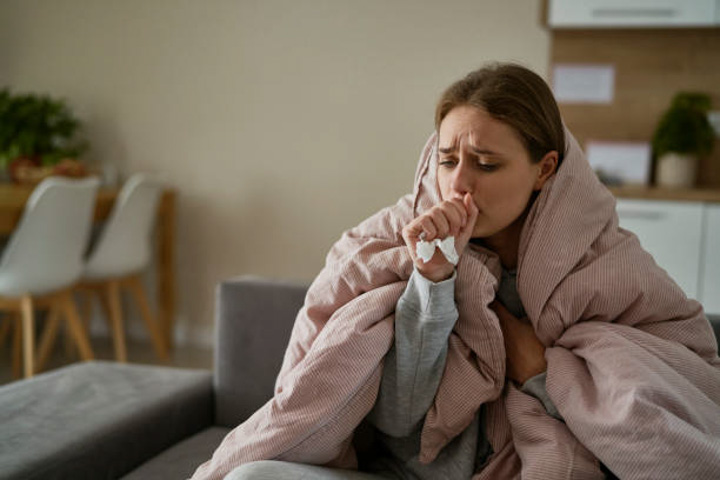
Photo Courtesy: iStock.com Photo credit to Getty Images
By Madi Poole, Health and wellness reporter
A look into what Influenza, a viral infection of the nose, throat and lungs, and also better known as “the flu”, has done and caused this year for all ages. Giving you a 2025 flu update from how many people got their flu shot this year to how many suffered from the flu this year and just how intense was this year’s flu season compared to past years?
Why it matters: The flu continues to take over each year, this year produced some new records on flu rates and deaths caused by the flu taking precautions where needed like getting your flu vaccine can be critical especially those of high risk.
As of February 1st, 2025 the CDC has reported that 45% of adults have received a flu vaccination and 45.7% of children have received a flu vaccination.
These rates are just about the same as compared to last year. Unable to see a huge increase in people getting their flu shots each year.
While only less than half the United States received their flu vaccination it has been reported that the CDC estimates at least 24 million people have had the seasonal flu this season.
Of the 24 million who caught the flu this season 310,000 were hospitalized and 13,000 deaths caused by the flu this 2024-2025 flu season, 57 of those deaths were children.
The Big Picture: Looking at statistics from just a few weeks ago it was reported for the week of January 25th through February 1st:
31.6% of people who visited a doctors tested positive for the flu
48,661 people with the flu were admitted into the hospital
2% of deaths attributed to the flu
10 pediatric deaths due to the flu were all reported in just one week.
Jaymie Bollman, a pediatric nurse, tells us about how bad it has been in her office for the flu this year “I have been at this office for four years now and this has probably been the most intense flu season I have seen yet.” Bollman tells us that she has seen children ranging from all ages come in and test positive for the flu “Seeing the flu in kids is not super rare just because once it starts in school it doesn’t stop for a while but we have had kids from three years old all the way to 17 come in here and test positive for it just in the past two weeks.”
Zoom In: One aspect of this year’s flu season that surprised doctors was for the first time since the pandemic there was a week that had more deaths caused by the flu than COVID-19. CBS News reported the week ending on January 25th, 2025:
1.7% of all deaths reported were due to the flu
1.5% were reported due to COVID-19
Rates of hospitalizations due to the flu were three times higher than COVID-19 because of this season’s record high of Influenza cases.
Luke Darrah talked to us right after having the flu, comparing it to COVID-19 “I have had both Covid and the flu multiple times but the flu I had this year was worse than any other year and worse than when I had covid.” Darrah tells us a little about the symptoms he was feeling this time around “I just felt very weak and exhausted but the congestion was the worst part. I struggled breathing out of my nose for a while.”
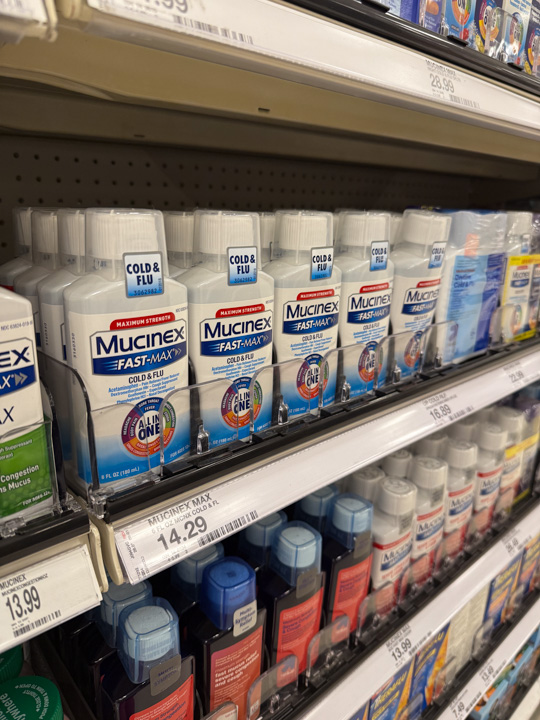
Stores like Target, Walmart, CVS, and Walgreens are making sure cold and flu medicine stays stocked due to the high demand for the medicine during flu season.
What we’re watching for: Moving forward this year as “flu season” comes to an end precautions should still be taken. The CDC always recommends health advice on how to avoid or minimize the chance of getting the flu. The CDC recommends:
Everyone six months or older should get a flu vaccine
Virginia Tech’s new Innovation Campus, a striking and architecturally bold facility in Alexandria, opens Feb. 28. The cutting-edge campus in Northern Virginia will offer students state-of-the-art amenities to help them thrive in their future careers. The opening marks a transformative moment for the university.
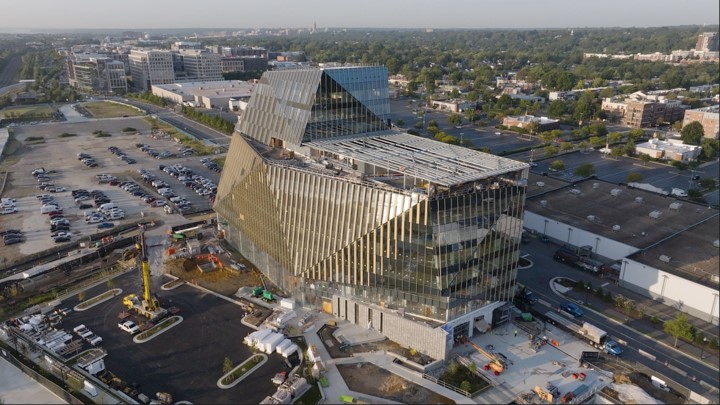
Innovation Campus under construction (Photo: Virginia Tech News)
Why it matters: This major investment by Virginia Tech expands the university’s footprint in the greater Washington, D.C. area and reinforces its commitment to serving the Commonwealth. The facility will focus on high-demand fields like computer science and computer engineering, directly addressing the region’s growing need for tech talent, especially with the continued expansion of companies like Amazon’s HQ2.
Located near the soon-to-open Potomac Yard Metro station, the campus offers convenient access for students, faculty and collaborators. Its proximity to major transportation hubs, including Reagan National Airport, further enhances accessibility and strengthens connections between Virginia Tech and the region’s booming tech sector.
Flashback: Construction on Academic Building One, the first building on Virginia Tech’s Innovation One campus, began in September 2021. The 300,000-square-foot, 11-story building was always going to be a major undertaking.
SmithGroup, the architects behind the building’s design, and Whiting-Turner, the construction contractor, are collaborating to bring this complex vision to life. The finished building will showcase their combined creativity, teamwork and expertise.
Virginia Tech News spoke with Sven Shockey, a 1996 alumnus and vice president and design director at SmithGroup, about the project.
“We all felt this project was ideally suited for us because Virginia Tech set ambitious goals for a building with a high level of sustainability and wanted to house the computer science and computer engineering programs in a top-tier research environment,” Shockey said.
“The building and site need to function as a self-sufficient mini-campus,” he added. “It must stand on its own for a while until the surrounding buildings are developed,” Shockey added.
Zoom in: The Alexandria campus offers a range of revolutionary features designed to foster a sustainable and educational environment. From energy-generating windows to an indoor drone testing facility, the campus offers unique opportunities for research and collaboration.
Sunlight powers the building through photovoltaic panels integrated into the south and southeast-facing windows. Unlike traditional rooftop solar installations, these window-mounted panels harness solar energy directly within the building’s facade.
A two-story, 465-square-foot drone testing cage spans the third and fourth floors. This indoor facility complements the outdoor drone park near the Oak Lane community in Blacksburg, providing Innovation Campus students with year-round access to drone technology.
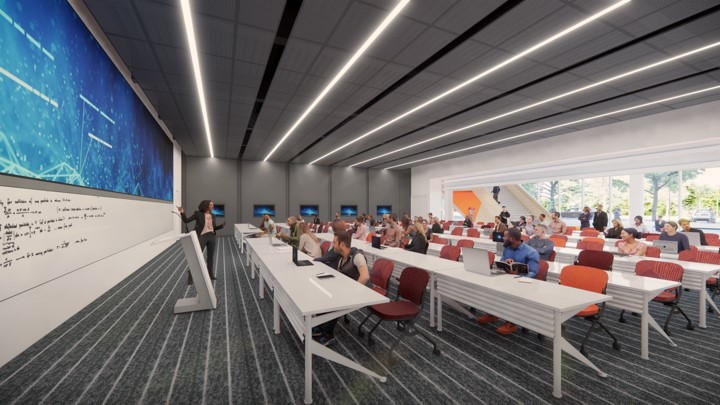
The spacious 3,000-square-foot Boeing Auditorium, conveniently located adjacent to the two-story lobby, will host lectures and presentations. Naming the auditorium after Boeing recognizes the company’s role as the Innovation Campus’s first foundational partner.
Rendering of the Boeing Auditorium (Photo: Virginia Tech News)
The design also incorporates a touch of Virginia Tech’s Blacksburg roots. While the Blacksburg campus features iconic Hokie Stone, the Alexandria building uses terracotta masonry.
“We have our Hokie Stone masonry in Blacksburg, and the new building utilizes terracotta masonry,” said Liza Morris, university architect, in an interview with Virginia Tech News. “In this way, we’re still maintaining a textural masonry element. It felt like the right materiality and the right way to honor the legacy of collegiate Gothic stone architecture of our Blacksburg campus, but in a way that’s appropriate for the new context.”
What we’re watching for: The Innovation Campus’s Academic One building opens Feb. 28, marking the start of what promises to be a hub for cutting-edge research and education. The official opening ceremony and ribbon-cutting will commence at 10 a.m. and is an event open to the public.
This is just the first step for the Innovation Campus, which plans to add two more academic buildings to accommodate a growing number of students and faculty.


 > THE NEWS FEED <