Google data center proposal raises questions and expectations in Botetourt County

By Emily Southern, science reporter

Botetourt County officials say a proposed Google data center campus could bring long-term financial benefits to the rural county, while some residents remain cautious about how the project may affect land use, infrastructure, and the area’s character.

Google recently purchased more than 312.55 acres in the Botetourt Center at Greenfield, an industrial park located between Daleville and Fincastle along U.S. Route 220. The land purchase followed a multi-year negotiation process and was publicly announced in June through a county press release.

Data centers house the power used to compute power throughout the internet. 

Photo of a data center. Photo by Cameron Davidson

According to the Botetourt County press release — Google is eager to partner with Botetourt County, “‘We are always looking for communities that have the innovative and collaborative leadership necessary to bring complex projects like data center campuses to life, and we are optimistic about the partnership we’ve built so far with Botetourt and the entire Roanoke region,’ said Amber Tillman, Google Head of Data Center Public Affairs, North America. ‘Together, we’re hopeful to help drive economic development across the region and continue to support Botetourt County’s thriving community.’”

According to county officials, the project is still in early planning stages. No construction timeline has been submitted, and formal site plans have not yet been filed with the county. The company is currently completing background studies related to engineering, utilities, and environmental requirements.

County Administrator Gary Larrowe described the scale of the agreement as unprecedented for the county.

“This is something we’ve never seen before in economic development,” Larrowe said.

The county received more than 14 million dollars from the land sale itself, which equates to roughly $45,000 per acre. In addition, Google provided a four million dollar community grant. Combined with other negotiated payments, the total funding associated with the project currently stands at approximately 18 million dollars.

Larrowe said the agreement was structured as a three-party arrangement involving Google, the Botetourt County Board of Supervisors and the county’s Economic Development Authority. The agreement outlines how the funds may be used and establishes long-term taxation terms tied to equipment and infrastructure once the data center becomes operational.

County officials say the immediate funding has allowed Botetourt to accelerate projects that were previously listed on the county’s capital improvement plan but lacked sufficient financing.

Among those projects are three new ambulances valued at $1.1 million, upgrades to the county library system, a new community center, advanced body camera systems for sheriff’s deputies and financial contributions toward new fire trucks, including the county’s first new ladder truck.

“This is something we’ve never seen before in economic development.”

Larrowe said that without the Google funding, many of these projects would have required long-term borrowing or higher local taxes.

“If we had to finance those, you’re talking about a massive amount of financing into the future,” Larrowe said.

While officials highlight financial benefits, community reaction has been mixed. Some residents have raised concerns about transparency, land preservation, and the long-term implications of hosting a large-scale data center in a rural area.

Robin Reed, a Botetourt County resident for 18 years and a professor of practice at Virginia Tech’s School of Communication, owns an 11-acre pumpkin farm in Fincastle. Reed said he first became aware of the possibility of a data center through local speculation before the official announcement.

“The rumor mill was in place well before the official announcement,” Reed said.

Reed said that once the project became public, some residents reacted strongly, particularly those concerned about farmland and outside development.

“The immediate feedback was, ‘Oh, we lost more farmland,’” Reed said.

Reed noted that the site is located within an existing industrial park and that Google purchased land that was already zoned for industrial use. According to Larrowe, zoning regulations limit data center development to that area of the county. The area is mostly secluded. 

Aerial view of the land purchased by Google. Photo by Botetourt County.

“This is the only place in the county where you could actually have a data center,” Larrowe said.

One concern frequently raised by residents involves water and power usage. Data centers require substantial electricity and cooling systems, which Reed said are at the center of much of the debate.

“It’s really simple. It’s water and power. It’s nothing more than that,” Reed said.

Reed and his wife have attended meetings with the regional water authority and power companies to learn more about the project’s potential impacts.

“We’ve been going to meetings with the Regional Water Authority and learning about what they have,” Reed said.

According to county officials, Google will fund necessary upgrades to water and power infrastructure. Larrowe said planning and construction will be handled by the appropriate utility authorities rather than the county itself.

“It’s the water authority that does that, and the same thing with AEP on the power side,” Larrowe said.

Another point of debate involves employment. While construction is expected to bring a temporary influx of workers, data centers typically employ relatively few full-time staff once operational.

“I don’t think data centers need that many employees,” Reed said. “Once the computers are running, they’re running.”

Larrowe said the limited number of permanent employees could reduce secondary impacts such as traffic and housing demand which he imagines many residents worry about. 

“If you ended up having multiple companies on this site, you could have had more than a thousand employees,” Larrowe said. “Relative to that, we may end up seeing 10 or 15% of that.”

Reed said some residents question whether the project offers enough direct economic opportunity, but he noted that tax revenue remains the primary benefit. Skepticism also remains among residents who question the intent behind Google’s financial contributions.

“There’s always unintended consequences to this kind of a deal,” Reed said. “You think you know what’s going to happen, but sometimes it doesn’t always work out that way.”

Larrowe said public understanding will continue to evolve as more information becomes available.

In addition to county officials and residents, regional planning documents show that data centers have become an increasingly common form of development across Virginia, particularly in areas with access to major transmission lines and industrial zoning. 

Local officials say Botetourt County’s location along U.S. Route 220 and its existing industrial infrastructure made the Greenfield site attractive for large-scale investment. County leaders have emphasized that no additional land has been rezoned for similar projects and that future proposals would require separate approval processes.

According to Botetourt County’s press release, “‘Google’s selection of Botetourt County as home for its newest data center campus would be a testimony to the massive potential our county holds,’ said Botetourt County Supervisor Vice Chair Dr. ‘Mac’ Scothorn. ‘This type of endorsement from one of the largest companies in the world speaks volumes about Botetourt’s ability to meet the technical challenges of the coming decades, which is great news for all Botetourt residents.’”

Aerial view of the land purchased by Google. Photo by Botetourt County.

County leaders also point to long-term tax revenue as a potential benefit once the data center becomes operational.

“That is one of the things that we’re hopeful for and are planning for,” Larrowe said.

Reed said he remains cautiously supportive of the project while acknowledging remaining unknowns.

“I think that the data center is the most dynamic, an interesting thing to happen to Botetourt in a very long time,” Reed said. “I’m always concerned, but I think this will be a positive thing to happen.”

For now, the land remains undeveloped as planning continues. County officials say public input opportunities will continue as the project progresses through permitting and review stages.

Whether the data center reshapes Botetourt County’s economic future or remains a single industrial development, it has already prompted broader discussion about growth, infrastructure and the county’s long-term direction.

For Appalachia’s biodiversity, these species could be canaries in the coal mine

By: Eli Lamport, science reporter

The flower of Peters Mountain Mallow, a rare plant species found in Southwest Virginia. (Photo: Massey Herbarium)

Southern Appalachia is one of the most biodiverse regions in the world outside of the tropics. The region, which spans from Virginia to Alabama, is home to over 25,000 different animal species. In Virginia alone, there are more than 3,000 native plant species, many of which are found right here in the Southwestern part of the state. 

There is no single reason for the unusual richness of species that is found in Southern Appalachia, instead it’s a combination of three main factors:

During the most recent ice age, glaciers reached as far south as southern Pennsylvania.  As the global climate cooled, plant and animal species moved further southward to avoid harsh glacial conditions. As a result, Southern Appalachia is home to both older pre-ice-age species and newer species that evolved under modern climatic conditions.

The region has geological features that support a wide range of biomes. High topographic relief, meaning that high mountains and low valleys are found in close proximity, is a particularly impactful feature. One of the most dramatic examples of this is Mount Rogers, Virginia’s highest peak. The summit, at over 5,700 feet sits just 15 miles from valleys that dip below 2,000 feet. The high topographic relief creates natural barriers that isolate species, and this isolation causes groups of species to evolve separately from others at different elevations. Over time, this allows for distinct new species to emerge, increasing biodiversity.

Historically, Southern Appalachia has experienced a moderate rate of significant environmental disturbances like wildfires, severe storms and disease outbreaks. It’s believed that moderate disturbance is conducive to high biodiversity. Too much disturbance and only the most resilient species survive. Too little,  and competition is fierce, forcing many species to extinction.

Threats to biodiversity

For millennia, these natural processes allowed for biodiversity in Southern Appalachia to soar. Now, human activity is having an undeniable impact on biodiversity in the region. 

Consider the Peters Mountain Mallow, a flowering plant that is only found on a single mountainside in Giles County, Virginia. When botanists  first discovered the species in the 1920s, they found roughly 50 of the plants growing on a rocky outcrop on Peters mountain, near the town of Narrows, Virginia. Researchers from Virginia Tech visited the site in the summer of 2025, and found only five plants remaining. This means Peters Mountain Mallow is now one of the rarest plants in the world.


Dr. J. Leighton Reid is leading efforts to relaunch research into the species. “For decades, researchers from Virginia Tech were studying this plant, but many of them retired or moved on, so I realized that it was a species that needed some attention,” says Reid. The primary reason for the decline in the population of these plants is a lack of wildfire. Without human intervention, forests burn at somewhat consistent intervals. Fire burns off dead brush, opens up the forest canopy, and ash recycles nutrients into the soil. Modern firefighting prevents most forest fires from running their natural course. This is particularly detrimental to the Peters Mountain Mallow because its seeds need to be burnt in order to sprout.

Virginia Tech undergraduate researchers surveying a Peters Mountain Mallow, seen inside a deer cage. (Photo: J. Leighton Reid)

“I realized that it was a species that needed some attention.”

Lab testing has found that without burning, Peters Mountain Mallow seeds only sprouted 3% of the time. After being burnt, that number rose to over 90%.  Reid adds that data obtained from tree rings on Peters Mountain shows that the area experienced fire roughly every two years until the early to mid 20th century. 

Without fire the Peters Mountain Mallow’s habitat has become covered by a dense tree canopy, limiting the amount of light that reaches to the forest floor. The plant’s inability to sprout without fire means that the tiny remaining population is becoming increasingly inbred. A prescribed burn on Peters Mountain is scheduled for summer of 2026 according to Quin Campbell, a student researching the plant under Dr. Reid. “I was glad to hear about that burn, but there’s a long way to go,” says Campbell. 

An invaluable species at risk

Another species that is being impacted by human activity throughout Southern Appalachia is Red Spruce. Red Spruce is one of the species that migrated south during the last ice age. In Virginia, the trees native habitat has been shrunk by warming climate. As temperatures have risen, these trees have been forced to move up in elevation. The colder temperatures found at high elevation makes these areas climatically similar to more northern locations. The problem is that Red Spruce is running out of elevation in Virginia. 

Mt. Rogers and the surrounding peaks are the largest of only a handful of remaining habitats for Red Spruce in Virginia.  Any species that is being threatened by climate change is worth studying and preserving, but Red Spruce is a “keystone species” meaning that it has an unusually high impact on its natural environment relative to its abundance.

Alex Dyer is a graduate student at Virginia Tech who is in the midst of a multi year research project on Red Spruce. Dyer explains that dozens of species rely on the uniquely shady and moist conditions found in Spruce forests. Many of the 50 salamander species native to southern Appalachia are found only in spruce forests. The Virginia northern flying squirrel cannot survive outside of spruce forests. The world’s smallest tarantula species, the Spruce Fir moss spider is another species that relies on spruce forest for habitat. Losing Red Spruce in Virginia would lead to the extinction of many other species in the state, according to Dyer.

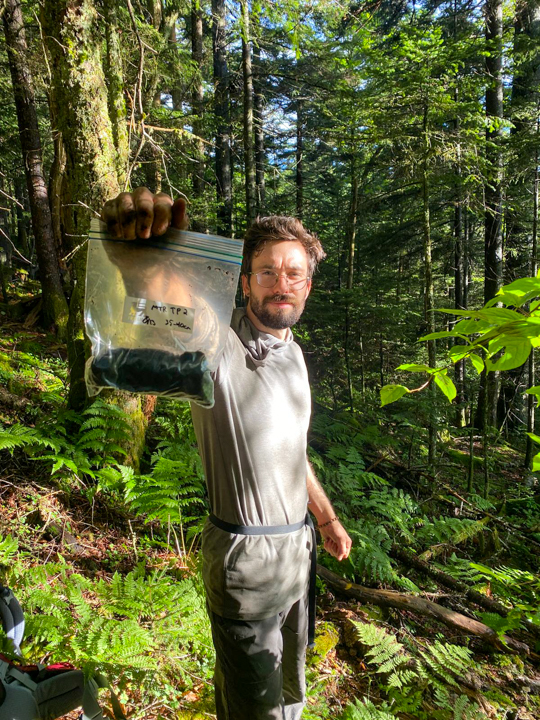
Alex Dyer holds a soil sample from a section of Spruce/Fir forest in Mt. Rogers State Park. (Photo: Alex Dyer)

Warmer temperature is not the only environmental factor threatening Red Spruce. Acid rain, as well as soil acidification are stunting the trees growth. A parasitic European insect called Balsam Wooly Adelgid is killing off Frasier Fir, which is a tree that frequently grows alongside red spruce. Fir trees are generally larger and more sturdy, protecting neighboring spruce trees from high winds. Without this protection, many Spruce trees are being uprooted by the wind. 

Another threat to Red Spruce at Mt. Rogers is from a managed population of ponies that have grazed in Mt. Rogers State Park since the 1970s. The ponies have become a major tourist attraction in their own right. The problem, Dyer says, is that the ponies eat spruce saplings and seeds, which limits the spruce trees’ habitat in the area. Dyer says only one-third of the land that is suitable for Spruce within Mt. Rogers State Park  actually has the species growing on it. “We need more discrete boundaries for the ponies to roam,” says Dyer.

Preserving samples of rare species

Equally important to research and conservation efforts is the collection of seeds and dried samples of threatened species. Virginia Tech’s Massey Herbarium is home to samples of more than 3,000 plant species native to Virginia. Many of the species found at the herbarium are threatened, including an extensive collection of the previously mentioned Peters Mountain Mallow. Dr. Jordan Metzger, the herbarium’s curator,  says it’s important to collect these samples because they “illustrate impacts on the species over time from climate change or pests, and they lock away chemical and genetic information for the species.” Metzger hopes that the herbarium can help raise awareness of rare species, particularly in Virginia.

“They lock away chemical and genetic information for the species, which is invaluable in the species goes extinct”

Dried Peters Mountain Mallow samples at the Massey Herbarium. (Photo: Eli Lamport)

Preserving the Peters Mountain Mallow, Red Spruce and the thousands of other rare species found in Southern Appalachia is vitally important to maintaining this region’s exceptional biodiversity. These species are part of a delicate ecosystem that is already being pushed to the brink by human actvity. Ecotourism has a significant economic impact across the region. Visitors crowd Mt. Rogers, Great Smoky Mountains National Park, and countless other outdoor destinations around the region. If these areas lose their unique plants and animals, will as many people come visit? It’s a question that everyone in Southern Appalachia should consider when they look out into the mountains.

The Game Within the Game: Sports Betting’s Popularity Explosion

By: Landon Swanson, Sports Reporter

It’s a Sunday morning, NFL is about to start, and the first thing done after waking up is checking the sportsbook. This is the story of people every day, checking money lines, over/under, or player props for a variety of different sports.

            Sports betting has taken over the sports industry; it is so big that now you can’t even tune into a game of any level without seeing a commercial or sponsorship for a sportsbook. Before the game or during the game, at home or on the road, people are always checking odds. The legalization of sports betting has taken it to heights that many thought it would never achieve.

            Moving from the outskirts of American culture to the forefront, sports betting has taken over the United States. After the federal ban on sports betting was lifted in 2018 these apps have exploded in popularity and usage. From needing to go to a physical location to being able to open your phone the ability to sports bet has become significantly easier as well. From professional partnerships to collegiate involvement, it is impossible to turn the tv on today without seeing any form of sports betting, as we see sports betting visualization and normalization, many are having a hard time differentiating games from gambling.

            Sports betting has become legal in 39 states, along with Washington, D.C. and Puerto Rico. However, this does not stop the other 11 states from having loopholes around the regulations in the form of fantasy apps. These apps essentially allow players, not in a legal state to sports bet, to bet on players higher or lower, which is the same principle these sportsbooks use for their player props. Also, these apps allow people of 18+ to join their sites while the legal age for sports betting is 21.

            “I’ve been sports betting for almost six years at this point and I am only 22, I place upwards of 10 bets a day and there is not a day I go where I do not place a bet anymore,” Aidan Weick said, college student and avid sports bettor.

            With the accessibility increasing it has become more popular to place numerous bets before and during the game. The introduction of these apps has allowed anyone with them to sit on their couch and place any number of bets that satisfy them. “It’s like my cup of coffee in the morning I wake up and I gamble it’s that easy,” Weick said.

“The money that has been put into sports betting in the last few years is something that I am not sure if me or anyone I know would have expected,” Christian Jordan said, sports economist, “the ability to sit in your living room and place however many bets you would like has created such an influx of money in this industry it truly is hard to believe.”

In 2018, sports betting generated a gross revenue of roughly $500 million, while in 2024 revenue generated around $13.5 billion, according to ESPN. This money is just the amount the sports books made and not the total amount bet, player winnings, or tax payments as well. “The world revolves around money, sports revolve around money, sports books revolve around money, they do not care about you,” Jordan said.

Numerous controversies have risen within the last few years over athletes themselves sports betting. Jontay Porter and Terry Rozier are two former NBA players who have both been arrested for being involved in a sports betting scandal. Emmanuel Clase and Luis Ortiz, both Guardians pitchers, who were suspended from the MLB this year while they were being investigated for allegedly intentionally throwing balls on certain pitches while giving this information to others for their own financial gain.

The world of sports betting scandals may seem like only an issue in the professional world, but in fact it is just as common in collegiate sports. For example, at Virginia Tech there have been two instances of issues regarding this including Alan Tisdale of the Virginia Tech football team and Hysier Miller, a transfer from Temple committed to Virginia Tech men’s basketball. These instances have two very different scenarios; Miller was dismissed from the basketball team before even joining them in Blacksburg. Miller was being investigated for his time at Temple for allegedly losing games on purpose allowing the opposing team to cover the spread which led to a probe into the Temple basketball team, including Miller, by the FBI. Tisdale on the other hand was suspended from the team for placing bets on the NBA Finals.

As Tisdale was gearing up for the 2022 season when he was suspended from the team for six games for placing $400 worth of bets on the 2022 NBA Finals, winning a total of $41. Tisdale, a redshirt-senior at the time was an NFL draft prospect coming into the season and this situation derailed his future in football. Now, collegiate athletes are legally allowed to place wagers on professional sports, so what does this mean for the future?

“Yea, I saw that they are allowing college players to bet on pro, but I still do not see myself doing that, I think it’s still a bit of a gray area for sure,” Kemari Copeland, Virginia Tech defensive lineman, said.

            However, Miller’s Temple team was just the first domino to fall as several college basketball teams were subject to an investigation from the FBI regarding their players throwing games for profit. In September 2025, 13 players from 6 different teams were investigated regarding wagers placed on games they were playing in. In Miller’s case at Temple their team was investigated for a game against UAB in which the spread shifted from -2 to -8 in favor of UAB, moments before the game started. This scenario is almost unheard of, which is why this specific game was flagged for review as the game eventually ended 100-72 with UAB winning. Miller was found to have placed several bets on his own Temple games inevitably which they all lost, this left Miller without a place in college basketball.

“The world revolves around money, sports revolve around money, sports books revolve around money, they do not care about you”

            As sports betting continues to expand, its presence in everyday sports culture shows little sign of fading. Betting companies are investing heavily in technology that allows for faster wagers, more personalized odds, and deeper integration with live broadcasts. For younger fans who have grown up with smartphones in hand, placing a bet can feel as intuitive as checking a score.

            Finding a balance of allowing sports betting to exist while prohibiting it from overwhelming the game itself is the challenge that is now being faced. Some platforms have begun implementing a system that allows you to place a limit of what you can bet on and how much you can bet, but the main issue with this is that it is self-oriented.

            Sports have always been changing, but now with the popularity sport betting has gained the fandom of sports has changed. Going from rooting for a team in a sport to rooting for people you have placed wagers on. Now every possession, shot, or whatever during a game gives people something to cheer for. People wake up place bets and are eager to watch the wagers they placed and look forward to a full day of sports every day.

“It’s like my cup of coffee in the morning I wake up and I gamble it’s that easy.”

Sports betting has woven itself so tightly into modern sports that it can be easy to forget how new this moment is. Odds scroll across television screens, betting apps send constant notifications, and conversations about point spreads and parlays have become as common as debates about players and teams. What was once a separate activity now exists inside the game itself. We now see it everywhere when we open our ESPN app to check the score, watching Pat McAfee during the week with betting so driven into the show there is an entire segment dedicated to it.

For many people this is a part of their life now, from sunrise to sunset the ability to place a wager is endless. For fans like Aidan Weick, it has become a piece of their daily routine. Whether physical or virtual sports books are everywhere you go and they have taken over the sports world. Try watching a football game today without seeing anything regarding one of these sites, you can’t, it’s impossible. That’s just how it is today sports betting and sports are entwined into one, so now we must determine what’s next.

Affordable Healthcare’s Unaffordable Future

John Tuason, Government and Politics reporter

Photo by Karola G

Jonathan Lopez is a father and husband. He currently pays ~$360 a month for a silver health insurance policy and qualifies for Cost Sharing Reductions (CSR) bringing his deductible down to $800. Expiring Affordable Care Act (ACA) subsidies mean that starting on January first, Jon’s monthly payments could increase 2-3x and he explained to me that, “If our premiums double next year, there is no way I will be able to pay it. We’re gonna have to get on a bronze plan and my daughter’s diabetes ‘ll burn a hole in my pocket.”

Lucia Martinez is a wife and mother of two. Her husband receives coverage through his job (employer-sponsored insurance), Lucia and her two sons pay ~$900 a month. In January, her monthly payments could jump up to ~$1100 a month. Lucia’s family is planning to move. “We were downsizing anyways, but these increases are limiting our options.”

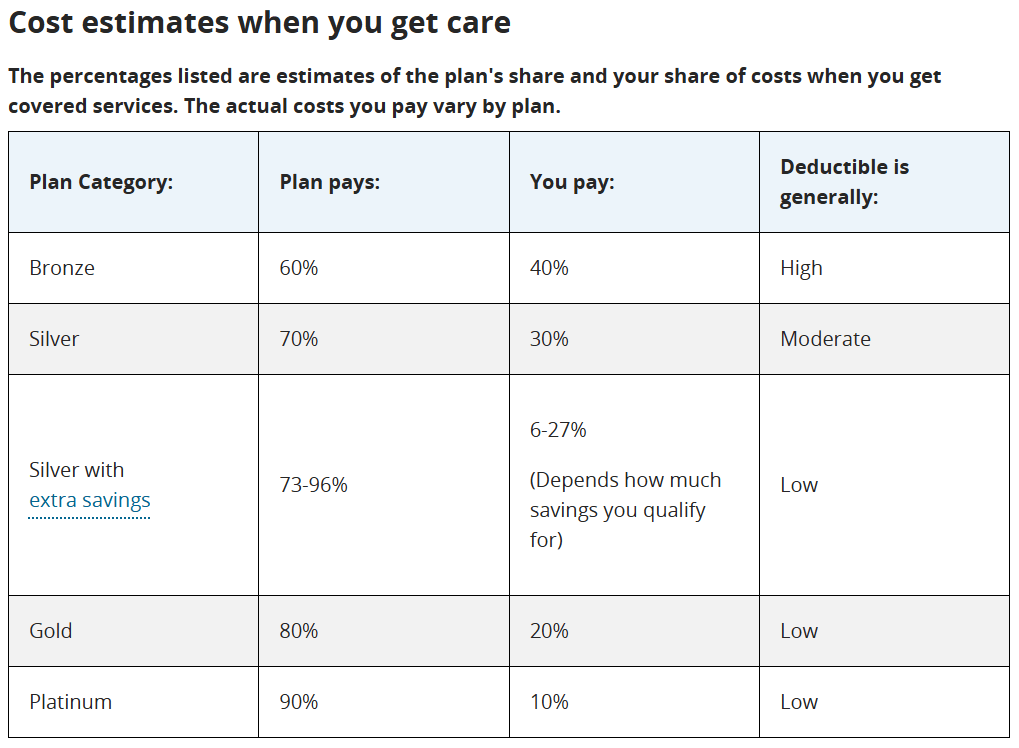
Deductible: The amount you pay for covered health care services before your insurance plan starts to pay. 

The ACA was enacted in March of 2010 to expand Medicaid and to make health insurance more affordable for households with incomes between 100-400% of Federal Poverty Level (FPL). The American Rescue Plan (ARP) Act of 2021 temporarily enhanced ACA subsidies, lowering premiums for many families and broadening health coverage in general. The ARP was one of the government’s attempts to ease the hardships facing Americans during the COVID-19 pandemic. After December 31, 2025 these enhanced subsidies are set to expire.

This impending expiration was the cause of the longest government shutdown in US history. Senate Democrats blocked the continuing resolution passed by the Republican-controlled House of Representatives because it lacked the extension to the subsidies. Eight senate democrats broke ranks with their party and voted to pass the funding bill and in return Republicans made a promise to hold a vote in December to extend the subsidies.

Natalie Cooke, a professor of Public Health at Virginia Tech, explained how these expirations will affect American families. “It’s the families whose health insurance is solely through the marketplace who will get hit the hardest… The lower- and middle-income households who rely on marketplace coverage are going to see their premiums increase by like 2 times which is very significant especially when they are already having to deal with inflation and rising costs.”

On December 11, 2025, two bills were proposed in the senate to address expirations. Democrats, led by the Senate Democrat leader, Chuck Schumer, proposed a bill containing a 3-year extension to the enhanced subsidies. The congressional budget office estimated that this proposal would add $83 billion to the federal deficit over the next decade. Republicans argued that it did not address the “…billions of dollars of fraudulent spending” as Senator Bill Cassidy stated.

Republicans, on the other hand, wanted to do away with the enhanced subsidies and create Health Savings Accounts (HSA). This proposal stated that individuals receiving under 700% FPL between the ages 18-49 would receive $1000 in HSA funding while individuals between 50-64 would receive $1500. They argued that this method would stop payments to insurance companies. Democrats opposed this proposal because it did not address the premiums and because it included restrictions on abortion and gender affirming care.

Both the democratic and republican proposals have failed to reach the required 60 votes to pass the senate. Now, there are only a few days left for lawmakers to address the expiration. “It is hard to see how a bill can come together — and pass — by this time next week, which is when Congress is set to leave for the year so we will start 2026 with the threat of a government shutdown at the end of January having failed to address the core issue of the 43-day shutdown: the ACA subsidies/credits,” Chris Krueger, a strategist at Washington Research Group, wrote in a research note on Thursday.

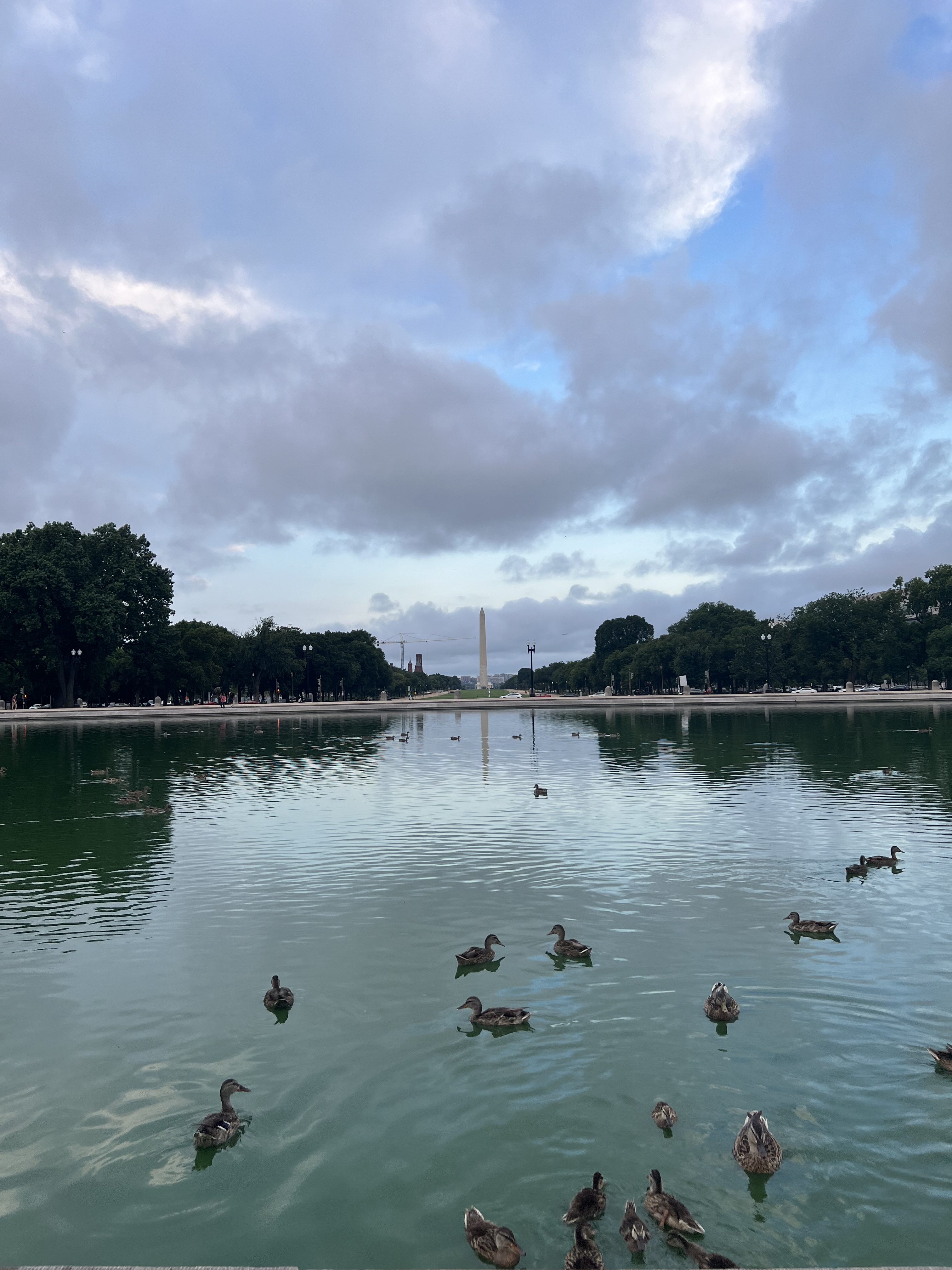
Can’t get our ducks in a row, TheNewsFeedNRV.com

Meanwhile, people like Jonathan are having to make drastic spending cuts to prepare for the changes. “I mean it’s Christmas and I want to make sure my daughter gets what she wants first, but we can’t just pray that our premiums stay the same y’know? We’ve gotta think longer term which really f—- me up” he said.

Since 2021, the number of Americans enrolled in the marketplace has gone from 12 million to almost 25 million. This is due to the enhanced subsidies that ARP has offered. Virginia has seen a 100,000 person increase in the same 4-year period. The middle-income families making around 400% of FPL are going to face what is known as a “subsidy cliff.”

…22% of their income.

“Historically, the 400% mark is where we see this subsidy cliff. Before the enhancements during covid, someone making 390% ($50,000) would pay about 9 to 10% of their income for coverage. If that same person were to make 410% ($52,000) they would have to pay the full premium which on average, for a silver plan, is like $960 a month or 22% of their income,” said Cooke.

The subsidy cliff was eased by the enhancements offered by the ARP and the expirations will bring that cliff back in a dramatic way. This will result in an average increase of 114% in premium payments according to the Kaiser Family Foundation, but it is families like Lucia’s who are going to feel it the most.

…a year of uncertainty for the average American.

Opinion:

The expiration of these subsidies is being wielded as a political weapon by both democrats and republicans and exhibits more broadly how the partisan stalemate we see in congress is gambling with American’s lives. Our systems of governance are showing cracks, and it is the people that rely on it most that are going to suffer the most. Bipartisan collaboration is necessary if we want to protect the most vulnerable Americans which should be the goal of every elected official.

According to the Yale Program on Climate Change Communication, in a poll conducted on May 15th of 2025, the top worries of Americans are 1. The economy 2. The cost of living 3. Government corruption 4. The state of democracy in the United States. All these concerns express both an affordability crisis and a general lack of trust in governmental institutions. These issues, in combination with the upcoming challenges facing affordable healthcare are making 2026 look like a year of uncertainty for the average American.

Preparation is key. Open enrollment begins on December 19th and ends January 30th in Virginia. Check coverage options at www.marketplace.virginia.gov or healthcare.gov because as Jonathan puts it, “…we can only do so much, but we gotta do that much.”

Legal loopholes: How Virginia’s cannabis laws create a gray market

By Milana Waller, arts, culture, and sports reporter

Legal loopholes: How Virginia’s cannabis laws create a gray market

Virginia’s contradictory cannabis laws, which currently prohibit retail purchases without a medical card but still allow possession, generate a gray market for buyers.

Virginia laws don’t condemn recreational marijuana usage, just the practice of purchasing it.

“They’re kind of lenient, in my opinion,” an anonymous seller and student at Virginia Tech said. “It’s a lot harder to get than it should be.”

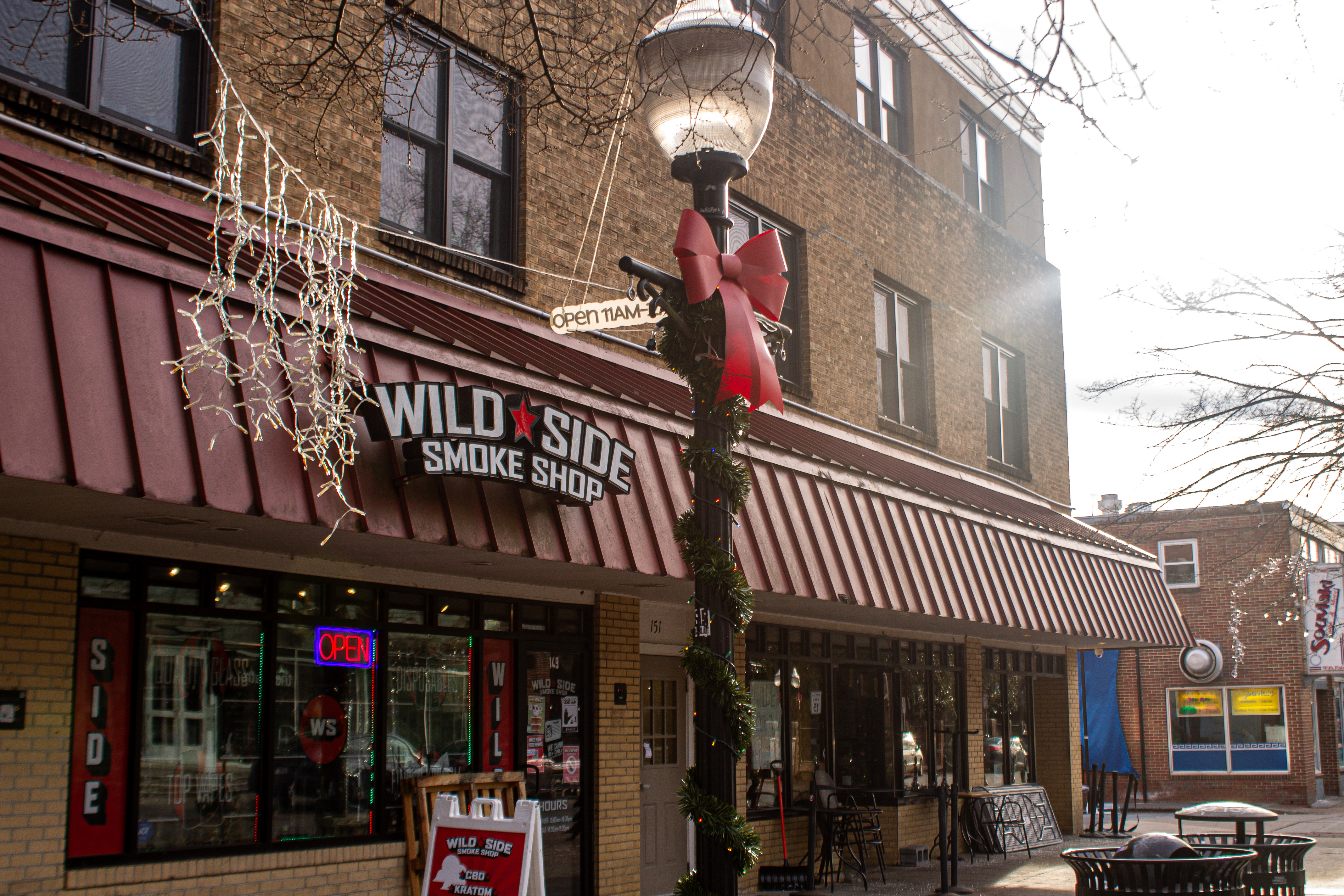
Blacksburg, Va., Dec. 13, 2025 — Wild Side Smoke Shop advertises CBD, kratom, vaporizers, disposables, hand pipes, water pipes, exotic snacks and e-juice but does not include flower. Photo by Milana Waller

Whilecannabinoids, which come in the form of vapes and edibles, can be purchased, actual flower is not legally sold anywhere but a medical dispensary.

“You can legally possess it if you’re over the age of 21, but it’s really hard to get your hands on it.”
Anonymous seller


The rules surrounding Virginia’s unique cannabis legalization allow personal use and possession in a private residence up to one ounce. However, to obtain the flower in the first place, the boundaries become a bit more vague.

“In my course, I go for all the medical aspects,” Alex Niemiera, a Virginia Tech professor in the School of Plants and Environmental Sciences who teaches a cannabis course covering the culture and science surrounding the marijuana industry, said. “The good, bad, and [the] ugly.”

To acquire flower legally, users must acquire the plant through adult sharing, which is distinguished by a private transfer consisting of less than an ounce between adults who are at least 21 years of age.

Selling or buying this same product, however, is illegal. This leaves little room for a legal transaction, since not many people are going to grow marijuana just to give it away for free.

Individuals can legally grow up to four marijuana plants out of public sight. When a female plant is isolated from males, secretion multiplies and does not cease, as the female is trying desperately to attract a male plant’s pollen.

“A female plant will produce, outside, not inside, half a pound of flower per plant,” Neimiera said. “So, technically, you can grow up to two pounds, but this is crazy. The government says anything over a pound is against the law.”

Anyone caught growing over 16.1 ounces can receive a felony and face years in jail.

“They were trying to reschedule it from a Schedule I to a Schedule III,” the anonymous seller said.

“State laws contradict the federal laws. That’s kind of where there’s gray area.”
Alex Niemiera

Currently, cannabis is still classified as a Schedule I drug with LSD and opium.

“Things like that would definitely help with the states feeling better about it,” the anonymous seller said. “But, overall, it’s definitely in the state’s hands because they have the ability to be able to make it recreationally and medically legal.”

Cannabis is composed of two largely considered components, commonly referred to as CBD and THC. Tetrahydrocannabinol (THC) is the chemical that creates a high, euphoric feeling commonly associated with the drug. Cannabidiol (CBD) is associated with sleepiness and pain relief. In recent history, THC levels in commonly consumed marijuana have skyrocketed.

Cannabis THC potency is much harder to measure than alcohol, especially if users are acquiring their cannabis flower illegally.

“Thirty years ago, it was only about two percent,” Neimiera said. “But you can buy concentrates up to ninety percent. It’s quite high, can be dangerous.”

In 1995, the average THC content reached a mere 4%. Now, most strains contain around 20% THC. Dabs, oils, and edibles can reach percentages up to a whopping 90%.

The anonymous seller says his flower contains around 22% THC.

“We get it from a guy who sells cookies in California,” the anonymous seller said.“But it depends on each strain and everything. I research it because I just don’t want to be selling things if I don’t know what it is.”

Anonymous students reported that if they do gather cannabis flower from a retail store, the process is functionally underground. Some might make a ‘donation’ to the store and receive a free ‘gift’ as a result.

However, if a retail store is selling flower as an additional ‘gift’ for another purchasable product, this goes against current Virginia law, which only allows retailers to sell delta-8 in the form of concentrates and vapes.

“That’s [with] most of the stores, and High Supply”, the anonymous seller said. “They don’t sell THCA or any of that, it’s just full-spectrum weeds. They grow it there and everything.”

Tetrahydrocannabinolic acid (THCA) is a non-intoxicating cannabinoid found in flower that can be converted to THC when subjected to heat. Under the 2018 Farm Bill, THCA is federally legal.

To satiate the rule of ‘adult-sharing’, buyers must purchase a plastic cup. Technically, the plastic cup is the item being sold.

“Their loophole is that you’re buying this plastic cup they sell and they ‘share’ you weed,” the anonymous seller said. “It’s just this random cup. It’s just the plastic thing that you hold, and then they give you the weed, and you go to the counter right next door to it.”

In this circumstance, an ounce is still the limit. As a result, those seeking flower, especially if they’re underage or on a budget, are still more inclined to purchase from dealers. Plus, a local dealer will likely deliver and provide during late-night hours.

Smoke shops such as Kief, Wild Side and Herban Legend also have obtainable flower. Students said smaller, more underground shops are more likely to simply ignore the use of loopholes. Additionally, they’re typically less strict about requiring IDs.

Blacksburg, Va., Dec. 13, 2025 — Kief offers strains such as “Pink Tar Kush”, “Purple nerds”, “Glitterbomb” and “Jealousy”. Photo by Milana Waller

“Some of them, if it’s THCA, because there’s a Farm Bill which makes it so you can legally sell hemp,” the anonymous seller said. “As long as they classify hemp as THCA, since it isn’t just THC, then they’re fine with it. So that’s what most of the smoke shops sell, and then other ones you buy something else, and they gift it to you.”

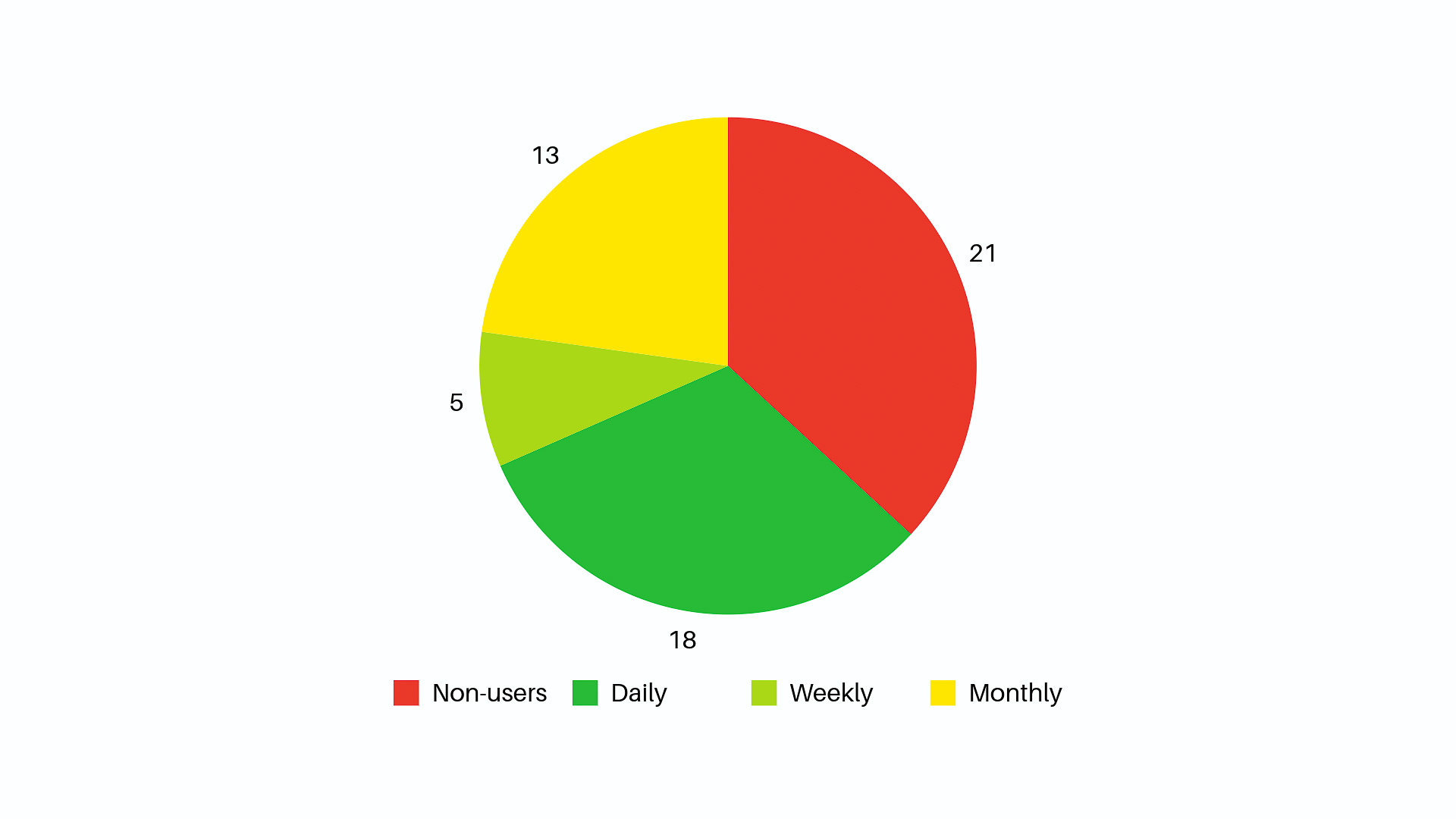
An anonymous survey of 57 participants was conducted at a bar in Blacksburg on Dec. 10, 2025. The survey was conducted randomly and non-scientifically

The pie chart above depicts self-reported cannabis use from anonymous respondents in Blacksburg, Va. Note that results are not representative of the general population. Graphic by Milana Waller

Out of the total number of participants, 36 reported that they are or have been cannabis users.

Among the 36 cannabis users, exactly half reported consuming on a daily basis. The other 36% reported smoking monthly, with 14% using weekly. Constant consumption amongst users was therefore more frequent than moderate consumption.

Out of the 18 daily users, 11 of them obtained flower from an underground dealer. Those who consumed on a weekly or monthly basis were less likely to seek out the product, acquiring cannabis instead from a friend or family member.

Only two of the five respondents who reported purchasing their flower from retail stated possession of personal medical cards, but said they were very easy to acquire. Others said dispensaries gave them the flower as a “gift” for free on a regular basis.

As a seller, the anonymous student acquires his weed from a friend who has lived in the area for six years and ships his product from California.

He believes his sales may lessen if retail becomes a more viable option. However, the impact depends on pricing.

The anonymous seller said most buyers don’t really care to understand the laws or loopholes. Most respondents conveyed a lack of concern for any real consequences to obtaining marijuana illegally.

“They’re just trying to get weed.”
Anonymous seller

“If non-retail people are selling it, if we have a lower price and the stores have [another] price, then some people could go for the cheaper option,” the anonymous seller said. “It always just feels safer to go to a retail area and get it.”

The seller believes the law is out of touch with the reality of the situation.

“They don’t really want to know what’s happening anyway, so they just place laws and don’t know what’s actually occurring,” the anonymous seller said.

In light of recent elections, Virginia laws are likely to change in Nov. 2026, legalizing the sale of flower in retail shops for buyers without medical cards.

“Most people definitely have the feeling that there’s some illegality to it,” the anonymous seller said. “No one really knows of the actual loopholes. But once it gets legalized at the end of the retail situation, I think it will become a lot more normalized.”

Niemiera hopes the state government will reduce the risks associated with an unregulated market and eliminate the use of pesticides and contaminants in the growing process.

Access may broaden in 2026, but until then, marijuana users still rely primarily on informal systems, and the gray market remains.

As Artificial Intelligence Spreads on Social Media, Users Struggle to Know What to Trust

By: Zoe Santos, arts, culture, and sports reporter

BLACKSBURG, Va. (Dec.11, 2025)- Virginia Tech sophomore Cooper Teich is looking at an AI-generated image of an AI influencer posing with Elon Musk.

Artificial intelligence has become increasingly visible on social media, shaping what users see, share, and believe online. Once limited to photo filters and automated captions, AI now generates realistic videos, images, and digital personas that blend seamlessly into everyday feeds. As the technology spreads across platforms such as Instagram and TikTok, users are left to question what is real and how that uncertainty is reshaping online culture.

Virginia Tech sophomore Cooper Teich said artificial intelligence appears in her social media feeds multiple times a day, often without a clear indication that the content is not real. While some posts are clearly labeled or exaggerated, others resemble authentic news footage or personal content shared by real users.

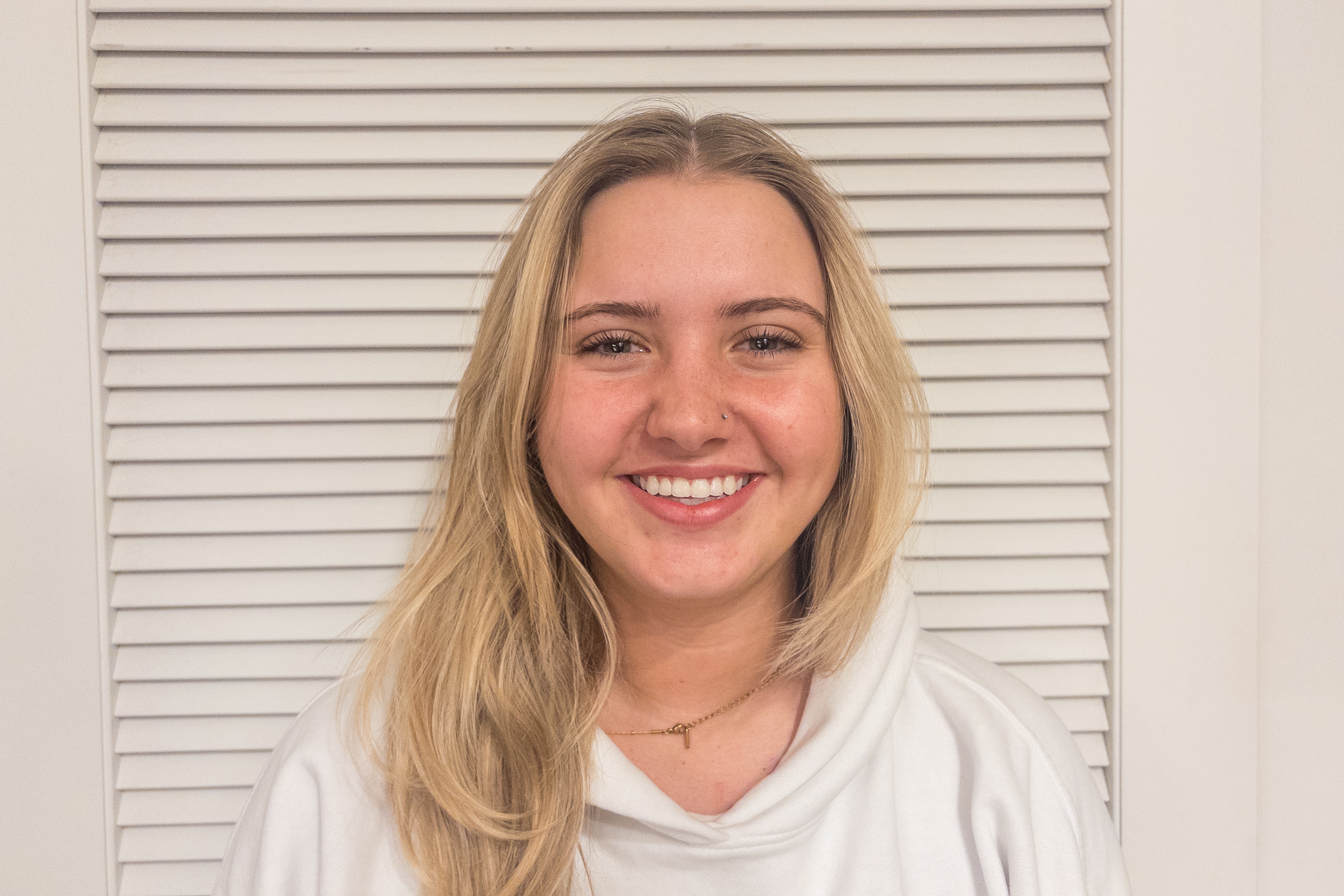
​​BLACKSBURG, Va. (Dec.11, 2025)- Cooper Teich, a Virginia Tech sophomore, poses for a photo.

“There are videos where something bad happens, and you don’t know if it actually happened,” Teich said. “I don’t know what to believe.”

Teich said the growing presence of AI-generated content has changed how she engages with social media. She now scrolls more cautiously, pauses more frequently, and checks comment sections for context before accepting videos at face value. What once felt like passive consumption has become an active process of verification.

She said the emotional impact of AI-generated content is often immediate, particularly when videos depict emergencies, violence, or distressing situations. Even when the content is later identified as artificial, the initial reaction remains.

“You still feel something when you see it,” Teich said. “Even if you find out it’s fake, the reaction already happened.” 

The uncertainty surrounding AI-generated content became more apparent during Thanksgiving break, when a family member showed Teich a video he believed depicted a serious car crash near his home.

“He thought it happened on his street,” Teich said. “He was really concerned and went outside to check.”

The video was entirely generated by artificial intelligence. 

Teich said moments like that illustrate how AI-generated content affects more than just younger users who are accustomed to questioning what they see online. Older adults, she said, are often more likely to accept realistic videos at face value, especially when they resemble local news footage or familiar environments.

“Imagine how often that happens when no one’s there to explain it,” she said. 

“I don’t know what to believe.”
– Cooper Teich, Virginia Tech sophomore

While younger users may be quicker to suspect a video is AI, Teich said the responsibility to interpret and verify content increasingly falls on individuals, regardless of age. That responsibility creates a culture in which uncertainty is normalized, and skepticism becomes necessary for everyday media consumption.

A screenshot from the Pew Research Center website shows differences between U.S. adults and AI experts in how they view artificial intelligence’s future impact.

Concerns about artificial intelligence extend beyond individual experiences. A 2025 Pew Research Center report found a large divide between how U.S. adults and AI experts view the technology’s future. About half of AI experts surveyed said artificial intelligence will have a positive effect on society, while only a small share of U.S. adults expressed the same optimism.

The gap suggests that while those working most closely with AI tend to see its potential benefits, the broader public remains far more cautious, reflecting a cultural disconnect between technological development and public trust as artificial intelligence becomes more visible in daily life. 

​​Carolyn Kogan, Virginia Tech Adjunct Instructor, poses for a photo. (Image courtesy of Carolyn Kogan) 


Carolyn Kogan, an adjunct professor at Virginia Tech who studies online behavior and digital culture, said artificial intelligence intensifies long-standing issues on social media by increasing realism while reducing accountability.

“When accountability is lowered, people react more emotionally and question less,” Kogan said. “AI makes that problem worse because it looks real.”

Kogan said misinformation is not new to social media, but artificial intelligence allows false or misleading content to spread faster and appear more convincing than before. Visual realism, she said, increases the likelihood that users will engage with content emotionally before evaluating its accuracy.

“Images and videos carry a different kind of authority,” Kogan said. “People trust what they can see.”

She explained that social media has long encouraged users to present idealized, public-facing versions of themselves, what sociologists refer to as “front stage” behavior. Artificial intelligence, she said, accelerates that process by removing the human element entirely.

“People already curate a front-facing version of their lives online,” Kogan said. “AI takes that one step further by removing the human altogether.”

Without a real person behind the content, accountability becomes increasingly abstract. AI-generated images and videos can circulate widely without a clear creator, making it difficult to determine who is responsible when the content is misleading or harmful. 

“When accountability is lowered, people react more emotionally and question less.”
– Carolyn Kogan, adjunct professor at Virginia Tech

That lack of accountability, Kogan said, contributes to a culture where skepticism is necessary but not always practiced.

“Not everyone has the same ability or awareness to question what they’re seeing,” she said.

On platforms such as Instagram, artificial intelligence appears in both obvious and subtle ways. In addition to AI-generated videos and images, some accounts feature AI influencers: digital personas designed to look and behave like real content creators. These accounts often post lifestyle content, promote products, and interact with followers, sometimes without clear disclosure that they are not human.

While AI influencers represent only one segment of AI-driven content online, Kogan said their presence reflects a broader cultural shift in how social media operates.

“These platforms reward engagement, not authenticity,” Kogan said. “If something performs well, it gets amplified, whether it’s real or not.”

Teich said encountering AI influencers has made her more skeptical of what appears in her feed.

“You’ll see someone who looks completely real, and then you find out they don’t even exist,” she said. “It makes you stop and question everything else you’re seeing.”

She said that realization has changed how she interacts with influencers more broadly, including human creators who use heavy editing or undisclosed AI tools.

Social media companies have begun responding to growing concerns about artificial intelligence. Meta, which owns Instagram and Facebook, now requires creators to label content that has been significantly altered or generated by AI. TikTok and YouTube have introduced similar disclosure policies for realistic AI content.
The policies are intended to help users better understand what they are seeing and reduce the spread of misleading content. However, enforcement varies across platforms, and labels are not always immediately visible to viewers.

AI-generated videos and images can still circulate widely before users realize the content is artificial, particularly when posts are reposted, edited, or shared without context.

Teich said labels can be helpful, but do not fully address the problem.

“If it looks real, people are going to believe it at first,” she said.

She also questioned the ethics of allowing highly realistic AI content to circulate freely in the same spaces as authentic photos and videos.

“I don’t think it’s ethical,” Teich said. “It makes you question what social media is even supposed to be.”

Despite growing skepticism, Teich said avoiding social media altogether feels unrealistic. Like many college students, she relies on platforms such as Instagram and TikTok for communication, entertainment, and information, even as trust in what appears online continues to erode.

That reliance on social media, Kogan said, reflects a broader cultural reality. Social media platforms are deeply embedded in daily life, making disengagement difficult even for users who are aware of the risks.

“When people can’t trust what they’re seeing, it affects how they interact with content and with each other,” Kogan said. “It changes how relationships, information, and identity function online.”

Kogan said artificial intelligence forces users to confront those issues more directly, pushing questions of trust and authenticity to the forefront of digital culture.

For Teich, navigating social media now requires her to be skeptical of anything she sees. She scrolls more carefully, questions videos that provoke strong emotional reactions, and relies on external context to determine whether content is credible.

“It just makes everything feel less certain,” she said.

As artificial intelligence becomes harder to separate from reality, users are left to adapt in real time. In a digital environment where fabricated and authentic content coexist, the ability to question what appears on a screen has become an essential part of social media use and a defining feature of online culture. 

A look ahead at the 164th Virginia General Assembly

by Jonathan Mususa, politics and government reporter

In the November 2025 elections, Democrats won all three statewide races – Abigail Spanberger for governor, Ghazala Hashmi for lieutenant-governor, and Jay Jones for attorney general. In the race for control of the House of Delegates, Democrats extended their majority from 51 to 64, coming three seats short of a supermajority.

More than a month later, Democrats are preparing to assume undivided control of state government for the first time since 2020, before Spanberger gets sworn in on January 17th and the sitting of the 164th General Assembly begins.

With Democrats now having the ability to enact legislative priorities without fear of a veto from outgoing Republican governor Glenn Youngkin, what can Virginians expect from Richmond in 2026?

Constitutional amendments

On November 17, Virginia House Democratic leadership announced that they had pre-filed a series of bills to be debated once the session starts. The first three bills on the Democratic agenda are constitutional amendments. Approved by the General Assembly during the last session, Democrats will have to approve them again this session in order to put these proposals before voters in a statewide referendum. 

This upcoming session, Democrats will attempt to pass proposals to enshrine access to abortion, automatic restoration of voting rights for ex-felons, and the right to same-sex marriage in the Virginia Constitution which would then be subject to referendums on or before November 3, 2026.

“To me, it seems as though we are clearly stating we are with where the American people are,” Sam Rasoul, the Democratic Delegate for the 38th district, said.

Rasoul’s district contains most of Roanoke, save for the southwest corner of the city located in the 40th district. First elected in 2014, his strongly Democratic district re-elected him for a sixth term. Of the proposed amendments, he is especially excited about the restoration of voting rights for ex-felons.

“This amendment, to me, actually only goes halfway,” Rasoul said. “It says, once you’ve served your time, your ability is automatically restored. I think we should even go further, but that is for another time. I am excited to, at least, take this significant step.”

Wren Williams, the Republican Delegate for the 47th district, who is especially opposed to the abortion rights initiative, hopes that “the people in Virginia will stand up and realize that, ‘no, this isn’t what we do here’ and step up and be strong and say, ‘we the people, we give the guidance to our representatives and this is beyond what we said we wanted in November.’”

Williams’ strongly Republican district contains Carroll, Floyd, and Patrick counties, as well as the city of Galax and parts of Henry County, and re-elected him to serve his third term in office.

The redistricting question

Democrats are also proposing another constitutional amendment: changing the redistricting process in Virginia so that the General Assembly can redraw congressional district lines between decennial censuses if other states do the same. This comes as states across the country are redrawing their congressional maps ahead of the 2026 midterms, in response to President Donald Trump calling for legislatures in Republican-controlled states to redraw districts to help Republicans hold onto control of the U.S. House of Representatives.

Currently, Virginia has a bipartisan redistricting commission composed of legislators and citizens from both parties. In the last redistricting cycle in 2020, however, gridlock on the commission caused the state Supreme Court to appoint two special masters from both parties to draw the current maps for the U.S. House and the General Assembly.

Del. Rasoul describes himself as “very passionate about redistricting reform” and supported the bipartisan commission. However, amid the nationwide pattern of partisan redistricting, he feels that Virginia Democrats are merely doing what they have to do.

“I think it would behoove us to do something to be able to say, ‘We know this is a sad moment, but what can we be doing to protect the fabric of the republic?’” Rasoul said.

Nicholas Goedert, a professor of political science at Virginia Tech with a research interest in the redistricting process, sees few short-term drawbacks to pursuing this strategy for Democrats in 2026, but believes that there would be potential adverse effects further into the future. 

“It does have more medium term potential drawbacks for Democrats in that, if they try to win as many seats as possible, they probably have to draw some of these seats to be only slightly Democratic,” Goedert said. “If we were to see a Republican wave election, perhaps, in 2030, which would be the last year that such a map would be in effect, you could see a lot of those seats won by Republicans because they will be only marginally Democratic and they could swing back to the Republicans’ direction.”

“To me, it seems as though we are clearly stating we are with where the American people are.”

– Del. Sam Rasoul (D–Roanoke)

(Saturday, December 13, 2025) An Appalachian Power utility pole near the Shawnee Swim Club in Blacksburg, Va., at the corner of University City Blvd. and Toms Creek Rd. – Jonathan Mususa, for The News Feed NRV.

Affordability, energy policy, and Virginia’s economy

Affordability has been an important plank in the Democrats’ platform, with pre-filed bills aimed at raising the minimum wage to $15 by 2028, mandating an hour of paid sick leave for every 30 hours worked in 2027, and authorizing localities to exercise a right of first refusal on property sales to the end of creating affordable housing.

Also on Democrats’ mind is energy policy, with legislation promising energy cost reductions for low-income families, efficiency mandates for Dominion Energy and Appalachian Power, and weatherization and retrofitting for low-income families’ homes by 2031. Del. Rasoul hopes that measures like these will help lower energy costs for Virginia families.

“I would venture to say that the largest tax increase in Virginia history has been the increase in our utility costs over the past decade, and people are getting hit from so many different angles, and, in this past year, we had, in AEP territory, not just people talking about $1,000 electric bills but even some cases of $2,000 electric bills for an average-sized home,” Rasoul said. “It’s really gotten out of control and it’s just for the wealth of a few.”

Del. Williams, on the other hand, finds Democratic proposals unfeasible and could lead to energy bills becoming more expensive and life in the Commonwealth becoming more unaffordable.

“The idea that the Democrats can legislate their way into a better economy is absolutely insane,” he said. “They need to back off. We need to cut regulations. We need to let the free enterprise market control, and we need to see small businesses thrive so that we can continue to be an economic and business leader in the nation.”

Governor–General Assembly relations

Some of the pre-filed bills had already passed the Democrat-controlled General Assembly, but were vetoed by Republican Governor Youngkin. Now, with a governor from the same party, Democrats in the General Assembly have a smoother path to delivering on campaign promises, with Virginia Tech political science professor Karen Hult calling it “somewhat less of a fraught-with-conflict situation than we’ve seen in the past.”

However, Spanberger’s background as a moderate Democratic Congresswoman could possibly lead to friction between the Governor’s Mansion and the General Assembly when it comes to the details of exactly how to implement their shared priorities.

“There may be some differences in priority and detail on a whole range of issues that Governor-elect Spanberger is going to be trying to push in the General Assembly, but many of those match the same kinds of matters and issues that members of the House of Delegates ran on as well,” Hult said.

To Del. Williams, Governor Spanberger might find herself out of step with her fellow Democrats in the General Assembly.

“Abigail Spanberger is going to want to paint herself as a moderate and she does not have a moderate backing when it comes to the General Assembly and their majority – their expanded majority,” Williams said. “She is really going to have a hard time keeping any kind of control or say over those legislative bodies because they’re going to do whatever they want and then they’re going to hand it to her and say, ‘your move.’”

“I hope … that the people in Virginia will stand up and realize that, ‘no, this isn’t what we do here’ and step up and be strong and say, ‘we the people, we give the guidance to our representatives and this is beyond what we said we wanted in November.’” 

– Del. Wren Williams (R–Patrick County)

The Republican minority

The road to the Democrats’ expanded majority in the House of Delegates ran through 13 Republican-held districts. For Williams, these losses were indicative of a failure on the part of Republicans to put forward an appealing message to voters in the face of a wave of anti-Trump sentiment.

“I don’t think that we brought a real cohesive message of how we were going to make life better for the constituents of the Commonwealth,” Williams said. “We just had an absolute failure to attract those independents, to give them the motivation to turn out, because I’m not sure that they could articulate what we were going to bring to the table if we had been handed those reins.”

Williams will be part of a 36-member Republican House caucus. Republicans will find themselves in the minority in the State Senate as well, with Democrats controlling the upper chamber 21–19 since 2024. Despite being in the minority, he said that he is looking forward to working with his House colleagues of both parties.

“We have to make sure that we are doing our duty by looking after the constituents that sent us to Richmond, which means advocating for smart policies that best benefit our communities,” he said, adding that he hoped that “the Democrats, rather than steal our legislation and slap their name on top of it, will join us in those bipartisan efforts to pass good-sense legislation and policy.”

(Monday, December 8, 2025) A faded poster promoting a get-out-the-vote rally featuring now-Delegate-elect Lily Franklin, by the Newman Library at Virginia Tech. – Jonathan Mususa, for The News Feed NRV.

Virginia Tech growth and and town housing development converge in Blacksburg, Va

The Town of Blacksburg considers the increasing enrollment at Virginia Tech with recent ordinance decisions regarding off-campus housing. (Photo by Emily Dorsey, TheNewsFeedNRV.com)

By Emily Dorsey, politics and government reporter

_______________________________________________
“It’s really the destruction of the place … [Blacksburg is] unrecognizable anymore,” said Kimberley Homer in an interview regarding recent housing developments, sustainable living and quality of life in Blacksburg, Virginia. Homer has lived in Blacksburg since 1980, first as a student and later as a Virginia Tech  employee, working with Technology-Enhanced Learning and Online Strategies (TLOS). Throughout her years as a Blacksburg resident she has seen more large-scale student housing developments, increasing student presence in residential neighborhoods and growing town-gown tension. 

“Town-gown” refers to the relationship or tension between a university and local residents which is a popular concept talked about in Blacksburg, Virginia. Town-gown housing issues can be dated back to 1996 when Virginia Tech’s off-campus housing was in a shortage. The university has seen a 7.3 percent increase in first-year enrollment from 2020 to 2025, now enrolling over 7,000 freshmen undergraduate students. This leaves roughly 2,000 beds for upperclassmen, transfer or graduate students if they choose to live on campus.

In Fall of 2022, Virginia Tech’s Student Life Village was proposed by Virginia Tech Board of Visitors (BOV). The board comprises a range of representatives and experts appointed by the Governor of Virginia including the President of CMG Leasing, CEO of Clark Construction, Virginia’s executive vice president of Dominion Energy and more. The Student Life Village presented a new residential district that involved dining, recreation, housing and enrichment opportunities for up to 5,000 students. In March of 2025, the BOV rescinded the proposal and stopped all action in reference to the project. The BOV affects campus housing by deciding master plans, funding renovations and determining strategies. In tandem, limited on-campus housing options impacts the off-campus housing market

The proposed Student Life Village. Photo courtesy of Virginia Tech News/Sasaki

Mayor Leslie Hager-Smith commented on Virginia Tech’s part in Blacksburg’s housing crisis at the Town Council meeting on Dec 9. 

“The university will always have the upperhand. Virginia Tech can purchase any property it wishes,” said Hager-Smith. “The situation is confounded by the compounding conflict of interest that certain members of the politically appointed board of visitors have. They are crafting university policy on housing and enrollment while also profiting on the private side – building student housing.”

The off-campus student housing complexes vary based on price, availability and accessibility to campus. The Edge, Union and Hub are closer to campus with good walkability but nears $1,000/month for rent. Complexes like Foxridge and The Mill are slightly more affordable but are on the outskirts of town. The median price for off-campus student housing options fall between $700-$1,000 a month depending on how many bedrooms and bathrooms. If a student worked 20 hours a week at the median wage, they would earn around $1,000/month. With this take home pay, about half of the off-campus housing options are not affordable. This is one factor contributing to Blacksburg’s housing crisis. 

Blacksburg is unique to other Virginian universities and surrounding towns based on student population ratio. Compared to University of Virginia, James Madison University and Virginia Commonwealth University, Virginia Tech has the smallest city population to student population ratio. For every 100 permanent residents in Blacksburg, there are about 86 students at Virginia Tech. With roughly 9,000 campus beds and nearly 39,000 students, this creates a very high housing demand and affordability issues for both students and locals. 

“I’ve seen the amount of housing available continue to decline. We have more people who want to live in Blacksburg or move to the area who simply cannot find a house or afford the few houses that are available,” said Blacksburg town council member, Susan Anderson, in an interview regarding housing development growth she’s seen over the years.  

With apartment and townhome rent in Blacksburg being out of range for students’ budgets, many turn to residential neighborhoods in town or in Christiansburg which range from $400-$700/month per person. With more undergraduates filling up existing residential neighborhoods, this pushes out families, couples and graduate students looking for long-term housing options. 

If Virginia Tech continues to increase enrollment without developing more on-campus housing and if the Town of Blacksburg continually supports projects that are not realistically affordable, students and Blacksburg residents will be met with increasing rent, neighborhood displacement and tension between the town and university.

“It’s really the destruction of the place … [Blacksburg is] unrecognizable anymore.”

In the last decade, Blacksburg’s Town Council has added 5,400 beds in off-campus student housing. The Edge and Brexx at Blacksburg, formerly known as The Retreat, were built in this time frame alongside other complexes’ renovations. In 2016, a Collegiate Times article questioned if Blacksburg has too many off-campus options which now is contradicted by a handful of current developments occurring throughout town. 

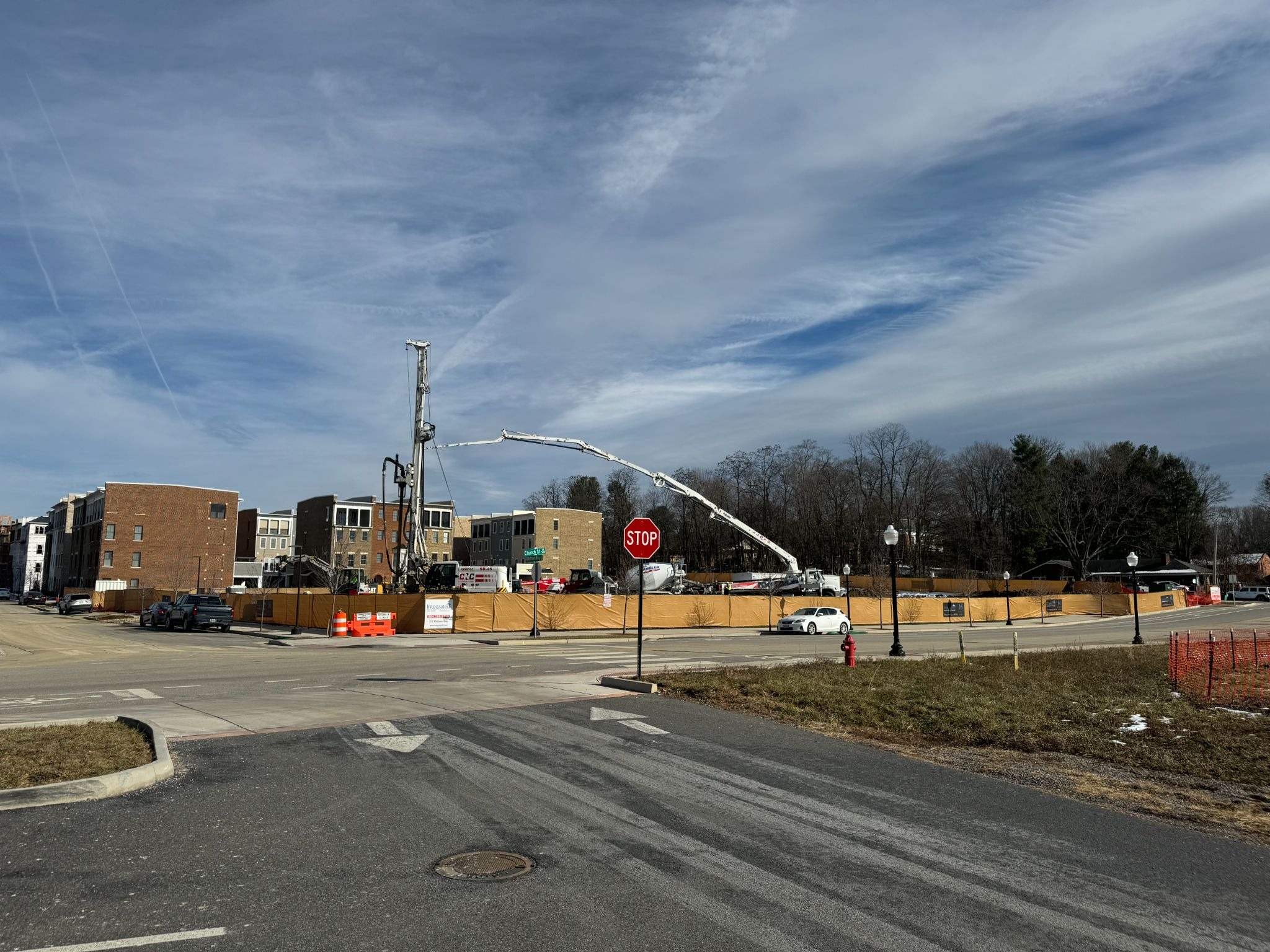
Two developments close to South Main Street, Midtown and Legacy on Main, have been under construction for a couple years. Midtown will “offer civic, commercial and residential mixed-use public space for all to enjoy” according to their Facebook profile.. In essence, it is a multi-purpose buildout which offers four-story townhomes, two-level condos and other recreation and dining experiences near Downtown Blacksburg. These townhomes and condos are listed from 600,000 to over one million dollars on Eagle Construction of Virginia website and are geared towards teachers, police officers and other full-time workers in Blacksburg.

Dec. 13, 2025, Blacksburg, Va – Construction for Midtown happening along Church St and Midtown Way. (Photo by Emily Dorsey, TheNewsFeedNRV.com)

Legacy on Main is a three-story apartment complex with 56 units which prioritize Blacksburg residents, not undergraduates, who need affordable living options. The future residents will have to qualify and earn up to 80 percent of Blacksburg’s Area Median Income (AMI) which was $63,000 in 2021.

Ordinances 2090 and 2094 were voted down on Tuesday, Dec 9 by the Town Council. They proposed housing developments on Webb Street and University City Boulevard respectively. Both ordinances proffered multi-story, luxury apartment complexes with limited parking and high increase in pedestrian, biker and vehicle safety concerns. While these ordinances were cut, various opportunities for developers remain. Ordinance 2095, was recently approved which will add a handful of townhomes next to an existing apartment complex on Whipple Drive.

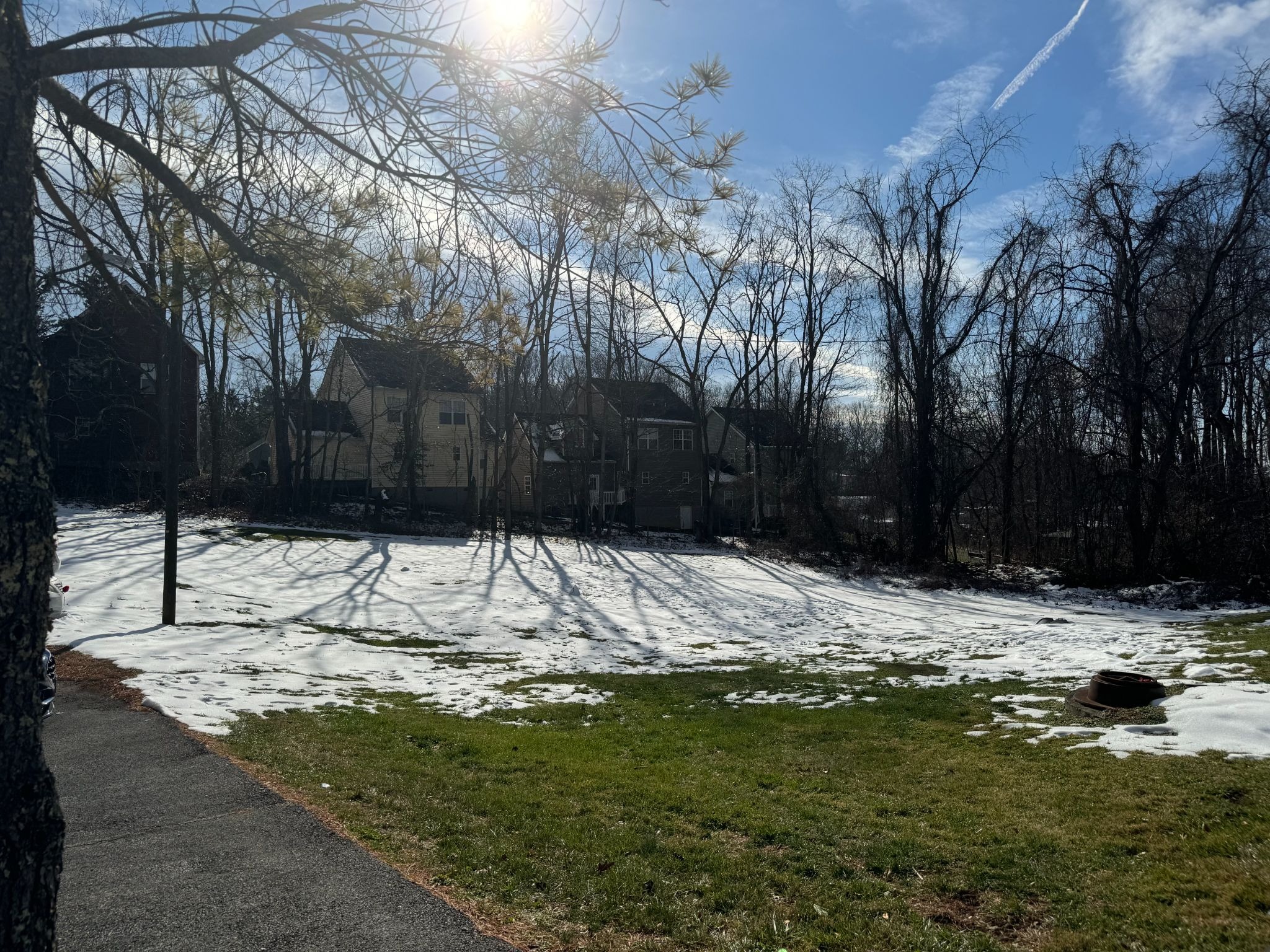
Dec. 13, 2025, Blacksburg, Va – Whipple Drive Townhomes will back up to existing student housing, Uptown Village. (Photo by Emily Dorsey, TheNewsFeedNRV.com)

The proposed Whipple Drive Townhomes plan. Image courtesy from the Town of Blacksburg website. 

Lastly, a close 4-3 Town Council vote approved a controversial development on North Main Street in March 2025. This development includes an eight-story, 700+ bedroom apartment complex being constructed near the well-known Downtown round-a-bout. Many citizens raised concerns at the public hearing regarding population density, traffic, pedestrian concerns, parking availability and the effect it will have on Blacksburg’s overall character. 

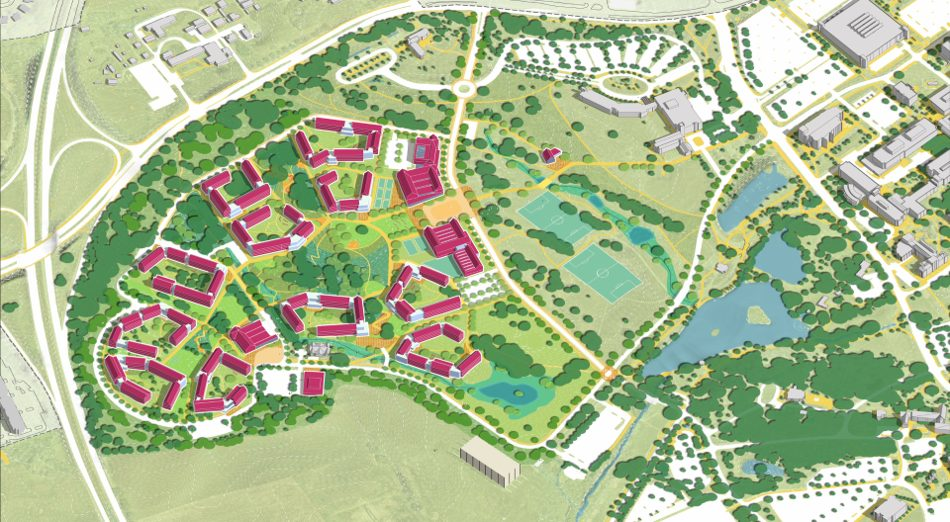
The proposed 801 North Main Street development. Image courtesy from the Town of Blacksburg website.

“We can’t say no more student housing, no more other people housing,” said Anderson. “That’s just ridiculous. We have to try to balance everybody’s housing needs. That’s a really hard struggle.”

Anderson shared that the Town and Council are working in various committees to mediate these issues. First, the Blacksburg-Virginia Tech Liaison Committee which includes the Mayor, Vice-Mayor, Town Manager and the two Deputy Town Managers who meet with six vice presidents from Virginia Tech monthly to discuss needs and topics that affect both the town and university. Second, is the Montgomery County Liaison Committee. The members include Blacksburg’s Mayor and Vice-Mayor who meet with others from Christiansburg and Radford to discuss and collaborate their shared issues and concerns.

“The university will always have the upperhand. Virginia Tech can purchase any property it wishes.”

The housing crisis Blacksburg is facing affects both students and long-term residents, deciding who can afford to live in town and the change in character. As off-campus developments increase rental prices, students turn to other options like residential neighborhoods or find housing in Christiansburg which intensifies competition for limited space. As a result, families, couples and full-time workers are consistently priced out, unable to find housing that fits their needs and budgets. Virginia Tech and the Town of Blacksburg are urged by its citizens to take a more collaborative approach that prioritizes affordability, sustainable growth and values community concerns. Without more change, the divide between students and residents will deepen, further straining the town-gown relationship that defines life in Blacksburg, Virginia. 

Moving the needle: A discussion about college student engagement in politics

By John Tauson, Jonathan Mususa, and Emily Dorsey

The politics and government beat of The News Feed discusses the engagement and impact of college students in the 2025 Virginia midterm elections. Chaz Nuttycombe, the executive director of State Navigate, shared insights on voter turnout, the importance of participation in local politics and the impact from college communities in elections.