
By Milana Waller, arts, culture, and sports reporter
Legal loopholes: How Virginia’s cannabis laws create a gray market
Virginia’s contradictory cannabis laws, which currently prohibit retail purchases without a medical card but still allow possession, generate a gray market for buyers.
Virginia laws don’t condemn recreational marijuana usage, just the practice of purchasing it.
“They’re kind of lenient, in my opinion,” an anonymous seller and student at Virginia Tech said. “It’s a lot harder to get than it should be.”
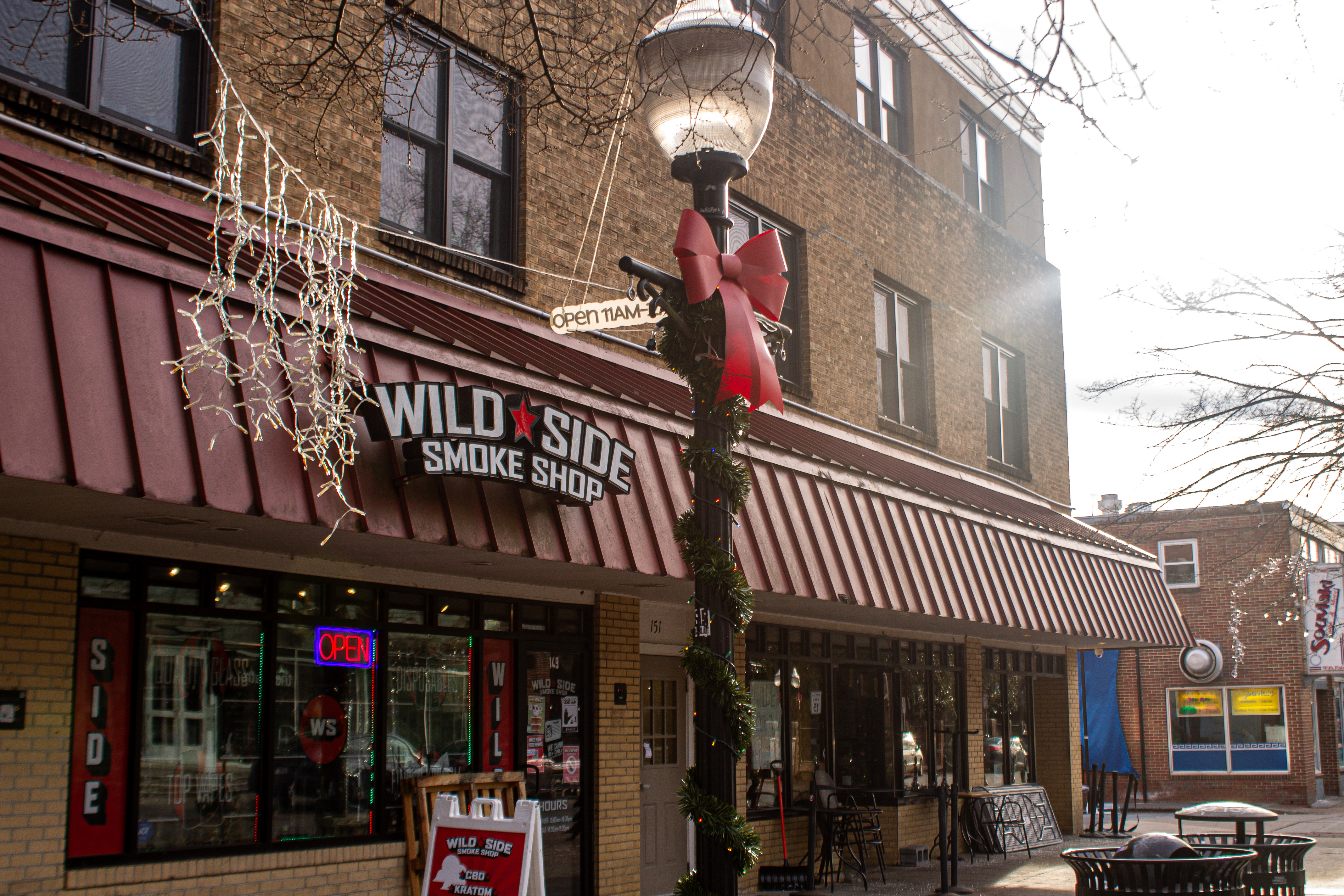
Blacksburg, Va., Dec. 13, 2025 — Wild Side Smoke Shop advertises CBD, kratom, vaporizers, disposables, hand pipes, water pipes, exotic snacks and e-juice but does not include flower. Photo by Milana Waller
Whilecannabinoids, which come in the form of vapes and edibles, can be purchased, actual flower is not legally sold anywhere but a medical dispensary.
“You can legally possess it if you’re over the age of 21, but it’s really hard to get your hands on it.”
Anonymous seller
The rules surrounding Virginia’s unique cannabis legalization allow personal use and possession in a private residence up to one ounce. However, to obtain the flower in the first place, the boundaries become a bit more vague.
“In my course, I go for all the medical aspects,” Alex Niemiera, a Virginia Tech professor in the School of Plants and Environmental Sciences who teaches a cannabis course covering the culture and science surrounding the marijuana industry, said. “The good, bad, and [the] ugly.”
To acquire flower legally, users must acquire the plant through adult sharing, which is distinguished by a private transfer consisting of less than an ounce between adults who are at least 21 years of age.
Selling or buying this same product, however, is illegal. This leaves little room for a legal transaction, since not many people are going to grow marijuana just to give it away for free.
Individuals can legally grow up to four marijuana plants out of public sight. When a female plant is isolated from males, secretion multiplies and does not cease, as the female is trying desperately to attract a male plant’s pollen.
“A female plant will produce, outside, not inside, half a pound of flower per plant,” Neimiera said. “So, technically, you can grow up to two pounds, but this is crazy. The government says anything over a pound is against the law.”
Anyone caught growing over 16.1 ounces can receive a felony and face years in jail.
“They were trying to reschedule it from a Schedule I to a Schedule III,” the anonymous seller said.
“State laws contradict the federal laws. That’s kind of where there’s gray area.”
Alex Niemiera
Currently, cannabis is still classified as a Schedule I drug with LSD and opium.
“Things like that would definitely help with the states feeling better about it,” the anonymous seller said. “But, overall, it’s definitely in the state’s hands because they have the ability to be able to make it recreationally and medically legal.”
Cannabis is composed of two largely considered components, commonly referred to as CBD and THC. Tetrahydrocannabinol (THC) is the chemical that creates a high, euphoric feeling commonly associated with the drug. Cannabidiol (CBD) is associated with sleepiness and pain relief. In recent history, THC levels in commonly consumed marijuana have skyrocketed.
Cannabis THC potency is much harder to measure than alcohol, especially if users are acquiring their cannabis flower illegally.
“Thirty years ago, it was only about two percent,” Neimiera said. “But you can buy concentrates up to ninety percent. It’s quite high, can be dangerous.”
In 1995, the average THC content reached a mere 4%. Now, most strains contain around 20% THC. Dabs, oils, and edibles can reach percentages up to a whopping 90%.
The anonymous seller says his flower contains around 22% THC.
“We get it from a guy who sells cookies in California,” the anonymous seller said.“But it depends on each strain and everything. I research it because I just don’t want to be selling things if I don’t know what it is.”
Anonymous students reported that if they do gather cannabis flower from a retail store, the process is functionally underground. Some might make a ‘donation’ to the store and receive a free ‘gift’ as a result.
However, if a retail store is selling flower as an additional ‘gift’ for another purchasable product, this goes against current Virginia law, which only allows retailers to sell delta-8 in the form of concentrates and vapes.
“That’s [with] most of the stores, and High Supply”, the anonymous seller said. “They don’t sell THCA or any of that, it’s just full-spectrum weeds. They grow it there and everything.”
Tetrahydrocannabinolic acid (THCA) is a non-intoxicating cannabinoid found in flower that can be converted to THC when subjected to heat. Under the 2018 Farm Bill, THCA is federally legal.
To satiate the rule of ‘adult-sharing’, buyers must purchase a plastic cup. Technically, the plastic cup is the item being sold.
“Their loophole is that you’re buying this plastic cup they sell and they ‘share’ you weed,” the anonymous seller said. “It’s just this random cup. It’s just the plastic thing that you hold, and then they give you the weed, and you go to the counter right next door to it.”
In this circumstance, an ounce is still the limit. As a result, those seeking flower, especially if they’re underage or on a budget, are still more inclined to purchase from dealers. Plus, a local dealer will likely deliver and provide during late-night hours.
Smoke shops such as Kief, Wild Side and Herban Legend also have obtainable flower. Students said smaller, more underground shops are more likely to simply ignore the use of loopholes. Additionally, they’re typically less strict about requiring IDs.
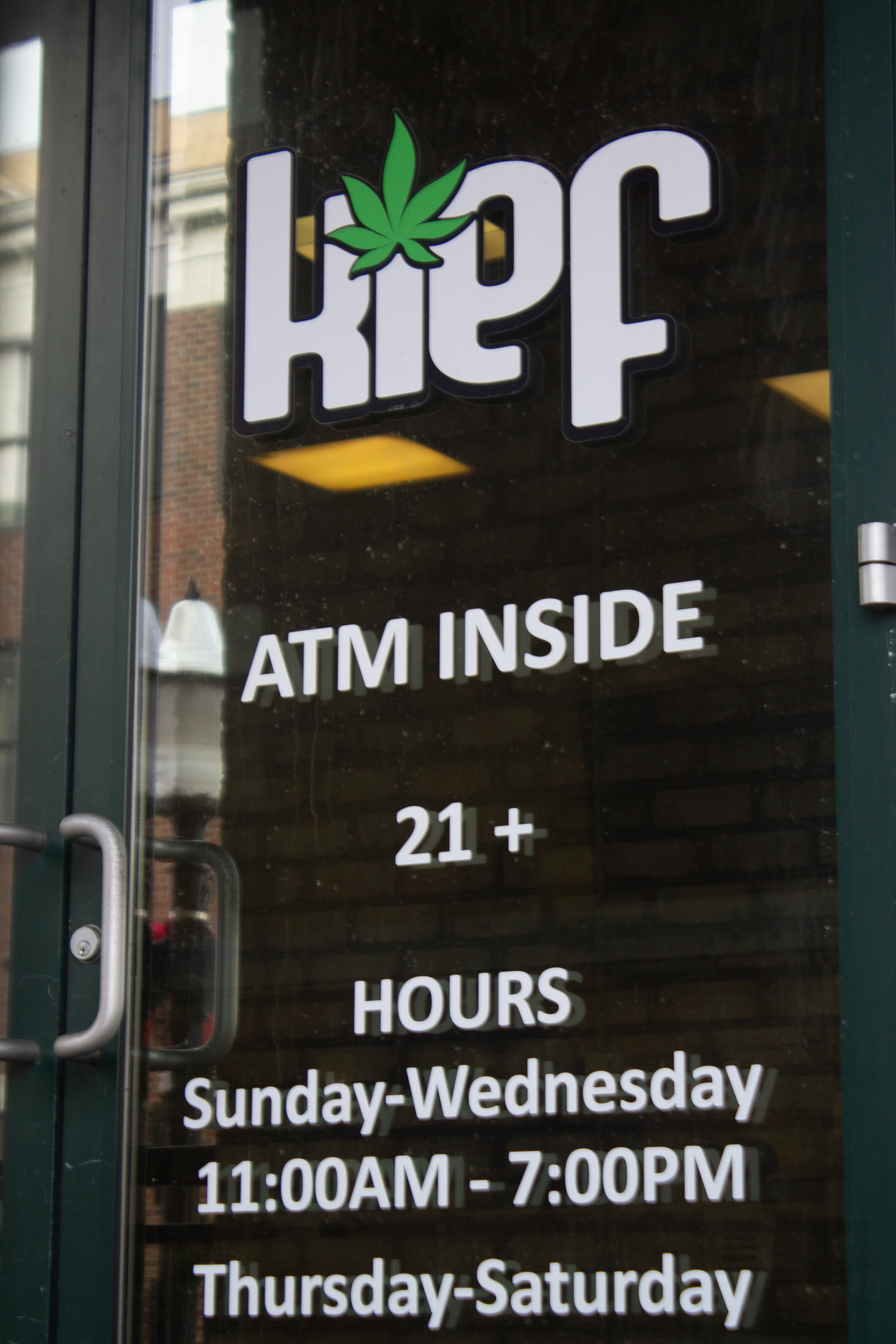
Blacksburg, Va., Dec. 13, 2025 — Kief offers strains such as “Pink Tar Kush”, “Purple nerds”, “Glitterbomb” and “Jealousy”. Photo by Milana Waller
“Some of them, if it’s THCA, because there’s a Farm Bill which makes it so you can legally sell hemp,” the anonymous seller said. “As long as they classify hemp as THCA, since it isn’t just THC, then they’re fine with it. So that’s what most of the smoke shops sell, and then other ones you buy something else, and they gift it to you.”
An anonymous survey of 57 participants was conducted at a bar in Blacksburg on Dec. 10, 2025. The survey was conducted randomly and non-scientifically
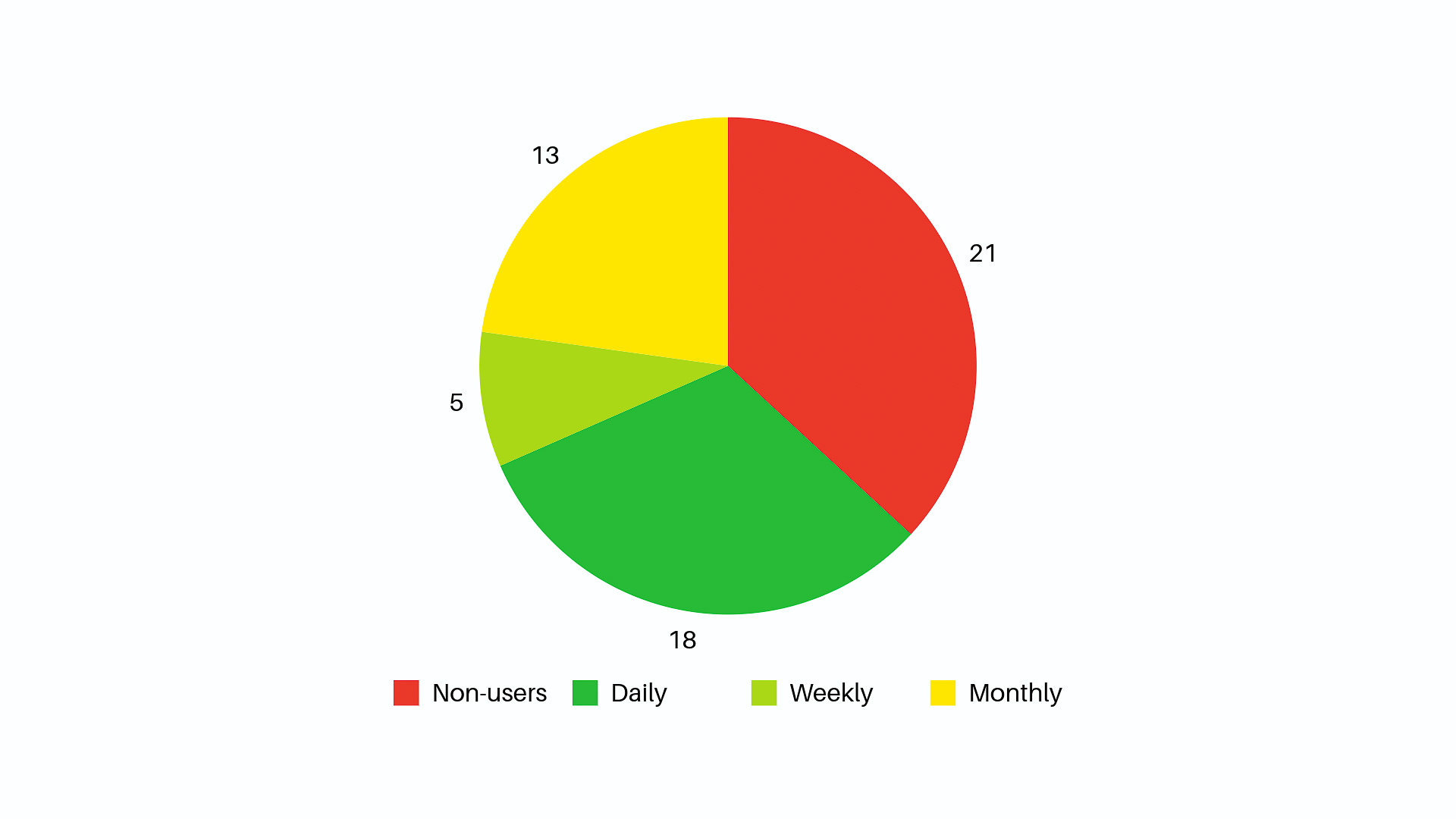
The pie chart above depicts self-reported cannabis use from anonymous respondents in Blacksburg, Va. Note that results are not representative of the general population. Graphic by Milana Waller
Out of the total number of participants, 36 reported that they are or have been cannabis users.
Among the 36 cannabis users, exactly half reported consuming on a daily basis. The other 36% reported smoking monthly, with 14% using weekly. Constant consumption amongst users was therefore more frequent than moderate consumption.
Out of the 18 daily users, 11 of them obtained flower from an underground dealer. Those who consumed on a weekly or monthly basis were less likely to seek out the product, acquiring cannabis instead from a friend or family member.
Only two of the five respondents who reported purchasing their flower from retail stated possession of personal medical cards, but said they were very easy to acquire. Others said dispensaries gave them the flower as a “gift” for free on a regular basis.
As a seller, the anonymous student acquires his weed from a friend who has lived in the area for six years and ships his product from California.
He believes his sales may lessen if retail becomes a more viable option. However, the impact depends on pricing.
The anonymous seller said most buyers don’t really care to understand the laws or loopholes. Most respondents conveyed a lack of concern for any real consequences to obtaining marijuana illegally.
“They’re just trying to get weed.”
Anonymous seller
“If non-retail people are selling it, if we have a lower price and the stores have [another] price, then some people could go for the cheaper option,” the anonymous seller said. “It always just feels safer to go to a retail area and get it.”
The seller believes the law is out of touch with the reality of the situation.
“They don’t really want to know what’s happening anyway, so they just place laws and don’t know what’s actually occurring,” the anonymous seller said.
In light of recent elections, Virginia laws are likely to change in Nov. 2026, legalizing the sale of flower in retail shops for buyers without medical cards.
“Most people definitely have the feeling that there’s some illegality to it,” the anonymous seller said. “No one really knows of the actual loopholes. But once it gets legalized at the end of the retail situation, I think it will become a lot more normalized.”
Niemiera hopes the state government will reduce the risks associated with an unregulated market and eliminate the use of pesticides and contaminants in the growing process.
Access may broaden in 2026, but until then, marijuana users still rely primarily on informal systems, and the gray market remains.
 > THE NEWS FEED <