The Blacksburg Citizens Institute is a 10-week program that teaches residents how the local government operates. From touring facilities, meeting with local leaders and seeing how projects are planned, participants get a close-up view of how decisions are made. This year’s program begins on March 30 and will wrap up on June 8.
In Blacksburg, Va., the Interfaith Food Pantry is helping address food insecurity by providing food and personal care items for those in need. Through strong community partnerships and volunteer support, the pantry is expanding its services and working to ensure no one goes without food.
On Thursday, Feb. 5, the Virginia Tech Board of Visitors met virtually for a special meeting to discuss improvement and funding plans made to the Beamer-Lawson indoor practice facility and on-campus residential facilities.
During the special meeting, two resolutions were discussed. The first was authorizing Virginia Tech to move forward with an $800,000 planning authorization, which is to make improvements to the Beamer-Lawson indoor practice facility. The second was authorizing planning funds and target timelines for several on-campus residential housing renovations, such as Slusher Hall, Pritchard Hall and Hoge Hall. Both plans were approved by the 13 board members in attendance unanimously.
“As a freshman I lived in Pritchard, and I think renovating should definitely be a priority for this school. Not only is there no air conditioning, but the bathrooms need a little love and the carpet in Pritchard needs to go,” said junior Virginia Tech student Leila Sarkarzadeh.
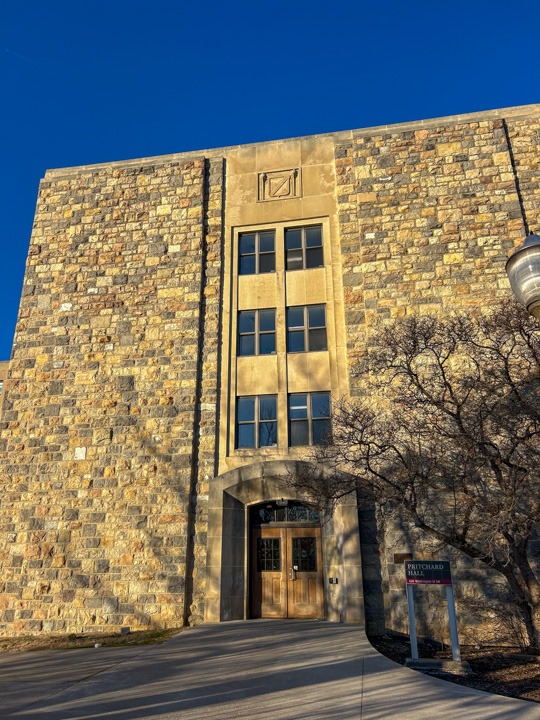
An entryway to Pritchard Hall, a residence hall on Virginia Tech’s campus.
Photo taken by Megan Reese.
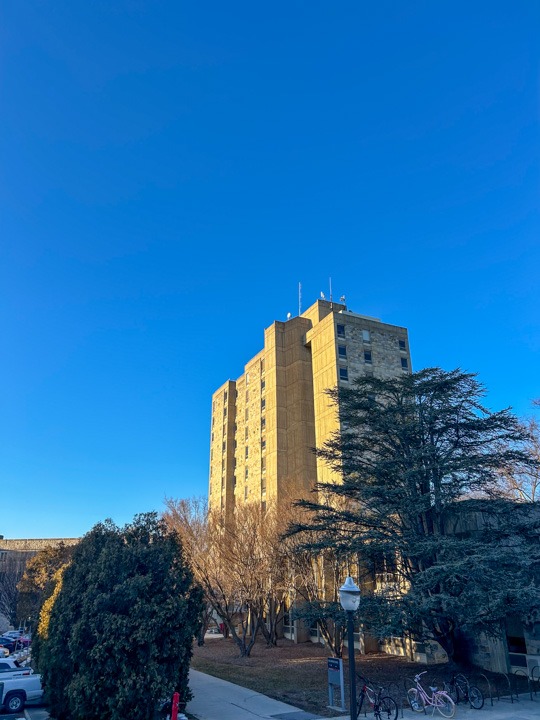
A full view of Slusher Hall, a residence hall on Virginia Tech’s campus. Photo taken by Megan Reese.
Many students complain of the lack of air conditioning in those residential halls during the hotter months, and the university is prioritizing that in the renovations. The renovation goals include heating, ventilation and air conditioning, as well as environmental quality, addressing modern program needs and safety needs.
Virginia Tech made an effort to better understand students’ needs and priorities by bringing in Brailsford and Dunleavy, a consulting company, to meet with students. The board also has an undergraduate student representative that conveys those needs. This person is a non-voting member, but still contributes to conversations, giving students a voice. There are four other non-voting members, the staff, faculty, administrative/professional faculty, and graduate student representatives.
“I sat in on one of [the Brailsford and Dunleavy] meetings as an RA, and I sat in on it as a student leader, and then I met with them in my capacity as the representative,” said Thomas Feely, the undergraduate student representative. “So I think they tried to cover their bases quite well. Emails went out to all of the residents saying, if you want to be part of a focus group, they’re meeting today for this.”
Amy Sebring, Virginia Tech’s vice president and chief operating officer, explained the plans in immense detail during her presentation. There was a refresher on all of the plans that were previously discussed, the renovations’ financial impact and a preliminary housing framework scenario discussing enrollment growth.
Slusher Hall was built in 1972 and the target construction start date will be summer of 2028. The proposed planning authorization is $6.5 million. Hoge Hall is the next building to start construction, with a target start date of the summer of 2030. It was built in 1966 and the proposed planning authorization is $9 million. The last building in this plan is Pritchard Hall, built in 1967, with the first phase of construction planning to begin in summer of 2032 and phase two in summer of 2034. The proposed planning authorization is $12 million.
The plan also noted that residential rates will increase with inflation and the renovations. The plan states “by 2032, to cover project costs, residential rates would need to increase by 4.2% per annum. By 2032 this would equate to 25.2% or $2,326, which equals a bed rate of $11,576.”
Annual increase needed to cover project costs is 4.2% and the annual increase projected to cover inflation is 3%, which combines to 7.2%. However bed rates are different based on the category. There is non air-conditioned multiple occupancy, air-conditioned multiple occupancy, and air-conditioned single occupancy. The new bed rate will apply based on the category.
“That 7% is being applied per category. The reason why I think this is reasonable is because we’re behind. We have a lot of deferred maintenance on these facilities,” said Feely. “3% goes to inflation and then the 4% is for the cost of renovations, which it’s tough to argue with 4%. To me it seems like a pretty good deal.”
Although the on-campus residential resolution was the bigger proposition of the meeting, the indoor practice plans were approved as well. The plan notes, “a conditioned interior practice environment is critical to remain competitive with other Atlantic Coast Conference and NCAA Division I athletics programs.”
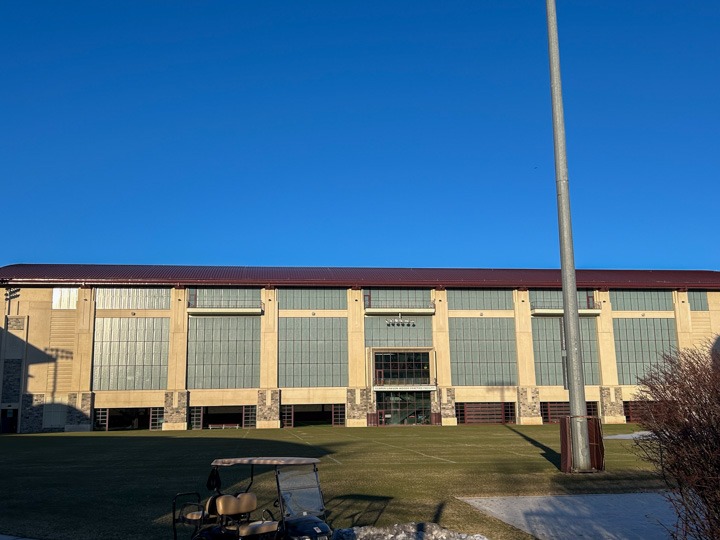
Beamer-Lawson indoor practice facility. Photo taken by Megan Reese.
The board recently made headlines for approving a $229 million plan to invest in athletics for the next four years. This plan aligns with the need to be competitive with other Division I athletic programs.
Feely noted that although there may be concern about more money going towards athletics, that this plan is funded by athletics auxiliary revenues, like ticket sales, which is money that the athletics department already has.
The next board of Visitors meeting is planned for April 13-14.
According to Benjamin Franklin, there are two things certain in life: death and taxes. Because of that, it is important to understand what you are paying and why you are paying it.
Jan. 26 marked the first day of tax filing season for Americans, and this time of year can be extremely stressful and confusing. Each year there are new laws and regulations put into place by Congress, and most people don’t have the time to fully understand what they mean.
U.S. Rep. Morgan Griffith, R-Va., of Virginia’s 9th District, recently wrote an article for NRVNews.com explaining how the new reconciliation package, called the “Working Families Tax Cuts,” could affect Southwest Virginia.
I spoke with Dr. Michelle Harding to discuss the basics of tax filing season, understand the new policies and how they will impact the local residents. Harding is a licensed certified public accountant specializing in taxation, and she joined the Pamplin College of Business in 2017 to teach the next generation of accounting professionals.
Harding’s comments were edited slightly for length and clarity purposes.
Can you give a quick summary of what tax filing season is?
Every year, people who have an income have to file a tax return. There’s some requirements where if your income’s below a certain level, you may not be required to file a tax return. But, if you have wage income, that means your employer has likely already deducted taxes. So, even if you’re not required to file a tax return, you should anyway in order to get a refund of those taxes that you’ve already paid.
What we typically think of as tax filing season is that employers are required to give their employees a W-2 form, which is their annual wage report for all the income they’ve earned over the last year, by Jan. 31. Basically, tax season is the time when you receive that W-2 wage report from your employer, until the April 15th filing deadline.
What is your overall main advice to young people and families going through this tax season?
When you get a W-2, 1099 form or your annual bank interest statement, those businesses are sending you a copy, but they’re also sending the IRS a copy. It’s really important that you pay attention and make sure you include all of your sources of income in your tax return.
Often people are just intimidated by taxes, it seems overwhelming and daunting. For people whose primary source of income is their paycheck, they absolutely should not be intimidated by this process because their W-2 is the main piece of information they need to file their tax return. Most Americans will actually receive a refund. So yeah, that’s good news.
There are also free tax filing services available. The IRS has on their website, it’s called IRS Free File. If your adjusted gross income is less than $89,000, then there is this online service that’s free for you to file your taxes. Also, the New River Valley Community Action Group sponsors VITA, which is Volunteer Income Tax Assistance. I definitely encourage people to take advantage of those resources.
Every year we see changes in tax policy, which directly impacts taxpayers. Can you explain, in plain terms, what the “Working Families Tax Cuts” are designed to do?
Tax deductions are rules that Congress passes. That’s another misconception. People blame the IRS, but Congress passes tax laws, and the IRS is responsible for enforcement of those tax laws. Every year Congress decides how much each taxpayer is allowed to deduct. So, every taxpayer gets a standard deduction, and that standard deduction reduces the amount of your income that you have to pay taxes on. It is a flat amount that everyone gets based on their filing status.
The first change under these “Working Families Tax Cuts” is that the amounts increased a little bit more than they usually do from year to year. That’s Congress saying, we’re allowing you to pay taxes on less of your income.
Then we get into some other very specific targeted tax deductions. For taxpayers that are 65 and older and have other sources of income, they get an extra $4,000 of standard deduction.
Also, qualified tip income. This is going to benefit people who work in service industries where a lot of their income is from tips. You’re able to exclude up to $25,000 as a single person. But if you’re married filing jointly, up to $50,000 of your income. That can be quite meaningful to people who get a lot of their income from tips.
There is also a new deduction for qualified overtime compensation. People who are paid on an hourly basis, if you work more than 40 hours a week, you’re entitled to overtime.
Based on what we know, how might these tax cuts affect working families in Southwest Virginia or the NRV specifically?
So if you qualify for these taxes; if you have tip income, if you have overtime income or if you’re 65 or older, these things will benefit you. But if I am a salary worker, for example, let’s talk about Virginia Tech. An administrative assistant may make $30,000 a year. So they have no tip income and they have no overtime income because they’re a salary employee. So, none of those deductions will benefit them. Now, everyone having the higher standard deduction will likely provide some tax relief. That effect is likely between $100 and $200 if your income is around the national salary average of $62,000, which again, more tax saving is always better.
Would this policy meaningfully change the tax filing experience? Would filing taxes become simpler, more complicated, or mostly unchanged?
It’s definitely not becoming simpler. Because as I described those tax deductions, there are a lot of if-then statements. So what will I advise them? Number one, don’t be intimidated by the process, especially if your income is primarily a W-2 and then you have some interest from your savings account. That’s a very straightforward tax return. If you know how to use a computer and the internet, using one of the free online tax filing resources, should be a really straightforward experience. So don’t be intimidated by it because the tax software walks you through the process.


 > THE NEWS FEED <