Blacksburg residents Jon Dudding and Nancy Moseley have teamed up with Virginia Tech’s University Libraries to explore new ways of preserving the Barger Cemetery’s gravestones. Using digital technology, the university is helping to document the inscriptions and designs found on the stones before they are further damaged or weathered, with the goal of preserving an important piece of Blacksburg’s history.
With the Virginia Tech career fair season upon us, students have opportunities to meet employers, explore internships and jobs and begin building professional relationships before the semester gets further underway. The fairs provide a chance to bring employers and students together, offering opportunities and experience for students at different stages of their college careers. For the team working in Career and Professional Development, this is one of the busiest times of the semester. According to Dr. Matthew Cowley, associate vice provost for Career and Professional Development, students can benefit from attending even if they are not yet looking for a full-time position.
“If you have the time, it’s a great thing to just go and shake some hands and network. I know that that may sound intimidating, but introducing yourself to folks who have hiring authority and asking them, ‘Hey, what do you all look for in an intern so that I can spend the next year getting ready and maybe having some of the experiences that the employers would say are valuable?’–that can be incredibly beneficial to a student,” Cowley said.
For students considering attending, Cowley recommends researching employers beforehand and developing a plan for the event. Most career fairs provide a list of participating employers, allowing students to learn about companies and positions they are recruiting for before arriving. Rather than asking recruiters basic questions, doing preliminary research can give students the opportunity to have more substantial conversations about what employers are looking for in potential employees.
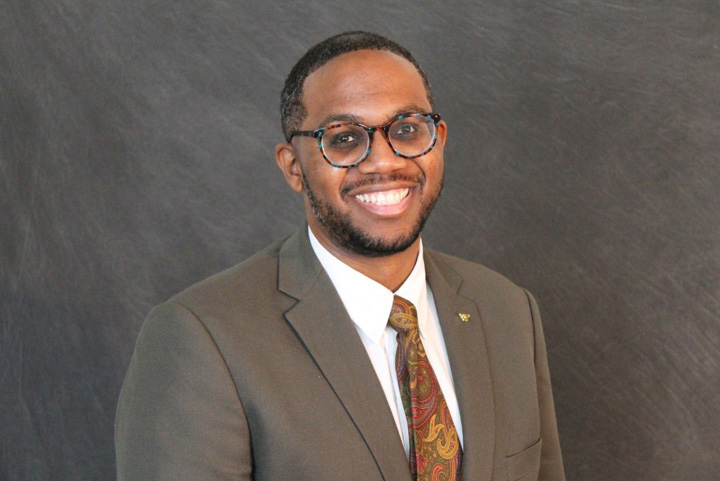
Dr. Matthew Cowley, the associate vice provost for Career and Professional Development, posing for a photo. Photo by Kelly Shannon.
The Career and Professional Development team also prepares students for career fairs, among other events, by helping them explore their interests and guiding them in looking for jobs, practicing for interviews, and networking with employers.
The timing of the fall career fair season can also give students a multitude of opportunities to refine their job-searching strategies. Students seeking summer internships have the fall fairs as an early opportunity to meet with recruiters, while the spring career fairs provide another chance to search if the first round does not result in an offer.
For graduating students, starting early can be particularly useful. Cowley said the job search can take months, making the fall an important time to identify weaknesses in resumes and interviewing skills and improve them in time for the spring semester. But Cowley knows that attending a career fair can be nerve-wracking for some students.
“I would say, you know, go with a friend. I wouldn’t hang on their side the entire time you’re at the event, but go with a friend who can help you process what’s happening and relax as you’re going through that process, that could be a really big thing,” Cowley advised.
Career fairs also offer something that online applications cannot: face-to-face interaction.
This was especially true at the 2026 Engineering Expo, where students filled Squires Student Center, prepared with tailored suits and resumes, before the event had even opened. The Engineering Expo, which is the largest student-run career fair at Virginia Tech, sees about 7,000 students every year. Kallie Allen, the 2026 Engineering Expo chair for the Student Engineers’ Council (SEC), said the event saw lines down Alumni Mall.
“So, this career fair is open to all engineering disciplines, and we also invite non-engineering majors to participate too. That includes students who are interested in switching to engineering, or maybe are interested in jobs outside of their major, and so, we’re very proud of the work we do,” Allen said.
Allen, a sophomore biomedical engineering student, has spent the summer working with companies, handling recruitment, logistics and outreach for the expo. Fourteen executive members of the SEC helped organize the event, which ran from Sept. 14 to 17.
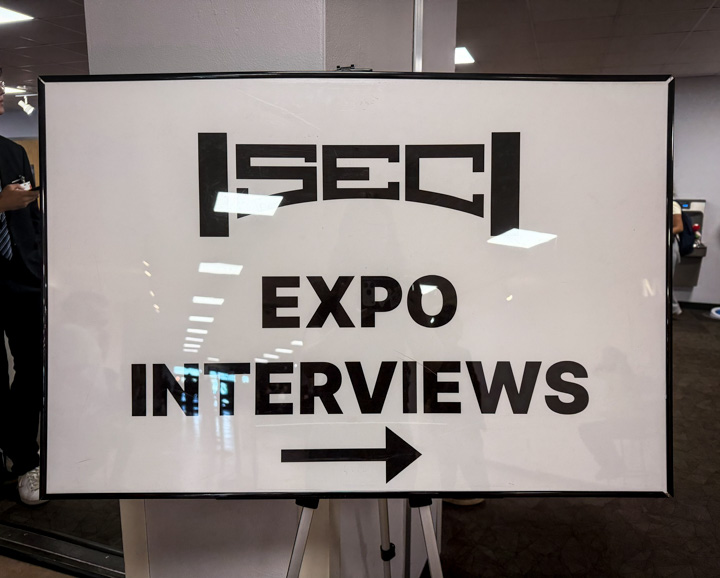
A sign inside of Squires Student Center helps direct students during the Engineering Expo on Sept. 17. Photo by Kiera McMahon, TheNewsFeedNRV.com.
The scale of the expo became more apparent as students moved between booths and recruiters met with hundreds of potential applicants each day. Allen said that one company reported speaking with approximately 800 students on the first day of the event. For Allen, the crowds show more than just the size of the event. The expo is intended to help students connect their education to expectations they will encounter in the professional world.
“We talk all the time at Virginia Tech about building your technical foundations, whether that’s in your classes, with workplace experiences, or with clubs or design teams, but they need a way to bridge that gap between the experiences that they have and what the industry is looking for,” Allen said.
According to Cowley, employers continue to look for many of the same competencies they sought when he was a student.
“When we talk to employers, unfailingly, these are the things that they’re looking for: They’re looking for good communication skills, whether it be written or verbal. They’re looking for somebody who can work on a team. They’re looking for somebody who shows evidence of having been a leader or having the potential to have to be a leader. They’re looking for somebody who can think critically,” Cowley said.
The only big change has been employers’ ability to discern which applicants truly possess those skills in the age of AI. With increasingly polished resumes and cover letters, employers are now looking for something more to differentiate applicants from each other. Cowley believes that this development makes career fairs even more important, as in-person interactions can leave a lasting impression on recruiters in ways that paper applications cannot.
For the fall semester, a variety of career fairs will take place through Oct. 20.
BLACKSBURG, Va. — The Virginia Tech Study Abroad Fair will be held on the Drillfield on Sept. 22, encouraging new and returning students to participate in programs that will give them opportunities to explore the world. The fair will connect students with information about programs and resources available through the Global Education Office (GEO). With the start of a new school year, the fair offers an early opportunity for students to learn how studying abroad can fit into their college experience.
For students unsure of where to begin, the Global Education Office says there are many more options available than most expect. In an interview, Erin Doherty, the outreach strategist and events manager with the Global Education Office, spoke about the efforts the GEO makes to get students interested and prepared for studying abroad. Understanding how study abroad programs are created and advertised can help students remain informed about what the Global Education Office can do for them. Doherty said that the goal is to help students find what suits them best in terms of interest and academic success.
Her comments were slightly edited for length and clarity.
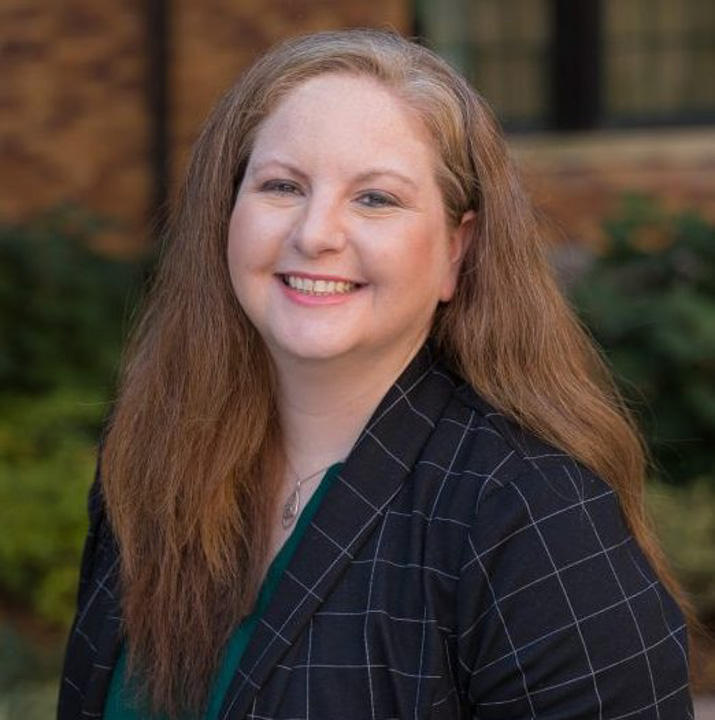
Erin Doherty, the outreach strategist and events manager with the Global Education Office, posing for a picture. Photo provided by Regina Lograsso.
What role does the Global Education Office play in helping students study abroad?
So, we play a major role in it. We have the students come and talk to our peer advisors, talk about the three main things that they should consider with studying abroad, which is what their support needs are, what their budget is, and then their career and academic goals. So, we try and find programs that fit all three of those and then set them up to go talk to their academic advisor to see if any of those programs would fit their academic credits that they have left in their transcript.
So they can sit down with their academic advisor, look at the transcript, see how study abroad can fit in, and then make sure that their schedule aligns to support going to study abroad because we’re here to add to the experience of your time as a Hokie, not add to your time as a Hokie here. So we’re just trying to set you all up for the best success with that.
What are some interests you gauge from new students in regards to studying abroad?
Where they want to study abroad is a big one, and when they want to study abroad. So, are we looking at freshman years? Sophomore years? Junior years? Typically we see sophomores and juniors go in general. So really it’s where they want to study abroad and what they’re interested in.
Are there any particular questions you hear from students?
I know we’re really excited when we hear all the different places that the students want to study, especially outside of Western Europe, because we have some great opportunities in New Zealand, Australia, as well as Japan and South Korea. Just a lot of great opportunities that don’t always come to mind when you first think of study abroad.
How does the Global Education Office spark interest for study abroad programs?
So we have our Study Abroad Fair on September 22 on the Drillfield from 10 a.m. to 4 p.m. That’s our biggest event of the year. Additionally, we were at Weeks of Welcome. We got to speak to the College of Science freshmen. And then we do a lot of tabling.
We’re always looking to collaborate with different departments and student organizations to create an experience where we can broaden our outreach. We do a lot of classroom outreach with advisors and stuff like that.
What are the biggest misconceptions that students have?
That you have to study a different language to go abroad. There are opportunities to study abroad in a country that is not your native language where the classes are in English. And that’s really cool because it’s not as scary.
Or that you have to do the entire semester. There’s programs for spring embedded, fall embedded, winter break, and summertime. There’s literally a program for everyone.
How does the GEO make studying abroad financially accessible?
GEO as well as other colleges on campus offer a lot of scholarships and right now, we are doing study abroad info sessions that center around financial aid and scholarships so that students are more aware of what their options are, both at Virginia Tech and outside of Virginia Tech to help fund it. In our newsletter, we talk about different deadlines and opportunities that come up. The important thing is study abroad can be affordable and the sooner you are proactive in terms of trying to figure out when you can study abroad and what kind of program, the better chance we have to help you find a way to afford it and set you up for meeting the deadlines for the scholarships to apply for.
What do you hope students take away from studying abroad?
I hope that they come away with a better understanding of how they can impact the world positively, the difference that they can make in the world, as well as, you know, just expanding their horizons. Hokies really do make a big difference, no matter where they go, and I hope that their study abroad program increases their confidence as well as their academic experience.
What is the most important thing that students should know about studying abroad?
Everyone can study abroad. If you’re an athlete, you can study abroad. If you’re in the cadets, you can study abroad. The main thing is, the more proactive you are, the better we can set you up for success to have those conversations with your academic advisor and financial aid. And that comes into talking to our peer advisors and our advising team because we really want to make sure that we’re steering you in the right direction.