
By Ella Winterling, science, technology, environment and climate reporter
In June 2026, there was a large increase in cases of Cyclospora, a parasite that is spread through contaminated food or water. While other unrelated outbreaks also occurred, the main outbreak was traced back to iceberg lettuce sourced from Mexico by Taylor Farms.
Cyclospora is a parasite thought to be connected to the food environment through human fecal contamination. How exactly the produce becomes contaminated is still being researched, with scientific theories including water sources, sanitation infrastructure and other environmental factors.
News of the outbreak led to a variety of reactions across social media and raised questions about produce safety. As researchers worked on locating the cause of the outbreak, consumers questioned what was and was not safe to eat.
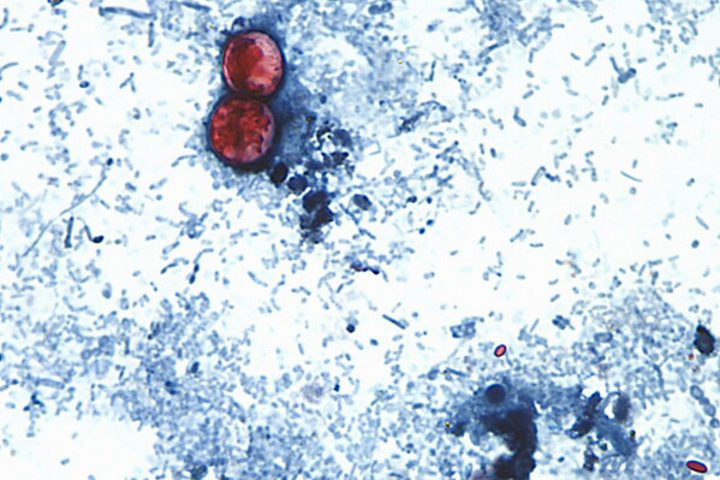
Cyclospora cayetanensis oocyst under a microscope. (Photo Courtesy of the CDC via Associated Press)
“One of the biggest misconceptions is that if one type of food is recalled, every product in that category is unsafe,” said Laura Strawn, a Virginia Tech professor with a focus in food microbiology and safety. “A recall usually applies to specific products, suppliers, production dates or lot codes, so consumers should look at the actual recall notice rather than assuming, for example, that all lettuce is unsafe.”
Instead of receiving information directly from social media, a common news source for college students, Stawn advises those seeking more information on recalls and outbreaks to go directly to the source to avoid misinformation.
“My advice is to go one step upstream,” Strawn said. “If a social media post says, “CDC says this” or “FDA found that,” go to CDC or FDA and see what they actually said.”
During the cyclospora outbreak this past summer, local farmer Kat Johnson noticed an increase in new customers coming to her produce stand at the Blacksburg Farmers Market.
“There’s been a lot of new faces at the market; people that didn’t come before are maybe coming to the market to feel safer about their food,” Johnson said.
While purchasing safe foods is not necessarily a matter of buying local produce versus grocery store produce, buying food from local farmers gives consumers closer access to where their food comes from.
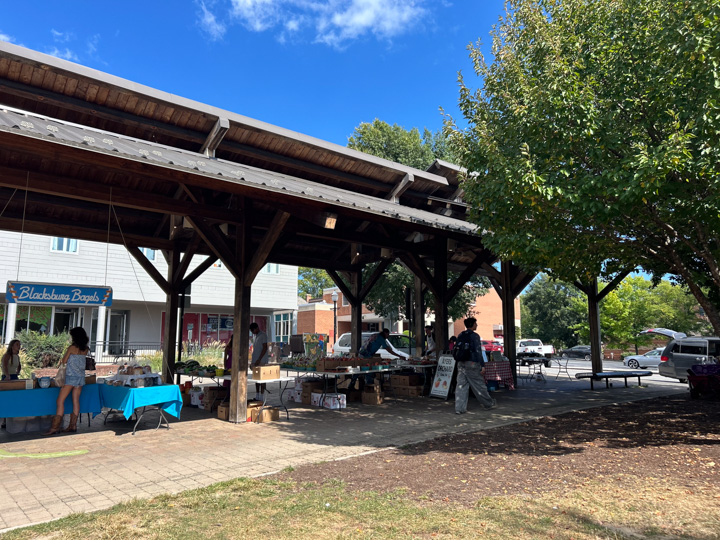
Vendors sell their products at the Blacksburg Farmers Market on Sept. 16. (Ella Winterling, The News Feed NRV)
“Buying directly from a local grower can give consumers an opportunity to ask questions about their growing and food-safety practices, and supporting local agriculture has many benefits, but ‘local’ itself isn’t a food-safety intervention,” Strawn said. “Lots of big grocery stores do a fantastic job and provide food at consumer-friendly prices.”
Johnson, who specializes in growing “salad-centric” produce, goes through routine safety training and follows a specific procedure to ensure that her products are safe for consumers, including annual water tests and consistent sanitization of surfaces that come in contact with harvested crops.
“When the Cyclospora thing was just coming to light in the news, I put out a newsletter to my customers,” Johnson said. “I did reiterate what we were doing and what we can guarantee and what we can’t guarantee.”
According to Johnson, local farms, while small, take their jobs “really seriously”. From routine safety trainings to taking care of the land, Johnson emphasizes the energy and thought that goes into farming.
“The large, trucked-in food system is really fragile, and I think that in times like this, or times like COVID or big natural disasters, you realize that having food grown close to home is really a matter of food security for our community,” Johnson said. “Supporting the farmers that are doing that before something bad happens is really important.”
Whether purchasing produce from a chain grocery store or a local farm stand, consumers can still practice healthy habits when it comes to produce safety, from rewashing lettuce to staying aware of cross-contamination. While Strawn recommends washing produce, she also warns of its limitations.
“Rinsing produce can reduce contamination, but it cannot guarantee that all pathogens are removed,” Strawn said. “That’s particularly true for Cyclospora, which is difficult to remove and is resistant to many common sanitizers. If a product has been recalled with instructions to discard it, washing it doesn’t make that recalled product safe to eat.”
In general, for college students looking for safe and affordable produce, it’s all about personal preference. Whether it’s organic local produce or canned vegetables, there are options for every need.
“My advice to students is to buy fruits and vegetables that fit your budget, your schedule and what you’ll actually eat,” Strawn said. “Frozen and canned fruits and vegetables can be great, affordable options too, and choosing store brands, buying produce in season and selecting foods with a longer shelf life can help reduce cost and food waste.”
While the Cyclospora outbreak caused fear in relation to buying and eating certain produce, Strawn explains that with safe practices, produce should not be something to be avoided.
“I don’t want an outbreak or recall to make people afraid of eating fruits and vegetables,” Strawn said. “The goal of food safety isn’t to make people afraid of food, it’s to understand where risks occur and figure out how we can prevent them.”

