
By Megan Reese, politics and government reporter
On Thursday, Feb. 5, the Virginia Tech Board of Visitors met virtually for a special meeting to discuss improvement and funding plans made to the Beamer-Lawson indoor practice facility and on-campus residential facilities.
During the special meeting, two resolutions were discussed. The first was authorizing Virginia Tech to move forward with an $800,000 planning authorization, which is to make improvements to the Beamer-Lawson indoor practice facility. The second was authorizing planning funds and target timelines for several on-campus residential housing renovations, such as Slusher Hall, Pritchard Hall and Hoge Hall. Both plans were approved by the 13 board members in attendance unanimously.
“As a freshman I lived in Pritchard, and I think renovating should definitely be a priority for this school. Not only is there no air conditioning, but the bathrooms need a little love and the carpet in Pritchard needs to go,” said junior Virginia Tech student Leila Sarkarzadeh.
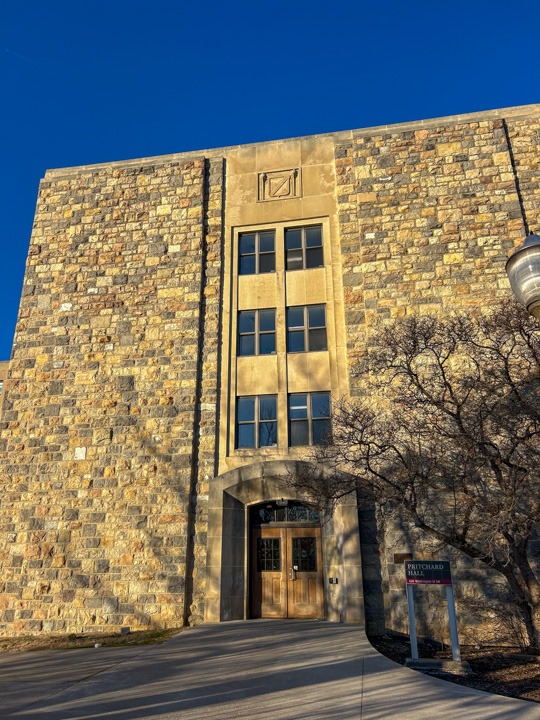
An entryway to Pritchard Hall, a residence hall on Virginia Tech’s campus.
Photo taken by Megan Reese.
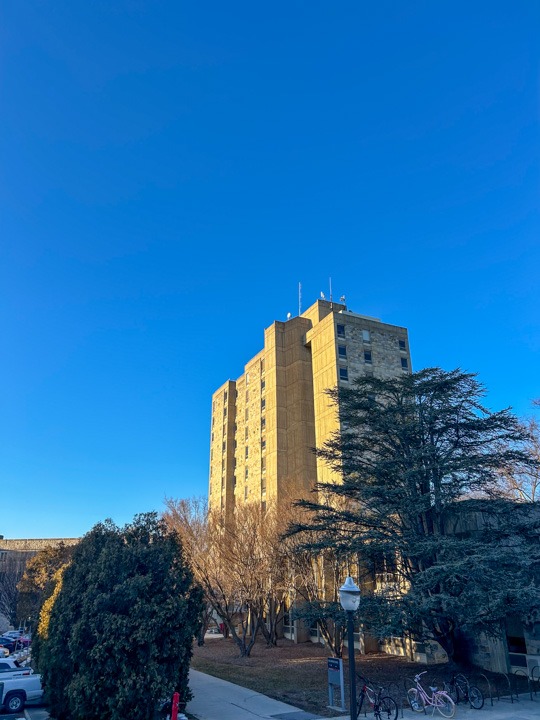
A full view of Slusher Hall, a residence hall on Virginia Tech’s campus. Photo taken by Megan Reese.
Many students complain of the lack of air conditioning in those residential halls during the hotter months, and the university is prioritizing that in the renovations. The renovation goals include heating, ventilation and air conditioning, as well as environmental quality, addressing modern program needs and safety needs.
Virginia Tech made an effort to better understand students’ needs and priorities by bringing in Brailsford and Dunleavy, a consulting company, to meet with students. The board also has an undergraduate student representative that conveys those needs. This person is a non-voting member, but still contributes to conversations, giving students a voice. There are four other non-voting members, the staff, faculty, administrative/professional faculty, and graduate student representatives.
“I sat in on one of [the Brailsford and Dunleavy] meetings as an RA, and I sat in on it as a student leader, and then I met with them in my capacity as the representative,” said Thomas Feely, the undergraduate student representative. “So I think they tried to cover their bases quite well. Emails went out to all of the residents saying, if you want to be part of a focus group, they’re meeting today for this.”
Amy Sebring, Virginia Tech’s vice president and chief operating officer, explained the plans in immense detail during her presentation. There was a refresher on all of the plans that were previously discussed, the renovations’ financial impact and a preliminary housing framework scenario discussing enrollment growth.
Slusher Hall was built in 1972 and the target construction start date will be summer of 2028. The proposed planning authorization is $6.5 million. Hoge Hall is the next building to start construction, with a target start date of the summer of 2030. It was built in 1966 and the proposed planning authorization is $9 million. The last building in this plan is Pritchard Hall, built in 1967, with the first phase of construction planning to begin in summer of 2032 and phase two in summer of 2034. The proposed planning authorization is $12 million.
The plan also noted that residential rates will increase with inflation and the renovations. The plan states “by 2032, to cover project costs, residential rates would need to increase by 4.2% per annum. By 2032 this would equate to 25.2% or $2,326, which equals a bed rate of $11,576.”
Annual increase needed to cover project costs is 4.2% and the annual increase projected to cover inflation is 3%, which combines to 7.2%. However bed rates are different based on the category. There is non air-conditioned multiple occupancy, air-conditioned multiple occupancy, and air-conditioned single occupancy. The new bed rate will apply based on the category.
“That 7% is being applied per category. The reason why I think this is reasonable is because we’re behind. We have a lot of deferred maintenance on these facilities,” said Feely. “3% goes to inflation and then the 4% is for the cost of renovations, which it’s tough to argue with 4%. To me it seems like a pretty good deal.”
Although the on-campus residential resolution was the bigger proposition of the meeting, the indoor practice plans were approved as well. The plan notes, “a conditioned interior practice environment is critical to remain competitive with other Atlantic Coast Conference and NCAA Division I athletics programs.”
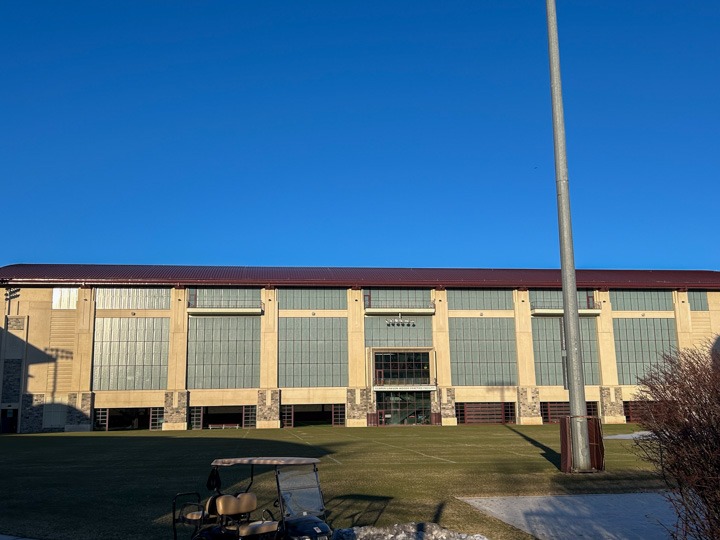
Beamer-Lawson indoor practice facility. Photo taken by Megan Reese.
The board recently made headlines for approving a $229 million plan to invest in athletics for the next four years. This plan aligns with the need to be competitive with other Division I athletic programs.
Feely noted that although there may be concern about more money going towards athletics, that this plan is funded by athletics auxiliary revenues, like ticket sales, which is money that the athletics department already has.
The next board of Visitors meeting is planned for April 13-14.
 > THE NEWS FEED <