Fire safety and prevention through the lens of architectural design

By Bethany Lenhardt, crime, safety and justice reporter

View of Burchard Hall, home of the architecture department, from above ground. Photo by Bethany Lenhardt

When considering the design of a building, architects must balance aesthetics with fire safety considerations, including prevention, suppression and egress.

Why it matters: The design of a building determines the safety of those inside and their route to leave in the event of an emergency.  

  • “It’s [fire] a top priority when an architect is planning a building,” said Jim Bassett, Director of the School of Architecture at Virginia Tech. “All materials have a fire rating, and it’s really not just single materials, but also materials that come together as assemblies, so you’re talking about the way in which those things might perform together.” 
  • For example, steel encased by concrete. Without concrete, steel is more vulnerable to fire. 
  • “Steel loses 50% of its strength at 1100 degrees,” Bassett said. “A conventional structure fire can reach 1000 degrees in 10 minutes. You basically turn steel into spaghetti almost 10-15 minutes into a fire. This is why you have this network of responses, and the first one is protection of the assemblies.” 

Zoom in: Three major variables factor into the building’s function and design relative to fire. 

  • “The first one is occupancy/use,” Bassett said. “What is the building going to be used for? Then type of construction; that is really the combustibility rating of the structure. The third one is the maximum height and area of your building.” 
  • Bassett says that the three variables are integral to each other. They help determine the answers to practical questions and represent the balance between beautiful design and practical safety.  
  • “How does it have to function relative to fire,” Bassett asked. “What and where do your walls – interior and exterior load-bearing walls – need to be? What do your non load bearing walls and partitions need to be? What does your floor and roof construction need to be?” 

Flashback: Historical events, like the Cocoanut Grove Fire of 1942, significantly impact and update building code over time. 

  • According to the National Archives, a small fire in a popular Boston club, “The Grove,” took the lives of 492 people. A decorative palm tree began to light up in the basement lounge. Wall and ceiling decor acted as fuel, and the fire quickly spread and smoked, taking the lights out with it.  
  • “An inward-opening door effectively became a wall as the panicked crowd pushed forth in an attempt to flee to the streets,” according to the National Archives website. “Additional exits, if they could be located in the dark, were either blocked or obscured, leaving hundreds trapped within the inferno.”  
  • Bassett believes that the Grove fire is an example of an event that fundamentally changed building codes, and that fire is easily one of the most major shapers of code.  
  • “You might not even notice, but all doors swing out in public spaces, especially rooms of a certain size,” Bassett said. “Sometimes they swing in, like my office, but that’s just because the occupancy load is very small; there’s just one or two people that have to get out.”   

Zoom out: In the grand scheme of things when a fire occurs, the number one priority is to get everyone out of the building.  

  • Areas of egress are the exit routes for all individuals in a building. You need at least two exit strategies; more if the building composition is larger or holds a greater quantity of individuals. Common egress is an enclosed staircase, but accessibility also needs to be taken into account.  
  • “Accessibility is very important when designing areas of egress specifically for those who are disabled,” said Julia Briner, senior architecture student. “My top considerations would be width of pathways and doorways, nonslip surfaces with tactile paving for those with visual impairments, proper lighting and signage, and safe areas where individuals can wait for assistance.” 
  • “An area of refuge is simply an area where people that are unable to use the stairs can await emergency evacuation,” Bassett said. “If somebody in a wheelchair is in that space, for example, there’s an emergency button that they can press. When first responders show up, they will go through those routes to make sure there are not people stuck in those places.” 
Area of refuge in Burchard Hall. Photo by Bethany Lenhardt

Virginia Tech provides Safe Ride services to ensure transportation safety

By Sophia Gerni, crime, safety, and justice reporter.


Virginia Tech Safe Ride van. Photo by the Virginia Tech Police Department.

Blacksburg, Va. — Walking around campus or the greater Blacksburg area during late-night hours can bring uneasiness and possibilities of feeling unsafe. Virginia Tech’s Police Department provides Safe Ride, which ensures safe and free transportation for anyone who may feel unsafe.

Virginia Tech’s nighttime safety escort, “Safe Ride,” starts in the evening and runs well into the night. Through a request on the TransLoc Rider app, they will provide walking escorts as well as car pickup by trained student drivers. Safe Ride is there to help students, faculty and staff, visitors of the university and Blacksburg locals get to their next destination around the Virginia Tech campus safely. With the usual form of transportation being a van, there are times when the van is not in operation. In this case, a member of the Virginia Tech Police Department will drive a police car to your location or give a walking escort if requested.

TransLoc Rider app showing the outline of Safe Ride pick up area. Screenshot from the TransLoc Rider app.

Kendrah Cline, Administrative Captain and Safe Ride Supervisor at Virginia Tech Police Department, said she wants people to be and feel safe when walking around Virginia Tech.

“The premise of Safe Ride is that you feel safe going from one place on campus to the next. Whether that’s in the van, an officer comes to pick you up, a security officer comes to pick you up or we walk.”

Cline knows that requesting a Safe Ride could be intimidating to those who have never used the service before, which is why the drivers are instructed to not to ask questions regarding the reason for the ride.

“We don’t really need to know your business or why you want a Safe Ride; we shouldn’t be asking you,” Cline said. “Whether it’s a safety thing or you just really don’t feel like walking, we don’t ask. I don’t want to say that we don’t care, but that’s not our judgment to make; we’re always going to say, ‘Okay, where do you need to go?’

Brooke Nicholes, a junior at Virginia Tech, called Safe Ride to avoid walking alone in the dark. “I was in my car and ordered a Safe Ride to get back to campus. I didn’t want to walk alone at night,” Nicholes said. “They didn’t ask me any questions; it was great.” 

Nicholes understands the importance of having someone with you when walking alone, especially for freshmen who don’t have easy or quick access to their cars.

“I remember when I was a freshman, I wouldn’t want to go to my car at night if I had to go somewhere. I would only go places during the day because I was too scared to walk alone at night,” Nicholes said. “I think it’s nice for freshmen, especially because at night you park so far away from your dorm. I think a Safe Ride is nice because you can get picked up from your car and go straight to your dorm safely.”

Safe Ride’s goal is to provide comfortable, easy, and safe access around the Virginia Tech campus. Cline understands that in some circumstances, some may feel unsure about calling, especially if the van isn’t running and a police officer comes to help instead.

“We’re very well aware that if you call for a Safe Ride, maybe you’ve had a little too much to drink and you don’t want an officer to come pick you up. Because of this, we want to have more student drivers so those requesting a ride feel more comfortable.” 

Safe Ride’s goal for student drivers is to provide a friendly face when being picked up. The Safe Ride service runs from 8 p.m. to 3 a.m. Sunday through Friday in the fall semester and 7 p.m. to 3 a.m. during the Spring Semester. On Saturdays, both during the spring and fall semesters, Safe Ride service begins at 4 a.m. With many students not ready to commit to the late work hours, these positions have been hard to fill. 

Cline would like to have these positions filled sooner than later. “One way that Safe Ride can be improved is to try to get these positions filled so that it’s a really efficient, full set of drivers, every night of the week,” Cline said. 

While Safe Ride is available for use, Cline understands that people may use other forms of transportation alone. With Uber and Lyft being popular for students at Virginia Tech, it is important to be aware of your surroundings and with another person if possible. 

“There are going to be occasions where you will need to order an Uber or something, and you are getting in that vehicle by yourself. In that case, I think it’s good for someone to know where you are and that you have taken this Uber,” Cline said. “Try to have a good, trusted group or friend with you, even if you are walking across campus or out in Blacksburg. Whether you’ve had some drinks or not, I think it’s good just to stay with a trusted group, or at least one person.”

Transportation safety of any kind is always important. When you are in the car with someone that you don’t know, stay focused and aware at all times.

Claytor Lake emerges from Hurricane Helene’s aftermath

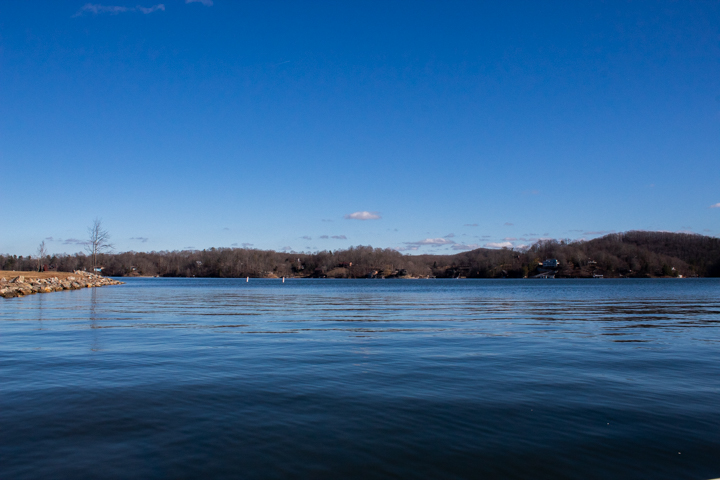
Dublin, VA, Feb. 1, 2025 – Heavy machinery remains at Claytor Lake following the completion of cleanup efforts. Photo by Alana Powell

by Alana Powell, environment and climate reporter

A usually serene Claytor Lake was turned into a debris-laden nightmare following Hurricane Helene back in October. Luckily, concerted efforts by federal agencies and local volunteers have successfully restored its recreational availability.

In the wake of the natural disaster, Claytor Lake was submerged under 300 acre-feet of debris, disrupting the ecosystem and local recreation. Over the past two months, the Norfolk District of U.S. Army Corps of Engineers and Friends of Claytor Lake have diligently removed over 27,000 cubic yards of debris and transported 6,000 tons to the landfill, concluding their efforts on Dec. 21, 2024. This extensive cleanup has not only cleared the waste and litter, but also reinstated the lake as an important community hub. 

According to the USACE, this was the largest debris removal mission in Virginia since Hurricane Isabel struck in September 2003. The team provided specialized equipment such as survey vessels and hydraulic excavators to help the non-profit, Friends of Claytor Lake, with the overwhelming task. 

Amanda Bishop, a ranger at Claytor Lake State Park, gave a chilling description of the lake immediately following the hurricane. “If you were here a couple of days after it hit, I personally compare it to what a horror movie kind of would look like.” She adds, “Usually when you look at the lake, you can see how the water’s moving. It was so still and debris sticking out of it and trash, propane tanks, just all kinds of people’s belongings that they didn’t think the flood would take.”

Jacob Ward, a local resident and frequent visitor, shared his initial shock at the damage. “I was so surprised. I was not expecting [the hurricane] at all and then I came here the day after and saw like everything floating in the water and I was just shocked because usually that doesn’t happen,” he recounted, highlighting the unexpected devastation to the region.

The cleanup process involved not just trash removal but also significant safety measures due to hazardous materials. “We had men in hazmat suits working to remove dangerous waste, making sure that the lake was safe for public use again,” Bishop added, indicating the complexities involved in making the area safe for visitors and wildlife. 

Local businesses felt the economic impact deeply, especially those reliant on lake tourism. “There’s a guy who runs a business down here renting out boats, he was hit pretty hard,” Bishop noted, “he saw a huge decrease in funds.” This downturn reflected the broader economic challenges posed by the lake’s temporary closure.

In an inspiring display of community solidarity, volunteers of all ages offered to assist in the cleanup, specifically helping with shoreline debris. “Our local middle school came and there were like over 150 kids that showed up and asked, ‘What can we do?’ There was a lot of trash that came in with the flood and plugged our shoreline with all the rocks,” Bishop stated.

Community members found other ways to assist if they were unable to participate in clean-up efforts. Several local churches provided meals daily to those who had extensive damage or lost their homes completely along the water. 

“The lake means a lot to the community. We get our electric from the dam and people from all over come to visit. It’s a relief to see it back to its normal state.” Ward added.

Photo by Alana Powell

With the cleanup complete, the park’s management has worked hard to keep the public informed. “We have a website that is, if you search Claytor Lake State Park, it comes up within DCR, which is the Department of Conservation and Recreation. We try to keep alerts on our page of what’s going on, what can you do or not do, where can you go, where can you not go, please stay out of these areas,” Bishop explained about the ongoing communication efforts to ensure visitor safety.

Dublin, VA, Feb. 1, 2025 – A man is seen boating on the lake now that it has reopened for recreational use. Photo by Alana Powell

The reopening of Claytor Lake has been met with enthusiasm from the community, eager to return to their normal activities. “Now that we’re open again, people are coming back, eager to enjoy the lake. It’s great to see the community bounce back after such a challenging time,” Bishop concluded.

The collective efforts at Claytor Lake are a testament to what can be achieved through collaboration and community engagement, effectively addressing, and overcoming the aftermath of natural disasters to restore and strengthen communal bonds and natural resources.

ReNewTheNew Hosts its Annual River Cleanup

by Sean Weinstock

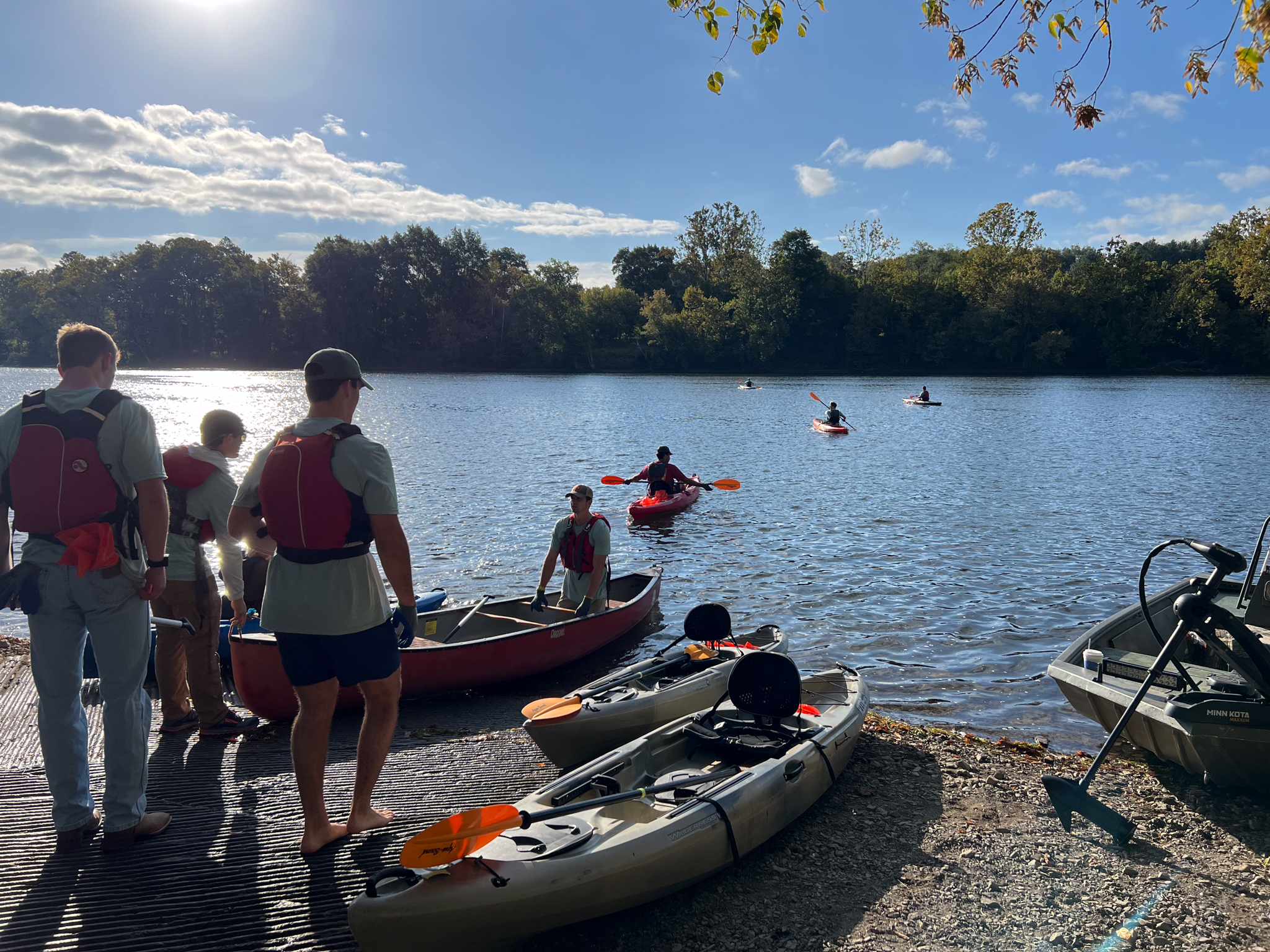
On Saturday, September 14th, over 800 volunteers in over 60 boats across four counties gathered at the New River to participate in the annual RenewTheNew cleanup event designed to improve conditions in the New River.

Why it matters: “The river is a special resource for this whole valley and cleaning it up, keeping it fresh for tourism, for fish and recreational use is really important.” said Brad Buchanan, RenewTheNew Montgomery County Organizer.

  • Organized by Giles County the annual effort includes four locations in Giles, Montgomery and Pulaski Counties, and the City of Radford. Additionally, this year the event included cleanup efforts in West Virginia and parts of North Carolina.
  • Locally, over 100 volunteers, many Virginia Tech students, gathered at Whitethorne Boat Ramp in Blacksburg. “We found out about this through one of their flyers and thought it would be a great opportunity to serve the broader community in Blacksburg”, said Justin Ward, Virginia Tech student.
  • The event provided volunteers with a ‘Fall Into the New’ t-shirt, work gloves, trash bags and water craft to pick up trash and debris scattered across the designated cleanup area.
  • With a focus on the river itself rather than just the shoreline, the bulk of the effort involved students in boats hand collecting trash and filling trash bags. Removing tires was also an important part of the effort.
  • Volunteers wore shorts, cargo pants, boots, and aquatic shoes. The cleanup fleet included kayaks, canoes, and a few small bass boats. The event in Montgomery County lasted from 9a.m to 12p.m and lunch was provided to volunteers at the end of the session.
  • “This was my first time going to a New River cleanup and I thought it would be a good way to get in some volunteer hours since I want to join Americore or the Peace Corp when I graduate”, said Thomas Oudekerk, Virginia Tech student.

Flashback: RenewTheNew started on July 21st, 2001, in Giles County with more than 600 volunteers and over 20,000 pounds of trash collected during the inaugural event. This event officially started Giles Counties annual after summer cleanup.

  • The first group was made up of river guides, river luggers and Giles County community members.
  • After a few years the river cleanup expanded to Montgomery, Floyd, and Pulaski counties and the City of Radford.
  • Participation was also expanded and opened to all members of the New River Valley community.

Context: The New River has been an important part of the New River Valley community for generations and has become a major tourist attraction for the region contributing nearly $36 million to Giles County in visitor spending in 2023.

  • A key attraction is the New River Water trail, a 37-mile protected stretch of river that includes the towering Palisades Cliffs. Below the cliffs, the New River reaches a depth of over 100 feet.

Rare Treasure: Considered to be the oldest river in North America, the New River is part of the Ohio River watershed running 320 miles across North Carolina, Virginia, and West Virginia.

  • The river is home to a variety of wildlife including large and smallmouth bass, walleye, muskellunge, crappie, bluegill, carp, and channel catfish.
  • In addition to its remarkable age, the New River is one of the few rivers in the Northern Hemisphere that flows from South to North.

What’s Next:  The ReNewTheNew initiative continues its efforts to keep the New River clean all year around.

  • Other initiatives include increasing enforcement of littering violations, erecting boat ramp kiosks for use by park officials to provide better information and resources to visitors, installation of trash pickup bag dispensers.
  • Improved coordination and cooperation with the Giles County Sheriff’s department has reduced vandalism along the river and in park areas.

ReNewTheNew is all about protecting the New River as a valuable asset and ensuring that it remains a vibrant part of the community.