Executive orders create uncertainty for researchers and admin at Virginia Tech

By Wilbert Ramirez, Politics reporter

A flurry of executive orders having been made by President Donald J. Trump since his inauguration on Jan. 20 has led to confusion and fear among students/researchers and principal investigators at Virginia Tech regarding the freeze on federal grants towards higher education institutions.

Why it matters:

  • Research is predominant part of Virginia Tech, a designated R1 university, the highest designation for research universities, with 4,000 plus researchers and $453.4 million in sponsored research expenditures in 2024 according to Virginia Tech.
  • “There may be questions that are raised from the various orders and memorandum that come in. So, we try to understand what it what the impact will be at Virginia Tech and then as information and an understanding comes in, we communicate that back to the university”, said Mark Owczarski, Interim Vice President of Communications and Marketing and Chief Spokesperson for Virginia Tech.

Misconceptions about the Executive orders:

According to the Federal Student Aid Office of the U.S. Department of Education stated, “Federal student aid funds (for example, Direct Loans and Pell Grants) were not impacted by the initial guidance, and we continue to award and disburse federal student aid.”

A screenshot of the current Federal Student Aid website taken on Feb 14, 2024

How is it impacting students and researchers:

According to student researchers who requested anonymity to speak freely without fear of retaliation, many are worried about funding suddenly being cut if the content their research does not align with Executive Order 13985 that stated,

  • “Terminate, to the maximum extent allowed by law, all DEI, DEIA, and “environmental justice” offices and positions (including but not limited to “Chief Diversity Officer” positions); all “equity action plans,” “equity” actions, initiatives, or programs, “equity-related” grants or contracts.”
  • “With the list of words that the National Science Foundation released they are flagging grant applications now, but it’s stuff like “trauma,” “multicultural, “advocate” and it’s like how you do even do social science?” said a psychology student and researcher at Virginia Tech whose research project is focused on substance abuse on LGBTQ+ young adults’.
  • “We were told last week that the State Department pulled the program, so Dr. Hodges and our team leads told us, ‘hey just keep doing what you’re doing but as of right now,’ said an international relations student and researcher from the Diplomacy Lab at Virginia Tech, who also asked to remain anonymous fearing retribution against his fellow researchers. “This is literally useless, we’re just doing it in the hopes that they would accept it by May, which I have extreme doubt they will because I don’t see why they would.”

What university administrators have said and done:

  • “We are following the situation closely and reaching out to our congressional representatives in Washington, D.C., to express our deep concern about this decision and its potential effect on our university and our nation’s long-term viability as a science and technology leader,” said Tim Sands, president of Virginia Tech in an official message.

In response to the dynamic and rapid changes caused by the executive orders, the university created a page that offers guidance to those with questions regarding research and updates on the “Federal Agency Updates” page.

Mark Owczarski in an office at Virginia Tech during a Zoom interview on Feb. 14, 2024, in Blacksburg, VA. (Photo, Wilbert Ramirez)
  • “It’s going to evolve, and we recognize that this community is vested into this, and so as we figure out things, and as the landscape externally changes as well, some things have been rolled back. Some things might be in the courts. Some things will be changed because of additional directives or instruction,” Owczarski said. “What we do know is we are committed to communicating, we are committed to research. We’re not going to just say we’re done, it’s who we are, and it’s challenging.”

Mill Mountain Theater welcomes in new Producing Artistic Director

By Will Frank, arts and culture reporter

Photo courtesy of https://www.visitroanokeva.com

The Mill Mountain Theater’s Producing Artistic Director, Ginger Poole, has officially retired, placing the theater’s future in new hands. 

Mill Mountain Theater has been a symbol of arts and culture in Southern Virginia for over 60 years, hosting hundreds of talented artists and programs on its stage since 1964. What makes the theater unique is its emphasis on supporting the arts with various performances and programs, not just the typical musical or theater performances expected at a theater. 

Ginger Poole, the previous Producing Artistic Director of the last 15 years, is credited for revving the theater twice through financial struggles and leading it through the COVID-19 pandemic. During the economic struggles, she continued to open the doors by hosting classes and a holiday show once a year for four years, while being the only full-time employee at the theater. 

“It’s an interesting take to apologize for a problem that you didn’t create. I knew the past of Mill Mountain and the quality of productions, and it would have been a detriment to the community if it were lost. That was my thought line to keep fighting for the theater, while we were digging ourselves out of a big, big hole. The other part was I truly enjoyed the people that I was working with”, stated Poole.   

While at the top of their game, like most other art organizations, the COVID-19 pandemic lowered the theater’s curtains. Poole led the charge of navigating the theater through this difficult period and was able to skillfully revive the theater to its present-day stature.

“Through COVID, however, it was different, because the first round of debt was Mill Mountain’s problem, and it was Mill Mountain’s problem to fix, where COVID was out of all of our control. It wasn’t just a Roanoke-centric problem, we were all in it together, nationally and globally. It had a different flavor [than the debt] but I had the same drive of wanting to keep Mill Mountain going. I wanted to keep my staff and my guest artists in my community and my volunteers safe. We were all in it together, and that comradery, and accountability, kept us going”, remarked Poole.    

Poole journeyed to Roanoke 18 years ago to pursue her career in acting and was asked to perform and choreograph in the MainStage Seasons, which turned into an opportunity to join the Mill Moutain Theater family as the Director of Education. She became the first female to hold the position of Producing Artistic Director at the theater. 

“My first time in Roanoke, I was brought in as an actor, and then I was brought back as a director, choreographer, and actor. I would come and go from Flatrock, North Carolina to Roanoke, for probably two years, back and forth, just being a guest artist in productions. From that, I built the relationship with Mill Mountain and became their Director of Education in a pinch”, Poole recounted.    

After a staggering 35-year career in the industry, 18 of which were with Mill Mountain, Poole will step down from her leadership role but will remain on a consulting contract with the theater to ensure a smooth transition.    

After a grueling 11-month period and reviewing hundreds of applicants, Matt Shields, a Radford University alum with a BS in theater, was selected to fulfill Poole’s position.
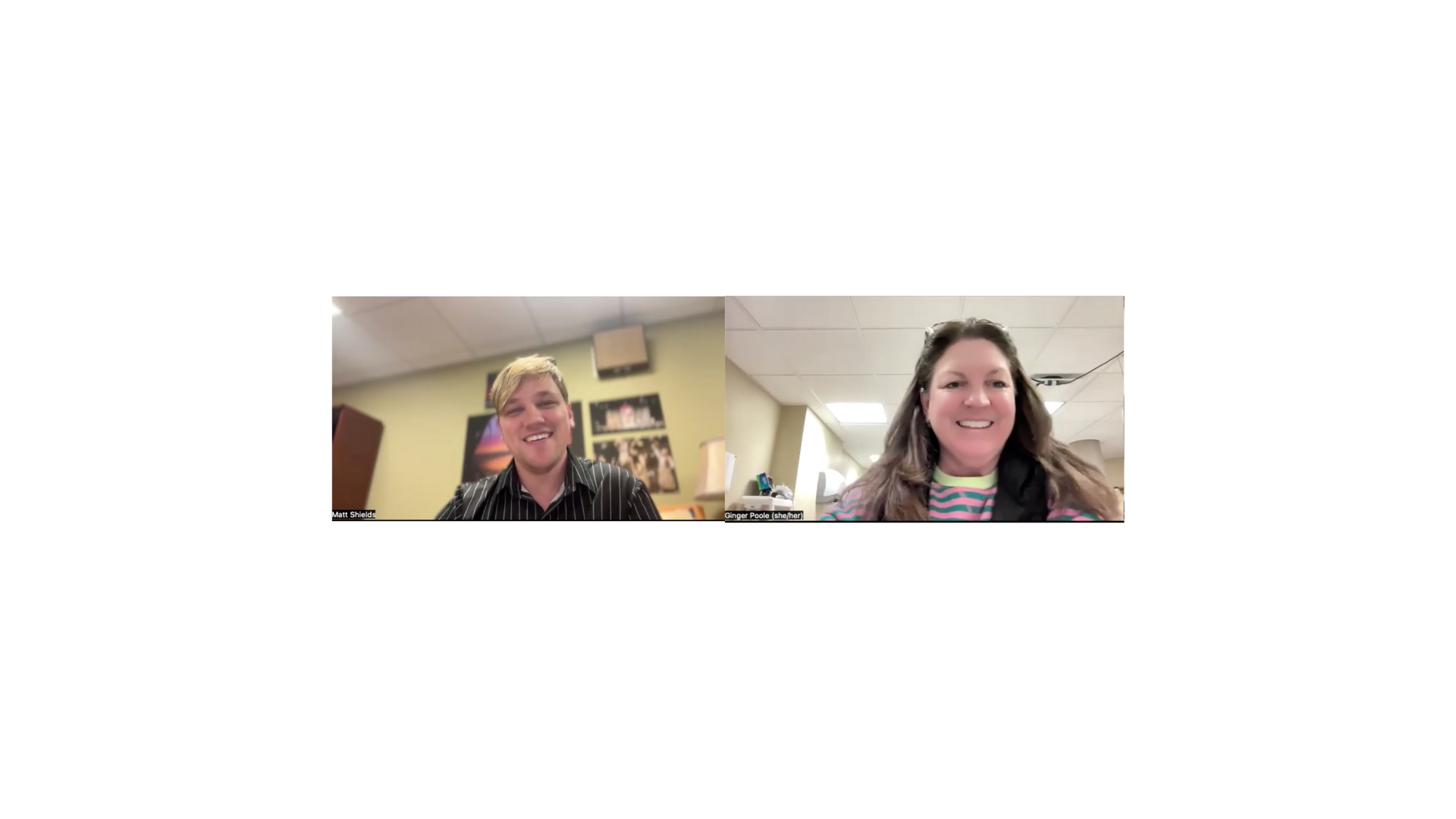
Shields grew up outside of Washington D.C. and fell in love with Southwest Virginia after his time studying in Radford. He has worked in the Mill Mountain Theater family for seven years, learning the ins and outs of every corner of the theater, previously handling the responsibilities of Director of Productions, prop master, costume manager, teaching artist scenic designer, and company manager. 

When asked what about Southwest Virginia influenced Shields to stay he remarked, “I loved the lack of traffic and how beautiful it is. The mountains, the rivers, the streams, we don’t have anything like that where I’m from, and lastly its sense of community. Roanoke is still a city, but it has a small-town feel. You get to meet your neighbors and the community members have so much support for what’s going on around here. That was awesome, to be a part of a community.” 

Shields plans to continue in the direction that Poole has been leading the theater down and wants to embody the leadership that he saw Poole demonstrate.

“Always lead with compassion. I don’t think any leader is successful unless they’re compassionate about the people who work with them and the staff around them. Secondly, it is being a servant leader. I try not to just sit at my desk all day, I try to be up helping the production staff build the show, or a development person write a grant or our business person write a budget. We are a team and it’s important that your staff sees that you’re still a working member of the staff”, said Shields. 

Poole and Shields have been working closely with each other during this period process to ensure a smooth transition between responsibilities. 

“Ginger and I have a great working relationship, so I think it makes the transition a lot easier, knowing that I can call on her when I need help. She is still in an advisory role while I put everything in my name. We are going to continue to prioritize our staff, our people, and our community. I want Mill Moutain to be a full experience as opposed to a ‘just come and see a show’. There will be small changes, but it’s still going to be the Mill Mountain that people know and love”, expressed Sheilds. 

Everyone in the Mill Mountain teams seems to believe that Shields is the perfect replacement to fill the gap that is left with Poole’s departure.  

International Art Exchange Gets It’s Start at Virginia Tech.

By Zain Omar

The Art, Research, and Technology Exchange (ARTx) was founded in collaboration with Virginia Tech’s Institute for Creativity, Arts and Technology (ICAT) and hosts conferences in specialized performance venues with universities on the advancement of technology’s role in art.

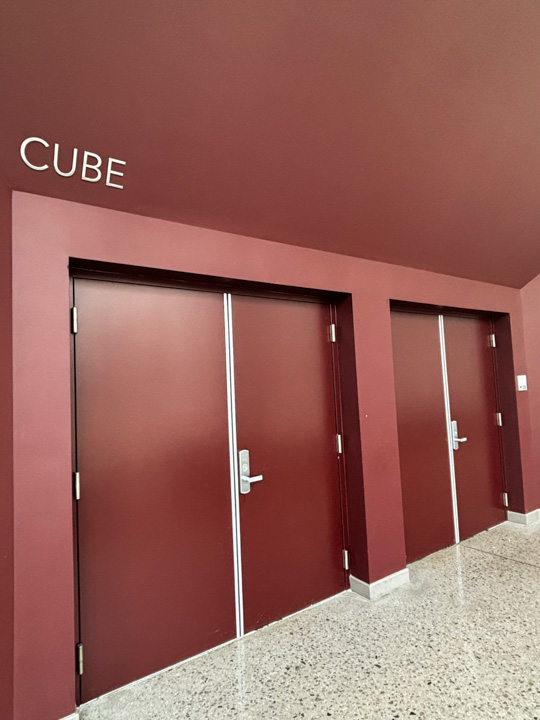
The idea of ARTx came to fruition when Kyle Hutchins, assistant professor of practice at Virginia Tech, played a piece that was composed specifically to be played at the Cube in Moss Arts Center. He realized that certain works could not be duplicated or transferred to digital media because the experience of the performance is affected by the environment.

ARTx allows for professionals and students in the art space to research the impact that advancements in technology affect the way art is shared, learned and taught. Universities and organizations have the opportunity to be awarded grants for their research to keep advancing multimedia performance spaces on their campuses. Virginia Tech was awarded the SEAD grant to fund future projects at the Cube during the spring 2024 ARTx conferences.

ARTx features guest lectures at their event where researchers and art faculty from around the world can share how they found that technology has impacted the learning and performance landscape. Music therapist, Grace Carr, has experienced first-hand how technology has affected the way we learn art. “As a music therapist, I have seen first-hand how teaching music and understanding it have changed because of technology. It is my opinion that technology has allowed for teaching to become much more accessible and readily available to people,” said Carr.

ARTx research focuses on advancements in technology and how they impact the way art is shared, whether in educational environments or in specialized performance venues, such as the Cube. According to Virginia Tech’s Institute for Creativity, Arts and Technology, “The initiative emphasizes collaborations with peer institutions that feature spatial audio and multimedia performance spaces and festivals.”

Advancements in technology also play a role in art classrooms. As new technology is being introduced each year, students and teachers must adapt to new ways to create.

Advancements in technology change the learning landscape for students who are pursuing careers in artistic fields. Former music education student and Music Therapist Grace Carr found that technology has enhanced the learning environment when it comes to artistic fields. “I would say that technology has changed the way we learn art, in that it had simply added on to what we learn. That is not to say that I didn’t learn anything the “old fashioned” way. When I was learning to transcribe music, I would first learn on paper, then on a computer software. So, I would say that in leaning art, technology can help us enhance what we already know,” said Carr.

With the rise of art created for specialized research environments, institutions have found that sharing their work in other settings can be difficult. “When institutions have highly specialized research spaces for art-making, sharing work with other institutions can become challenging, if not impossible,” according to ICAT. ARTx is a way for these institutions to team up to find ways to develop these works to be shared in other space.

Through ARTx, researchers are finding ways to better be able to share these works that have been composed to fit only certain environments. This research will open doors or new ideas and innovative ways that art can be created.

ICAT hosts collaborations with festivals, universities, and organizations throughout the year. They have currently teamed up with 11 partners with locations all around the world. Currently, ARTx has partners in Canada, California, Ireland, New York, and Washington, D.C.

Virginia Tech hosts the New Music and Technology Festival every two years, where faculty and researchers apart from ARTx convene to share their research through lectures, performances and installations. The festival also features student works and is an environment for art and technology disciplines to learn and collaborate with each other. According to ICAT, “the festival highlights diverse disciplines, including music, theatre, cinema, dance, visual art, creative coding, computer science, neuroscience, molecular biology, robotics, and cybersecurity.”

Events for this festival are held in specialized research and performance spaces around Virginia Tech’s campus, such as the Cube, the Sandbox, and Perform Studio.

When Virginia Tech is not hosting the organizations that are part of ARTx, faculty is sent to attend conferences all over the world hosted by other institutions in the art exchange. The most recent conference that Virginia Tech attended was a five-day conference at the Center for Interdisciplinary Research in Music Media and Technology in Montreal, Canada.

Through the collaboration with ARTx and ICAT, along with the other universities and organizations that have joined the art exchange, new understandings of the way technology and art intertwine will start to change the way we share and view art.

The Cost of Distance: Push for a Kidney Transplant Center in Southwest Virginia 

by Elizabeth Ann Miller, health and wellness reporter

Carilion Clinic is fighting to provide Southwest Virginia its first kidney transplant program, bringing life-saving care closer to home. The biggest obstacle remains support from state regulators. 

Carilion Roanoke Memorial Hospital. Photo by Emily Schabacker. 

Southwest Virginia is one of the few regions in the state without a kidney transplant center, forcing patients to travel up and down the east coast to facilities in Richmond, Charlottesville, or North Carolina. Carilion Clinic believes a local program would limit that burden and save more lives. However, the proposal lacks support from select state regulators. This hurdle highlights the broader challenges in providing specialized medical care to rural communities, where patients often face long wait times and logistical barriers to treatment. 

According to a report by Cardinal News, The Roanoke-based health system defended its proposal during a four-hour hearing in Richmond. Eight individuals, including a kidney transplant recipient, Joey Shervey, spoke in support. The state’s Certificate of Public Need division recommended denying Carilion’s request, raising concerns expressed by the University of Virginia (UVa), which currently operates the only transplant center in the region. 

Patient Struggle 

Joey Shervey spoke during the hearing to represent local patients. At 28, Shervey has already endured the emotional and financial burden of kidney failure and transplant. He was diagnosed with Stage 5 kidney failure at 26. Throughout the treatment and transplant process, Shervey and his wife, Jessica, were living in Roanoke. Appointments required them to frequently make the nearly two-hour drive to Charlottesville, straining their finances, careers, and daily lives. During the hearing, Shervey expressed that for patients like him, Carilion’s proposal represents a shot at a better life.  

“I’ve become the person I did not want to be. I am a 30-year-old man living in my parents’ basement. That’s not the goal I want to set for my future family,” Shervey said during his testimony. 

The Sherveys traveled to Richmond to advocate for Carilion’s proposal, hoping future transplant patients in the region won’t face the same struggles. Jessica Shervey took on the role of primary caregiver and spoke about the sleepless nights, constant travel, and anxiety that came with her husband’s health crisis. 

Opposition and Support 

UVa is the only health system opposing Carilion’s plan, arguing that the biggest barrier to kidney transplantation is the limited availability of donor organs in Southwest Virginia. In their opposition letter, UVa noted that it already operates outpatient transplant clinics in Roanoke, Martinsville, and Lynchburg, allowing Southwest Virginia patients to receive most of their care closer to home. 

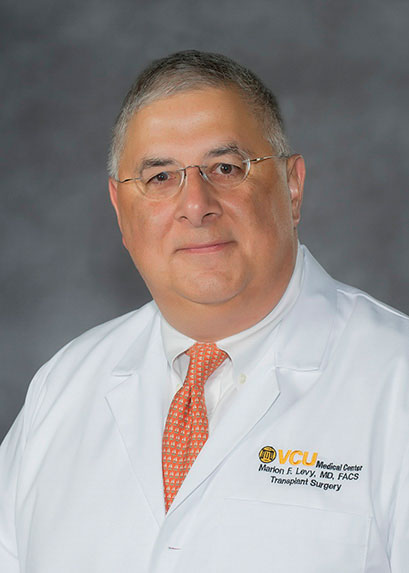
Dr. Marlon Levy, CEO of Virginia Commonwealth University (VCU) Health System and Senior Vice President for VCU Health Sciences, disagrees with UVa’s statement. VCU, one of the largest transplant centers in the country, often works closely with UVa. Levy noted that many donated kidneys go unused due to logistical challenges such as organ transfer delays and overwhelmed surgical teams. 

“Sometimes it’s because of organ quality. Sometimes it’s because of geography that prevents the organ from being transferred to the organ center. Sometimes it’s because the surgical teams are too busy to accept another organ,” Levy said during the hearing. 

Dr. Marlon Levy, CEO of VCU Health. Photo by Allen Jones.

In an interview, Levy emphasized that access to a transplant center is key, as quality of life improves significantly post-transplant compared to being on dialysis. He explained how a transplant center in Roanoke would help increase organ utilization rates by reducing the distance organs must travel and alleviate strain on existing transplant centers. 

“In 30 plus years of surgery, I’ve learned that it’s all about the patients,” Levy said, stressing the importance of better serving patients across the region. “Kidney transplantation is not just about survival—it’s about quality of life.” 

Carillion’s Plan 

The transplant program in Roanoke is led by Dr. Arnold Salzburg, Carillion transplant and general surgeon. Carilion has performed well in organ procurement, securing more deceased kidney donors over the past three years than any other Virginia health system. However, without a local transplant center, these organs are sent to other hospitals for transplantation. 

“As many as 5,000 people in our region are experiencing advanced stages of kidney disease—more than any other region in Virginia—and around 2,300 people in the state are on the transplant list, often staying on the list for two or more years before they can schedule a transplant,” Salzburg said in an article published by Carilion Clinic. 

For many in Southwest Virginia, access to a kidney transplant program isn’t just about convenience. Patients requiring transplants must undergo frequent medical evaluations before and after the procedure. For those living in Roanoke and surrounding areas, traveling to Charlottesville or Wake Forest adds a layer of difficulty and financial strain. 

“We have the infrastructure, we have the ability, now we just need the approval,” Salzburg said during the hearing. 

The Virginia Department of Health is set to close the public record on Feb. 28. The state health commissioner will review the case before issuing a final decision in the spring of 2025.  

Beyond the immediate decision, debate over Carilion’s proposal has sparked broader discussions about healthcare access in rural regions. Advocates argue that the regulatory process should prioritize patient needs, while opponents warn against creating programs without established records of success. If Carilion’s plan is approved and successful, it has potential to encourage other health systems to pursue transplant programs in areas currently lacking access. 

Virginia Tech provides Safe Ride services to ensure transportation safety

By Sophia Gerni, crime, safety, and justice reporter.


Virginia Tech Safe Ride van. Photo by the Virginia Tech Police Department.

Blacksburg, Va. — Walking around campus or the greater Blacksburg area during late-night hours can bring uneasiness and possibilities of feeling unsafe. Virginia Tech’s Police Department provides Safe Ride, which ensures safe and free transportation for anyone who may feel unsafe.

Virginia Tech’s nighttime safety escort, “Safe Ride,” starts in the evening and runs well into the night. Through a request on the TransLoc Rider app, they will provide walking escorts as well as car pickup by trained student drivers. Safe Ride is there to help students, faculty and staff, visitors of the university and Blacksburg locals get to their next destination around the Virginia Tech campus safely. With the usual form of transportation being a van, there are times when the van is not in operation. In this case, a member of the Virginia Tech Police Department will drive a police car to your location or give a walking escort if requested.

TransLoc Rider app showing the outline of Safe Ride pick up area. Screenshot from the TransLoc Rider app.

Kendrah Cline, Administrative Captain and Safe Ride Supervisor at Virginia Tech Police Department, said she wants people to be and feel safe when walking around Virginia Tech.

“The premise of Safe Ride is that you feel safe going from one place on campus to the next. Whether that’s in the van, an officer comes to pick you up, a security officer comes to pick you up or we walk.”

Cline knows that requesting a Safe Ride could be intimidating to those who have never used the service before, which is why the drivers are instructed to not to ask questions regarding the reason for the ride.

“We don’t really need to know your business or why you want a Safe Ride; we shouldn’t be asking you,” Cline said. “Whether it’s a safety thing or you just really don’t feel like walking, we don’t ask. I don’t want to say that we don’t care, but that’s not our judgment to make; we’re always going to say, ‘Okay, where do you need to go?’

Brooke Nicholes, a junior at Virginia Tech, called Safe Ride to avoid walking alone in the dark. “I was in my car and ordered a Safe Ride to get back to campus. I didn’t want to walk alone at night,” Nicholes said. “They didn’t ask me any questions; it was great.” 

Nicholes understands the importance of having someone with you when walking alone, especially for freshmen who don’t have easy or quick access to their cars.

“I remember when I was a freshman, I wouldn’t want to go to my car at night if I had to go somewhere. I would only go places during the day because I was too scared to walk alone at night,” Nicholes said. “I think it’s nice for freshmen, especially because at night you park so far away from your dorm. I think a Safe Ride is nice because you can get picked up from your car and go straight to your dorm safely.”

Safe Ride’s goal is to provide comfortable, easy, and safe access around the Virginia Tech campus. Cline understands that in some circumstances, some may feel unsure about calling, especially if the van isn’t running and a police officer comes to help instead.

“We’re very well aware that if you call for a Safe Ride, maybe you’ve had a little too much to drink and you don’t want an officer to come pick you up. Because of this, we want to have more student drivers so those requesting a ride feel more comfortable.” 

Safe Ride’s goal for student drivers is to provide a friendly face when being picked up. The Safe Ride service runs from 8 p.m. to 3 a.m. Sunday through Friday in the fall semester and 7 p.m. to 3 a.m. during the Spring Semester. On Saturdays, both during the spring and fall semesters, Safe Ride service begins at 4 a.m. With many students not ready to commit to the late work hours, these positions have been hard to fill. 

Cline would like to have these positions filled sooner than later. “One way that Safe Ride can be improved is to try to get these positions filled so that it’s a really efficient, full set of drivers, every night of the week,” Cline said. 

While Safe Ride is available for use, Cline understands that people may use other forms of transportation alone. With Uber and Lyft being popular for students at Virginia Tech, it is important to be aware of your surroundings and with another person if possible. 

“There are going to be occasions where you will need to order an Uber or something, and you are getting in that vehicle by yourself. In that case, I think it’s good for someone to know where you are and that you have taken this Uber,” Cline said. “Try to have a good, trusted group or friend with you, even if you are walking across campus or out in Blacksburg. Whether you’ve had some drinks or not, I think it’s good just to stay with a trusted group, or at least one person.”

Transportation safety of any kind is always important. When you are in the car with someone that you don’t know, stay focused and aware at all times.

Virginia communities brace for change in light of Trump’s immigration orders 

U.S. President Donald Trump signs an executive order in the Oval Office of the White House, in Washington, U.S., January 23, 2025. REUTERS/Kevin Lamarque

By Julia Lagano, Political reporter

Since his inauguration, President Trump has issued eight executive orders on immigration, sending waves of uncertainty through communities across the nation. In Virginia, where immigrants make up about 12.6% of the population and approximately 227,100 individuals are undocumented, the impact is expected to be significant. With Virginia’s proximity to Washington, D.C., many fear it is only a matter of time before federal enforcement actions begin. 

One policy at risk under these executive orders is Deferred Action for Childhood Arrivals (DACA), a program initiated by former President Obama in 2012 that provides temporary protection from deportation and work authorization to undocumented individuals who arrived in the U.S. as children. While it is not a direct path to citizenship, DACA has allowed thousands of recipients, “Dreamers,” to pursue higher education and secure employment. 

Cities all over the state have already begun to prepare. In the New River Valley, help can be found in Roanoke and Blacksburg. Virginia Tech organizations, like Latin Link, are coming together to support those who are at risk of being affected. Latin Link is one of the largest Latinx student organizations on campus that strives to be a tight-knit community and a safe space for minority students attending a predominantly white institution. The club promotes its members’ cultures and heritages on campus through educational, cultural, and social events. Jennifer Lopez-Perez, senior and president of Latin Link, emphasized the importance of advocacy at this moment, “There is a community here at Virginia Tech that will not stand down and that will continue to fight for their [immigrants’] rights. They [Immigrants] are here for a better future, and they are seen.”  

One way that the club takes a stand is by participating in Undoculliance, a week-long event hosted every year by the Latino Association of Student Organizations (LASO). With the goal to raise campus awareness about immigrant rights and the undocumented experience, the event shows support for DACA recipients and children of immigrants. “We have various guest speakers on a panel, hosted by a few organizations, that will talk about their experiences throughout college and within the workforce,” Lopez-Perez describes, “On social media, there are more organizations that will provide informational videos and provide resources for students both in and out of VT.” 

Outside of Virginia Tech, Commonwealth Catholic Charities (CCC) is making efforts to support immigrants all over Virginia. The CCC has been serving vulnerable populations in Virginia since 1923. They offer a range of services, including but not limited to housing assistance, refugee resettlement, legal support, language education, and permanent residence status. The order, Realigning the United States Refugee Admissions Program, put a freeze on refugee admissions by suspending applications, and ceasing federal funding to resettlement programs. Katie Dillion, Communications Manager for the CCC, explains the impact of this, “Without federal funding, we are struggling to provide these services to newcomers during their first 90 days, which is the most intense time of support.” The CCC’s immigration team is small to begin with, their Roanoke office only has one staff person, making the capacity to help low.  

For many in Virginia, the fear is not hypothetical —it’s personal. Lopez-Perez, like many others, has witnessed the hardships and sacrifices made by her parents to provide a promising future for their children. “As a daughter of immigrants, I have seen first-hand the battle that my parents have struggled through and continue to struggle through to be able to provide a better future for myself and my siblings. There are countless people that are just trying to live day by day to provide the same for themselves and their families,” she shared, “There are systems that are set in place that leave so many at a disadvantage and yet, they continue to fight and continue to work for that opportunity.” 

The Price of Education: Unpacking the Financial Strain on First-Generation College Students 

Image Credits: Virginia Polytechnic Institute and State University

By Janae Neely, Education reporter 

The bold “Congratulations!” and confetti bursting from a college acceptance letter evoke feelings of exhilaration, pride, and the promise of endless opportunities. However, for first-generation students, those initial feelings quickly fade as they are faced with an overwhelming question; how are they going to pay for it? 

According to a 2024 study, the average cost of college tuition has risen 141% over the last 20 years. And while resources such as student loans and grants are available, those systems can be faulty and don’t succeed in helping first-generation students. Citizens and Everfi reported, “51% of first-generation students said they were nervous about paying for college” and 11% of students said that the price of college wasn’t worth it. 

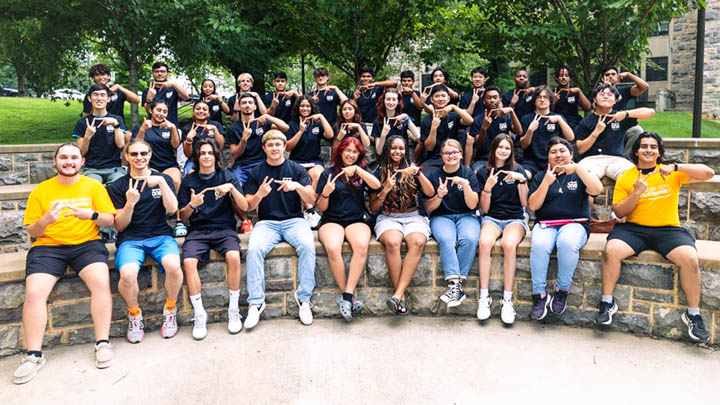
Over 6,000 first-generation students have found a home at Virginia Tech, and the university has taken strides to make sure that first-generation students have easy access to education and resources regarding finances and how to pay for higher education. 

GenerationOne, a living-learning community created solely to provide a support system for first-generation college students, held an event this Thursday called Thinkful Thursday: Being Fruitful with Your Finances/FAFSA. This event, hosted in collaboration with Virginia Tech’s Financial Aid Office, educated students on the federal student loan process and provided tips on how first-generation students can manage their finances over the next four years. Hannah Banks, a sophomore at Virginia Tech and a Student Leader in GenerationOne is extremely familiar with the stresses of the financial aid process, “On a scale of one to ten, I would say the stress of financials was a seven when I was deciding where to go to college. Finances were my deciding factor to come to Virginia Tech rather than JMU because they gave me more money.” 

Financial Aid Specialist, Diane Roberson headlined the event and gave thorough tips on how to navigate FAFSA, scholarships, grants, and questions from other students on how to navigate the strain of finances on the college experience. 

“It’s extremely important to have events like this,” said Banks, “When you’re coming to a large university like this, it is refreshing to be in a community where people have gone through the same experience as you.” A 2022 study conducted by The Ohio State University found, “First-generation students were significantly more likely to use federal student loans, private student loans, money from a job, scholarships/grants, and credit cards to fund their education…” (Rehr et al., 2022). However, the study also showed that first-generation students have less knowledge than their counterparts when it comes to financial literacy and financial self-efficacy. This highlights a clear issue in the education and resources that first-generation students receive. 

Image Credits: Ellucian

One of the resources that first-generation students have access to is scholarships. However, only two scholarships out of the 3,000 that Virginia Tech offers are designed for first-generation students. This by far is not enough to help first-generation students with grants and funds. Savannah Stephens, a first-generation senior felt like she didn’t receive the proper education when applying to college, “The FAFSA process was so confusing, and no one in my family had done it before, it was hard trying to find the right information and figure out what to do.” The lack of resources only felt like it continued once Stephens reached Blacksburg, “There were and are plenty of social, emotional, and academic resources but I didn’t need any of those, which wasn’t helpful. I received no financial help as a first-generation student which was extremely stressful at the time.” 

In a 2024 article discussing the difficulties of the FAFSA process, the CEO of iMentor, Heather Washington explained, “…I think students are generally sort of frustrated, but I think the real frustration starts to set in, and I think we’re starting to see this with each passing day as the acceptances come in,” Washington continued, “It almost undermines their excitement about getting in and going, because they either haven’t completed the FAFSA, they’re stuck getting it in, or they just submitted it so they know that this acceptance letter isn’t really telling them yet what they can do with this college acceptance that they have” (Anderson, 2024). 

In almost every area, first-generation students are starting at a disadvantage. It is constantly an uphill battle that needs to be recognized by universities, advisors, and organizations like FAFSA. There needs to be sectors to help these students so that they can succeed to the best of their ability.  Experiences continue to show the significant impact that finances have on first-generation students, highlighting the delicate balance between their success and discouraging them from pursuing higher education altogether. “There is definitely more to be done,” Banks concluded, “ First-generation students still don’t have the resources we need. I think it would be interesting to see a first-generation center where thousands of Virginia Tech students who are first-generation can have access to more resources.”

Claytor Lake emerges from Hurricane Helene’s aftermath

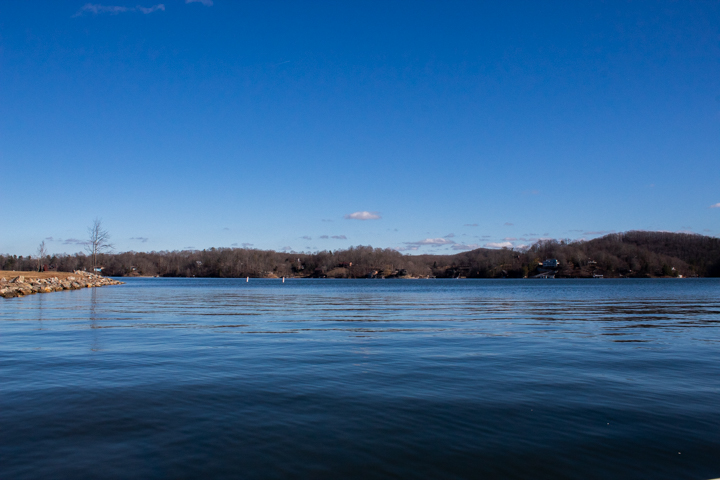
Dublin, VA, Feb. 1, 2025 – Heavy machinery remains at Claytor Lake following the completion of cleanup efforts. Photo by Alana Powell

by Alana Powell, environment and climate reporter

A usually serene Claytor Lake was turned into a debris-laden nightmare following Hurricane Helene back in October. Luckily, concerted efforts by federal agencies and local volunteers have successfully restored its recreational availability.

In the wake of the natural disaster, Claytor Lake was submerged under 300 acre-feet of debris, disrupting the ecosystem and local recreation. Over the past two months, the Norfolk District of U.S. Army Corps of Engineers and Friends of Claytor Lake have diligently removed over 27,000 cubic yards of debris and transported 6,000 tons to the landfill, concluding their efforts on Dec. 21, 2024. This extensive cleanup has not only cleared the waste and litter, but also reinstated the lake as an important community hub. 

According to the USACE, this was the largest debris removal mission in Virginia since Hurricane Isabel struck in September 2003. The team provided specialized equipment such as survey vessels and hydraulic excavators to help the non-profit, Friends of Claytor Lake, with the overwhelming task. 

Amanda Bishop, a ranger at Claytor Lake State Park, gave a chilling description of the lake immediately following the hurricane. “If you were here a couple of days after it hit, I personally compare it to what a horror movie kind of would look like.” She adds, “Usually when you look at the lake, you can see how the water’s moving. It was so still and debris sticking out of it and trash, propane tanks, just all kinds of people’s belongings that they didn’t think the flood would take.”

Jacob Ward, a local resident and frequent visitor, shared his initial shock at the damage. “I was so surprised. I was not expecting [the hurricane] at all and then I came here the day after and saw like everything floating in the water and I was just shocked because usually that doesn’t happen,” he recounted, highlighting the unexpected devastation to the region.

The cleanup process involved not just trash removal but also significant safety measures due to hazardous materials. “We had men in hazmat suits working to remove dangerous waste, making sure that the lake was safe for public use again,” Bishop added, indicating the complexities involved in making the area safe for visitors and wildlife. 

Local businesses felt the economic impact deeply, especially those reliant on lake tourism. “There’s a guy who runs a business down here renting out boats, he was hit pretty hard,” Bishop noted, “he saw a huge decrease in funds.” This downturn reflected the broader economic challenges posed by the lake’s temporary closure.

In an inspiring display of community solidarity, volunteers of all ages offered to assist in the cleanup, specifically helping with shoreline debris. “Our local middle school came and there were like over 150 kids that showed up and asked, ‘What can we do?’ There was a lot of trash that came in with the flood and plugged our shoreline with all the rocks,” Bishop stated.

Community members found other ways to assist if they were unable to participate in clean-up efforts. Several local churches provided meals daily to those who had extensive damage or lost their homes completely along the water. 

“The lake means a lot to the community. We get our electric from the dam and people from all over come to visit. It’s a relief to see it back to its normal state.” Ward added.

Photo by Alana Powell

With the cleanup complete, the park’s management has worked hard to keep the public informed. “We have a website that is, if you search Claytor Lake State Park, it comes up within DCR, which is the Department of Conservation and Recreation. We try to keep alerts on our page of what’s going on, what can you do or not do, where can you go, where can you not go, please stay out of these areas,” Bishop explained about the ongoing communication efforts to ensure visitor safety.

Dublin, VA, Feb. 1, 2025 – A man is seen boating on the lake now that it has reopened for recreational use. Photo by Alana Powell

The reopening of Claytor Lake has been met with enthusiasm from the community, eager to return to their normal activities. “Now that we’re open again, people are coming back, eager to enjoy the lake. It’s great to see the community bounce back after such a challenging time,” Bishop concluded.

The collective efforts at Claytor Lake are a testament to what can be achieved through collaboration and community engagement, effectively addressing, and overcoming the aftermath of natural disasters to restore and strengthen communal bonds and natural resources.

A Taste of Home: Virginia Tech celebrates the 50th International Cafe Hour

By Elizabeth Hill, education reporter

 Braised pork with rice, sweet potato balls and brown sugar bubble tea at the International Cafe Hour (Photo: Elizabeth Hill)

The aroma of braised pork and rice mingled with the sweet scent of brown sugar bubble tea at Virginia Tech’s Deet’s Place on Jan. 31 as students and community members gathered for the 50th International Cafe Hour. This milestone event, hosted in collaboration with the Taiwanese Student Association, celebrated Taiwanese culture and traditions, reinforcing the university’s mission to foster a welcoming environment for international students and promote cross-cultural understanding.

Since its formation, the International Cafe Hour has provided students with a platform to share their cultures, develop a sense of belonging and connect with the wider community. These free events featuring food, presentations and interactive activities have become a vital part of campus life, enriching the student experience and encouraging global connections.

Fawna Zwart, assistant director for campus and community engagement at the Cranwell International Center, has led the initiative since the beginning. “I think one of the biggest goals is to help international students feel more welcome and more at home here at Virginia Tech,” Zwart said. “What I have discovered is that when students share their culture, they just light up. It helps them develop a sense of belonging, express pride in their culture and also helps them find their people.”

The event started as a small gathering in the Cranwell Center’s community room, offering students a space to connect. “We had 112 people in the first hour,” Zwart recalled. “We had a line out the door.” The overwhelming response quickly turned the event into a campus favorite, necessitating a move to a larger venue. Today, it takes place in Deet’s Place, where attendance continues to grow.

As participation increased, so did the offerings. In collaboration with Virginia Tech Dining Services, the program now provides authentic cuisine that resonates with the featured country or region. “We get their home recipes, and the chefs choose a sweet, a savory and a beverage,” Zwart said. This approach ensures each gathering feels like a taste of home for international students while inviting the broader campus community to explore global flavors.

Each cafe hour is unique, showcasing different cultures through food, music, presentations and hands-on activities. To mark the 50th event, organizers extended the celebration to three hours, offering attendees a deeper dive into Taiwanese culture. The event featured information boards, traditional dishes and a Mandarin calligraphy station. Attendees also participated in trivia with questions about Taiwan and the chance to win tickets to a Moss Arts Center performance. The Global Education Office (GEO) and the Council of International Student Organizations (CISO) were also on hand to connect students with international opportunities.

A student learning the art of Mandarin calligraphy (Photo: Elizabeth Hill)


For Maya Collins, a student eager to explore different cultures, the event offered an immersive experience. “This is my first time at an international cafe hour,” she said. “Since I have not had the opportunity to study abroad, this event made me feel like I teleported to a new country, even if it was just for a couple of hours.”

Beyond the event itself, the Cranwell International Center strives to maintain long-term cultural engagement. A key element of this initiative is the creation of “culture boxes”—collections of decorations and artifacts representing different countries.

Student groups receive a small budget to curate these materials, ensuring a meaningful representation of their heritage. “I have created the culture boxes for them because many of them don’t have things from home,” Zwart said. “You know, they are restricted with their two suitcases to get here. They are not packing all the things from home, so I try to buy a few things for them that they can use and decorate with.” These boxes serve as valuable resources, not only for the cafe hours but also for student organizations presenting at local schools and community events.

With its growing popularity, the International Cafe Hour has become a highly sought-after opportunity for student groups, with several already expressing interest in participating next year. Zwart envisions the program as a living travelogue, offering the entire community a chance to learn about different cultures and break down barriers. 

The impact of this program extends far beyond the walls of the cafe itself, highlighting the importance of international education outside of the traditional classroom setting. Experiences like these foster crucial intercultural skills, such as communication, empathy and adaptability, that are essential for success in today’s globalized world. These skills aren’t always effectively taught in lectures or textbooks; they are best learned through direct interaction and shared experiences, like those offered at the International Cafe Hour. 

By fostering global awareness and mutual understanding, the International Cafe Hour prepares students to navigate an increasingly interconnected world. Through food, conversation and shared traditions, the event continues to bridge cultures, create connections and celebrate the diverse voices that make up the Virginia Tech community.  

House bills take aim at University Protestors

By Wilbert Ramirez, Politics Reporter

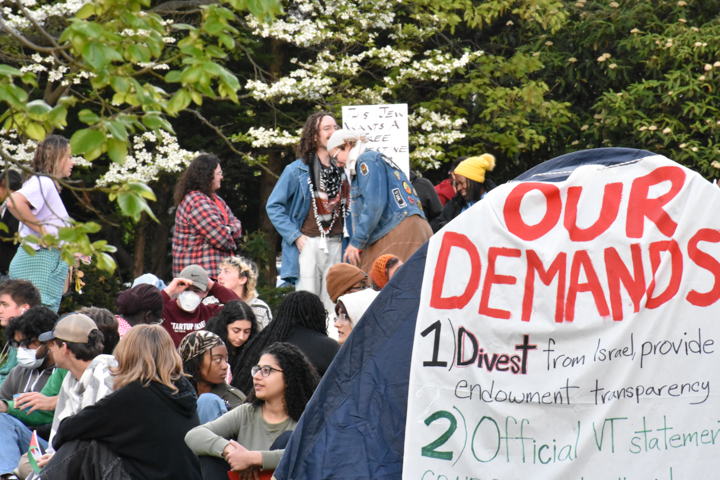
Student Protesters sit on the Graduate life center lawn at Virginia Tech, in Blacksburg, VA. Friday April 26, 2024 (Photo, Wilbert Ramirez)

Two House Bills introduced in the Virginia General assembly seek to stifle student protesters’ demands.

House Bill 2529 and H.B. 2207 have drawn the criticism of Students for Justice in Palestine at Virginia Tech. The Instagram page run by “sjpvtech,” called to action against the bills by posting a template to contact representatives in the Virginia General Assembly.

House bill 2529 introduced by Del. Micheal Jones (D) and Del. Dan Helmer (D), seeks to prohibit public institutions in the state of Virginia from divesting all funds from “any country or territory that is not the subject of an active sanctions program administered by the Office of Foreign Assets Control of the U.S. Department of the Treasury.”

“It would make it harder for Virginia tech to divest, but not impossible said Shahed Sanuri, a first-year graduate student at Virginia Tech and co-president for Students for Justice in Palestine. “So the movement is only stronger and only grows stronger and from the way we’ve seen people come together, to we combat these bills.”

H.B. 2529 would make it difficult for any student organization to have any significant policy change at all public institutions in Virginia. The bill appears to narrowly focus on the demands of many of the protestors across the Commonwealth that were arrested at public universities in 2024 around the state that included: the University of Virginia, Virginia Tech, Virginia Commonwealth University, and the University of Mary Washington.

The pro-Palestinian protestors at Virginia Tech were arrested the night of the April 28 in front of the Graduate Life Center Lawn at the public university. 82 individuals were arrested, and the University President Tim Sands released a statement on April 29, after the night of the arrests.

A student protester is arrested on the Graduate Life Center lawn at Virginia Tech, in Blacksburg VA. Sunday April 28, 2024 (Photo, Wilbert Ramirez)
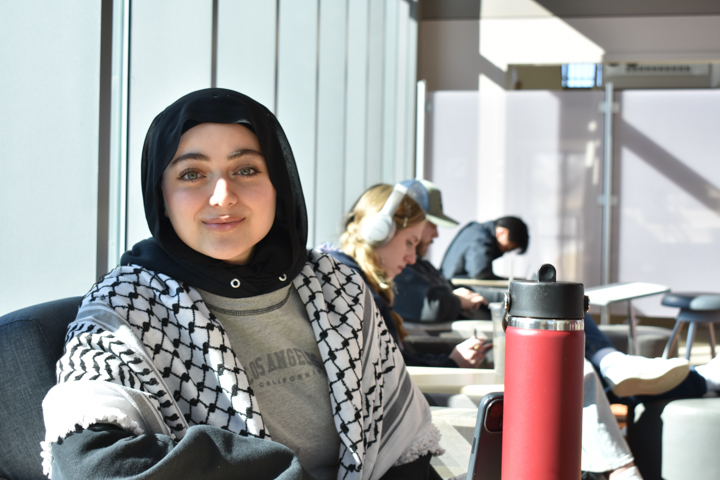
Shahed Sanuri, Co-President of Students for Justice in Palestine at Virginia Tech, in Blacksburg, VA. Wednesday, Jan 29, 2025. (Photo Wilbert Ramirez)

House Bill 2207, which is a companion bill, introduced by Del. Terry Kilgore (R) and it is aimed at tackling terroristic threats on public institutions in the state of Virginia.

The companion bill to H.B. 2207, H.B. 1284 introduced by Sen. Bill Stanley was struck down on Jan. 27 by a Virginia Senate Education Subcommittee.

“It would put a lot of innocent international students as well as other people who are legally here, but not citizens at risk for simply participating in protests or even so much as like posting about their support for Palestine,” says Bella Gilbert, a sophomore majoring in Political Science Virginia Tech and outreach coordinator for SJP at Virginia Tech. “And even though one of the bills says, that deportation is conditional on pro-Hamas expression, we can safely assume that it will just be contingent on pro-Palestinian support.”

Critics from the Pro-Palestinian organization have expressed that these bills if they were to pass, they would make it more difficult for their organization to protest on public institutions.

“The bills basically ban protests from campuses and when we say, ‘liberation for Palestine is liberation for all’ this is what we mean. This is why we’re fighting for the liberation Palestine now and we’re fighting against these bills because these bills don’t just affect the Palestine movement that they affect any movement that’s to come. It just portrays a deep sense of U.S. imperialism and how the U.S. government tries to just target student protests,” Sanuri said.

“These bills are very narrowly tailored, by the way and are in reaction to the camp and the protests last year the arrest. I feel like anyone can look at these bills and see that they are a direct attempt to silence our movement,” Gilbert said.

In recent months the SJP voiced their grievances against the university’s policy 5000 which was altered in Aug. 2024 by university administrators at Virginia Tech, the policy change restricts encampments on university property from midnight to 6 a.m.

“Regardless of whether the bill is possible or not, regardless of what the government wants to do, regardless of how the administration wants to silence us, just know that Palestinian movement will always grow stronger, and we’re always going to fight for the liberation of Palestine,” Sanuri said.

H.B. 2529, as of Jan. 25, 2025, is being analyzed in a fiscal impact statement from the Department of Planning and Budget that informs lawmakers about the financial consequences of the bill.

H.B. 2207 as of Jan. 24, 2025, is also currently under analysis in a fiscal impact statement from the Department of Planning and Budget.

It is unclear where many lawmakers stand on the bills given the controversial actions and consequences of each bill need to first be assessed in the new session of Virginia’s legislature.