RCPS submits a proposal for a historical marker celebrating educator Lucy Addison

Will Frank, arts and culture reporter

Roanoke City Public Schools is currently in the process of applying for a state historic marker to highlight the pioneering education work of Lucy Addison.

The Big Picture: Lucy Addison was born to enslaved parents in 1861 in Fauquier County, Virginia. She ventured to Philadelphia to earn her education degree and returned to Virginia to teach in Loudoun County. After some time there, Addison was offered the position of interim principal at Roanoke’s First Ward Colored School in 1887. 

In 1918, she became the principal of Roanoke’s Harrison High School. At this time, the high school only offered classes as high as the eighth grade. Addison tenaciously campaigned and advocated for a secondary school curriculum and was able to steadily add advanced classes. The State Board of Education accredited Harrison as a high school in 1924, establishing it as the first black high school in Roanoke and providing Black students their first opportunity to receive an education.   

In 1928 the city renamed the school after Addison, attaining the title of Roanoke’s first public building named after one of its citizens.

 (Lucy Addison, photo curtsey of RCPS)

Zoom Out: The process of getting a marker proposal approved is complex and challenging. The Roanoke County Public School (RCPS) is opening the Booker T. Washington Community Empowerment and Education Center where the proposed marker would be located. RCPS is working with Nelson Harris, a Roanoke historian and former mayor, to help review and submit the proposal. He has had 10 proposals approved by the VDR

  • “The Virginia Department of Historic Resources (DHR) only approves about 25 per year for the entire state. Your marker application will compete with marker applications from Richmond, Lynchburg, Northern Virginia, Shenandoah Valley, Charlottesville, and anywhere else that people are submitting historic marker applications”, stated Harris.

For the marker, the team submitting has to provide research that backs up their claim on why the proposed individual, institution, or organization is historically significant. Once the research is completed the proposal is submitted to the DHR for review. They go over the research to make sure everything is accurate or add additional information. After the vetting process, if they accept your proposal, they then will work with the group who submitted it on editing and drafting the final text on the marker.

  • “Everything will take anywhere from four to six months. If the marker is approved, then the order is placed and it goes to the foundry. Right now, there’s about a six to eight-month lag time from the time the orders are placed until the marker arrives. So by the time I mail in my marker application, and everything goes well, the marker arrives in the city after a year and a half”, explained Harris.    

Zoom In: RCPS plans to open the new Booker T. Washington Community Empowerment and Education Center in the old RCPS Central Office, which is set to be the new hub for the Roanoke community, as well as the location of the proposed marker. Claire Mitzel, the school’s division spokesperson who also works very closely with Harris, has high hopes for the new community center’s impact.

  • “It’s going to serve, I hope, to support our students and families from all around the city. It’ll act as a welcome center, so families can come here to enroll their students, get immunizations, receive needed resources, and have a sort of parent and guardian empowerment workshop series”, Mitzel remarked hopefully. 

The idea of the new education center came from the inspiration of Lucy Addison, and her pioneering work in black education.

  • “Honoring Miss Lucy Addison, who the school is named after, is just a small way that we can shine a light on history, and make sure that generations of students and families know who she is. The building was built almost 200 years ago, and going into the future, we want to honor those who came before us”, stated Mitzel.

(Roanoke County Public School when it was first constructed circa 1920, photo courtesy of RCPS)

The opening of this center brings Addison’s achievements full circle. A new community center, by the community and for the community, supports students and families throughout Roanoke and provides them with the tools to help them thrive.
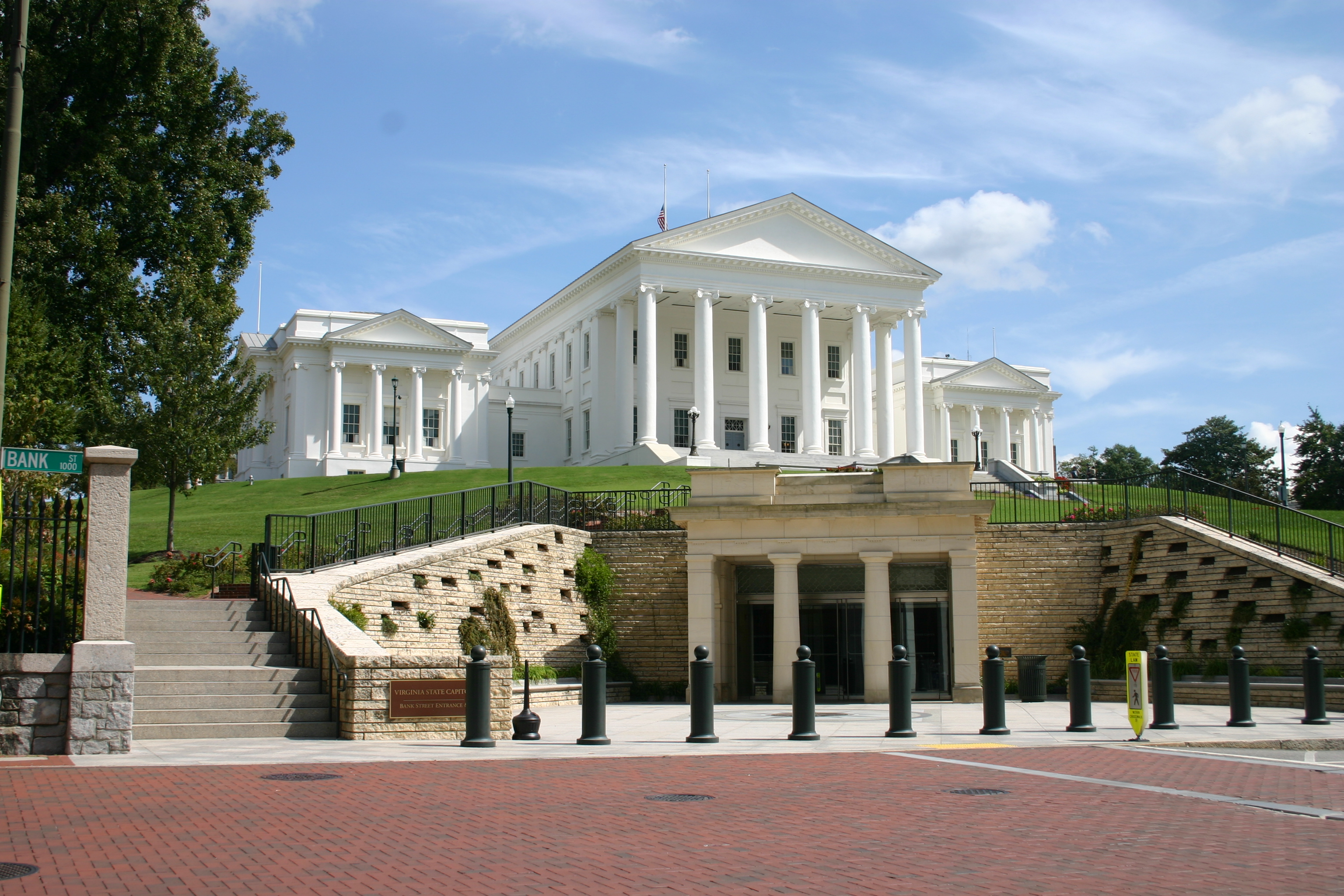
Virginia General Assembly Moves Towards Repealing Constitutional Ban on Same-Sex Marriage

By Evvy Fite, health & wellness reporter

The Virginia Capitol building. Photo courtesy of Capitol Classroom.

In January, the Virginia General Assembly voted “yes” on a constitutional amendment that will bring hope to hundreds of thousands of Virginians.

Since 2006, the Constitution of Virginia has stated that “only a union between one man and one woman may be a marriage valid in or recognized by” the Commonwealth of Virginia. Although the U.S. Supreme Court’s decision in Obergefell v. Hodges overruled this and similar lines in state constitutions, many are concerned that the Trump administration and overwhelmingly conservative Supreme Court will attempt to overturn this precedent, which would leave each state to decide whether to allow same-sex marriage.

Senate Joint Resolution 11 (SJ 11), which was first introduced in January 2024, amends Section 15-A of Article I of the Constitution of Virginia, repealing the prohibition of same-sex marriage and affirming the right to marriage. If SJ 11 is passed, the Constitution will now state that “the right to marry is a fundamental right inherent in the liberty of persons, and marriage is one of the vital personal rights essential to the orderly pursuit of happiness.” The amendment protects the rights of Virginians to marry legally, regardless of sex, gender, or race. SJ 11 is moving through Virginia’s General Assembly right on time, as members of the Republican party are actively calling for a reversal of the previous decision on same-sex marriage.

If made into law, this amendment could improve the mental and physical health of the approximately 300,000 Virginians who are part of the LGBTQ+ community. According to a study published shortly after Obergefell v. Hodges, “LGBT persons experience higher rates of anxiety, depression, and substance abuse because of repeated experiences of social stigmatization.” This only worsens when the LGBTQ+ community is denied freedoms such as marriage to the person they love. A 2010 study on mental health of lesbians, gay men, and bisexuals in states with marriage equality versus those without showed that “LGB persons living in states with bans had a nearly 37% increase in any mood disorder, 248.2% increase in generalized anxiety disorder, 41% increase in alcohol use, and 36% increase in any psychiatric co-morbidity.”

Delegate Rozia Henson. Photo Courtesy of vahousedems.org.

Delegate Rozia Henson of Virginia’s 19th House of Delegates district stated that “especially with the current climate in Washington and the extreme right Supreme Court,” the potential threat to marriage equality “provides uneasiness and burdens people’s state of mind.” His hope is that the bill brings to Virginia’s LGBTQ+ community “the peace of mind that they will know that no matter what happens in Congress, you can marry who you love in the Commonwealth of Virginia, and [if Obergefell v. Hodges is overturned], you know the position the Commonwealth is in, and what we’re willing to do to fight for our constituents.”

The physical wellness of LGBTQ+ Virginians will also be impacted if SJ 11 is passed. Many studies have shown that “chronic stress can produce long-lasting changes in the brain, including structural changes and loss of brain volume in some regions, that are linked with anxiety, depression, and substance abuse.” Additionally, long-term stress can lead to physical problems, including digestive issues, sleep problems, and increased risk of heart disease, heart attack, high blood pressure and stroke.

Beyond general physical health, researchers found that there was a 14% decrease in suicide attempts among LGBTQ+ youth when their states legalized same-sex marriage ahead of Obergefell v. Hodges. Despite the growing tension and fear as attitudes towards the LGBTQ+ community shift, Virginia may serve as a safe haven for its citizens, leading to a lower suicide rate than in states where same-sex marriage will become illegal if Obergefell v. Hodges is overturned.

Although it has been passed by both houses of the 2025 General Assembly, SJ 11 is far from the finish line. In order to become part of the Constitution of Virginia, it will have to be passed again by both houses of the 2026 General Assembly. If the amendment makes it through the second round of General Assembly voting, then it will be on the ballot in 2026 for Virginians to vote on whether or not it becomes part of the constitution. Although Virginia will elect a new governor in 2026, this will not affect the amendment’s prospects, as the Governor of Virginia plays no role in the process of amending Virginia’s Constitution.

Virginia is a highly divided state politically, with the majority of the state being rural and Republican, while Richmond and Northern Virginia overwhelmingly vote Democrat. This may present a challenge for SJ 11 to be voted into law, particularly with the current political climate of extreme views and divisiveness.

Despite this, Delegate Henson says that SJ 11 currently has strong bipartisan support from Virginia’s lawmakers, and that he is hopeful for its chances of passing the next few barricades and being voted into law.