
by Bianca Campoverde, crime, safety, and justice reporter
James Madison Middle School’s Community Builders program prioritizes violence prevention by creating comfortable, supportive environments that help students build a foundation for a bright future.
Gun violence is not just an isolated problem but a public health crisis that affects communities nationwide. In the United States, it remains a pressing concern, particularly among young people. The impact of gun violence on communities, schools, and families is devastating. However, efforts are underway to prevent it. One initiative is the James Madison Middle School Community Builders program in Roanoke, Virginia.
The program incorporates strategies to de-escalate conflict without resorting to violence by teaching students to recognize the signs and respond appropriately. This approach creates a generation of young people who are more informed, responsible, and proactive in preventing violence.
Students are also involved in community outreach and awareness campaigns, giving them a sense of responsibility to create safer environments for themselves and others. This engagement has a ripple effect throughout the community, as students who are educated in community safety advocate for change in their families, neighborhoods, and beyond.

Early intervention for middle school students is crucial, as this period serves as a pivotal turning point in their development. During this time, students develop the skills to navigate real-world challenges, avoid harmful behaviors, and build habits that will guide them toward success in high school and beyond. The program aims to curb violence and build a reliable foundation for students through early intervention and comprehensive support systems.
In speaking with various high school students, Joshua Johnson, youth development intervention coordinator for Roanoke City Public Schools, noted, “Many of them felt like they were becoming detached from school and less motivated around middle school. This is why we wanted to target them during this transition period, looking at some positive experiences that combat some of the adverse childhood experiences (ACEs) they’ve had.”
This detachment can be linked to a range of factors, including personal struggles, family challenges, and exposure to ACEs. These factors not only impact academic success but can also increase the likelihood of involvement in violence.
Regarding logistics, the program tracks participating students’ data to identify areas of challenge where resources and support can be provided to alleviate external factors outside of the school environment. The program offers support through conflict resolution, healthy coping strategies, and other resources. In an effort to reach as many students as possible, those outside of the program who display academic struggles are contacted and directed toward it.
“I affectionately call them our temperature changers. They’re a small group, but depending on where they come in that day-good or bad-they can really change the temperature of a room. Those are the kids we really want to pour a lot of attention into, making sure they don’t slip through the cracks, ensuring they are seen, heard, and feel like they belong,” Johnson said.
In addition to educational resources, the program creates a stable and comfortable environment where students experience inclusivity, strong ties to their school and peers, healthy relationships, and an overall atmosphere that encourages their self-esteem and nurtures their self-worth. These elements are essential for building resilience in the face of external challenges.
Corey Allder, director of Community Engagement for Roanoke City Public Schools, said, “If students are engaged and have a sense of belonging, they are less likely to be a part of a violent group or community violence.”
The goal of the program is to provide students with real-world experiences and career opportunities to combat community and domestic violence, while also raising awareness about gun violence prevention. Allder and Johnson were tasked with developing a program to help students set and work toward personal goals.
From visiting colleges, businesses, and government agencies to organizing events at their school, students in the program learn to cultivate their leadership skills. They demonstrate the program’s effectiveness through their academics and overall attitude toward their community. These opportunities help students understand their potential and the importance of goal setting. The exposure helps broaden their understanding, motivating them to pursue academic excellence and future career aspirations.
“It could be a good opportunity to find ways to be more adult and find more ways to be better in life,” said Javon Kotz, an eighth grader at James Madison, when asked what about the program interested him.
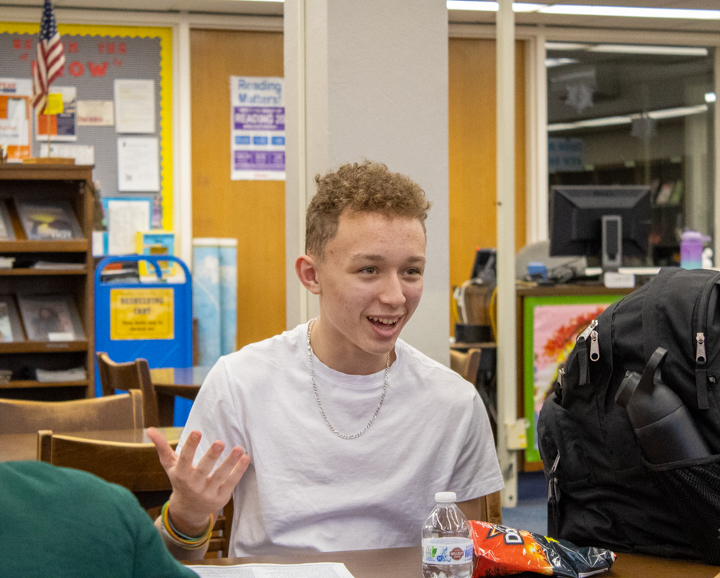
Kotz hopes to attend Radford University in the future to pursue a degree in real estate.
“I feel like some people don’t want to sell a home; they just care about the money. I want people to know what they’re buying and not get ripped off. I want them to get a good deal, not just a house that’s terrible,” Kotz said.
By emphasizing these emotional and social aspects, the program is working to address the root causes of violence.
The General Assembly’s decision to provide two years of funding for the pilot of the Community Builders program is an important first step. However, the program remains temporary, and long-term funding and community support are essential for its success to be sustained. The results from this initial phase will help shape future efforts to expand and refine the initiative. Ensuring that more students benefit from its resources and guidance.
Gun violence remains a significant challenge in many communities, but through early intervention and comprehensive support, programs like James Madison Middle School’s Community Builders are taking steps to prevent it before it begins. With continued support, the program will play an important role in shaping a safer, more positive future for students, families, and communities.
 > THE NEWS FEED <