For Appalachia’s biodiversity, these species could be canaries in the coal mine

By: Eli Lamport, science reporter

The flower of Peters Mountain Mallow, a rare plant species found in Southwest Virginia. (Photo: Massey Herbarium)

Southern Appalachia is one of the most biodiverse regions in the world outside of the tropics. The region, which spans from Virginia to Alabama, is home to over 25,000 different animal species. In Virginia alone, there are more than 3,000 native plant species, many of which are found right here in the Southwestern part of the state. 

There is no single reason for the unusual richness of species that is found in Southern Appalachia, instead it’s a combination of three main factors:

During the most recent ice age, glaciers reached as far south as southern Pennsylvania.  As the global climate cooled, plant and animal species moved further southward to avoid harsh glacial conditions. As a result, Southern Appalachia is home to both older pre-ice-age species and newer species that evolved under modern climatic conditions.

The region has geological features that support a wide range of biomes. High topographic relief, meaning that high mountains and low valleys are found in close proximity, is a particularly impactful feature. One of the most dramatic examples of this is Mount Rogers, Virginia’s highest peak. The summit, at over 5,700 feet sits just 15 miles from valleys that dip below 2,000 feet. The high topographic relief creates natural barriers that isolate species, and this isolation causes groups of species to evolve separately from others at different elevations. Over time, this allows for distinct new species to emerge, increasing biodiversity.

Historically, Southern Appalachia has experienced a moderate rate of significant environmental disturbances like wildfires, severe storms and disease outbreaks. It’s believed that moderate disturbance is conducive to high biodiversity. Too much disturbance and only the most resilient species survive. Too little,  and competition is fierce, forcing many species to extinction.

Threats to biodiversity

For millennia, these natural processes allowed for biodiversity in Southern Appalachia to soar. Now, human activity is having an undeniable impact on biodiversity in the region. 

Consider the Peters Mountain Mallow, a flowering plant that is only found on a single mountainside in Giles County, Virginia. When botanists  first discovered the species in the 1920s, they found roughly 50 of the plants growing on a rocky outcrop on Peters mountain, near the town of Narrows, Virginia. Researchers from Virginia Tech visited the site in the summer of 2025, and found only five plants remaining. This means Peters Mountain Mallow is now one of the rarest plants in the world.


Dr. J. Leighton Reid is leading efforts to relaunch research into the species. “For decades, researchers from Virginia Tech were studying this plant, but many of them retired or moved on, so I realized that it was a species that needed some attention,” says Reid. The primary reason for the decline in the population of these plants is a lack of wildfire. Without human intervention, forests burn at somewhat consistent intervals. Fire burns off dead brush, opens up the forest canopy, and ash recycles nutrients into the soil. Modern firefighting prevents most forest fires from running their natural course. This is particularly detrimental to the Peters Mountain Mallow because its seeds need to be burnt in order to sprout.

Virginia Tech undergraduate researchers surveying a Peters Mountain Mallow, seen inside a deer cage. (Photo: J. Leighton Reid)

“I realized that it was a species that needed some attention.”

Lab testing has found that without burning, Peters Mountain Mallow seeds only sprouted 3% of the time. After being burnt, that number rose to over 90%.  Reid adds that data obtained from tree rings on Peters Mountain shows that the area experienced fire roughly every two years until the early to mid 20th century. 

Without fire the Peters Mountain Mallow’s habitat has become covered by a dense tree canopy, limiting the amount of light that reaches to the forest floor. The plant’s inability to sprout without fire means that the tiny remaining population is becoming increasingly inbred. A prescribed burn on Peters Mountain is scheduled for summer of 2026 according to Quin Campbell, a student researching the plant under Dr. Reid. “I was glad to hear about that burn, but there’s a long way to go,” says Campbell. 

An invaluable species at risk

Another species that is being impacted by human activity throughout Southern Appalachia is Red Spruce. Red Spruce is one of the species that migrated south during the last ice age. In Virginia, the trees native habitat has been shrunk by warming climate. As temperatures have risen, these trees have been forced to move up in elevation. The colder temperatures found at high elevation makes these areas climatically similar to more northern locations. The problem is that Red Spruce is running out of elevation in Virginia. 

Mt. Rogers and the surrounding peaks are the largest of only a handful of remaining habitats for Red Spruce in Virginia.  Any species that is being threatened by climate change is worth studying and preserving, but Red Spruce is a “keystone species” meaning that it has an unusually high impact on its natural environment relative to its abundance.

Alex Dyer is a graduate student at Virginia Tech who is in the midst of a multi year research project on Red Spruce. Dyer explains that dozens of species rely on the uniquely shady and moist conditions found in Spruce forests. Many of the more than 50 salamander species native to southern Appalachia are found only in spruce forests. The Virginia northern flying squirrel cannot survive outside of spruce forests. The world’s smallest tarantula species, the Spruce Fir moss spider is another species that relies on spruce forest for habitat. According to Dyer, losing Red Spruce in Virginia would lead to the extinction of many other species in the state, according to Dyer.

Alex Dyer holds a soil sample from a section of Spruce/Fir forest in Mt. Rogers State Park. (Photo: Alex Dyer)

Warmer temperature is not the only environmental factor threatening Red Spruce. Acid rain, as well as soil acidification are stunting the trees growth. A parasitic European insect called Balsam Wooly Adelgid is killing off Frasier Fir, which is a tree that frequently grows alongside red spruce. Fir trees are generally larger and more sturdy, protecting neighboring spruce trees from high winds. Without this protection, many Spruce trees are being uprooted by the wind. 

Another threat to Red Spruce at Mt. Rogers is from a managed population of ponies that have grazed in Mt. Rogers State Park since the 1970s. The ponies have become a major tourist attraction in their own right. The problem, Dyer says, is that the ponies eat spruce saplings and seeds, which limits the spruce trees’ habitat in the area. Dyer says only one-third of the land that is suitable for Spruce within Mt. Rogers State Park  actually has the species growing on it. “We need more discrete boundaries for the ponies to roam,” says Dyer.

Preserving samples of rare species

Equally important to research and conservation efforts is the collection of seeds and dried samples of threatened species. Virginia Tech’s Massey Herbarium is home to samples of more than 3,000 plant species native to Virginia. Many of the species found at the herbarium are threatened, including an extensive collection of the previously mentioned Peters Mountain Mallow. Dr. Jordan Metzger, the herbarium’s curator,  says it’s important to collect these samples because they “illustrate impacts on the species over time from climate change or pests, and they lock away chemical and genetic information for the species.” Metzger hopes that the herbarium can help raise awareness of rare species, particularly in Virginia.

“They lock away chemical and genetic information for the species, which is invaluable in the species goes extinct”

Dried Peters Mountain Mallow samples at the Massey Herbarium. (Photo: Eli Lamport)

Preserving the Peters Mountain Mallow, Red Spruce and the thousands of other rare species found in Southern Appalachia is vitally important to maintaining this region’s exceptional biodiversity. These species are part of a delicate ecosystem that is already being pushed to the brink by human actvity. Ecotourism has a significant economic impact across the region. Visitors crowd Mt. Rogers, Great Smoky Mountains National Park, and countless other outdoor destinations across this region. If these areas lose their unique plants and animals, will as many people come visit? It’s a question that everyone in Southern Appalachia should consider when they look out into the mountains.

Virginia Tech to continue climate action efforts following US exit from Paris Agreement

By Evan Hull, environment, climate, and sustainability reporter

Solar panels at Perry Street Parking Garage.

For a second time, the U.S. is set to exit the Paris Climate Agreement, but Virginia Tech isn’t backing down from its climate action commitments.

Why it matters: As an internationally recognized institution for environmental engineering and natural resources management, Virginia Tech plays a key role in researching sustainable practices across the globe. With President Donald Trump’s signing of the “Putting America First in International Environmental Agreements” executive order, many environmental initiatives across the country are now in limbo. 

The big picture: Virginia Tech will not stray away from its nearly 16-year-old Climate Action Commitment, but there may be some hurdles for researchers.

  • “Our impact on the environment matters to us,” said Mark Owczarski, interim vice president of communications and marketing at Virginia Tech. “It’s part of ‘Ut Prosim.’ We’re serving our community. We’re serving our students and faculty. We serve our environment because, without our environment, we can’t function.”
  • Carbon neutrality and 100% renewable electricity are among the goals Virginia Tech currently has set for its Blacksburg campus by 2030. It is one of many universities that remains in-tune with international climate initiatives.
  • “Right now, there are governors, mayors, and institutions across the U.S. saying ‘we’re still in,’ and ‘we’re going to comply with the Paris Agreement,’” said Carol Franco, senior research associate at Virginia Tech, and climate advisor to the Ministry of the Environment of the Dominican Republic.
  • While the university isn’t concerned about continuing their plans for a more sustainable campus, questions have been raised about research funding—particularly from the federal level.
  • “As faculty, we apply for funding—even departments apply for funding,” Franco said. “Having that funding will impact our availability and our capacity to do research in certain areas.”
  • Still in the early stages of Trump’s second administration, it remains unclear as to what environmental programs and projects will continue to receive federal funding.

Zoom in: While Virginia Tech is unwavering in its commitment to climate action initiatives, officials recognize that times of intense change can always be met with adaptability.

  • “The university believes that responsible stewardship of the environment is important, and that may look different from generation to generation,” Owczarski said. “The plan will continue to change, evolve, and grow over time.”
  • Virginia Tech’s Climate Action Commitment has been revised twice since initial approval in 2009.
World leaders celebrate the signing of the Paris Climate Agreement in Paris, Dec. 12, 2015. (Photo/Carol Franco)

Flashback: Over the last several years under the Biden administration and the Paris Agreement, U.S. sustainability plans closely resembled those of Virginia Tech.

  • In April 2021, Biden created a goal of reducing U.S. emissions by 50 to 52% by 2030 according to the Natural Resources Defense Council. By December 2024, the goal was changed to 61 to 66% by 2035.

What we’re watching: While Virginia Tech’s climate initiatives remain safe from federal intervention, experts from countries still in the Paris Agreement are keeping a close eye on the U.S. before they officially exit.

  • The U.S. will still be members of the agreement until January 26, 2025 according to Reuters.
  • “During the first administration of President Trump, the U.S. basically stayed on the sidelines,” Franco said, noting that United Nations Framework Convention on Climate Change decisions must be made by consensus. “Now, if the idea is to stay on the sidelines, we’re going to be able to move forward. If the idea is to oppose, then we’re going to have issues.”

Embracing native plants for ecosystem health

Blacksburg, VA, Feb. 14, 2025 – Newly planted native trees line the riparian restoration area near Stroubles Creek, part of a vital effort to enhance biodiversity and stabilize the ecosystem in response to urban expansion and climate variability. (Photo by Alana Powell)

by Alana Powell, environment and climate reporter 

In the quest for ecological balance, the critical role of native plants has surged to the forefront. With urban expansion and climate variability reshaping landscapes, local ecosystems in the New River Valley increasingly depend on these species to maintain biodiversity and ecological stability.

Why it matters:

  • Native plants are pivotal for their ecological benefits, supporting local wildlife and stabilizing ecosystems.
  • They improve water quality and reduce erosion, directly benefiting the environment and communities.
  • Initiatives like Homegrown National Park highlight the need to transform personal spaces into wildlife-supportive landscapes.

The big picture: Leighton Reed, a professor of Ecological Restoration at Virginia Tech, emphasizes the foundational role of native species:

  • “Native plant species are the biodiversity of the New River Valley. These species not only enhance local biodiversity but also support critical trophic interactions that non-native species cannot match, which are essential for maintaining diverse and stable ecosystems,” says Reed.

Zoom in: Nicole Hersch, campaign coordinator for the Plant Southwest Virginia Natives initiative, discusses the specific advantages of native plants:

  • “Native plants typically have deeper root systems, which help reduce runoff and erosion, maintaining clearer and healthier water systems,” Hersch notes.
  • Their ability to manage stormwater and conserve river ecosystems by slowing down water flow during heavy rain events prevents soil erosion and water pollution, crucial for maintaining clean waterways and healthy aquatic life.

Yes, but: Despite their ecological benefits, widespread adoption of native plants faces challenges:

  • “Understanding what a native plant is remains a major hurdle. Many people mistakenly believe that commonly seen plants in commercial and residential landscapes are native due to their prevalence,” explains Hersch.
  • Shifting from traditional mowing and landscaping to practices that support sustainable, native-focused ecosystems is seen as more complex and unfamiliar to most property owners.

What we’re watching:

  • Virginia House Bill 1941 aims to promote native plant use by requiring nurseries to label invasive species, enhancing consumer awareness and encouraging more environmentally responsible purchasing decisions
  • The bill has not yet passed.
  • It was last referred to the Committee on Education and Health January 29, 2025.
  • Currently in the process of engrossment, facing discussions and revisions.

Zoom out:

  • Projects across Virginia, highlighted by the Virginia Native Plant Society offer templates for integrating native flora into public and private spaces. These gardens serve as educational and inspirational resources that encourage community members to consider native species for their landscaping needs.
  • Research cited in Desiree Narango’s study on the impact of native plants on pollinators underscores the ecological benefits of maintaining native plant populations, especially in supporting biodiversity and food web stability.
Blacksburg, VA, Feb. 14, 2025 – The Heritage Park Nature Play Space stands bare in winter, hinting at its usual bustling state with native plants that thrive in warmer months. (Photo by Alana Powell)

By fostering native plant growth and supporting initiatives that encourage their use, communities can significantly enhance ecological sustainability and resilience. This movement not only preserves the local environmental heritage but also provides a framework for engaging with nature in ways that enrich both the land and community life.

Double trouble: the impacts of Trump pulling out of Paris Climate Agreement, again

by: Gracie Gosier, environment reporter.

President Donald Trump signed an executive order titled “Putting America First In International Environmental Agreements,” instructing the United States to immediately pull out of the Paris Agreement on January 20, 2025.

UNFCCC at the 2015 UN climate change conference that resulted in the Paris Agreement. Photo from Britannica.

The Paris Agreement, first signed in 2015 at the UN Climate Change Conference,  is a legally binding treaty where nations all over the world committed to reduce greenhouse gas emissions and maintain the global temperature increase below 1.5°C over pre-industrial levels, in an attempt to control global warming and slow down the effects of climate change. 

In September 2016, the United States and China, the world’s two greatest emitters of greenhouse gases, confirmed their combined commitment to the deal, boosting its worldwide momentum. In June 2017, President Donald Trump announced his intention to remove the United States from the Paris Agreement. The formal withdrawal procedure began in November 2019 and was completed on November 4, 2020, making the United States the first country to leave the deal. On January 20, 2021, President Joe Biden issued an executive order to rejoin the Paris Agreement, highlighting the need of combating climate change. The United States formally rejoined on February 19, 2021, reiterating its support for global climate policies.

Why it matters: Despite the fact that 2024 is the world’s hottest year on record, President Trump wants to shift the federal government away from former President Joe Biden’s climate program and toward a wider embrace of fossil fuels. Climate change raises the probability of storms, causes more severe rainfall, and increases the likelihood of intense and devastating wildfires.

  • During his first term, Trump fulfilled a campaign promise by withdrawing the United States from the climate accord, joining Iran, Libya, and Yemen as the only countries not part of the agreement.
  • When Biden resumed office in early 2021, he quickly rejoined the Paris Agreement after a brief absence of less than four months. Biden’s climate change policy focused on reducing greenhouse gas emissions, and many of the actions taken by the Biden administration reversed or attempted to reverse the first-term policies of Donald Trump.
  • In 2022, Biden signed the Inflation Reduction Act . The legislation allocated hundreds of billions of dollars to promote renewable energy, electric vehicles, and greener manufacturing. He also developed comprehensive new regulations to reduce pollution from automobiles and power plants during his term.
  • Environmental organizations such as the Sierra Club, Sunrise Movement, and Earthjustice, say that President Biden performed more environmental policy than any other president in history.

The big picture: Trump’s announcement to withdraw again from the Paris Agreement marks a return to isolationism at a moment when collective global action is most needed. Exiting the deal twice is enough to damage U.S. credibility internationally and sabotage global climate diplomacy. It would also serve as a risky model for other countries to ignore their climate obligations, which could have a cascading effect and undo the progress that has been made collectively.  

  • Countries must submit emission reduction targets and give quarterly progress updates under the terms of the Paris Agreement. Before leaving office, Biden declared a new US goal: to reduce greenhouse gas emissions by more than 60% from peak levels by 2035, which would likely require a quick transition away from fossil fuels.
  • During Trump’s inaugural address on January 20, 2025, he proclaimed a “national energy emergency” and urged oil companies to “drill baby, drill,” that would allow him to reverse many of Biden’s environmental regulations and open up additional places for oil and gas production on protected lands.
Donald Trump at Capitol One Arena giving his inauguration speech. Photo by USNews.com.

Zoom in: Environmental activist groups such as the POWHR Coalition, have taken the next step into fighting against the withdrawal with their own plans. Their current campaign is towards defunding the new Mountain Valley Pipeline (MVP).  

  • The MVP has been associated with several negative environmental and social impacts such as deforestation, water quality degradation, and lower property value for surrounding areas of the pipeline. 
  • POWHR goes after JPMorgan Chase, Bank of America, MUFG, TD Bank, PNC, and Wells Fargo, the top investors of the pipeline. 

Zoom out:  U.S Senator Tim Kaine (D-VA), as well as many other experts and officials, have shown their support for the Paris Climate Agreement.

  • “From sea level rise in Hampton Roads and on the Eastern Shore to hurricanes in Southwest Virginia, climate change is affecting us all and threatening the safety of our communities,” said Kaine. “I’m disappointed, but not surprised, by President Trump’s short-sighted withdrawal from the Paris Accords, and that’s why I’m joining my colleagues in introducing this resolution to express support for the goals of the climate agreement. I remain committed to building on our progress in recent years to reduce greenhouse gas emissions, improve resiliency, accelerate clean energy production, and keep Americans safe.”
  • The America Is All In coalition, which formed following the United States’ initial departure from the Paris Agreement, continues to motivate climate action. These initiatives have increased in power, with bipartisan leadership from the U.S. Climate Alliance, a coalition of 24 states (including Virginia) and territories that represents more than half of the US economy and committed to fulfilling the Paris Agreement’s targets.

What we’re watching: The pullout was a component of a larger plan to decrease funding for renewable energy sources and increase support for fossil fuels. The administration is giving traditional energy sectors precedence over renewable projects and underlying the significance of energy independence.

With the globe experiencing more severe climate consequences, the U.S. decision has prompted other big polluters, such as China, to reevaluate their own pledges to the Paris Agreement. Despite the U.S. position, many nations are moving forward with their climate initiatives.

Relying on fossil fuels might be detrimental to the nation’s long-term interests. The energy transition has great promise for job creation, economic vibrancy, and global competitiveness, as well as for the environmental health of the United States and the world. The U.S may find it more difficult to control those developing sectors in the future if it continues to concentrate on fossil fuels.

Claytor Lake emerges from Hurricane Helene’s aftermath

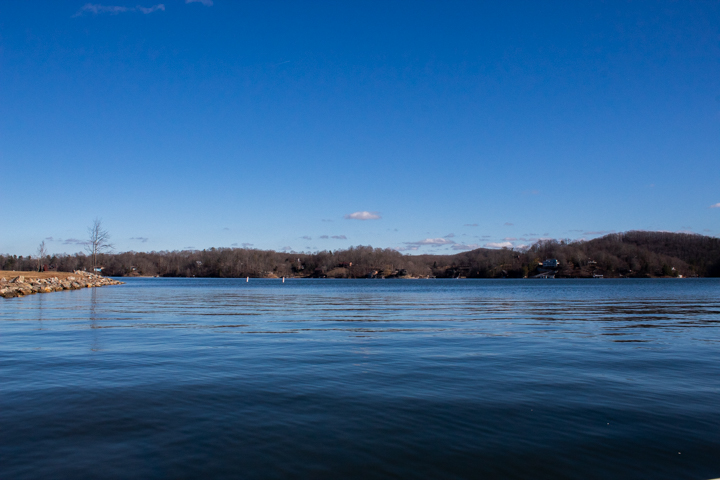
Dublin, VA, Feb. 1, 2025 – Heavy machinery remains at Claytor Lake following the completion of cleanup efforts. Photo by Alana Powell

by Alana Powell, environment and climate reporter

A usually serene Claytor Lake was turned into a debris-laden nightmare following Hurricane Helene back in October. Luckily, concerted efforts by federal agencies and local volunteers have successfully restored its recreational availability.

In the wake of the natural disaster, Claytor Lake was submerged under 300 acre-feet of debris, disrupting the ecosystem and local recreation. Over the past two months, the Norfolk District of U.S. Army Corps of Engineers and Friends of Claytor Lake have diligently removed over 27,000 cubic yards of debris and transported 6,000 tons to the landfill, concluding their efforts on Dec. 21, 2024. This extensive cleanup has not only cleared the waste and litter, but also reinstated the lake as an important community hub. 

According to the USACE, this was the largest debris removal mission in Virginia since Hurricane Isabel struck in September 2003. The team provided specialized equipment such as survey vessels and hydraulic excavators to help the non-profit, Friends of Claytor Lake, with the overwhelming task. 

Amanda Bishop, a ranger at Claytor Lake State Park, gave a chilling description of the lake immediately following the hurricane. “If you were here a couple of days after it hit, I personally compare it to what a horror movie kind of would look like.” She adds, “Usually when you look at the lake, you can see how the water’s moving. It was so still and debris sticking out of it and trash, propane tanks, just all kinds of people’s belongings that they didn’t think the flood would take.”

Jacob Ward, a local resident and frequent visitor, shared his initial shock at the damage. “I was so surprised. I was not expecting [the hurricane] at all and then I came here the day after and saw like everything floating in the water and I was just shocked because usually that doesn’t happen,” he recounted, highlighting the unexpected devastation to the region.

The cleanup process involved not just trash removal but also significant safety measures due to hazardous materials. “We had men in hazmat suits working to remove dangerous waste, making sure that the lake was safe for public use again,” Bishop added, indicating the complexities involved in making the area safe for visitors and wildlife. 

Local businesses felt the economic impact deeply, especially those reliant on lake tourism. “There’s a guy who runs a business down here renting out boats, he was hit pretty hard,” Bishop noted, “he saw a huge decrease in funds.” This downturn reflected the broader economic challenges posed by the lake’s temporary closure.

In an inspiring display of community solidarity, volunteers of all ages offered to assist in the cleanup, specifically helping with shoreline debris. “Our local middle school came and there were like over 150 kids that showed up and asked, ‘What can we do?’ There was a lot of trash that came in with the flood and plugged our shoreline with all the rocks,” Bishop stated.

Community members found other ways to assist if they were unable to participate in clean-up efforts. Several local churches provided meals daily to those who had extensive damage or lost their homes completely along the water. 

“The lake means a lot to the community. We get our electric from the dam and people from all over come to visit. It’s a relief to see it back to its normal state.” Ward added.

Photo by Alana Powell

With the cleanup complete, the park’s management has worked hard to keep the public informed. “We have a website that is, if you search Claytor Lake State Park, it comes up within DCR, which is the Department of Conservation and Recreation. We try to keep alerts on our page of what’s going on, what can you do or not do, where can you go, where can you not go, please stay out of these areas,” Bishop explained about the ongoing communication efforts to ensure visitor safety.

Dublin, VA, Feb. 1, 2025 – A man is seen boating on the lake now that it has reopened for recreational use. Photo by Alana Powell

The reopening of Claytor Lake has been met with enthusiasm from the community, eager to return to their normal activities. “Now that we’re open again, people are coming back, eager to enjoy the lake. It’s great to see the community bounce back after such a challenging time,” Bishop concluded.

The collective efforts at Claytor Lake are a testament to what can be achieved through collaboration and community engagement, effectively addressing, and overcoming the aftermath of natural disasters to restore and strengthen communal bonds and natural resources.

Road salt raises larger questions for local waterways

By Evan Hull, environment, climate, and sustainability reporter

In response to winter weather sweeping across the east coast, the Virginia Department of Transportation deployed its usual slew of road salt. Experts say that while the popular ice and snow combatitant isn’t causing too many headaches in the NRV, it could in the future.

“Everything we do in the terrestrial environment creates ions,” said Joel Snodgrass, head of the Department of Fish and Wildlife Conservation. “When they get in water, they dissociate, they dissolve, and they kind of pass through everything. So, if we put [salt] on the road, it gets washed into the soil, into the groundwater, and ultimately into surface waters like streams, wetlands, and lakes.”

Anywhere from 15 to 32 million metric tons of road salt are dumped on roads every year in the United States according to the Cary Institute of Ecosystem Studies. With the NRV being geographically more susceptible to ions, such as calcium, entering groundwater systems, road salt adds another layer of complexity to the pollution problems we face.

“During the winter, you get these big spikes in salt runoff,” Snodgrass said. 

Researchers worry about winter chloride spikes in local waterways, but they are more concerned about the continual elevation of groundwater contamination, which has become a global problem.

“Road salts are part of this bigger phenomenon that’s going on basically everywhere in the world, in fresh water systems, where the amount of ions in the water is increasing,” Snodgrass said. “In other words, the water is becoming more saline in nature. It has more dissolved solids in it.”

Other runoff pollutants cause issues all year long.

“It’s not just salt that comes off these roads,” Snodgrass said. “Every time someone uses their brakes, particles come off their brake pads and collect on the road—all the belts, engines, and tires.”

When heavy metals are released onto roadways, most commonly cadmium, copper, and zinc, they can interact with road salt in harmful ways. The International Erosion Control Agency says road salt mobilizes heavy metals, permitting these materials to quickly infiltrate groundwater systems and contaminate plants and wildlife.

Additionally, high concentrations of sodium can reduce the permeability of soil, increase surface runoff, and raise erosion rates, directing pollutants straight toward major waterways.

But these aren’t new issues. In fact, stormwater management facilities such as Virginia Tech’s Duck Pond and Stroubles Creek are great examples of how runoff pollution is managed in southwest Virginia.

“Stormwater management facilities in the NRV serve two purposes,” said Kafi Howard, stormwater engineer for the town of Blacksburg. “The first is to mitigate volume increases due to developments like roads and commercial buildings.”

Even in less-urbanized areas, such as the NRV, large developments increase impervious surfaces, meaning that high volumes of road salt and other harmful materials run into waterways very quickly. Stormwater management facilities help hold that water back, and slowly release it in a less harmful manner.

“There’s also quality control,” Howard continued. “A lot of newer stormwater facilities incorporate mechanisms to filter pollutants.”

Howard noted that many older stormwater facilities do not have filtering systems, noting the importance of properly functioning stormwater ponds and wetlands.

“The New River Valley has quite a few streams that are impaired, which means they are not meeting water quality standards,” Howard said. “So it’s super important that those facilities function and help reduce these pollutants.”

In localities as close as northern Virginia, we can see what happens when pollutants are unfiltered by stormwater facilities.

“In Tysons Corner, Virginia, there is enough salt going down that people are losing their wells,” Snodgrass said. “The well becomes so contaminated that all their appliances start to rust.”

The question then turns to the economy. Does keeping roads clear of ice and snow boost the economy enough to justify the cost of maintaining highly contaminated waterways?

“There’s a whole social aspect to this,” Snodgrass commented. “There’s an economic piece to this. If it snows and nobody can get to work for three days, that slows down our economy, right? Now it’s in our mentality.”

Although road salt helps lower the freezing temperature of water, keeping the roads clear and economies moving, it comes with hidden costs, and not just in the environmental price we pay. According to the EPA, NBC, and Vox, the U.S. spends an estimated $2.3 billion to apply road salt, and another $5 billion to repair infrastructure and vehicle damages annually.

With a huge price tag, several alternatives have been considered including acetate deicers and organics, both of which can release equally harmful chemicals into waterways according to the Sustainable Technologies Evaluation Program. Neither option is nearly as cost-effective as road salt.

While waterways in the NRV do not currently have to give a second thought to the application of road salt, they should certainly keep a close eye out as commercial developments continue to pop up regularly, contributing to higher concentrations of pollutants entering local streams.

“I think that the consideration of road salt and stormwater management is certainly something that needs more investigation,” Howard said. “We all want clear streets and easy access in the winter, but we need to recognize that there is a price to pay for our convenience.”

ReNewTheNew Hosts its Annual River Cleanup

by Sean Weinstock

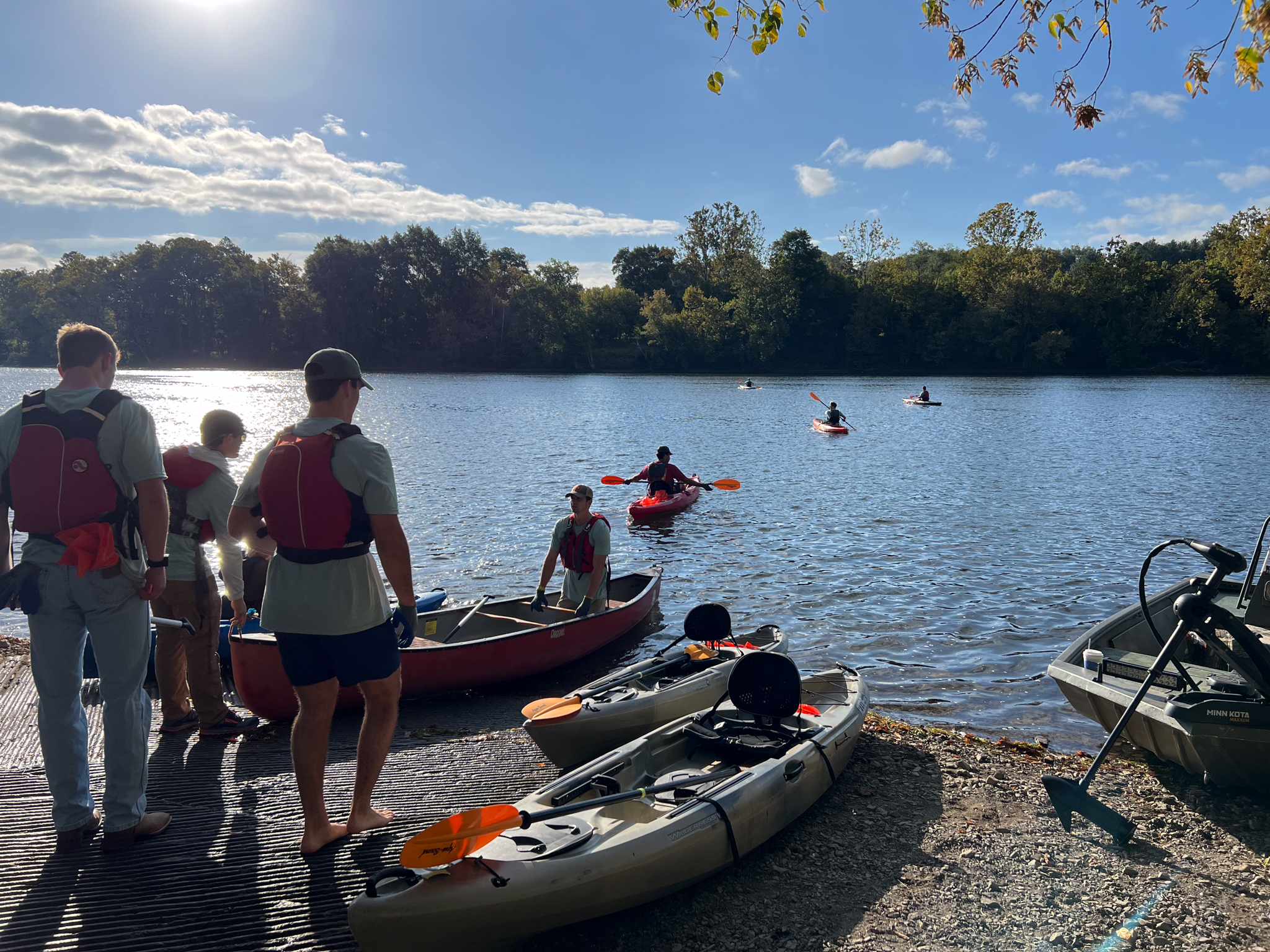
On Saturday, September 14th, over 800 volunteers in over 60 boats across four counties gathered at the New River to participate in the annual RenewTheNew cleanup event designed to improve conditions in the New River.

Why it matters: “The river is a special resource for this whole valley and cleaning it up, keeping it fresh for tourism, for fish and recreational use is really important.” said Brad Buchanan, RenewTheNew Montgomery County Organizer.

  • Organized by Giles County the annual effort includes four locations in Giles, Montgomery and Pulaski Counties, and the City of Radford. Additionally, this year the event included cleanup efforts in West Virginia and parts of North Carolina.
  • Locally, over 100 volunteers, many Virginia Tech students, gathered at Whitethorne Boat Ramp in Blacksburg. “We found out about this through one of their flyers and thought it would be a great opportunity to serve the broader community in Blacksburg”, said Justin Ward, Virginia Tech student.
  • The event provided volunteers with a ‘Fall Into the New’ t-shirt, work gloves, trash bags and water craft to pick up trash and debris scattered across the designated cleanup area.
  • With a focus on the river itself rather than just the shoreline, the bulk of the effort involved students in boats hand collecting trash and filling trash bags. Removing tires was also an important part of the effort.
  • Volunteers wore shorts, cargo pants, boots, and aquatic shoes. The cleanup fleet included kayaks, canoes, and a few small bass boats. The event in Montgomery County lasted from 9a.m to 12p.m and lunch was provided to volunteers at the end of the session.
  • “This was my first time going to a New River cleanup and I thought it would be a good way to get in some volunteer hours since I want to join Americore or the Peace Corp when I graduate”, said Thomas Oudekerk, Virginia Tech student.

Flashback: RenewTheNew started on July 21st, 2001, in Giles County with more than 600 volunteers and over 20,000 pounds of trash collected during the inaugural event. This event officially started Giles Counties annual after summer cleanup.

  • The first group was made up of river guides, river luggers and Giles County community members.
  • After a few years the river cleanup expanded to Montgomery, Floyd, and Pulaski counties and the City of Radford.
  • Participation was also expanded and opened to all members of the New River Valley community.

Context: The New River has been an important part of the New River Valley community for generations and has become a major tourist attraction for the region contributing nearly $36 million to Giles County in visitor spending in 2023.

  • A key attraction is the New River Water trail, a 37-mile protected stretch of river that includes the towering Palisades Cliffs. Below the cliffs, the New River reaches a depth of over 100 feet.

Rare Treasure: Considered to be the oldest river in North America, the New River is part of the Ohio River watershed running 320 miles across North Carolina, Virginia, and West Virginia.

  • The river is home to a variety of wildlife including large and smallmouth bass, walleye, muskellunge, crappie, bluegill, carp, and channel catfish.
  • In addition to its remarkable age, the New River is one of the few rivers in the Northern Hemisphere that flows from South to North.

What’s Next:  The ReNewTheNew initiative continues its efforts to keep the New River clean all year around.

  • Other initiatives include increasing enforcement of littering violations, erecting boat ramp kiosks for use by park officials to provide better information and resources to visitors, installation of trash pickup bag dispensers.
  • Improved coordination and cooperation with the Giles County Sheriff’s department has reduced vandalism along the river and in park areas.

ReNewTheNew is all about protecting the New River as a valuable asset and ensuring that it remains a vibrant part of the community.

It’s Electric! Or, It might be

by Carolina Nunez-

School bus stopping to pick up elementary students. Picture taken on March 23, 2023 by Carolina Nunez in Blacksburg Virginia

Many schools in Virginia have been granted the opportunity to have electric buses in their communities in April and September of 2022 as a part of the 2021 American Rescue Plan Electric School Bus Rebates and the annual 2021 Diesel Emissions Reduction Act (DERA) School Bus Rebates. Some of these areas include Newport News, Loudoun County, Culpeper County, Petersburg City, and Carroll County public schools. Each of these zones were granted upwards of $100,000, the highest fund awarded being $900,000, going towards acquiring electric school buses according to WXFR with New River Valley news

 When it comes to Blacksburg public schools,  Mayor Leslie Hager-Smith states that “[Blacksburg] will hopefully have about half our fleet in electric buses.” What exactly does this mean for schools in the New River Valley?  

Dr. Bernard Bragen, superintendent for Montgomery County Public Schools, said, “In the Montgomery County Public Schools, as of right now, we have 4 electric school buses.”

“It all comes down to economics. If the state of Virginia incentivizes the buses where the costs are the same in gas- we would do it in a heartbeat,” Bragen continued.

Montgomery County Public School Administration office entrance. Picture taken on March 24, 2023 by Carolina Nunez in Christiansburg, Virginia

Bragen explained that electric school buses are not cheap in price. The 2021 American Rescue Plan Electric School Bus Rebates had planned to offer approximately $10 million to public and private fleet owners for the replacement of old diesel school buses with new buses certified to EPA’s cleanest emission standards. This plan mostly applied to schools in more “densely populated areas” because these are the areas that are developing a more “clean” environment. 

The idea to replace regular school buses with newer electric ones has been circulating throughout the nation. But why is it necessary? Dominion Energy reports that replacing one diesel bus can reduce greenhouse gas emissions by 54,000 pounds each year. This means the air quality inside a diesel bus is 5x worse than outside the bus. Replacing a diesel bus with an electric bus improves air quality for students inside the bus and for the communities outside of them. 

Diesel powered school buses produce more than 5 million tons of carbon dioxide emissions. According to the NYBCA, There are more than 480,000 yellow school buses across the United States that transport an estimated 26 million students to and from school. This alone saves close to 2.3 billion gallons of fuel and saves families more than $7.3 billion in fuel costs each year. This is great for our economy, but terrible for the environment and the children who are constantly being exposed to their buses exhaust fumes. 

Despite the benefits of having an electric school bus, it is not so easy to acclimate them to certain areas. Bragen explained that, “The issue with the electric buses is that some things like temperature matter. Typically you would be able to get 200 miles with one charge on a bus, which would normally be okay, but the temperature we experience affects that rate.”  Because the New River Valley does experience temperatures that vary from cold to warm in one day, this is an issue worth considering before converting to electric buses. 

With school buses being one of the most common vehicles on the road, the carbon footprint they leave behind has a big impact on the air we breathe every day. The nation as a whole has slowly inched towards replacing the regular diesel powered buses with the more efficient electrical school buses, but the question remains of whether the New River Valley will be a part of this change.