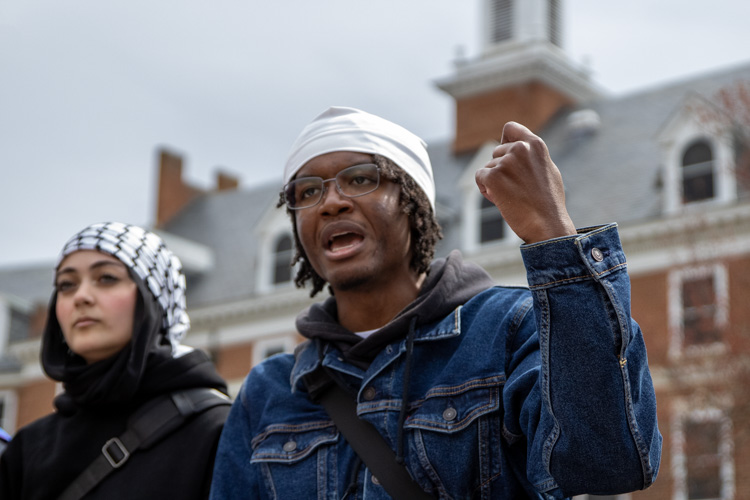
Confessions of a Freshman Delegate: A conversation with Chris Obenshain, Republican Delegate for the 41st district

by Jonathan Mususa, politics and government reporter

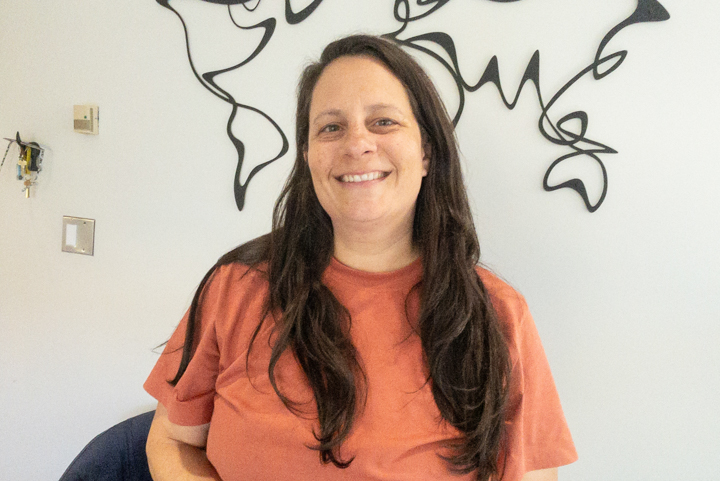
Chris Obenshain, the Republican Delegate for the 41st House district, at work in his Blacksburg office (Jonathan Mususa, for The News Feed).

As his first term comes to a close, Delegate Chris Obenshain (R–Blacksburg) is preparing to seek another two years in office.

A Montgomery County native, U.S. Army Reservist and former county prosecutor, he entered the 2023 race for the then-new 41st district, containing Blacksburg and rural parts of Montgomery and Roanoke counties. He faced Democratic nominee and Roanoke Delegate Sam Rasoul’s former chief of staff Lily Franklin and won by a margin of 183 votes.

As a freshman legislator, Obenshain joined a Republican caucus that had just narrowly lost control of the House of Delegates. The Commonwealth has since had a fairly evenly divided government, with Republicans in all three statewide positions – Governor Glenn Youngkin, Lieutenant Governor Winsome Earle-Sears, Attorney General Jason Miyares – and Democrats narrowly controlling both houses of the General Assembly. 

He and Franklin will face each other again in November.

Also, for those who are wondering, he is indeed one of those Obenshains. The late former Virginia Republican Party chairman Richard Obenshain was his uncle and State Senator Mark Obenshain (R–Harrisonburg) is his cousin.

In an interview at his office in Blacksburg, Obenshain spoke about his role as a Delegate, his experiences as a freshman legislator in Richmond, and his approach to public service.

The following conversation has been edited for length and clarity.

Why would you say you ran for Delegate at the first place?

Really just wanting to be involved to try to make my community a better place. I’ve lived here in Montgomery County for a number of years, I’ve got three kids here – two in the schools here in Montgomery County – and my family’s been here for almost a hundred years. So I really love this community and saw it as an opportunity to really try to continue to make this part of Virginia a great place to live and to work and for people to come and raise their families like I have.

In the wake of your election victory, you said in the Facebook post after the result that “the closeness of this election reflects the division we see across our nation.” Do you see your role as a Delegate for this community as helping to ameliorate those divisions in some way?

Absolutely. As a delegate, I represent everyone who lives in this district. I don’t just represent one party or the other. I represent all of those 80,000 people that make up the 41st district. Some of those folks have very different views about what kind of policies they want for the state of Virginia and so, as a Delegate, it’s really my role to engage with those different groups.

I welcome all kinds of different folks with different policy viewpoints into my office during the legislative session. I meet with folks on opposite sides of a lot of different issues and I appreciate those conversations because it helps me to understand what people are thinking, what their desires and hopes are for their families and their communities.

Let’s get to talking about your tenure. How would you say that your experience as a Delegate compares to you were expecting before you took office?

I think largely it’s what I anticipated. I’ve had the opportunity to work in state government before I ran for the House of Delegates. I’ve worked in the Attorney General’s Office in Richmond for eight years so I knew a little bit about state government and kind of how it worked. So a lot of it was similar to what I expected. 

The difference is really, during the legislative session, the pace. Our legislative sessions in Virginia are very short: 45 days in odd years, 60 days in even years. So it’s not a lot of time. Bills are moving very fast. For me, the biggest adjustment was adapting to the pace of things and how quickly things move and making sure that I was ready and had read up on the bills before they come to the floor.

What are the best and worst parts of your job?

The worst part of the job is definitely being away from my family during the week. Like I said, I’m a dad of three kids – two of them are in school – and, during the legislative session, I’ve got to be in Richmond during the week. I envy those legislators from the Richmond area who can go home at night and have dinner with their families because I’m three and a half hours away from home. That’s the toughest part of being a legislator: that separation from family. 

But the best part is, again, really getting to represent my community and be a voice for my community. I really enjoy when I have the chance to visit with people from back home during the legislative session or after the session. I get to come back home and talk to folks about the things that we’ve done in the legislature from raising teacher and law enforcement pay to cutting taxes, passing legislation that helps people in a variety of different ways. Those are the great opportunities and the things that I really enjoy doing, being able to represent my community and make some positive change for this region.

What would you say to someone who is perhaps considering a run for public office, maybe even for Delegate?

If you’re interested in public office, the most important thing is to become a part of a community. Identify the community that you wanna be a part of and that you want to give back to. If you do that, if you get engaged in your community and you become involved in local issues, then those opportunities, they’ll come around. 

I didn’t have any design on running for the House of Delegates. Again, this is home for me. It’s where my family’s been for almost 100 years. I came to work in the Commonwealth’s Attorney’s Office and have been in this community for a while. Then redistricting happened. A new district gets drawn and the opportunity is created to step up and do a different job. 

I decided to take that step at that time, but I wouldn’t have been in that position to run for this seat in the House of Delegates if I hadn’t made this my home and been a part of this community.
How climate change impacts Indigenous communities 

By Emily Southern, science reporter

Eranga Galappaththi, an assistant professor at Virginia Tech, teaches a variety of classes surrounding geography, ecological systems and sustainability. 

His research focuses on complex human-environmental system changes and has a strong focus on Indigenous communities across the world. 

“I’m trying to understand how Indigenous people or communities experience climate change, specifically within the context of a climate-food-health nexus,” Galappaththi said. “I am also trying to understand the issues and dynamics around how they respond to climate change.”  

Galappaththi has strong research partnerships with the Indigenous communities in Sri Lanka, Canada and the Artic. He has published 36 peer-reviewed research articles in leading journals, including The Lancet Planetary Health, Nature Climate Change and One Earth, along with three book chapters. He has contributed to high-profile reports for the United Nations, like the IPCC and FAO. Galappaththi received his doctoral degree from McGill University in Canada.  

In an interview last week, Galathappaththi spoke on issues regarding climate change and affected communities. 

His comments were slightly edited for length and clarity.  

What motivates your passion for focusing on climate change affecting Indigenous communities? 

Fifteen years ago, I migrated to Canada because I’m originally from Sri Lanka. After I moved to Canada, I worked in the northern communities reserves which were mostly occupied by Indigenous people.  

Within my first three months I connected with those communities. I thought they would be a developed community, but I found that they were a very underdeveloped country. I was very touched, and I connected with those people and that’s how I continued my research with these communities. Slowly after my doctoral degree, I expanded to other countries as well with the help of other researchers and globally connected networks. 

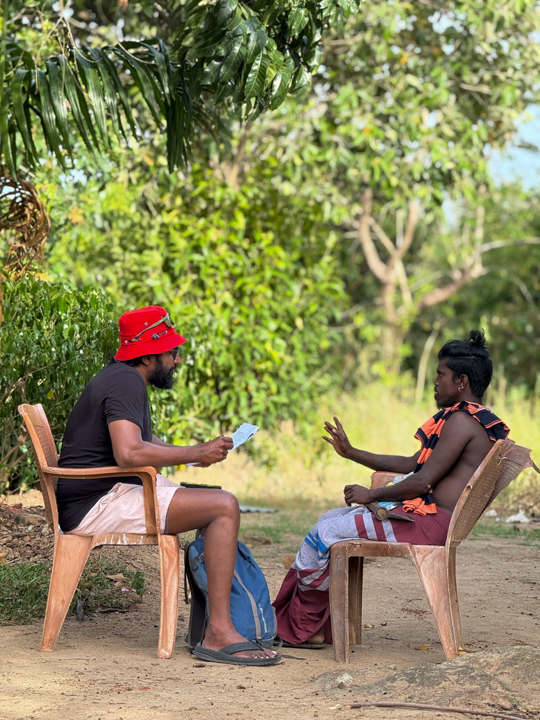
Eranga Galappaththi interviewing Indigenous community members in Sri Lanka. Photo courtesy of Eranga Galappaththi.

From your view, what are the biggest impacts of climate change on Indigenous people or minorities? 

We have worked with over 100 Indigenous communities internationally and have a network of 14 partner countries as well. Based on this research and the work so far, we found that the way people experience climate change is very different.  


Each Indigenous community has their own problems. For example, one community in Sri Lanka might experience tourism related issues because they get more tourists. Indigenous people are used as a tool to do tourism, and they are not given any benefits for doing so. For them, there’s a lot of social power gaps, marginalization, education problems and food security issues.  

If you go to the Arctic, they have very different issues. They don’t have roads. They’re isolated communities and they have lot of food related health issues because of nutrition. They’re still highly relying on hunting, trapping and fishing for their food security. It’s because of the isolation and lack of economic opportunities that cause a high level of suicidal rates and high level of drug and violence issues.  

These are very complex issues, and each community is affected in different ways. Climate change acts as a central hub for these issues because Indigenous people are still relying on natural systems for their food security.  

When they lose their food security it causes food contamination, and they start to face different food related health impacts as well. That’s why I study a nexus of climate-food-health. These topics are interconnected especially when it comes to rural communities. 

In your view, why do some individuals remain unconvinced about the reality of climate change?  

I travel to places that specifically experience climate change. For example, in the Arctic you can see climate change because these places are totally covered with ice. They experience global warming at a very high level, so when they lose ice and lose their food, it’s obvious that it is real.  

The problem is people have trouble believing in something that they can’t see. It’s all evidence based and it has a high-level of research. I contributed to the Intergovernmental Panel on Climate Change Assessment reports, and we know it’s real.  

Have you seen any like climate change impacts in Blacksburg, Virginia? 

I moved from Canada in 2021, and we got a really good snow here that winter. I was so happy. The next couple of years, we have gotten less and less snow each year, at least to my standards. 

I’ve heard from a lot of elders here in Blacksburg, that have said we used to get a lot of snow in Blacksburg, but now we don’t. That’s one observation that I have made during my time here. Another thing I have noticed is the predictions. They’re sometimes inaccurate which could be a result of climate change impacts.  

How do you think educators could better integrate Indigenous knowledge or concepts into student learning? 

Most people limit their education to western knowledge systems. There are non-western knowledge systems like Indigenous knowledge, local knowledge and other knowledge systems. We need to go beyond science to integrate those systems. For example, I invite some of the Indigenous researchers and Indigenous community members to give guest talks with my students, so they get that opportunity.  

My aim is to not only deliver knowledge to students, but to create a core learning environment. This makes an equal base learning environment. I want to learn, and they want to learn as well. It turns into a group learning environment; it’s not just reading and studying a textbook.  

Do you include approaches or perspectives in your teaching that weren’t part of your own education?  

I’m trying to integrate a lot of community perspectives and non-western type of perspectives. I’m really just trying to bring different perspectives into my classroom which was something I didn’t experience.  

What advice would you give students who want to pursue research or careers focused on climate resilience and sustainability? 

In any research, it’s very important to integrate multiple perspectives and to respect all of them.

More Than a Professor: How Angela Anderson Leads Students Beyond the Classroom 

By Sage Mayhew, Health and Wellness Reporter

Angela Anderson, PhD

Anderson’s impact doesn’t end when class is over. She fosters well-being and sustainable habits for students to support more fulfilling, healthier lives.

Anderson teaches in the Department of Human Nutrition Foods and Exercise at Virginia Tech. Gaining her PhD from Virginia Tech in cancer metabolism and her expertise in exercise science, her research navigates how student motivation and performance are influenced by physical health. Her lessons reach beyond the end of a lecture. Through community engagement and mentorship, Anderson’s commitment to student wellness helps Hokies succeed in both their academic and personal lives. 

[Edited for clarity]

Tell me a little bit about your role here and how you got to where you are today

I am collegiate faculty, so I’m teaching faculty. One piece of collegiate faculty is research. That research is more pedagogical. So, how can I effectively teach in the classroom? How can I draw students in and increase their engagement and learning?

We moved to Colorado in 2014 for my husband’s job. I taught part time at Pikes Peak Community College and at Colorado College. During that time, we really missed Blacksburg, so I had reached out to my PhD advisor, who was the department head at the time, and said, ‘Hey, would there ever be any opportunities for me to come back?’ And he said, ‘Actually, they’ve started collegiate faculty, and I think it would be great.’ So we moved back in 2018! 

How do you advise a student’s well-being?

Having an active lifestyle is really important for undergraduates, but also trying to keep things in perspective. What I try to remind my students is that I was 44 when I got hired back here at Virginia Tech. I went back to graduate school at 34 when my first son was born. Life is long, so I try to remind them everybody has a different path and that’s okay.  

How does stress impact students physically and academically?

It can put your back up against the wall, where you make poor moral choices. You get to the point where you’re like, I’ve just got to check the box. And then maybe you look over at someone else’s computer on an exam because you didn’t put the hours in to study. I think there’s a lot of negative impacts of stress, and that’s one of the reasons why I think carving out time to be physically active can help reduce that.

Aside from stress, what other health concerns do you see among college students?

Digital wellness is a big one. I think the isolation that comes from our digital environment is really real. Having a phone at our fingertips, having air pods in our ear, having ChatGPT to have a relationship with makes it easy for us to be socially isolated, which increases depression and anxiety. I think what is really important is making students feel cared for, and making them feel that they belong, not just in my classroom, but also with each other. I’m not anti social media by any means. It’s just how we choose to use it. It’s a balance, having tech breaks to do things like exercise and engage in relationships with others.

What’s the connection between physical health and academic motivation?

I’ve done some research with that and it’s really hard to measure in humans, because there’s so many other confounders, such as their sleep schedule, their work schedule, and so many other things to really tease out. We did see some changes in executive functioning, specifically with memory after acute exercise. So there is some evidence out there. It’s just not as clear cut, but we do know that exercise increases blood flow to our brain. That correlation is the increase of  our brain functioning would help us to be better learners. 

What sustainable health habits do you recommend to students?

Finding physical activity that you enjoy, and then having a regular, scheduled time for it. Don’t be a runner if you don’t like running. It’s about finding something that you like and making it a routine.  I’ve always said the hardest part about exercise is getting dressed, because it’s like, once you’ve gone over that mental mountain of actually getting dressed you’re like, okay, let’s just do it. 

Have you seen any positive health trends among students recently?

One thing that those of us that grew up in the 80s and 90s see about

Gen Z is water. You guys are such better water drinkers! I also think our students here are a really active community. You see people exercising all the time. 

Do you collaborate with any programs on campus or in the community?

Yes,  through my class, Exercise and Health. We have a partnership with Rec Sports, the students come up with pitches for ways to get college students more active. If they like one, they roll it out. One rolled out this past spring, for girls and women in sports day which was really exciting! It was a women’s only weight lifting time, because some female college students feel intimidated in the weight room, but they want to be able to lift weights, and so having a protected time where they could go and lift was a way that we have partnered with rec sports to help increase physical activity. 

Another way that I connect students with our community is as a board member for the soccer club with New River United. I reach out to students to be soccer coaches for kids in the community. 

What’s one thing you wish students understood about long-term health?

That it is a life long process of balancing.

It is easy when you’re in college to prioritize exercise. As you get older, you just have more demands. So the habits that they’re making now are easier, and they’re going to be harder when you transition. So it’s continuing this healthy lifestyle that we’ve started in college and forming habits now that we will be able to take with us. 

Can you share any moments that remind you why you love this work?

I think it’s when students email me after they’ve graduated, and they will say, ‘Oh my gosh, I am just finishing my first semester in med school, and  your class really prepared me.’ That’s a win! I have set them up to be successful! 

But I think my heart really goes out to the struggling students. It’s easy to think when students aren’t performing well, that they’re just not working hard enough. But we don’t always know what’s going on and that they’re having to adult through some things that really they shouldn’t have to. So it’s watching them overcome those things, seeing them be successful and move on from here into what they are passionate about, and then getting to hear from them later.

Researchers at Virginia Tech Combine Public Health and Geography Expertise to Understand a Concerning Trend.

By: Eli Lamport, science reporter

Dr. Korine Kolivras in her office in Wallace Hall, on Virginia Tech’s campus.

Dr. Korine Kolivras is a medical geographer with more than 20 years of experience in her field. At Virginia Tech, she has embarked on research into the spread of Lyme disease in the New River Valley area.

Dr. Kolivras also teaches several undergraduate courses and works directly with graduate students in Virginia Tech’s Department of Geography. I sat down with Dr. Kolivras to discuss her background, research, and thoughts on the current state of science in the United States.

(Editied for clarity)

You describe yourself as a medical geographer. Can you elaborate on that? What does that mean? What does your day-to-day look like? 

Stepping back a little bit, as a geographer we study why things are where they are. So some people call it the science of where, because we’re understanding why is that type of plant here and not there? Why is this city here and not somewhere else? So I study why diseases and health concerns are where they are, what factors are unique to making certain places healthy or less healthy and also how diseases spread from place to place. So day to day, I do research related to that. 

How do medical geographers work alongside other kinds of geographers, and what other fields does your work overlap with?

Yeah, so I collaborate with people within geography as well as in other fields and disciplines. It’s pretty interdisciplinary. So, within geography, we’re trying to figure out where diseases are, but oftentimes that’s where certain insects are. So it’s like, where are ticks living? Where they’re living, we’ve found that Lyme disease is higher, where we have land cover change, where we have different land covers next to each other. So a forest, a large forest patch next to a farm field, for example, that’s the type of place where we would have Lyme disease more typically. And so I could work with bio-geographers and people that study land cover change. And then outside of geography, I collaborate with people in epidemiology and public health, but also, I could collaborate with people in sociology, because they understand population patterns and population level decision making within society. 

How did you end up in this field? Do you remember a moment where you realized this is what you wanted to do long term?

First of all, in K-12 education we don’t get a really good understanding of what geographers do. Students come into my class, and it’s just like memorizing capitals and where rivers are and stuff. That’s not really what we do, you know, the location of things is definitely important, but it’s more about what else is going on in that place?

In college, I started out as a Spanish major because I love to travel. I love languages, and then I just randomly took a geography class. And I’m like, oh my gosh, this is where the cool stuff is, the stuff that I’m excited about. So I switched my major to geography. And actually, it was my senior year of undergrad when I first took a medical geography class. It was fascinating to combine this idea of geography and why things are where they are, with thinking about human health. It also made me realize that I could do research that could make a difference. I feel like everyone deserves good health, and so by doing this kind of research, it could help with that. So I went on, I got my master’s degree and then my PhD doing medical geography related work.

You have done extensive research on Lyme disease trends within Virginia. Can you tell me more about that process, and why Lyme disease continues to spike in this area?

I first got started working on it a little over 15 years ago when the Virginia Department of Health noted that Lyme diseases were increasing in Virginia. I think the number of cases tripled over a 20 year span, and they were looking to do a study to try to understand why that was happening. And so that’s when I first got started on it. And then eventually I got funding from the National Science Foundation, which was critical in getting this research started and trying to understand Lyme diseases spread. Early on, we had a lot of cases around northern Virginia. There’s a lot of people living there. There’s also a lot of suburbanization. Suburban areas are often hotspots for the disease. Starting around 2014, the New River Valley was a hot spot. We had a lot of cases down here. So my research is centered around  trying to understand why that spread happened and why some places have high rates of Lyme disease and some places have low rates. 

Even when we standardize and adjust by population, some areas stand out as having a lot of cases. And so what we found is that within plots of land that had high rates of forest patches next to herbaceous land. So like a pasture, a farm field, you know, grassy areas, those  were the census tracks that had the highest rates of Lyme disease. And honestly, if you drive around, that’s what a lot of neighborhoods around Blacksburg are like. And honestly it’s kind of a cultural thing where that’s what we want our suburban developments to look like. We want to live in areas where you’re close to forest or greenspace, which is understandable, but at the same time, it supports this Lyme disease cycle. 

How do you feel about the state of your field going forward? 

I’ll speak about science more broadly. The United States has been an innovator and leader within science for decades. Developing new things, new solutions, discoveries. And I am a bit concerned about the decreased focus on research funding that we’ve seen recently. I’ve gotten funding from the NSF, and that’s definitely something that could be in jeopardy. Science research is so important, and I’m not just saying that as a researcher, but also as a member of the public.

Almost Two Years In: The Effects of MCPS Cellphone Policies at Christiansburg Middle School

By Emily Dorsey, politics and government reporter

I sat down with Joseph Caldwell, an assistant principal at Christiansburg Middle School, to discuss the effects of cellphone policies he sees day to day. 

CMS has implemented phone policies beginning in March 2024, ahead of Gov. Glenn Youngkin’s Executive Order 33, which took effect Jan. 1, 2025. CMS began with prohibiting cell phones and other electronic devices during the school day. By June 2024, all Montgomery County Public Schools issued a county-wide policy. In its final guidance for cellphone-free education, the Virginia Department of Education in September 2024 established the “bell-to-bell” cell phone-free policy.

Caldwell has 16 years of teaching experience including transition programs for students with behavior challenges, civics and economics and U.S. history from 1865 to present. Last year was his last year teaching in the classroom before this administrative role. Looking back on the last 17 months, Caldwell addresses the support from the community, policy details that acknowledge unique circumstances and the next challenge the education system is facing: artificial intelligence. 

Caldwell’s comments were edited slightly for length and clarity.

Joseph Caldwell, assistant principal at Christiansburg Middle School. (Courtesy of Joseph Caldwell)

MCPS was doing cellphone free school days last academic year. In January, a bell-to-bell phone ban was implemented. What changes, positive or negative, have you seen with that extra implementation? 

Students are more engaging academically than they were previously. Technology still tends to be a challenge; now the technology is Chromebooks. We’ve been trying this year, as an administrative team, to communicate with teachers to use Chromebooks less than they are used to because students will find ways to be distracted. They are really quick about flipping tabs. Even though there is software teachers can use to monitor it, teachers get more distracted with management than they do teaching.

Students on a limited English proficiency plan or students with disabilities have access to programs on their phone or Chromebook. Why is it important for these students to have access to certain platforms other students may not have

We will still make exceptions for students to use it [phones] for tools like translating purposes. Students with monitoring devices for their diabetes are allowed to carry their phones. That is just a different conversation we have with those students. And then there’s also 504 plans and IEPs in place that allow for that. But a lot of the tools that students would need their phone for, their Chromebook can serve that purpose, as well. 

According to Cardinal News, policy violation does not lead to suspension or expulsion without being tied to an instance of disruptive behavior. Why is it important for administrators to see the differences between certain circumstances? 

State law doesn’t allow us to expel students for phones. The heaviest punishment we have in our policy is to assign Saturday school and that’s either on the third or fourth offense. Those consequences become inconvenient enough for the parent that we usually don’t get that far. We have other systems in place, for students that need that technology, that becomes part of a bigger conversation. Like being responsible with technology and how they use it. 

How do you or the MCPS staff navigate various parent or student opinions regarding these state laws?

We had a lot of positive support from the community. Last year we allowed it [cellphones] during bus-wait in the morning and afternoon, while other schools in the county did not. This year we became even more restrictive because we changed it to where they couldn’t have it during bus-wait and I expected a lot of push back from that, but we didn’t have any. We had a couple road bumps along the way, but for the most part parents didn’t say anything. 

What day-to-day changes have you seen in students as a teacher over these couple of years with the cellphone policies implemented? 

As a teacher I have observed the changes in young people not just phones, but screens in general. I observed a noticeable decline in academic achievement in my first decade of teaching. I started to unofficially poll my students asking them who owned phones.  Those that didn’t, were more academically successful than those that did.  Now, there’s not really an observable difference because most young people have some kind of screen in front of them at some point during the day.  Behaviorally what I have observed in the building are kids being more social with one another.

How do you see the future of cellphone policy usage in schools? 

I don’t see it changing any, we aren’t seeing a lot of public pushback from it. I think they [families] see the challenges of technology, too, so I think they are supportive of it [current cellphone policies]. If anything the bigger conversation is centering around what to do with AI. 

Students seem to rely on AI as a crutch versus a resource. How should teachers and administrators approach AI in the classroom? Do you see a benefit to this technology as a learning function or is it disruptive like cellphones? 

I see it costing students more at this point, since traditional classroom practices require us to process information deeper to get to places of real understanding. I think it needs to be a part of classroom conversations, but, at least for middle schoolers, not sure it is something that needs to be handed over to them. Most often we do have students use it [AI] to cheat which most of the time is blatantly obvious. Also, if it is used for feedback from a teacher to a student I believe it only weakens the role of the teacher to build authentic relationships with her/his students. 

The benefits of not using cellphones definitely extend after the school day. Research shows the harmful correlations between cellphones and children. How can families help support this cause outside the classroom? How and why should students limit their cellphone usage even outside the classroom? 

I think this goes for all of us, not just young people. I know that I am impacted by it, and now that I have been mindful of it, I know how it impacts me. At the end of the day, we don’t like people telling us what to do. It’s not really effective for genuine buy-in to bring change. I think parents need to be mindful of their use of technology in the home as well as the young people they are raising. 

Hokie Spirit Never Dies: Evan Hughes on Why Virginia Tech Football Still Unites Fans

By: Zoe Santos, arts & culture reporter

Evan Hughes, Assistant Director of Broadcast Services and Voice of Virginia Tech women’s basketball and baseball, poses for a portrait in Blacksburg, Va.

Even with recent losing seasons, Virginia Tech football continues to draw sold-out crowds to Lane Stadium. The passion is strong as ever, and Hokies, students and alumni alike, say the program represents more than wins and losses. 

Evan Hughes, a Virginia Tech alumnus and assistant director of broadcast services for Virginia Tech Athletics, has experienced the culture from both sides of the stands. As a student and now a staff member, Hughes offers a perspective on the influence of Frank Beamer, the game day atmosphere in Lane Stadium, and why Hokie spirit continues to thrive.

(Edited for clarity)

You’ve been both a student and an employee at Virginia Tech. How would you describe what makes the culture here unique?

I think first and foremost, it’s the people, and I think that it’s so overly used when it comes to organizations or universities, “the people, the people, the people,” but truly, there’s a reason why Virginia Tech is near the top every year in student life happiness.

You hardly meet people who come to Virginia Tech who don’t like Virginia Tech. I just think there’s something about the way others treat fellow students and professors that makes this community so special.

I don’t know if it’s the small-town vibe. I don’t know if it’s being in the mountains. But it’s contagious. You can feel it. And there’s a sense of real pride in being a part of something bigger than yourself, too, which is kinda cool.

Every day, there’s one thing that hasn’t changed from when I was a freshman in college to now being an employee. It’s the people.


Frank Beamer was at the South Carolina game recently, supporting his son Shane. What did you think about the fan response to him being there in another team’s colors?

I think it’s a really good question. Obviously, Coach Beamer is arguably the biggest celebrity and one of the most impactful people to ever graduate from Virginia Tech, but then had the biggest impact that one person has had.

The growth of the football team really helped the growth of the university from an academic standpoint. So to see him there supporting Shane, I thought it was cool because he had a Virginia Tech pin. That was so cool, just paying homage like, “Hey, I am a Hokie. I love you guys. This is probably the hardest thing I’ve ever had to do, but of course I’m going to cheer for my son first.”

Just about every Hokie understood that. Nobody’s like, “Hey, why isn’t Coach cheering for the Hokies?” Everybody gets it. It’s his son. Of course, he’s going to cheer for him. That was really unique. I mean, it’s not every day that your legendary coach is going up against his son.

If you could put it into words, what lasting impact did Beamer leave beyond numbers and wins?

When he first got here, from an athletic department standpoint, we were a very small athletic department. We had not achieved a lot from a team perspective. We’d had some good football seasons in the past, but nothing like where we are now in the ACC and from a competitive standpoint.

We are where we are because of Frank Beamer. I think the rise of the football program allowed for so many more people to get on the bandwagon, so to speak, and then students started saying, “Hey, Virginia Tech’s good. Are they good in school? Maybe I should apply there.”

I don’t think you can sum up what he has meant to this place. Even in his retired life, he walks around campus almost every day, and he’s been around for years. In my opinion, Frank Beamer is one of the most impactful people to ever be a Hokie.

I think about Virginia Tech, how many students we can admit every year, how competitive it is, and how we need to expand. All these things. It’s because of him. He is one of the common denominators for why we are the way we are.

I hope he knows that. I hope he feels that from Hokies, because I don’t think he fully understands that he is one of the primary driving forces of why we are where we are as a university and athletic department today.

As a student and now an alumnus, how do you think the experience changed? Does the passion remain the same?

I think the passion absolutely remains the same. As a student, it depends. Some people come in having grown up a Hokie, and they know everything about it. Some come from out of state and don’t know who Frank Beamer is. Everybody has different starting points for when they started following Tech football. But once you’re in, you’re hooked.

As an alum, so many people who love sports follow Tech football because it takes them back to their college days. Tech football is that placeholder in their heart. It’s their way of staying connected to what’s happening with their alma mater.

It is cool how Tech football continues to give to those who have already graduated. That Hokie Stone the players touch running out of the tunnel comes to mind, “For those who have passed, for those to come, reach for excellence.” That’s what it represents.  

If you had to sum up a gameday in Lane Stadium to someone who’s never been here, how would you describe it?

Exhilarating. Jumping, a lot of jumping. Coming together with 66,000 of your closest friends to cheer on one common goal, and that is for Virginia Tech to win a football game. You are the 12th man, helping push the team to victory. You’re also sharing in three hours of one of the most special moments you’ll have all week.

From kids who are five to alumni who are 90, people love being Hokies. And there’s no better way to show that than being inside Lane Stadium on a Saturday.


A semester of protests at Virginia Tech

By Wilbert Ramirez, politics reporter

Student protests were frequently observed during the 2025 Spring Semester at Virginia Tech in response to rapid changes made by federal and university administrations.

The protests were from a large variety of different student organizations that had different goals in mind against university policy regarding Virginia Tech’s policy changes due to the new Presidential administration in the United States.

On Jan. 20, President Donald J. Trump enacted executive order 14151 titled “Ending Radical And Wasteful Government DEI Programs And Preferencing,” which stirred confusion among universities and educational institutions around the United States – Virginia Tech included.

Student researchers at the university underwent a “chilling effect” regarding speaking publicly about their research in fear of retaliation from the Presidential administration. Virginia Tech students questioned from the Diplomacy Lab and other social science research requested         The Newsfeed for anonymity to speak freely without fear of retaliation to themselves or their colleagues.

A protest by the Students United Front began on Feb. 21 with students protesting any future action of letting U.S. Immigration and Customs Enforcement or ICE on to Virginia Tech’s campus. The SUF’s worries were propelled by earlier emails sent out by university admin on Feb. 18 discussing what staff such as professors should do if an ICE officer is seeking a student in their classes with bulleted topics regarding “points of contact, private spaces, and communications and rights.”

The situation regarding student protests was then galvanized following the arrest of Mahmoud Khalil on March 8 of a pro-Palestinian student leader at Columbia University who was detained by ICE officers after his green card was revoked.

The next protest of many at Virginia Tech was an emergency protest march by the organization “Students for Justice in Palestine,” which met and marched from the Pylons memorial at the university to the townhall in downtown Blacksburg. The organization called for Virginia Tech to divest from Israel and weapons manufacturing organizations that supply the Israeli military.

The protest was in response to the ceasefire between Hamas and Israel being broken by the state of Israel.

Shahed Sanuri (seen left holding megaphone) and pro-Palestinian student Protesters gather at the Pylons memorial at Virginia Tech, in Blacksburg, VA. Wednesday March 19, 2025 (Photo, Wilbert Ramirez)

“There’s no time for us to debate whether we should be fighting for Palestine or fighting against injustice because it’s Palestinians today and it’s happening to us today, but it could be anybody else tomorrow.”

Shahed Sanuri

Shahed Sanuri, a first-year graduate student at Virginia Tech and co-president for Students for Justice in Palestine is an ardent supporter of the Palestinian rights and recognition.

The largest and most diverse of the protests organized was the march for civil and human rights in response to the board of visitors decision to eliminate the DEI office at Virginia Tech on March 25. The march involved a wide coalition of many organizations such as Black mindedness, Students United Front, Students for Justice in Palestine, and students from varieties of backgrounds. Approximately upwards of 1000 people participated in the march according to organizers of the march.

Protesters gather in front of the Skelton Inn at Virginia Tech, in Blacksburg, VA. Tuesday March 25, 2025 (Photo, Wilbert Ramirez)

“It’s one thing to be able to get 1000 people to show up one day, and it’s when you’re comparing it like qualitatively, how does getting 1000 people to show up one day compare to getting 50 to 100 people to show up every single week, you know, for months, right?,” said Cameron Baller, a PhD student in Sociology at Virginia Tech with a Bachelors in Natural Resources and Environmental Science, Minors in Gender and Women’s studies and Economic with an interest in researching social movements. “That’s another kind of lens in which I would be thinking about the history, the recent history of protest on this campus.”

The board of visitors at Virginia Tech went through with the vote to eliminate the DEI office at Virginia Tech in a 12 to 2 vote.

Another moment that galvanized students at Virginia Tech to protest involved the sudden revoking of international student visas around the country including seven Virginia Tech students and 2 alumni on April 9.

President Tim Sands of Virginia Tech released a statement issuing information to assist those who may have been affected.

The following day on April 10 the “Latino Association for Student Organizations” carried out a protest marching through campus against ICE enforcement and student speakers noted the revocation of the international student visas as one their largest grievances in speaking out against the U.S. presidential administration’s decision.

Student protesters gather at the Pylons memorial at Virginia Tech, in Blacksburg, VA. Thursday April 10, 2025 (Photo, Wilbert Ramirez)

“It’s very heartbreaking and disheartening to see how higher education administrations don’t really give mind to why students are protesting and they’re not really trying to find an active solution towards that,” said Tiffany Suarez the newly elected president of Latino’s for Student Organizations at Virginia Tech and an undergraduate majoring in environmental policy and planning and political science. “I feel like I’ve been seeing a lot of protests, almost every week, and the result of that has honestly just been the administration, turning their back on us not being responsive, not wanting to be at the table and constantly making up excuses about their unwillingness to cooperate with the students.”

The Trump administration reversed the decision of revoking the student visas on April 25 following numerous lawsuits contesting the terminations of visas.

The organization “VTforClimateJustice” held a climate protest on Earth Day, April 22, in front of Burruss Hall that then proceeded to march across campus and ended at the Pylons. The grievances by the organizers consisted of calls for Virginia Tech’s administration to be more transparent regarding Virginia Tech’s climate goals and where the university was currently at in meeting said goals.

In one of the final major protests on Virginia Tech’s campus this semester, Students for Justice in Palestine had a 1-year anniversary protest remembering the arrest of 82 pro-Palestinian protestors that included 53 students the year prior on April 29, 2024 following their 3-day encampment.

The protestors called for the need to stay strong to their cause of getting Virginia Tech to divest from Israel and weapons manufacturers at a time in which rapid changes are shifting against protesting on college campuses around the nation and at Virginia Tech.

The protests and their frequency at Virginia Tech this spring semester signaled an immediate resistance to the rapid, uncertain, and wide range of changes that began with the Trump administration and its combativeness against higher education institutions that challenge the president.

The largest of the educational institutions to rally against the U.S. president is Harvard in Boston Massachusetts, which sued the administration for freezing $2.2 billion in funding to the university. The Joint Task Force to Combat Antisemitism of the Trump administration announced the freeze in funding because of the university’s failing to protect its Jewish students after Harvard refused to comply with a list of demands from the administration.

Student protests around the nation culminated under a time of great uncertainty for their rights and causes depending on their citizenship, international status, and background.

“I think to be a protester, especially during this administration is to have the courage to stand up for something, knowing that there could be legal implications involved.”

Tiffany Suarez

“I think there’s a level of courage that we haven’t seen beforehand in the student protesters on campus – people knowingly going out and protesting given that people are getting their visas revoked.” Said Suarez. “People are actively getting targeted by ICE officials because of their support for either Palestine or criticism of the current administration. I think that shows a new level of courage that I don’t think we haven’t seen in college campuses in quite a while.”  

DEI Removal Sparks A Semester of Outrage at Virginia Tech

By Nyles Stone, politics reporter

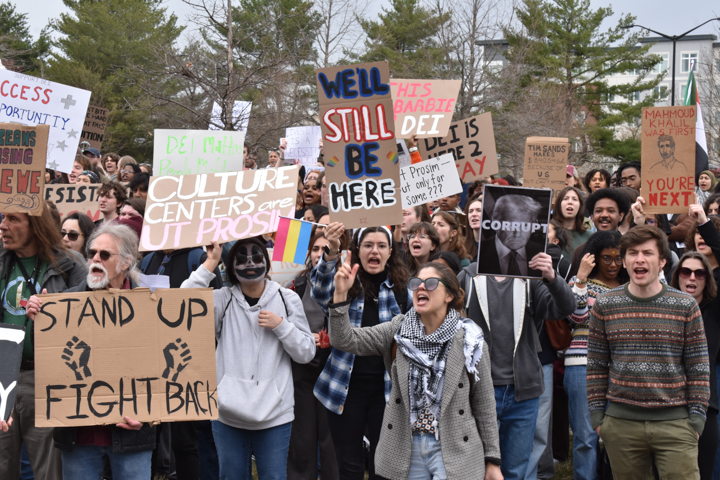
(Nyles Stone/ Politics Reporter) Picture taken from the We Will Not Go Back Civil and Human Rights March

The start of the Spring 2025 semester at Virginia Tech was marked with uncertainty among students and faculty alike due to the January 20th executive order 14151, which was aimed at dismantling diversity, equity, and inclusion initiatives across all federal institutions. Many faculty grappled with the anxiety of the potential changes, while students all around the campus came together and planned for change, the professors, faculty, and staff were struggling to find a voice.  

Dr. Brandy Faulkner, Professor in the College of Liberal Arts and Human Sciences talks about the uncertainty the DEI removal brings, and the amount of stress it caused to faculty when it was first announced. 

“There was so much uncertainty. Nobody really knew what was going to happen or where we would end up. And so, there was nervousness, there was some fear, there was anxiety.”

Dr. Brandy Faulkner, Professor at Virginia Tech

The executive order, titled “Ending Radical and Wasteful Government DEI Programs and Preferencing,” mandated the termination of all DEI-related mandates, policies, programs, scholarships, funding, and activities associated with federal agencies. Furthermore, all DEI-related workers were forced to go on paid administrative leave Jan. 22. The order characterized DEI as causing a divide, promoting that special treatment was being given instead of equality, a claim that drew backlash from educators nationwide. Public universities like Virginia Tech that rely on federal funding followed suit with the executive orders, with many universities getting rid of grants, academic programs, and student and faculty support services tied to DEI. 

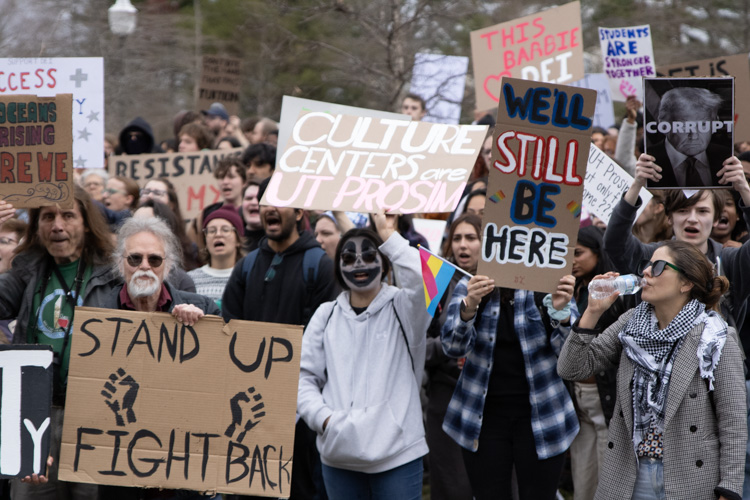
In response to the executive order, the Virginia Tech’s Board of Visitors came together to discuss the potential outcomes, and on March 25, the Board of Visitors voted to dissolve the university’s Office for Inclusive Strategy and Excellence, which oversaw more than 700 DEI programs across the university. This led to speculations of things that could be removed from classes, funding, and student organizations. The Board of Visitors decision sparked outrage around the campus, leading to protest outside of The Inn at Virginia Tech and Skelton Conference Center, where the Board of Visitors gathered to make their decision. Students, Faculty, and Staff all gathered in dismay over the decision to get rid of the DEI programs, with over 1,000 people in attendance. 

(Nyles Stone/ Politics Reporter) Students and Citizens of Blacksburg Gathered at The Inn at Virginia Tech

“Absolutely, there was fear about classes like Africana Studies getting shut down, because we didn’t know,” Dr. Faulkner said. “We don’t yet have the answers to whether some of our courses are going to disappear, whether they might be renamed, whether the content will have to change. So, there is still a whole lot of uncertainty, even as we are at the end of the semester and already thinking about next year.” 

The environment of fear and speculation paralyzed many departments, with an alarming amount of distress on whether some faculty were going to able to keep their jobs. “There was a lot of hesitancy. Nobody wants to be a target,” Faulkner explained. “It felt sometimes that to even talk about was to just speculate because we had nothing concrete.” 

For Faulkner and other Virginia Tech faculty and staff, the implications of the DEI removal are deeply imbedded into their professional workplace. “That fear of the unknown is still continuing. Some things have been solidified; we know research funding for NSF grants and NEH, much of it has been taken away if it was classified as DEI-related,” she said. “Now there are more conversations about those kinds of things and how we will move forward, but you still see a lot of hesitancy.” 

Yet, even with the removal of DEI-related programs and the Office for Inclusive Strategy and Excellence, none of this was new to Dr. Faulkner.  

“As a black faculty member at a predominantly white institution, I have to assume day to day that this could happen at any time, that’s my lived experience,” Faulker said. “We know, if we study history, when there are gains, there will always be pushback and plans to undo the progress.”  

This semester brought tough conversations into the classroom for Dr. Faulkner. With the loss of a grant and gaining more evidence of what Faulkner calls the university’s “constant and open opposition” she remains determined, aiming to stay vigilant, reminding students and faculty that they must continue moving forward. Dr. Faulkner even expressed happiness for the powerful student leadership seen on campus. “I’ve been so proud to see students decide that they are going to be engaged, to do what they can to protect not only themselves, but their community.”  

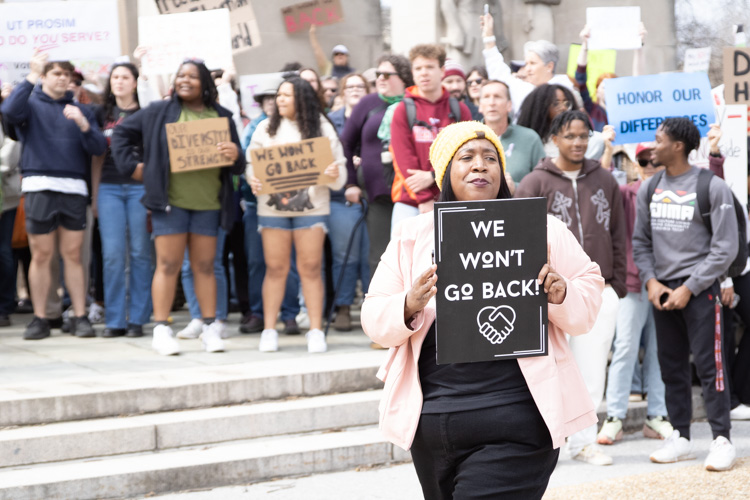
When reminiscing about a moment of student leadership that stands out, Dr. Faulkner mentioned the We Won’t Go Back March for Civil and Human Rights, highlighting the march as something she was proud of. With the march being organized by multiple student organizations, Faulkner iterated her happiness for Black Mindedness founder Emon Green, with him being at the forefront of many of the university protests. 

(Nyles Stone/ Politics Reporter) Picture of Dr. Brandy Faulkner at the We Won’t Go Back Civil and Human Rights March

The civil rights march stood as a reminder for Dr. Faulkner, with the thousands of students, faculty, and staff in attendance, it showed Faulkner that she is not alone, saying that “there are plenty of people who don’t want us to take these progressive steps backwards.”  

Despite the Board of Visitors decision, organizations like Black Mindedness have continued to advocate for inclusivity and community support. “Honestly, with Black Mindedness, it’s not difficult. Our organization has no affiliation with Virginia Tech, so we aren’t subject to the immediate impact of these type of decisions.” said Emon Green, a senior majoring in philosophy, politics, and economics and founder of Black Mindedness. “I think we will face a generative type of difficulty that comes with the process of building alternatives for what is being taken away with the dismantling of DEI.” 

(Nyles Stone/ Politics Reporter) Picture of Emon Green at the We Won’t Go Back Civili and Human Rights March

Julia Alexander, a senior majoring in wildlife conservation at Virginia Tech voiced her frustration with the dismantle of DEI and the Board of Visitors decision. I’m disappointed by the removal of DEI positions and the insensitive impression of the Board of Visitors towards the protesting students,” said Alexander. 

While Alexander, unlike Emon, is not a part of organizations aimed at building community, she found the use of DEI beneficial when needing someone to talk to. With her majoring lying in the College of Natural Resources and Environment, a college according to an article published by College Factual, 78% of students in the College of Natural Resources and Environment are White, with African American making up only 1.7% of the college.  

“As a student at Virginia Tech, I looked to the director of DEI in my college for advice, it felt more comfortable speaking with someone who understands the perspective of a minority at a predominantly white institution,”

Julia Alexander, Wildlife Conservation Student

Alexander elaborated that DEI was something symbolic, talking about the use of cultural centers in the Squires Student Center, the living-learning communities, and the acknowledgements of an inclusive campus all around the university. Alexander, who stayed three-years in the Ujima living-learning community talked about how communities like Ujima helped get opportunities that tailored to minority groups, “It was a way to stand out and get opportunities, DEI has supported my success in college, and I wouldn’t have as many professional and personal development opportunities without it.” 

As the spring semester comes to a close and the effects of the executive order continue to unfold, the Virginia Tech campus remains caught between student outcry, and faculty hesitancy. While academic grants, programs, and voices within the institution have dwindled, many within the community are finding ways to speak out, with organizations like Black Mindedness continuing to advocate for civil justice  

“It makes me mad as hell. I’m angry. People have poured their hearts, their time, their energy into making Virginia Tech better, a more welcoming, inclusive, fair, and equitable campus, To see that work just wiped away makes me extremely angry.” 

Dr. Brandy Faulkner

Women Take Center Stage in Virginia Politics

By Julia Lagano, political reporter

Former U.S. Representative Abigail Spanberger (left) and Lieutenant Governor Winsome Earle-Sears. (Photos by Parker Michels-Boyce and Mechelle Hankerson for the Virginia Mercury).

All eyes are on Virginia as the state gears up for a high-stake gubernatorial election this November. Often viewed as a bellwether, Virginia’s off-year election offers both Democrats and Republicans an early litmus test on national political trends and voter sentiment heading into 2026 midterms and 2028 presidential race.

Regardless of the outcome, this race will be historic; Virginia will elect its first female governor. This marks a milestone in U.S. political history, given the resistance to female leadership at the national level in past presidential elections. The winner will also help shape the state’s ideological direction.

Since 1977, Virginia has a tradition of electing governors from the opposite party of the sitting president, with the exception of 2013. This pattern has made the state a testing ground for political trends, fundraising patterns, campaign tactics, and future party strategies. The state’s ever-shifting demographics, particularly in Northern Virginia, have turned it into one of the country’s most watched battlegrounds.

Although the Virginia primaries are set for June 17, both major parties have officially confirmed their candidates: Lieutenant Governor Winsome Earle-Sears and Democratic former U.S. Representative Abigail Spanberger.

Earle-Sears is already a trailblazer in Virginia politics. She is the first woman to serve as lieutenant governor and the first woman of color to hold a statewide office in Virginia. If she wins this race, she would be the first Black woman elected governor of any U.S. state. Additionally, it would be the first time Virginia has elected back-to-back Republican governors since Jim Gilmore in 1997.

Born in Kingston, Jamaica, Sears immigrated to the United States at the age of six and grew up in the Bronx, New York. After receiving her Master’s in organizational leadership from Regent University, Sears served as an electrician in the United States Marine Corps from 1983 to 1986.

Sears entered politics in 2001, when she won a seat in the Virginia House of Delegates by upsetting 10-term Democratic incumbent Billy Robinson. In 2018, she ran for U.S. Senate but lost in the Republican primary. She has served on the Advisory Committee on Women’s Veterans to the Secretary of Veterans, as the vice president of the Virginia Board of Education, and as the co-chair of the African American Committee on the U.S. Census Bureau.

A staunch conservative, Sears brands herself as a someone who embodies traditional Republican values. Her platform focuses heavily on education reform, economic growth, law and order, the Second Amendment, and social conservatism, specifically reproductive rights and LGBTQ+ policies.

She has closely aligned herself with Donald Trump, referring to herself as “Trump in heels.” This association may help her among the GOP, but she risks alienating moderate voters, particularly women. Democrats are framing her as too extreme for Virginia as they hope to replicate their wins from 2018 and 2020.

In contrast, Abigail Spanberger, is running as a centrist Democrat focused on bipartisanship. Born in New Jersey and raised in Short Pump, Virginia, Spanberger holds an MBA from Purdue University. After graduating, she briefly worked as a postal inspector with a focus on money laundering and narcotics.

From 2006 to 2014, Spanberger served as a Case Officer for the Central Intelligence Agency (CIA), working on international security and counterterrorism operations. After leaving the CIA, she was appointed to the Virginia Fair Housing Board in 2017 by former Governor Terry McAuliffe. In 2018, she was elected to represent Virginia’s 7th Congressional District in the U.S. House of Representatives; she served until she announced her candidacy for governor in November 2023.

Spanberger’s platform centers on economic development, education, reproductive rights, environmental protection, and public safety. Like Sears, she is prioritizing veterans’ affairs, as Virginia has one of the nation’s largest military and veteran populations.

To broaden her appeal, Spanberger has distanced herself from the Democratic Party’s progressive wing. She’s known for working across party lines and pushing for bipartisan legislation such as the Transactional Fentanyl Prevention Act, American Food Supply Chain Resiliency Act, and Supporting Federal Employees in the National Guard and Reserves Act.

“Virginia is seen as ‘purple,’ and this result can be viewed as where the nation is heading as to what’s happening in Virginia.” – John Tedesco, Director of Virginia’s School of Communication and expert in political communication.

Historically, Virginia has leaned Republican. Between 1952 and 2004, the state voted for every conservative presidential candidate, except for the 1964 election of President Lyndon B. Johnson. However, the rapid growth in Northern Virginia during the 1990s shifted the political landscape. Since 2008, Democrats have won Virginia in five consecutive presidential elections, though by narrow margins. In the 2024 presidential election, Kamala Harris defeated Donald Trump by only five points.

2024 Presidential election results in Virginia. Source: Virginia Department of Elections.

Virginia comprises a unique blend of rural conservatism, urban liberalism, and suburban swing voters. The state has about 320,000 full-time federal employees, with 190,000 federal jobs are based there. This job sector constitutes a significant portion of Virginia’s workforce, and the recent news has become a major issue in this year’s race.

In April, CNN reported that more than 121,000 workers have been laid off since the beginning of Trump’s second term by the Department of Government Efficiency (DOGE). These cuts have highlighted Virginia’s vulnerable economy and made job security a central campaign issue.

Compared to a Presidential General Election, voter turnout for gubernatorial elections is significantly lower. Last November, Virginia’s voter turnout was 73%, the highest on the East Coast. However, that percentage drops considerably in state elections. Virginia state elections attracts about 42-50% of voters. In 2013, approximately 43% of registered voters cast a ballot.  

In 2021 there were record breaking numbers, with 55% of Virginians voting, the highest turnout for a gubernatorial election in about quarter century. Virginia passed 14 bills to improve voter turnout, such as 45 days of no-excuse early voting, expanding identification options, and designating Election Day a statewide holiday. Because of the state’s unique election schedule, these races are more dependent on voter enthusiasm, local issues, and campaign mobilization.

“I have only voted in presidential elections.Until now, I never realized that [the governor’s race] is held in off-years or the impact it is has on the nation.” – Alana Peyton, voter in Hanover County

To reach voters like Peyton, both campaigns are using different media strategies. Sears is relying more on traditional media, TV, radio and in-person events, to engage more traditional and older electorates. Her messaging places a large emphasis on patriotism, faith, and tradition.

On the other hand, Spanberger is embracing a digital-first approach, using platforms such as Instagram and TikTok to connect with the younger generation and tech-savvy voters. Because she is catering to a younger demographic, Sears has begun to label her as an extreme left winged, or “woke” politician.

Fundraising is crucial in elections, and this one is no exception. Expected to be Virginia’s most expensive gubernatorial campaign, Spanberger has raised around $16 million since launching her campaign in 2023. In the first quarter of 2025, she has raised $6.7 million, a record-breaking number for the first quarter of an election year. Comparatively, Sears has raised around $3.1 million, a record for the Virginia GOP.

Sears’ alignment with Donald Trump could be seen as a strength and a liability. It cements her position with Trump loyalists, it risks alienating moderates and swing voters. “There are advantages for those in strong support of Trump,” Tedesco said, “But that is not going to win over any liberal voters, and it may even scare away moderate voters.”

Voters understand what this election could mean for the future of the U.S. “[The political climate] is very tense right now,” Peyton said, “It feels like you are on one extreme or the other. Which is really frustrating because politicians should be able to work with their cohorts to improve our country as a whole, not just serve one group.”

Not only is this race highlighting key national issues like education curriculum, reproductive rights, economic development, and public safety. It is also confronting a bigger question: is there is any bipartisanship left in the United States?

“In the past year, I have become much more in tune with national politics,” Peyton said, “I plan on voting in the [gubernatorial and local] elections because ultimately, change starts at the bottom.”

Editor’s Note: Dr. John Tedesco is the Director of the Virginia Tech School of Communication which publishes The News Feed NRV.

Federal hiring freezes and funding cuts leave college graduates with uncertainty

By: Kyndall Hanson, Elizabeth Hill, and Janae Neely, education reporters

Throughout 2025, federal hiring freezes and funding cuts implemented by the Trump administration have created uncertainty for graduating college seniors. As students navigate post-graduate plans, they are often left to choose between entering the workforce or pursuing higher education, both of which present challenges. Kate Renz, assistant director of employer relations and career services in the College of Liberal Arts and Human Sciences, discusses the potential impacts on graduating seniors and offers advice on navigating the job market.