
Montgomery County has issued a Boil Water Notice. This has left Blacksburg residents and Virginia Tech students adjusting their daily schedules. By Ryan Siegel
Category: No category
After 82 Years Football is Back at Roanoke College
The Roanoke College football team has their first season since 1942. The team has begun their season 2-0. Caroline Reed shows us how the season is going so far for the new team.
Virginia Tech Boasts In-House Therapists for Student Residents Under Innovative Well-being Model
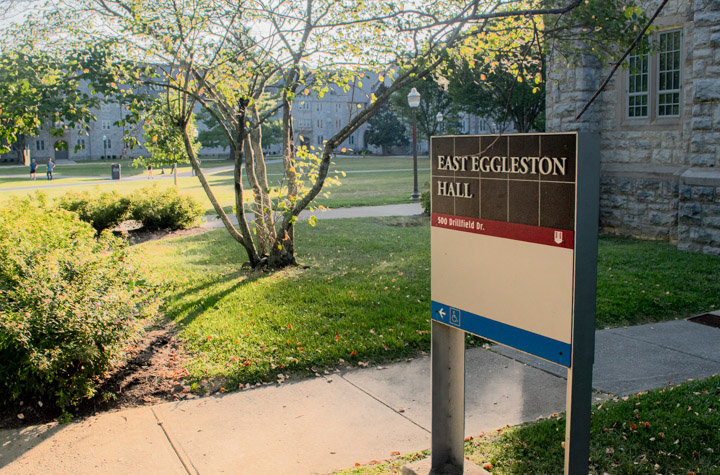
Virginia Tech freshmen now have live-in therapists. One of these therapists, Annie Clay, was hired to serve as an embedded counselor when Virginia Tech redesigned their student wellness programming in 2022. “Embedded” meaning these counselors live on campus, in the very same dorms students live in.
“The Residential Well-being Embedded Counselor program is part of the bigger Residential Well-being initiative model that [Virginia Tech] implemented two years ago,” Clay explained. “Most other universities don’t offer the Residential Well-being model to begin with … it’s a relatively new development.”
The school had faced backlash in recent years for its inadequate mental health resources, with students complaining of monthslong appointment waiting lists and unhelpful providers. But it seems that Virginia Tech took students’ feedback seriously; Clay relayed that Tech’s current Residential Well-being model is considered one of the most innovative in the country.
The Covid-19 pandemic challenged people’s mental health in a way that had never been seen before. Even in the fall of 2020, as restrictions slowly lifted and Tech welcomed students back to campus, the repercussions of lockdown remained. Realizing they weren’t meeting the needs of students, the school reworked their Residential Well-being program from the ground up. Clay explained that this involved breaking up the school’s on-campus student population into five districts.
“Each district has a set of professional staff that ensure the well-being of the students that live on campus, so they have case managers as well as other professionals that have expertise in different areas,” Clay said. “They work with students to check in on them [and] make sure they’re thriving.”
In addition to case managers, each district has an ExperienceVT coordinator, an Inclusion and Belonging coordinator, and a coordinator for Well-being. Describing how these different departments intersect in residence halls, Clay said, “the idea is if we can make the experience of living on campus good and we can help [students] thrive and feel a part of the community and do well, then they’re going to want to continue on at Virginia Tech.”
Even the Student Leaders–known as RAs at many other colleges and universities–have slightly different roles under the model. With the embedded counselors on staff, Student Leaders have a bit of a lighter load and no longer have to be the sole points of contact for batches of 25+ student residents.
“They’re heavily involved in checking on the students in their hallways,” Clay said, “making sure they’re okay. And if they think something’s come up, they will frequently get them connected with one of the coordinators. Or, frequently, Student Leaders will also bring students here if they’re in need of mental health services.”
Clay also credits the Student Leaders as being a major source of advertisement for the embedded counselors. “Student Leaders are a big help in letting students be aware that, ‘You have counselors right around the corner. We can take you right now,’ helping bring awareness that way.”
Student Leaders are students themselves, of course, and juggle their own course loads and social and personal lives, on top of their almost full-time jobs as Student Leaders. Residential Well-being’s Embedded Counselors are particularly helpful in swooping in during those late-night times of crisis, when a resident may need someone to talk to, but their Student Leader has exhausted all available resources.
“Our hours are different to make [counseling] more convenient for the students,” Clay said. “So, we have those evening hours open and available for the students, as well as having those drop-in and crisis [appointments].” Unlike counselors at Cook Counseling’s main offices, Clay and the other embedded counselors work 2-11 p.m., Monday through Thursday, and 1-4 p.m. on Fridays.
The embedded counselors have offices in East Eggleston Hall, situated between a dining hall and Virginia Tech’s famous Drillfield, directly across the street from the campus library and bookstore. While East Eggleston is residential, the embedded counselors don’t all live in it, as they serve students in all residence halls on campus. “The location’s on purpose,” Clay clarified. “It’s more convenient for the students that live on campus just to walk here, as opposed to the Gilbert Street location.”
Gilbert Street is where the main Cook Counseling Center is located, housing the majority of its other counselors and their corresponding offices. However, while Clay and her colleagues don’t work there and were fresh hires for the embedded program, she said it doesn’t limit the work they’re able to do.
“We’re just an extension of Cook Counseling Center, we’re just made more accessible to students that live on campus,” she explained. “We offer almost the full range of services of Cook Counseling Center here, meaning we do ongoing, individual counseling. We also have crisis and drop-in appointment times on almost a daily basis.”
As per Cook Counseling Center’s policy, Clay and her colleagues meet with their individual counseling clients every two to three weeks. They also host weekly meetings of the same kinds of therapeutic and support groups that the Cook Counseling Center does, just out of their East Eggleston location instead.

Clay believes the embedded counselors’ East Eggleston location actually offers certain insights to student life that the main Cook Counseling Center doesn’t benefit from. “Because we live on campus and we’re so aware and connected with what’s happening–because we work very closely with the professional staff and the coordinators and the case managers, as well–we have a bigger knowledge of the systems in place that, you know, could be contributing to mental health needs, or, also, that we can activate to help [students] deal with what’s going on.”
As far as what topics she most commonly covers with clients, Clay described the challenges students are expected to face when transitioning to college: new housing environments, conflicts with roommates, etc. But treating anxiety and depression is what she does most, Clay said. “Frequently we’ll see a lot of [students for] adjusting to college, ‘How do I deal with X, Y, or Z factor,’ ‘How do I deal with academics if my mental health is getting in the way of that?’ Of course, anxiety and depression are extremely common, we see that a lot.”
While students who live off-campus are only able to take advantage of Cook Counseling services at their main site, Residential Well-being does have plans to continue to expand the reach of their Embedded Counselors in the future. “It’s Virginia Tech’s goal to get a counselor embedded in every school and location,” Clay said.
Currently, there are counselors embedded for the Pamplin College of Business, the College of Engineering, and the College of Liberal Arts and Human Sciences. There are also embedded counselors in the Corps of Cadets and several in Virginia Tech Athletics.
Clay confirmed that she and her colleagues out of East Eggleston are able to manage student demand comfortably at this time. However, she said, “We’re in the process of getting two more counselors added to our program, so we’re doing interviews for that … to meet more student demand and have more availability.”
School of Visual Arts Joins National Youth Voting Initative: Will It make A Difference?

This election season the Virginia Tech School of Visual Arts (SOVA) is joining a larger campaign headed by the American Institute of Graphic Arts (AIGA) to create non-partisan Get Out The Vote flyers. The flyers are meant to creatively catch the viewer’s attention while also encouraging a larger participatory democracy.
Why it matters: Beginning in 1998, AIGA’s oldest initiative is to apply design tools and thinking to drive civic engagement.
-The initiative is meant to make interactions between the U.S. government and its citizens more understandable, efficient and trustworthy while also encouraging designers to become more vocal citizens.
Driving the news: The 2024 presidential election is a narrow race and is being called by many outlets “the most important election of our generation”
-Virginia is historically a battleground state and with much emphasis being placed on campaigning within the commonwealth, the messaging from both the Donald Trump and Kamala Harris campaigns must reach eligible voters.
What they’re saying: Meaghan Dee, chair of graphic design at SOVA, believes that “Voting is your chance to make your voice heard,” and that registering is the first step.
-The graphic design chair also believes that a larger number of actual voters will lead to a more reflective democracy.
-As an artist and designer, she uses her ‘voice’ through the images she creates. She hopes students feel inspired to use their skills to express their opinions and inspire others to take positive action.
-She highlighted deadlines that she believes to be important such as the first Tuesday of November 2024 for in-person general election voting.
-Further, she believes it important to research the candidates and the issues they support in order to make an informed decision on election day.
Yes but, Dee was unsure of the number of Virginia Tech students participating in this year’s initiative despite encouraging them to do so.
-While word of mouth and tangible graphic initiatives are difficult to translate into an explanation of actual election outcomes, the lack of participation in this year’s drive may decrease the number of students registering to vote.
-The lack of participation may also explain why there is a continued effort across multiple organizations to increase student voter registration ahead of the 2024 presidential election.
Flashback: VT Engage: The Center for Leadership and Service Learning publishes statistics of students registered to vote in presidential elections.
-in 2020 this number was expressed as 90.7% of eligible students were registered to vote and of those students 72.8% actually voted.
-Virginia Tech is nationally recognized as a Voter Friendly Campus for 2023-2024 through a partnership between the Fair Election Center’s Campus Vote Project and the National Association of Student Personnel Administrators’ NASPA Lead Initiative.
-The AIGA initiative has been popular at Virginia Tech in recent elections with nine students submitting posters to the project in 2020.
What we’re watching:
-The 2020 election was largely seen as a referendum on Donald Trump’s administrative policies and the 2024 presidential election was set to be a rematch and referendum on the Biden administration.
-In 2024 the electoral playing field has shifted to the potential for newer and younger leadership in Kamala Harris with much of the campaigning taking place through online communication tools.
-As Trump lost the 2020 election despite attempts to overturn the results the public may be more confident in a win for Harris and as a result are less enthusiastic about campaigning on her behalf.
-With initiatives being spearheaded by Virginia Tech schools, professors and independent political action committees it is yet to be seen whether the number of students registered to vote will increase or decrease.
-The factors at play include enthusiasm for party platforms, civic duty and apathetic beliefs for the difference of one vote.
Is Policy 5000 Targeting Student Organizations?
Virginia Tech’s Policy 5000 has changed the way students can gather on campus, causing difficulties for students to host events.
Why It Matters: Virginia Tech’s Policy 5000 has imposed certain restrictions for student organizations to gather on campus.
- The enforcement of these restrictions could be a result of Students for Palestinian Justice protests that gained national attention last spring.
Flashback: Last spring, Virginia Techs held numerous Pro-Palestinian protests. These protests led to the detainment of Virginia Tech students, faculty and staff.
- Students like Emon Green, a Virginia Tech senior and member of Students for Palestinian Justice believe that the strict enforcement of Policy 5000 this year is a drastic change from last spring.
- Green stated, “The policy itself was already on the books. Like other policies it was broken regularly (specifically on game days) and Virginia Tech paid it no mind. Even at the onset of the encampment, this policy was not enforced in the manner it later would be – as police informed us that we could “stay as long as [we] want as long as the tents [came] down.” Of course, Virginia Tech, when it became seemingly convenient to do so, arbitrarily enforced the policy and sent the police (who had prior told us we could stay as long as we want) to arrest us so the university could brush off our demands using the excuse that we were non-compliant.”
- The policy has been enforced post-protests, after the university received national criticism. Green expressed, “After this spectacle reasonably caused widespread negative sentiment toward the University (Tim Sands specifically), it became clear to Virginia Tech that it had to further repress dissent to prevent any organized campaigns for change from students and faculty. This is when, and why, the new policy 5000 was written; a policy which makes displays of public discontent and dissent extremely difficult and in some cases impossible.”
Zoom In: Virginia Tech’s Policy 5000 is a fourteen-page document describing how students are allowed to gather on campus.
- Per the policy, “Any person on or in university Real Property who engages in unlawful behavior or violates university policy, standards or guidelines may be asked by a university official authorized to act as an agent of the university to leave the property. Failure to comply with such requests may constitute trespassing under Virginia state law and may lead to disciplinary action and/or arrest. The university is not obligated to tolerate events that interfere with any lawful mission, process, or function of the institution. Request for approval of events may be denied if they pose a clear and present danger to university students, employees and facility users.”
- While this may seem broad, the policy further details additional forms, guidelines, and approvals students must adhere to prior to hosting an event.
What we’re watching: As student organizations continue to gather on campus, the level of policy enforcement is to be determined.
- Last spring students were met with an increased police presence and forcibly removed from campus properties.
- Green believes that the enforcement of Policy 5000 is not just a Students for Palestinian Justice problem, but rather a problem for all students on campus.
- Green stated, “We – not just SJP, but several student groups – have had to change our tact. There is no guarantee that if we do a march and chant that all of us marching will not be hit with student conduct referrals or arrested; in fact, there’s a decent chance that we will under the new policy 5000 (especially if we’re challenging the University’s position on Palestine). This is only one example of the effect amongst many. But we (i.e. you, me, and every other student) must keep in mind that policy 5000 is not the reason we face the threat of punishment for standing up for what’s right; it is only the tool used to excuse unjust punishment.”
Virginia Tech Police Department declined to comment on this topic.
Montgomery County Schools Gun Safety Efforts Increase
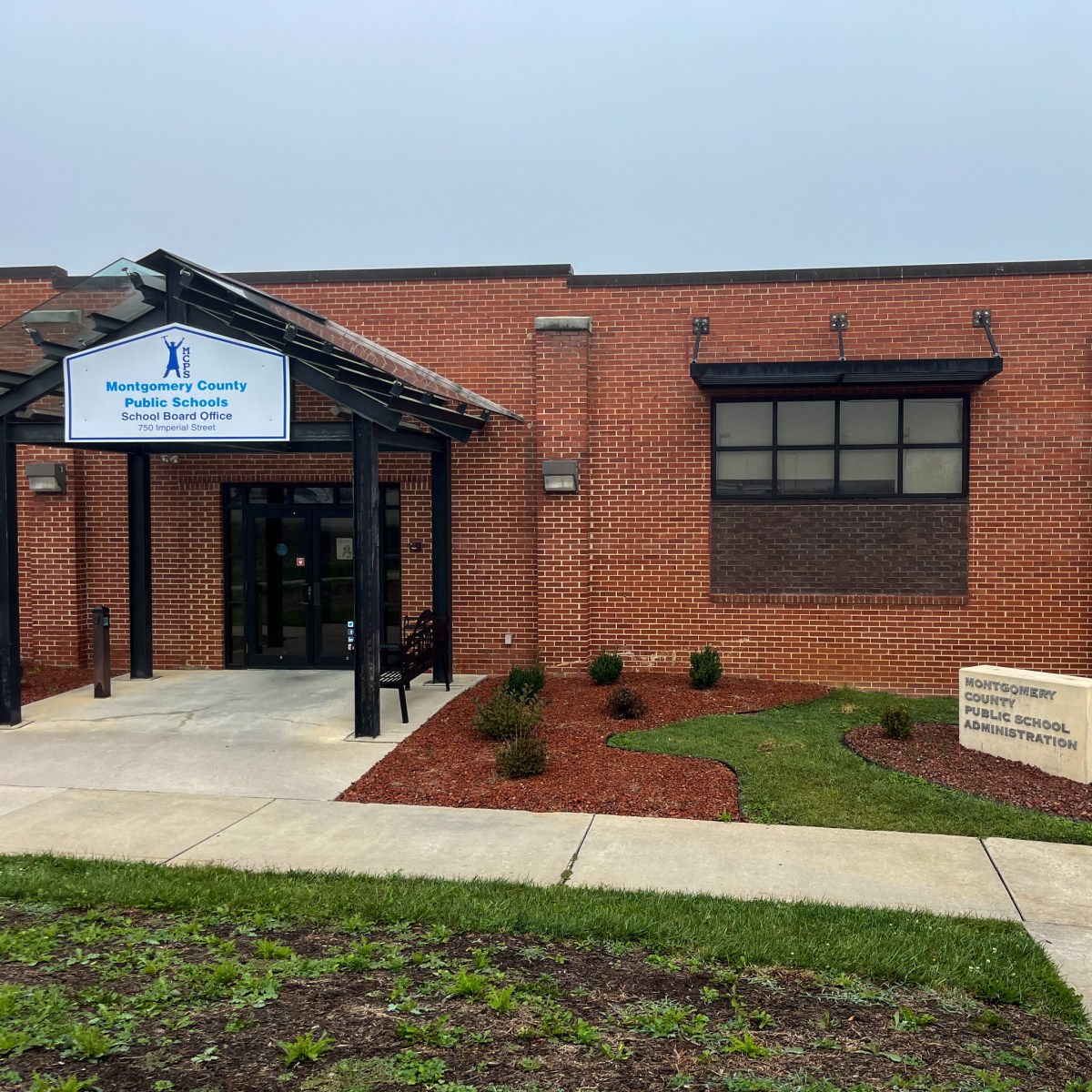
Montgomery County School Board along with 4 other NRV schools have adopted a gun safety initiative modeled after BeSmart a national program focused on educating students and parents. The vote was unanimous in April 2024.
At the meeting on April 9th, Superintendent Dr. Bernard Bragen Jr. said:
“If there’s a way to be proactive and potentially save lives, it’s worth looking into. Passing this resolution will help us remind our parents and guardians how important it is to keep firearms away from children.”’

The BeSmart Program:
The program is modeled after the nationwide program BeSmart, that focuses on educating children and also parents to promote responsible gun ownership. Similar policies have been adopted by Fairfax County School District, Albemarle County Public Schools, Arlington Public Schools, and Charlottesville City Schools.
S, stands for secure, asking parents to appropriately store guns away safely locked and unloaded in both the home and the vehicle.
M for modeling responsible behavior around guns.
A, for asking other parents and adults about loaded guns in other homes in order to prevent an accident ask.
R stands for recognizing the role guns play in suicide and violence.
T for tell others. Encourage others to practice the same management tools when it comes to protecting the safety of all.
Gun Violence in the Community:
Statistically, the numbers can be alarming:
- More than 700 children living in American die by gun suicide each year
- Nearly 360 children unintentionally harm themselves or others
- 3/4 of school shooters acquire their firearm from a relative.
- In 2024 there were at least 139 incidents of gunfire on school grounds, resulting in 42 deaths and 91 injuries nationally.
But it has touched the community personally too. These are no longer “just numbers.” Too many parents and children have dealt with their own first-hand experience with gun violence. From the Virginia Tech shooting in 2007, to the recent lockdown on September 13th where Wheaton and Edison high schools were placed on lockdown due to a potential gun threat.
However, guns are the leading cause of death amongst teens both on and off school grounds. This November is the year anniversary of 17-year old high school senior Serenity Hawley’s death in what was believed to be a murder-suicide in a parking garage located in Blacksburg, VA.
What’s Next for Schools:
After tragedy strikes in a community it is easy to look back and wonder what could have been done differently, or what measures could have prevented situation before they even began. “Recently, the Montgomery County School Board passed a resolution directing me to work to increase awareness among our students, families, and staff about the importance of secure gun storage,” said Bragen Jr. in a letter sent out to families.
The letter is a brief overview of safety as well as resources for parents. Virginia Firearm Safety Device Tax Credit will reimburse up to $300 for a gun safe.
Along with printed material and resources made available to all students, the school have also integrated firearm safety into the D.A.R.E. (Drug Abuse and Resistance Education) program. The school, local government, as well as police forces are all trying to increase awareness and step up to play their part in the community.

Yet, it is a combination effort from everyone to ensure that everyone has a safe place to learn and work. Many schools have implemented other safety measures including metal detectors and increased security, however that can curate a nervous, unstable atmosphere for young kids as well as their parents. Right now, is the time to make the changes necessary so that the kids of our community can feel safe and cared for in their school system.
Montgomery leaders invest in museum accessibility ahead of county, state, nation’s 250th
By Ainsley Cragin
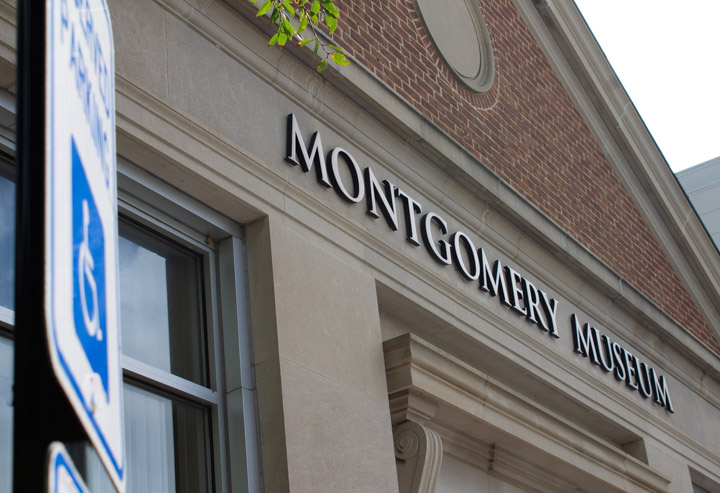
The Montgomery County Board of Supervisors looks to award $117,000 to support the installation of an elevator in the Montgomery Museum of Art and History ahead of 2026 celebrations of America’s 250th anniversary.
Why it matters: The proposed contribution from the county will support the museum’s application for special grant funds from the Virginia Department of Historic Resources (DHR).
- Montgomery is the only county in the Commonwealth to share a birthday with the state of Virgina and the United States of America.
- If the grant is approved by the DHR, the Montgomery Museum will receive funds from both state and county governments to support the installation of an ADA-compliant elevator and a one-of-a-kind Montgomery County semiquincentennial anniversary exhibit.
Driving the news: The Montgomery County Board of Supervisors will vote Monday on a resolution to support Montgomery Museum’s grant application.
- In July, Governor Youngkin and the Virginia DHR announced a $20 million special grant program to prepare historic landmarks and history museums for the 250th anniversary of the 1776 Declaration of Independence.
- Projects that are “shovel-ready” and can demonstrate local buy-in through the commitment of at least one-third cash match will be given priority for Virginia 250 Preservation Fund (VA250) grant awards.
- Applications for the grant are due on Oct 14, awards will be announced in late 2024.
- Casey Jenkins, executive director of the Montgomery Museum, received an uncontested thumbs-up response from all seven County Supervisors during his presentation at a Sept. 9 Montgomery Board meeting.

Zoom in: The installation of an ADA-only elevator will allow visitors with limited mobility to access exhibits in the community room on the museum’s lower level.
- The museum moved to a 15,000 square foot building, the former Bank of Christiansburg, in 2022. The new space includes a ground floor and a basement level.
- Disabled visitors and those with limited mobility cannot currently enter the community room without need to exit and re-enter the building at a side door, traversing at least ten stairs before reaching the basement.
- The cost to design and install an ADA-compliant elevator is projected to be about $300,000.
Montgomery County’s $117,000 decision could cover one-third of the total $350,000 requested in the museum’s grant application, fulfilling both local buy-in and one-third cost matching prerequisites outlined in the applicant requirements for VA250.
- According to Sara R. Bohn, Montgomery County Supervisor, the county’s fiscally responsible budgeting process creates a small annual surplus of a few hundred-thousand dollars for the board to spend on community-serving projects.
Zoom out: VA250 funds should be allocated to ADA accessibility and exhibit installation projects to help draw tourists toward recipients’ regions in Virginia.
- The opportunity to apply for the grant is open to Virginia localities, non-profit organizations, and state or federally recognized Indian tribes.
- According to Jenkins, 83% of Montgomery Museum’s annual visitors are locals, primarily residents of Blacksburg and Christiansburg.
- Montgomery County’s unique position as the only county in Virginia to be founded in 1776 – sharing an anniversary with both the state and the nation – may prompt an specially significant increase in tourism as visitors travel from counties across the state for semiquincentennial celebrations in 2026.
What we’re watching: If the board approves the resolution at their next meeting on Sep. 23, the county’s commitment to cash-match $117,000 will only go through if the museum is awarded the VA250 grant.
- Ahead of the meeting, Bohn and Jenkins anticipate an affirmative vote on the resolution.
- According to Mary Biggs, chair of the Montgomery County Board of Supervisors, the county government and the Montgomery Museum have maintained a strong relationship for more than two decades.
- “The County is delighted to partner with the Montgomery Museum,” she said, “to help lead the planning for such a significant celebration for our community and the Commonwealth of Virginia.”
September is Suicide Prevention Month, but it’s a conversation to be had anywhere, anytime, anywhere starting right here in the New River Valley
The most difficult conversations to have can be the ones that are the most important. In some cases, they could be the conversations that save a life.
WHY IT MATTERS: That conversation is talking about mental health challenges, and in the month of September, specifically suicide. Mike Wade, the Coordinator of Community Wellness and Outreach at New River Valley Community Services says “It’s one in four or one in five adults every year that have a serious, diagnosable mental health condition . . . I would argue that we probably all 100% of us at some point have some kind of mental health setback that a lot of us can manage and get through ourselves. But sometimes we need professional help, and that’s okay. That’s the best way to do it.”
- Wade says that although the statistics reveal at least 20% of the population battles a mental health disorder, it goes undiagnosed more often than not because people are scared to have the conversations surrounding mental health because of a negative stigma. “Suicide has been a taboo subject that a lot of people aren’t comfortable talking about. But the only way to really address that as a community is to get it out in the open and talk about it, and despite what a lot of people may think, talking about suicide doesn’t increase the likelihood that someone will actually follow through with that act,” says Wade. “In fact, it does just the opposite, and those direct conversations with someone that we may have concerns about can actually prevent them from moving forward with a plan to end their life.”

Mike Wade, the Coordinator of Community Wellness and Outreach at New River Valley Community Services, speaks with TheNewsFeedNRV about Suicide Prevention Month.
THE BIG PICTURE: Wade says 50,000 Americans die from suicide each year and it’s a combination of everyone. “It’s not an issue that discriminates based on income, race or gender,” says Wade. “We know that some populations have a great risk of suicide, but I think a lot of people would be surprised to learn that actually older adults, seniors 80 and over, actually have the highest rate of suicide of any demographic.”
- There’s no one factor that drives a person to want to commit suicide. The majority of the time, it is the result of a person feeling such emotional distress that they feel the only way out is to take their own life. But Wade says one of the best ways to help someone who might be considering suicide is to just know they are not alone- There’s always an ear willing to listen. “Despite how bad things might seem in your life, in your particular situation or in that moment, there’s always someone you can talk to,” says Wade. “A complete stranger, a friend or a family member.”
ZOOM IN: This month, the country is breaking down those obstacles that make it seem like suicide is a difficult topic to talk about through Suicide Prevention Month. “This month is really just about recognizing that this is something that somebody we love and care about, or even ourselves can go through and there’s no definitive timeline on when we might experience this or any kind of key indicators that might trigger this,” says Wade. “It’s just a really good opportunity for us to raise awareness at the community level so we in turn can do more to help individuals that struggle with this issue.”
- Although suicide prevention is shared more through the month of September, that doesn’t mean it’s the only time to be aware of it in our community. There are always resources available for those struggling with suicidal thoughts or know someone struggling – Right from your phone and right here in the New River Valley.
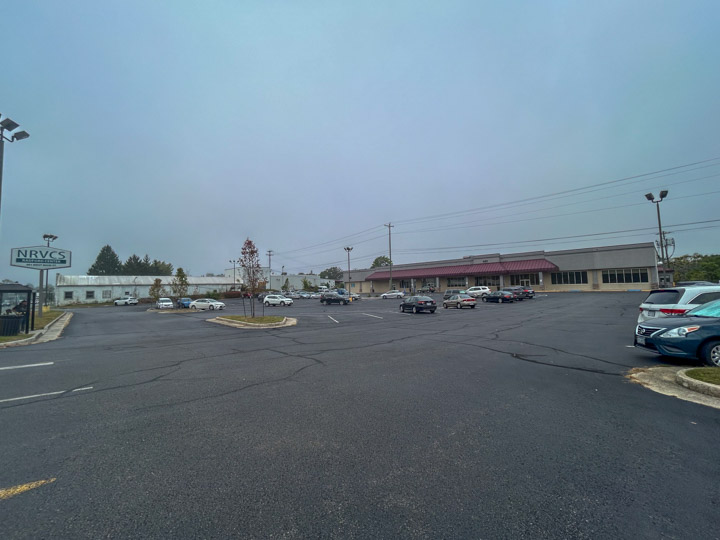
The New River Valley Community Service Center is location in Radford, VA.
ZOOM OUT: Suicide prevention is every day, every month of every year. The best way to reach out in an emergency if you or someone you know is in a crisis is by dialing the national line at 988. Wade says calling that number will reroute your call to a local provider, like New River Valley Community Services, to speak with someone in real time.
- “We at NRVCS have been really intentional over the last couple of years about expanding our crisis continuum to be a little more comprehensive and to really be helpful getting people connected in a timely manner,” says Wade. “So that they can potentially stay in the community and not have to be diverted to hospitals or be served at the crisis level.”
New River Valley Community Service is based in Radford. Wade says no matter what your situation is, they’ll offer someone to speak with so those tough conversations don’t seem so hard.
Stomp on sight: the scourge of the lanternfly
As the New River and Roanoke Valleys embrace fall, an increasingly common pest is laying the groundwork for its next generation.
Why it matters: The spotted lanternfly, an invasive species, poses threats to agriculture, trade and native species. It is also a nuisance to property owners.
- According to Virginia Tech’s Insect Identification Lab, by September lanternflies are in their adult stage and are beginning to lay egg masses. The eggs will overwinter and hatch in the late spring.
- They feed on grapevines and cause declines in the health, yield and sugar content of grapes intended for usage in the wine industry. They can also cause harm to stone fruit, hops and more.
The big picture: The existence of the spotted lanternfly (Lycorma delicatula) in the United States is thought to have originated from trade coming out of northern China.
- It was first detected in the United States in eastern Pennsylvania in 2014. The first record of the species in Virginia was in Winchester in 2018.
- Egg masses travel on pallets, ornamental rocks and shipping containers if preventative measures are not taken.
- According to the Animal and Plant Health Inspection Service (APHIS), there are at least 17 states with recorded infestations.
- Spotted lanternflies are well adapted to handling cold climates in this part of the United States, where there is only one generation a year, and could thrive in warmer ones similar to South Asia, where there are multiple generations in a year.
Zoom in: Spotted lanternflies are becoming established in Roanoke and Radford. Reasonably, this means there is potential for greater expansion within the New River Valley and Roanoke Valley.
- “Radford is infested with spotted lanternfly. It’s on the edge of campus that faces towards the railroad tracks. We get reports from Fairlawn,” said Eric Day, manager of the Insect Identification Lab. “The other infestation area in Montgomery County is Ironto at that truck stop, there’s a population there as well too.”
- One was even recently found on Virginia Tech’s campus following a tailgate.

Zoom Out: Spotted lanternflies are adaptable and could be coming to your yard next.
- They are effective at traveling on human transports. On their own, they may move three to five miles.
- The preferred food source of the spotted lanternfly is tree of heaven, which is another common invasive species hailing from China. Increased presence of this tree means increased habitability of a location for the spotted lanternfly.
- Spotted lanternfly droppings, referred to as honeydew, cause a sooty mold on other trees including maples. These droppings attract yellow jackets and other biting or stinging insects.
- 12 counties and 10 cities in Virginia, mostly in the Shenandoah Valley and in Northern Virginia, are currently under quarantine regarding spotted lanternfly. Businesses in the area must obtain a permit from the Virginia Department of Agriculture and Consumer Services and undergo inspection for all regulated articles.
- “It’s that sort of unfortunate stage where they are moving into the established pest stage. It was new and we [were] looking for new reports and everything – that’s what took up a lot of time, getting the word out,” Day said. “And now, I hate to say it, it’s here.”

What we’re watching: New reports of spotted lanternflies are coming in frequently. Expansion has the potential to occur rapidly.
- While the most effective way to keep lanternflies away from home is to be cautious with purchases, there are also insecticides that consumers can choose to use.
If you find a spotted lanternfly in an area where an invasion has not already been identified, please be sure to report it to your local Virginia Cooperative Extension office.
The Roost: Where Virginia Tech students can work on their recovery full-time

Virginia Tech just opened its first Living-Learning Community dedicated to students in active recovery from substance use. Called “The Roost,” it currently houses five students in recovery and is located on the first floor of Payne Hall, a central spot on the residential side of campus.
Why it matters: The Virginia Tech Recovery Community was established in 2015 and has since become its own department under Hokie Wellness, Virginia Tech’s campus-wide programming that educates students on maintaining their physical, mental, and social health.
The Recovery Community has hosted group meetings in its Recovery Lounge in Payne Hall for years. But now, the Lounge also serves as a home base for residents of The Roost: students whose suite-style dorm rooms are just down the hall.

While Virginia Tech students commonly choose to only live on campus for their first year, The Roost is designed for students of all ages. The program even drew students who were previously living off campus to return to dorm-style housing, as its current makeup is two freshmen and three upperclassmen.
The big picture: Living in The Roost, students receive individual counseling, design their own recovery journeys, and participate in larger Recovery Community events.
- Kaitlin Carter, a Virginia Tech alumna herself, is Assistant Director of the VT Recovery Community and works closely with students in The Roost.
- “For our students who live in The Roost, they do meet with Amy Terry or myself at least once a month. They can meet with us more than that, if that’s what feels good, and some of them do. And then, they are required to attend our Recovery Seminar that meets on Fridays,” Carter said.
- Amy Terry is The Roost LLC Program Director and has an office adjacent to Carter’s in the Recovery Lounge.
- “Most Living-Learning Programs have an academic or course requirement, and [the Recovery Seminar] is our course requirement … We have different speakers come in, we do different activities in that to really focus on community-building in recovery support,” Carter explained.
- In terms of what’s discussed in one-on-ones, Carter said she talks a lot with students about how to navigate urges and cravings.
- “We also talk pretty extensively about how to navigate relationships–friendships, romantic relationships–particularly if it doesn’t feel like folks in their life either know about their recovery or are supportive,” Carter added.
Zoom in: Julian, a student who transferred to Virginia Tech after taking classes at New River Community College, has been part of the Recovery Community for more than two years.
- Julian went to his first recovery meeting and enjoyed it, but didn’t attend another meeting until a month later. Hearing other students’ stories caused him to realize the gravity of his problem, but also encouraged him that change was possible.
- “I guess what brought me back was I saw people who had it so much worse than I did–or, I guess, what I perceived as worse than I did–and they were getting better, and I was like, ‘Maybe there’s a chance,’” Julian said.
- Since becoming fully involved in the Recovery Community, Julian described noticing significant changes in his sense of responsibility, control, and in his sociability.
- “The most important thing for me–which is, like, a pillar of my morals now–is a sense of very strong personal responsibility,” he said. “[But] after going to the meetings and coming back … I realize that it’s all on me, which is difficult but also really liberating.”
Zoom out: While there are college students struggling with addiction all across the country, it’s hard to ignore Virginia Tech’s location in Southwest Virginia, right along the Appalachian Mountains.
- The Appalachian region was a main target of the Opioid Epidemic and continues to suffer its repercussions.
- Carter pointed out that VT students may be particularly sensitive to opioid-related issues simply because the school pulls in a lot of in-state students. On top of that, many of these students are from within a tight radius of Blacksburg, further increasing their likelihood of knowing someone who has struggled with substance use.
- Considering this, it’s understandable why VT has been expanding their resources and staff, implementing programs like The Roost to support their unique demographic of students.
- As Carter put it, “We can’t expect for the issues that face Appalachia to not be on our campus.”
- Julian, who grew up only 30 minutes from campus, noted this as one of the reasons he found VT-specific recovery meetings especially effective.
- “One of the reasons I was actually happy to be in the Recovery Community, versus a local meeting, was [because] I was going in with a problem with weed,” which he said was severe. “But if you go to, like, any of the meetings in Southwest Virginia, it’s meth, alcohol, and opioids. So, I didn’t really feel like I would even have a place.”
 > THE NEWS FEED <