
Nicole Cummings
5 October 2024
Nicole Cummings
5 October 2024
Montgomery County has issued a Boil Water Notice. This has left Blacksburg residents and Virginia Tech students adjusting their daily schedules. By Ryan Siegel
The Roanoke College football team has their first season since 1942. The team has begun their season 2-0. Caroline Reed shows us how the season is going so far for the new team.
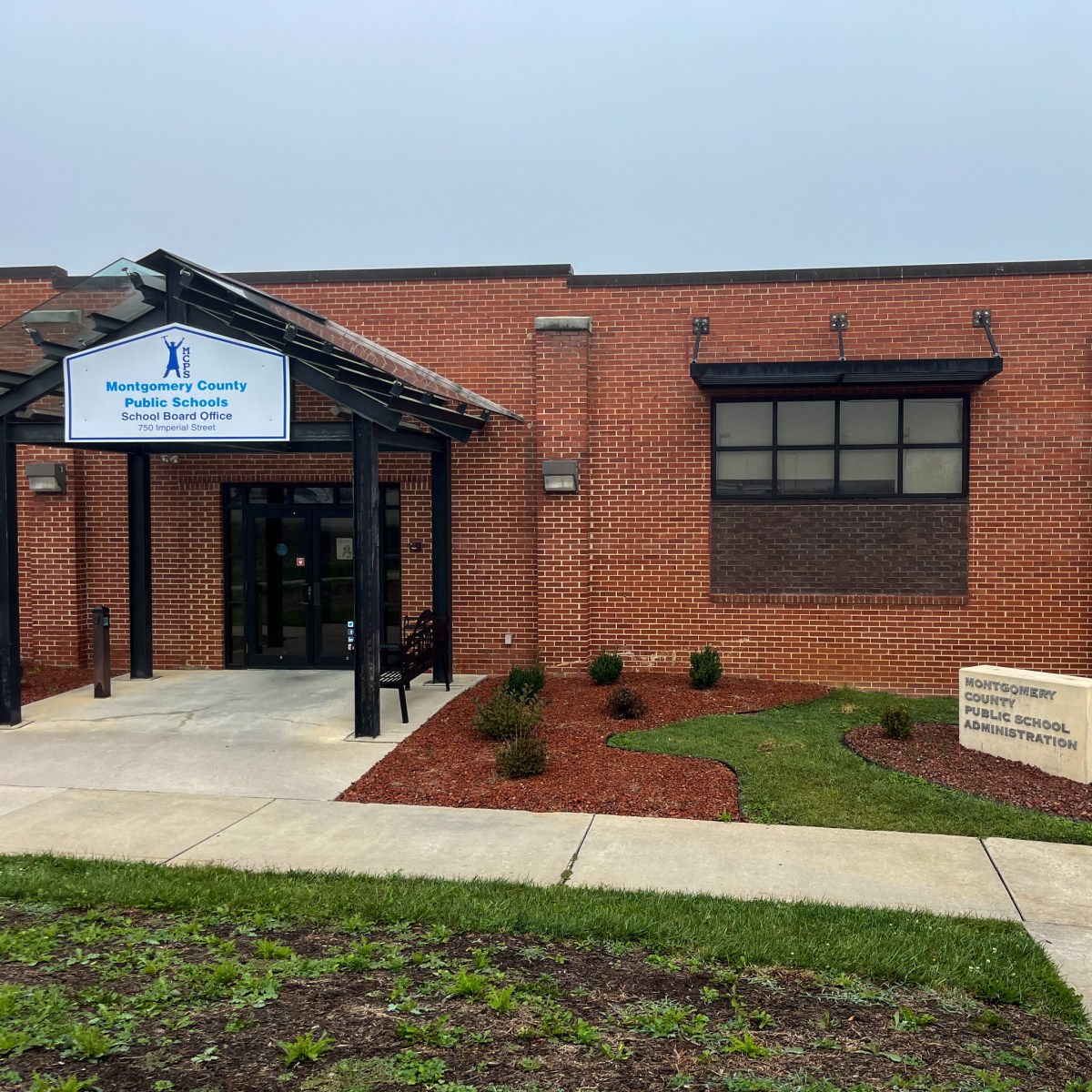
Montgomery County School Board along with 4 other NRV schools have adopted a gun safety initiative modeled after BeSmart a national program focused on educating students and parents. The vote was unanimous in April 2024.
At the meeting on April 9th, Superintendent Dr. Bernard Bragen Jr. said:
“If there’s a way to be proactive and potentially save lives, it’s worth looking into. Passing this resolution will help us remind our parents and guardians how important it is to keep firearms away from children.”’

The BeSmart Program:
The program is modeled after the nationwide program BeSmart, that focuses on educating children and also parents to promote responsible gun ownership. Similar policies have been adopted by Fairfax County School District, Albemarle County Public Schools, Arlington Public Schools, and Charlottesville City Schools.
S, stands for secure, asking parents to appropriately store guns away safely locked and unloaded in both the home and the vehicle.
M for modeling responsible behavior around guns.
A, for asking other parents and adults about loaded guns in other homes in order to prevent an accident ask.
R stands for recognizing the role guns play in suicide and violence.
T for tell others. Encourage others to practice the same management tools when it comes to protecting the safety of all.
Gun Violence in the Community:
Statistically, the numbers can be alarming:
But it has touched the community personally too. These are no longer “just numbers.” Too many parents and children have dealt with their own first-hand experience with gun violence. From the Virginia Tech shooting in 2007, to the recent lockdown on September 13th where Wheaton and Edison high schools were placed on lockdown due to a potential gun threat.
However, guns are the leading cause of death amongst teens both on and off school grounds. This November is the year anniversary of 17-year old high school senior Serenity Hawley’s death in what was believed to be a murder-suicide in a parking garage located in Blacksburg, VA.
What’s Next for Schools:
After tragedy strikes in a community it is easy to look back and wonder what could have been done differently, or what measures could have prevented situation before they even began. “Recently, the Montgomery County School Board passed a resolution directing me to work to increase awareness among our students, families, and staff about the importance of secure gun storage,” said Bragen Jr. in a letter sent out to families.
The letter is a brief overview of safety as well as resources for parents. Virginia Firearm Safety Device Tax Credit will reimburse up to $300 for a gun safe.
Along with printed material and resources made available to all students, the school have also integrated firearm safety into the D.A.R.E. (Drug Abuse and Resistance Education) program. The school, local government, as well as police forces are all trying to increase awareness and step up to play their part in the community.

Yet, it is a combination effort from everyone to ensure that everyone has a safe place to learn and work. Many schools have implemented other safety measures including metal detectors and increased security, however that can curate a nervous, unstable atmosphere for young kids as well as their parents. Right now, is the time to make the changes necessary so that the kids of our community can feel safe and cared for in their school system.
By Ainsley Cragin
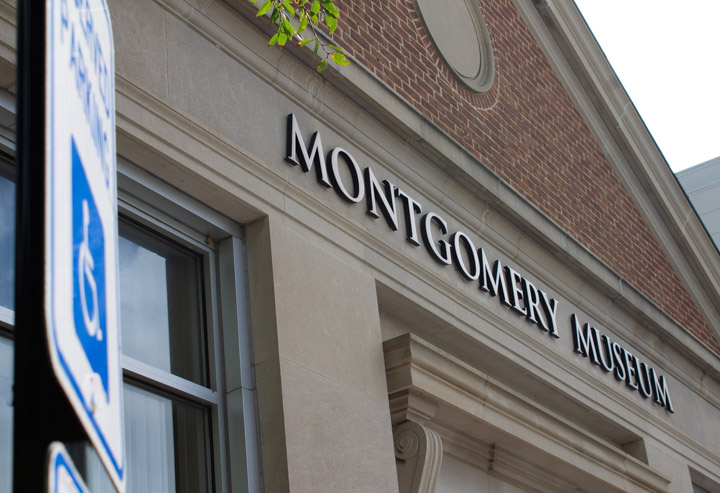
The Montgomery County Board of Supervisors looks to award $117,000 to support the installation of an elevator in the Montgomery Museum of Art and History ahead of 2026 celebrations of America’s 250th anniversary.
Why it matters: The proposed contribution from the county will support the museum’s application for special grant funds from the Virginia Department of Historic Resources (DHR).
Driving the news: The Montgomery County Board of Supervisors will vote Monday on a resolution to support Montgomery Museum’s grant application.

Zoom in: The installation of an ADA-only elevator will allow visitors with limited mobility to access exhibits in the community room on the museum’s lower level.
Montgomery County’s $117,000 decision could cover one-third of the total $350,000 requested in the museum’s grant application, fulfilling both local buy-in and one-third cost matching prerequisites outlined in the applicant requirements for VA250.
Zoom out: VA250 funds should be allocated to ADA accessibility and exhibit installation projects to help draw tourists toward recipients’ regions in Virginia.
What we’re watching: If the board approves the resolution at their next meeting on Sep. 23, the county’s commitment to cash-match $117,000 will only go through if the museum is awarded the VA250 grant.
The most difficult conversations to have can be the ones that are the most important. In some cases, they could be the conversations that save a life.
WHY IT MATTERS: That conversation is talking about mental health challenges, and in the month of September, specifically suicide. Mike Wade, the Coordinator of Community Wellness and Outreach at New River Valley Community Services says “It’s one in four or one in five adults every year that have a serious, diagnosable mental health condition . . . I would argue that we probably all 100% of us at some point have some kind of mental health setback that a lot of us can manage and get through ourselves. But sometimes we need professional help, and that’s okay. That’s the best way to do it.”

Mike Wade, the Coordinator of Community Wellness and Outreach at New River Valley Community Services, speaks with TheNewsFeedNRV about Suicide Prevention Month.
THE BIG PICTURE: Wade says 50,000 Americans die from suicide each year and it’s a combination of everyone. “It’s not an issue that discriminates based on income, race or gender,” says Wade. “We know that some populations have a great risk of suicide, but I think a lot of people would be surprised to learn that actually older adults, seniors 80 and over, actually have the highest rate of suicide of any demographic.”
ZOOM IN: This month, the country is breaking down those obstacles that make it seem like suicide is a difficult topic to talk about through Suicide Prevention Month. “This month is really just about recognizing that this is something that somebody we love and care about, or even ourselves can go through and there’s no definitive timeline on when we might experience this or any kind of key indicators that might trigger this,” says Wade. “It’s just a really good opportunity for us to raise awareness at the community level so we in turn can do more to help individuals that struggle with this issue.”
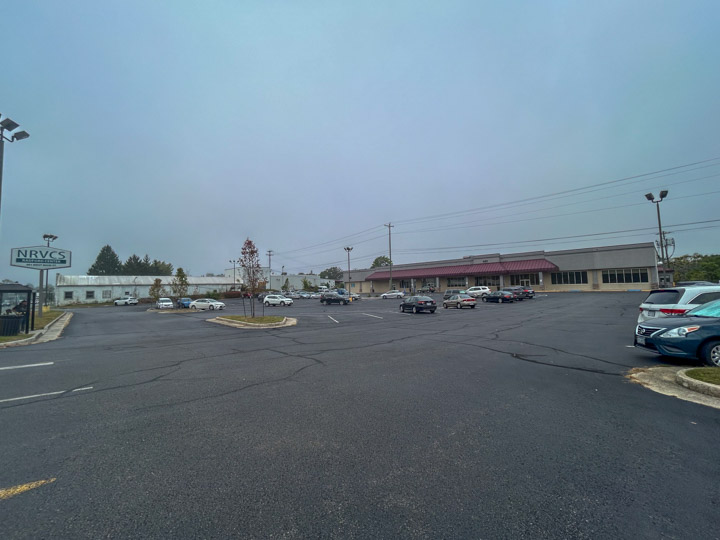
The New River Valley Community Service Center is location in Radford, VA.
ZOOM OUT: Suicide prevention is every day, every month of every year. The best way to reach out in an emergency if you or someone you know is in a crisis is by dialing the national line at 988. Wade says calling that number will reroute your call to a local provider, like New River Valley Community Services, to speak with someone in real time.
New River Valley Community Service is based in Radford. Wade says no matter what your situation is, they’ll offer someone to speak with so those tough conversations don’t seem so hard.
As the New River and Roanoke Valleys embrace fall, an increasingly common pest is laying the groundwork for its next generation.
Why it matters: The spotted lanternfly, an invasive species, poses threats to agriculture, trade and native species. It is also a nuisance to property owners.
The big picture: The existence of the spotted lanternfly (Lycorma delicatula) in the United States is thought to have originated from trade coming out of northern China.
Zoom in: Spotted lanternflies are becoming established in Roanoke and Radford. Reasonably, this means there is potential for greater expansion within the New River Valley and Roanoke Valley.

Zoom Out: Spotted lanternflies are adaptable and could be coming to your yard next.

What we’re watching: New reports of spotted lanternflies are coming in frequently. Expansion has the potential to occur rapidly.
If you find a spotted lanternfly in an area where an invasion has not already been identified, please be sure to report it to your local Virginia Cooperative Extension office.

Virginia Tech just opened its first Living-Learning Community dedicated to students in active recovery from substance use. Called “The Roost,” it currently houses five students in recovery and is located on the first floor of Payne Hall, a central spot on the residential side of campus.
Why it matters: The Virginia Tech Recovery Community was established in 2015 and has since become its own department under Hokie Wellness, Virginia Tech’s campus-wide programming that educates students on maintaining their physical, mental, and social health.
The Recovery Community has hosted group meetings in its Recovery Lounge in Payne Hall for years. But now, the Lounge also serves as a home base for residents of The Roost: students whose suite-style dorm rooms are just down the hall.

While Virginia Tech students commonly choose to only live on campus for their first year, The Roost is designed for students of all ages. The program even drew students who were previously living off campus to return to dorm-style housing, as its current makeup is two freshmen and three upperclassmen.
The big picture: Living in The Roost, students receive individual counseling, design their own recovery journeys, and participate in larger Recovery Community events.
Zoom in: Julian, a student who transferred to Virginia Tech after taking classes at New River Community College, has been part of the Recovery Community for more than two years.
Zoom out: While there are college students struggling with addiction all across the country, it’s hard to ignore Virginia Tech’s location in Southwest Virginia, right along the Appalachian Mountains.
Virginia Tech has launched a voter registration portal in an attempt to make it easier for students to register to vote. The portal was created by VT Engage as a partnership with ALL IN To Vote.
Why It Matters
This portal is part of VT Engage’s mission “to facilitate leadership, service learning, and civic engagement experiences that advance community priorities, contribute to student development, and embody Ut Prosim (That I May Serve.)”
VT Engage has recently put an increased focus on the civic engagement aspect of their goals. In 2023, they hired Billy McKeon to serve as their Civic Engagement Coordinator. In this role, McKeon supports the Civic Democracy Leadership Initiative and Hokies Vote Caucus.
Virginia Tech is a recognized as a Voter Friendly Campus. This means that they have an established plan to engage their students in the election process.
The Big Picture
ALL IN was created in 2016 to and has helped solve a national concern of young Americans not participating in elections.
ALL IN is a non-partisan organization that was built around the idea that “higher education should play a role in developing an active and informed citizenry by educating students, motivating them to engage in American democracy, and instilling the value of lifelong participation.” ALL IN “inspires, supports, and celebrates colleges and universities working to improve civic learning, political engagement, and voter participation.”
Flashback
Virginia Tech students have a history of participating in elections. According to the National Study of Learning, Voting, and Engagement (NSLVE), Virginia Tech had 73% of eligible voters vote on Election Day and 90.7% of all students registered to vote in the 2020 Election.
This involvement in the 2020 election earned Virginia Tech recognition as a Gold Campus for excellence in student voter engagement by the All In Campus Democracy Challenge.
Zoom Out
Outside of Virginia Tech, voting participation hasn’t been as high. According to the NSLVE, Radford University had 64.7% of eligible students vote in the 2020 election and 87.5% of their eligible students registered. Nationally, 66% of eligible students voted on Election Day.
ALL IN is currently involved with 1,072 institutions across all 50 states.
What We’re Watching
It is still unknown exactly how election participation will trend at Virginia Tech, in the region, and nationally. With this being ALL IN’s third presidential election, there are still some unknowns in terms of the impact they will have on the young voter turnout.
For now, both in-state and out-of-state students can access information on how to vote in the November 5th election through the portal online.
by Sean Weinstock
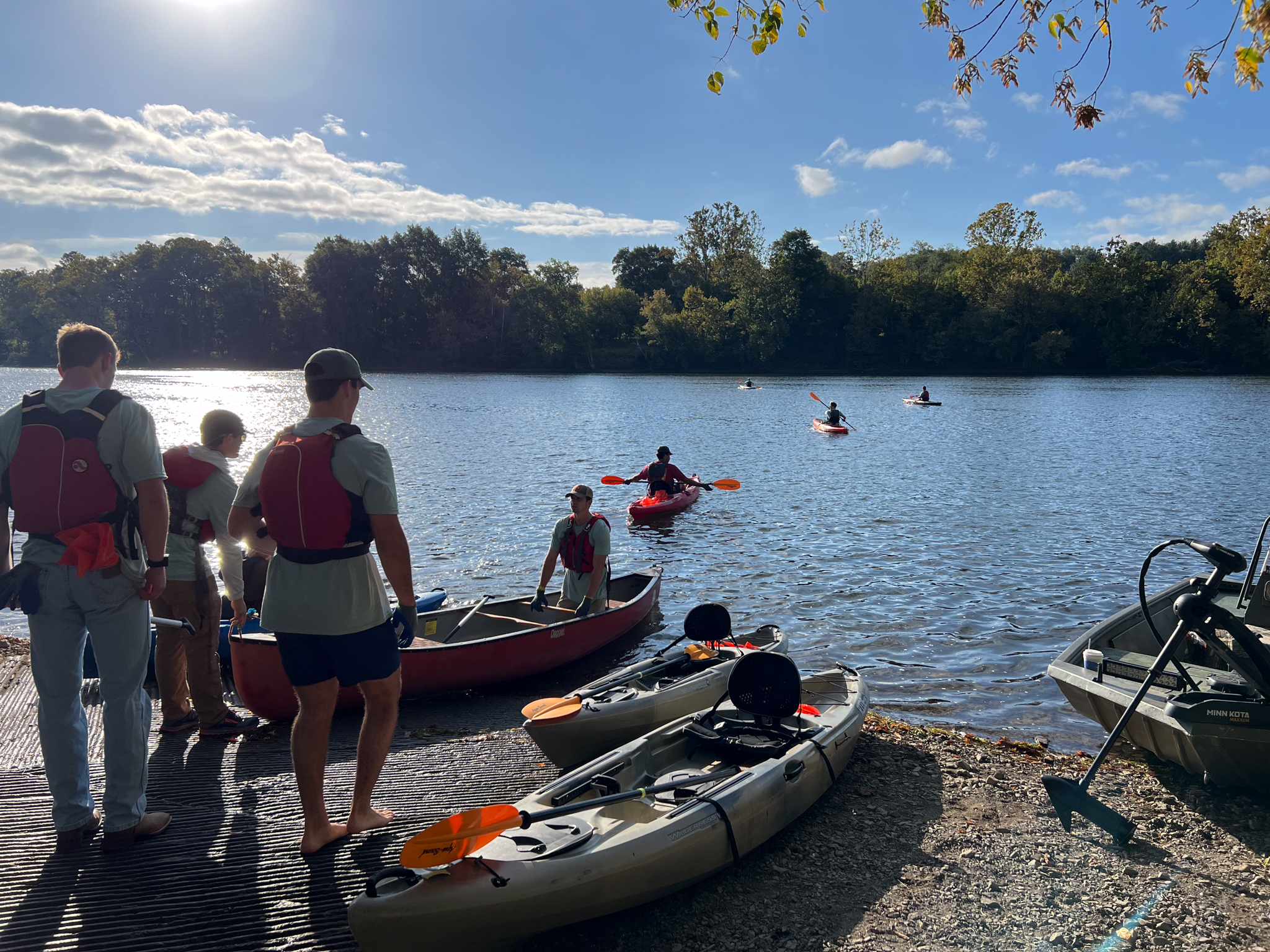
On Saturday, September 14th, over 800 volunteers in over 60 boats across four counties gathered at the New River to participate in the annual RenewTheNew cleanup event designed to improve conditions in the New River.
Why it matters: “The river is a special resource for this whole valley and cleaning it up, keeping it fresh for tourism, for fish and recreational use is really important.” said Brad Buchanan, RenewTheNew Montgomery County Organizer.
Flashback: RenewTheNew started on July 21st, 2001, in Giles County with more than 600 volunteers and over 20,000 pounds of trash collected during the inaugural event. This event officially started Giles Counties annual after summer cleanup.
Context: The New River has been an important part of the New River Valley community for generations and has become a major tourist attraction for the region contributing nearly $36 million to Giles County in visitor spending in 2023.
Rare Treasure: Considered to be the oldest river in North America, the New River is part of the Ohio River watershed running 320 miles across North Carolina, Virginia, and West Virginia.
What’s Next: The ReNewTheNew initiative continues its efforts to keep the New River clean all year around.
ReNewTheNew is all about protecting the New River as a valuable asset and ensuring that it remains a vibrant part of the community.

 > THE NEWS FEED <