RCPS submits a proposal for a historical marker celebrating educator Lucy Addison

Will Frank, arts and culture reporter

Roanoke City Public Schools is currently in the process of applying for a state historic marker to highlight the pioneering education work of Lucy Addison.

The Big Picture: Lucy Addison was born to enslaved parents in 1861 in Fauquier County, Virginia. She ventured to Philadelphia to earn her education degree and returned to Virginia to teach in Loudoun County. After some time there, Addison was offered the position of interim principal at Roanoke’s First Ward Colored School in 1887. 

In 1918, she became the principal of Roanoke’s Harrison High School. At this time, the high school only offered classes as high as the eighth grade. Addison tenaciously campaigned and advocated for a secondary school curriculum and was able to steadily add advanced classes. The State Board of Education accredited Harrison as a high school in 1924, establishing it as the first black high school in Roanoke and providing Black students their first opportunity to receive an education.   

In 1928 the city renamed the school after Addison, attaining the title of Roanoke’s first public building named after one of its citizens.

 (Lucy Addison, photo curtsey of RCPS)

Zoom Out: The process of getting a marker proposal approved is complex and challenging. The Roanoke County Public School (RCPS) is opening the Booker T. Washington Community Empowerment and Education Center where the proposed marker would be located. RCPS is working with Nelson Harris, a Roanoke historian and former mayor, to help review and submit the proposal. He has had 10 proposals approved by the VDR

  • “The Virginia Department of Historic Resources (DHR) only approves about 25 per year for the entire state. Your marker application will compete with marker applications from Richmond, Lynchburg, Northern Virginia, Shenandoah Valley, Charlottesville, and anywhere else that people are submitting historic marker applications”, stated Harris.

For the marker, the team submitting has to provide research that backs up their claim on why the proposed individual, institution, or organization is historically significant. Once the research is completed the proposal is submitted to the DHR for review. They go over the research to make sure everything is accurate or add additional information. After the vetting process, if they accept your proposal, they then will work with the group who submitted it on editing and drafting the final text on the marker.

  • “Everything will take anywhere from four to six months. If the marker is approved, then the order is placed and it goes to the foundry. Right now, there’s about a six to eight-month lag time from the time the orders are placed until the marker arrives. So by the time I mail in my marker application, and everything goes well, the marker arrives in the city after a year and a half”, explained Harris.    

Zoom In: RCPS plans to open the new Booker T. Washington Community Empowerment and Education Center in the old RCPS Central Office, which is set to be the new hub for the Roanoke community, as well as the location of the proposed marker. Claire Mitzel, the school’s division spokesperson who also works very closely with Harris, has high hopes for the new community center’s impact.

  • “It’s going to serve, I hope, to support our students and families from all around the city. It’ll act as a welcome center, so families can come here to enroll their students, get immunizations, receive needed resources, and have a sort of parent and guardian empowerment workshop series”, Mitzel remarked hopefully. 

The idea of the new education center came from the inspiration of Lucy Addison, and her pioneering work in black education.

  • “Honoring Miss Lucy Addison, who the school is named after, is just a small way that we can shine a light on history, and make sure that generations of students and families know who she is. The building was built almost 200 years ago, and going into the future, we want to honor those who came before us”, stated Mitzel.

(Roanoke County Public School when it was first constructed circa 1920, photo courtesy of RCPS)

The opening of this center brings Addison’s achievements full circle. A new community center, by the community and for the community, supports students and families throughout Roanoke and provides them with the tools to help them thrive.

Embracing native plants for ecosystem health

Blacksburg, VA, Feb. 14, 2025 – Newly planted native trees line the riparian restoration area near Stroubles Creek, part of a vital effort to enhance biodiversity and stabilize the ecosystem in response to urban expansion and climate variability. (Photo by Alana Powell)

by Alana Powell, environment and climate reporter 

In the quest for ecological balance, the critical role of native plants has surged to the forefront. With urban expansion and climate variability reshaping landscapes, local ecosystems in the New River Valley increasingly depend on these species to maintain biodiversity and ecological stability.

Why it matters:

  • Native plants are pivotal for their ecological benefits, supporting local wildlife and stabilizing ecosystems.
  • They improve water quality and reduce erosion, directly benefiting the environment and communities.
  • Initiatives like Homegrown National Park highlight the need to transform personal spaces into wildlife-supportive landscapes.

The big picture: Leighton Reed, a professor of Ecological Restoration at Virginia Tech, emphasizes the foundational role of native species:

  • “Native plant species are the biodiversity of the New River Valley. These species not only enhance local biodiversity but also support critical trophic interactions that non-native species cannot match, which are essential for maintaining diverse and stable ecosystems,” says Reed.

Zoom in: Nicole Hersch, campaign coordinator for the Plant Southwest Virginia Natives initiative, discusses the specific advantages of native plants:

  • “Native plants typically have deeper root systems, which help reduce runoff and erosion, maintaining clearer and healthier water systems,” Hersch notes.
  • Their ability to manage stormwater and conserve river ecosystems by slowing down water flow during heavy rain events prevents soil erosion and water pollution, crucial for maintaining clean waterways and healthy aquatic life.

Yes, but: Despite their ecological benefits, widespread adoption of native plants faces challenges:

  • “Understanding what a native plant is remains a major hurdle. Many people mistakenly believe that commonly seen plants in commercial and residential landscapes are native due to their prevalence,” explains Hersch.
  • Shifting from traditional mowing and landscaping to practices that support sustainable, native-focused ecosystems is seen as more complex and unfamiliar to most property owners.

What we’re watching:

  • Virginia House Bill 1941 aims to promote native plant use by requiring nurseries to label invasive species, enhancing consumer awareness and encouraging more environmentally responsible purchasing decisions
  • The bill has not yet passed.
  • It was last referred to the Committee on Education and Health January 29, 2025.
  • Currently in the process of engrossment, facing discussions and revisions.

Zoom out:

  • Projects across Virginia, highlighted by the Virginia Native Plant Society offer templates for integrating native flora into public and private spaces. These gardens serve as educational and inspirational resources that encourage community members to consider native species for their landscaping needs.
  • Research cited in Desiree Narango’s study on the impact of native plants on pollinators underscores the ecological benefits of maintaining native plant populations, especially in supporting biodiversity and food web stability.
Blacksburg, VA, Feb. 14, 2025 – The Heritage Park Nature Play Space stands bare in winter, hinting at its usual bustling state with native plants that thrive in warmer months. (Photo by Alana Powell)

By fostering native plant growth and supporting initiatives that encourage their use, communities can significantly enhance ecological sustainability and resilience. This movement not only preserves the local environmental heritage but also provides a framework for engaging with nature in ways that enrich both the land and community life.

Fire safety and prevention through the lens of architectural design

By Bethany Lenhardt, crime, safety and justice reporter

View of Burchard Hall, home of the architecture department, from above ground. Photo by Bethany Lenhardt

When considering the design of a building, architects must balance aesthetics with fire safety considerations, including prevention, suppression and egress.

Why it matters: The design of a building determines the safety of those inside and their route to leave in the event of an emergency.  

  • “It’s [fire] a top priority when an architect is planning a building,” said Jim Bassett, Director of the School of Architecture at Virginia Tech. “All materials have a fire rating, and it’s really not just single materials, but also materials that come together as assemblies, so you’re talking about the way in which those things might perform together.” 
  • For example, steel encased by concrete. Without concrete, steel is more vulnerable to fire. 
  • “Steel loses 50% of its strength at 1100 degrees,” Bassett said. “A conventional structure fire can reach 1000 degrees in 10 minutes. You basically turn steel into spaghetti almost 10-15 minutes into a fire. This is why you have this network of responses, and the first one is protection of the assemblies.” 

Zoom in: Three major variables factor into the building’s function and design relative to fire. 

  • “The first one is occupancy/use,” Bassett said. “What is the building going to be used for? Then type of construction; that is really the combustibility rating of the structure. The third one is the maximum height and area of your building.” 
  • Bassett says that the three variables are integral to each other. They help determine the answers to practical questions and represent the balance between beautiful design and practical safety.  
  • “How does it have to function relative to fire,” Bassett asked. “What and where do your walls – interior and exterior load-bearing walls – need to be? What do your non load bearing walls and partitions need to be? What does your floor and roof construction need to be?” 

Flashback: Historical events, like the Cocoanut Grove Fire of 1942, significantly impact and update building code over time. 

  • According to the National Archives, a small fire in a popular Boston club, “The Grove,” took the lives of 492 people. A decorative palm tree began to light up in the basement lounge. Wall and ceiling decor acted as fuel, and the fire quickly spread and smoked, taking the lights out with it.  
  • “An inward-opening door effectively became a wall as the panicked crowd pushed forth in an attempt to flee to the streets,” according to the National Archives website. “Additional exits, if they could be located in the dark, were either blocked or obscured, leaving hundreds trapped within the inferno.”  
  • Bassett believes that the Grove fire is an example of an event that fundamentally changed building codes, and that fire is easily one of the most major shapers of code.  
  • “You might not even notice, but all doors swing out in public spaces, especially rooms of a certain size,” Bassett said. “Sometimes they swing in, like my office, but that’s just because the occupancy load is very small; there’s just one or two people that have to get out.”   

Zoom out: In the grand scheme of things when a fire occurs, the number one priority is to get everyone out of the building.  

  • Areas of egress are the exit routes for all individuals in a building. You need at least two exit strategies; more if the building composition is larger or holds a greater quantity of individuals. Common egress is an enclosed staircase, but accessibility also needs to be taken into account.  
  • “Accessibility is very important when designing areas of egress specifically for those who are disabled,” said Julia Briner, senior architecture student. “My top considerations would be width of pathways and doorways, nonslip surfaces with tactile paving for those with visual impairments, proper lighting and signage, and safe areas where individuals can wait for assistance.” 
  • “An area of refuge is simply an area where people that are unable to use the stairs can await emergency evacuation,” Bassett said. “If somebody in a wheelchair is in that space, for example, there’s an emergency button that they can press. When first responders show up, they will go through those routes to make sure there are not people stuck in those places.” 
Area of refuge in Burchard Hall. Photo by Bethany Lenhardt

Montgomery County Schools Introduces Nonstop Student Counseling 

By: Elizabeth Ann Miller, health and wellness student reporter 

Montgomery County Public Schools is offering students free access to 24/7 mental health counseling through a new pilot program called Reach Out by Gaggle, providing around-the-clock support via call or text.

Reach Out by Gaggle in use. Photo by Gaggle.

 Why it matters: Reach Out by Gaggle reduces mental health barriers for students, aiming to improve holistic wellbeing.  

  • By ensuring support is available beyond school hours, the program addresses crises in real time, catering to the urgency of mental health concerns.  
  • When a serious issue arises, professionals can quickly intervene and notify school staff or law enforcement, offering a level of immediate support that was previously unavailable to students. 
  • This initiative removes physical and logistical obstacles to care, ensuring students can seek help anytime, anywhere. As mental health challenges continue to rise among young people, school officials hope the program will provide critical, life-changing support and set a new standard for student well-being. 

The big picture: Students need strong mental health support not only to thrive but to learn and perform at their best, both in and out of the classroom. 

  • Identifying and addressing mental health concerns early can prevent crises. With immediate access to professional support, students can receive real-time guidance and coping strategies to manage challenges before they escalate. 
  • This proactive approach enhances student safety while fostering a culture of mental health awareness and prevention across Montgomery County Schools
  • “MCPS supports the whole person and recognizes that mental health impacts learning.  We desire that students have the resources they need during school hours with school counselors, and outside of school hours with Gaggle Reach Out,” said Jane Greenough, Montgomery County Public Schools Supervisor of School Counseling. 

Zoom in: Students spend much of their time in school, making access to mental health support critical to their overall well-being and success. 

  • Parents and educators see the initiative as a vital step in addressing student mental health concerns, ensuring help is available when and where it’s needed. 
  • “I think this program will provide a proactive approach to students mental health and is a great step towards fostering a supportive environment for our children’s growth and success,” said Lindsey Hamden, former school counselor and Montgomery County Schools parent. 
Lindsey Hamden and children. Photo by Elizabeth Ann Miller.

What we’re watching: Montgomery County Public Schools will evaluate the program’s effectiveness at the end of the academic year, analyzing student usage, counselor response times, and overall impact. 

  • If successful, officials may extend the service to middle school students, recognizing the increasing need for early mental health intervention. 
  • Feedback from students, parents, and educators will shape future improvements, refining the program to better serve Montgomery County’s youth. 
  • “We hope to see our students flourish and grow in confidence with the resource provided by Gaggle Reach Out.  It is our desire that students who are in need will be identified and connected to additional resources so that they can gain resilience.  We want them to know that someone is always available to talk with them and they do not have to struggle alone,” Jane Greenough said. 

Federal funding cuts may threaten the breadth of research conducted at Virginia Tech 

The Virginia Tech Corporate Research Center houses laboratories and workspaces for a diversity of research initiatives at Virginia Tech.  

by: Kyndall Hanson, education reporter 

On Feb. 7, the National Institute of Health (NIH) issued a policy outlining a standardized 15% cap on indirect costs incurred through research funded by grants, including maintenance, operational, and administrative expenses. While the NIH’s policy is questioned in federal courts, universities like Virginia Tech are left to weigh the potential impacts of reduced federal support on research initiatives. 

Why it matters: The NIH is one of the first governmental agencies to outline research funding restrictions following the Trump administration’s now-rescinded memo outlining a federal funding freeze. According to a statement by Virginia Tech President Timothy Sands, the NIH’s decision to cut the reimbursements of indirect costs could have a $13 million impact on the university’s annual research budget and over $55 million if the policy was extended across all federal agencies.  

  • “Lives will be lost,” said Sands, describing the potential “debilitating effects” of funding cuts on biomedical research at the university, among other impacts across research disciplines.   
  • “Research is an integral part of who we are and what we do,” said Mark Owczarski, interim vice president of communications and marketing at Virginia Tech. “It’s going to take us time to figure this stuff out.” 

The big picture: As an R1 university, Virginia Tech undergoes significant research activity. In 2024, Virginia Tech’s sponsored research expenditures were $453.4 million. According to Sands, over $308 million of these research expenditures were federally sponsored. As the university works to understand the mandates of federal agencies, the long-term impact on research is unclear, described Owczarski. 

  • According to Sands, of the over $308 million in federally sponsored research, $73 million was attributed to indirect cost reimbursements, or facilities and administrative research costs – with an additional $18 million in indirect expenses subsidized by alternative university funding sources.  
  • “It requires us to ask a lot of questions, do a lot of analysis, figure out what we are doing and [what] each of these executive orders really mean,” said Owczarski. “In the long term, there could be significant impacts, or there could be very little impacts – we don’t know.”  
A graphic by Virginia Tech displays the growing sponsored research expenditures at the university.  

Zoom in: The Virginia Tech Office of Research and Innovation has established a ‘Federal Agency Update’ webpage to notify the university community of updates surrounding university compliance with executive orders and additional impacted federal guidelines. 

  • According to Owczarski, as of early February, Virginia Tech’s research is continuing. 
  • “We’re asking researchers to continue the good work they do,” said Owczarski. “Engage in their research, keep applying for grants – just keep doing what you’re doing, and we’ll figure out how we’re going to support that long-term.”  
  • While university research is largely supported by federal grants, additional funding opportunities are available to support to learning experiences at Virginia Tech. According to Julia Ward, assistant director for professional development and experiential programs at Virginia Tech, programs like Campus internEXP are supported by state grants and not affected by federal funding regulations.  

What we’re watching: The long-term impacts of the NIH’s regulations on research and university funding are still in question as recent mandates are challenged in federal courts. The early days of the Trump administration have demonstrated a push for policy demonstrating government efficiency, meaning university funding may be a continued target for regulation.  

  • “It’s about how much research we can actually do,” described Owczarski discussing the potential loss in federal funding. “We’d have to make up the costs somehow, redirect things, but we don’t know what the outcome is going to be.”  

Executive orders create uncertainty for researchers and admin at Virginia Tech

By Wilbert Ramirez, Politics reporter

A flurry of executive orders having been made by President Donald J. Trump since his inauguration on Jan. 20 has led to confusion and fear among students/researchers and principal investigators at Virginia Tech regarding the freeze on federal grants towards higher education institutions.

Why it matters:

  • Research is predominant part of Virginia Tech, a designated R1 university, the highest designation for research universities, with 4,000 plus researchers and $453.4 million in sponsored research expenditures in 2024 according to Virginia Tech.
  • “There may be questions that are raised from the various orders and memorandum that come in. So, we try to understand what it what the impact will be at Virginia Tech and then as information and an understanding comes in, we communicate that back to the university”, said Mark Owczarski, Interim Vice President of Communications and Marketing and Chief Spokesperson for Virginia Tech.

Misconceptions about the Executive orders:

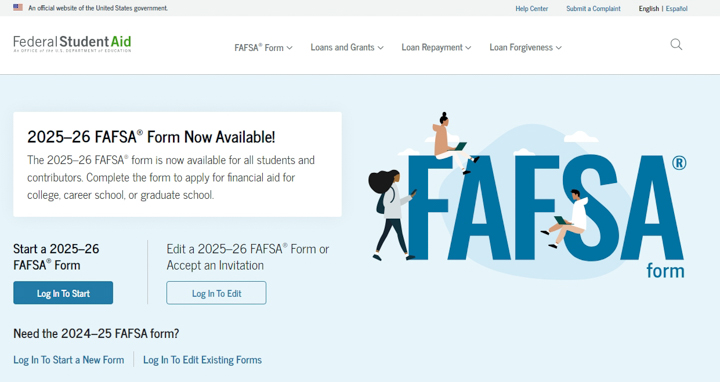
According to the Federal Student Aid Office of the U.S. Department of Education stated, “Federal student aid funds (for example, Direct Loans and Pell Grants) were not impacted by the initial guidance, and we continue to award and disburse federal student aid.”

A screenshot of the current Federal Student Aid website taken on Feb 14, 2024

How is it impacting students and researchers:

According to student researchers who requested anonymity to speak freely without fear of retaliation, many are worried about funding suddenly being cut if the content their research does not align with Executive Order 13985 that stated,

  • “Terminate, to the maximum extent allowed by law, all DEI, DEIA, and “environmental justice” offices and positions (including but not limited to “Chief Diversity Officer” positions); all “equity action plans,” “equity” actions, initiatives, or programs, “equity-related” grants or contracts.”
  • “With the list of words that the National Science Foundation released they are flagging grant applications now, but it’s stuff like “trauma,” “multicultural, “advocate” and it’s like how you do even do social science?” said a psychology student and researcher at Virginia Tech whose research project is focused on substance abuse on LGBTQ+ young adults’.
  • “We were told last week that the State Department pulled the program, so Dr. Hodges and our team leads told us, ‘hey just keep doing what you’re doing but as of right now,’ said an international relations student and researcher from the Diplomacy Lab at Virginia Tech, who also asked to remain anonymous fearing retribution against his fellow researchers. “This is literally useless, we’re just doing it in the hopes that they would accept it by May, which I have extreme doubt they will because I don’t see why they would.”

What university administrators have said and done:

  • “We are following the situation closely and reaching out to our congressional representatives in Washington, D.C., to express our deep concern about this decision and its potential effect on our university and our nation’s long-term viability as a science and technology leader,” said Tim Sands, president of Virginia Tech in an official message.

In response to the dynamic and rapid changes caused by the executive orders, the university created a page that offers guidance to those with questions regarding research and updates on the “Federal Agency Updates” page.

Mark Owczarski in an office at Virginia Tech during a Zoom interview on Feb. 14, 2024, in Blacksburg, VA. (Photo, Wilbert Ramirez)
  • “It’s going to evolve, and we recognize that this community is vested into this, and so as we figure out things, and as the landscape externally changes as well, some things have been rolled back. Some things might be in the courts. Some things will be changed because of additional directives or instruction,” Owczarski said. “What we do know is we are committed to communicating, we are committed to research. We’re not going to just say we’re done, it’s who we are, and it’s challenging.”

Snow forces Fiber Arts Collective and other events to adapt at Virginia Tech

Fiber Arts Collective details written on chalk board: Courtesy of VT Perspective Art Gallery Instagram

By Caroline Herbert, Arts and Culture Reporter


The Fiber Arts Collective event was supposed to take place at Virginia Tech’s Perspective Gallery on Tuesday, Feb. 11, but was cancelled due to snow.

Why It Matters: Events like the Fiber Collective at Virginia Tech are important because they bring students together that have similar passions and interest, to create a community. But when obstacles like weather get in the way of doing so, all those involved must adapt.

The Big Picture: Virginia Tech’s decision to close schools due to the snow on both Feb. 11 and 12 not only affected classes and regular activities, but also planned events scheduled for these days.

  • Virginia Tech’s statement on their website: “Due to inclement weather, the Virginia Tech campus in Blacksburg will be closed on Tuesday, Feb. 11, 2025. All Blacksburg campus in-person classes and activities are canceled for Tuesday.”
  • Examples of events this effected: Beginner bowling tournament, Financial Wellness Workshop, movie night at the student center, and the School of Communication Professors Q & A

Zoom In: Olivia Coutre, Art Program Coordinator for Student Engagement and Campus Life, works with Studio 72. Coutre designed and facilitates the Fiber Art Collective Program and the weekly events that take place.

  • About Fiber Art Collective: Fiber Art Collective is one of the “crafternoon” events among others such as Watercolor Wednesday and pop-up programs in Johnston Student Center on Thursdays.
  • This week’s event was supposed to be in a similar format to previous weeks.
  • “We do everything from crocheting, knitting, punch needling, embroidery, hand-sewing, needle felting, and I also just introduced some weaving,” said Coutre. “I am available to help teach them any of the projects that they want to start but don’t know how to do yet.”
  • “Typically, we have a pretty good group of returning students that come every week, and then we’ll have a few new students that will show up,” said Coutre.
Activity at Perspective Gallery: Courtesy of VT Perspective Art Gallery Instagram

How they adapted: Although Coutre says they are bummed that this week’s event fell on a snow day, she said they found ways to adapt to the circumstances.

  • “People were sharing updates on their projects through a group me that one of the students started, which was a nice alternative if we couldn’t meet.” said Coutre, “I encouraged people to work on their projects on the snowy day.”

Zoom Out: Beyond the Fiber Art Collective, there were many other events that were affected by the snow cancellations. On Tuesday, Feb. 11 there was supposed to be a School of Communication Professors Q and A.

  • Emma Duncan, Society of Professional Journalists (SPJ) member who has been
    playing a role in the planning of the School of Communication Professors Q and A, shares her experience with the event cancellations in Blacksburg. Originally supposed to be on Feb. 4, this event has been through a long planning process due to the room and professor availability. With the rescheduled date being Feb. 11, the snow cancellation date, they are having to reschedule once again. Duncan and others involved with the planning of this event decided to move it to Tuesday, Feb 18, on zoom to avoid any further rescheduling due to weather in the future.
  • Duncan shares that for SPJ, this type of cancellation is unusual.
  • “With planning any event, you never really think about weather because most of the events we do for our club are indoors. Our biggest challenges are normally scheduling guests to come,” said Duncan “It was the first time we’ve had to reschedule for weather.”
  • Duncan is adapting with a positive mindset. “We’re hoping zoom might even bring out more attendance,” said Duncan.

Looking forward from Winter Storm Harlow: How to prepare for the next weather event

By Sophia Gerni crime, safety, and justice reporter

The New River Valley has experienced many power outages due to Winter Storm Harlow. With falling trees, power lines down, and high gusts of wind, many realized they were unprepared. And with the potential threat of winter weather ongoing, it is never too late to begin preparing.

Why it matters: People often underestimate the importance of preparation for power outages, especially when the temperatures drop below freezing. It is important that people prepare, just in case it happens again. 

  • “ I wasn’t prepared, not at all,” said Clemie Cahir, a student at Virginia Tech. “If I took anything away from my experience, it was that I should probably have a safety kit ready for if the power goes out again.”  
Appalachian Power employees working to restore the power lines. Photo courtesy Appalachian Power via Facebook.

The big picture: Appalachian Power has provided continuous updates within the New River Valley as they work to repair the damages caused by Winter Storm Harlow. Appalachian Power also provided a list of essential items to have in preparation for the next time there might be a major storm. 

  • Flashlights and Fresh Batteries 
  • Candles, matches, or lighters 
  • Portable heater, oil or gas
  • Battery-powered radio or televisions 
  • Important over-the-counter medicines 
  • Camping equipment, such as sleeping bags, camp stoves, and lanterns 

Yes, but: We can’t always rely on our phones during power outages. Using your phone’s flashlight for extended periods of time can drain the battery quickly. If there is no portable charger, your phone will not be able to recharge. 

  • “We had our phones’ flashlights, but our phones were dying very quickly,” Cahir said. “I never thought about getting a flashlight. Honestly, I just relied on my phone, but after that I am going to get one for sure.” 
  • Having a portable phone charger prepared at all times could be beneficial in many situations. This could help to stay in touch with loved ones, having the ability to receive updates on the situation, and a way to call for help if something becomes a serious emergency.

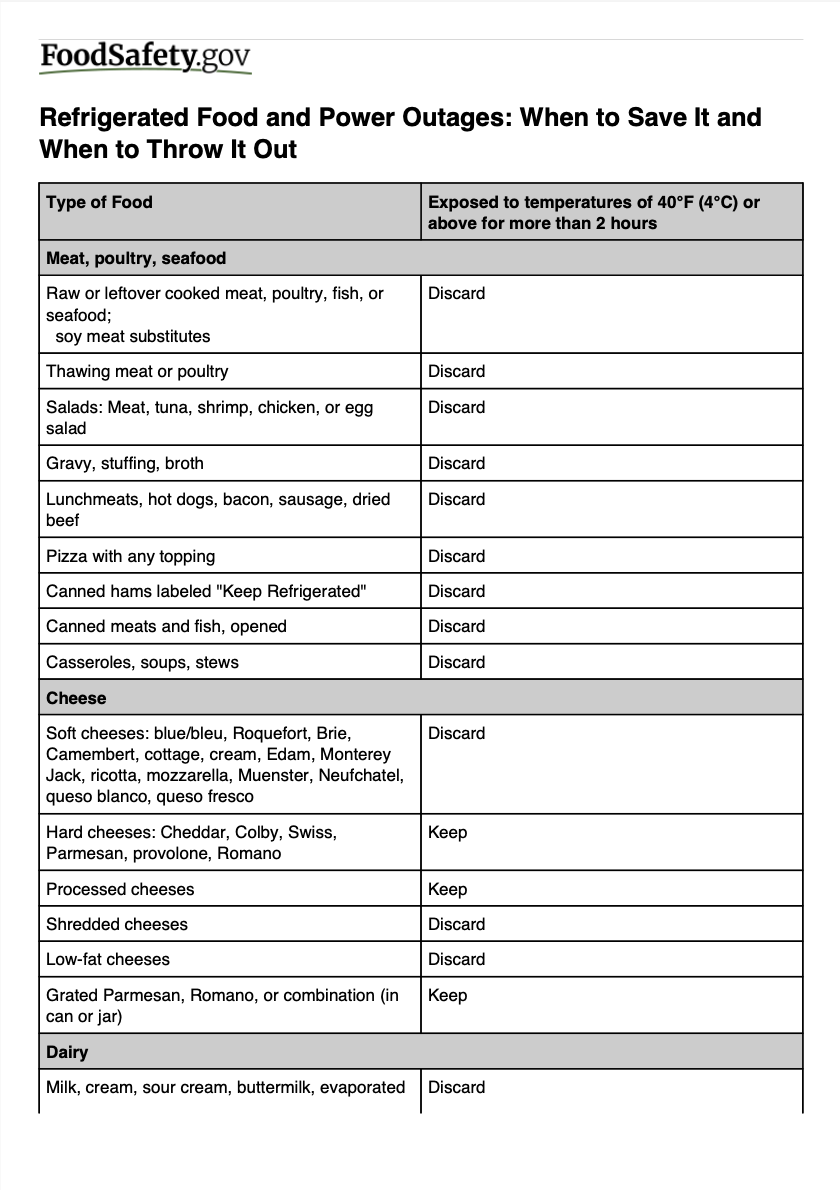
Zoom in: About 37,000 people lost power starting Wednesday morning and continuing into the night. Without knowledge and preparation, perishable food spoils quickly. It is important to know how long frozen and refrigerated food can last without power.

  • Renee Boyer, head of Virginia Tech’s Food Science and Technology department understands that dealing with food during a power outage can be frustrating. She offers  some tips on what to do and things to look for if this situation shall occur. 
  • “As soon as the power goes out, the big recommendation is to not open the freezer or refrigerator doors. As long as you keep those doors shut, the food will last longer,” Boyer said. “If the power is out and you can keep the refrigerator closed, it can actually last four to six hours and be relatively safe.” 
  • “In terms of your food in your refrigerator, if that food gets down to room temperature then that food should be discarded,” Boyer said. “The issue with refrigerated foods is that a lot of those foods are considered TCS foods (Time and temperature controlled foods for safety). If there are bacteria or pathogens in that food, if the food doesn’t stay cold then the bacteria can reproduce and reproduce to high enough levels that it can make you sick.” 
  • “This time when the power went out it was cold outside. If it is below 40 degrees outside, you can actually take food from your refrigerator and leave it outside. This will make it last longer,” Boyer said.
Chart screenshot from Food Safety.Gov. Recommended by Renee Boyer.

The next time there is a power outage, it is important to have to have the essentials  on hand and a clear understanding of food safety when lights go out. 

Shared Responsibility: Construction Safety on I-81


by Bianca Campoverde
crime, safety, and justice reporter

Construction on I-81 near Salem, aimed at improving safety with added lanes and widening projects, has created work zones that increase the risk of accidents due to narrowed lanes, sudden lane shifts, and uneven surfaces. Drivers must follow posted speed limits and remain cautious in these areas to avoid collisions. This becomes even more important during the bad weather the New River and Roanoke Valleys have seen in recent days.

Why it matters: Implementing the necessary measures to protect everyone on the road and the cooperation of travelers in following posted guidelines are crucial to keeping families and friends within our community safe.

  • Construction began in December 2021 on the section between exits 137 and 140 to widen the road to three lanes and is expected to be completed by January 2026.  

The big picture: The shoulders are closed off, forcing vehicles to stay within the narrower lanes, which are often merged or shifted to accommodate the construction zone. Signs encouraging attentiveness within these zones are posted.

  • “I have a big fear around the construction zones, the roads are narrow and there isn’t much space for cars if something were to occur,” said Tulio Ceballos, Junior at Virginia Tech.
  • The ground is uneven in several places, creating bumps and dips that disrupt the smooth flow of traffic, presenting a challenging and somewhat chaotic driving environment.
  • “There is definitely an increased wear and tear on my car due to rocks and potholes, and the construction markers and signs are not easy to follow; they typically have only one sign instead of multiple throughout,” said Laura Funes Quiñones, who uses I-81 to commute to and from work.
  • The implementation of consistent and clearer signage, visible and reflective lane markings, and upkeep of road conditions are needed to ensure safety and minimize disruption for travelers.
Photo courtesy: Virginia Department of Transportation

Yes, but: Travelers must also be vigilant and adhere to posted signals, where increased hazards are present, which encourage safe driving behavior, such as reducing speed and following lane keeping signs, ensuring their own safety as well as the safety of others.

  • “Switching lanes and exceeding the speed limit in these areas puts everyone at risk, but people seem not to care and ignore what is meant to keep themselves and others safe” Quiñones said.
  • By ignoring safety guidelines, the risk within these zones increases immensely, contradicting the purpose of the project of creating safer travel conditions despite efforts to encourage safer and precautions within these areas.
  • “The zones are maintained well, but it is others who bring danger in these areas due to their carelessness while driving,” Ceballos said.

What we’re watching: With construction in the area estimated to last year-round, the consideration of enforcing penalties and fines to maintain safety guidelines is underway.

  • While authorities can create safer environments with better signage, lane markings, and road upkeep, it’s ultimately up to drivers to follow rules, adjust their behavior, and reduce risk.
  • “It would be a lot easier to navigate if everyone did their part to keep each other safe,” Ceballos said.

Maintaining a safer road environment is a shared responsibility between drivers and construction workers, as their cooperation is essential to ensuring safe driving in construction zones through collective vigilance and active participation.

The Cost of Distance: Push for a Kidney Transplant Center in Southwest Virginia 

by Elizabeth Ann Miller, health and wellness reporter

Carilion Clinic is fighting to provide Southwest Virginia its first kidney transplant program, bringing life-saving care closer to home. The biggest obstacle remains support from state regulators. 

Carilion Roanoke Memorial Hospital. Photo by Emily Schabacker. 

Southwest Virginia is one of the few regions in the state without a kidney transplant center, forcing patients to travel up and down the east coast to facilities in Richmond, Charlottesville, or North Carolina. Carilion Clinic believes a local program would limit that burden and save more lives. However, the proposal lacks support from select state regulators. This hurdle highlights the broader challenges in providing specialized medical care to rural communities, where patients often face long wait times and logistical barriers to treatment. 

According to a report by Cardinal News, The Roanoke-based health system defended its proposal during a four-hour hearing in Richmond. Eight individuals, including a kidney transplant recipient, Joey Shervey, spoke in support. The state’s Certificate of Public Need division recommended denying Carilion’s request, raising concerns expressed by the University of Virginia (UVa), which currently operates the only transplant center in the region. 

Patient Struggle 

Joey Shervey spoke during the hearing to represent local patients. At 28, Shervey has already endured the emotional and financial burden of kidney failure and transplant. He was diagnosed with Stage 5 kidney failure at 26. Throughout the treatment and transplant process, Shervey and his wife, Jessica, were living in Roanoke. Appointments required them to frequently make the nearly two-hour drive to Charlottesville, straining their finances, careers, and daily lives. During the hearing, Shervey expressed that for patients like him, Carilion’s proposal represents a shot at a better life.  

“I’ve become the person I did not want to be. I am a 30-year-old man living in my parents’ basement. That’s not the goal I want to set for my future family,” Shervey said during his testimony. 

The Sherveys traveled to Richmond to advocate for Carilion’s proposal, hoping future transplant patients in the region won’t face the same struggles. Jessica Shervey took on the role of primary caregiver and spoke about the sleepless nights, constant travel, and anxiety that came with her husband’s health crisis. 

Opposition and Support 

UVa is the only health system opposing Carilion’s plan, arguing that the biggest barrier to kidney transplantation is the limited availability of donor organs in Southwest Virginia. In their opposition letter, UVa noted that it already operates outpatient transplant clinics in Roanoke, Martinsville, and Lynchburg, allowing Southwest Virginia patients to receive most of their care closer to home. 

Dr. Marlon Levy, CEO of Virginia Commonwealth University (VCU) Health System and Senior Vice President for VCU Health Sciences, disagrees with UVa’s statement. VCU, one of the largest transplant centers in the country, often works closely with UVa. Levy noted that many donated kidneys go unused due to logistical challenges such as organ transfer delays and overwhelmed surgical teams. 

“Sometimes it’s because of organ quality. Sometimes it’s because of geography that prevents the organ from being transferred to the organ center. Sometimes it’s because the surgical teams are too busy to accept another organ,” Levy said during the hearing. 

Dr. Marlon Levy, CEO of VCU Health. Photo by Allen Jones.

In an interview, Levy emphasized that access to a transplant center is key, as quality of life improves significantly post-transplant compared to being on dialysis. He explained how a transplant center in Roanoke would help increase organ utilization rates by reducing the distance organs must travel and alleviate strain on existing transplant centers. 

“In 30 plus years of surgery, I’ve learned that it’s all about the patients,” Levy said, stressing the importance of better serving patients across the region. “Kidney transplantation is not just about survival—it’s about quality of life.” 

Carillion’s Plan 

The transplant program in Roanoke is led by Dr. Arnold Salzburg, Carillion transplant and general surgeon. Carilion has performed well in organ procurement, securing more deceased kidney donors over the past three years than any other Virginia health system. However, without a local transplant center, these organs are sent to other hospitals for transplantation. 

“As many as 5,000 people in our region are experiencing advanced stages of kidney disease—more than any other region in Virginia—and around 2,300 people in the state are on the transplant list, often staying on the list for two or more years before they can schedule a transplant,” Salzburg said in an article published by Carilion Clinic. 

For many in Southwest Virginia, access to a kidney transplant program isn’t just about convenience. Patients requiring transplants must undergo frequent medical evaluations before and after the procedure. For those living in Roanoke and surrounding areas, traveling to Charlottesville or Wake Forest adds a layer of difficulty and financial strain. 

“We have the infrastructure, we have the ability, now we just need the approval,” Salzburg said during the hearing. 

The Virginia Department of Health is set to close the public record on Feb. 28. The state health commissioner will review the case before issuing a final decision in the spring of 2025.  

Beyond the immediate decision, debate over Carilion’s proposal has sparked broader discussions about healthcare access in rural regions. Advocates argue that the regulatory process should prioritize patient needs, while opponents warn against creating programs without established records of success. If Carilion’s plan is approved and successful, it has potential to encourage other health systems to pursue transplant programs in areas currently lacking access.