Artificial brain brings dead composer back to life through music 

By Will Frank, Arts and Culture Reporter

Across the world, Alvin Lucier is composing his latest project at the Art Gallery of Western Australia. But here’s the twist: he died in 2021.

The exhibit is constructed around 20 wall-mounted brass plates with mallets that are periodically struck, sending a ringing vibration throughout the room. What controls these mallets is the recently deceased Alvin Lucier. In the center of the room lives a small enclosure that hosts two white blobs (“brain on a dish”), which send electrical signals to the mallets, creating his newest compositions.     

The blobs are cerebral organoids, three-dimensional structures that resemble a developing human brain. They were created using Induced Pluripotent Stem Cell (IPSC) technology. Lucier’s cells were donated before his death in 2021. 

Cerebral organoids on a mesh of electrodes (Photo courtesy of  media release from the Art Gallery of Western Australia)

The “Revivification” project came to fruition in 2018, when Lucier and an assembled mix of artists and scientists came up with the prospect of generating art after death. The team includes artist Nathan Thompson, Guy Ben-Ary, and Matt Gingold, along with University of Western Australia neuroscientist Stuart Hodgetts. 

Lucier, in correspondence with his team, donated his blood for the project in 2020. They reprogrammed the blood cells into stem cells, which are what the “brain on a dish” is composed of, in the middle of the exhibit. The neuronal structure rests on a mesh of electrodes, which corresponds to the mallets that sit behind the brass plates. A statement from the gallery describes the process as generating “complex, sustained resonances that fill the space with sound.”

“Experimentation in the arts is just as vital as it is in the sciences and other fields.”- Ruth Waalkes

Alvin Lucier, pictured here in 2017 in Cambridge, Massachusetts (Photo courtesy of Wikimedia Commons)

Associate Provost for the Arts and Executive Director for Moss Arts Center at Virginia Tech, Ruth Waalkes, is responsible for setting strategic direction and creating programmatic priorities for university-level arts initiatives. She leads the overall development, artistic programming, and operations of Moss Arts Center.  

Waalkes noted, “Experimentation in the arts is just as vital as it is in the sciences and other fields. When the arts center was in development, we formulated the concept for what is now the Institute for Creativity, Arts, and Technology (ICAT) as a key element of the overall arts initiative here at Virginia Tech. ICAT has a variety of lab spaces here and supports many different types of projects at the intersections of science, engineering, arts, and design. Some projects are predominantly using art and design methods to explore a research topic, and some utilize technology and scientific data to create works of art. I do see these collaborations continuing to expand here at Virginia Tech through ICAT and other departments on campus.”

In his prolific 90 years of life, Lucier was known for his experimental edge, frequently drawing from the physics of sound in his music. One of his most famous works, “I Am Sitting in a Room,” consisted of him recording himself reading a passage, playing the tape, and re-recording it, and repeating the process until the words became too jumbled to register. He became a pivotal figure in the experimental music scene, revolutionizing the standards of how composition is thought of. His philosophy of composing focused on a shift from the traditional musical elements to experimenting and pushing the boundaries of experimenting with the properties of physical sound.

When asked how “Revivification” challenges the traditional notion of authorship and creativity, Waalkes commented, 

“Art-making that crosses the boundaries of technologies and the sciences is a big topic now, particularly with the proliferation of artificial intelligence. Many people are experimenting with these new tools, and it will be very interesting to see what paths both performing and visual artists take. In [this] case, I would say that the creative authors are a collaborative effort – Alvin Lucier who provided the concept, and plus all of [the] others who devised and implemented the installation.  However, the final product created needs to resonate with and provoke a response [from] its audience beyond the novelty of the process, I believe, to be considered a ‘successful’ work of art.” 

Through his avant-garde work with echolocation, brain waves, and room acoustics, the lines became blurred between music, science, and art. This is what garnered the attention of the artists and researchers at the Art Gallery of Western Australia.     

The team’s objective is greater than the act of preservation or paying tribute to a legend; they are, “fundamentally reimagin[ing] artistic immortality by creating a living extension of Lucier’s creative essence,” the team told Forbes

Still, it would be more accurate to attribute creativity to the “interaction” itself between humans and machines, rather than putting it solely on the robot or technology side…” – Myounghoon Jeon

The installation raises complex ethical and philosophical questions. Not only does this technology allow a lab-grown brain to compose music from the creative mind of a deceased artist, but it also challenges the status quo understanding of creativity, consciousness, and agency. 

Myounghoon Jeon, an Industrial and Systems Engineering/ Human-Computer Interaction (HCI) and Human-Robot Interaction (HRI) Professor at Virginia Tech, wrote a survey paper about robotic arts in 2017. AI technology has grown exponentially since then, and so have his thoughts on how the technology can be used. 

Jeon remarked, “In the paper, I argued that artists interact with technologies or robots (even though they don’t have consciousness) by receiving feedback and adjusting their interactions accordingly. This goes beyond just “responsiveness” or “reactivity” to something, but we can call it “interactivity”.  Still, it would be more accurate to attribute creativity to the “interaction” itself between humans and machines, rather than putting it solely on the robot or technology side, given that human input or “curation” plays a significant role in shaping both the style and meaning-making. At that time, I mentioned that it could still be difficult for machines to make a new “concept” or engage in “meaning-making”. But with recent AI advancements, my thought has evolved more. So, now I can imagine that AI can even make original concepts or artistic directions, which might imply that the interactions with those machines can be more meaningful.

The cells are not done growing either. The team is hoping to learn if they are capable of changing in response to the environment they are housed in. Noise from the gallery viewers is converted into electrical signals and is fed back into the “in vitro brain”. The group is aware of the strangeness this exhibit invites to mind. Part of their mission is to raise the questions of creativity and art: Can it exist outside the human body, and if it can, should it? They are trying to define what the ethical or philosophical guidelines should inform future collaborations between neuroscience, AI, and the arts. 

Jeon stated, “Regarding AI and artistic ownership, we should be careful when reusing or building [on] previous or existing work. With large language models (e.g., ChatGPT), it is easy to absorb and reproduce others’ ideas without clear attribution. Knowing where the source comes [from] and acknowledging it would be critical. When working with biological or neurological data (or even posthumous material), ethical collection and consent are crucial (e.g., IRB and consent procedure). In the example here, Lucier himself volunteered for this artwork, so there would be no problem. However, future applications may raise many more complex ethical challenges that we must thoughtfully navigate.

The Revivification Collective uses cross-disciplinary expertise of emerging technologies to initiate a critical public conversation of the blurred lines surrounding modern technology and its place in art culture. We are in a new age— an age of unprecedented biotechnological advancement, empowering thought-provoking and philosophically challenging notions of what constitutes art. Never before has the idea of ‘consciousness’ been as critical in defining what art is.

Jeon observed, “I agree that ‘consciousness’ is critical in creating art. At the same time, many scholars and artists recognize that ‘randomness’ or ‘happenings’ are also key in contemporary art. In the work we’re discussing, there was certainly conscious intent from the creators, researchers, and Lucier. However, the lab-grown brain cells lack consciousness, so there is no ownership or authorship there. Still, they could introduce unpredictable elements into the process (i.e., randomness). I believe that both consciousness and randomness meaningfully contribute to the art piece ultimately.”

Where we go from here is uncertain. The rapid growth of technology and the use of artificial intelligence seem to come straight from an Asimov story, but it is impossible to turn a blind eye to this technology. Discovering the reaches of this technology is the goal of this exhibit, it is meant to raise discomfort, to make us stop and reflect on humanity’s trajectory. After all, that has always been the intention of great art.

The power of music in early childhood education

By Will Frank, arts and culture reporter

As a part of provost speeches at Radford University, Professor Jennifer McDonel presents on the impact that music has on early childhood development. She explores the cognitive, emotional, and social developments she has seen impacted by her studies while developing a curriculum that applies the power of music to transform early education.   

Virginia Tech Wind Ensemble multimedia performance of children’s Story

The Virginia Tech Wind Ensemble is set to perform “Wild Symphony” by Dan Brown on March 2 at the Moss Arts Center, featuring music, narration, and interactive pre-concert activities. Directed by Derek Shapiro and narrated by Patricia Raun, the concert aims to make classical music accessible and enjoyable for all ages. Tickets are available with special family pricing, and the event encourages audience participation to create a lively and engaging atmosphere.

RCPS submits a proposal for a historical marker celebrating educator Lucy Addison

Will Frank, arts and culture reporter

Roanoke City Public Schools is currently in the process of applying for a state historic marker to highlight the pioneering education work of Lucy Addison.

The Big Picture: Lucy Addison was born to enslaved parents in 1861 in Fauquier County, Virginia. She ventured to Philadelphia to earn her education degree and returned to Virginia to teach in Loudoun County. After some time there, Addison was offered the position of interim principal at Roanoke’s First Ward Colored School in 1887. 

In 1918, she became the principal of Roanoke’s Harrison High School. At this time, the high school only offered classes as high as the eighth grade. Addison tenaciously campaigned and advocated for a secondary school curriculum and was able to steadily add advanced classes. The State Board of Education accredited Harrison as a high school in 1924, establishing it as the first black high school in Roanoke and providing Black students their first opportunity to receive an education.   

In 1928 the city renamed the school after Addison, attaining the title of Roanoke’s first public building named after one of its citizens.

 (Lucy Addison, photo curtsey of RCPS)

Zoom Out: The process of getting a marker proposal approved is complex and challenging. The Roanoke County Public School (RCPS) is opening the Booker T. Washington Community Empowerment and Education Center where the proposed marker would be located. RCPS is working with Nelson Harris, a Roanoke historian and former mayor, to help review and submit the proposal. He has had 10 proposals approved by the VDR

  • “The Virginia Department of Historic Resources (DHR) only approves about 25 per year for the entire state. Your marker application will compete with marker applications from Richmond, Lynchburg, Northern Virginia, Shenandoah Valley, Charlottesville, and anywhere else that people are submitting historic marker applications”, stated Harris.

For the marker, the team submitting has to provide research that backs up their claim on why the proposed individual, institution, or organization is historically significant. Once the research is completed the proposal is submitted to the DHR for review. They go over the research to make sure everything is accurate or add additional information. After the vetting process, if they accept your proposal, they then will work with the group who submitted it on editing and drafting the final text on the marker.

  • “Everything will take anywhere from four to six months. If the marker is approved, then the order is placed and it goes to the foundry. Right now, there’s about a six to eight-month lag time from the time the orders are placed until the marker arrives. So by the time I mail in my marker application, and everything goes well, the marker arrives in the city after a year and a half”, explained Harris.    

Zoom In: RCPS plans to open the new Booker T. Washington Community Empowerment and Education Center in the old RCPS Central Office, which is set to be the new hub for the Roanoke community, as well as the location of the proposed marker. Claire Mitzel, the school’s division spokesperson who also works very closely with Harris, has high hopes for the new community center’s impact.

  • “It’s going to serve, I hope, to support our students and families from all around the city. It’ll act as a welcome center, so families can come here to enroll their students, get immunizations, receive needed resources, and have a sort of parent and guardian empowerment workshop series”, Mitzel remarked hopefully. 

The idea of the new education center came from the inspiration of Lucy Addison, and her pioneering work in black education.

  • “Honoring Miss Lucy Addison, who the school is named after, is just a small way that we can shine a light on history, and make sure that generations of students and families know who she is. The building was built almost 200 years ago, and going into the future, we want to honor those who came before us”, stated Mitzel.

(Roanoke County Public School when it was first constructed circa 1920, photo courtesy of RCPS)

The opening of this center brings Addison’s achievements full circle. A new community center, by the community and for the community, supports students and families throughout Roanoke and provides them with the tools to help them thrive.

Mill Mountain Theater welcomes in new Producing Artistic Director

By Will Frank, arts and culture reporter

Photo courtesy of https://www.visitroanokeva.com

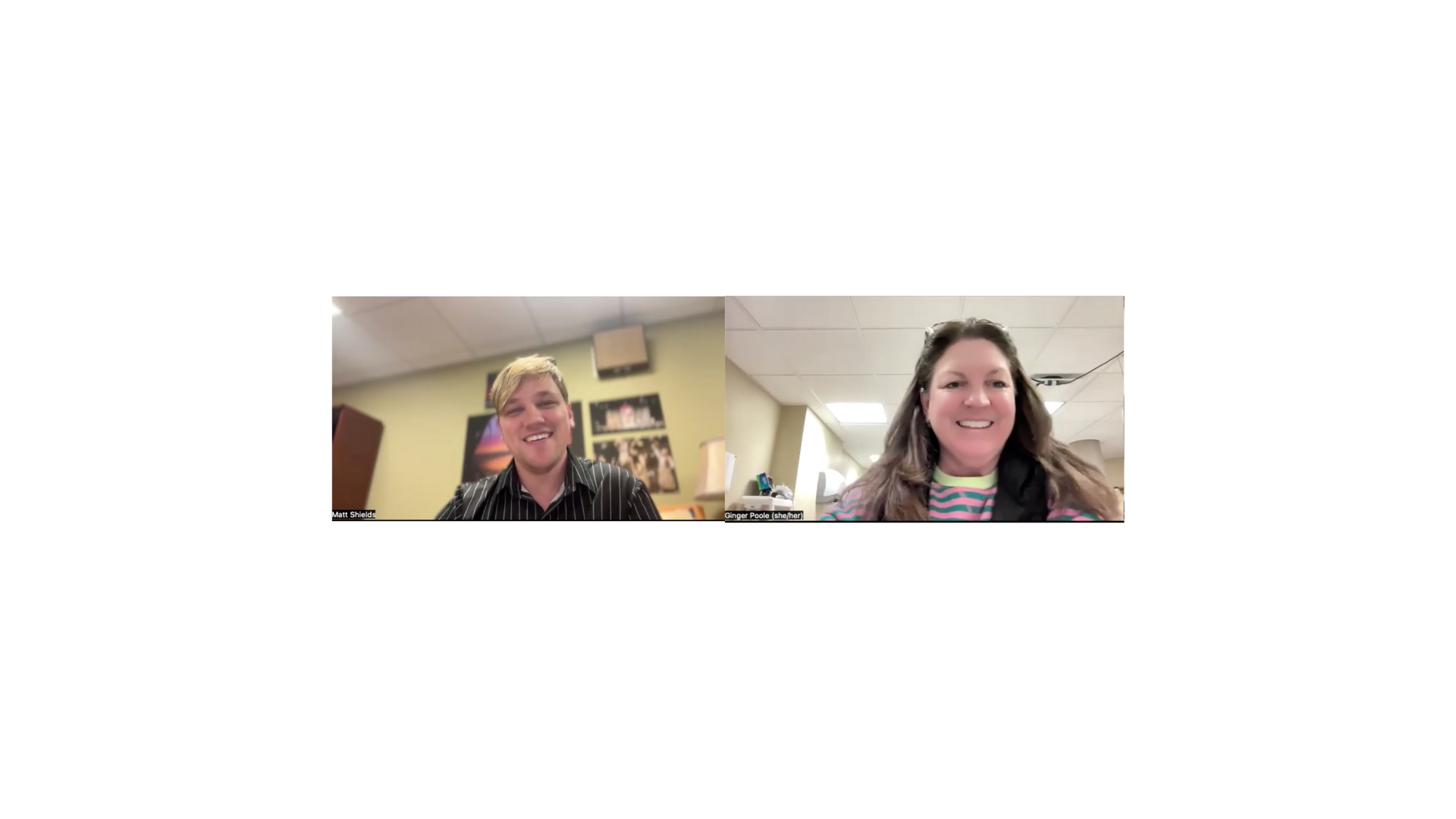
The Mill Mountain Theater’s Producing Artistic Director, Ginger Poole, has officially retired, placing the theater’s future in new hands. 

Mill Mountain Theater has been a symbol of arts and culture in Southern Virginia for over 60 years, hosting hundreds of talented artists and programs on its stage since 1964. What makes the theater unique is its emphasis on supporting the arts with various performances and programs, not just the typical musical or theater performances expected at a theater. 

Ginger Poole, the previous Producing Artistic Director of the last 15 years, is credited for revving the theater twice through financial struggles and leading it through the COVID-19 pandemic. During the economic struggles, she continued to open the doors by hosting classes and a holiday show once a year for four years, while being the only full-time employee at the theater. 

“It’s an interesting take to apologize for a problem that you didn’t create. I knew the past of Mill Mountain and the quality of productions, and it would have been a detriment to the community if it were lost. That was my thought line to keep fighting for the theater, while we were digging ourselves out of a big, big hole. The other part was I truly enjoyed the people that I was working with”, stated Poole.   

While at the top of their game, like most other art organizations, the COVID-19 pandemic lowered the theater’s curtains. Poole led the charge of navigating the theater through this difficult period and was able to skillfully revive the theater to its present-day stature.

“Through COVID, however, it was different, because the first round of debt was Mill Mountain’s problem, and it was Mill Mountain’s problem to fix, where COVID was out of all of our control. It wasn’t just a Roanoke-centric problem, we were all in it together, nationally and globally. It had a different flavor [than the debt] but I had the same drive of wanting to keep Mill Mountain going. I wanted to keep my staff and my guest artists in my community and my volunteers safe. We were all in it together, and that comradery, and accountability, kept us going”, remarked Poole.    

Poole journeyed to Roanoke 18 years ago to pursue her career in acting and was asked to perform and choreograph in the MainStage Seasons, which turned into an opportunity to join the Mill Moutain Theater family as the Director of Education. She became the first female to hold the position of Producing Artistic Director at the theater. 

“My first time in Roanoke, I was brought in as an actor, and then I was brought back as a director, choreographer, and actor. I would come and go from Flatrock, North Carolina to Roanoke, for probably two years, back and forth, just being a guest artist in productions. From that, I built the relationship with Mill Mountain and became their Director of Education in a pinch”, Poole recounted.    

After a staggering 35-year career in the industry, 18 of which were with Mill Mountain, Poole will step down from her leadership role but will remain on a consulting contract with the theater to ensure a smooth transition.    

After a grueling 11-month period and reviewing hundreds of applicants, Matt Shields, a Radford University alum with a BS in theater, was selected to fulfill Poole’s position.

Shields grew up outside of Washington D.C. and fell in love with Southwest Virginia after his time studying in Radford. He has worked in the Mill Mountain Theater family for seven years, learning the ins and outs of every corner of the theater, previously handling the responsibilities of Director of Productions, prop master, costume manager, teaching artist scenic designer, and company manager. 

When asked what about Southwest Virginia influenced Shields to stay he remarked, “I loved the lack of traffic and how beautiful it is. The mountains, the rivers, the streams, we don’t have anything like that where I’m from, and lastly its sense of community. Roanoke is still a city, but it has a small-town feel. You get to meet your neighbors and the community members have so much support for what’s going on around here. That was awesome, to be a part of a community.” 

Shields plans to continue in the direction that Poole has been leading the theater down and wants to embody the leadership that he saw Poole demonstrate.

“Always lead with compassion. I don’t think any leader is successful unless they’re compassionate about the people who work with them and the staff around them. Secondly, it is being a servant leader. I try not to just sit at my desk all day, I try to be up helping the production staff build the show, or a development person write a grant or our business person write a budget. We are a team and it’s important that your staff sees that you’re still a working member of the staff”, said Shields. 

Poole and Shields have been working closely with each other during this period process to ensure a smooth transition between responsibilities. 

“Ginger and I have a great working relationship, so I think it makes the transition a lot easier, knowing that I can call on her when I need help. She is still in an advisory role while I put everything in my name. We are going to continue to prioritize our staff, our people, and our community. I want Mill Moutain to be a full experience as opposed to a ‘just come and see a show’. There will be small changes, but it’s still going to be the Mill Mountain that people know and love”, expressed Sheilds. 

Everyone in the Mill Mountain teams seems to believe that Shields is the perfect replacement to fill the gap that is left with Poole’s departure.