
by Sean Weinstock
The Bull and Bones Brewery used its empty brewing tanks to provide water to the community during the boil water advisory.
by Sean Weinstock
The Bull and Bones Brewery used its empty brewing tanks to provide water to the community during the boil water advisory.
Sean Weinstock
The Town of Dublin, VA has received a $1 million multipurpose grant from the Environmental Protection Agency to clean up their under utilized industrial park. The cleaning process for the site will help create new community and business opportunities for the town in the future.
by Sean Weinstock
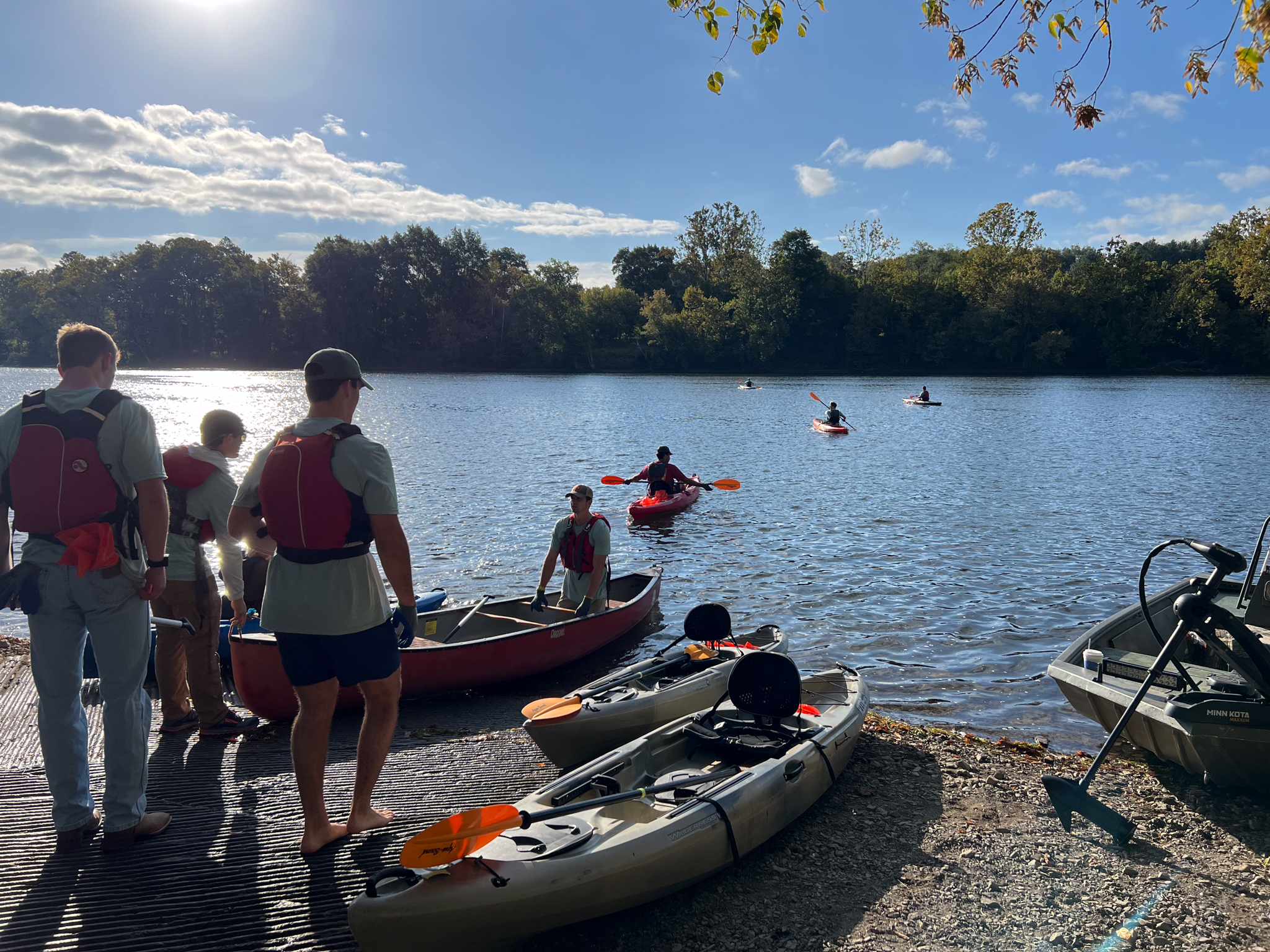
On Saturday, September 14th, over 800 volunteers in over 60 boats across four counties gathered at the New River to participate in the annual RenewTheNew cleanup event designed to improve conditions in the New River.
Why it matters: “The river is a special resource for this whole valley and cleaning it up, keeping it fresh for tourism, for fish and recreational use is really important.” said Brad Buchanan, RenewTheNew Montgomery County Organizer.
Flashback: RenewTheNew started on July 21st, 2001, in Giles County with more than 600 volunteers and over 20,000 pounds of trash collected during the inaugural event. This event officially started Giles Counties annual after summer cleanup.
Context: The New River has been an important part of the New River Valley community for generations and has become a major tourist attraction for the region contributing nearly $36 million to Giles County in visitor spending in 2023.
Rare Treasure: Considered to be the oldest river in North America, the New River is part of the Ohio River watershed running 320 miles across North Carolina, Virginia, and West Virginia.
What’s Next: The ReNewTheNew initiative continues its efforts to keep the New River clean all year around.
ReNewTheNew is all about protecting the New River as a valuable asset and ensuring that it remains a vibrant part of the community.

By Sean Weinstock
With a return to the school year, Virginia Tech continues its efforts to create a more sustainable packaging system for all campus dining facilities.
“Several new initiatives are on the horizon and on-going, said Emily Williams, Dining Services Sustainability Manager. “We are continuously working on transitioning from single-use plastics to compostable options”.
In 2020 Virginia Tech adopted the Climate Action Commitment dedicating itself to being a leader in climate action to the community, the commonwealth, and the world. One of the key tenets of the commitment was for Virginia Tech to become a zero-waste campus by 2030. Dining Services is playing a key role in this effort.
Over the summer Virginia Tech Dining Services began updating packaging systems and incorporating new methods to reduce waste. One of the first steps was implementing new plastic containers that can be returned to dining halls. Single use plastics is one of the biggest sources of waste at the university. Another more recent change was the removal of plastic bags and water cups from all dining facilities. The removal of plastic bags aligns with a broader statewide initiative to charge for or remove plastic bags from many retail locations. “At the start of the semester I didn’t really notice that they were gone, but now not having them has made picking up food a little more annoying,” said Ryan Erickson, Virginia Tech student. While some students are less than thrilled with the changes in packaging, the sustainability team is confident that students will adjust, and the benefits far outweigh any inconvenience. “There has been some concern about the reduction of plastic bags in our dining centers,” said Williams. “We understand that plastic bags are a convenient option, and this change can be challenging for those accustomed to using them.”
Additionally, a new reusable tracking system is now being tested, starting at the West End Dining Hall. The program is called the West End Pilot Program. Sponsored by GrubHub and Topanga, the program is designed to track the reusable food containers so they can be returned properly and be ready for use again. Food delivery and carry out containers are another major source of plastic waste and developing a viable mechanism to switch to multiple use options is another important element of the university’s sustainability program. “The pilot at West End has only been active for a little over a week but initial results are promising”, said Williams. “We are observing about an 89% return rate for containers; this marks a significant improvement compared to past semesters.” Since the start of the semester and the Pilot, the sustainability team has seen over 2,700 containers used and returned by Virginia Tech customers.
As with most sustainability and recycling efforts, separating materials early in the process is critical to the success of the initiative. This semester students in most dining facilities were greeted by new signage providing students with clear guidance on how to properly dispose of waste. In addition to signage, trash receptacles contain unique icons and color coding designed to make it easier for students to identify the appropriate bins at a quick glance, thereby increasing the likelihood of correct waste disposal. Having a universal system across all dining halls ensures consistency, which helps reinforce proper sorting habits. This new signage is intended to enhance front-end sorting by aligning student behavior with established back-end practices with the ultimate goal of bridging the gap between students’ waste disposal actions and Dining Services’ sustainability goals.
Efficiently disposing of organic waste is another important pillar of Virginia Tech’s sustainability program. Southgate Food Center has now implemented a Biodigester into their dining hall. A Biodigester works by using a process called aerobic digestion, to break down food waste by turning it into gray water and adding it into the plumbing system. Gray water requires less sewage treatment and can be used for gardening and other uses. The first Biodigester was implemented into Southgate Food Center in January 2024. “There are plans to explore the expansion of biodigesters to other dining facilities in the future”, said Williams. “The technology has proven to be quite effective at Southgate, and there is a strong desire to extend its use across more locations”. Virginia Tech’s sustainability team does not have a current timeline on when new biodigesters will be seen in dining facilities but assure that there are plans for more.
The Dining Facilities office does not operate in a vacuum and actively collaborates with various environmental and sustainability groups at Virginia Tech. “I work closely with other sustainable departments on campus, including the Office of Sustainability and Waste Management,” said Williams. “Additionally, I engage with student groups such as Rhizome, the Honors College, and several classes within the College of Agriculture and Life Sciences. The office is continually exploring new opportunities for collaboration to further our sustainability goals and support student involvement in these initiatives.”
Williams emphasized that although progress has been made, it is still early days, and much work remains to achieve the university’s sustainability goals. There are several new initiatives on the horizon, many with a focus on transitioning from single-use plastics to compostable options. “We have hundreds of different items to convert and it’s something that can be time-consuming to complete,” said Williams.
Another important sustainability focus area is increasing local purchasing of produce and other food products. Buying locally supports local businesses and reduces the carbon footprint associated with transporting food across the countries. The Dining Services office has internal goals to increase local purchasing. There is also an effort to expand the availability of organic products available to students. The Dining Services offices has an outreach and marketing program that targets local farmers.
With all of these new plans being set in motion at Virginia tech, there still comes the matter of cost. “Our primary goal as a department is to support the campus in achieving its Climate Action Commitment goals, this can sometimes come as an added expense,” said Williams. “We believe that the long-term benefits of these initiatives, both in terms of environmental impact and alignment with our sustainability objectives, outweigh the immediate costs”.
 > THE NEWS FEED <