
By: Sage Mayhew, Health and Wellness Reporter
It looks like soda, tastes like soda, but claims to help your gut. Poppi is everywhere on college campuses right now — but is it actually good for you, or just good marketing? I put it to the test.
By: Sage Mayhew, Health and Wellness Reporter
It looks like soda, tastes like soda, but claims to help your gut. Poppi is everywhere on college campuses right now — but is it actually good for you, or just good marketing? I put it to the test.
By: Sage Mayhew, Health and Wellness Reporter
On the surface, it looks like an ordinary riding lesson. However what’s happening behind the barn doors at Healing Strides of Virginia, is a whole lot more than just riding.
By Sage Mayhew, Health and Wellness Reporter
In a town known for its fast pace and high expectations, yoga is helping Blacksburg residents and Virginia Tech students slow down — and breathe. During National Yoga Awareness Month, both professors and students say the practice is reshaping how they navigate life.
Yoga has been praised for its physical benefits for decades, but in Blacksburg, it’s receiving attention for something deeper: its power to transform how people show up, carry themselves and connect with each other. With the spotlight on this September, local voices are highlighting yoga’s unique impact on both mind and body.
From student-led classes at Virginia Tech Recreational Sports to seasoned professionals teaching at In Balance Yoga Studio, the message is the same: yoga isn’t just a workout. It’s a way of life, and one that many say they didn’t know they needed until they found it.
For Virginia Tech senior Emma Roland, the weight of pursuing majors in both biological sciences and human nutrition, foods and exercise can pile up quickly. Roland always thought that yoga was just about stretching, but when she was introduced to it through one of her courses, she not only found a way to slow down the pace of her own life and catch her breath, but a way to give back to others as well. Roland was hooked and earned her 200-hour yoga instructor certification from In Balance Yoga studio in Blacksburg. Now she teaches weekly classes with Virginia Tech’s Rec Sports. Her classes focus on being present in the moment, setting goals and finding an outlet in all the chaos of life. She emphasizes the importance of letting go of everything exterior and taking time to relax your body and mind. When talking about her classes and participants, Roland says, “We’ve all had a long day and it’s like, okay, the next 45 minutes we can just worry about what’s going on within these four walls.”
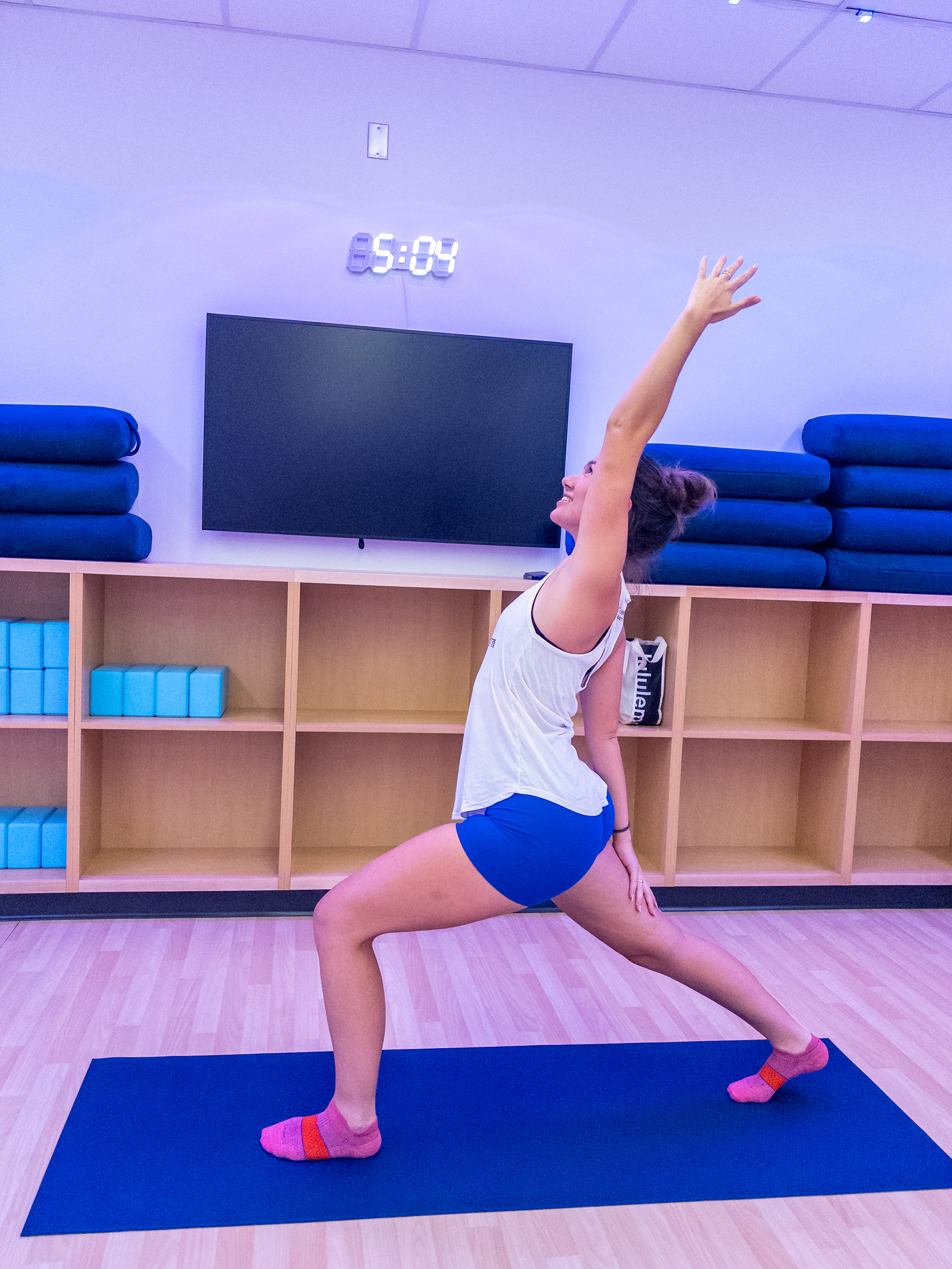
The impact of yoga extends beyond just helping students. “Yoga saved my life, and I think it’s going to help me help others,” said Dr. Samantha Harden, a 500-hour registered yoga instructor at In Balance Yoga Studio, dissemination and implementation science researcher and professor. Like many, Harden was constantly chasing success, climbing the ladder, and reaching for career excellence. However, she found that her best self isn’t rooted in professional success, but in authentic moments where she can breathe, process, and slow down. Once she started, the shift was undeniable. Colleagues began to ask what had changed, how did she become more professional, more present, more positive? Her answer? Yoga.
When Harden first discovered yoga, she thought it was superficial and more about the look than anything else. However what she found couldn’t have been more different. “It’s just other people trying to breathe, and use story, and posture and community to heal.” She shared, “You can learn so much about yourself – your level of surrender, your discipline, your grit. There’s a lot more to it than postures…It’s your interaction with someone on the sidewalk, or behind the wheel, or in a class. Your ability to create union goes way beyond the mat…being present with others is how yoga can change Blacksburg and how we can be a bright light in the darkness.” That’s exactly what yoga is doing, creating change.
Both Roland and Harden, grateful for what yoga has done for them, agree that it’s about more than just personal improvements, but a way to give back and to build community. Harden shared that “The United States is facing a social isolation and loneliness pandemic, and yoga is an opportunity to improve your social health as much as it is your mental and physical health.” The benefit of entering a studio, seeing familiar faces, learning and growing together, builds community, consistency, and connection in a time when it’s needed most.
When it comes to yoga, “The doors are always open,” says Harden. Both student and professor urge more people to make the first stretch, and try yoga. “Just come and see the impact just one class can have, how it leaves the body and the mind in a more relaxed and present state.” , says Roland. With two separate locations in Blacksburg, and classes online, In Balance Yoga Studio offers over 40 classes weekly for all ages and experience levels. For students looking to get involved and stay on campus, Virginia Tech Rec Sports also offers various types of yoga classes every week for anyone to join.

Yoga isn’t just a practice for super fit people or people that seem to have all the money and time in the world. It’s for anyone needing to breathe, find an outlet and give their mind and body rest. “No matter what time of day or who you are there’s a class that can meet you where you are,” says Harden.
By Sage Mayhew, Health and Wellness Reporter

Anderson’s impact doesn’t end when class is over. She fosters well-being and sustainable habits for students to support more fulfilling, healthier lives.
Anderson teaches in the Department of Human Nutrition Foods and Exercise at Virginia Tech. Gaining her PhD from Virginia Tech in cancer metabolism and her expertise in exercise science, her research navigates how student motivation and performance are influenced by physical health. Her lessons reach beyond the end of a lecture. Through community engagement and mentorship, Anderson’s commitment to student wellness helps Hokies succeed in both their academic and personal lives.
[Edited for clarity]
Tell me a little bit about your role here and how you got to where you are today
I am collegiate faculty, so I’m teaching faculty. One piece of collegiate faculty is research. That research is more pedagogical. So, how can I effectively teach in the classroom? How can I draw students in and increase their engagement and learning?
We moved to Colorado in 2014 for my husband’s job. I taught part time at Pikes Peak Community College and at Colorado College. During that time, we really missed Blacksburg, so I had reached out to my PhD advisor, who was the department head at the time, and said, ‘Hey, would there ever be any opportunities for me to come back?’ And he said, ‘Actually, they’ve started collegiate faculty, and I think it would be great.’ So we moved back in 2018!
How do you advise a student’s well-being?
Having an active lifestyle is really important for undergraduates, but also trying to keep things in perspective. What I try to remind my students is that I was 44 when I got hired back here at Virginia Tech. I went back to graduate school at 34 when my first son was born. Life is long, so I try to remind them everybody has a different path and that’s okay.
How does stress impact students physically and academically?
It can put your back up against the wall, where you make poor moral choices. You get to the point where you’re like, I’ve just got to check the box. And then maybe you look over at someone else’s computer on an exam because you didn’t put the hours in to study. I think there’s a lot of negative impacts of stress, and that’s one of the reasons why I think carving out time to be physically active can help reduce that.
Aside from stress, what other health concerns do you see among college students?
Digital wellness is a big one. I think the isolation that comes from our digital environment is really real. Having a phone at our fingertips, having air pods in our ear, having ChatGPT to have a relationship with makes it easy for us to be socially isolated, which increases depression and anxiety. I think what is really important is making students feel cared for, and making them feel that they belong, not just in my classroom, but also with each other. I’m not anti social media by any means. It’s just how we choose to use it. It’s a balance, having tech breaks to do things like exercise and engage in relationships with others.
What’s the connection between physical health and academic motivation?
I’ve done some research with that and it’s really hard to measure in humans, because there’s so many other confounders, such as their sleep schedule, their work schedule, and so many other things to really tease out. We did see some changes in executive functioning, specifically with memory after acute exercise. So there is some evidence out there. It’s just not as clear cut, but we do know that exercise increases blood flow to our brain. That correlation is the increase of our brain functioning would help us to be better learners.
What sustainable health habits do you recommend to students?
Finding physical activity that you enjoy, and then having a regular, scheduled time for it. Don’t be a runner if you don’t like running. It’s about finding something that you like and making it a routine. I’ve always said the hardest part about exercise is getting dressed, because it’s like, once you’ve gone over that mental mountain of actually getting dressed you’re like, okay, let’s just do it.
Have you seen any positive health trends among students recently?
One thing that those of us that grew up in the 80s and 90s see about
Gen Z is water. You guys are such better water drinkers! I also think our students here are a really active community. You see people exercising all the time.
Do you collaborate with any programs on campus or in the community?
Yes, through my class, Exercise and Health. We have a partnership with Rec Sports, the students come up with pitches for ways to get college students more active. If they like one, they roll it out. One rolled out this past spring, for girls and women in sports day which was really exciting! It was a women’s only weight lifting time, because some female college students feel intimidated in the weight room, but they want to be able to lift weights, and so having a protected time where they could go and lift was a way that we have partnered with rec sports to help increase physical activity.
Another way that I connect students with our community is as a board member for the soccer club with New River United. I reach out to students to be soccer coaches for kids in the community.
What’s one thing you wish students understood about long-term health?
That it is a life long process of balancing.
It is easy when you’re in college to prioritize exercise. As you get older, you just have more demands. So the habits that they’re making now are easier, and they’re going to be harder when you transition. So it’s continuing this healthy lifestyle that we’ve started in college and forming habits now that we will be able to take with us.
Can you share any moments that remind you why you love this work?
I think it’s when students email me after they’ve graduated, and they will say, ‘Oh my gosh, I am just finishing my first semester in med school, and your class really prepared me.’ That’s a win! I have set them up to be successful!
But I think my heart really goes out to the struggling students. It’s easy to think when students aren’t performing well, that they’re just not working hard enough. But we don’t always know what’s going on and that they’re having to adult through some things that really they shouldn’t have to. So it’s watching them overcome those things, seeing them be successful and move on from here into what they are passionate about, and then getting to hear from them later.
 > THE NEWS FEED <